



Cost-Effective Workforce Solutions: Rapid-Assembly Prefabricated Dormitories by Lida Group
2026-Oct-16 16:04:58
By Admin
01 Introduction: The Real Cost of Housing a Workforce
Every project that depends on a large on-site workforce eventually confronts the same question: where will the people live? Mines, refineries, pipeline corridors, and large infrastructure jobs often sit far from established towns, which means operators cannot rely on local accommodation. They must build it themselves, quickly, and within a budget that the project can actually support. The conventional answer, a traditional building erected on site over many months, carries hidden costs that go well beyond the price of materials and labour. Lida Group offers a different path with its rapid-assembly prefabricated dormitories, units designed to house workers comfortably while keeping the full cost of accommodation firmly under control.
This article examines what makes these dormitories genuinely cost-effective, not simply cheaper at first glance. It looks at the way factory fabrication shortens the construction window, how standardization drives down both purchase and operating costs, and why the long-term economics of a well-built prefabricated unit consistently outperform hurried alternatives. The goal is to show operators that the least expensive housing is not always the cheapest to buy, but the one that delivers reliable service for the longest time at the lowest total cost.
02 The Price of Waiting: Time as a Cost Driver
In a remote project, time is money in the most literal sense. Every day that accommodation is not ready is a day that the workforce cannot be brought to full strength, and every delay in housing pushes back the entire project schedule. Traditional dormitory construction ties up a project for months, with foundations, framing, and finishing all completed in sequence on site. During that period, workers may be housed in expensive temporary arrangements, or the project may simply wait, accumulating costs while producing nothing.
Lida’s rapid-assembly approach removes this bottleneck. Because each dormitory is manufactured in a controlled factory environment, the building work happens off site, in parallel with whatever preparation is needed at the project location. When the units arrive, they can be set in place and connected in a fraction of the time required for conventional building. For the operator, this means the workforce moves in sooner, the project starts earlier, and the revenue or progress that comes from an earlier start becomes part of the economic case for the dormitory. Time saved is money saved, and it is often the largest single saving of all. The faster a camp becomes habitable, the sooner crews can reach full capacity and the sooner the project can begin generating the value it was planned to deliver.
03 Standardization: The Engine of Economy
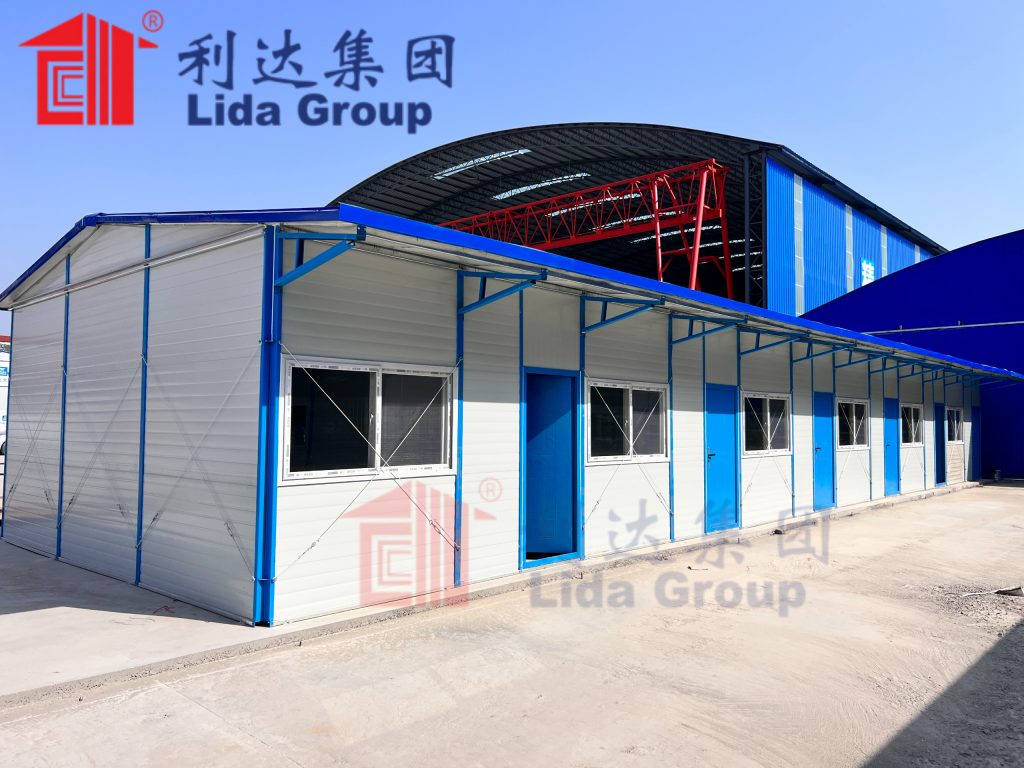
Behind every cost-effective prefabricated dormitory lies a commitment to standardization. When a product is built repeatedly to the same design, using the same materials and the same processes, its cost falls naturally. Tooling is optimized, procurement is simpler, quality is easier to control, and waste is minimized. Lida applies this principle across its dormitory range, offering configurations that are proven, refined, and produced at scale, so that the buyer benefits from manufacturing efficiencies that a one-off building can never match.
Standardization also simplifies the operator’s life in ways that reduce cost indirectly. Spare parts are readily available because the same components are used across many units. Maintenance teams learn a single set of systems rather than managing a unique installation. Planning is predictable because the capacity and performance of each unit are known quantities. These advantages accumulate over the life of the camp, turning a lower initial purchase price into a steadily lower cost of ownership, which is exactly what a cost-effective solution should deliver.
04 Factory Quality: Fewer Surprises, Fewer Repairs
Quality is a cost factor that is easy to overlook at the moment of purchase and painful to confront later. A building that is assembled hastily on site, in weather that may be hostile and with workmanship that varies from crew to crew, will generate repair costs long after the invoice is paid. Factory fabrication changes this equation. Lida builds its dormitories indoors, under controlled conditions, using established procedures and quality checks at every stage, so that the finished unit arrives with a level of consistency that field construction rarely achieves.
The practical effect is a lower rate of defects and failures over the life of the dormitory. Seals are applied properly, insulation is installed as designed, electrical systems are tested before shipment, and finishes are protected during transport. For the operator, this translates into fewer breakdowns, less downtime, and a smaller maintenance budget. When the total cost of running the camp is added up over several years, the superior initial quality of a prefabricated unit pays for itself many times over, which is the true measure of cost-effectiveness. A well-made building does not merely avoid the expense of constant patching; it also avoids the disruption that every repair brings to a workforce that needs rest between demanding shifts.
05 Speed of Assembly: Up and Running in Days
The name of the product promises speed, and the design delivers it. A Lida dormitory is engineered so that it can be set in place quickly and made habitable with a minimum of on-site work. Because the unit arrives fully finished, the crew on site does not need to install walls, roofs, or services from scratch. Instead, they position the unit, secure it, and connect it to the camp’s power, water, and waste systems, a process that is measured in days rather than months. This speed has a direct effect on the project schedule and therefore on the project budget.
Speed also offers flexibility that protects the operator’s investment. A camp that must expand quickly to accommodate a growing workforce can add units with minimal disruption, and a camp that no longer needs a particular building can have it moved to a new location. This ability to respond quickly to changing conditions means the operator does not overbuild out of caution or leave capacity idle out of inertia. Housing matches the project’s actual needs, and money is not wasted on space that is never used or needed later.
06 Durable by Design: Lower Lifetime Cost
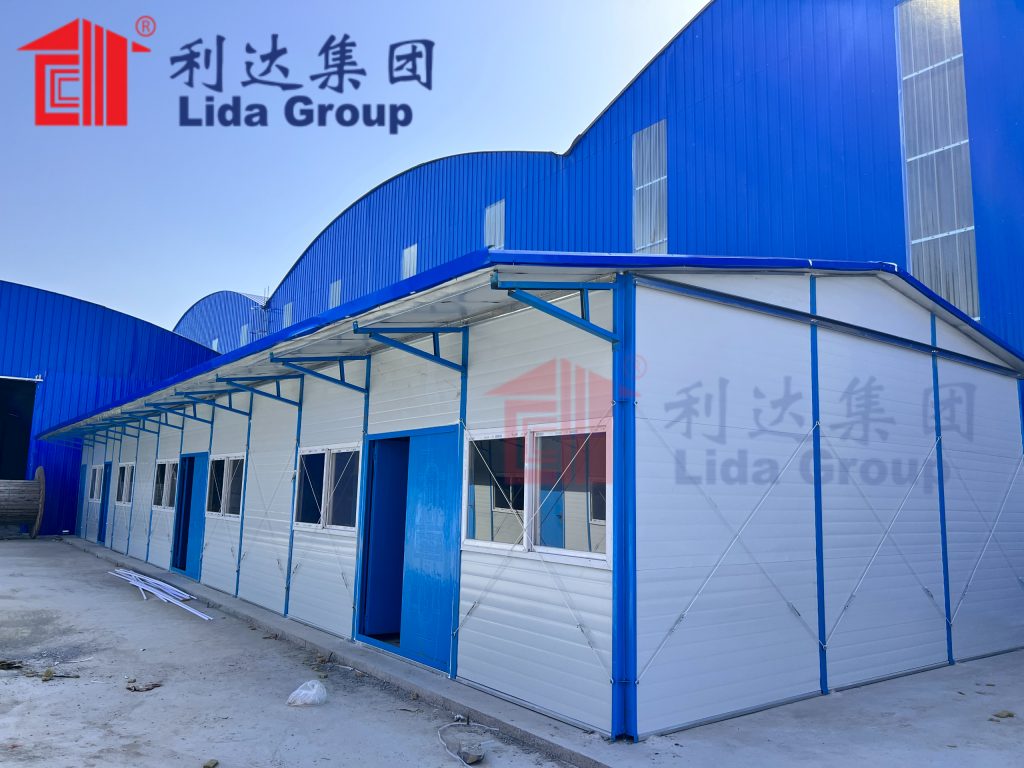
A cost-effective dormitory must be durable, because replacement is the most expensive option of all. Lida builds its units around a steel frame chosen for its strength and longevity, and this frame is protected by a coating system and a weatherproof envelope that resist the corrosion, moisture, and wear that shorten the life of lesser structures. The result is a building that serves for many years, through repeated use, transport, and relocation, rather than a structure that must be replaced or substantially repaired after a short service life.
Durability compounds into real savings. A dormitory that lasts longer spreads its purchase price across more years of service. A unit that can be relocated to a new project retains its value rather than being written off at the end of one job. And a building that resists damage reduces the repair and replacement costs that quietly erode the budgets of less robust alternatives. When operators evaluate the total cost of ownership, the durable design of a Lida dormitory becomes one of its most valuable economic features.
07 Operating Efficiency: Saving Money Every Day
The cost of a dormitory does not end when it is installed; it continues every day the unit is in service. Energy, water, maintenance, and staffing all add to the running cost of a camp, and a well-designed building can reduce each of these. Lida fits its dormitories with insulation that lowers heating and cooling demand, efficient climate control systems that use less energy, and durable, easy-to-clean finishes that simplify housekeeping and reduce the frequency of repair. These features turn the dormitory into an asset that saves money over its entire working life.
There is also a human side to operating efficiency. A dormitory that is comfortable, safe, and well-maintained supports a stable workforce, and a stable workforce is a cheaper workforce. When workers are housed well, they are less likely to leave, and the operator avoids the constant cost of recruiting, training, and transporting replacements across difficult logistics. Reduced turnover, better morale, and higher productivity are not abstract benefits; they appear directly in the project’s bottom line. In this way, a cost-effective dormitory is also an investment in the people who make the project succeed, because it protects the very resource on which every other part of the operation depends.
08 A Complete Workforce Solution
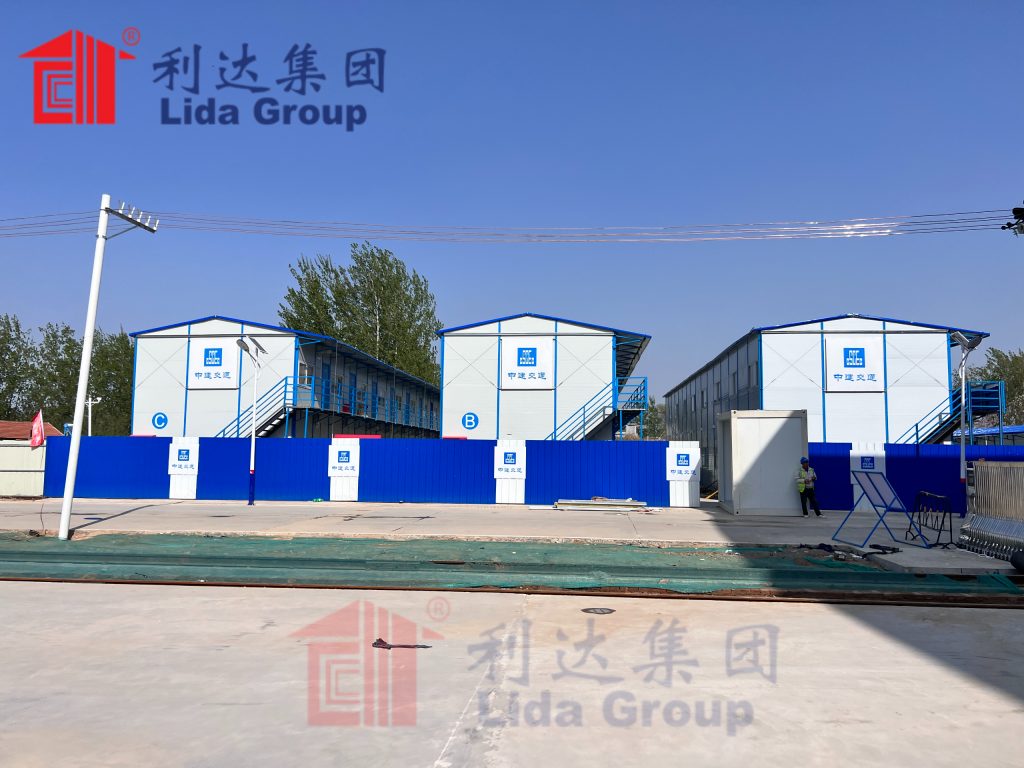
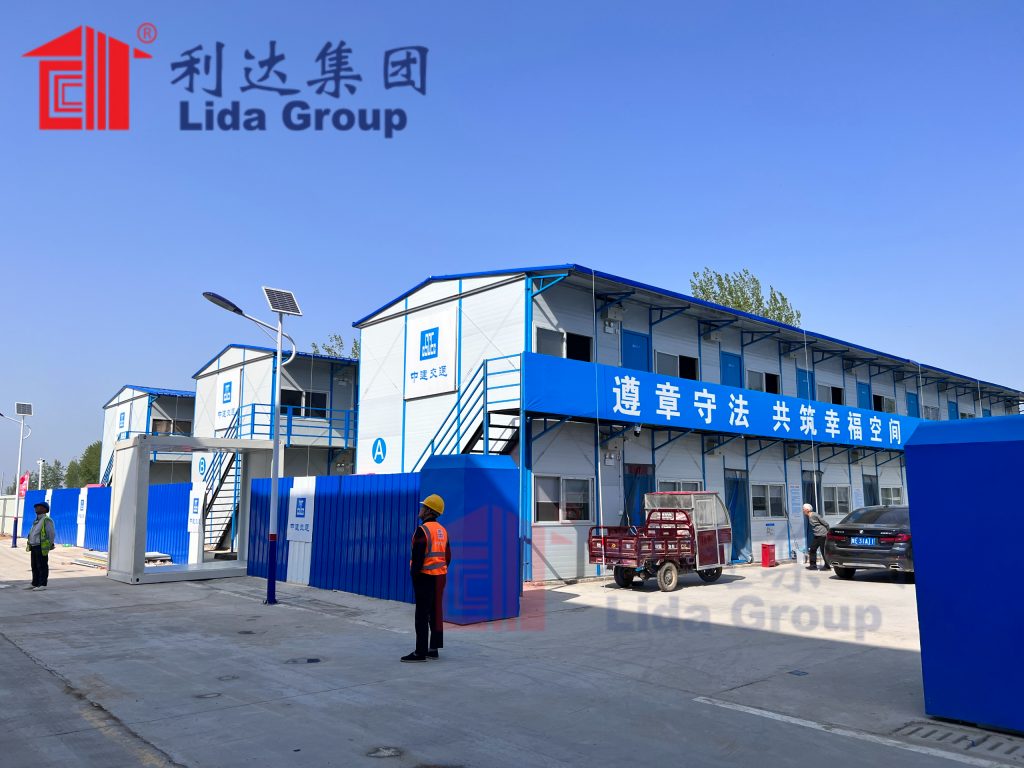
Lida’s rapid-assembly dormitories are not isolated buildings but part of a complete workforce housing solution. The range includes sleeping quarters, sanitary units, kitchens, dining halls, and recreational spaces, all built to the same standard and designed to work together as a coherent camp. This integration simplifies planning, because the operator can specify an entire accommodation package rather than assembling components from different suppliers. It also simplifies operation, because all the units share the same systems, materials, and service requirements.
The breadth of the range also means that Lida can match the solution to the size and character of the project. A small team on a short job can be housed with a few well-equipped units, while a large camp for a major construction program can draw on the same proven product at greater scale. This scalability protects the operator’s budget, because housing can be sized to actual need and expanded only as the project grows. Whether the requirement is modest or substantial, the underlying economics remain the same: a durable, standardized product that is fast to deploy and economical to run.
09 Conclusion: Cost-Effectiveness Built on a Solid Foundation
Lida Group’s rapid-assembly prefabricated dormitories answer the challenge of housing a workforce economically without compromising on quality or comfort. The savings begin with time, because factory fabrication and fast on-site assembly get workers housed sooner and projects started earlier. They continue through standardization, which lowers the cost of production, spares, and maintenance. And they endure through durability and operating efficiency, which reduce the long-term cost of running the camp. Together, these advantages mean that the total cost of a Lida dormitory, measured over its full working life, is consistently lower than that of hurried or poorly built alternatives.
For operators who must house a workforce in a remote location, the choice is not simply between a cheap building and an expensive one. It is between a solution that creates ongoing savings and one that quietly accumulates cost. Lida’s dormitories are designed to be the former, offering a durable, standardized, and efficient product that protects the project budget from the moment it is ordered until long after it is in service. In the end, cost-effectiveness is not just about the purchase price but about delivering reliable workforce housing that serves the project for years, and that is precisely what Lida Group provides.
Related news
-
Built for Extreme Environments: Heavy-Duty Steel Warehouses & Worksite Camps for Mining Operations
2026-10-14 10:25:49
-
Built for the Extreme: How Lida Container Houses Withstand Harsh Conditions in Mining & Oil Fields
2026-10-10 17:05:07
-
Cost-Effective Industrial Spaces: Why Steel Workshops Outperform Traditional Buildings
2026-09-30 13:12:31
contact us
- Tel: +86-532-88966982
- Whatsapp: +86-13793209022
- E-mail: sales@lidajituan.com
