



Introduction
Mining is among the most demanding industries on Earth. Whether extracting iron ore from the red dust of the Pilbara, copper from the high Andes, gold from the frozen expanses of Siberia, or coal from the humid tropics of Southeast Asia, mining operations must function in locations where nature itself seems determined to resist human presence. Temperatures swing from searing heat to bitter cold. Winds carry abrasive dust and corrosive salt. Seismic activity threatens structural integrity. And the sheer remoteness of most mining sites means that any failure of infrastructure carries consequences far more severe than it would in an urban setting.
Within this unforgiving context, the buildings that support mining operations—warehouses for equipment and materials, workshops for maintenance and repair, and camps for housing the workforce—must be engineered to standards that far exceed those required for conventional construction. A warehouse that collapses under snow load, a workshop that corrodes within a few years, or a camp that fails to protect workers from extreme temperatures can halt production, endanger lives, and cost millions in lost revenue.
Lida Group, a global leader in integrated building engineering solutions established in 1993, has spent more than three decades developing and refining steel structure buildings specifically engineered for the extreme conditions that mining operations face. With over 5,000 completed projects across 152 countries, a portfolio of over 60 independent patents, and a reputation for delivering structures that perform reliably in the world’s harshest environments, Lida Group has become the trusted partner for mining companies seeking infrastructure that is genuinely built to last.
The Unique Challenges of Mining Environments
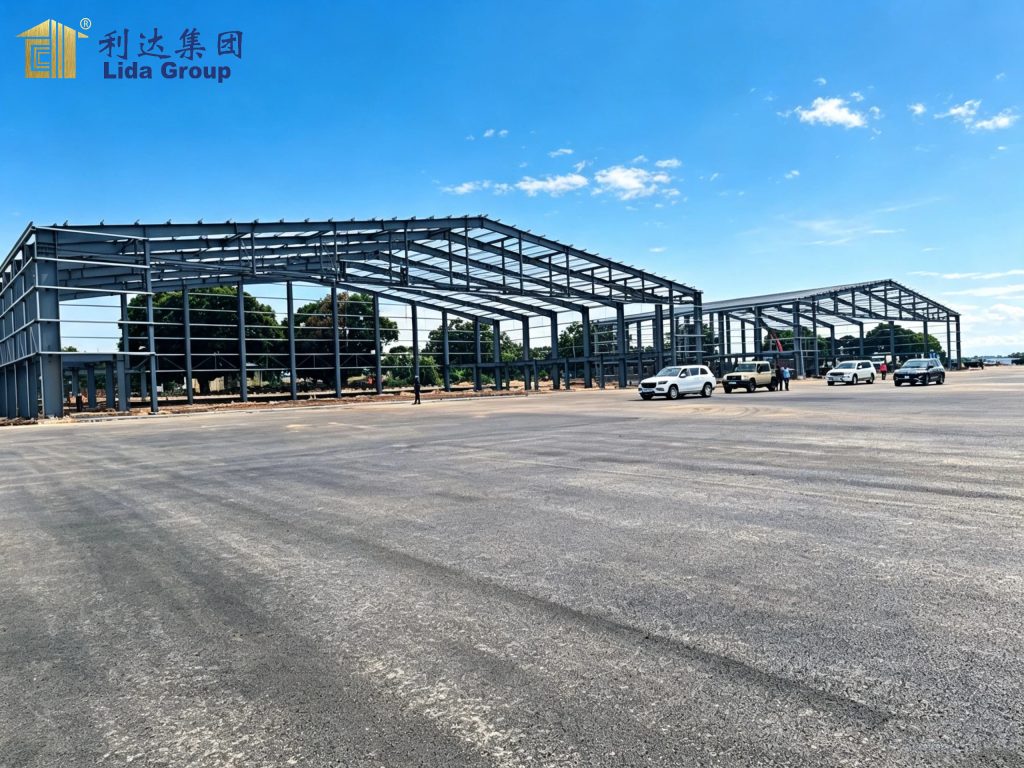
Mining operations present a combination of environmental and operational challenges that few other industries encounter. Understanding these challenges is essential to appreciating why heavy-duty steel structures are not merely preferable but necessary for mining applications.
The climatic extremes of mining locations are perhaps the most obvious challenge. Mining operations in the Australian outback endure summer temperatures exceeding 45 degrees Celsius, while operations in northern Canada and Siberia face winter temperatures below minus 40 degrees. These extremes place enormous stress on building materials, causing expansion and contraction that can crack concrete, warp timber, and compromise the integrity of poorly designed structures.
Wind is another persistent threat. Many mining sites are located in exposed locations where wind speeds regularly exceed 100 kilometers per hour, with gusts reaching far higher during storms. Wind-driven debris—dust, gravel, and rocks—acts as an abrasive force that wears away at building surfaces over time. Buildings must be engineered to withstand both the structural loads imposed by high winds and the ongoing abrasion caused by wind-borne particles.
Corrosion represents a particular challenge for mining infrastructure. Mining environments are often characterized by high humidity, salt exposure (in coastal locations), and the presence of corrosive chemicals used in mineral processing. These factors accelerate the deterioration of steel and other materials, shortening the service life of buildings and increasing maintenance costs. Effective corrosion protection is essential to ensure that mining infrastructure remains functional over the decades-long lifespans of typical mining operations.
Seismic activity poses risks at many mining locations, particularly in regions where geological forces have concentrated mineral deposits. Buildings must be engineered to withstand earthquake forces without collapse, protecting both the valuable equipment housed within and the workers who operate it.
Finally, the remote nature of most mining sites creates logistical and operational challenges that influence building design. Every component must be transported over long distances, often over unpaved roads or by air. Construction labor may be scarce and expensive. Once erected, buildings must be maintained using resources available on site, which places a premium on designs that require minimal maintenance and can be repaired using locally available skills and materials.
Lida Group’s Heavy-Duty Steel Structure System
Lida Group’s response to these challenges is a comprehensive steel structure building system engineered specifically for the extreme conditions of mining environments. The system is built upon a foundation of high-quality materials, advanced engineering, and industrial-scale manufacturing that together deliver structures capable of performing reliably for decades in the world’s harshest locations.
The structural frames of Lida Group’s mining buildings are fabricated from premium-grade steel sections, including H-section steel and C-section steel, selected for their exceptional strength, ductility, and resistance to fatigue. These frames are designed using advanced computer-aided engineering software that optimizes material usage while ensuring that structures can withstand the specific loads—wind, snow, seismic, and operational—that each project will encounter. Every component is manufactured in controlled factory environments, where computerized cutting, robotic welding, and automated assembly ensure dimensional accuracy and consistent quality across all parts.
Corrosion protection is a critical consideration in mining environments, and Lida Group employs multiple strategies to ensure long-term durability. The primary protection is provided by hot-dip galvanization, which creates a thick, metallurgically bonded zinc coating that protects steel from corrosion for 20 to 30 years, even in aggressive environments. For particularly corrosive locations, additional coatings—epoxy, polyurethane, or specialized industrial paints—can be applied to further extend service life. All coatings are applied under controlled factory conditions, ensuring consistent coverage and adhesion that would be impossible to achieve on site.
The building envelope is completed with composite sandwich panels that provide thermal insulation, weather protection, and structural performance. These panels combine an insulating core—rock wool, fiberglass, polyurethane, or expanded polystyrene—with durable metal skins that resist impact, abrasion, and moisture. The panels are designed with interlocking edges that create weather-tight seals, ensuring that buildings remain dry and comfortable even during driving rain or blowing snow. Insulation thicknesses can be specified according to climate requirements, with panels ranging from 50 millimeters to 200 millimeters thick.
Heavy-Duty Warehouses for Mining Operations
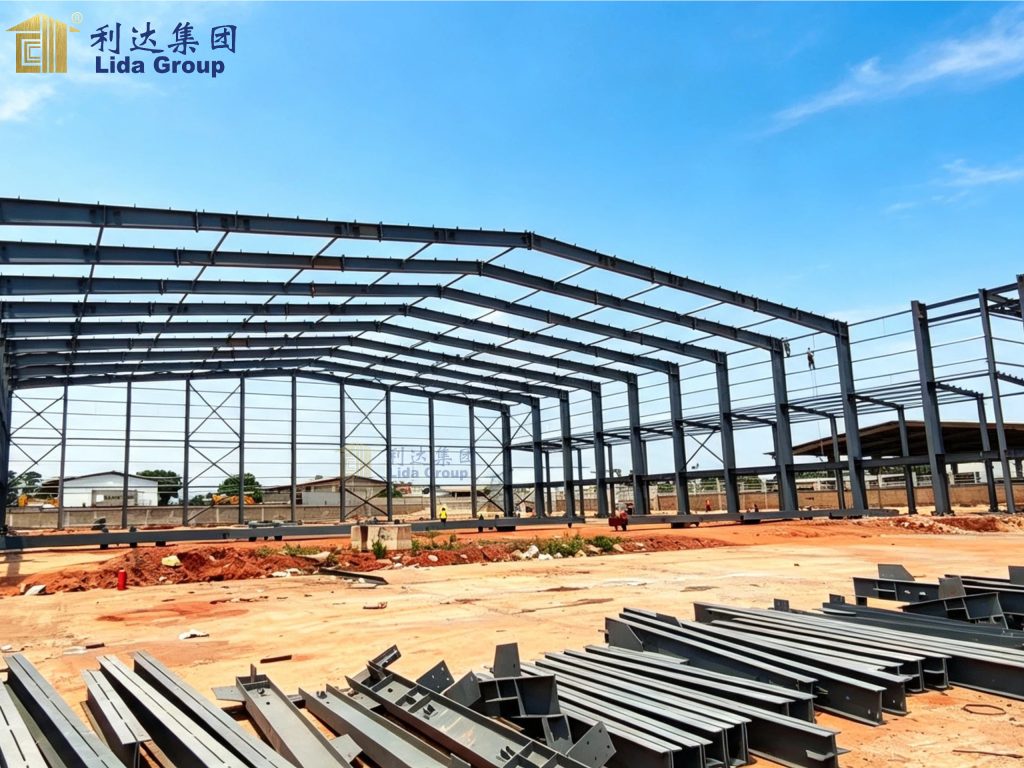
Warehouses are essential to every mining operation, providing secure, weather-protected storage for equipment, spare parts, consumables, and processed materials. In mining environments, warehouses must be engineered to withstand conditions that would quickly destroy conventional buildings.
Lida Group’s heavy-duty steel warehouses are designed with clear-span capabilities of up to 36 meters, creating expansive interior spaces without columns that would obstruct operations. This clear-span design allows for efficient movement of large equipment—haul trucks, loaders, drills—and facilitates the storage of oversized components that cannot be accommodated in conventionally framed buildings.
The structural systems of these warehouses are engineered to support heavy loads, including overhead crane systems that are essential for maintenance and material handling in mining operations. Crane rails can be integrated into the structural design, with capacity determined by the specific lifting requirements of each project. Floor systems are designed to support the concentrated loads imposed by heavy equipment and stored materials, with reinforced concrete or heavy-duty steel flooring available according to requirements.
Environmental control is a critical consideration for mining warehouses. In hot climates, effective ventilation is essential to prevent heat accumulation that can damage sensitive equipment and make working conditions unbearable. Lida Group’s warehouses can be equipped with powered ventilation systems, evaporative cooling, or full HVAC systems depending on requirements. In cold climates, insulation and heating systems maintain temperatures above freezing, protecting equipment and materials from damage.
Fire protection is another critical requirement for mining warehouses, particularly those storing combustible materials such as lubricants, fuels, and chemicals. Lida Group’s steel structures are inherently non-combustible, and can be equipped with fire suppression systems, fire-rated walls, and emergency egress provisions that meet the most stringent safety standards.
Worksite Camps for Mining Workforces
Mining operations depend on large workforces, and these workers must be housed, fed, and supported in environments that are often far from any existing settlement. Lida Group’s worksite camps provide comprehensive accommodation solutions that maintain worker health, morale, and productivity even in the most challenging conditions.
The foundation of Lida Group’s camp solutions is its modular accommodation units, engineered for rapid deployment and long-term durability. These units can be configured as single-occupancy rooms for senior staff, shared rooms for general workers, or family units for operations that support workers accompanied by dependents. Each unit is constructed using the same heavy-duty steel framing and composite panel systems used in warehouses, ensuring consistent durability and performance.
Interior environments are designed for comfort and functionality. Insulation maintains comfortable temperatures regardless of external conditions. Windows provide natural light and ventilation. Electrical systems, plumbing, and HVAC are pre-installed and integrated, ensuring that units are ready for immediate occupancy upon assembly. Furnishings—beds, storage, desks, and seating—can be provided according to client requirements.
Beyond accommodation, Lida Group provides a complete range of support facilities that transform a collection of housing units into a functioning community. Dining halls with commercial kitchens provide nutritious meals for large workforces. Recreation facilities—gyms, lounges, and social spaces—support worker well-being during extended rotations. Medical clinics provide on-site healthcare, essential when the nearest hospital may be hours away. Administrative offices provide workspace for camp management and operations staff.
The layout of Lida Group’s camps is carefully planned to support efficient operations and community cohesion. Accommodation areas are separated from noisy or hazardous operations. Pedestrian pathways connect residential, dining, and recreational facilities, encouraging walking and reducing reliance on vehicles. Landscaping and outdoor spaces provide opportunities for relaxation and social interaction. Security provisions—perimeter fencing, access control, and lighting—protect workers and assets.
Integration: Complete Site Solutions
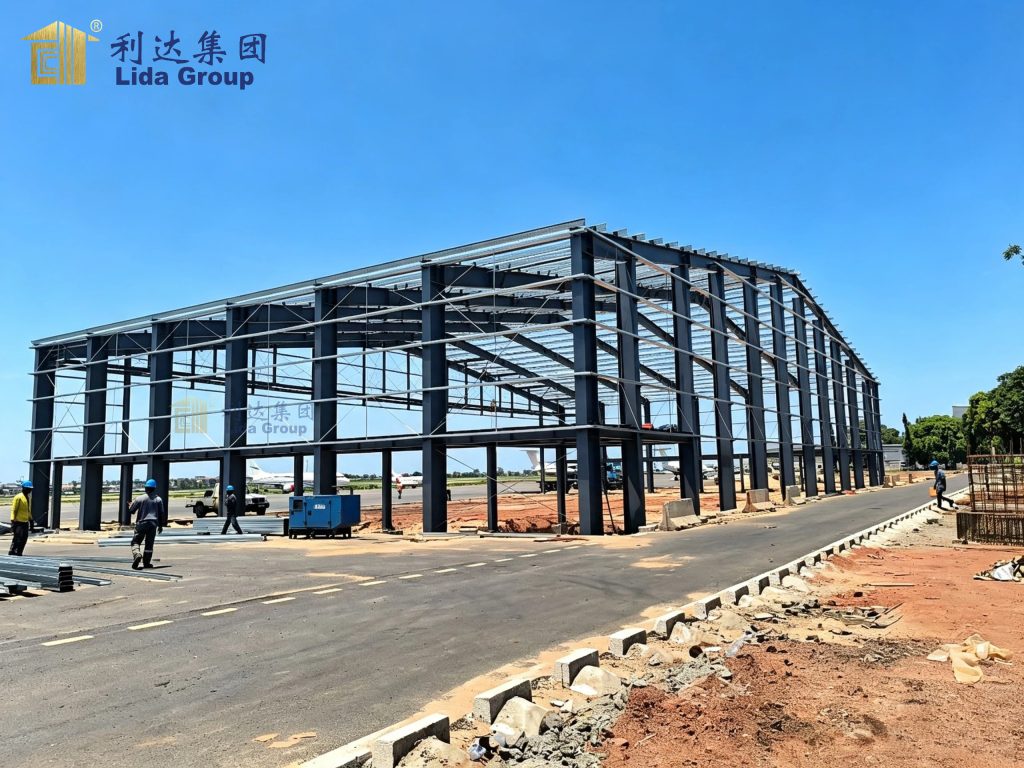
One of the key advantages of working with Lida Group is the ability to source complete site infrastructure from a single supplier. Rather than coordinating multiple vendors for warehouses, workshops, offices, accommodation, and support facilities, mining companies can work with Lida Group to deliver integrated solutions that are designed to work together.
This integration delivers practical benefits. Structural systems are standardized, simplifying procurement and reducing spare parts inventory. Building systems—electrical, plumbing, HVAC—are compatible, simplifying connection and operation. Aesthetic consistency across the site creates a cohesive environment that supports worker morale and corporate identity. And a single point of responsibility for design, manufacturing, delivery, and assembly simplifies project management and reduces risk.
Real-World Applications
Lida Group’s heavy-duty steel structures and worksite camps have been deployed at mining operations around the world, delivering reliable performance in the most challenging environments.
In the Pilbara region of Western Australia, Lida Group supplied modular accommodation and support facilities for iron ore operations, engineered to withstand the extreme heat and abrasive dust that characterize the region. The galvanized steel structures have maintained their integrity for years with minimal maintenance, protected by coatings that resist the corrosive effects of the environment.
In the high Andes of South America, Lida Group delivered warehouses and workshops for copper mining operations at altitudes exceeding 4,000 meters. The structures were engineered to withstand seismic activity, extreme temperature variations, and the high winds that sweep across the altiplano. Insulation systems maintain comfortable interior temperatures despite the thin atmosphere and intense solar radiation.
In the oil sands region of northern Canada, Lida Group provided accommodation and support facilities engineered for winter temperatures that regularly drop below minus 40 degrees Celsius. Triple-glazed windows, enhanced insulation, and robust heating systems ensure that workers remain comfortable throughout the long, harsh winters that characterize the region.
Conclusion
Mining operations demand infrastructure that can withstand the most extreme conditions that nature can produce. Heavy-duty steel warehouses and worksite camps must resist temperature extremes, high winds, corrosion, seismic activity, and the constant abrasion of dust and debris. They must be durable enough to serve for decades, yet flexible enough to accommodate changing operational requirements. And they must be deployable rapidly, often in locations where construction resources are scarce.
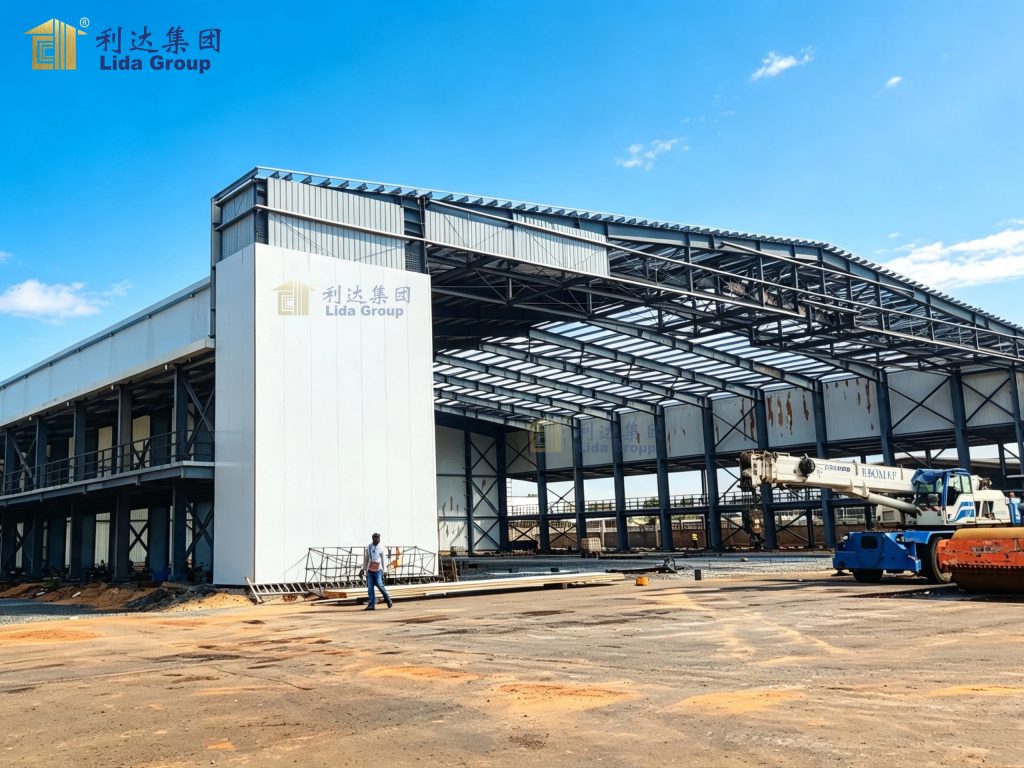
Lida Group’s heavy-duty steel structures and worksite camps meet these demands comprehensively. The company’s advanced steel framing systems deliver strength, durability, and corrosion resistance that conventional construction cannot match. Its composite panel envelopes provide thermal performance, weather protection, and impact resistance. Its modular designs enable rapid deployment and future reconfiguration. And its integrated approach to site infrastructure simplifies procurement and ensures that all components work together seamlessly.
With over three decades of experience, more than 5,000 completed projects across 152 countries, and a portfolio of over 60 patents, Lida Group has established itself as the trusted partner for mining companies seeking infrastructure that is genuinely built for extreme environments. From the scorching deserts of Australia to the frozen expanses of northern Canada, from the high Andes to the humid tropics, Lida Group’s steel structures are performing reliably, protecting equipment, sheltering workers, and supporting the mining operations that supply the raw materials on which modern civilization depends.
As global demand for minerals and metals continues to grow, and as mining operations push into ever more remote and challenging locations, the need for infrastructure that can withstand these conditions will only intensify. Lida Group stands ready to meet this demand, delivering heavy-duty steel warehouses and worksite camps that are engineered for the extremes, built to last, and designed to support the success of mining operations worldwide.
Related news
-
Built for the Extreme: How Lida Container Houses Withstand Harsh Conditions in Mining & Oil Fields
2026-10-10 17:05:07
-
Innovative Prefab House Features Easy Install Sandwich Panel System
2026-09-30 13:32:21
-
Cost-Effective Industrial Spaces: Why Steel Workshops Outperform Traditional Buildings
2026-09-30 13:12:31
contact us
- Tel: +86-532-88966982
- Whatsapp: +86-13793209022
- E-mail: sales@lidajituan.com
