



Lida Group Revolutionizes Prefab Construction with Innovative Modular Steel Framing Systems
2026-Sep-15 17:09:30
By Admin
The global construction industry is undergoing a fundamental transformation, shifting from labor-intensive, site-dependent traditional building toward standardized, efficient, and sustainable off-site manufacturing. For decades, prefabricated construction has struggled with widespread industry limitations, including inconsistent structural precision, rigid design boundaries, unstable weather adaptability, and mediocre long-term durability. Many conventional prefab solutions are perceived as temporary, low-quality substitutes for permanent buildings, restricting their application in high-standard residential, commercial, medical, and industrial projects. Breaking these long-standing industry bottlenecks, Lida Group has launched a next-generation innovative modular steel framing system, redefining the technical standards and application boundaries of modern prefab construction. By integrating digital precision manufacturing, optimized structural mechanics, and multi-scenario adaptive design, this advanced steel framing technology delivers consistent structural reliability, flexible architectural performance, and remarkable construction efficiency, thoroughly revolutionizing the traditional prefab building model and leading the industry toward intelligent, green, and high-quality development.
Traditional prefabricated construction has long been confined by outdated structural systems and backward production logic. Most early prefab buildings rely on simple lightweight steel frames or crude assembled components with low manufacturing precision, resulting in loose structural integration, poor seismic resistance, and insufficient overall rigidity. These conventional frames often suffer from minor deformation, joint loosening, and panel gaps after short-term use, leading to water leakage, air infiltration, and degraded thermal insulation performance. In addition, traditional prefab structures adopt fixed-size modular designs with single spatial forms, making it difficult to adapt to complex architectural layouts and personalized project demands. The majority of construction work still depends on on-site manual modification and secondary processing, which generates uncontrollable quality errors, material waste, and prolonged project cycles. These inherent flaws have caused market prejudice against prefab buildings, limiting their large-scale promotion in high-end and permanent construction fields. Lida Group’s innovative modular steel framing system targets these core pain points, realizing comprehensive technological upgrades in structural design, production processes, and on-site application.
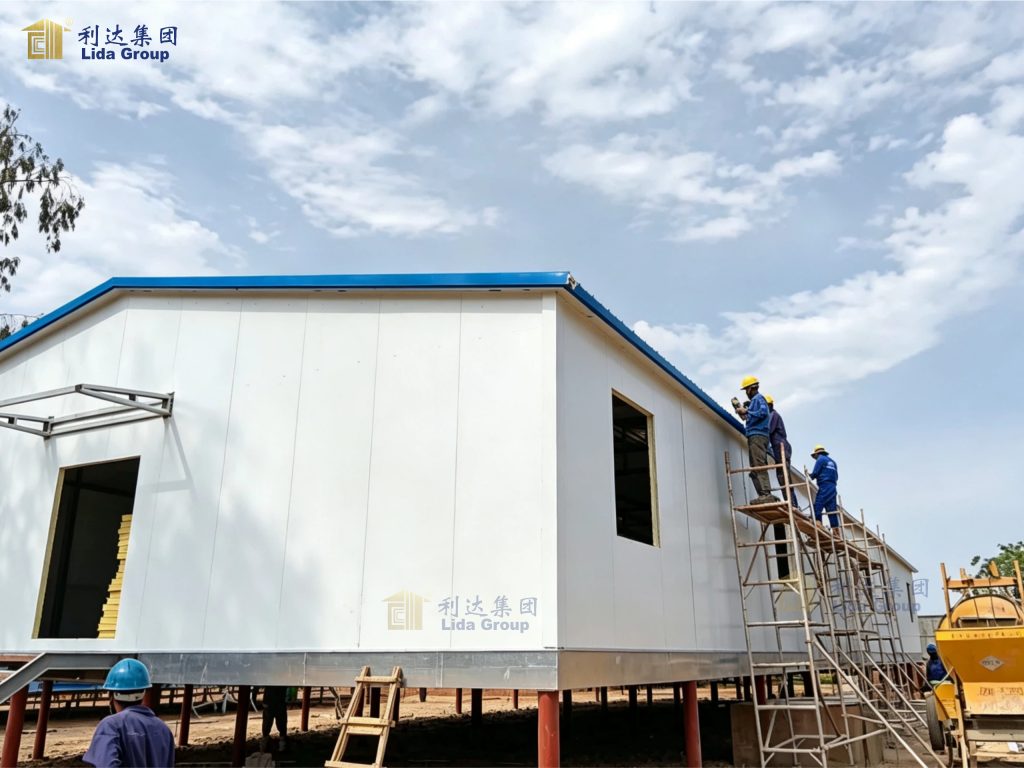
The core revolutionary advantage of Lida’s modular steel framing system lies in its digitally driven precision modular design and integrated structural optimization. Different from discrete component assembly in traditional prefab buildings, Lida’s system takes the entire building frame as a unified mechanical whole, adopting finite element structural simulation and BIM digital modeling to complete overall stress analysis and layout optimization in the early design stage. Every beam, column, and connecting node is calculated and customized according to architectural span, load-bearing requirements, and regional environmental parameters such as wind pressure and seismic intensity. All steel frame components are produced in automated factory production lines with millimeter-level precision, completely eliminating dimensional deviations caused by manual cutting and welding on construction sites. The standardized bolted connection structure replaces traditional on-site welding, ensuring tight fitting of all joints, improving overall structural integrity, and effectively avoiding structural deformation and loose connection problems that plague ordinary prefab steel buildings.
In terms of material performance and durability optimization, Lida Group’s innovative steel framing system achieves a qualitative leap compared with conventional prefab structures. The system adopts high-strength hot-dip galvanized steel as the base material, which features excellent tensile strength, structural stability, and temperature resistance. Compared with ordinary thin-walled steel frames, the optimized material formula and structural section design greatly enhance load-bearing capacity and structural rigidity while maintaining lightweight advantages. The overall building weight is effectively reduced, lowering foundation construction requirements and project comprehensive costs without sacrificing safety performance. All steel components undergo multi-layer anti-corrosion, rust-proof, and weather-resistant treatments, resisting oxidation, humid erosion, and long-term outdoor ultraviolet aging. This enables the modular steel frame to maintain stable structural performance in high-temperature, rainy, dry, and cold environments, supporting long-term permanent building use and completely changing the industry stereotype that prefab structures can only be used for temporary buildings.
Lida’s modular steel framing system fundamentally improves construction efficiency and project controllability, bringing disruptive changes to traditional construction workflows. Traditional building projects require step-by-step sequential construction, with each process waiting for the previous stage to be completed and cured, resulting in long cycles and frequent delays due to weather and human factors. In contrast, Lida’s off-site modular manufacturing mode realizes parallel operation of factory component production and on-site foundation construction. While the factory completes standardized steel frame processing, pre-assembly, and quality inspection, the on-site team can simultaneously carry out site leveling, foundation pouring, and pipeline pre-burial work. This parallel working mode shortens the overall project cycle by nearly 40% compared with traditional construction methods. After components are transported to the site, the whole building can be quickly assembled through simple hoisting and bolting, with no extensive wet work or long curing cycles required. The whole construction process is efficient, orderly, and minimally affected by external environments, greatly improving project schedule stability and delivery efficiency.
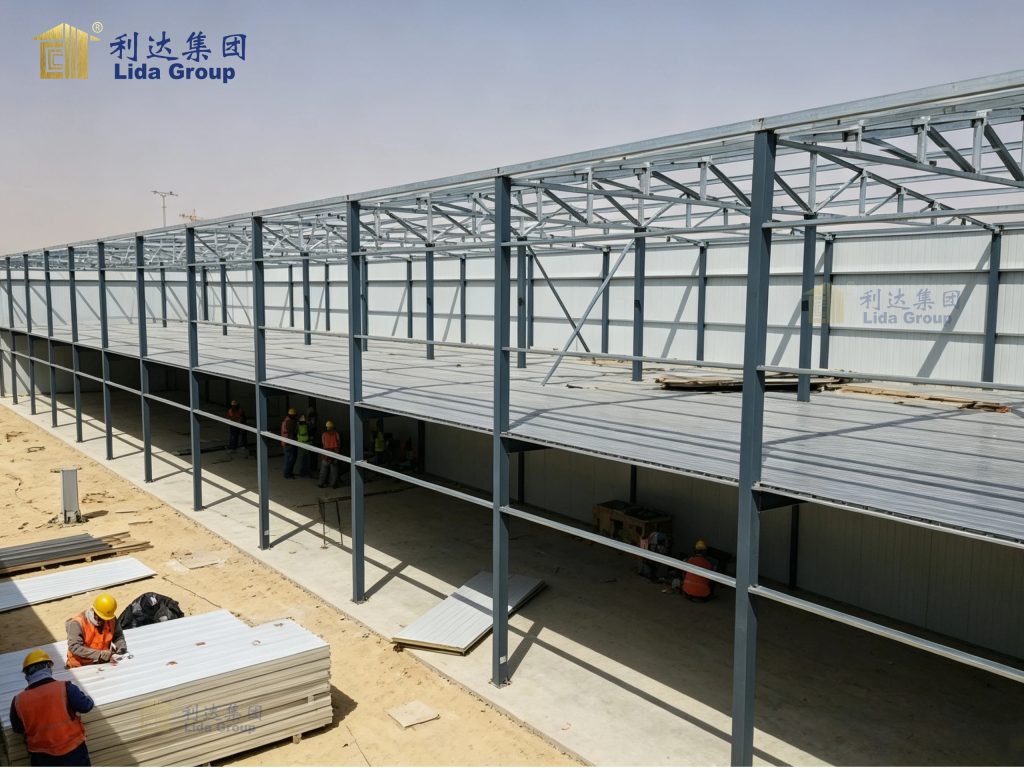
Beyond efficiency and safety upgrades, the innovative steel framing system breaks the design limitations of traditional prefab buildings and realizes flexible architectural customization. Traditional prefab modules are restricted by fixed specifications, resulting in monotonous building shapes and single internal space layouts, unable to meet the diverse aesthetic and functional needs of modern architecture. Lida’s modular steel frame adopts a flexible unit combination logic, supporting free splicing, layered stacking, and personalized spatial adjustment. It can adapt to diversified project types including high-end residential apartments, commercial office buildings, community hospitals, school buildings, industrial warehouses, and field camps. The large-span and low-column-density frame design maximizes indoor usable space, facilitates flexible partitioning of functional areas, and reserves sufficient space for later interior decoration and equipment upgrading. Whether for standardized batch construction or personalized customized projects, the system can achieve a perfect balance of architectural aesthetics, functional practicality, and structural safety.
Sustainable green construction is another core revolutionary highlight of Lida Group’s modular steel framing system. The precise factory prefabrication mode greatly reduces material cutting errors and construction waste, achieving nearly zero on-site construction garbage compared with traditional cast-in-place construction. The all-steel frame structure is 100% recyclable and reusable. After the end of a project cycle, building components can be disassembled, transported, and reassembled for secondary use in other projects, effectively reducing resource consumption and carbon emissions. Meanwhile, the optimized frame structure cooperates with high-performance insulated enclosure panels to form an airtight and energy-efficient building envelope, reducing indoor temperature exchange and long-term operation energy consumption. The entire construction process produces less dust, noise, and sewage pollution, meeting the global green building and low-carbon development standards, and providing a sustainable development path for the construction industry.
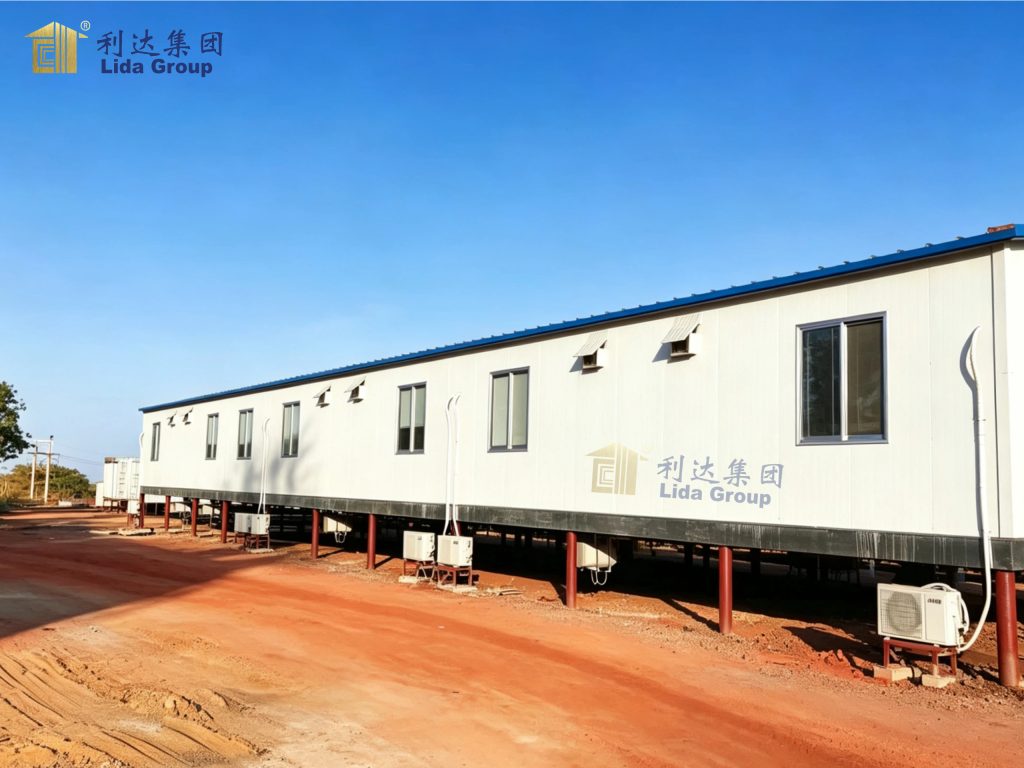
With its comprehensive performance advantages, Lida Group’s innovative modular steel framing system has achieved wide market verification and industrial promotion. In numerous domestic and international construction projects, the system has demonstrated outstanding stability, adaptability, and cost-effectiveness. It not only solves the quality and efficiency pain points of traditional prefab construction but also expands the application scenarios of modular buildings from temporary facilities to high-standard permanent buildings. For developers and engineering contractors, the system reduces comprehensive project costs, shortens investment recovery cycles, and improves project quality and market competitiveness. For end users, the optimized structural safety, living comfort, and aesthetic design greatly upgrade the overall building experience, promoting the market recognition and industry status of prefabricated steel structures.
Conclusion
In conclusion, Lida Group’s innovative modular steel framing system represents a landmark technological revolution in the prefab construction industry. By optimizing structural design, upgrading manufacturing technology, breaking spatial limitations, and realizing green low-carbon construction, the system thoroughly subverts the backward mode and low-quality impression of traditional prefab buildings. It integrates high structural safety, flexible design adaptability, ultra-high construction efficiency, and sustainable environmental protection performance into one standardized building solution, effectively solving various bottlenecks restricting the development of the prefabricated construction industry. As the global construction industry accelerates its transformation toward modularization, digitization, and greening, Lida Group’s advanced steel framing technology will continue to lead the iterative upgrading of the industry. It provides reliable, efficient, and high-quality building solutions for diverse construction scenarios worldwide, injects strong innovative vitality into the modernization of the global construction industry, and promotes the high-quality and sustainable development of prefabricated architecture.
Related news
-
Prefabricated Steel Components Speed up Construction of New Community Hospital, Allowing Medical Services to Start Months Earlier Than Traditional Methods
2026-09-10 16:29:58
-
Lida Group breaks ground on new steel structure production facility to mass produce modular building components for high-rise apartment construction.
2026-09-04 17:12:58
-
Researchers design prefab mobile house made with lightweight metal frame and assembled off-site at Lida Group using insulated composite sandwich wall panels
2026-09-02 17:49:37
contact us
- Tel: +86-532-88966982
- Whatsapp: +86-13793209022
- E-mail: sales@lidajituan.com
