



Lida Group Launches Mobile Modular Container Dormitory for Remote Workforce Housing
2026-Apr-24 13:34:02
By Admin
In the global landscape of remote infrastructure development, from mountainous mining sites and remote construction projects to rural agricultural hubs and disaster relief zones, the housing needs of the remote workforce have long been a pressing challenge. Traditional temporary housing solutions—such as makeshift tents, prefabricated shacks, or brick-and-mortar dormitories—often fall short in meeting the basic requirements of safety, comfort, mobility, and sustainability. These options are either too flimsy to withstand harsh remote environments, too time-consuming and costly to construct, or too inflexible to adapt to the dynamic needs of mobile workforces. Recognizing this critical gap, Lida Group, a global leader in integrated metal building solutions with over three decades of expertise, has officially launched its Mobile Modular Container Dormitory—a game-changing housing solution designed specifically to address the unique needs of remote workers worldwide.
This innovative product combines Lida Group’s proven excellence in modular construction, sustainable materials, and customer-centric design to deliver a housing solution that is mobile, durable, comfortable, eco-friendly, and cost-effective. Unlike conventional temporary housing, Lida’s Mobile Modular Container Dormitory is designed for easy transportation, rapid assembly, and flexible configuration, making it ideal for remote work sites where accessibility is limited, construction time is critical, and workforce needs are constantly evolving. By launching this product, Lida Group aims to redefine remote workforce housing, ensuring that workers in even the most isolated areas have access to safe, comfortable, and dignified living spaces while supporting businesses and organizations in optimizing operational efficiency and reducing environmental impact.
This article explores the full scope of Lida Group’s Mobile Modular Container Dormitory, including its core features, technological innovations, design highlights, global application cases, production and construction processes, sustainability credentials, and market impact. We also delve into why this launch is a significant milestone for both Lida Group and the remote workforce housing industry, and how it addresses the long-standing challenges faced by remote workers and their employers. By the end of this article, readers will gain a comprehensive understanding of Lida’s latest innovation and why it is set to become the preferred housing solution for remote workforces across industries and regions.
1. Lida Group: A Legacy of Excellence in Modular and Sustainable Construction
To fully appreciate the significance of Lida Group’s new Mobile Modular Container Dormitory, it is essential to understand the company’s decades-long commitment to excellence, innovation, and sustainability in the construction industry. Founded in 1993, Lida Group has evolved from a regional construction materials manufacturer to a global integrated solution provider specializing in high-quality metal frame structures, modular buildings, and sustainable construction technologies. With over 32 years of experience, the company has completed more than 10,000 projects in 152 countries and regions, spanning Asia, Europe, Africa, North America, and South America.
Lida Group’s core expertise lies in modular construction—a technology that has been the cornerstone of its success in delivering efficient, high-quality building solutions. The company’s prior experience in metal frame farmhouses, warehouses, commercial buildings, and residential homes has equipped it with the technical know-how to develop innovative modular products that adapt to diverse environments and needs. With a strong focus on sustainability, Lida Group has long prioritized the use of recycled materials, energy-efficient designs, and eco-friendly production processes, aligning its operations with global “net-zero” carbon goals and green building standards.
The launch of the Mobile Modular Container Dormitory is a natural extension of Lida Group’s expertise and mission. Drawing on its experience in modular construction, metal frame engineering, and sustainable materials, the company has developed a product that addresses the specific pain points of remote workforce housing. Lida Group’s global presence—with branch offices and production bases in key markets such as Saudi Arabia, Dubai, Chile, Nigeria, Malaysia, and the United States—ensures that the new dormitory solution can be easily deployed and supported worldwide, regardless of geographic location or environmental conditions.
What sets Lida Group apart from competitors in the modular housing space is its unwavering commitment to quality, customer-centricity, and technological innovation. The company invests 8% of its annual revenue in research and development (R&D), ensuring that its products are at the forefront of industry advancements. With a 99.8% customer satisfaction rate over the past decade and 85% of clients returning for additional projects, Lida Group has built a reputation as a trusted partner for businesses, governments, and organizations seeking reliable, high-quality construction solutions.
2. Core Features of Lida’s Mobile Modular Container Dormitory: Designed for Remote Needs
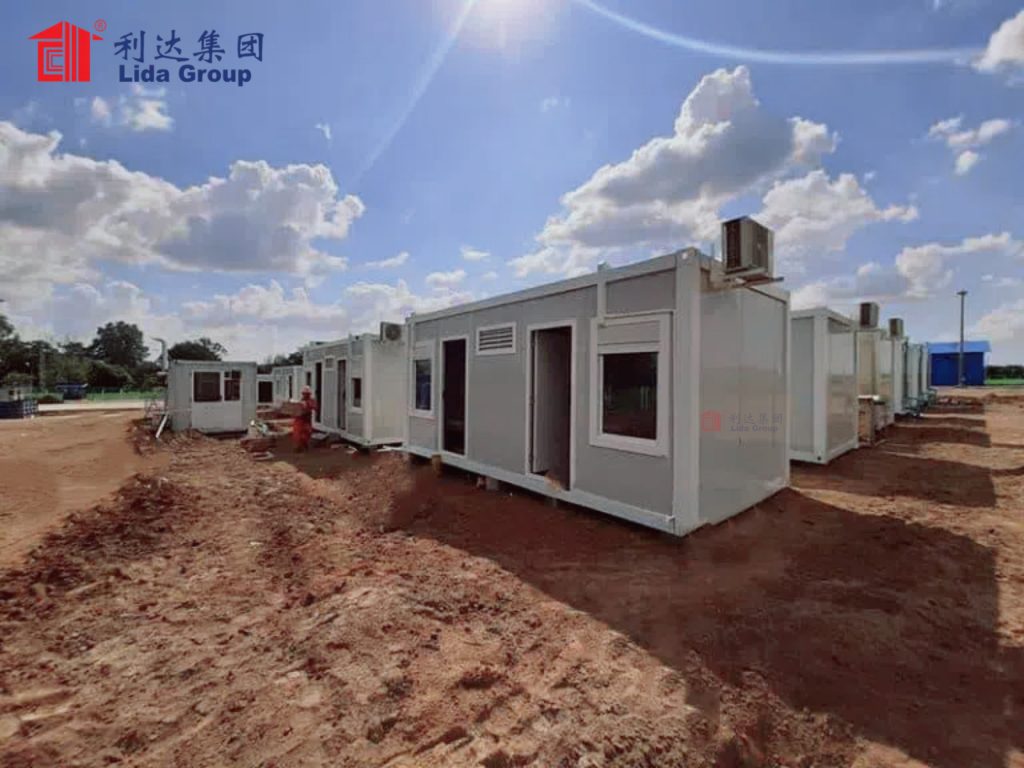
Lida Group’s Mobile Modular Container Dormitory is engineered to address the unique challenges of remote workforce housing, with a focus on mobility, durability, comfort, flexibility, and sustainability. Every feature of the dormitory is designed to meet the needs of both workers and employers, ensuring that living conditions are safe and comfortable while operational costs are minimized. Below are the key core features that make this product a game-changer in the remote housing industry.
2.1 Exceptional Mobility and Rapid Deployment
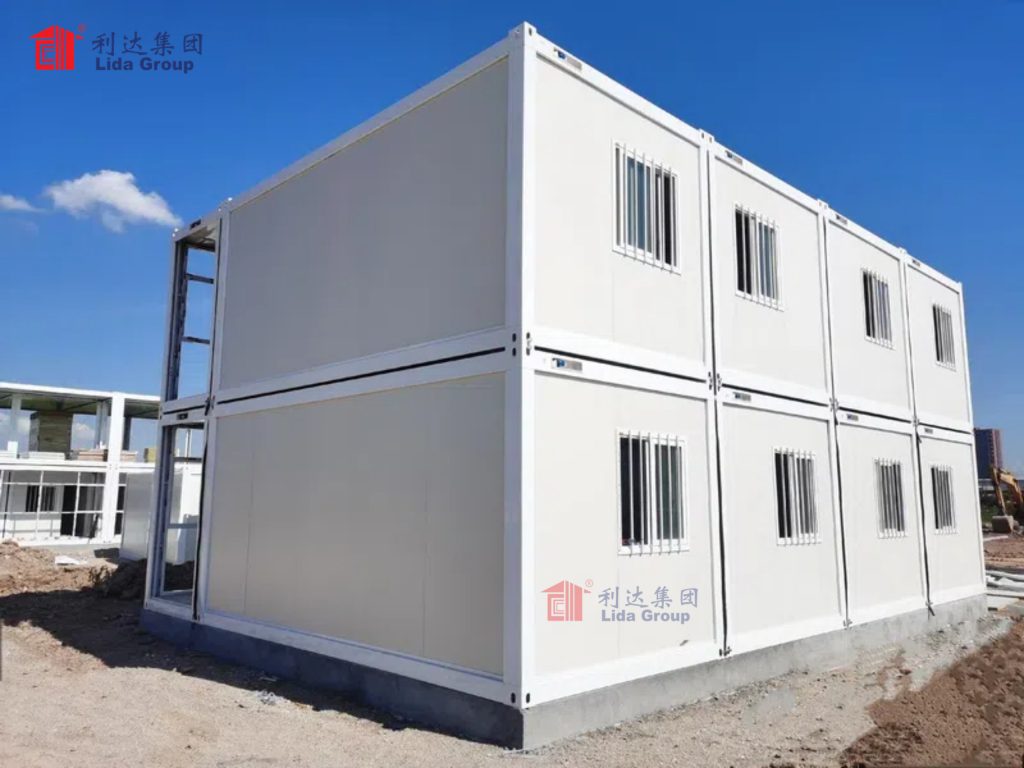
The most defining feature of Lida’s Mobile Modular Container Dormitory is its mobility. Unlike traditional temporary housing, which is often permanent or difficult to relocate, the dormitory is designed as a fully portable solution that can be easily transported to even the most remote locations. Each modular unit is built to standard container dimensions (20ft or 40ft), making it compatible with global shipping and transportation networks—including trucks, trains, and container ships. This compatibility ensures that the dormitories can be delivered to sites with limited accessibility, such as mountainous mining areas, remote construction zones, or rural agricultural hubs.
In addition to mobility, the dormitory boasts rapid deployment capabilities. Thanks to Lida’s advanced modular construction technology, a single 20ft dormitory unit can be assembled on-site in as little as 4 hours, while a larger complex of 10 units can be fully operational within 3 days. This is a stark contrast to traditional brick-and-mortar dormitories, which can take weeks or even months to construct. The rapid deployment not only reduces downtime for businesses but also ensures that remote workers have access to safe housing as soon as they arrive on-site.
The dormitory’s mobility also allows for reusability. When a remote project is completed, the modular units can be disassembled, transported to a new site, and reassembled—reducing waste and maximizing the return on investment for employers. This reusability is a key advantage over traditional temporary housing, which is often discarded after use, contributing to environmental waste.
2.2 Superior Durability and Weather Resistance
Remote work sites are often characterized by harsh environmental conditions—extreme temperatures, heavy rainfall, strong winds, earthquakes, and high humidity. Lida’s Mobile Modular Container Dormitory is built to withstand these challenges, ensuring long-term durability and safety for occupants. The core structure of each unit is made from high-strength recycled steel (Q355 grade), which offers exceptional strength, ductility, and corrosion resistance. This steel frame is treated with a hot-dip galvanization coating and an eco-friendly anti-rust paint, ensuring that the dormitory can withstand salt spray, high humidity, and extreme temperatures without corroding or deteriorating.
The dormitory is also designed to meet international safety standards for weather resistance. It has a wind resistance rating of up to 150 mph (240 km/h), making it suitable for use in hurricane-prone regions, and an earthquake resistance rating of 8 degrees, ensuring safety in seismic-prone areas such as mountainous mining sites. The roof is equipped with high-performance waterproof membranes and insulation materials, preventing leaks and ensuring that the interior remains dry even in heavy rainfall or snowfall.
In addition to weather resistance, the dormitory’s steel frame is fire-resistant, meeting international fire safety standards. The interior materials—including wall panels, flooring, and furniture—are non-toxic and fire-retardant, reducing the risk of fire and ensuring the safety of occupants in the event of an emergency.
2.3 Comfortable and Human-Centric Design
Lida Group recognizes that comfortable living conditions are essential for remote workers’ well-being, productivity, and retention. As such, the Mobile Modular Container Dormitory is designed with a human-centric approach, incorporating features that ensure a comfortable and dignified living experience. Each unit is spacious and well-ventilated, with optimized space utilization to maximize living area.
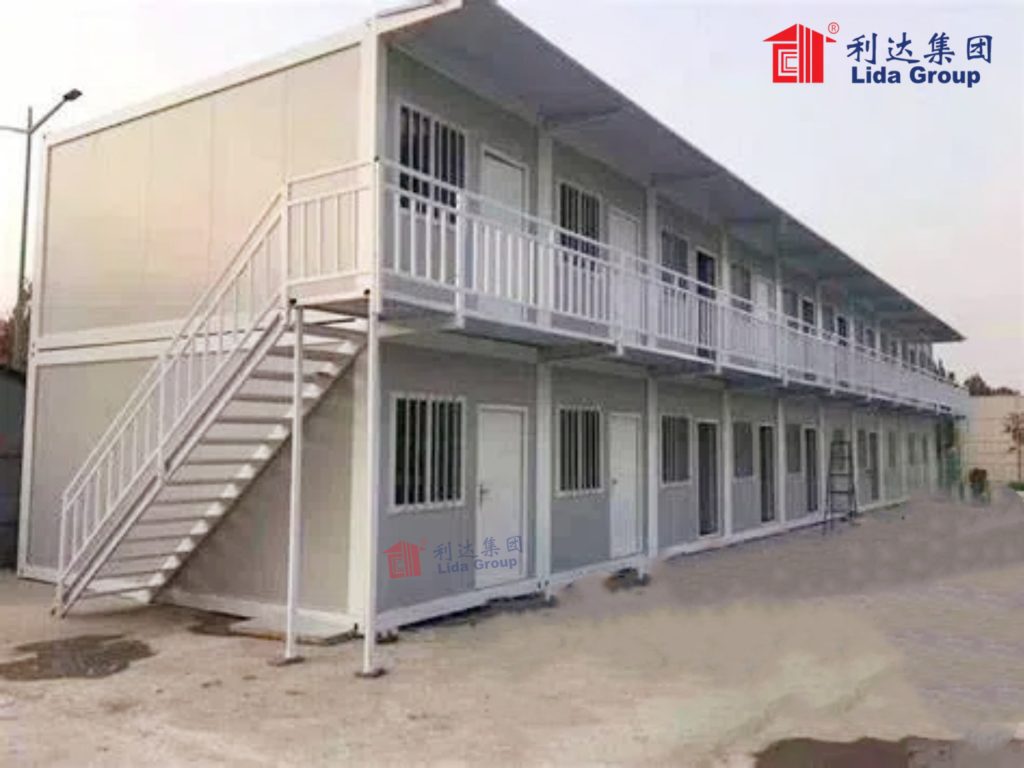
The dormitory units are available in multiple configurations to meet different needs: single-person rooms, double rooms, and quadruple rooms. Each room is equipped with comfortable beds, built-in storage cabinets, a small desk, and a chair—providing workers with a private space to rest, work, and store personal belongings. The rooms also feature large windows that allow natural light to enter, reducing the need for artificial lighting and improving mood and well-being.
To ensure year-round comfort, the dormitory is equipped with a high-efficiency HVAC (Heating, Ventilation, and Air Conditioning) system, which can adjust to extreme temperatures—keeping the interior cool in hot climates (up to 45°C) and warm in cold environments (down to -30°C). The walls and roof are insulated with high-density rock wool panels (thermal conductivity ≤0.04W/(m·K)), which provide superior thermal insulation, reducing energy consumption and ensuring a stable indoor temperature.
The dormitory also includes shared facilities such as clean, modern bathrooms with hot water supply, laundry rooms with washing machines, and communal living areas—creating a sense of community and improving the overall living experience for remote workers. These shared spaces are designed to be hygienic, spacious, and easy to maintain, ensuring that workers have access to all essential amenities.
2.4 Flexible Configuration and Scalability
Remote workforce needs are often dynamic, with the number of workers fluctuating based on project stages. Lida’s Mobile Modular Container Dormitory is designed with flexibility and scalability in mind, allowing employers to easily adjust the number of units based on their changing needs. The modular units can be quickly added, removed, or reconfigured to create larger dormitory complexes or smaller, more compact housing solutions.
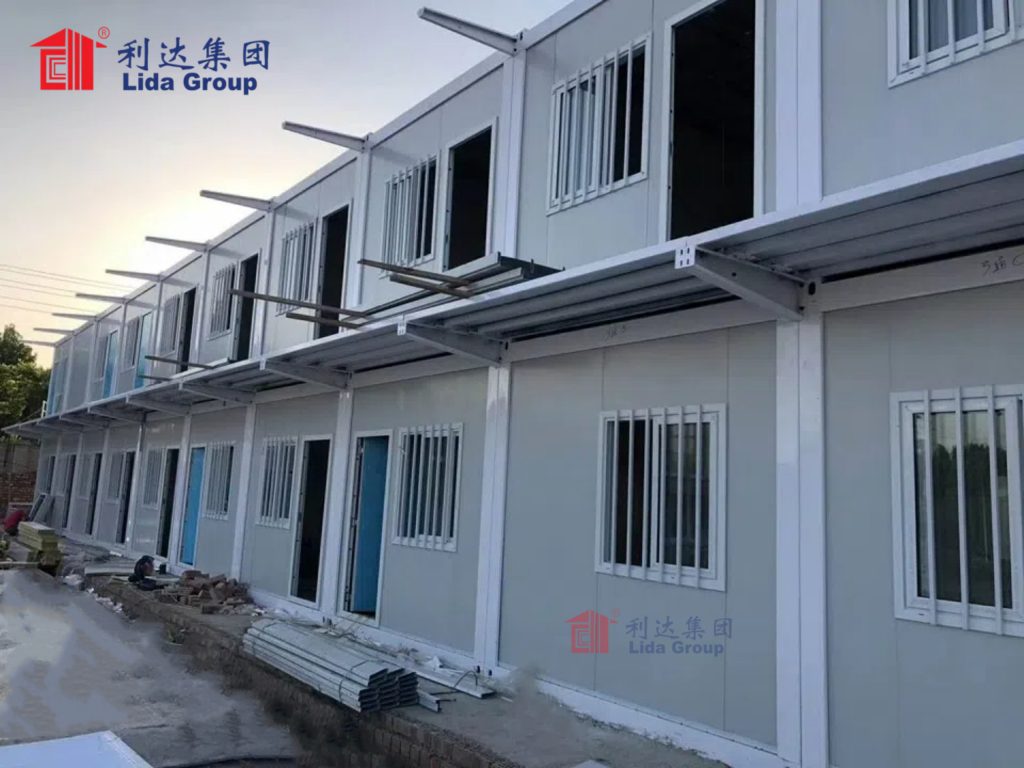
The units are connected using high-strength bolts, eliminating the need for complex on-site welding and allowing for easy assembly and disassembly. This flexibility also extends to the interior layout—rooms can be reconfigured to serve different purposes, such as offices, medical rooms, or storage spaces, depending on the project’s needs. For example, a dormitory unit can be converted into a first-aid room for remote worksites that require on-site medical support.
In addition to scalability, the dormitory can be customized to meet specific regional or industry needs. For example, in mining sites, units can be equipped with dust-proof ventilation systems and reinforced flooring to withstand heavy equipment. In agricultural hubs, units can be designed with additional storage space for tools and equipment. This customization ensures that the dormitory is tailored to the unique needs of each remote work site.
2.5 Sustainable and Eco-Friendly Design
Sustainability is a core value of Lida Group, and the Mobile Modular Container Dormitory is designed to minimize environmental impact while maximizing energy efficiency. The dormitory is built using 90% recycled steel, reducing the demand for virgin steel and lowering carbon emissions. The use of recycled materials also reduces waste and conserves natural resources, aligning with global “net-zero” carbon goals.
The dormitory’s energy-efficient design further reduces its environmental footprint. The high-performance insulation, energy-efficient HVAC system, and LED lighting reduce energy consumption by up to 60% compared to traditional temporary housing. Additionally, Lida offers optional renewable energy integration, such as solar PV panels and wind turbines, allowing the dormitory to operate off-grid in remote areas with limited access to electricity. This not only reduces reliance on fossil fuels but also lowers operational costs for employers.
The dormitory also features a rainwater collection system, which captures and filters rainwater for non-potable use (such as cleaning and irrigation), reducing reliance on scarce water resources in remote areas. The interior materials are non-toxic, pollution-free, and recyclable, ensuring that the dormitory is safe for both occupants and the environment. Even at the end of its service life, the modular units can be disassembled and recycled, further reducing waste.
3. Technological Innovations: Driving Efficiency and Quality
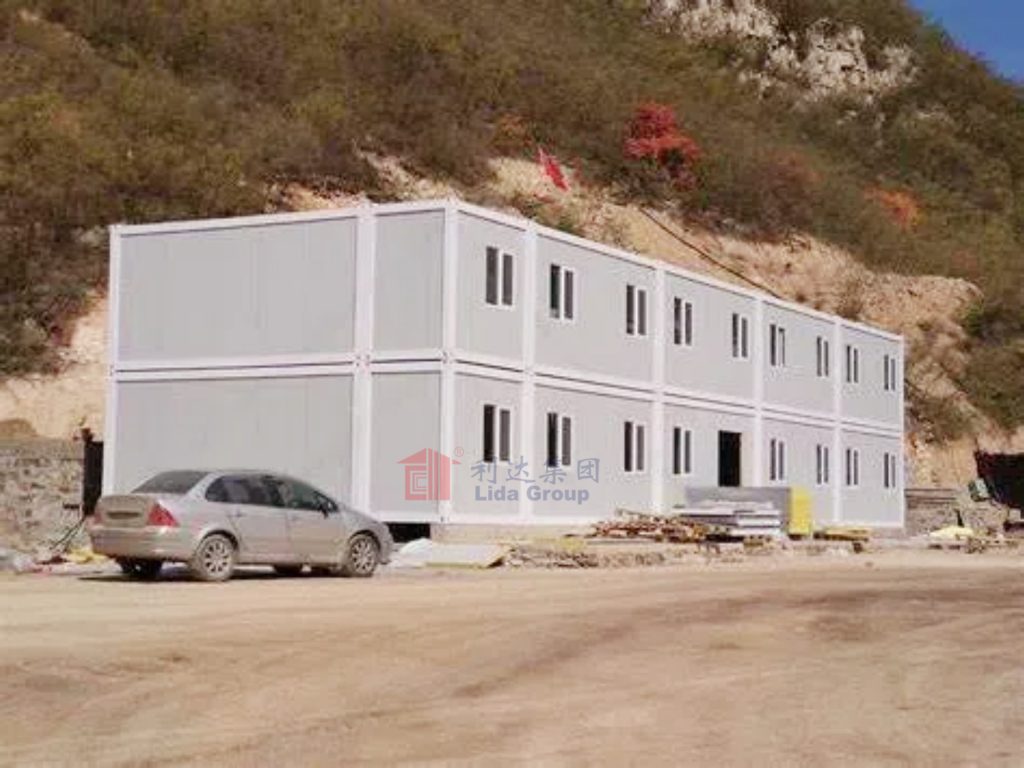
Lida Group’s Mobile Modular Container Dormitory is backed by advanced technological innovations that set it apart from traditional temporary housing solutions. The company’s investment in R&D has led to the integration of cutting-edge technologies in design, production, and construction, ensuring that the dormitory is efficient, high-quality, and future-proof.
3.1 MiC (Modular Integrated Construction) Technology
Lida Group has adopted MiC (Modular Integrated Construction) technology for the production of its Mobile Modular Container Dormitory—an advanced construction method that involves manufacturing entire building modules in a controlled factory environment before transporting them to the site for assembly. This technology ensures consistent quality, reduces construction time, and minimizes on-site waste.
Each dormitory module is fully finished in the factory, including all interior fittings, electrical systems, plumbing, and HVAC. This means that once the modules arrive on-site, they only need to be connected and commissioned—eliminating the need for extensive on-site construction work. MiC technology also allows for precise quality control, as each module is inspected in the factory before delivery, ensuring that it meets Lida’s strict quality standards. This is a significant advantage over traditional on-site construction, which is often subject to weather delays, human error, and quality inconsistencies.
Drawing on the success of MiC projects globally—such as the青岛光电产业园人才公寓项目 (Qingdao Optoelectronic Industrial Park Talent Apartment Project), which used 724 MiC boxes with an assembly rate of over 70%—Lida has optimized its MiC technology for remote environments, ensuring that the dormitory modules are lightweight, durable, and easy to transport and assemble.
3.2 Digitalization and Intelligent Design
Lida Group uses AI-driven design software and BIM (Building Information Modeling) 4.0 technology to optimize the design of the Mobile Modular Container Dormitory. BIM technology creates a 3D model of the dormitory that integrates all design, production, and construction data, allowing the design team to simulate the performance of the modules under various environmental conditions—such as extreme temperatures, strong winds, and seismic activity. This simulation helps identify potential weak points and optimize the design before production begins, ensuring that the dormitory is safe and durable.
AI-driven design software also allows Lida to customize the dormitory to meet specific client needs quickly. The software generates multiple design schemes based on factors such as the number of workers, climate conditions, and budget, selecting the optimal solution that balances quality, functionality, and cost. This digitalization also enables seamless collaboration between the design, production, and construction teams, reducing errors and ensuring that every module fits perfectly during assembly.
Additionally, the dormitory can be equipped with intelligent monitoring systems, which use IoT (Internet of Things) sensors to track temperature, humidity, air quality, and energy consumption. These sensors provide real-time data to facility managers, allowing them to optimize energy use, maintain comfortable living conditions, and identify potential issues before they become costly problems. The intelligent monitoring system also enhances safety by detecting fire, gas leaks, or structural issues and alerting managers immediately.
3.3 Precision Production and Quality Control
Lida Group’s state-of-the-art production facilities—including a 30,000-square-meter factory dedicated to modular construction—are equipped with advanced automated equipment, such as CNC cutting machines, automatic welding robots, and precision testing equipment. These machines ensure that each dormitory module is manufactured to exact specifications, with a tolerance of less than 0.5mm—far below industry standards. This precision ensures that modules fit together seamlessly during assembly, reducing the need for on-site adjustments and improving the overall quality and durability of the dormitory.
The company’s quality control system is certified to ISO 9001, the international standard for quality management, and includes a three-level testing process. The first level of testing occurs at the material stage: all steel and auxiliary materials are inspected upon arrival at the factory, with samples sent to third-party testing institutions (such as SGS, TUV, and BV) for verification. Any materials that do not meet the required standards are rejected immediately.
The second level of testing occurs during production: each module is inspected at every stage of manufacturing, from steel cutting and welding to interior fitting and electrical installation. Welding quality is inspected using non-destructive testing methods, and every module is labeled with a unique identifier for traceability. The third level of testing occurs before delivery: each module is fully assembled in the factory, tested for functionality, and inspected for quality before being shipped to the site. This rigorous quality control ensures that every dormitory module meets the highest international standards.
4. Design Highlights: Tailored to Remote Workforce Needs
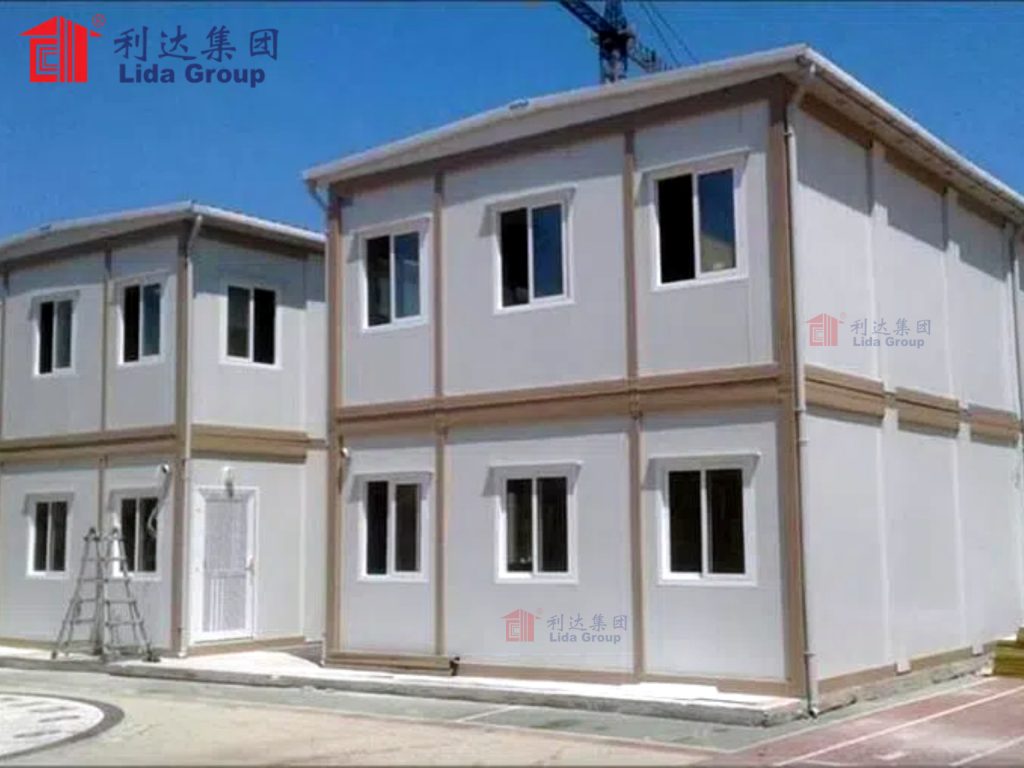
Lida Group’s Mobile Modular Container Dormitory is not just a functional housing solution—it is designed to address the unique needs and challenges of remote workers. The design incorporates several key highlights that enhance comfort, safety, and convenience, ensuring that workers can thrive in even the most isolated environments.
4.1 Ergonomic Space Design
The dormitory’s interior is designed with ergonomics in mind, maximizing space utilization while ensuring comfort. Each room is carefully laid out to provide ample space for movement, with built-in furniture that is both functional and comfortable. For example, the beds are designed with ergonomic mattresses to reduce back pain, and the desks are positioned to provide optimal lighting and workspace. The storage cabinets are designed to maximize storage space while taking up minimal floor area, ensuring that workers have enough space to store personal belongings.
The communal areas are also designed to be spacious and comfortable, with seating areas, tables, and natural lighting. These areas provide workers with a space to relax, socialize, and connect with colleagues—reducing feelings of isolation and improving mental well-being. The shared bathrooms are designed to be hygienic and efficient, with multiple shower stalls and sinks to minimize waiting times.
4.2 Adaptation to Extreme Environments
Remote work sites often have extreme environmental conditions, and Lida’s dormitory is designed to adapt to these challenges. In hot and humid regions (such as Nigeria or Southeast Asia), the dormitory is equipped with enhanced ventilation systems, anti-corrosion coatings, and heat-resistant insulation to keep the interior cool and dry. In cold regions (such as remote areas of Chile or Canada), the dormitory features thick thermal insulation, radiant heating systems, and wind-resistant windows to ensure indoor comfort.
In high-altitude regions (such as mountainous mining sites), the dormitory is designed to handle low oxygen levels, with optional oxygen supply systems and air purification systems to ensure the health and safety of occupants. In dusty environments (such as construction sites or mining areas), the dormitory is equipped with dust-proof ventilation systems and air filters to keep the interior clean and free of dust.
4.3 Essential Amenities and Services
Lida’s Mobile Modular Container Dormitory is equipped with all essential amenities to ensure that remote workers have a comfortable and convenient living experience. Each unit includes:
-
High-efficiency HVAC system for year-round comfort
-
LED lighting with energy-saving features
-
Built-in electrical outlets and USB charging ports
-
Hot water supply for showers and sinks
-
Water purification system for safe drinking water
-
Fire safety equipment (fire extinguishers, smoke detectors, emergency lighting)
-
First-aid kit and emergency contact systems
For larger dormitory complexes, Lida also offers optional amenities such as a communal kitchen, dining area, fitness room, and medical room—providing workers with access to all the services they need to maintain a healthy and balanced lifestyle.
4.4 Accessibility and Inclusivity
Lida Group is committed to creating inclusive housing solutions, and the Mobile Modular Container Dormitory is designed to be accessible to workers with disabilities. The dormitory includes ramps for wheelchair access, wide doorways, and accessible bathrooms with grab bars and non-slip flooring. The interior is designed to be easy to navigate, with clear signage and adequate lighting, ensuring that all workers—regardless of ability—can live comfortably and safely.
5. Global Application Cases: Proving the Value of Lida’s Dormitory Solution
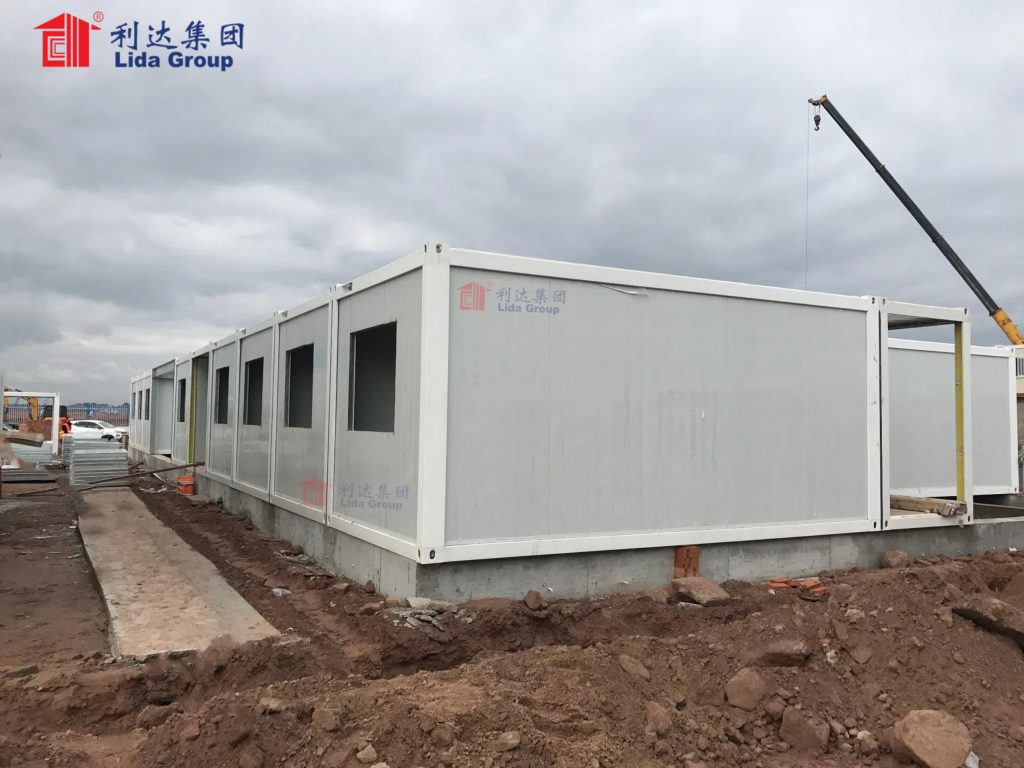
To demonstrate the effectiveness and versatility of its Mobile Modular Container Dormitory, Lida Group has already deployed the product in several remote work sites worldwide. These case studies highlight how the dormitory has addressed the unique challenges of remote workforce housing, delivering value to both workers and employers.
5.1 Case Study 1: Mining Site Dormitories in Western China
A major mining company in Western China faced significant challenges in providing housing for its remote workforce. The mining site was located in a mountainous region with harsh weather conditions—extreme cold in winter (down to -25°C) and strong winds, as well as limited accessibility. Traditional temporary housing was too flimsy to withstand the weather, and construction of brick-and-mortar dormitories was time-consuming and costly.
The company partnered with Lida Group to deploy 80 Mobile Modular Container Dormitory units, capable of housing 320 workers. The dormitories were designed with thick thermal insulation, radiant heating systems, and wind-resistant structures to withstand the harsh mountain conditions. The units were transported to the site using trucks, and the entire complex was assembled in just 10 days—significantly faster than traditional construction.
The dormitories included single and double rooms, shared bathrooms with hot water, a communal kitchen, and a medical room. The intelligent monitoring system allowed the mining company to track energy consumption and maintain comfortable living conditions. After six months of use, the company reported a 40% reduction in energy costs and a 25% improvement in worker retention. Workers reported higher satisfaction with their living conditions, citing the comfort, safety, and convenience of the dormitories.
5.2 Case Study 2: Construction Site Dormitories in Nigeria
A construction company in Nigeria was working on a remote highway project in a hot and humid region, where temperatures often exceed 40°C. The company needed a housing solution that could be quickly deployed, withstand the high humidity and heat, and provide comfortable living conditions for 150 workers. Traditional temporary housing was prone to mold and corrosion, and workers often complained about poor ventilation and uncomfortable temperatures.
Lida Group provided 40 Mobile Modular Container Dormitory units, customized for the hot and humid climate. The units were equipped with enhanced ventilation systems, heat-resistant insulation, and anti-corrosion coatings to prevent mold and deterioration. The dormitories also included solar PV panels to provide off-grid electricity, as the remote site had limited access to the grid.
The dormitories were assembled in just 5 days, and workers moved in immediately. The solar PV system reduced the company’s reliance on diesel generators, cutting energy costs by 50%. The enhanced ventilation and HVAC system kept the interior cool and dry, reducing worker complaints and improving productivity. The company also noted that the dormitories’ mobility allowed them to relocate the units as the construction project progressed, maximizing efficiency and reducing waste.
5.3 Case Study 3: Green Dormitories for Agricultural Workers in Germany
A German agricultural cooperative needed housing for seasonal workers in a remote rural area, with a focus on sustainability and environmental friendliness. The cooperative wanted a solution that would minimize carbon emissions, use eco-friendly materials, and provide comfortable living conditions for 80 workers.
Lida Group deployed 20 Mobile Modular Container Dormitory units, built with 95% recycled steel and equipped with solar PV panels, rainwater collection systems, and energy-efficient HVAC. The dormitories were designed to be carbon-neutral, with the solar PV system generating enough electricity to power the units and the rainwater collection system providing water for non-potable use.
The dormitories were certified as green buildings by the German Green Building Council, meeting the country’s strict environmental standards. The cooperative reported a 60% reduction in carbon emissions compared to traditional temporary housing, and workers praised the comfortable living conditions and eco-friendly design. The dormitories’ modular design also allowed the cooperative to add units during peak seasons and remove them during off-peak periods, optimizing resource use.
5.4 Case Study 4: Disaster Relief Dormitories in Chile
In 2025, a major earthquake struck a remote region of Chile, displacing thousands of people and destroying local housing. A Chilean NGO partnered with Lida Group to deploy 50 Mobile Modular Container Dormitories as temporary housing for disaster victims and relief workers. The dormitories needed to be quickly deployed, withstand aftershocks, and provide safe and comfortable living conditions.
Lida Group delivered the dormitory units within 72 hours of the earthquake, and the entire complex was assembled in just 3 days. The units were designed with 8-degree earthquake resistance, ensuring safety during aftershocks. Each unit was equipped with basic amenities, including beds, storage, and a small kitchenette, providing disaster victims with a dignified place to live while their homes were rebuilt.
The dormitories’ mobility allowed them to be relocated to different areas as relief efforts progressed, and their durability ensured that they could be reused for future disaster relief efforts. The NGO reported that the dormitories significantly improved the living conditions of disaster victims, reducing the risk of disease and improving mental well-being.
6. Production, Construction, and After-Sales Support
Lida Group’s commitment to quality and customer satisfaction extends beyond the design and production of the Mobile Modular Container Dormitory. The company provides comprehensive services throughout the entire project lifecycle—from production and transportation to construction and after-sales support—ensuring that clients receive a seamless and hassle-free experience.
6.1 Efficient Production and Global Logistics
Lida Group’s state-of-the-art production facilities enable mass production of dormitory modules, ensuring that clients receive their orders in a timely manner. The company’s global logistics network—with warehouses and transportation partners in 152 countries—ensures that modules can be delivered to even the most remote sites. For sites with difficult accessibility, Lida uses lightweight modular units that can be transported using small trucks or even helicopters, reducing transportation costs and ensuring timely delivery.
The production process is also optimized for efficiency, with automated equipment reducing production time by 40% compared to traditional manufacturing methods. This efficiency allows Lida to offer competitive pricing without compromising on quality, making the dormitory solution accessible to businesses of all sizes.
6.2 Professional On-Site Construction
Lida Group provides a professional on-site construction team to assemble the dormitory modules, ensuring that the process is safe, efficient, and of the highest quality. The team consists of experienced workers who are proficient in modular assembly and have years of experience in remote construction. The team is trained to follow strict safety standards, minimizing the risk of accidents and ensuring that the construction process is completed on time.
The assembly process is designed to be efficient, with modules connected using high-strength bolts and pre-installed electrical and plumbing connections. A single team of 4 workers can assemble 5 dormitory units in a single day, ensuring that the entire complex is operational as quickly as possible. The team also minimizes environmental impact during construction by sorting and recycling waste on-site and using dust suppression systems to reduce air pollution.
6.3 Comprehensive After-Sales Support
Lida Group’s after-sales support services are designed to ensure that the Mobile Modular Container Dormitory remains in excellent condition for decades. The company provides a detailed maintenance manual that guides clients on regular inspections, maintenance, and troubleshooting. The manual includes step-by-step instructions on how to inspect the steel frame, check the HVAC system, and maintain renewable energy systems (if installed).
Lida also offers annual on-site inspection services, where a professional maintenance team visits the site to check the integrity of the modules, the performance of the systems, and any other components. If any issues are found, the team promptly carries out repairs—preventing small problems from becoming costly repairs. The company also offers 24/7 emergency support, ensuring that clients can access assistance at any time in the event of an emergency, such as severe weather damage or system failures.
To back its commitment to quality, Lida Group offers a comprehensive warranty: 50 years for the steel frame, 10 years for auxiliary materials (such as insulation panels and coatings), and 5 years for electrical and plumbing systems. This warranty ensures that clients are protected against any manufacturing or construction defects, giving them peace of mind that their investment is secure.
7. Market Impact and Future Prospects
The launch of Lida Group’s Mobile Modular Container Dormitory is set to have a significant impact on the remote workforce housing industry. By addressing the long-standing challenges of mobility, durability, comfort, and sustainability, the product fills a critical gap in the market and offers a superior alternative to traditional temporary housing solutions.
7.1 Market Impact
The remote workforce housing market is growing rapidly, driven by the expansion of remote infrastructure projects—such as mining, construction, and renewable energy—in isolated regions. According to industry reports, the global modular housing market is expected to grow at a CAGR of 8.5% between 2025 and 2030, with remote workforce housing being a key growth segment. Lida Group’s Mobile Modular Container Dormitory is well-positioned to capture a significant share of this market, thanks to its unique features, technological innovations, and global presence.
The product’s impact extends beyond the housing industry. By providing safe and comfortable living conditions for remote workers, Lida’s dormitory helps businesses improve worker retention, productivity, and safety—reducing costs associated with turnover, accidents, and poor living conditions. For governments and NGOs, the dormitory offers a cost-effective and sustainable solution for disaster relief, rural development, and workforce housing in remote regions.
Lida’s dormitory also contributes to global sustainability goals by reducing carbon emissions, minimizing waste, and promoting the use of recycled materials. As more businesses and organizations prioritize sustainability, the demand for eco-friendly remote housing solutions is expected to grow—further boosting the adoption of Lida’s product.
7.2 Future Prospects
Lida Group is committed to continuous innovation, and the Mobile Modular Container Dormitory is just the first step in its expansion into the remote workforce housing market. The company plans to invest further in R&D to enhance the product’s features, including:
-
Integration of more advanced intelligent systems, such as AI-powered energy management and smart security systems.
-
Development of lightweight, high-strength materials to further improve mobility and durability.
-
Expansion of customization options to meet the unique needs of different industries, such as offshore oil and gas, renewable energy, and forestry.
-
Partnerships with renewable energy companies to integrate more advanced off-grid energy solutions, such as hydrogen fuel cells.
Lida Group also plans to expand its global footprint, opening new production bases and branch offices in key markets such as Africa, Southeast Asia, and Latin America—regions with high demand for remote workforce housing. The company will also strengthen partnerships with governments, NGOs, and businesses to promote the adoption of its dormitory solution, particularly in developing countries where remote infrastructure development is growing rapidly.
With the global push for sustainable development and the increasing demand for remote workforce housing, Lida Group’s Mobile Modular Container Dormitory is poised to become a leading solution in the industry, transforming the way remote workers live and work.
8. Conclusion
Lida Group’s launch of the Mobile Modular Container Dormitory marks a significant milestone in the remote workforce housing industry, offering a solution that addresses the long-standing challenges of mobility, durability, comfort, and sustainability. Built on the company’s three decades of expertise in modular construction, sustainable materials, and technological innovation, this product redefines what is possible in remote housing—ensuring that workers in even the most isolated areas have access to safe, comfortable, and dignified living spaces.
The core features of the dormitory—exceptional mobility, superior durability, human-centric design, flexible configuration, and eco-friendly construction—make it a game-changer for businesses, governments, and NGOs seeking reliable remote housing solutions. The product’s advanced technologies, including MiC technology, digital design, and intelligent monitoring, ensure efficiency, quality, and future-proofing, while its global application cases demonstrate its versatility and effectiveness in diverse environments.
Lida Group’s comprehensive services—from production and construction to after-sales support—ensure that clients receive a seamless and hassle-free experience, while its commitment to quality and sustainability aligns with global goals and the evolving needs of the market. By launching this product, Lida Group is not only expanding its product portfolio but also making a meaningful contribution to improving the lives of remote workers worldwide.
As the global demand for remote workforce housing continues to grow, Lida Group’s Mobile Modular Container Dormitory is well-positioned to lead the industry, setting new standards for quality, efficiency, and sustainability. With ongoing innovation and a global presence, Lida Group is poised to transform the remote housing landscape, ensuring that no worker is left without safe and comfortable housing—regardless of how remote their work site may be.
In a world where remote work is becoming increasingly common, Lida Group’s Mobile Modular Container Dormitory is more than just a housing solution—it is a commitment to the well-being of remote workers, the efficiency of businesses, and the sustainability of our planet. By choosing Lida’s dormitory, organizations are not just investing in housing—they are investing in their workers, their operations, and a more sustainable future.
Related news
-
Why Choose Lida Group for High Quality Construction of Your Metal Frame Farmhouse?
2026-04-24 10:59:07
-
Sustainable Steel Structure Building Creates Long-Lasting Metal Frame Farmhouse by Lida Group
2026-04-24 10:36:32
-
Lida Group's Metal Frame Farmhouse: Where High Quality Construction Meets Affordability
2026-04-24 10:15:08
contact us
- Tel: +86-532-88966982
- Whatsapp: +86-13793209022
- E-mail: sales@lidajituan.com
