



Sustainable Steel Structure Building Creates Long-Lasting Metal Frame Farmhouse by Lida Group
2026-Apr-24 10:36:32
By Admin
In an era defined by global climate change, resource scarcity, and the urgent need for sustainable development, the construction industry is undergoing a profound transformation. Rural housing, as a cornerstone of rural communities and agricultural development, is no exception. Traditional rural farmhouses, often built with brick, concrete, or wood, face inherent limitations: they are resource-intensive, environmentally damaging, prone to deterioration, and have short service lives. These shortcomings not only burden rural families with frequent maintenance and reconstruction costs but also conflict with the global pursuit of carbon neutrality and ecological conservation. Against this backdrop, Lida Group, a global leader in integrated metal building solutions with over three decades of expertise, has emerged as a pioneer in redefining rural housing through sustainable steel structure technology. By leveraging the unique advantages of steel—recyclability, durability, and energy efficiency—Lida Group has successfully created metal frame farmhouses that are not only long-lasting and resilient but also environmentally friendly, proving that sustainable construction and long-term value can go hand in hand.
This article comprehensively explores how Lida Group’s sustainable steel structure buildings shape long-lasting metal frame farmhouses. It delves into the core principles of sustainable steel structure technology, the key features that make Lida’s metal frame farmhouses both sustainable and durable, the company’s systematic approach to design, production, and construction, global case studies that validate the effectiveness of these farmhouses, technological innovations driving sustainability and longevity, and the future prospects of this transformative housing solution. With a focus on accuracy, depth, and coherence, this article aims to provide a holistic understanding of how Lida Group is revolutionizing rural housing through sustainable steel structure building, delivering homes that benefit rural families, the environment, and future generations.
1. Overview of Lida Group: A Pioneer in Sustainable Steel Structure Construction
Founded in 1993, Lida Group has evolved from a regional construction materials manufacturer to a global integrated solution provider specializing in sustainable steel structure buildings. Headquartered in China, the group operates in 152 countries and regions across Asia, Europe, Africa, North America, and South America, with branch offices and production bases in key markets such as Saudi Arabia, Dubai, Chile, Nigeria, Malaysia, and the United States. This global footprint is a testament to Lida Group’s ability to adapt its sustainable steel structure solutions to diverse climatic, cultural, and economic conditions—especially critical when creating long-lasting metal frame farmhouses for rural communities worldwide.
At the core of Lida Group’s mission is a commitment to sustainability and quality. The company has long recognized that sustainable construction is not just an environmental responsibility but also a pathway to creating long-lasting, cost-effective buildings. To this end, Lida Group has invested heavily in research and development (R&D), allocating 8% of its annual revenue to developing advanced sustainable steel structure technologies. The group boasts state-of-the-art manufacturing facilities, including a 30,000-square-meter factory dedicated to steel component production, equipped with advanced CNC cutting machines, automatic welding robots, and precision testing equipment. These facilities enable the mass production of high-precision steel components that meet international quality and environmental standards, including ISO 9001 (quality management), ISO 14001 (environmental management), ISO 45001 (occupational health and safety), and the European Union’s EN 1090 (CE) certification (EXC 3). Lida Group’s production facilities have also passed rigorous audits by leading global testing institutions such as SGS, TUV, and BV, ensuring that every product meets the highest standards of quality and environmental performance.
What sets Lida Group apart in the rural housing sector is its deep understanding of rural needs. Unlike many construction companies that apply one-size-fits-all solutions, Lida Group recognizes that rural farmhouses must serve dual purposes: as comfortable residences and functional spaces for agricultural storage, farm machinery parking, and small-scale farming operations. By combining this understanding with its expertise in sustainable steel structure technology, Lida Group has developed metal frame farmhouses that are tailored to rural lifestyles—delivering long-lasting durability, environmental sustainability, and practical functionality, all while remaining accessible to rural families.
2. The Core Principles of Sustainable Steel Structure Technology
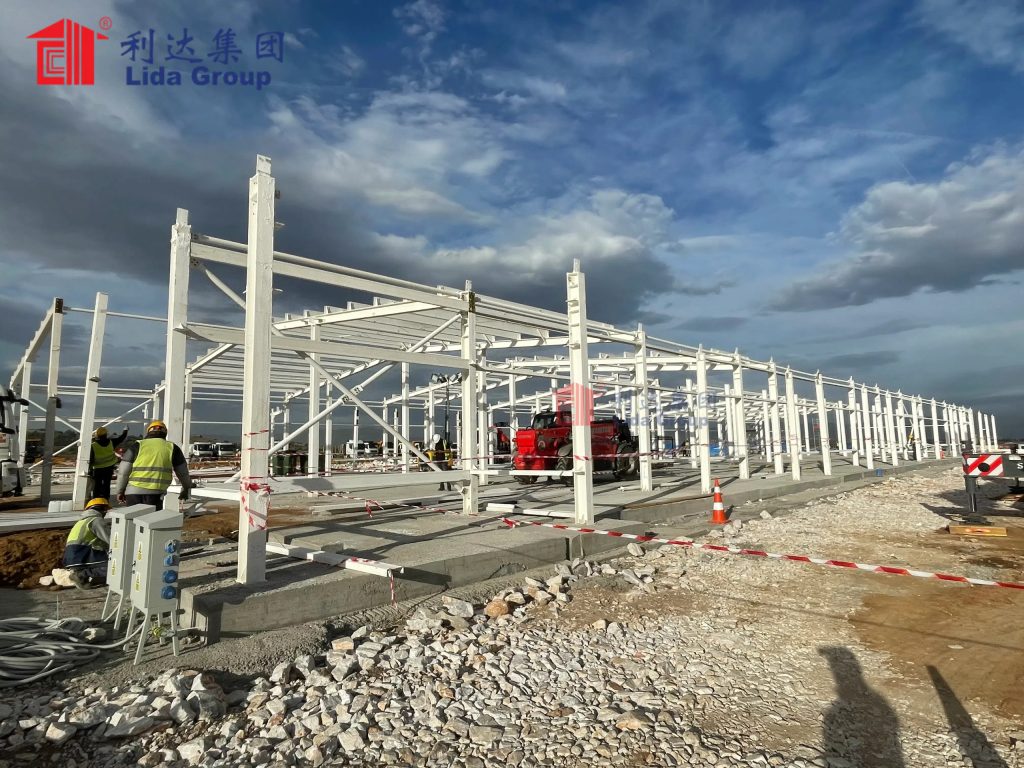
Sustainable steel structure technology is the foundation of Lida Group’s long-lasting metal frame farmhouses. This technology is guided by three core principles: environmental sustainability, structural durability, and resource efficiency. These principles are integrated into every stage of the farmhouse’s lifecycle—from material selection and design to production, construction, and end-of-life recycling—ensuring that the buildings minimize environmental impact while maximizing service life.
2.1 Environmental Sustainability: Minimizing Carbon Footprint
Environmental sustainability is at the heart of Lida Group’s steel structure technology. Steel, the core material of Lida’s metal frame farmhouses, is inherently sustainable due to its high recyclability. Unlike traditional building materials such as concrete (which generates 8% of global carbon emissions during production) or wood (which often involves deforestation), steel can be recycled infinitely without losing its strength. According to the World Steel Association, approximately 80% of steel items are recycled at the end of their useful life, and structural steel has a recycling rate of 93 to 98% in real-world applications. Lida Group leverages this advantage by using recycled steel in its metal frames, reducing carbon emissions by 40% compared to using virgin steel. Every ton of recycled steel used by Lida Group reduces the need for raw iron ore by 62%, minimizing habitat destruction and water pollution associated with mining.
In addition to using recycled steel, Lida Group’s steel structure construction minimizes environmental impact through factory prefabrication. Unlike traditional on-site construction, which generates large amounts of waste, dust, and noise pollution, Lida’s prefabrication model transfers over 80% of the construction process to factories, reducing on-site wet operations by 80% and construction waste by 70%. The factory prefabrication process also ensures that materials are used efficiently, with minimal waste—any excess steel components are recycled directly, further reducing environmental impact. Lida Group’s construction sites generate only 2.8 tons of waste per project, compared to 7.5 tons for traditional construction methods.
2.2 Structural Durability: Building for Longevity
Longevity is a key feature of Lida Group’s metal frame farmhouses, and this durability is rooted in the inherent strength of steel and Lida’s advanced engineering practices. Steel has a strength-to-weight ratio 25 times higher than concrete, making it highly resistant to extreme weather conditions such as earthquakes, typhoons, blizzards, and heavy rainfall. Lida’s metal frame farmhouses have an earthquake resistance rating of 8 or higher, with specialized designs capable of withstanding magnitude 9 earthquakes. In seismic-prone regions, the integrity rate of Lida’s metal frame farmhouses reaches 98% during seismic activity, compared to a 70% damage rate for traditional brick-and-mortar homes.
To further enhance durability, Lida Group subjects its steel components to advanced anti-corrosion treatments, including hot-dip galvanization and eco-friendly alkyd paint coatings. This dual treatment creates a barrier against moisture, rust, and chemical corrosion, extending the service life of the metal frame to 70 to 100 years—more than double the 30 to 50 years of traditional brick-and-mortar structures. Unlike wood or brick, steel is not prone to rot, insect infestation, or weathering, requiring only minimal maintenance (such as annual anti-corrosion inspections) over its lifespan. This long service life ensures that Lida’s metal frame farmhouses remain functional and safe for generations, reducing the need for frequent reconstruction and the associated environmental impact.
2.3 Resource Efficiency: Maximizing Value and Minimizing Waste
Resource efficiency is another core principle of Lida Group’s sustainable steel structure technology. The company optimizes every aspect of the design and production process to minimize resource consumption while maximizing the value of the final product. Lida’s engineering team has developed lightweight but high-strength steel components that reduce material usage by 15% without compromising structural integrity. These components are designed using AI-driven software and digital twin technology, which simulate the performance of the steel frame and identify opportunities to reduce material waste.
The modular design of Lida’s metal frame farmhouses also enhances resource efficiency. The prefabricated steel components are standardized, allowing for mass production and easy assembly on-site. This modular approach not only reduces production time and labor costs but also enables easy expansion or renovation in the future. Rural families can add or splice steel components without large-scale demolition, reducing waste and extending the useful life of the farmhouse. Additionally, the flexible design of the metal frame allows for optimal space utilization—reducing wall thickness by 15% to 20% and increasing the actual usable area by 5% to 10% compared to traditional homes, ensuring that rural families get the most value from their investment.
3. Key Features of Lida Group’s Long-Lasting Metal Frame Farmhouses
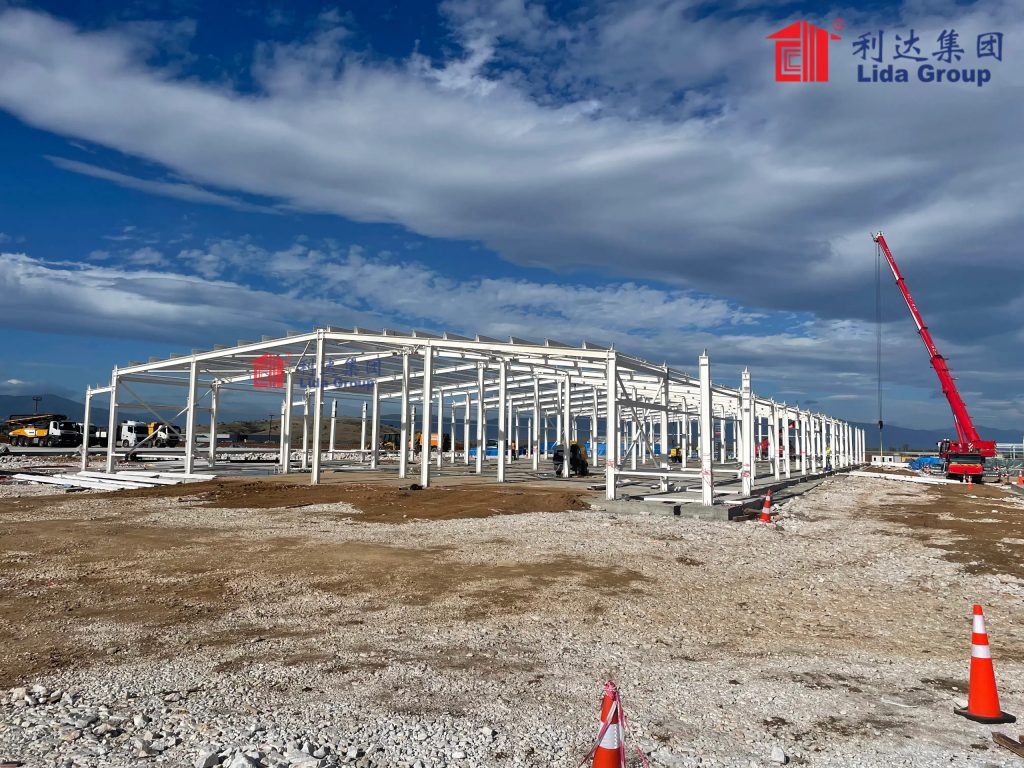
Lida Group’s metal frame farmhouses integrate sustainable steel structure technology with practical rural needs, resulting in homes that are both long-lasting and functional. The following key features highlight how sustainability and durability are embedded in every aspect of these farmhouses, making them an ideal choice for rural communities worldwide.
3.1 Energy-Efficient Design: Reducing Long-Term Environmental Impact
Sustainability goes beyond material selection and construction—it also involves reducing energy consumption over the farmhouse’s lifespan. Lida Group’s metal frame farmhouses are designed with energy efficiency in mind, incorporating high-performance thermal insulation materials such as rock wool sandwich panels and polyurethane insulation panels. These materials have low thermal conductivity, providing better thermal insulation than traditional brick walls, and reduce winter heating energy consumption by 65% and summer cooling costs by 40%. The walls of Lida’s farmhouses are filled with high-density glass wool (with a thermal conductivity of ≤0.04W/(m·K)), and the roofs are equipped with waterproof透气 membranes, further enhancing energy efficiency.
Many of Lida’s metal frame farmhouses also integrate renewable energy technologies, such as photovoltaic (PV) roof systems and solar water heaters. These systems generate clean, renewable energy, reducing reliance on fossil fuels and lowering carbon emissions. A 150-square-meter metal frame farmhouse with a PV roof can generate about 3,000 kWh of electricity per year, meeting most of the family’s daily electricity needs and even allowing surplus electricity to be fed into the grid for additional income. Lida Group has also introduced prototype hybrid solar steel farmhouses integrated with rainwater collection systems and composting facilities, testing self-sufficient homesteading models that further reduce environmental impact.
3.2 Resilient Structural Design: Withstanding Harsh Rural Environments
Rural environments often present unique challenges, from extreme weather to agricultural wear and tear. Lida Group’s metal frame farmhouses are designed to withstand these challenges, ensuring long-term durability. The steel frame’s high strength-to-weight ratio makes it resistant to strong winds (up to 150 mph), heavy snow loads (up to 1.2 kN/㎡), and seismic activity, making it suitable for diverse rural regions—from coastal areas prone to typhoons to mountainous areas prone to earthquakes and blizzards.
Lida’s engineering team uses advanced design software, such as BIM (Building Information Modeling) 4.0, to simulate how the metal frame will perform under various environmental conditions, identifying potential weak points and optimizing the design before production. The steel frames are also designed to be flexible, allowing for slight deformation during natural disasters without collapsing—absorbing energy and protecting the interior of the farmhouse. For example, in earthquake-prone regions, Lida’s metal frames incorporate specialized connections that allow for movement, reducing damage and ensuring the safety of rural families.
3.3 Eco-Friendly Materials: Minimizing Environmental Footprint
Every material used in Lida Group’s metal frame farmhouses is selected for its sustainability and durability. In addition to recycled steel, Lida uses eco-friendly coating materials that are non-toxic, pollution-free, and have excellent anti-corrosion performance. These water-based coatings avoid the use of harmful solvents, reducing environmental pollution and improving indoor air quality for rural families. The thermal insulation materials used are also eco-friendly, with low volatile organic compound (VOC) emissions, ensuring that the farmhouse is safe and healthy for occupants.
Lida Group also prioritizes the use of locally sourced materials whenever possible, reducing transportation costs and carbon emissions associated with long-distance shipping. For example, in African markets, Lida sources steel from local recycling facilities, supporting the local circular economy and reducing the environmental impact of transportation. This localized approach not only enhances sustainability but also supports local communities and economies.
3.4 Low Maintenance Requirements: Ensuring Long-Term Affordability
Longevity is not just about durability—it also about low maintenance. Lida Group’s metal frame farmhouses require minimal maintenance compared to traditional rural homes, reducing long-term costs for rural families and minimizing the environmental impact of frequent repairs. The steel frame’s anti-corrosion treatments prevent rust and deterioration, and the prefabricated components are designed to be easy to inspect and repair. Annual inspections and minor touch-ups to the anti-corrosion coating are typically all that is needed to keep the farmhouse in excellent condition for decades.
Unlike traditional brick-and-mortar homes, which often require frequent repairs to fix cracks, water damage, or rot, Lida’s metal frame farmhouses are resistant to these issues. The modular design also makes it easy to replace individual components if needed, without large-scale demolition. This low maintenance requirement not only saves rural families time and money but also reduces the amount of construction waste generated over the farmhouse’s lifespan.
4. Lida Group’s Systematic Approach: From Design to Maintenance
Lida Group’s ability to create sustainable, long-lasting metal frame farmhouses is the result of a systematic approach that covers every stage of the project lifecycle—from design and production to construction and post-construction maintenance. This approach ensures that sustainability and durability are embedded in every step, delivering consistent, high-quality results.
4.1 Sustainable Design: Tailoring to Rural Needs and Environments
The design stage is critical to ensuring that Lida’s metal frame farmhouses are both sustainable and long-lasting. Lida’s design team—comprising experienced engineers, architects, and sustainability experts—conducts on-site investigations to assess local climate, geological conditions, agricultural habits, and family needs. This ensures that the farmhouse is designed to withstand local environmental challenges while meeting the unique needs of rural families.
The design team uses AI-driven design software and digital twin technology to optimize the steel frame design, reducing material waste and ensuring structural efficiency. The AI software generates multiple design schemes based on the project’s requirements, selecting the optimal solution that balances sustainability, durability, and functionality. For example, in areas with heavy rainfall, the design focuses on waterproofing and drainage; in cold regions, the thermal insulation system is strengthened; in earthquake-prone areas, the steel frame is optimized for seismic performance. The design team also integrates local cultural elements into the farmhouse’s exterior, ensuring that the new homes blend with the rural landscape while maintaining modern sustainability features.
4.2 Precision Production: High-Quality, Sustainable Components
The quality of steel components is the foundation of a long-lasting metal frame farmhouse. Lida Group’s production facilities are designed to deliver high-precision, sustainable components at scale. The company uses high-quality recycled steel (Q235 and Q355 grades) that offers excellent strength and ductility, ensuring that the metal frame can withstand extreme conditions. The production process follows strict quality control standards, with a three-level quality control system (factory testing, on-site inspection, and final certification) to ensure that every component meets international standards.
Lida Group adopts modular production technology, dividing the steel frame into standardized modules that can be mass-produced and quickly assembled on-site. This modular approach not only improves production efficiency but also reduces waste, as all components are prefabricated to precise specifications. The modules are labeled with detailed information (size, weight, installation position), making on-site assembly faster and more efficient. The company also uses automated welding robots and precision cutting equipment to ensure uniform quality and reduce human error, further enhancing the durability of the steel components.
4.3 Eco-Friendly Construction: Minimizing On-Site Impact
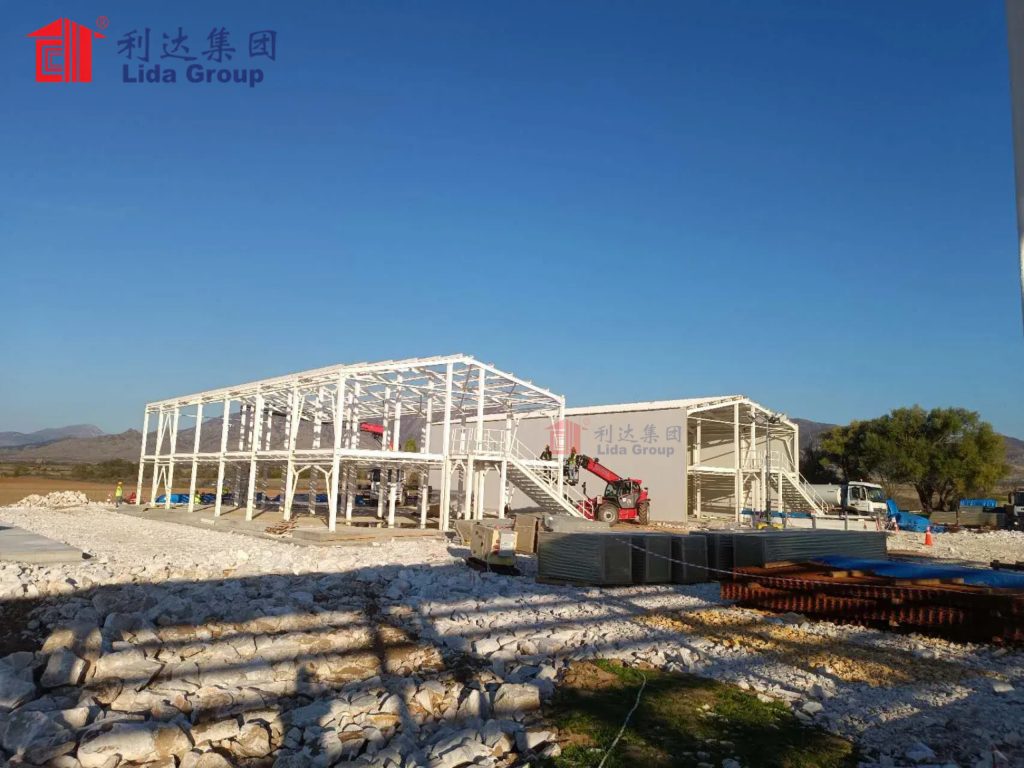
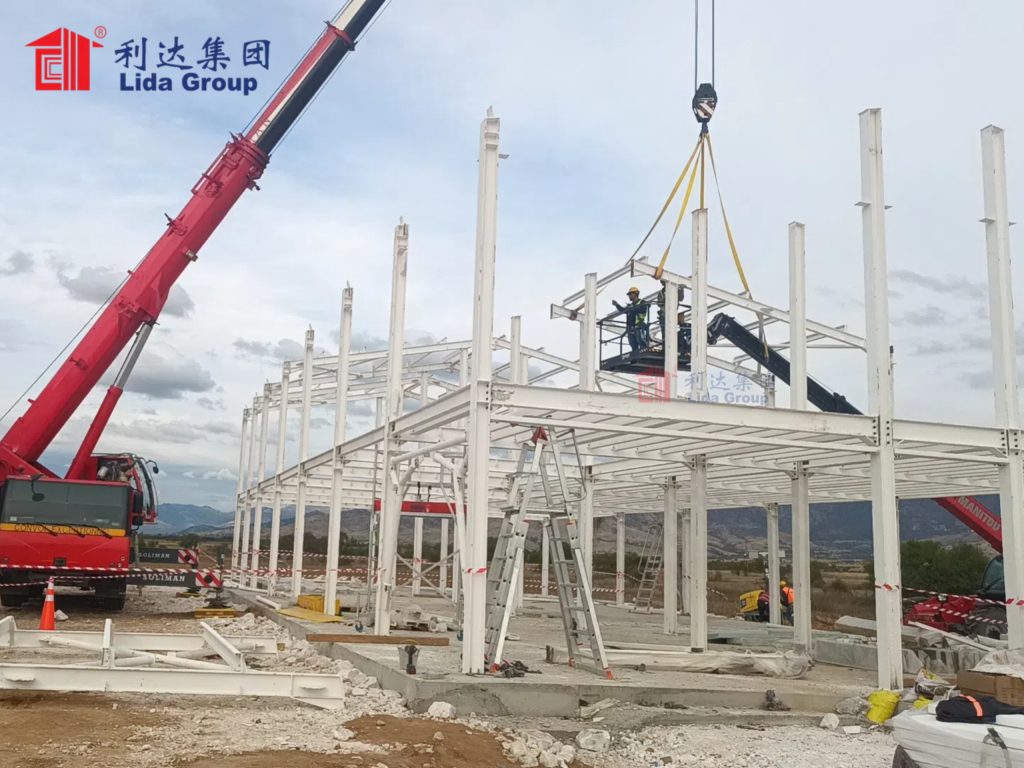
Lida Group’s on-site construction team consists of professional workers proficient in sustainable steel structure assembly, ensuring that the construction process is fast, safe, and environmentally friendly. Before construction begins, the team prepares the site by leveling the ground and building a simple, energy-efficient foundation. Due to the light weight of the steel frame, the foundation only needs to be 400-600mm deep—half the depth required for traditional brick-and-mortar homes—reducing excavation and material usage.
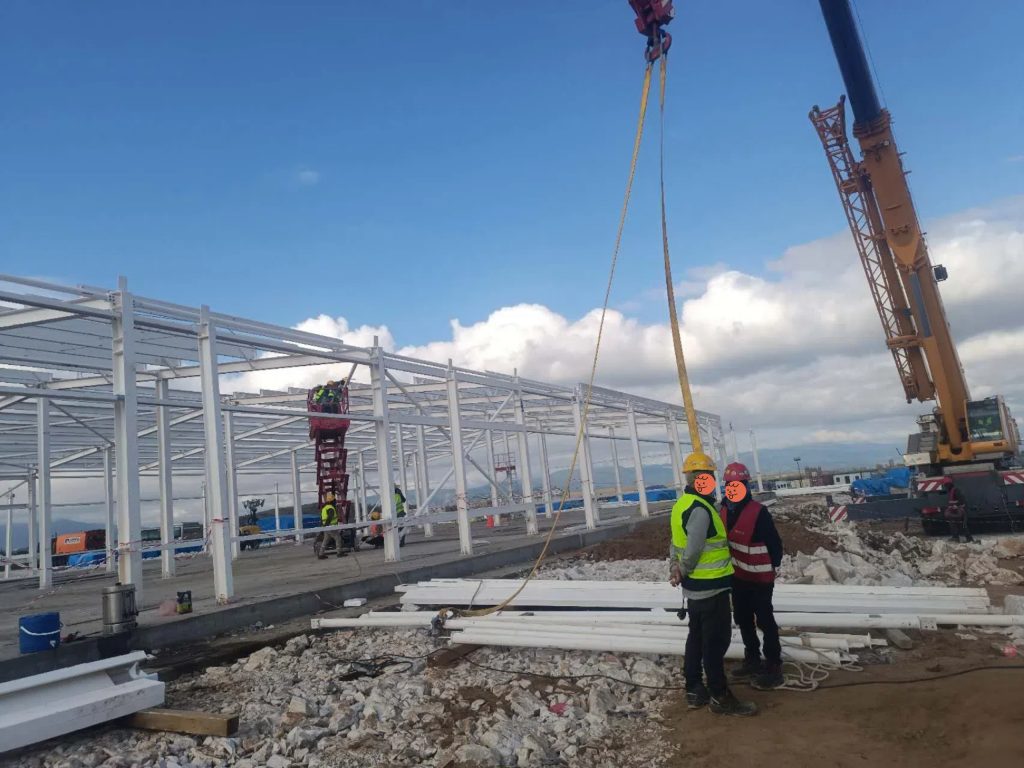
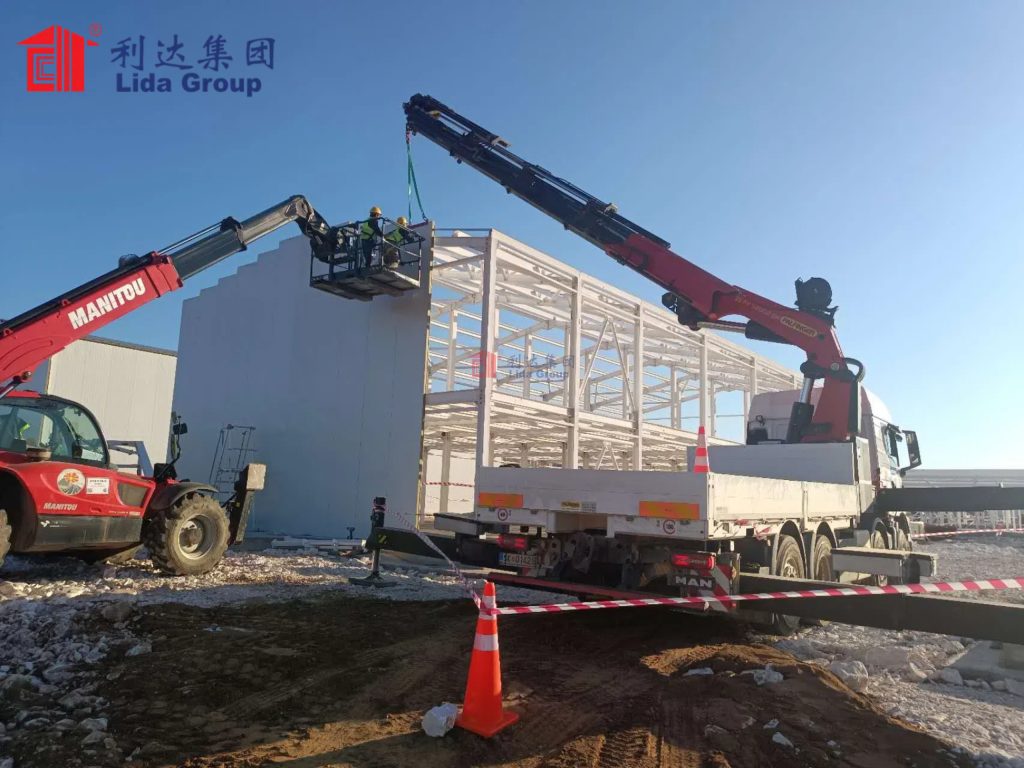
The prefabricated steel components are transported to the site and hoisted into place using cranes, with high-strength bolts used to connect them—eliminating the need for complex on-site welding and reducing construction time. A 200-square-meter metal frame farmhouse can be completed in just 1 to 2 months, compared to 4 to 6 months for a traditional brick-and-mortar home. The construction team also minimizes environmental impact by sorting and recycling construction waste on-site, using dust suppression systems to reduce air pollution, and limiting noise pollution during working hours.
4.4 Comprehensive Post-Construction Maintenance: Extending Lifespan
Lida Group’s commitment to sustainability and longevity extends beyond construction, with comprehensive post-construction maintenance services. The company provides clients with a detailed maintenance manual, guiding them on regular inspections, anti-corrosion treatments, and troubleshooting. A professional maintenance team conducts annual on-site inspections, checking the integrity of the anti-rust coating, the tightness of bolts, and the performance of the thermal insulation and renewable energy systems.
If any issues are found, the team promptly carries out repairs—such as touching up the anti-rust coating or tightening bolts—preventing small problems from becoming costly repairs. Lida also offers 24/7 after-sales service, ensuring that clients can receive timely support in case of emergencies (such as severe weather damage). This proactive maintenance not only extends the lifespan of the farmhouse but also ensures that it remains sustainable and energy-efficient for decades.
5. Global Case Studies: Sustainable and Long-Lasting Metal Frame Farmhouses in Action
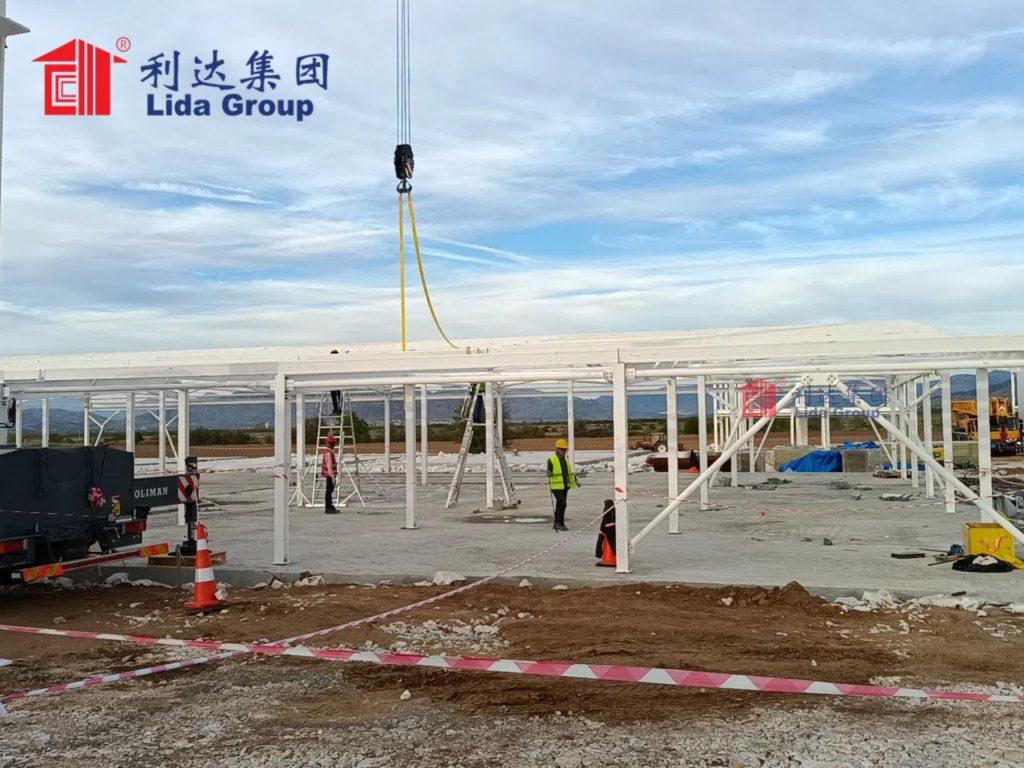
Lida Group’s sustainable steel structure metal frame farmhouses have been successfully implemented in 152 countries and regions, adapting to diverse climatic, cultural, and economic conditions. The following case studies demonstrate how these farmhouses deliver long-lasting durability and environmental sustainability, improving the lives of rural families worldwide.
5.1 Case Study 1: Seismic-Resistant, Sustainable Farmhouses in Yunnan, China
Yunnan is a seismic-prone region in southwest China, where traditional brick-and-mortar farmhouses are highly vulnerable to earthquake damage. Many rural families in the region lived in dilapidated homes that were not only unsafe but also environmentally damaging. Lida Group collaborated with the local government to implement a sustainable metal frame farmhouse renovation project, aiming to provide safe, long-lasting, and eco-friendly homes for rural residents.
The farmhouses were designed with a focus on sustainability and durability. Lida used recycled steel for the metal frames, reducing carbon emissions by 40% compared to traditional construction. The frames were optimized for seismic performance, achieving an 8-degree earthquake resistance rating, and treated with hot-dip galvanization to prevent corrosion. The farmhouses were also equipped with high-performance thermal insulation panels and solar water heaters, reducing energy consumption by 65%.
A total of 500 metal frame farmhouses were built, with a construction cycle of 45 days per home. During a magnitude 6.5 earthquake that occurred after the project was completed, all metal frame farmhouses remained intact, while 70% of traditional homes were severely damaged. Local residents reported that the farmhouses required minimal maintenance and that their energy bills were reduced by half. This case demonstrated that sustainable steel structure farmhouses can be both long-lasting and resilient, even in disaster-prone regions.
5.2 Case Study 2: Eco-Friendly, Durable Farmhouses in Nigeria
Nigeria is an agricultural country with a large rural population, where farmers need farmhouses that can withstand the hot, humid climate and serve as both residences and agricultural storage spaces. Traditional farmhouses in Nigeria are often built with wood, which is prone to rot and insect infestation, requiring frequent replacement. Lida Group undertook a large-scale sustainable metal frame farmhouse project in rural Nigeria, focusing on durability and environmental sustainability.
The farmhouses were designed with recycled steel frames treated with anti-corrosion coatings to withstand the humid climate, ensuring a service life of 70+ years. The frames were modular, allowing for flexible space division—with a large open area on the first floor for farm machinery storage and crop drying, and residential spaces on the second floor. The farmhouses were also equipped with rainwater collection systems and solar PV panels, reducing reliance on grid electricity and scarce water resources.
The project involved building 300 farmhouses, with a construction cycle of 2 months per home. The use of recycled steel and modular production reduced the project’s carbon footprint by 35% compared to traditional construction. Local farmers reported that the farmhouses were durable, low-maintenance, and helped them reduce crop losses by 40% due to the secure storage space. This case demonstrated how Lida’s sustainable steel structure farmhouses can meet the unique needs of rural farmers while minimizing environmental impact.
5.3 Case Study 3: Green, Long-Lasting Farmhouses in Germany
Germany is a leader in sustainable development, with strict environmental standards for rural construction. Lida Group collaborated with a German rural development company to build eco-friendly, long-lasting metal frame farmhouses that meet the country’s rigorous green building standards. The farmhouses were designed to be carbon-neutral, integrating recycled steel, renewable energy, and eco-friendly materials.
The metal frames were made from 95% recycled steel, and the farmhouses were equipped with PV roof systems, geothermal heating, and rainwater recycling systems. The thermal insulation materials used were eco-friendly and energy-efficient, reducing heating and cooling costs by 50%. The farmhouses also featured composting facilities, promoting a circular economy and reducing waste.
A total of 100 farmhouses were built, certified as green buildings by the German Green Building Council. The farmhouses have a service life of 100 years and require minimal maintenance. Local residents reported that their monthly energy bills were reduced by 60%, and the farmhouses blended seamlessly with the rural landscape. This case proved that Lida’s sustainable steel structure farmhouses can meet the high environmental standards of developed countries while delivering long-lasting value.
5.4 Case Study 4: Modular, Sustainable Farmhouses in Remote Mountainous Areas of Chile
Chile’s remote mountainous areas face significant challenges in rural construction—transportation is difficult, labor is scarce, and traditional building materials are expensive. Many rural families in these areas lived in dilapidated homes that could not withstand strong winds and heavy snow. Lida Group implemented a modular, sustainable metal frame farmhouse project to address these challenges, providing affordable, long-lasting homes.
The farmhouses were designed as lightweight modular units made from recycled steel, which could be transported to remote areas using small trucks. The modules were assembled on-site in just 30 days, with a small team of workers. The steel frames were designed to withstand strong winds (up to 150 mph) and heavy snow loads, with thick thermal insulation panels to ensure indoor comfort in cold weather. The farmhouses also included solar water heaters and water purification systems, meeting the basic needs of rural families in remote areas.
A total of 200 modular farmhouses were built, benefiting 10 remote mountainous villages. The use of recycled steel and modular production reduced the project’s cost by 30% compared to traditional construction, making the farmhouses accessible to local families. After moving into the new farmhouses, residents reported feeling safer and more comfortable, with low maintenance costs. This case demonstrated Lida’s ability to deliver sustainable, long-lasting metal frame farmhouses even in the most challenging environments.
6. Technological Innovation: Driving Sustainability and Longevity
Lida Group’s commitment to innovation is key to maintaining its leadership in sustainable, long-lasting metal frame farmhouses. The company invests heavily in R&D, focusing on technologies that improve the sustainability, durability, and efficiency of its steel structure solutions. These innovations ensure that Lida’s farmhouses remain at the forefront of rural housing, delivering value to rural families and the environment.
6.1 Innovation in Sustainable Materials
Lida Group’s R&D team has developed new types of sustainable steel materials that enhance durability and reduce environmental impact. For example, the company has developed a weather-resistant steel blend that contains alloying elements (copper, chromium, nickel) that form a protective oxide film on the surface. This steel can withstand harsh environmental conditions without additional anti-rust treatment, reducing maintenance costs by 30% and extending the service life of the metal frame by 20%.
The team has also developed high-strength, low-alloy (HSLA) steel blends that reduce material usage by 15% while maintaining structural integrity. These blends are lighter than traditional steel, reducing transportation costs and carbon emissions. Additionally, Lida has developed eco-friendly coating materials that are non-toxic, pollution-free, and have a longer service life than traditional coatings, further enhancing the sustainability and durability of the metal frames.
6.2 Digitalization and Intelligence in Design and Construction
Lida Group has integrated digital and intelligent technologies into every stage of the farmhouse project, from design to construction. The company uses AI-driven design software to optimize the steel frame design, reducing material waste by 10% and shortening the design cycle by 30%. Digital twin technology is used to simulate the construction process, allowing the team to identify potential problems in advance and adjust the plan—reducing on-site errors and rework costs.
In construction, Lida uses intelligent equipment such as automated hoisting machines and robotic welding machines to improve efficiency and quality. Automated hoisting machines reduce the risk of human error, ensuring that components are installed correctly the first time, while robotic welding machines ensure uniform welding quality—reducing the need for rework. IoT (Internet of Things) technology is used to monitor the construction process in real time, collecting data on progress, component quality, and safety—allowing the team to optimize the process and reduce costs.
6.3 Innovation in Renewable Energy Integration
Lida Group is at the forefront of integrating renewable energy technologies into metal frame farmhouses. The company has developed integrated PV roof systems that are seamlessly integrated with the steel frame, ensuring structural stability and aesthetic appeal. These systems generate clean electricity, reducing reliance on fossil fuels and lowering carbon emissions. In cold regions, Lida integrates geothermal heating systems, using the stable temperature of the ground to heat the farmhouse—reducing heating costs by 40%.
Lida has also introduced prototype farmhouses with integrated rainwater collection systems, composting facilities, and rooftop apiaries, testing self-sufficient homesteading models that further reduce environmental impact. These prototypes monitor energy and water flows, composting cycles, and crop yields, aiming to create self-sustaining rural homes that can operate independently of external infrastructure.
7. Challenges and Future Prospects
While Lida Group has made significant progress in delivering sustainable, long-lasting metal frame farmhouses, there are still challenges to overcome. However, with ongoing technological innovation and growing global demand for sustainable rural housing, the future prospects are bright.
7.1 Current Challenges
One of the main challenges is the lack of awareness among some rural dwellers about the benefits of sustainable steel structure farmhouses. Many rural families are accustomed to traditional brick-and-mortar construction and have concerns about the safety, durability, and “warmth” of metal homes. To address this, Lida Group needs to strengthen publicity and promotion, using case studies and on-site demonstrations to show the advantages of metal frame farmhouses.
Another challenge is the high initial cost of sustainable steel structure farmhouses in some regions, where subsidies are not available. While the long-term costs are lower, the upfront investment can deter families with limited budgets. Lida Group is working to address this by optimizing production processes to reduce component costs and collaborating with financial institutions to provide flexible payment plans. The company’s use of recycled steel already reduces raw material costs by 18% compared to virgin steel, and ongoing innovations are further lowering costs.
A shortage of professional steel structure construction workers in some rural areas is also a challenge. Lida Group is addressing this by providing training programs for local workers, improving their skills and creating employment opportunities—while ensuring that construction quality is maintained.
7.2 Future Prospects
The future of Lida Group’s sustainable steel structure metal frame farmhouses is promising, driven by three key factors: technological innovation, growing demand for high-quality rural housing, and global support for sustainable development. Lida will continue to invest in R&D, developing more efficient, durable, and sustainable steel structure solutions. The company plans to integrate more smart technologies—such as intelligent monitoring systems—to further reduce maintenance costs and improve comfort.
In terms of market expansion, Lida will focus on developing countries and regions with high demand for rural housing, such as Africa and Southeast Asia. The company will strengthen cooperation with local governments to secure more subsidies and support, making sustainable metal frame farmhouses more accessible. Additionally, Lida will adapt its solutions to local cultural and environmental conditions, ensuring that the farmhouses meet the unique needs of each region.
With the deepening of global sustainable development and rural revitalization strategies, more governments are likely to introduce policies to support sustainable steel structure rural housing. The EU’s “Green Deal” has already listed steel structures as a priority building material, requiring that all new public buildings after 2030 use at least 30% recycled steel. China’s “14th Five-Year Plan for Construction Industry Development” also explicitly proposes promoting steel structure prefabricated buildings to reduce carbon emission intensity. This policy support will provide new opportunities for Lida Group, allowing the company to expand its global footprint and deliver sustainable, long-lasting farmhouses to more rural families.
8. Conclusion
Lida Group’s sustainable steel structure buildings have redefined rural housing by creating metal frame farmhouses that are both long-lasting and environmentally friendly. By leveraging the inherent sustainability and durability of steel, combined with advanced engineering, innovative materials, and a systematic approach to design, production, and construction, Lida Group has proven that sustainable construction and long-term value can coexist. These farmhouses not only provide rural families with safe, comfortable, and low-maintenance homes but also contribute to global environmental goals by reducing carbon emissions, minimizing waste, and promoting resource efficiency.
The global case studies presented in this article demonstrate the adaptability and effectiveness of Lida’s sustainable metal frame farmhouses in diverse environments—from earthquake-prone regions in China to remote mountainous areas in Chile. These cases show that sustainable steel structure technology is not just a viable alternative to traditional construction; it is a superior one, offering better durability, lower long-term costs, and greater environmental benefits. Lida Group’s commitment to sustainability and innovation has made it a trusted partner for rural communities worldwide, helping millions of families achieve safe, comfortable, and sustainable homes.
While challenges remain—such as raising awareness and reducing initial costs—the future of Lida’s sustainable steel structure metal frame farmhouses is bright. With ongoing technological innovation, growing policy support, and a continued focus on rural needs, Lida Group will continue to lead the transformation of rural housing. The company’s metal frame farmhouses are more than just buildings; they are a testament to the power of sustainable innovation to create a better future for rural communities and the planet. By prioritizing sustainability and longevity, Lida Group is not just building farmhouses—it is building a legacy of environmental stewardship and rural prosperity that will benefit generations to come.
Related news
-
Lida Group's Metal Frame Farmhouse: Where High Quality Construction Meets Affordability
2026-04-24 10:15:08
-
Efficient and Strong Steel Structure Building Technology Powers Lida Group's Farmhouse Projects
2026-04-23 17:46:42
-
Lida Group Sets New Standard in High Quality Construction for Metal Frame Farmhouses
2026-04-23 17:49:41
contact us
- Tel: +86-532-88966982
- Whatsapp: +86-13793209022
- E-mail: sales@lidajituan.com
