



Introduction
The global poultry industry is experiencing unprecedented growth. As populations rise and protein demand surges, commercial egg and broiler operations are expanding at a remarkable pace across North America, Asia, and beyond. Yet this rapid expansion has exposed a critical vulnerability: the inadequacy of traditional poultry housing infrastructure. Wood-framed barns, which have served the industry for generations, are increasingly unable to meet the demands of modern commercial operations. They suffer from limited lifespans, high maintenance costs, inadequate ventilation, and perhaps most critically, severe fire risks.
Poultry barns present unique fire hazards. The combination of highly flammable poultry manure, wood shaving bedding materials prone to spontaneous combustion, and densely packed wooden structural members creates conditions where a single spark can escalate into a devastating conflagration. Traditional wood post-frame barns simply cannot meet increasingly stringent wildland-urban interface codes aimed at controlling structure fires capable of jumping farms and igniting surrounding communities. Insurance underwriters now demand certified flame-spread classified construction, a standard that conventional wooden barns struggle to achieve.
Recognizing these challenges, Lida Group—a global leader in prefabricated steel structure engineering established in 1993—has developed an innovative standardized prefabricated steel structural system specifically engineered for fireproof chicken houses. With over three decades of experience, more than 5,000 completed projects across 152 countries, and a comprehensive portfolio of integrated building solutions, Lida Group is revolutionizing the industrial poultry housing industry.
The Fire Safety Imperative in Poultry Housing
Fire represents one of the greatest threats to commercial poultry operations. A single barn fire can destroy tens of thousands of birds, devastate farm infrastructure, and interrupt production cycles for months. The financial losses extend far beyond the value of the birds themselves—lost production, facility reconstruction, and business interruption compound into staggering sums.
Traditional wood-framed poultry barns are particularly vulnerable. Wood structural members provide fuel for fires, while the accumulation of poultry manure and bedding materials creates additional combustible loads. Once ignited, wooden barns can collapse rapidly, leaving little time for fire suppression or bird evacuation.
Steel, by contrast, does not burn easily. Lida Group applies specialized fireproof coatings to steel frames and accessories to further reduce fire risks. The non-combustible metal construction provides a firewall-rated enclosure that is critical for facilities housing highly flammable materials. This fire resistance translates directly into enhanced safety for birds, workers, and surrounding communities.
Insurance underwriters have taken note. As Lida Group’s system demonstrates, certified flame-spread classified construction not only reduces risk but also lowers insurance premiums and improves access to coverage. For commercial poultry operators, this represents a tangible financial advantage that compounds over the life of the building.
The Standardized Prefabricated Steel Structure System
Lida Group’s innovative system represents a fundamental departure from conventional construction approaches. Rather than relying on field-built wood framing, the system employs fully pre-engineered, column-free steel building platforms optimized for durable, fast-track construction.
Engineering and Materials
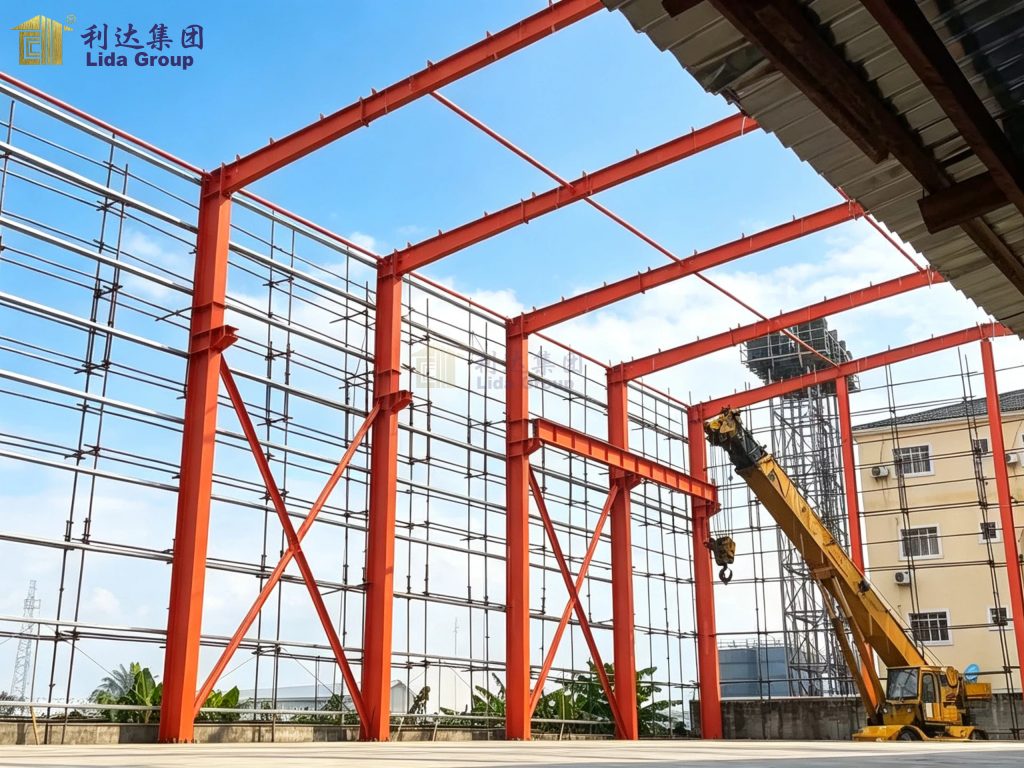
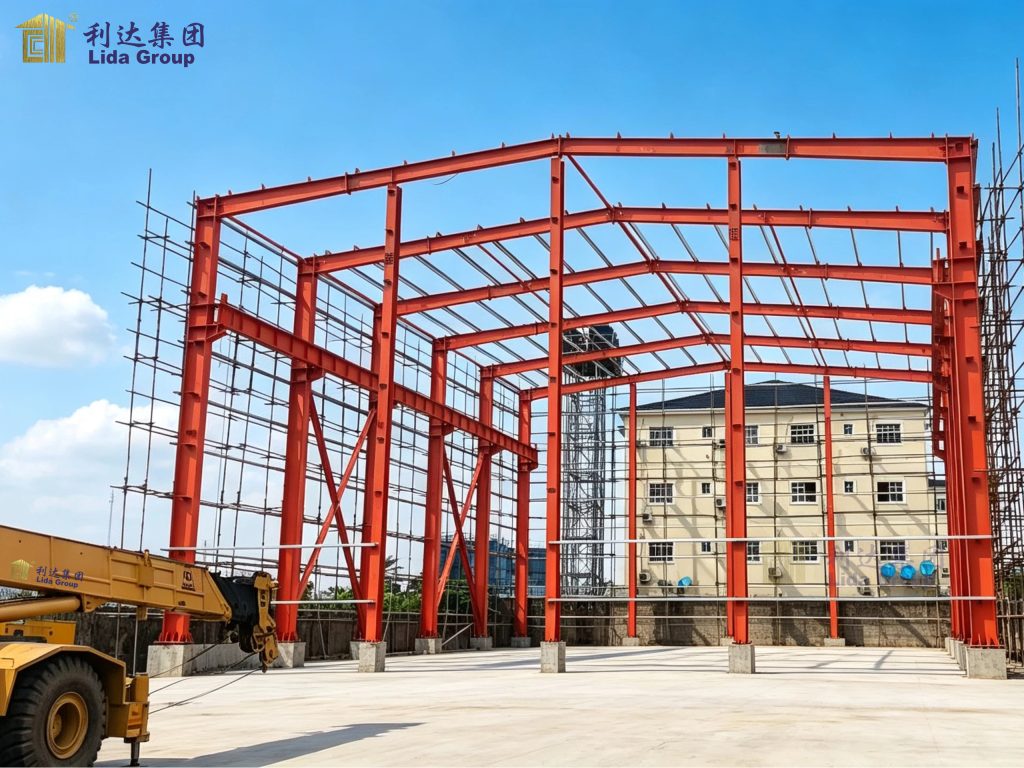
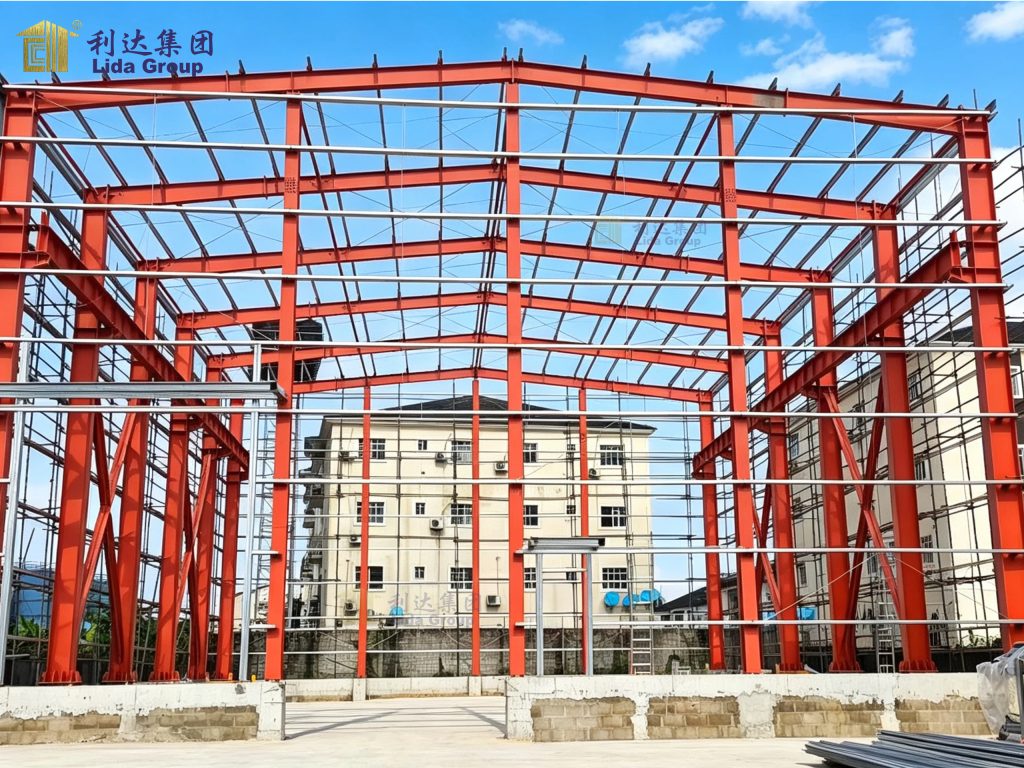
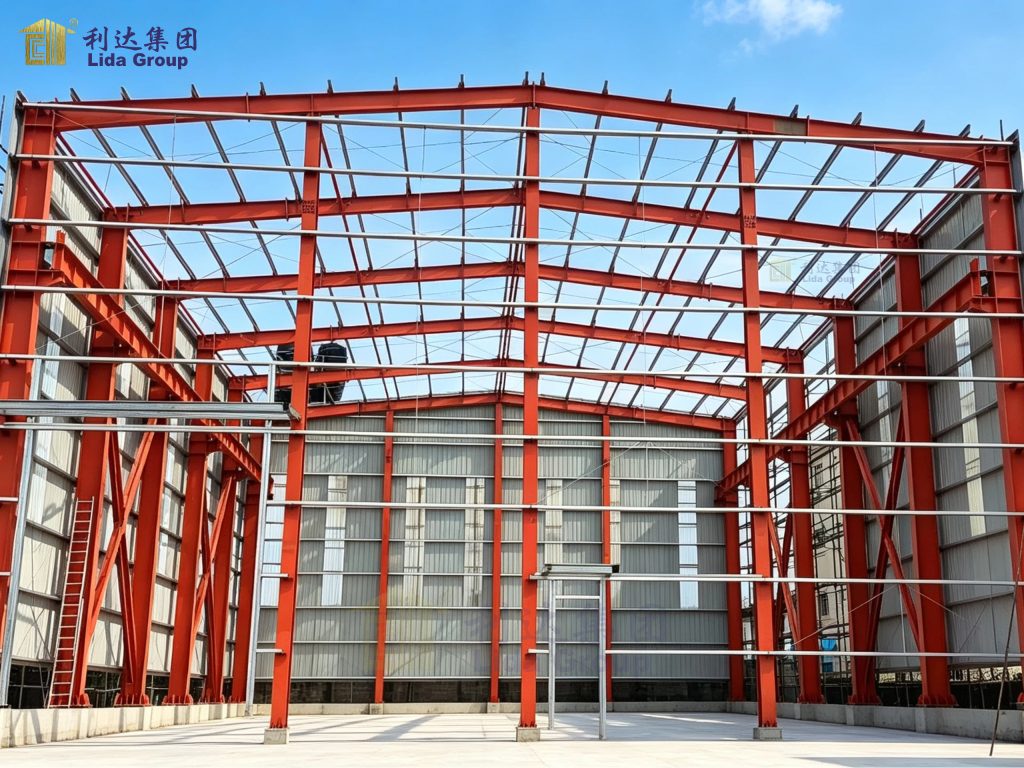
The structural foundation of each chicken house consists of high-quality steel components. Main frames are constructed using premium-grade H-section steel, with columns and beams fabricated from welded H-style steel. This construction provides exceptional strength and rigidity, capable of withstanding heavy loads, strong winds, and seismic activity.
In tropical and coastal environments where humidity and salt exposure pose particular challenges, Lida Group adopts hot-dip galvanized steel sheets. This process produces a thick and durable zinc coating that effectively prevents rusting for at least 20 years. The company’s Fiji chicken farm project, completed in 2017, demonstrated the effectiveness of these protective measures in a challenging tropical climate characterized by high temperatures, rainfall, and humidity.
The system also incorporates insulated sandwich composite panels for floors, walls, and roofs. These panels combine structural integrity with thermal performance, helping to maintain consistent internal temperatures essential for bird health and productivity. Insulation options include EPS (expanded polystyrene), rock wool, fiberglass wool, and polyurethane, allowing customization based on specific climate requirements.
Prefabrication and Assembly
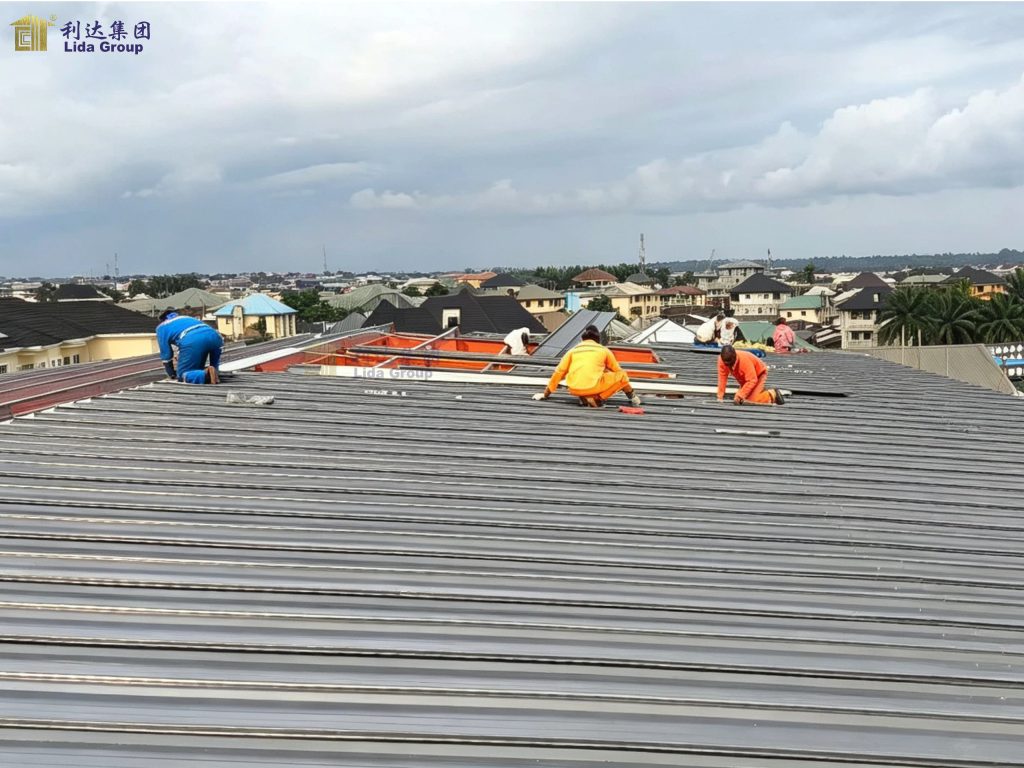
Perhaps the most transformative aspect of Lida Group’s system is its approach to construction. Entire wall, roof, and support frames are prefabricated offsite from steel components for rapid field assembly. Standardized structural ribs and panels create column-free bays ideal for housing lines, feed storage, and manure removal equipment.
The prefabrication process yields “install-ready kits” that arrive sealed from the elements as single transportable building packages. Complete with openings and optional pre-wiring, plumbing, and climate control systems, these kits enable entire barns to go together like giant three-dimensional jigsaws in a fraction of the time traditional building would require.
This approach delivers extraordinary speed. Standardized pre-cut steel parts ensure construction consistency and code compliance versus field-built wood. Factory assembly eliminates mistakes from job site weather exposure that might compromise barn air-tightness, which is critical for bird health management.
Advantages Over Traditional Construction
Fire Safety and Disaster Resilience
The most immediate advantage of Lida Group’s steel structure system is its superior fire safety. Steel does not burn, and specialized fireproof coatings further reduce fire risks. This non-combustible construction provides a firewall-rated enclosure that protects both birds and surrounding communities.
Beyond fire resistance, steel structures offer all-hazard fortification suitable for high-risk coastal or wildland regions. They withstand extreme weather events, including high winds and seismic activity, with minimal damage. Metal barns represent the safest, most code-compliant, and disaster-resilient option for locating anywhere near communities or forests as climate threats intensify.
Durability and Longevity
Lida Group’s steel structure buildings offer a service life exceeding 50 years with minimal maintenance. This extraordinary longevity stands in stark contrast to traditional wooden barns, which often require significant repairs or complete replacement within decades of construction.
The high tensile strength of steel can withstand extreme weather and heavy loads from chickens and farm equipment. Steel is resistant to pests, rot, and decay—the common scourges that afflict wooden structures. This inherent resistance translates directly into substantially lower long-term maintenance costs.
Cost-Effectiveness
While steel may have a higher initial cost compared to traditional materials, its longevity and low maintenance requirements lead to significant savings over time. Early adopters of Lida Group’s system are achieving projected savings of 20 percent over wood options, with low-maintenance steel barns offering double-digit returns on investment over typical 25-year service lives.
Reduced construction downtime between flocks lets farmers maximize annual production cycles. Farms can expand without limitations from wood component supply challenges or skilled framing labor shortages that traditionally hamper poultry industry growth potential.
Flexibility and Scalability
Steel frames are modular and can be expanded easily as a farm’s chicken population grows. Modular expansion capabilities let farms scale flocks upwards in lockstep with demand without requiring demolition of existing barns.
Lida Group’s engineers draft three-dimensional models incorporating specific prerequisites for each operation, designing barns that can house up to 30,000 birds per structure. Individual housing bays, feed lines, watering systems, manure scrapers, and environmental controls are optimized for integration into cohesive plug-and-play barn systems. Future-proofing is incorporated to allow retrofitting barn interiors for different poultry types or expanding flocks as needed through the facilities’ long service lives.
Biosecurity and Bird Health
Steel structures can be designed with biosecurity in mind, featuring controlled access points, easy-to-clean surfaces, and integrated sanitation stations. These elements help prevent disease outbreaks and ensure the health of the flock.
Effective ventilation is essential in poultry housing to maintain optimal temperature and air quality. Lida Group incorporates sufficient vents, fans, and chimneys into steel structures to ensure adequate airflow and circulation for the chickens’ wellbeing. Strategic ventilation design maintains good air circulation inside houses, reducing heat stress and respiratory problems.
Real-World Applications
Fiji Steel Structure Chicken Farm Project
In 2017, Lida Group built three steel structure chicken houses in Fiji with dimensions of 15 meters by 100 meters by 2.2 meters. The steel structure, mainly using H-shape steel, adapted well to the local tropical climate. Lida Group adopted H-shape steel frames and hot-dip galvanized steel sheets for the chicken coops, ensuring durability against high temperatures, rainfall, and humidity.
Strategic ventilation design ensured good air circulation inside the houses. The completed chicken coops gained high praise from the client for their sturdiness, flexibility in use, and adaptability to the climate. This success strengthened Lida Group’s determination to “go global” and explore more overseas opportunities.
North American Partnership
In partnership with Canada’s largest commercial egg and chicken producers, Lida Group is introducing fully pre-engineered steel building platforms optimized for durable, fast-track construction of fire-resistant chicken houses. Early adopter Maple Leaf Farms is implementing the system initially across 120 new chicken barns under construction through Western Canada.
Cambodian Poultry Producer Collaboration
Sathapana Poultry, one of the largest integrated poultry producers in Cambodia, partnered with Lida Group to develop a new generation of large-scale, cost-efficient poultry housing. The company’s previous generation of mostly timber-framed poultry barns were approaching the end of their usable lifespan.
Lida Group proposed a customized solution based on standardized prefabricated framing systems tailored for poultry housing on an industrial scale. Key drivers of the system design included maximizing usable floor area within footprint for high stocking density, incorporating optimum ventilation design parameters, facilitating automated feeding and manure handling systems, allowing division into isolation bays to control disease spread, ensuring rapid disinfection cycles between flocks, and achieving a 30-plus year design life with low maintenance costs.
A full-scale prototype barn was constructed to verify design functionality ahead of mass production, with minor refinements made based on operational feedback.
Sustainability and Environmental Responsibility
Beyond fire safety and operational efficiency, Lida Group’s steel structure system embodies a commitment to environmental sustainability. Steel is 100 percent recyclable, reducing environmental impact from material extraction. The precision of factory-based modular construction significantly reduces on-site waste, with material savings of up to 90 percent compared to traditional construction waste levels.
Reusable steel envelopes yield flexible operation and multiple rebuilds over decades of service while retaining resale value. This aligns with circular economy principles, allowing farmers to reinvest in facilities without generating construction waste.
Conclusion
Lida Group’s standardized prefabricated steel structure building system for fireproof chicken houses represents a transformative advancement in commercial poultry housing—one that addresses the fundamental challenges facing the industry with engineering excellence, practical efficiency, and environmental responsibility.
The system delivers what traditional wood-framed construction cannot: superior fire safety through non-combustible steel construction and specialized fireproof coatings; exceptional durability with service lives exceeding 50 years; cost-effectiveness through reduced maintenance and construction downtime; flexibility for scalable expansion; and enhanced biosecurity for bird health and disease prevention.
From tropical Fiji to Western Canada and Cambodia, Lida Group’s steel structure chicken houses are proving their worth in diverse climates and operational contexts. The company’s system enables fast-track construction of fire-resistant chicken houses sheltering tens of thousands of birds, replacing conventional wooden structural members with fully shop-welded, bolted-together building skeletons that rise entirely on location within days versus weeks.
As global protein demands surge, streamlined farm infrastructure construction represents the future. Smarter building partnerships deliver responsible farming capacity that the world needs while safeguarding rural communities and landscapes for generations to come. Lida Group’s fireproof steel structure system is not merely a product—it is a comprehensive solution that enables commercial poultry operations to grow safely, sustainably, and profitably in an era of increasing environmental and regulatory challenges.
Related news
-
Engineers Specify Inclusive Prefabricated Wellness Units from Lida Group Equipped with Composite Panel Laundry, Medical and Kitchen Amenities within Mobile Labor Camps
2026-08-26 17:17:12
-
Lida Group develops standardized modular container house system for rapid deployment of transitional housing communities in disaster impacted regions.
2026-08-26 14:29:00
-
Long-span warehouse for major logistics company features open-web steel joists that provide unobstructed floorplans perfectly suited for modern distribution operations.
2026-08-25 17:49:52
contact us
- Tel: +86-532-88966982
- Whatsapp: +86-13793209022
- E-mail: sales@lidajituan.com
