



Innovative Metal Frame Construction by Lida Group Creates Durable High Quality House
2026-Apr-27 11:15:33
By Admin
The global construction industry is continuously pursuing the balance of structural durability, construction quality, cost efficiency and green sustainability. Building frame systems serve as the fundamental skeleton that determines the overall performance, service life and safety level of all buildings. For decades, traditional construction relies heavily on wooden frames, ordinary welded steel frames and concrete load-bearing structures. These conventional frame construction methods have long-standing inherent drawbacks, including poor dimensional stability, weak weather resistance, vulnerable structural deformation, high maintenance consumption and low reusability. Wooden frames are prone to termite erosion, mildew decay and flammable risks. Welded steel frames suffer from welding stress deformation, joint rusting and inconsistent assembly quality. Concrete structures feature heavy self-weight, long curing cycles and poor seismic flexibility. All these defects make traditional frame structures difficult to support modern buildings’ demands for long-term durability, refined quality control and diversified scene adaptation.
As a global leading manufacturer and solution provider of modular building systems, Lida Group deeply explores the technical bottlenecks of traditional building frame construction. By upgrading raw material formulas, innovating frame connection structures, optimizing factory precision processing and iterating modular assembly techniques, Lida Group develops innovative metal frame construction technology. Breaking through the quality limitations of conventional wooden and ordinary steel frames, this cutting-edge construction system focuses on high structural stability, ultra-long durability, precise manufacturing, flexible assembly and low maintenance, successfully creating a new generation of durable and high-quality prefabricated houses. Widely applicable to construction site dormitories, field office buildings, temporary camps, commercial auxiliary facilities and lightweight residential buildings, Lida Group’s innovative metal frame construction redefines the quality standard of modern modular buildings and leads the technological upgrading of the global prefabricated construction industry.
Different from generic metal frame products in the market with single performance and rough craftsmanship, Lida Group’s proprietary metal frame construction technology integrates multiple optimized designs. Adopting high-strength low-alloy metal materials, multi-pass anti-corrosion treatment and standardized bolted connection structures, the metal frame abandons backward on-site welding and fixed connection modes. It realizes comprehensive improvements in structural toughness, environmental adaptability, assembly accuracy and recyclability. Combined with matched high-performance enclosure and insulation systems, the metal frame based houses achieve outstanding structural safety, stable finished quality, ultra-long outdoor service life and excellent living comfort. Massive global cross-regional engineering practices have proven that Lida Group’s innovative metal frame construction is a reliable, cost-effective and high-quality building solution suitable for complex global construction environments.
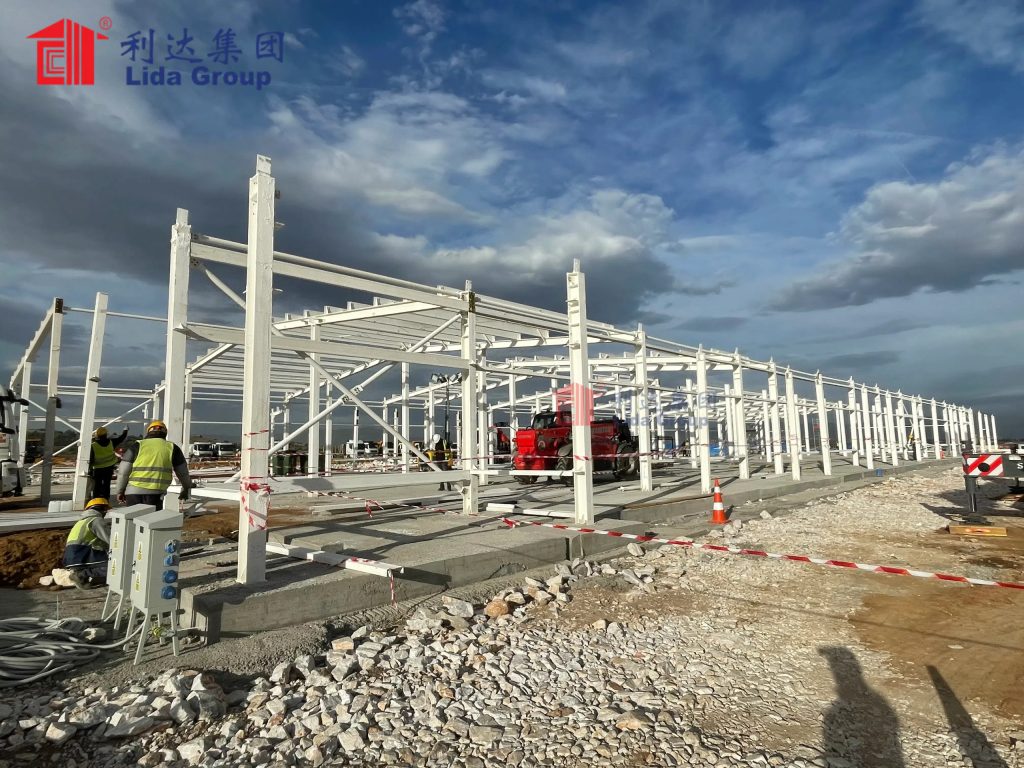
1. Limitations of Traditional Building Frame Construction
Traditional building frame construction technologies cannot meet the refined and durable quality requirements of modern construction, restricting the overall quality improvement and sustainable development of buildings. Wooden, welded steel and concrete frames, as the three mainstream traditional frame forms, all have obvious performance defects and construction drawbacks.
Wooden frame construction features low material cost and lightweight advantages, but its natural material properties determine fatal durability defects. Wood is highly susceptible to moisture absorption, mildew growth, termite and microbial erosion in outdoor humid environments. It is also flammable and prone to deformation and cracking under extreme temperature and humidity changes. Most wooden frame buildings have a service life of less than five years in outdoor open environments and require regular anti-corrosion, insect-proof and fire-proof maintenance throughout the operation cycle, resulting in high comprehensive maintenance costs. In addition, wooden frames rely on natural forest resources, causing resource consumption and ecological pressure, and cannot be recycled and reused after aging, failing to adapt to global green construction trends.
Ordinary welded steel frame construction improves structural strength compared with wooden frames, yet its backward welding process brings multiple quality hidden dangers. On-site manual welding is easily affected by weather, temperature and worker operation proficiency, leading to uneven welding quality, incomplete fusion, welding cracks and residual welding stress. Long-term outdoor exposure will cause rust and corrosion at welding joints, resulting in structural loosening and deformation. Moreover, welded frames form fixed integrated structures that cannot be disassembled and relocated. After project completion, the frames can only be scrapped, resulting in serious resource waste. The rigid welded structure also lacks flexible deformation capacity, with poor seismic and impact resistance in extreme natural disaster scenarios.
Concrete frame structures have high rigidity and compressive strength but suffer from heavy self-weight, poor seismic toughness and uncontrollable construction quality. On-site pouring and curing require long construction cycles and are easily disturbed by external environmental factors, causing hollowing, cracking and dimensional deviation. The heavy frame structure puts forward high requirements for foundation bearing capacity, increasing foundation construction cost and cycle. Meanwhile, concrete structures cannot be disassembled and reused, generating massive construction waste after demolition, with low comprehensive economic and environmental benefits. In general, the universal defects of traditional frame construction urgently require innovative metal frame technology to achieve comprehensive quality and durability upgrading of modern buildings.
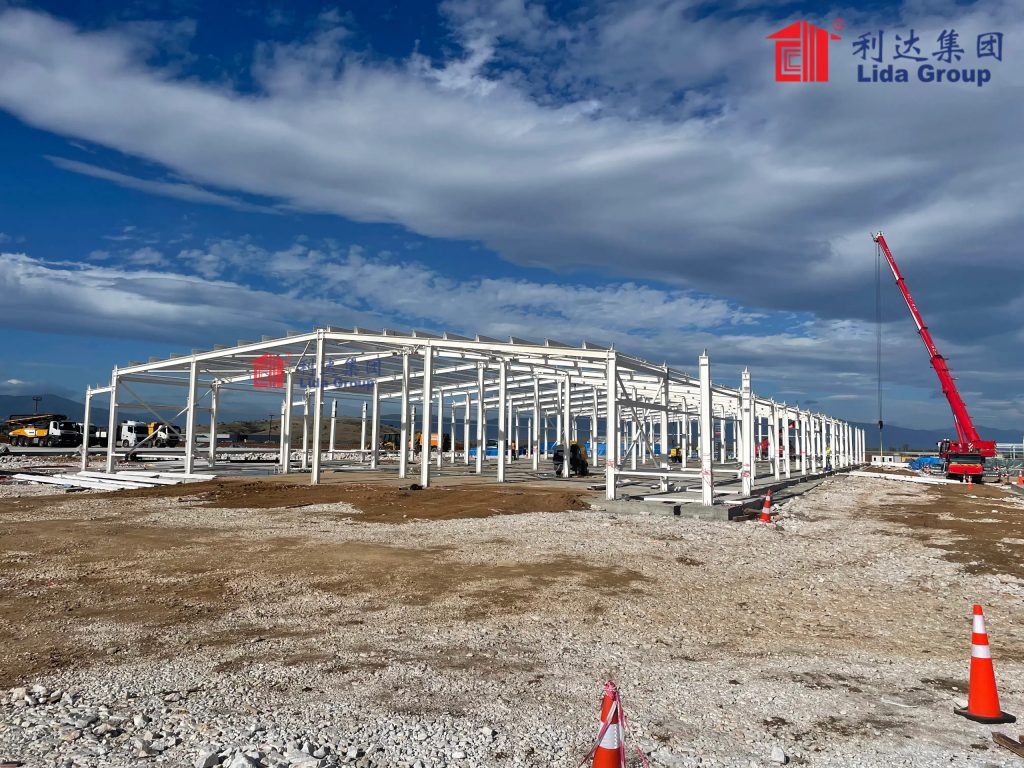
2. Core Innovation Principles of Lida Group’s Metal Frame Construction Technology
Lida Group’s innovative metal frame construction technology takes “durability, high precision, stability and flexibility” as the core design concept. Through systematic innovation in material selection, structural design, processing technology and assembly mode, it completely solves the quality and performance defects of traditional frame structures, laying a solid technical foundation for manufacturing high-quality durable buildings.
2.1 High-Strength Customized Metal Material Formula
Material performance is the fundamental guarantee of frame durability. Lida Group selects exclusive low-alloy high-strength galvanized metal materials for frame production. Compared with ordinary steel and wood, this customized metal material has an ultra-high strength-to-weight ratio, which is 25 times higher than traditional concrete materials. It ensures excellent tensile strength, compressive resistance and structural toughness while maintaining lightweight characteristics. The lightweight frame effectively reduces the overall self-weight of the building, lowers foundation bearing requirements, adapts to various complex terrains, and avoids structural settlement and cracking caused by insufficient foundation strength.
In terms of material stability, the customized metal material is completely impervious to termite erosion, microbial decay and mold growth, overcoming the natural defects of wooden frames. The uniform and stable internal metal texture avoids brittle fracture problems of ordinary low-quality steel. All raw metal materials undergo strict factory sampling inspection and performance testing to ensure consistent thickness, stable mechanical properties and zero quality defects, fundamentally guaranteeing the basic durability and safety of building frames.
2.2 Multi-Layer Composite Anti-Corrosion and Anti-Aging Technology
Outdoor building frames face long-term erosion from rainwater, humid air, coastal salt spray, ultraviolet radiation and desert sandstorms, making anti-corrosion and anti-aging performance the key to structural durability. Different from the single galvanization treatment of ordinary steel frames, Lida Group’s innovative metal frames adopt dual protection technology of hot-dip galvanizing and multi-layer weather-resistant polymer coating.
The hot-dip galvanizing process forms a dense and uniform zinc protective layer on the metal surface, completely isolating the metal matrix from air and moisture to prevent oxidation and electrochemical corrosion. The outer polymer weather-resistant coating further enhances ultraviolet resistance, salt spray corrosion resistance, scratch resistance and anti-fading performance. This multi-layer composite protection system enables the metal frame to maintain stable structural performance in extreme environments ranging from alpine low temperature, coastal high humidity to desert high temperature, effectively avoiding rust, aging and structural loosening. Verified by long-term outdoor simulation tests, the anti-corrosion and anti-aging system ensures the metal frame’s stable service life exceeds 25 years.
2.3 Digital Precision Factory Fabrication
Quality inconsistency is a prominent pain point of traditional on-site construction. Lida Group’s metal frame components are all processed in fully automated digital factories, abandoning backward manual on-site production modes. Supported by CNC numerical control equipment and finite element simulation analysis technology, all metal frame beams, columns and connecting accessories complete precision cutting, punching and forming in standardized production lines.
The whole production process realizes full digital control, with component dimensional accuracy controlled within ±2 millimeters. Before leaving the factory, every batch of metal frames undergoes professional structural stress testing, bearing capacity verification and assembly simulation testing to ensure stable mechanical performance and accurate connection matching. Unified factory standardized production eliminates quality deviation caused by manual operation errors and environmental interference, ensuring consistent and reliable structural quality of each building frame and greatly improving the overall finished quality of buildings.
2.4 Modular Bolted Quick-Assembly Structure
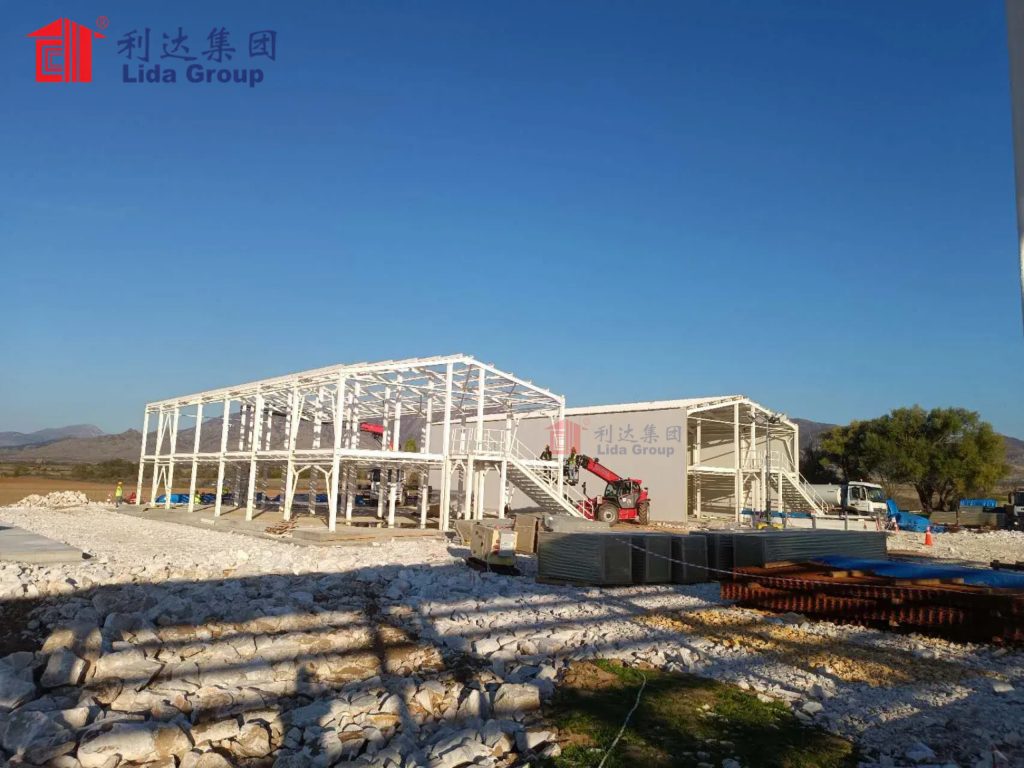
Lida Group’s most core innovative breakthrough is abandoning traditional on-site welding construction and adopting standardized bolted modular assembly technology. All metal frame components reserve precise unified connecting holes during factory processing without on-site cutting, welding and painting operations. On construction sites, workers only need to complete quick butt joint and bolt fixing to realize frame assembly.
This innovative connection mode completely avoids structural hidden dangers such as welding cracks, welding deformation and joint rust caused by traditional welding processes. Standardized bolted connections ensure uniform stress at all structural nodes, strong connection toughness and stable overall coordination. The assembled frame structure has good flexible deformation capacity, which can absorb external impact force through micro deformation when encountering earthquakes and strong winds, effectively improving building disaster resistance. In addition, the bolted assembly structure supports complete disassembly, transfer and secondary reassembly, realizing repeated cyclic utilization of metal frames.
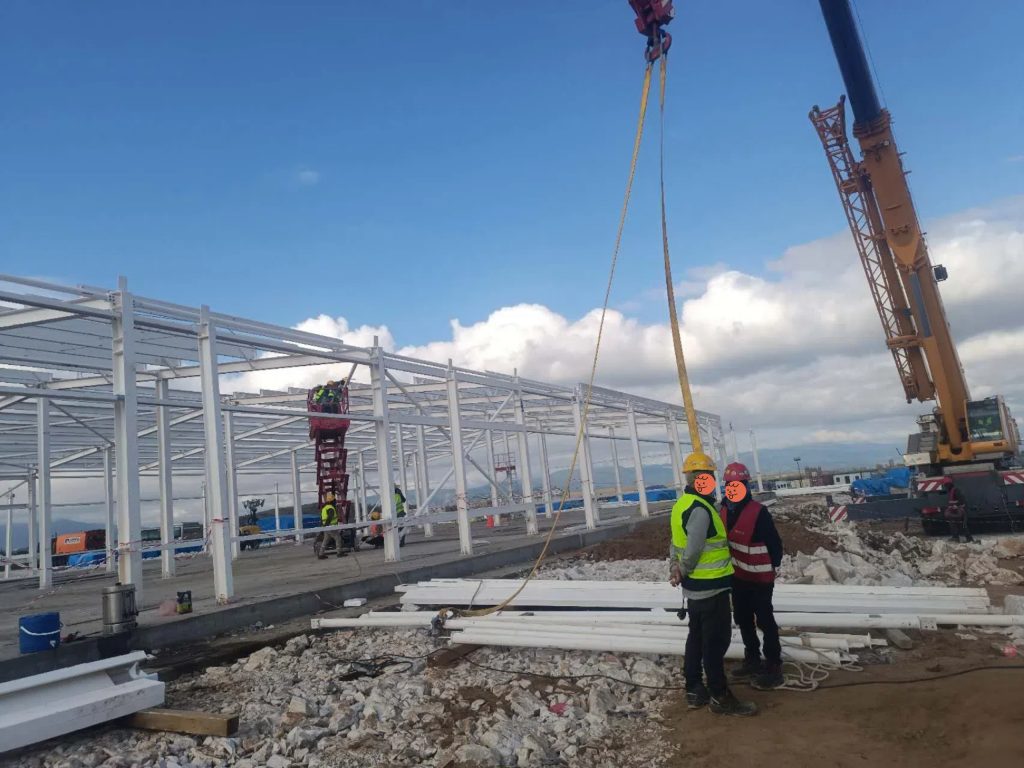
3. Core Advantages of Buildings Built with Innovative Metal Frame Construction
Empowered by innovative metal frame construction technology, Lida Group’s high-quality buildings form comprehensive competitive advantages in structural durability, construction quality, safety performance, economic efficiency and green environmental protection, fully meeting the high-standard construction needs of modern engineering and commercial scenarios.
3.1 Ultra-Long Structural Durability and Low Maintenance
Durability is the most prominent advantage of Lida Group’s metal frame buildings. Benefiting from high-strength customized metal materials and multi-layer composite anti-corrosion technology, the metal frame will not rust, deform, decay or mildew during long-term outdoor exposure. Compared with wooden frames that need annual anti-corrosion and insect-proof maintenance and ordinary welded steel frames that require frequent rust removal and repair, Lida Group’s metal frame has extremely low daily maintenance requirements. The stable structural performance ensures that the building can operate continuously and stably throughout multiple project cycles, greatly reducing the long-term operation and maintenance costs for building owners and realizing low-consumption and durable building operation.
3.2 Superior Structural Safety and Disaster Resistance
Lida Group’s innovative metal frame has excellent mechanical properties and flexible structural toughness. Professional performance tests verify that the integrated metal frame structure can resist magnitude 8 earthquakes, level 12 strong winds, heavy snow accumulation and sandstorm impact. Different from the brittle fracture of concrete and wooden structures under external impact, the metal frame can disperse and absorb external stress through micro plastic deformation, avoiding overall building collapse. Whether in earthquake-prone belts, coastal typhoon areas, alpine frozen regions or arid desert areas, the metal frame building can maintain stable structural integrity, providing reliable safety guarantee for on-site staff and materials.
3.3 High Construction Accuracy and Stable Finished Quality
Full factory digital precision processing ensures the ultra-high assembly accuracy of metal frame buildings. All component sizes, connection positions and assembly gaps strictly comply with international building standards, eliminating random quality defects of traditional manual construction. The modular matching design ensures the coordinated operation of the frame and supporting wall panels, roof systems and internal facilities. The assembled building has flat and stable walls, neat internal structures and uniform overall quality. No matter single independent buildings or large-scale building clusters, they can reach high-quality engineering acceptance standards, effectively solving common problems such as structural inclination, gap unevenness and loose assembly of traditional buildings.
3.4 Efficient Construction and Flexible Scenario Adaptability
The bolted modular assembly mode greatly improves construction efficiency. Most building components are prefabricated in factories, and on-site assembly only requires simple hoisting and fixing operations, shortening the overall construction cycle by more than 50% compared with traditional construction methods. The lightweight metal frame has low requirements for foundation conditions, and can be quickly deployed on flat cement ground, gravel ground, uneven mountain terrain and coastal tidal flat terrain, adapting to various complex construction site environments. Meanwhile, the modular splicing design supports free adjustment of building span, floor number and indoor layout, realizing flexible customization according to project scale and functional demands, breaking the single structural limitation of traditional buildings.
3.5 Excellent Green Environmental Protection and Recyclability
Metal frames are typical eco-friendly green building materials. All metal components of Lida Group’s buildings can be completely disassembled, recycled and reused, with a material recycling rate of over 95%. The factory prefabrication mode realizes zero on-site construction waste, dust and sewage pollution during the construction process, effectively reducing construction’s impact on the ecological environment. The lightweight frame design reduces foundation earthwork excavation and resource consumption. Combined with high-efficiency thermal insulation enclosure systems, the metal frame building effectively reduces daily energy consumption and carbon emissions. Compared with disposable high-pollution traditional buildings, Lida Group’s innovative metal frame buildings fully comply with global low-carbon sustainable development and green construction standards.
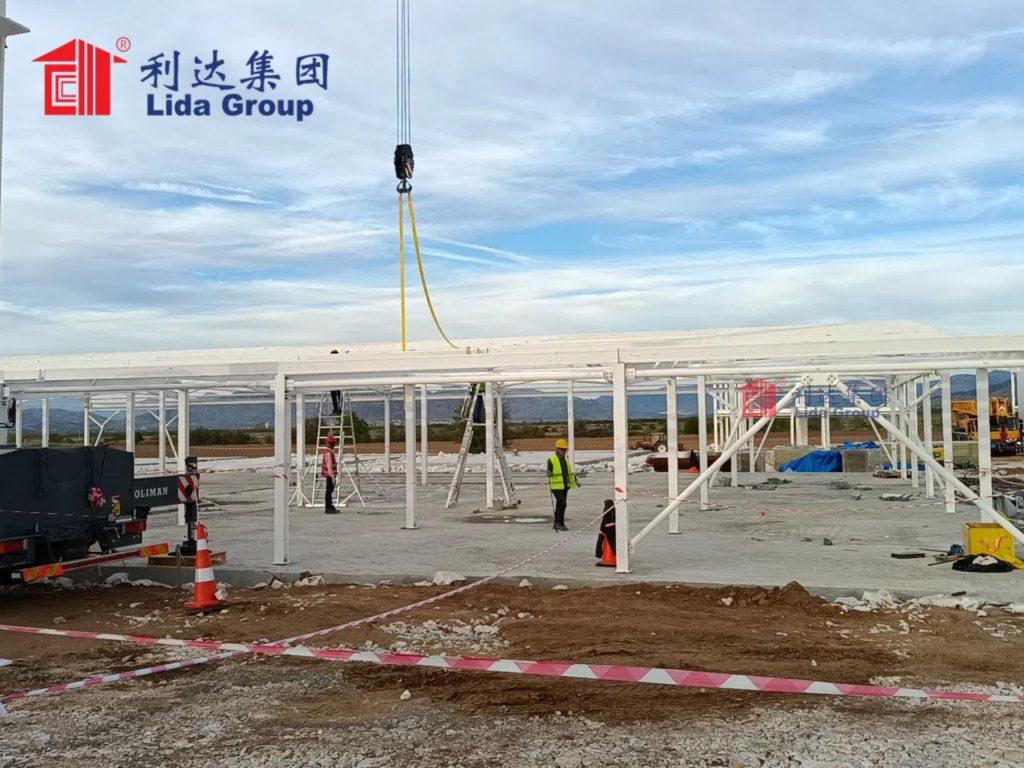
4. Global Engineering Application Cases
Lida Group’s innovative metal frame construction technology has been widely applied in global engineering projects, and numerous practical cases have fully verified the excellent durability, high quality and environmental adaptability of metal frame buildings in complex scenarios.
In an African open-pit mining project, the construction site is located in a savanna region with strong ultraviolet radiation, obvious dry and wet seasonal differences, frequent gusts and harsh natural conditions. Traditional wooden frame buildings are easy to decay and burn, while ordinary welded steel frame buildings are prone to rapid rust and aging. The project adopted Lida Group’s innovative metal frame buildings. The multi-layer anti-ultraviolet and anti-corrosion metal frame effectively resisted outdoor harsh erosion, maintaining stable structural performance throughout the five-year project cycle. The efficient modular assembly completed the deployment of hundreds of worker dormitories within 9 days, solving urgent staff accommodation demands. The buildings required almost no daily maintenance, effectively reducing the project’s auxiliary operation costs and ensuring stable construction progress.
In a Southeast Asian coastal water conservancy project, the local area is affected by perennial high temperature, heavy rainfall, high humidity and severe salt spray corrosion, which puts forward extremely high requirements for building frame anti-corrosion and waterproof performance. Lida Group provided customized innovative metal frame buildings with enhanced salt spray resistance. The composite anti-corrosion system effectively isolated coastal salt fog and moisture erosion, avoiding frame rust and structural deformation. The flexible metal frame structure resisted multiple seasonal typhoon impacts without structural damage. After the completion of the three-year project, all metal frame components were completely disassembled and reused in local municipal construction projects, saving nearly 40% of the enterprise’s temporary facility investment and successfully passing local green construction certification.
5. Market Value and Industrial Development Significance
With the continuous upgrading of global building safety standards, quality assessment specifications and environmental protection requirements, traditional low-durability, high-consumption and non-recyclable building frame structures can no longer meet the development needs of modern construction. Lida Group’s innovative metal frame construction technology subverts the backward construction mode of the traditional industry and provides a standardized, durable, high-quality and green building frame solution for the global construction market.
For construction enterprises and project owners, Lida Group’s metal frame buildings solve common industry pain points including unstable structural quality, short service life, high maintenance cost and poor reusability. The integrated factory prefabrication and modular assembly mode ensures controllable project quality, progress and cost, improves project comprehensive economic benefits and operational stability, and optimizes enterprise ESG assessment performance and market competitiveness. For end users, safe, stable, durable and comfortable metal frame building spaces fully protect personal safety and improve living and working experience.
For the entire global construction industry, Lida Group’s innovative metal frame construction technology promotes the transformation of the construction industry from extensive manual wet construction to intensive industrialized modular manufacturing. It standardizes the design, production and assembly process of building frames, improves the overall durability and quality level of prefabricated buildings, drives the industry’s upgrading in structural safety, refined quality control and green sustainability, and provides a replicable high-quality development model for modern modular construction.
6. Conclusion
Traditional wooden, welded steel and concrete frame construction technologies have long restricted the high-quality and sustainable development of the construction industry due to poor durability, unstable quality, low construction efficiency, high maintenance consumption and serious resource waste. As a leading global modular building solution provider, Lida Group breaks through the technical limitations of traditional frame construction with independent innovative metal frame technology, successfully creating durable and high-quality modern buildings suitable for global complex scenarios.
Through customized high-strength metal materials, multi-layer composite anti-aging protection, digital factory precision fabrication and innovative bolted modular assembly structure, Lida Group’s metal frame construction realizes comprehensive upgrades in structural safety, construction accuracy, environmental adaptability and recyclability. A large number of global engineering practices have verified that metal frame buildings have irreplaceable advantages over traditional buildings in ultra-long durability, low maintenance consumption, flexible construction and green environmental protection, effectively avoiding common quality defects and resource waste problems of traditional buildings and creating lasting economic and use value for project owners.
In the context of accelerated industrialization and standardized quality upgrading of the global construction industry, durable, precise, efficient and recyclable metal frame modular buildings will become the mainstream development trend. In the future, Lida Group will continue to iterate and upgrade innovative metal frame construction technology, further optimize building structural performance, intelligence and comfort, continuously output high-quality and durable modular building solutions, lead the high-quality upgrading of global prefabricated buildings, and empower the long-term sustainable development of the modern construction industry.
Related news
-
Lida Group Delivers High Quality House with Advanced Steel Structure Building Technology
2026-04-27 11:06:13
-
Lida Group Delivers Construction Site Worker Dormitory with Low-Cost Durable Building Design
2026-04-27 10:45:25
-
Low-Cost Durable Building Meets Sustainability in Lida Group's Worker Dormitory Solutions
2026-04-27 10:27:27
contact us
- Tel: +86-532-88966982
- Whatsapp: +86-13793209022
- E-mail: sales@lidajituan.com
