



Lida Group Delivers Construction Site Worker Dormitory with Low-Cost Durable Building Design
2026-Apr-27 10:45:25
By Admin
The global construction industry relies heavily on stable on-site workforce support to ensure efficient project delivery. As fundamental temporary infrastructure for all engineering projects, construction site worker dormitories play a pivotal role in stabilizing construction teams, standardizing on-site management, and guaranteeing continuous project progress. Most construction projects are characterized by tight schedules, limited budgets, and complex outdoor operating environments, which put forward two core requirements for temporary worker accommodation: controllable construction costs and stable long-term structural durability. Nevertheless, traditional on-site dormitory solutions have long failed to balance these two key indicators. Conventional masonry buildings require massive material and labor investment with long construction cycles and poor reusability, while low-end simple color steel cabins feature low upfront costs but fragile structures, frequent failures, and high later maintenance expenses. The universal contradiction between low cost and structural durability has become a major obstacle restricting cost control and refined management of global construction projects.
Against the backdrop of intensified market competition and standardized upgrading of construction site management, construction enterprises are eager for integrated temporary accommodation solutions that can reduce comprehensive operating costs while maintaining stable building performance. Specializing in modular prefabricated building design, production, and engineering delivery, Lida Group accurately grasps the core pain points of traditional worker dormitories. By optimizing structural design, upgrading raw material configuration, and iterating modular assembly technology, Lida Group successfully delivers customized construction site worker dormitories with low-cost durable building design. Breaking the industry stereotype that low-cost temporary buildings must sacrifice structural quality and service life, this innovative building solution realizes low upfront investment, low maintenance consumption, long structural service life and strong environmental adaptability. It provides cost-effective and long-lasting worker accommodation for global infrastructure, mining, water conservancy, municipal and energy engineering projects, becoming a benchmark product for modern temporary construction facilities.
Different from ordinary temporary buildings that blindly cut costs by reducing material standards, Lida Group’s low-cost durable dormitory design adopts scientific cost control logic and structural optimization concepts. Instead of downgrading building materials, the brand reduces comprehensive costs through standardized mass production, efficient modular assembly, minimal foundation requirements and reusable structural design. Meanwhile, high-strength anti-corrosion steel frames and high-performance composite sandwich panels ensure excellent weather resistance, impact resistance and aging resistance of dormitories. This unique design concept perfectly balances economic efficiency and structural durability, enabling construction enterprises to save project auxiliary costs without compromising building safety, service life and worker living quality. Up to now, Lida Group’s low-cost durable worker dormitories have been successfully delivered to more than 120 countries and regions worldwide, accumulating rich practical engineering experience in diverse harsh construction scenarios.
1. Dual Dilemma of Cost and Durability in Traditional Worker Dormitories
For a long time, the construction of traditional construction site worker dormitories has fallen into an unbreakable dual dilemma of cost and durability, which cannot meet the refined and sustainable management needs of modern construction projects. Most construction enterprises can only choose between high-cost durable buildings and low-cost fragile temporary facilities, lacking balanced and efficient solution options.
On the one hand, high-standard durable temporary buildings bring excessive economic pressure to projects. Traditional masonry temporary dormitories and customized high-grade steel structure buildings have stable structural performance and long service life. However, they require complex foundation treatment, a large number of building materials and professional construction teams, resulting in high upfront construction costs, long construction cycles and poor flexibility. Most importantly, these fixed buildings cannot be disassembled and relocated. After the completion of a single project, the buildings can only be demolished and abandoned, unable to create repeated asset value. For short-cycle engineering projects, such high-investment durable buildings will cause serious resource waste and cost redundancy, greatly reducing project profit margins.
On the other hand, low-cost ordinary temporary buildings have prominent durability defects. To control upfront investment, most small and medium-sized construction enterprises choose low-grade color steel cabins and simple wooden houses. Although the one-time construction cost is low, these buildings have extremely unstable structural performance. Thin single-layer steel plates and low-density foam core materials lead to poor wind resistance, seismic resistance, waterproofing and anti-corrosion capabilities. Under complex outdoor construction environments such as rainwater erosion, sandstorm impact and ultraviolet radiation, traditional low-cost dormitories are prone to roof leakage, wall rust, structural deformation and mold breeding. The average service life is only five to eight years. Enterprises need to invest a lot of manpower and material resources in regular inspection, maintenance and component replacement throughout the project cycle. The continuous hidden maintenance costs make the comprehensive life-cycle cost far exceed expectations.
In addition to economic and durability defects, traditional dormitories also have obvious deficiencies in environmental adaptability and living experience. Fixed structural design cannot flexibly adjust the building scale according to the dynamic changes of construction teams. Poor thermal insulation and sound insulation performance lead to harsh indoor living environments, which affect workers’ rest quality and physical health, easily causing team turnover and indirectly increasing enterprise human resource costs. The long-standing dual dilemma of cost and durability urgently requires innovative building design solutions to break through industry limitations.
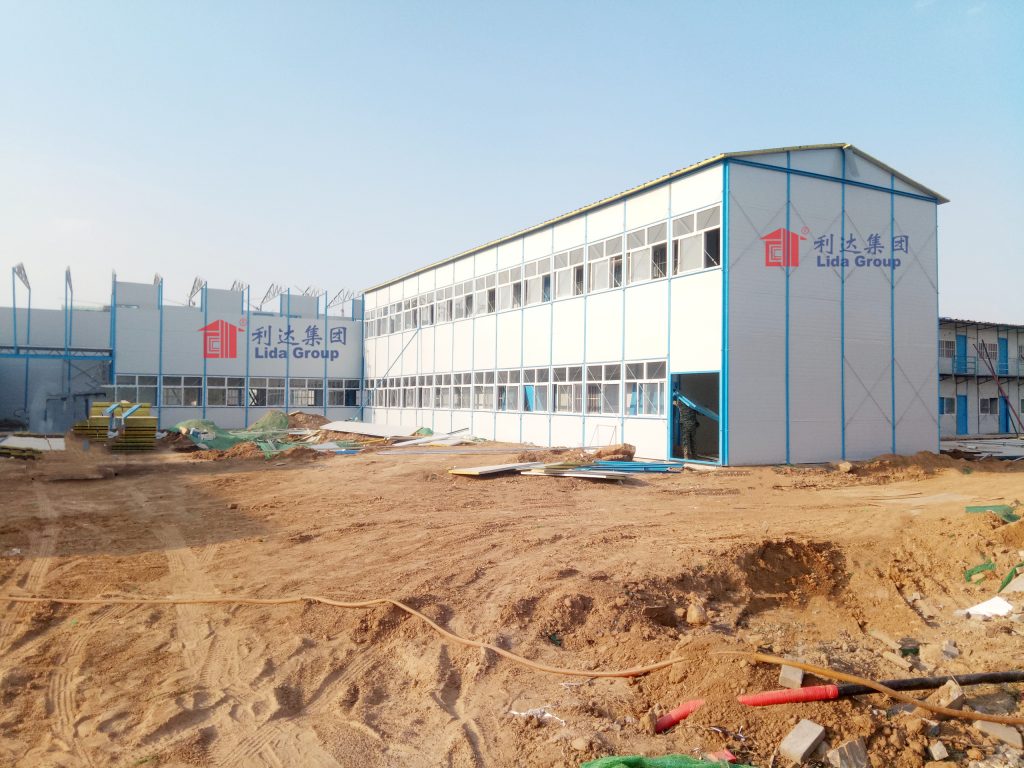
2. Core Design Concepts and Technical Support of Lida Group’s Low-Cost Durable Buildings
Lida Group’s low-cost durable worker dormitory design abandons the backward industry thinking of trading quality for low cost. Centering on full-life-cycle cost optimization and long-term structural stability, Lida Group carries out systematic innovation in structural design, material selection, production technology and assembly mode, forming a mature and reliable modular building system, and realizing the organic unity of low economic cost and ultra-long structural durability.
2.1 Optimized Lightweight Steel Frame Structural Design
Structural frame is the core component that determines the durability of temporary buildings. Lida Group adopts optimized hot-dip galvanized lightweight steel frame structure for dormitories. Through finite element stress simulation analysis, the enterprise removes redundant structural designs on the premise of ensuring overall building bearing capacity, realizing lightweight integration of the frame. Compared with traditional heavy steel structures, the optimized lightweight frame reduces the overall building weight by more than 30%, effectively lowering material consumption, factory production costs and on-site hoisting and transportation expenses. At the same time, all steel components undergo professional hot-dip galvanizing anti-corrosion treatment, with uniform and dense surface zinc coating, which can effectively resist oxidation, rust, rainwater corrosion and coastal salt spray erosion.
Verified by professional performance tests, the optimized steel frame structure can resist level 12 strong winds and magnitude 8 earthquakes, and maintain stable bearing capacity under extreme temperatures ranging from minus 40 degrees Celsius to 50 degrees Celsius. Even in harsh environments such as desert sandstorms, alpine low temperature and coastal humidity, the steel frame will not deform or age. The overall service life of the steel structure can reach more than 25 years, providing stable and reliable structural support for long-term operation of worker dormitories.
2.2 High-Cost-Performance Composite Sandwich Panel Design
Matching with the lightweight steel frame, Lida Group equips dormitories with self-developed high-cost-performance composite sandwich panels. Different from low-grade single-function panels on the market, the composite panels adopt a three-layer integrated structure, including galvanized steel outer plates, high-density flame-retardant insulation core materials and formaldehyde-free inner decorative plates. Through integrated pressing and forming technology, the panels integrate waterproofing, thermal insulation, sound insulation, fire resistance and anti-aging functions. The multi-functional integrated design avoids the need for multiple auxiliary decorative and thermal insulation materials for traditional walls, effectively simplifying building structure and reducing comprehensive material costs.
The outer steel plate of the sandwich panel is coated with multi-layer weather-resistant paint to enhance ultraviolet resistance and anti-fading performance. The middle rock wool or EPS core material not only ensures flame-retardant safety, but also forms an efficient thermal insulation layer to reduce indoor temperature adjustment energy consumption. The inner formaldehyde-free decorative plate ensures healthy indoor air quality and anti-mold hygiene performance. While controlling unit material cost, the composite panel greatly improves the comprehensive performance and service life of the building wall, avoiding frequent wall maintenance and renovation caused by single functional defect of traditional panels.
2.3 Standardized Modular Prefabrication to Reduce Comprehensive Costs
Standardized modular factory prefabrication is the key for Lida Group to realize low-cost delivery. All dormitory steel frames, wall panels, roof systems, doors, windows and internal supporting facilities are uniformly designed, batch-produced and pre-assembled in automated factories. Unified production specifications eliminate material waste caused by on-site cutting, repeated processing and unqualified construction of traditional buildings, increasing the raw material utilization rate to more than 95%. Centralized factory mass production greatly reduces unit production costs through scale effect, making high-standard durable building materials reach affordable market prices.
In terms of on-site construction, Lida Group’s dormitories adopt bolt quick-connection assembly technology without welding, painting and other complex wet operations. The simplified assembly process reduces on-site professional labor demand and shortens construction cycle. A complete medium-sized worker dormitory cluster can be fully deployed and put into use within 7 to 10 days. Efficient construction avoids idle loss of on-site machinery and personnel, greatly reducing on-site construction and management costs for enterprises.
2.4 Detachable Reusable Design to Extend Asset Life Cycle
The most core cost-saving design of Lida Group’s durable dormitories is the full detachable modular structure. Traditional temporary buildings mostly adopt fixed welding structures and can only be used once. In contrast, all components of Lida Group’s dormitories are connected by standardized bolts, supporting rapid disassembly, integral transportation and secondary reassembly. After the completion of a single engineering project, all intact dormitory modules can be recycled and reused in new construction projects, with a component loss rate of less than 5% and reusable times of more than 10 times. This reusable design turns disposable temporary building consumables into recyclable fixed assets of construction enterprises, fundamentally solving the pain point of repeated construction investment of traditional dormitories and greatly reducing the average annual use cost of temporary accommodation.
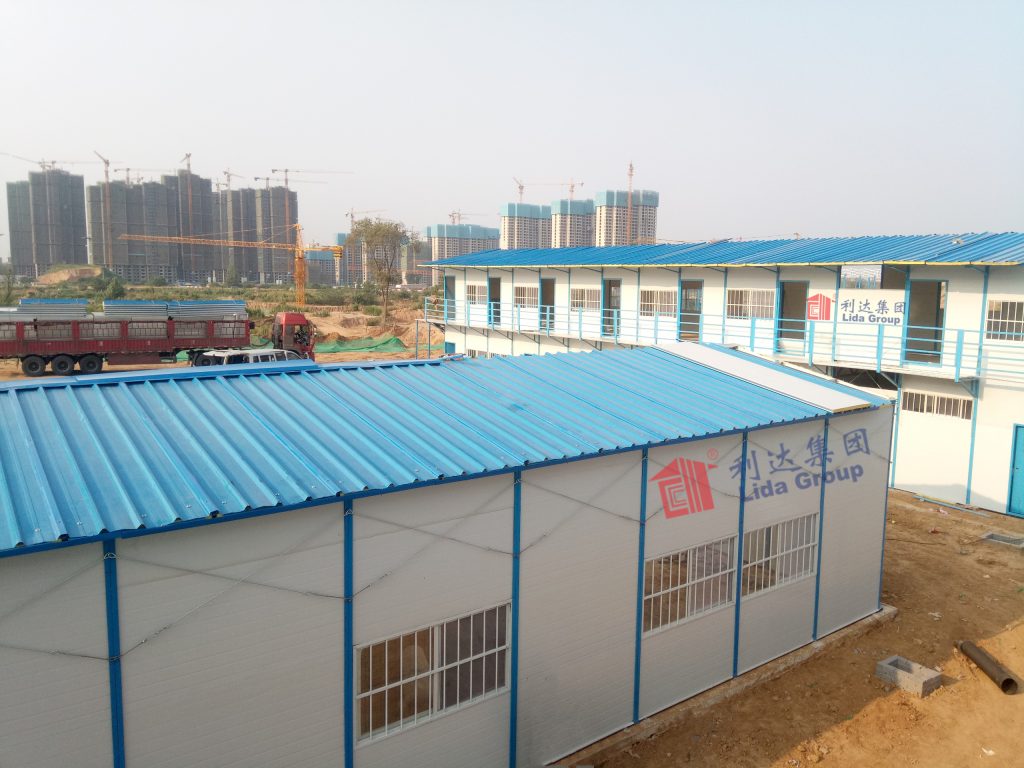
3. Comprehensive Core Advantages of Lida Group’s Low-Cost Durable Dormitories
Supported by optimized structural design, high-performance materials and mature modular technology, Lida Group’s delivered worker dormitories form comprehensive competitive advantages in economic cost, structural durability, environmental adaptability, living comfort and flexible application, fully meeting the diversified needs of modern construction site temporary accommodation management.
3.1 Full-Life-Cycle Low Economic Cost
Lida Group’s dormitory solutions realize comprehensive cost reduction throughout the entire life cycle. Standardized factory mass production and lightweight structural design reduce upfront construction investment by 25% to 35% compared with traditional qualified durable temporary buildings. Efficient modular assembly cuts on-site labor and mechanical leasing costs. Excellent anti-corrosion, anti-aging and waterproof performance reduces daily maintenance and component replacement expenses by more than 60%. Most importantly, the detachable reusable structure avoids repeated construction investment for different projects. Calculated based on a 25-year service cycle, the comprehensive annual use cost of Lida Group’s dormitories is only one-third of that of traditional disposable dormitories, bringing substantial and stable cost-saving benefits to construction enterprises.
3.2 Ultra-Long Structural Durability and Stable Safety
Cost reduction does not compromise building structural safety and durability. The matching hot-dip galvanized steel frame and composite sandwich panel structure forms an integral stable building system. Professional engineering tests confirm that the overall structure can resist extreme weather such as strong winds, rainstorms, sandstorms and extreme temperature changes, and has excellent seismic resistance, waterproofing, corrosion resistance and ultraviolet aging resistance. Whether in hot and humid coastal areas, dry and windy desert regions, or cold plateau environments, the dormitories can maintain stable structural performance without deformation, leakage or aging. The ultra-long service life far exceeds traditional temporary buildings, ensuring stable and safe accommodation throughout multi-cycle engineering projects.
3.3 Strong Environmental Adaptability and Flexible Scalability
Lida Group’s low-cost durable dormitories have extremely high environmental adaptability and flexible scalability. The lightweight building structure has low requirements for foundation conditions, and can be stably deployed on cement ground, gravel ground and compacted soil ground without complex foundation pouring and long curing cycles, adapting to various harsh and limited construction site terrain. Meanwhile, the modular splicing design supports free adjustment of building scale, floor number and indoor layout. Construction enterprises can expand or reduce dormitory modules according to the dynamic changes of construction team size and project progress, avoiding resource waste caused by over-construction and accommodation shortage caused by insufficient construction, realizing flexible and refined on-site accommodation management.
3.4 Balanced Living Comfort and Humanized Value
While focusing on cost control and structural durability, Lida Group fully considers workers’ living needs and humanized management requirements. The high-density sandwich panel structure has excellent thermal insulation and sound insulation performance, maintaining constant indoor temperature all year round and isolating more than 85% of external construction noise. The formaldehyde-free and anti-mold inner wall design ensures clean, hygienic and healthy indoor air and living environment. Combined with standardized indoor layout, sufficient natural lighting and ventilation and complete supporting living facilities, the dormitories effectively improve workers’ rest quality and living satisfaction, reduce enterprise personnel turnover rate, stabilize construction teams, and provide reliable workforce guarantee for efficient project construction.
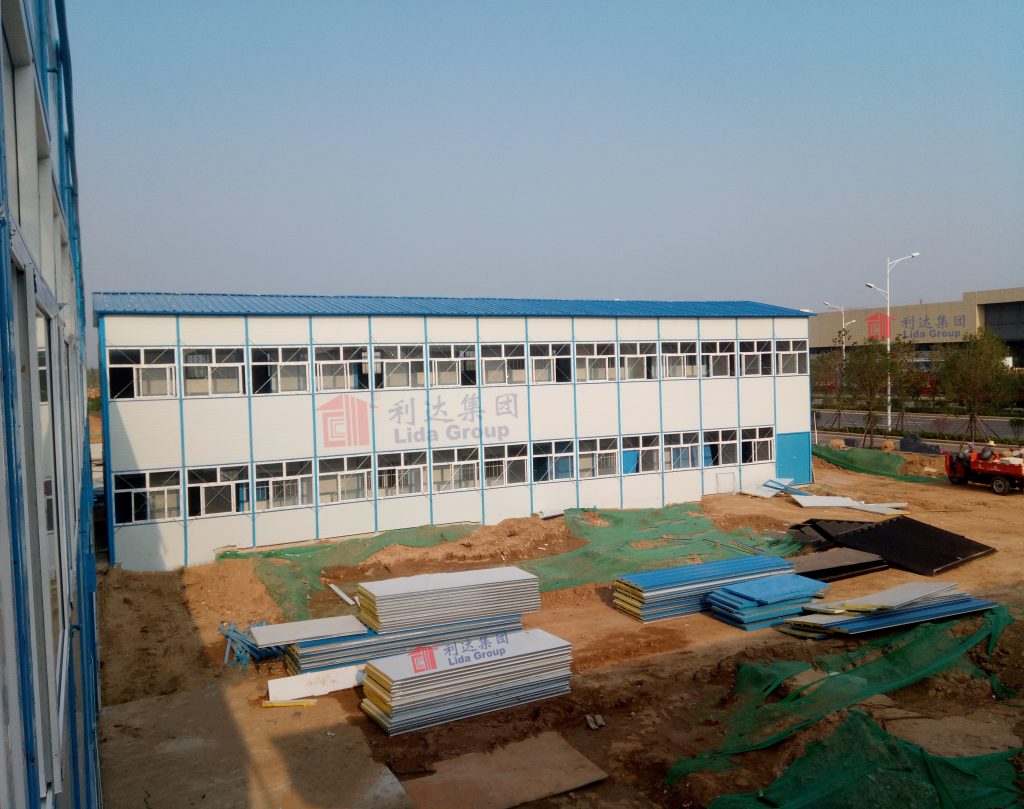
4. Global Engineering Delivery Cases
Lida Group’s low-cost durable worker dormitory solutions have been delivered to numerous global engineering projects, and a large number of practical cases have fully verified the product’s excellent cost performance, structural stability and environmental adaptability in complex scenarios.
In a Central Asian desert highway construction project, the construction site is located in a remote desert area with scarce resources, inconvenient transportation, frequent sandstorms and large day and night temperature differences. The project has a limited budget for temporary facilities and requires dormitories to maintain stable operation throughout the four-year project cycle with low maintenance costs. Traditional temporary buildings are either expensive and uneconomical or fragile and difficult to resist desert extreme weather. Lida Group provided customized low-cost durable modular dormitories for the project. The optimized anti-sand and anti-aging steel frame and composite panels effectively resisted desert sand erosion and ultraviolet aging. The whole dormitory cluster was quickly assembled on-site within 8 days, solving the urgent accommodation problem of 380 construction workers. During the four-year project cycle, the dormitories operated stably with almost no failure and maintenance. After project completion, all modules were disassembled and reused in a local municipal pipeline project, saving nearly 40% of the enterprise’s temporary accommodation comprehensive cost.
In a Southeast Asian coastal port expansion project, the local climate is hot and rainy all year round with high air humidity and severe salt spray corrosion. The project team faced dual challenges of controlling construction budget and resisting coastal humid corrosion. Lida Group’s delivered low-cost durable dormitories adopt enhanced waterproof and anti-corrosion structural design. The hot-dip galvanized steel frame and salt-spray-resistant coated sandwich panels effectively avoided structural rust, wall mold and water leakage. The excellent thermal insulation performance improved indoor living comfort in hot and humid climates. The reusable modular design realized zero demolition waste after project completion. The product’s balanced advantages of low cost and high durability helped the project successfully complete green construction assessment and budget control targets.
5. Market Application Value and Industrial Significance
With the continuous intensification of market competition in the global construction industry, project profit margins are gradually shrinking, and refined cost control has become the core competitiveness of construction enterprises. At the same time, the continuous upgrading of construction safety standards and worker welfare requirements makes durable, safe and comfortable temporary accommodation an indispensable basic guarantee for project construction. Lida Group’s low-cost durable building design precisely solves the long-standing industry dilemma that temporary dormitories cannot balance cost and durability, providing a universal and efficient solution for global construction site temporary facility construction.
For construction enterprises, Lida Group’s dormitory solutions effectively reduce the full-life-cycle operating cost of project temporary facilities, avoid repeated capital investment and resource waste, stabilize on-site construction teams, and improve project comprehensive economic benefits and operational efficiency. For frontline construction workers, stable, safe and comfortable living environments fully protect workers’ occupational health and legitimate welfare rights, reflecting the humanized management concept of modern engineering projects. For the entire construction industry, this innovative design concept breaks the outdated industry cognition of cost-quality trade-off, promotes the standardized, economical and durable upgrading of temporary building products, accelerates the refined and sustainable development of global construction site management, and guides the iterative progress of the modular prefabricated building industry.
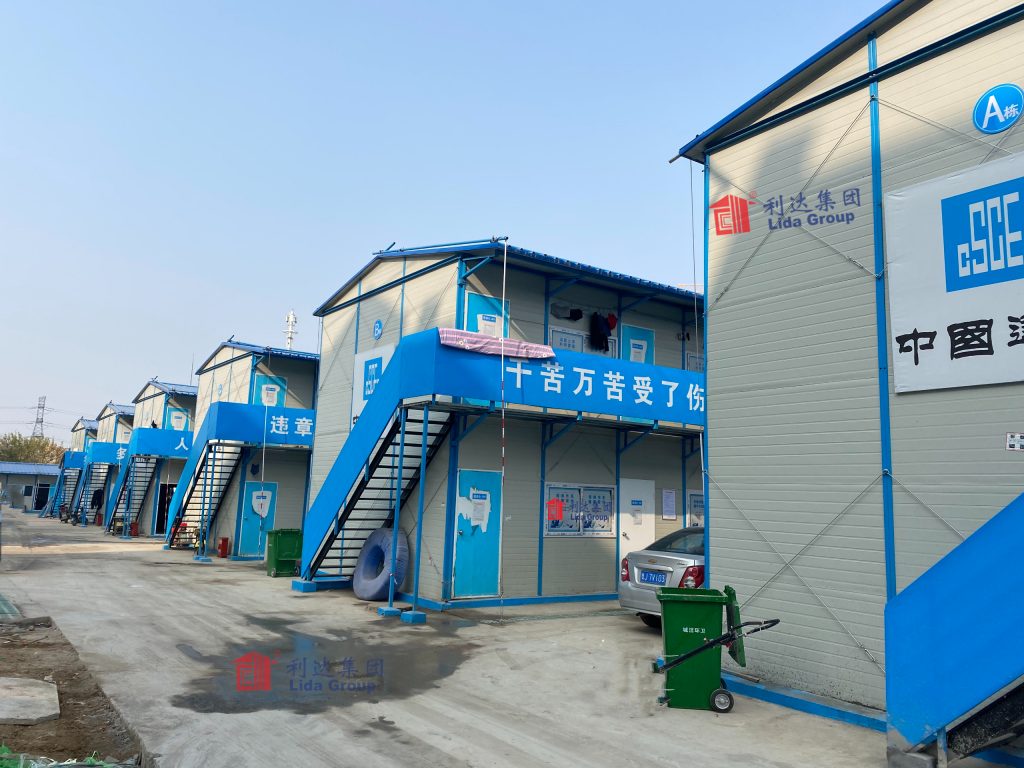
6. Conclusion
Traditional construction site worker dormitories have long restricted the refined management and sustainable development of construction projects due to the unresolvable contradiction between high comprehensive cost and poor structural durability. Either high investment cannot be recycled, or low cost leads to frequent building failures and increased hidden maintenance costs. As a leading global modular prefabricated building solution provider, Lida Group relies on mature engineering experience and innovative structural design concepts to deliver professional worker dormitories with low-cost durable building design, completely breaking the industry’s inherent technical limitations.
Through optimized lightweight steel frame structure, high-cost-performance composite sandwich panels, standardized factory prefabrication and detachable reusable design, Lida Group’s dormitories realize effective control of upfront construction cost, on-site assembly cost and later maintenance cost on the premise of ensuring ultra-long structural service life, excellent environmental adaptability and safe living conditions. A large number of global engineering practices have verified that this product perfectly balances economic efficiency, structural durability and humanized practicality, solving multiple pain points such as high comprehensive cost, unstable performance and poor flexibility of traditional temporary dormitories.
In the future, with the continuous development of global modular construction technology and the continuous improvement of construction industry refined management standards, low-cost, durable, reusable and humanized temporary buildings will become the mainstream standard of the industry. Lida Group will continue to optimize modular building structural design and material performance, further improve the cost performance and environmental sustainability of worker dormitory products, continuously provide high-quality temporary accommodation solutions for global construction enterprises, and steadily promote the high-quality and sustainable development of the global construction industry.
Related news
-
Eco-Friendly Sandwich Panel House by Lida Group Ideal for Construction Site Worker Dormitory
2026-04-27 10:36:49
-
Low-Cost Durable Building Meets Sustainability in Lida Group's Worker Dormitory Solutions
2026-04-27 10:27:27
-
Lida Group Launches Eco-Friendly Sandwich Panel House for Construction Site Worker Dormitory
2026-04-27 10:23:41
contact us
- Tel: +86-532-88966982
- Whatsapp: +86-13793209022
- E-mail: sales@lidajituan.com
