



Eco-Friendly Sandwich Panel House by Lida Group Ideal for Construction Site Worker Dormitory
2026-Apr-27 10:36:49
By Admin
The booming global construction industry generates countless temporary workforce accommodation demands across infrastructure, municipal, mining, and energy engineering projects worldwide. Construction site worker dormitories serve as fundamental temporary facilities that directly influence workforce stability, worker physical and mental health, on-site management efficiency, and overall project productivity. For decades, most construction projects rely on conventional temporary buildings, including crude wooden huts, low-grade color steel cabins, and simple masonry structures. These traditional accommodation options suffer from universal drawbacks such as toxic building materials, poor thermal insulation, insufficient weather resistance, low reusability, and excessive construction waste. Unable to balance environmental protection, living comfort, structural durability, and economic practicability, they have long become a prominent shortcoming restricting green construction and refined site management.
As global carbon neutrality initiatives continue to advance and corporate ESG assessment standards become increasingly stringent, the construction industry is undergoing comprehensive green transformation. Temporary worker dormitories are no longer regarded as disposable auxiliary facilities but essential components of sustainable project operation and humanized workforce management. Specialized in modular green prefabricated building research, development, and manufacturing, Lida Group deeply understands the defects of traditional on-site accommodation and independently develops high-performance eco-friendly sandwich panel houses tailored exclusively for construction site worker dormitories. Integrating low-carbon raw materials, optimized composite structural design, factory prefabrication technology, and detachable modular assembly systems, Lida Group’s sandwich panel houses perfectly fit the complex and changeable operating scenarios of construction sites, becoming the ideal temporary accommodation solution for global construction enterprises.
Different from ordinary market-grade sandwich panel buildings with single performance and unstable quality, Lida Group’s eco-friendly sandwich panel houses adopt a scientific three-layer composite structure composed of anti-corrosion galvanized steel outer plates, high-performance flame-retardant insulation core materials, and formaldehyde-free inner decorative layers. All raw materials comply with international green building certification standards, achieving zero toxic emission, excellent weather adaptability, energy-saving operation, and recyclable utilization. Through standardized automated factory production and efficient on-site assembly, these houses solve multiple industry pain points of traditional dormitories, including environmental pollution, poor comfort, short service life, and high comprehensive costs. Currently, Lida Group’s eco-friendly sandwich panel dormitories have been widely deployed in over 120 countries and regions, fully verifying their superior practicability and sustainability in diverse complex construction environments.
1. Persistent Shortcomings of Traditional Construction Site Worker Dormitories
Traditional temporary worker dormitories have failed to meet modern green construction and humanized management standards due to outdated design concepts and backward building technologies. Most construction enterprises prioritize low upfront costs and rapid construction progress when building temporary accommodation, ignoring long-term environmental impact, worker living quality, and resource utilization efficiency. These inherent flaws make conventional dormitories unsuitable for the sustainable development needs of the modern construction industry.
First of all, traditional dormitories face severe environmental and health risks. Low-cost ordinary color steel cabins use inferior adhesive and foam core materials containing formaldehyde, benzene, and other volatile harmful substances. These toxins continuously volatilize indoors throughout the building’s service cycle, polluting indoor air and triggering respiratory diseases, skin allergies, and other health problems among long-term resident workers. Wooden temporary huts consume massive natural wood resources and are prone to decay, mildew, and bacterial breeding in humid environments. Furthermore, most traditional temporary buildings adopt fixed welding structures that cannot be disassembled and reused. After project completion, obsolete dormitories are directly demolished, generating large quantities of non-degradable construction waste that occupies land resources and aggravates ecological pollution.
Secondly, traditional dormitories provide poor living comfort and low environmental adaptability. Ordinary single-layer color steel panels have extremely limited thermal insulation and sound insulation performance. In hot summer seasons, indoor temperatures rise sharply, while indoor heat dissipates rapidly in cold winter, resulting in extreme indoor temperature fluctuations. Additionally, simple splicing structures cannot block external construction noise, wind noise, and dust, leading to noisy and dusty living environments. In rainy, humid, coastal salt spray, and desert sandstorm environments, traditional dormitories are prone to water leakage, wall peeling, rust deformation, and mold growth, creating damp, messy, and unhygienic living conditions that severely affect worker rest quality and physical health.
Thirdly, traditional temporary buildings have low structural durability and high full-life-cycle costs. The thin and fragile structural design of conventional dormitories results in poor wind resistance, seismic resistance, and impact resistance. Most ordinary temporary dormitories only have a service life of five to eight years and require frequent maintenance, component replacement, and renovation during operation, consuming substantial manpower and material resources. Moreover, the disposable construction mode forces enterprises to repeatedly invest in building new dormitories for different projects, leading to continuous redundant capital expenditure and low overall project economic benefits.
2. Structural Composition and Eco-Friendly Mechanism of Lida Group’s Sandwich Panel Houses
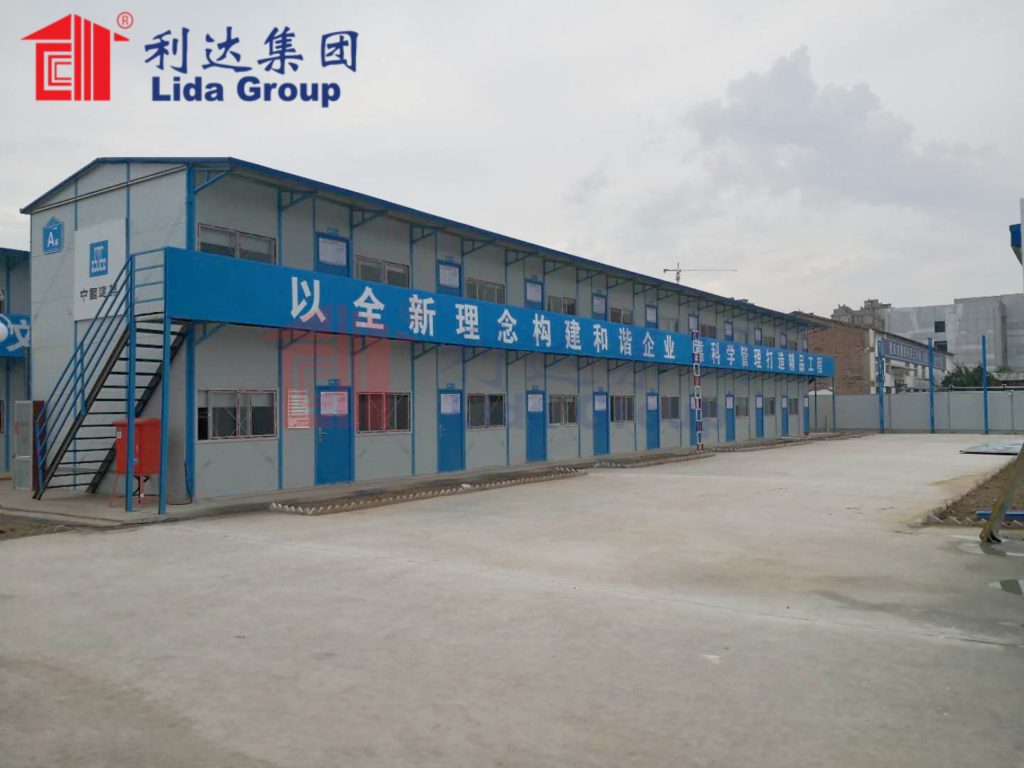
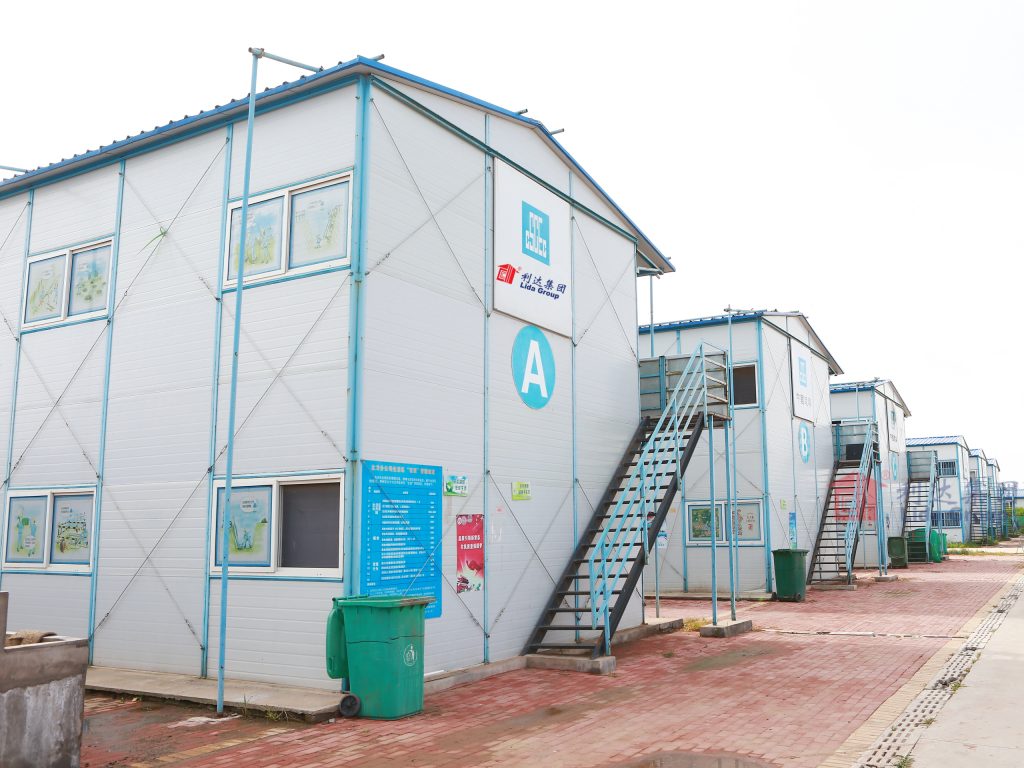
Lida Group’s eco-friendly sandwich panel house is a customized modular temporary building solution developed specifically for construction site scenarios. Every structural layer and production process is optimized for green environmental protection, structural durability, living comfort, and rapid deployment. The mature three-layer composite structure and standardized production technology fundamentally overcome the defects of traditional temporary buildings, making it the ideal choice for construction site worker dormitories.
2.1 Anti-Aging Galvanized Steel Outer Layer
The outer protective layer of Lida Group’s customized sandwich panels adopts high-grade hot-dip galvanized color steel plates with multi-layer weather-resistant coating treatment. This professional surface processing technology enhances the steel plate’s oxidation resistance, ultraviolet resistance, salt spray corrosion resistance, and waterproof performance. The outer steel layer can effectively resist external harsh environmental impacts, including strong winds, rain erosion, desert sandstorms, and coastal salt spray, preventing wall fading, rusting, deformation, and aging during long-term outdoor exposure. Verified by professional environmental simulation tests, the outer steel structure maintains stable physical and chemical properties under extreme temperatures ranging from -40℃ to 50℃, providing durable and reliable external protection for worker dormitories in global complex construction environments.
2.2 Multi-Functional Green Insulation Core Layer
The middle core layer is the key functional component that determines the environmental performance, thermal insulation, sound insulation, and fire resistance of sandwich panels. Lida Group selects A1-grade flame-retardant rock wool or formaldehyde-free EPS core materials according to different regional climate characteristics and project safety standards. Both core materials are environmentally friendly, non-toxic, and pollution-free, producing no harmful volatile substances during long-term use. The porous internal structure forms a stable air insulation layer, effectively isolating indoor and outdoor heat exchange, reducing building energy consumption for heating and cooling, and lowering project carbon emissions. Meanwhile, the porous structure absorbs external noise waves, isolating over 85% of construction site noise and outdoor wind noise to create a quiet indoor rest environment. In addition, the flame-retardant core material can effectively block flame spread, significantly improving the fire safety level of on-site dormitories.
2.3 Health-Focused Anti-Mold Inner Layer
Different from ordinary inferior inner wall panels on the market, the inner decorative layer of Lida Group’s sandwich panels adopts food-grade formaldehyde-free color-coated steel plates with professional anti-mold and antibacterial coatings. The smooth and compact surface does not absorb dust, breed mold, or accumulate bacteria, ensuring clean, hygienic, and healthy indoor living conditions. Without any toxic and harmful substance volatilization, the inner wall material completely solves the indoor air pollution problem of traditional dormitories, fully protecting the physical health of frontline construction workers and meeting modern humanized green accommodation standards.
2.4 Factory Green Production and Modular Assembly Technology
All sandwich panel components and supporting steel frame structures of Lida Group’s dormitories are produced in fully enclosed automated green factories. The production workshop is equipped with professional dust removal, noise reduction, and waste recovery equipment to minimize industrial pollution during manufacturing. Unified standardized production specifications eliminate material waste caused by on-site cutting and secondary processing, increasing the raw material utilization rate to over 95%. On construction sites, the product adopts bolt quick-connection assembly technology without welding, painting, and other polluting wet operations, realizing zero on-site construction waste and low-noise green construction. Most importantly, the detachable modular structure enables repeated disassembly, transportation, and reassembly of dormitory modules, transforming disposable temporary buildings into reusable green assets for construction enterprises.
3. Core Advantages of Lida Group’s Sandwich Panel Worker Dormitories
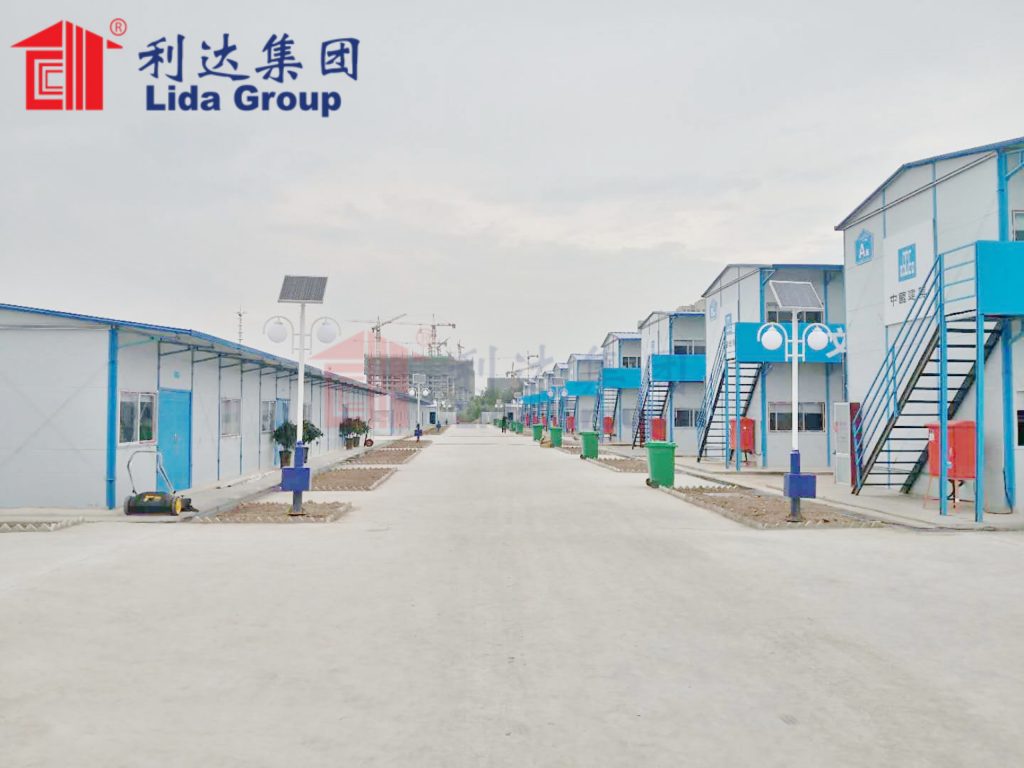
Supported by optimized composite material structure and mature modular construction technology, Lida Group’s eco-friendly sandwich panel houses comprehensively surpass traditional temporary dormitories in environmental performance, living comfort, structural safety, construction efficiency, and economic benefits, forming multi-dimensional core competitive advantages suitable for modern construction site management.
3.1 Full-Life-Cycle Green and Low-Carbon Performance
Green sustainability is the most prominent advantage of Lida Group’s sandwich panel dormitories. From raw material production, factory processing, on-site assembly, daily operation to later disassembly and reuse, the entire life cycle achieves low-carbon, pollution-free, and waste-free operation. Non-toxic and formaldehyde-free building materials ensure healthy indoor air quality and eliminate living health risks. Factory centralized green production reduces industrial dust, noise, and sewage pollution. Modular assembly realizes zero construction waste during deployment, and the reusable structure avoids massive demolition waste after project completion. Moreover, excellent thermal insulation performance reduces indoor temperature adjustment energy consumption, cutting daily carbon emissions of dormitory operation. These comprehensive green attributes help construction enterprises meet international ESG evaluation standards and global low-carbon development requirements, effectively improving project green construction levels.
3.2 Optimized Worker Living Comfort and Welfare
Lida Group fully integrates humanized design concepts into sandwich panel dormitories to improve worker living experience. The efficient constant-temperature insulation structure avoids extreme indoor cold and heat, ensuring comfortable indoor temperatures in all seasons. The high-efficiency sound insulation structure isolates external construction noise, providing a quiet rest environment for workers after high-intensity work. The anti-mold, dust-proof, and antibacterial inner wall design maintains hygienic indoor conditions and reduces the incidence of occupational diseases caused by damp and polluted accommodation environments. Combined with standardized indoor layout, sufficient natural lighting and ventilation, and complete supporting living facilities, the sandwich panel dormitories effectively enhance workers’ sense of belonging and happiness, stabilize construction teams, and reduce enterprise personnel turnover costs.
3.3 Stable Structural Safety and Strong Environmental Adaptability
Matched with high-strength hot-dip galvanized steel frames, eco-friendly sandwich panels form an integrated stable building system. Professional performance tests confirm that the overall structure can resist level 12 strong winds, magnitude 8 earthquakes, and various extreme weather conditions. The composite wall panels have excellent waterproof, anti-corrosion, anti-ultraviolet, and anti-aging capabilities, adapting perfectly to diverse harsh construction scenarios including coastal humid salt spray areas, desert sandstorm regions, alpine low-temperature zones, and rainy mountainous areas. The overall service life of Lida Group’s sandwich panel dormitories exceeds 25 years, far longer than traditional temporary buildings, ensuring long-term stable and safe operation throughout multi-cycle construction projects.
3.4 Efficient Deployment and Excellent Economic Benefits
The modular prefabrication mode enables ultra-fast deployment of sandwich panel dormitories. All building components are prefabricated and pre-assembled in factories, requiring only simple hoisting and docking on construction sites. A complete medium-sized worker dormitory cluster can be fully deployed and put into use within 7 to 10 days, greatly shortening project preparation cycles and ensuring timely worker settlement. Standardized mass factory production reduces upfront construction costs by 25% to 35% compared with traditional qualified dormitories. Excellent anti-aging and durable performance cuts annual maintenance expenses by over 60%, and the reusable modular design avoids repeated construction investment for different projects. Calculated over a 25-year service cycle, the average annual comprehensive use cost is only one-third of traditional disposable dormitories, bringing significant cost-saving benefits to construction enterprises.
3.5 Flexible Customization and Scalable Application
Lida Group’s eco-friendly sandwich panel dormitories support flexible personalized customization according to project scale, site conditions, and worker accommodation needs. Enterprises can freely adjust building size, floor number, indoor layout, and supporting facilities to meet the accommodation demands of different team sizes. The lightweight building structure has low foundation requirements, enabling stable deployment on flat cement ground, gravel ground, and compacted soil ground without complex foundation pouring and long curing cycles. This strong flexibility and scalability make the sandwich panel houses universally applicable to various global engineering construction scenarios.

4. Global Practical Engineering Application Cases
Lida Group’s eco-friendly sandwich panel worker dormitories have been widely applied in global engineering projects, and numerous practical cases have fully verified their outstanding environmental adaptability, stability, and practicability.
In an African open-pit mining project, the construction site features strong ultraviolet radiation, obvious dry and wet seasonal differences, barren terrain, and extremely harsh living conditions. Traditional wooden dormitories are prone to decay and bacterial growth, while ordinary color steel cabins suffer from severe aging and poor thermal insulation. To solve accommodation difficulties, the project adopted Lida Group’s customized eco-friendly sandwich panel dormitories with enhanced ultraviolet resistance, dust prevention, and constant-temperature insulation performance. All modules were quickly assembled on-site within 9 days, solving the urgent accommodation needs of 320 construction workers. During the five-year project cycle, the dormitories maintained stable structural and functional performance with almost no maintenance required. The formaldehyde-free healthy environment and comfortable living conditions effectively improved worker satisfaction, reduced team turnover, and guaranteed stable project construction progress.
In a Southeast Asian cross-region water conservancy project, the local climate is hot and rainy all year round with high air humidity and severe coastal salt spray corrosion. Local environmental protection departments impose strict requirements on project green construction, carbon emissions, and construction waste management. The project team selected Lida Group’s eco-friendly sandwich panel dormitories for on-site worker accommodation. The customized waterproof and anti-corrosion sandwich panels effectively resisted rain penetration and salt spray erosion, avoiding wall mold and structural aging. The high-efficiency thermal insulation system improved indoor living comfort in hot and humid climates, and the detachable reusable structure achieved zero demolition waste after project completion. All dormitory modules were disassembled and reused in a subsequent urban pipeline renovation project, saving nearly 38% of the enterprise’s temporary accommodation investment and helping the project pass local green construction certification successfully.
5. Market Value and Industrial Promotion Significance
With the continuous upgrading of global green construction standards and increasing social attention to worker occupational health and welfare, traditional polluting, low-comfort, disposable temporary dormitories can no longer meet the modernized development needs of the construction industry. As a mature and innovative green temporary building solution, Lida Group’s eco-friendly sandwich panel house fills the market gap of high-quality sustainable worker accommodation and drives the overall upgrading of the temporary building industry.
For construction enterprises, this solution integrates green environmental protection, worker welfare improvement, cost control, and efficient construction, helping enterprises optimize ESG assessment scores, shape good social images, and enhance core market competitiveness. For frontline construction workers, healthy, safe, comfortable, and hygienic living environments fully protect workers’ legitimate rights and interests, reflecting the humanized care of modern construction management. For the global construction industry, Lida Group’s sandwich panel technology breaks the long-standing industry dilemma that temporary buildings cannot balance environmental protection, comfort, durability, and economy. It promotes the transformation of temporary facilities from disposable consumables to recyclable green assets, accelerates the refined, standardized, and sustainable development of global construction site management, and provides a replicable and universal green construction model for the industry.
6. Conclusion
Traditional construction site worker dormitories have long restricted the green upgrading and humanized management of the global construction industry due to toxic materials, serious environmental pollution, poor living comfort, insufficient structural durability, and high comprehensive operating costs. To solve these universal industry pain points, Lida Group relies on years of modular building research and development experience to launch eco-friendly sandwich panel houses specially optimized for construction site worker dormitories, providing an ideal all-round solution for modern temporary workforce accommodation.
Through scientific three-layer composite structural design, full-life-cycle green production technology, and efficient detachable modular assembly mode, Lida Group’s sandwich panel dormitories realize zero harmful emission, low energy consumption, zero construction waste, and recyclable reuse. They overcome the environmental and health hazards of traditional dormitories, greatly improve worker living comfort and safety, ensure stable operation in diverse harsh construction environments, and effectively reduce enterprises’ full-life-cycle accommodation costs. Verified by numerous global engineering practices, the product’s comprehensive performance in environmental protection, durability, comfort, and economy far exceeds that of traditional temporary buildings.
As global green construction and worker welfare standards continue to improve, eco-friendly, reusable, humanized, and cost-effective temporary buildings will become the mainstream trend of the industry. In the future, Lida Group will continue to iterate and upgrade sandwich panel material technology and modular building systems, further optimize product intelligence, comfort, and environmental protection performance. By continuously launching high-quality green temporary accommodation solutions, Lida Group will keep leading the standardized and sustainable upgrading of global construction site temporary facilities and empowering the long-term high-quality development of the global construction industry.
Related news
-
Lida Group Launches Eco-Friendly Sandwich Panel House for Construction Site Worker Dormitory
2026-04-27 10:23:41
-
Low-Cost Durable Building Meets Sustainability in Lida Group's Worker Dormitory Solutions
2026-04-27 10:27:27
-
Rapid Deployment of Construction Site Worker Dormitory Using Lida Group's Low-Cost Durable Building
2026-04-27 10:20:01
contact us
- Tel: +86-532-88966982
- Whatsapp: +86-13793209022
- E-mail: sales@lidajituan.com
