



Temporary Low Cost Building Solutions by Lida Group Transform Oil Field Worker Dormitory Housing
2026-May-28 17:01:22
By Admin
Introduction
The global oil and gas industry is inherently project-based, mobile, and geographically dispersed, with most exploration, drilling, and maintenance operations located in remote, underdeveloped regions. These sites span arid deserts, windy Gobi terrains, freezing high-altitude plateaus, and humid coastal salt-spray zones, where permanent municipal housing infrastructure is completely absent. For oil and gas enterprises, on-site worker dormitories are not merely auxiliary facilities but core operational supports that determine workforce stability, project progress, and overall cost control. Unlike conventional residential buildings, oil field housing requires three decisive attributes: rapid deployability for urgent project launches, flexible scalability for phased construction cycles, and controlled low full-lifecycle costs for temporary operational demands.
For decades, the oil and gas sector has been trapped in an unbalanced housing dilemma. Traditional permanent brick-and-mortar dormitories deliver stable living conditions but involve lengthy wet construction, massive material input, and enormous sunk costs, making them economically wasteful for short-term and mobile oilfield projects. Basic makeshift shelters such as canvas tents and thin iron sheet huts feature low upfront spending but suffer from fragile structures, poor weather resistance, and substandard living environments, leading to high worker turnover and frequent facility replacement. Conventional prefabricated houses improve structural stability but retain high on-site labor costs, limited reusability, and hidden long-term maintenance expenses. These outdated housing models generate substantial hidden costs, delay project schedules, and fail to meet the standardized, cost-efficient, and humanized housing demands of modern oilfield operations.
As a leading global provider of modular temporary construction systems, Lida Group has thoroughly redefined oil field worker housing by launching customized temporary low-cost building solutions. Breaking the outdated industry stereotype that “low cost equals low quality”, Lida’s innovative modular building technology integrates factory prefabrication, tool-free rapid assembly, harsh-environment adaptive materials, and reusable structural design. These solutions completely transform the traditional construction and operation mode of oil field dormitories, achieving perfect balance among ultra-low investment, ultra-fast deployment, reliable durability, and basic living comfort. This article systematically analyzes the core pain points of traditional oil field housing, the technical advantages of Lida’s low-cost temporary building solutions, their transformative impacts on oil field dormitory construction, full-lifecycle economic value, environmental adaptability, safety performance, and practical industrial application, demonstrating how Lida’s affordable modular systems revolutionize workforce housing for global oil and gas projects.
1. Chronic Housing Pain Points in Traditional Oil Field Camp Construction
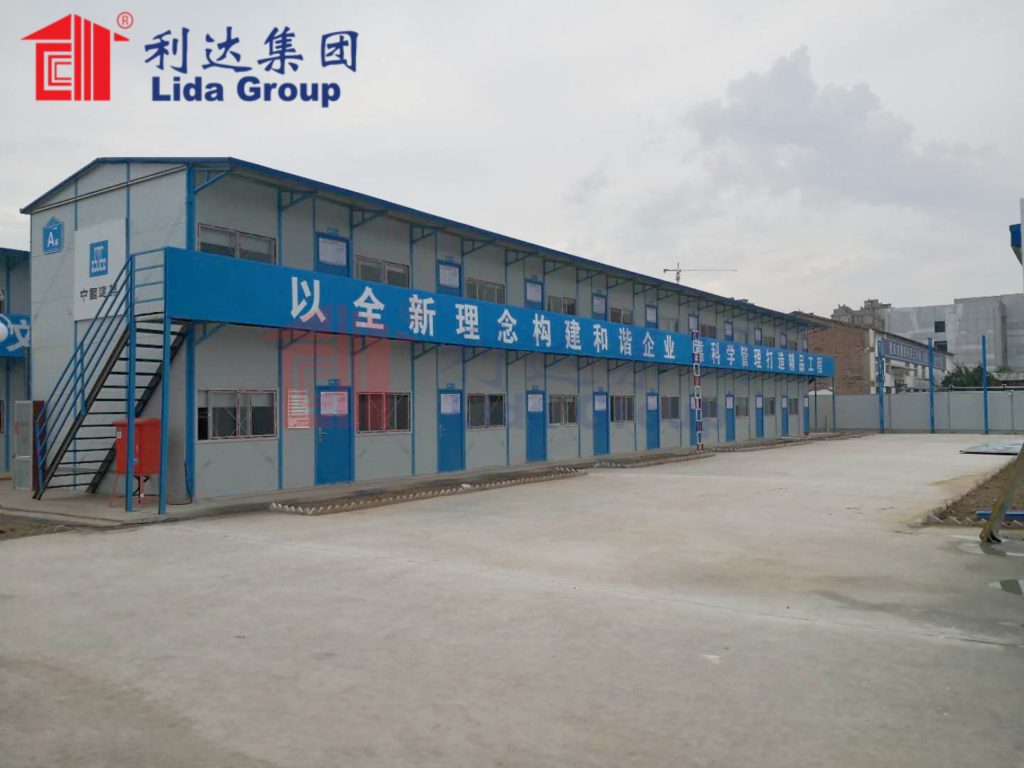
Traditional oil field worker dormitory solutions were developed for conventional fixed construction scenarios and cannot adapt to the unique mobile, temporary, and harsh operational characteristics of oil and gas projects. Their inherent defects in cost control, construction efficiency, flexibility, and living quality create long-term operational burdens for energy enterprises.
1.1 Exorbitant Comprehensive Costs and Serious Resource Waste
Permanent brick-concrete dormitories require large-scale raw material procurement, foundation pouring, professional construction teams, and mechanical equipment leasing, resulting in extremely high one-time upfront investment. After the completion of short-cycle oil exploration and drilling projects, these fixed buildings cannot be relocated or reused, turning into complete sunk costs and causing massive resource waste. Even conventional prefabricated houses have low residual asset value, with only 15% residual value after five years of use, failing to preserve enterprise assets effectively. In contrast, relying on external hotel accommodation and rental housing incurs soaring per diem fees, transportation subsidies, and administrative overhead, which can inflate housing budgets by 30% to 40% due to regional resource scarcity during oil industry booms.
1.2 Slow Construction Speed Restricts Project Startup Rhythm
Traditional on-site wet construction and welded temporary building processes have long construction cycles ranging from three to six weeks. Remote oil field sites face unpredictable extreme weather, scarce technical workers, and insufficient mechanical support, further delaying construction progress. Slow dormitory deployment leads to delayed worker settlement, idle manpower resources, and postponed project launches, generating huge invisible economic losses for oil and gas enterprises. Conventional modular houses also require skilled workers and 200 to 300 labor hours for assembly, with high remote-site labor costs ranging from $85 to $150 per hour, failing to achieve rapid and low-threshold deployment.
1.3 Poor Environmental Adaptability and Frequent Maintenance
Most traditional temporary housing lacks targeted optimization for extreme oil field climates. In desert regions, intense ultraviolet radiation and high temperatures accelerate material aging, causing panel fading, peeling, and insulation failure. In plateau cold regions, freeze-thaw cycles damage structural components and thermal insulation layers. In coastal zones, salt spray corrosion triggers widespread steel rusting and water leakage. These problems lead to frequent facility failures, requiring regular rust removal, repainting, sealing replacement, and structural repairs. High-frequency maintenance consumes substantial manpower and material resources, forming continuous long-term operational costs.
1.4 Inflexible Layout Fails Dynamic Workforce Matching
Oil field projects feature dynamic workforce changes across exploration, drilling, construction, and maintenance stages. Traditional fixed dormitory buildings have rigid spatial layouts and cannot be flexibly expanded or reduced. Peak construction periods face housing shortages that restrict manpower deployment, while idle stages result in redundant vacant facilities and resource waste. The lack of scalable and adjustable housing solutions makes refined cost management and flexible camp operation impossible for oil field enterprises.
2. Core Technical Advantages of Lida Group’s Low-Cost Temporary Building Solutions
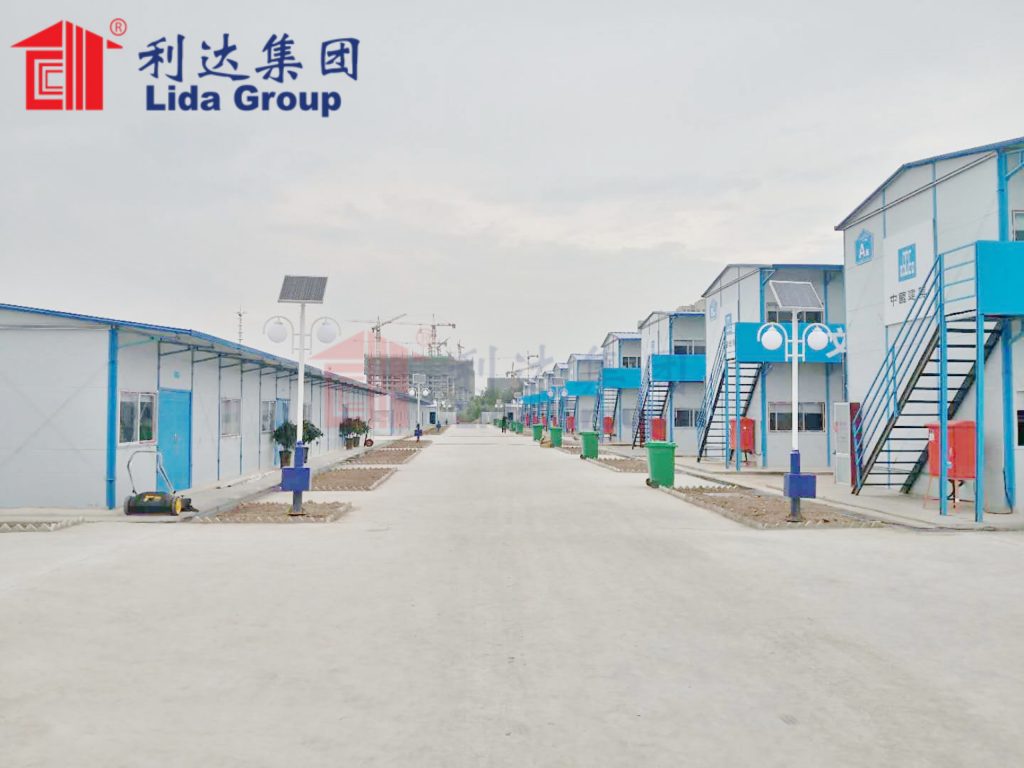
Lida Group’s temporary low-cost building solutions target the entire pain point system of traditional oil field housing, adopting standardized modular industrial production and innovative assembly technology. By optimizing material selection, structural design, and construction logic, Lida fundamentally reduces construction thresholds and full-lifecycle costs while retaining reliable performance, laying a technical foundation for the transformative upgrading of oil field dormitory housing.
2.1 Full Factory Prefabrication Cuts On-Site Costs and Time
More than 98% of component production, surface anti-corrosion treatment, functional integration, and quality testing of Lida’s temporary buildings are completed in standardized industrial workshops. All steel frames, wall panels, roof systems, doors, windows, and electrical accessories are manufactured as finished standardized parts, requiring no secondary cutting, welding, or modification on site. This factory prefabrication mode eliminates traditional wet construction processes, greatly reducing on-site material waste, labor demand, and mechanical leasing costs. It compresses the camp construction cycle from weeks to days, achieving schedule compression of over 50% compared with traditional construction modes and significantly improving project operational productivity.
2.2 Tool-Free Bolt Assembly Eliminates Skilled Labor Dependence
Different from conventional modular houses that require professional construction workers, Lida’s low-cost temporary buildings adopt a full-bolt non-destructive assembly structure with unified precise positioning interfaces and color-coded installation marks. Ordinary untrained workers can complete standardized assembly through simple hand tools and detailed multi-language guidelines, completely eliminating reliance on high-priced skilled crews and large hoisting equipment. This innovation drastically cuts remote-site labor costs by over 60%, solving the industry problem of expensive and scarce technical manpower in remote oil fields.
2.3 Foundation-Free Laying Simplifies Construction Procedures
Optimized lightweight force-bearing structural design enables Lida’s temporary buildings to adapt to complex oil field ground conditions. The houses can be directly laid on flat gravel, hardened ground, and temporary open spaces without concrete foundation pouring, steel bar laying, and long curing cycles. This foundation-free technology saves three to five days of foundation treatment time for each batch of dormitories, eliminates foundation material and labor investment, and further reduces overall construction costs while realizing zero-delay rapid deployment.
2.4 Detachable Modular Design Realizes Reusable Asset Value
Lida’s exclusive non-destructive connection structure supports repeated disassembly, transportation, and cross-project reassembly without structural damage or performance attenuation. A single set of building units can withstand more than eight turnover cycles, retaining 55% to 70% residual value after long-term use, far exceeding the 15% residual value of ordinary container houses. This reusable design transforms temporary housing from disposable construction waste into sustainable enterprise assets, fundamentally solving the long-term problem of repeated construction investment in oil field camps.
3. Transformative Impacts of Lida’s Solutions on Oil Field Dormitory Housing
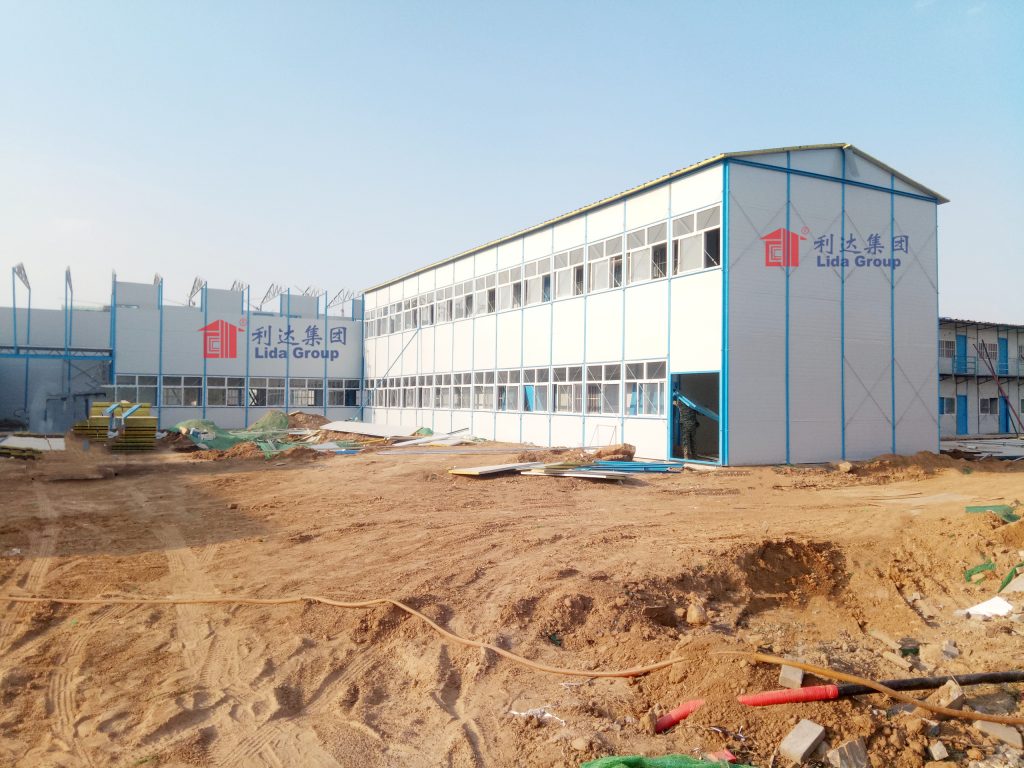
Lida Group’s low-cost temporary building solutions do not merely optimize individual construction links but realize comprehensive transformative upgrading of oil field dormitory housing modes, covering construction efficiency, cost structure, flexible operation, and standardized management, reshaping the industrial form of oil field workforce accommodation.
3.1 Transforming Slow and Uncontrollable Construction to Rapid and Predictable Deployment
Traditional oil field camp construction faces uncertain progress risks caused by weather changes, manpower shortages, and technical errors, making construction cycles and costs difficult to control. Lida’s standardized modular construction mode turns unpredictable on-site construction into predictable factory production and rapid assembly. A standard single dormitory unit can be completed and occupied within four to six hours, and a medium-sized worker camp with dozens of units can be fully deployed within two to three days. This efficient and predictable construction rhythm ensures timely worker settlement and synchronous project startup, greatly improving the overall operational controllability of oil field projects.
3.2 Transforming Sunk-Cost Investment to Sustainable Asset Operation
For a long time, oil field temporary housing has been a typical one-time sunk investment, with zero residual value after project completion. Lida’s reusable temporary building system completely reverses this model. Enterprises only need one-time initial investment to realize repeated cross-regional and cross-project use of dormitory facilities. This mode reduces long-term repeated construction investment by more than 40%, turning passive housing expenditure into active asset reserve. It effectively optimizes the enterprise cost structure and improves capital utilization efficiency, bringing long-term sustainable economic benefits.
3.3 Transforming Rigid Fixed Layout to Flexible Scalable Operation
Lida’s standardized building units support free horizontal splicing and multi-layer stacking, enabling flexible adjustment of camp scale and layout according to dynamic workforce changes. Enterprises can rapidly add dormitory units during project peak periods and disassemble and store redundant units during idle periods, realizing precise matching of housing resources and project demand. This flexible scalable design solves the resource waste and housing shortage problems of traditional fixed dormitories, supporting refined and intelligent camp management for modern oil field projects.
3.4 Transforming Low-Quality Shelters to Standardized Comfortable Dormitories
While controlling costs strictly, Lida’s solutions completely abandon the low-quality positioning of traditional cheap temporary shelters. The high-performance composite wall panels integrate thermal insulation, sound insulation, dustproof, and waterproof functions. The fully sealed structural design isolates external sand, dust, noise, and humid air, creating dry, quiet, and temperature-stable indoor living conditions. Standardized lighting, ventilation, and safety configurations meet the basic living and rest needs of workers, effectively improving workforce satisfaction and reducing turnover rates caused by poor accommodation environments.
4. Balancing Low Cost with Harsh Environment Adaptability and Industrial Safety
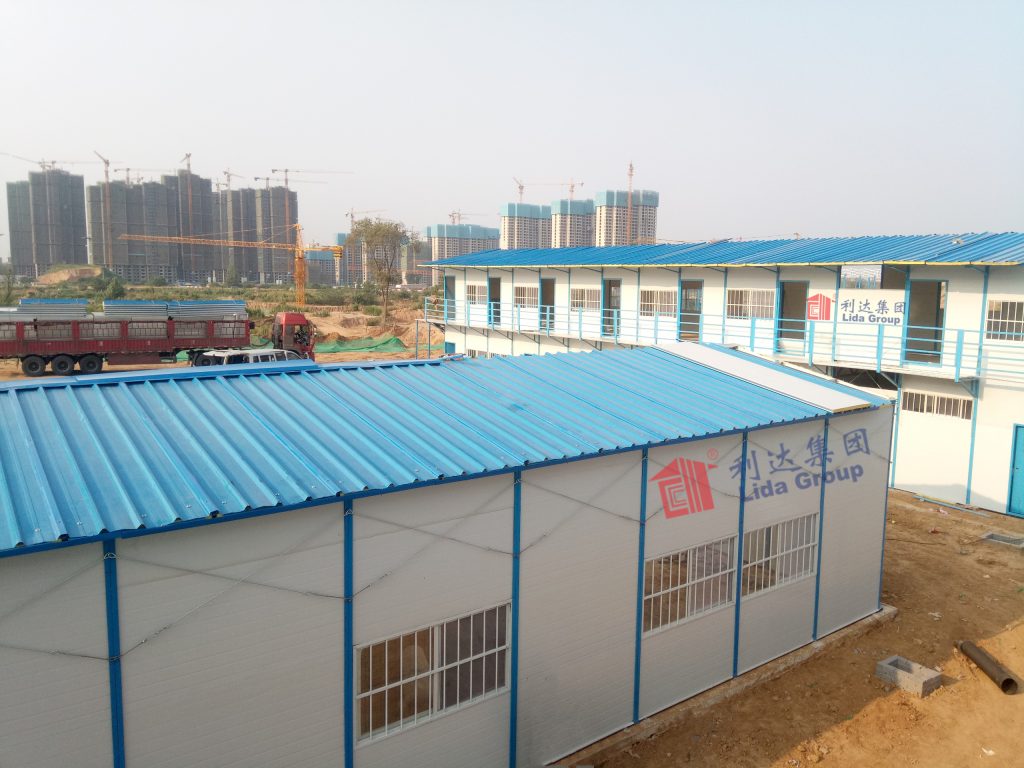
The core competitiveness of Lida’s low-cost temporary building solutions lies in achieving cost reduction without performance sacrifice. Through scenario-based material optimization and industrial-grade structural design, the products maintain excellent harsh environment adaptability and high-standard safety performance, fully complying with oil field high-risk operation specifications.
4.1 All-Weather Environmental Adaptability for Extreme Oil Field Climates
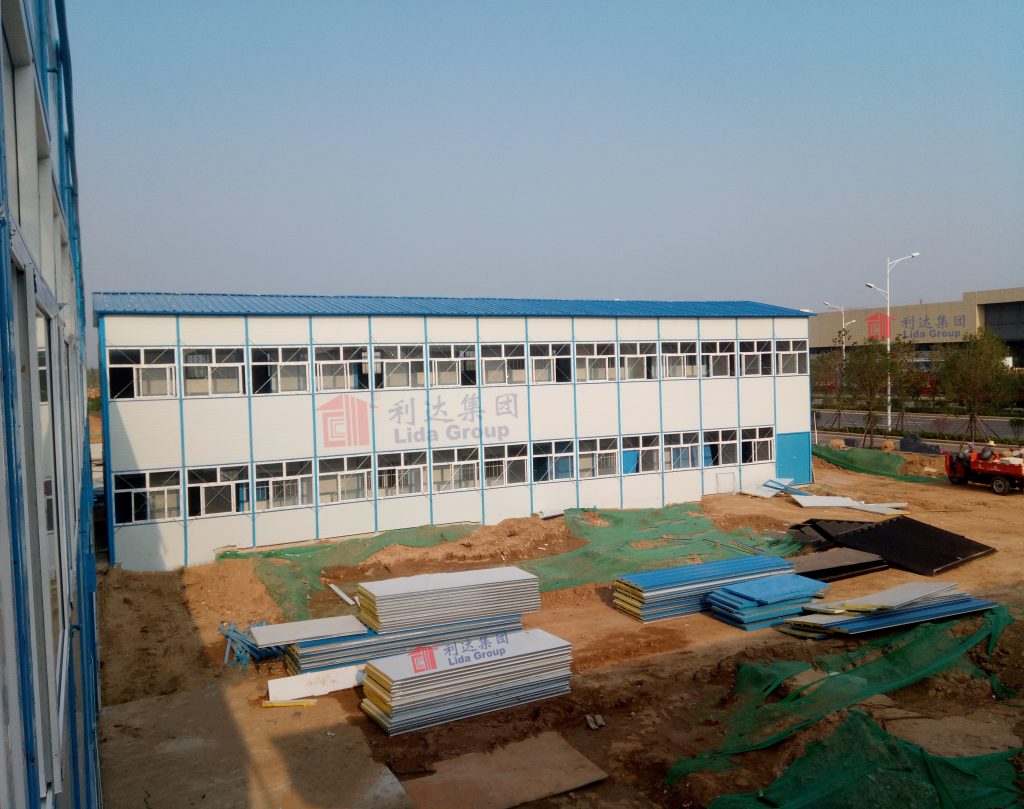
Lida’s customized composite sandwich panels adopt weather-resistant surface coating and high-density insulation core materials, achieving stable performance in extreme high-temperature desert, ultra-low-temperature plateau, and high-humidity coastal environments. The thermal insulation system avoids indoor overheating in summer and freezing in winter; the high-elasticity full-sealing structure resists sandstorm erosion and dust penetration in windy and sandy areas; the elevated floor and anti-corrosion spraying technology prevent salt spray and moisture erosion in coastal regions. This all-weather adaptability ensures long-term stable operation of dormitories in diverse harsh oil field scenarios.
4.2 Industrial-Grade Safety Performance for High-Risk Oil Field Sites
All insulation core materials of Lida’s buildings reach A-level non-combustible fireproof standards, with stable flame retardant and smoke suppression capabilities, eliminating fire hazards in crowded dormitory areas. The integral hot-dip galvanized steel frame structure passes professional grade-12 wind resistance, grade-7 seismic resistance, and heavy snow load tests, resisting extreme weather impacts and slight geological fluctuations. The standardized fireproof electrical system and leakage protection devices avoid electrical aging and short-circuit risks, realizing comprehensive safety protection for long-term on-site residence.
5. Outstanding Full-Lifecycle Economic Value for Oil and Gas Enterprises
Lida’s temporary low-cost building solutions create multi-dimensional economic benefits covering upfront construction, mid-term operation, and long-term asset appreciation, becoming an important cost-control tool for modern oil field project management.
5.1 Low Upfront Construction Investment
Standardized batch factory production reduces unit manufacturing costs, while flat-pack stacked transportation improves container loading rate and cuts remote logistics expenses by over 70%. The elimination of foundation construction, skilled labor employment, and mechanical leasing further compresses upfront investment. Compared with traditional brick-concrete and conventional prefabricated dormitories, Lida’s solutions reduce initial comprehensive construction costs by 30% to 50%, greatly easing capital pressure in the early stage of project startup.
5.2 Ultra-Low Long-Term Maintenance Costs
High-quality anti-aging, anti-corrosion, and weather-resistant materials ensure extremely low failure rates of Lida’s buildings in long-term outdoor operation. The annual maintenance cost is less than 2% of the initial investment, far lower than the industry average. There is no need for frequent rust removal, repainting, and component replacement required by traditional temporary houses, greatly reducing daily camp management workload and operational expenditure.
5.3 High Residual Asset Value Improves Return on Investment
Thanks to the detachable reusable structure and durable material performance, Lida’s temporary buildings retain high residual value after project completion. The 55% to 70% residual value rate enables enterprises to recover most of the initial investment through turnover use and secondary deployment. Compared with disposable traditional housing with zero residual value, Lida’s solutions significantly improve the long-term return on investment of camp facilities, realizing maximum economic output with minimum capital input.
6. Wide Industrial Application and Market Recognition
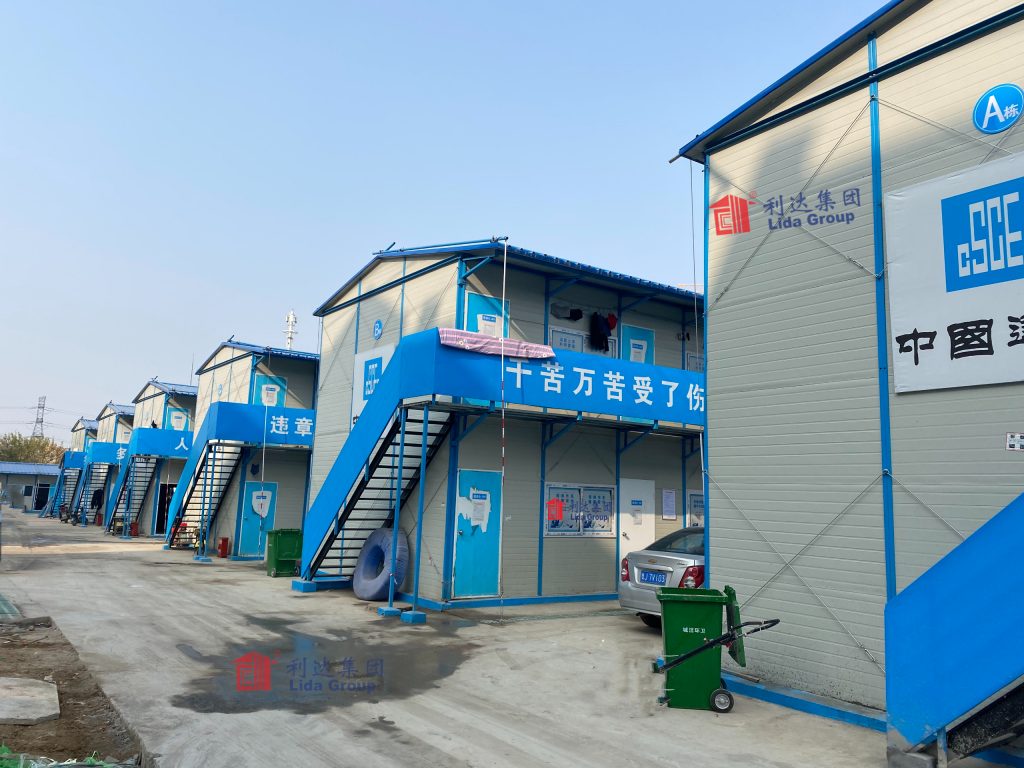
With the dual core advantages of low full-lifecycle cost and reliable comprehensive performance, Lida Group’s temporary building solutions have been widely applied in global oil and gas engineering projects. They are extensively used for worker dormitories, temporary offices, material warehouses, and medical rooms in desert exploration camps, high-altitude drilling bases, coastal offshore oil fields, and short-term maintenance projects. The flexible, economical, and efficient housing mode effectively solves the accommodation dilemma of remote oil field projects, stabilizes frontline workforce teams, and improves the standardized management level of oil field camps. Stable operational performance in various extreme environments has won long-term trust and repeated cooperation from global energy enterprises.
7. Conclusion
Traditional oil field worker dormitory housing modes have long restricted the efficient and economical operation of oil and gas projects due to high construction costs, slow deployment speed, poor flexibility, low asset utilization, and high hidden maintenance expenses. The contradiction between housing cost, construction efficiency, and living quality has always been a key bottleneck limiting the refined development of oil field camps.
Lida Group’s Temporary Low Cost Building Solutions completely transform the traditional oil field housing system. Through innovative factory prefabrication, tool-free rapid assembly, foundation-free construction, and reusable modular design, the solutions realize ultra-fast low-threshold deployment and significant upfront cost reduction. The high-standard material selection and structural optimization ensure excellent extreme weather adaptability, industrial safety, and basic living comfort, breaking the industry’s low-cost and low-quality stereotype. More importantly, the reusable asset mode converts temporary housing expenditure into sustainable enterprise assets, greatly reducing long-term full-lifecycle costs and improving capital utilization efficiency. As a mature, economical, and reliable housing solution, Lida’s temporary buildings continuously empower global oil and gas enterprises to optimize camp construction, control operational costs, stabilize workforce resources, and realize efficient, standardized, and sustainable project development.
Related news
-
Lida Group’s Easy Install Sandwich Panel House Delivers Durable Oil Field Worker Dormitory
2026-05-28 16:53:19
-
Oil Field Worker Dormitory Completed Quickly Using Temporary Low Cost Building Technology
2026-05-28 16:47:00
-
Lida Group Launches Easy Install Sandwich Panel House for Oil Field Worker Dormitory Needs
2026-05-28 16:35:27
contact us
- Tel: +86-532-88966982
- Whatsapp: +86-13793209022
- E-mail: sales@lidajituan.com
