



Oil Field Worker Dormitory Completed Quickly Using Temporary Low Cost Building Technology
2026-May-28 16:47:00
By Admin
Introduction
The global oil and gas industry is characterized by remote project locations, urgent construction schedules, and phased operational cycles. Most oil field exploration, drilling, and maintenance projects are deployed in deserts, Gobi plains, high-altitude plateaus, and coastal salt-spray regions where municipal infrastructure is incomplete, transportation conditions are tough, and on-site construction resources are extremely scarce. As the core supporting facility for frontline operation teams, worker dormitories directly determine workforce settlement efficiency, project startup progress, and on-site team stability. Unlike permanent urban buildings, oil field accommodation emphasizes two core indicators: extremely fast construction speed to match urgent project deployment and controllable low cost to adapt to temporary phased construction attributes.
For a long time, oil and gas engineering enterprises have faced a dual dilemma in camp construction. Traditional brick-concrete buildings and on-site welded temporary houses feature stable structural performance but require lengthy wet construction cycles, massive material and labor investment, and high mechanical leasing costs. A complete oil field dormitory camp often takes one to two months to complete, which seriously delays project startup schedules and causes invisible economic losses. In contrast, ultra-low-cost simple shelters such as canvas tents and iron sheet shanties can be built quickly but suffer from poor safety, insufficient weather resistance, and substandard living conditions, unable to support long-term worker residency and standardized site management. The lack of a balanced solution integrating rapid construction, low cost, and reliable performance has always restricted the refined and efficient operation of modern oil field projects.
With the continuous upgrading of modular construction technology, temporary low-cost building technology has gradually become the mainstream solution for remote engineering camp construction. Lida Group, as a global leading provider of modular temporary building systems, has optimized and upgraded traditional temporary building technologies targeting the unique construction pain points of oil field dormitories. Through factory prefabrication modular technology, simplified on-site assembly processes, standardized low-cost material matching, and flexible scalable structural design, Lida’s temporary low-cost building technology realizes ultra-fast completion of oil field worker dormitories while effectively controlling full-lifecycle construction and operational costs. This article systematically analyzes the limitations of traditional oil field dormitory construction technologies, the core technical principles of Lida’s rapid low-cost temporary buildings, construction efficiency advantages, cost control mechanisms, harsh environment adaptability, safety performance, and practical project application value, demonstrating how advanced temporary building technology revolutionizes the construction mode of modern oil field worker dormitories.
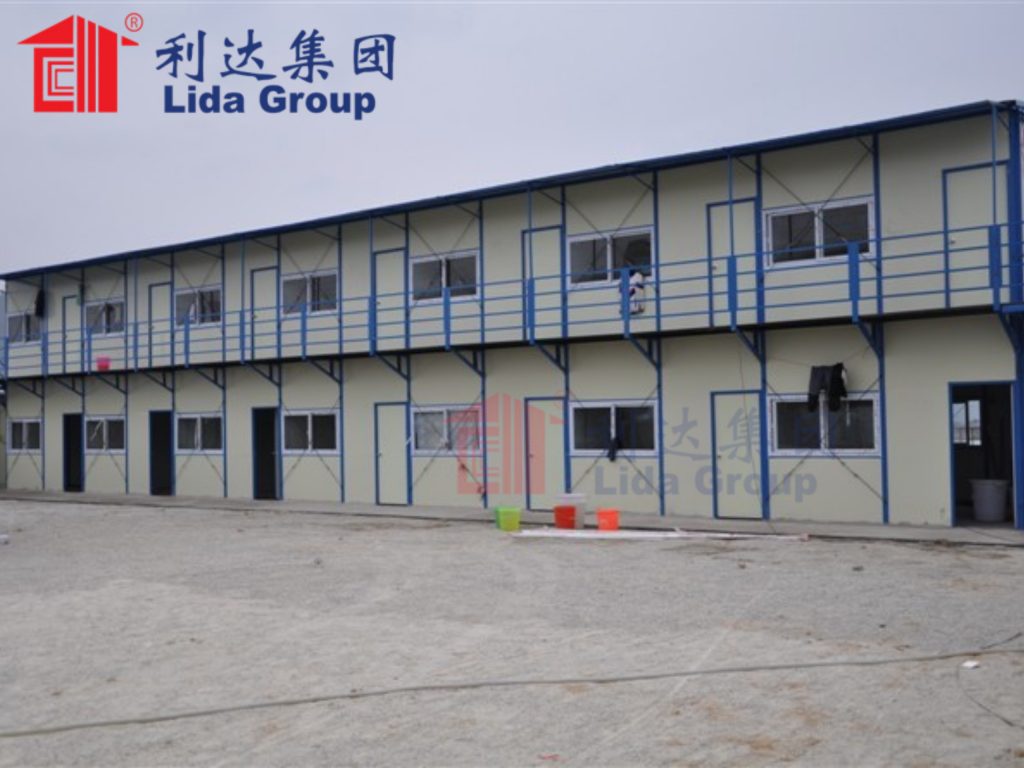
1. Limitations of Traditional Construction Technologies for Oil Field Dormitories
Traditional oil field dormitory construction mainly relies on on-site pouring masonry and conventional welded temporary building technologies. Restricted by backward construction processes, scattered material matching, and high on-site construction dependence, these technologies cannot adapt to the rapid and low-cost construction needs of modern oil field projects, exposing multiple prominent limitations in construction efficiency, cost control, and scenario adaptability.
1.1 Long Construction Cycle Restricts Project Deployment
Traditional brick-concrete dormitory construction adopts extensive on-site wet construction processes, including foundation excavation, concrete pouring, steel bar binding, wall masonry, and interior decoration. Each construction link requires long curing and interval waiting time, and the overall camp construction cycle lasts 30 to 60 days. Conventional welded color steel houses simplify partial masonry procedures but still require on-site frame welding, panel fixing, and sealing debugging, with a construction cycle of 15 to 25 days. In remote oil field areas with changeable weather, sudden sandstorms, rain, and snow will further delay construction progress. Slow dormitory completion speed leads to delayed worker settlement, idle on-site manpower, and postponed project startup, bringing huge hidden losses to oil and gas enterprises.
1.2 High Comprehensive Construction and Operational Costs
Traditional construction technologies have extremely high comprehensive investment costs. On-site masonry and welding require a large number of professional construction workers and large mechanical equipment such as cranes and welding machines, resulting in high labor and equipment leasing costs in remote oil field areas with scarce manpower. Disordered on-site construction produces a large amount of material waste, further increasing unit construction costs. More importantly, traditional fixed buildings are non-detachable and non-reusable. After the completion of a single oil field project, dormitory facilities can only be demolished and discarded, forming one-time sunk costs. In addition, poor material durability leads to frequent structural rust, wall damage, and water leakage, requiring continuous maintenance and renovation investment in the later stage, with extremely high full-lifecycle operational costs.
1.3 High Construction Threshold Dependent on On-Site Conditions
Traditional construction technologies have extremely high dependence on on-site supporting conditions. Wet construction requires stable water and electricity supply, flat construction sites, and sufficient material stacking space, which are difficult to meet in remote desert and Gobi oil fields. Welding construction requires professional certified welders and fireproof construction conditions, and non-standard on-site operation easily induces safety hazards. The high construction threshold makes it impossible to deploy dormitory facilities in a timely manner for emergency oil field exploration and short-term maintenance projects, resulting in poor project flexibility.
1.4 Poor Adaptability to Harsh Oil Field Environments
Buildings constructed by traditional technologies have single environmental adaptability and cannot cope with complex extreme climates of oil fields. Ordinary masonry walls have poor thermal insulation performance, resulting in sweltering indoor environments in desert high-temperature seasons and freezing indoor temperatures in plateau winter. Welded color steel houses have dense assembly gaps and poor sealing performance, prone to sand and dust penetration in windy and sandy areas and moisture mildew in humid coastal areas. Traditional structures lack targeted wind resistance, anti-corrosion, and weather-resistant design, resulting in frequent facility failures, which seriously affects worker living stability and increases daily management pressure.
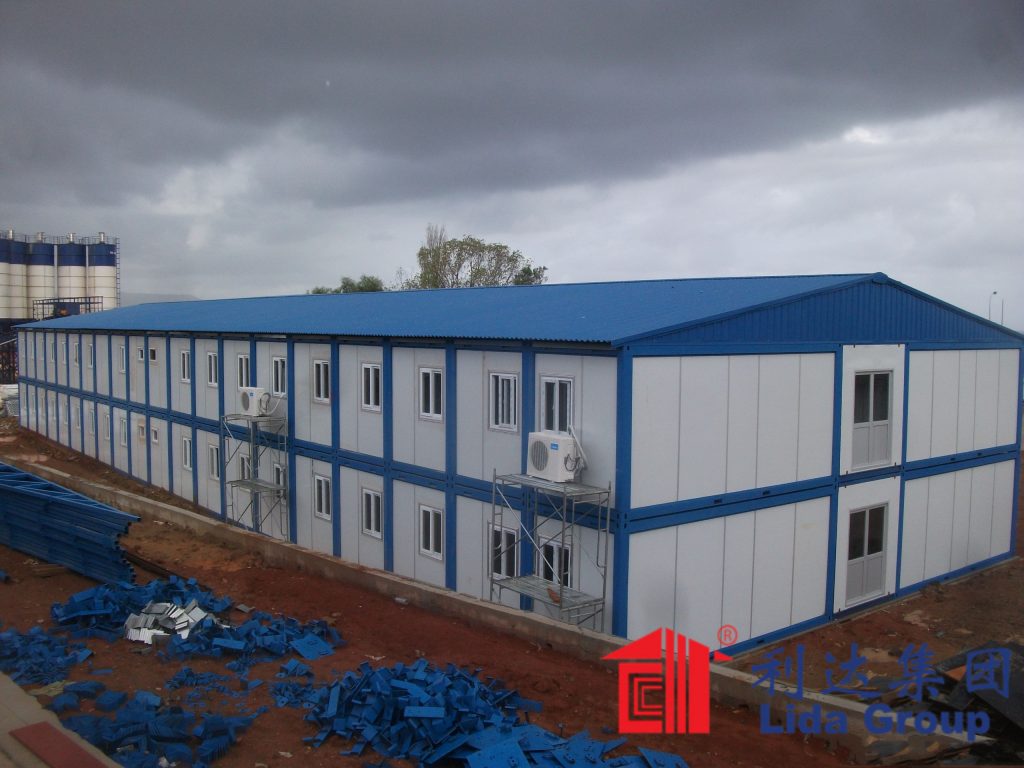
2. Core Technical Principles of Lida’s Temporary Low-Cost Building Technology
Aiming at the pain points of slow construction, high cost, and high threshold of traditional oil field dormitory technologies, Lida Group’s optimized temporary low-cost building technology takes “factory prefabrication, modular assembly, standardized cost control, and flexible turnover” as the core technical logic. It subverts the traditional on-site extensive construction mode, realizes the transformation of dormitory construction from “on-site manufacturing” to “factory manufacturing + on-site assembly”, and achieves the dual goals of rapid completion and low-cost operation of oil field dormitories.
2.1 Full Factory Prefabrication Technology Transforms Construction Logic
Lida’s temporary building technology realizes 98% standardized prefabrication of all dormitory components in industrial workshops. The steel frame cutting and forming, anti-corrosion treatment, sandwich panel composite pressing, door and window matching, and electrical pipeline embedding are all completed in a controlled factory environment. Strict standardized production processes ensure consistent component precision and stable product quality, avoiding quality fluctuations caused by on-site manual operation. All finished components are transported to the oil field site as complete parts, requiring no secondary cutting, welding, or modification. This technology completely eliminates traditional wet construction processes, greatly compresses on-site construction time, and lays a technical foundation for ultra-fast dormitory completion.
2.2 Simplified Full-Bolt Rapid Assembly Technology
Different from the complex welding and masonry connection mode of traditional technologies, Lida’s temporary building technology adopts a full-bolt non-destructive assembly system. All steel frames, wall panels, roof systems, and floor components are reserved with unified precise positioning interfaces, realizing seamless docking and rapid fixing between components. The assembly process only requires conventional manual tools, without large hoisting equipment and professional technical workers. Ordinary untrained workers can complete standardized assembly according to color-coded component labels and unified installation instructions. This low-threshold assembly technology greatly reduces on-site construction difficulty and shortens the dormitory deployment cycle.
2.3 Standardized Material Matching Reduces Redundant Costs
Lida’s low-cost building technology adheres to scenario-based precise material matching, abandoning the two extremes of inferior low-cost materials with poor durability and high-end customized materials with redundant performance. For oil field temporary dormitory scenarios, the technology selects high-cost-performance galvanized light steel frames and fireproof thermal insulation sandwich panels. The steel structure has excellent anti-corrosion and structural stability, while the sandwich panels integrate thermal insulation, fireproof, and waterproof functions. Unified batch procurement and automated production reduce unit material costs, and streamlined functional configuration removes unnecessary decorative redundant designs, realizing precise cost control on the premise of meeting oil field safety and living standards.
2.4 Detachable Modular Turnover Technology Improves Asset Utilization
The core innovative technology of Lida’s temporary building system is the non-destructive detachable modular design. All components are connected by fixed bolts without any destructive welding and bonding. After the completion of oil field projects, the dormitory buildings can be quickly disassembled into flat stacked components, which are convenient for storage and cross-regional transportation and reassembly. A single set of temporary building facilities can support more than eight repeated turnover uses, completely changing the disposable construction mode of traditional buildings. This technical feature turns temporary dormitory investment into reusable enterprise assets and fundamentally reduces the long-term repeated construction cost of oil field camps.
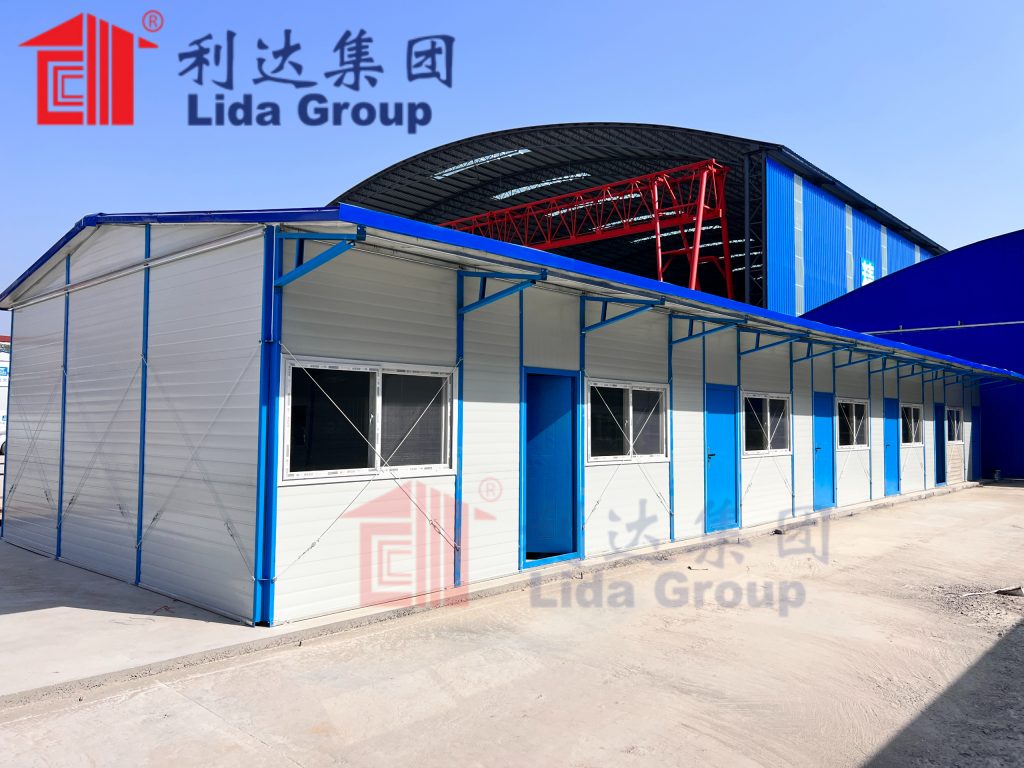
3. Ultra-Fast Completion Advantage of Lida’s Technical System
Rapid construction and quick occupancy are the most prominent advantages of Lida’s temporary low-cost building technology in oil field dormitory construction. Through the integration of factory prefabrication and simplified on-site assembly, the technology realizes a qualitative leap in construction efficiency, meeting the urgent rapid deployment needs of various oil field projects.
3.1 Shortened Single-Unit Construction Cycle
Benefiting from full factory prefabrication and bolt assembly technology, Lida’s standard oil field dormitory units achieve extremely high construction efficiency. A single 20-square-meter standard worker dormitory can be fully assembled, electrically debugged, and put into formal occupancy within 4 to 6 hours by a 3-person on-site team. Compared with the 7 to 10 days required for conventional welded temporary houses and the one-month cycle of brick-concrete buildings, the construction efficiency is increased by more than 90%. The ultra-fast single-unit construction speed supports flexible incremental deployment of dormitories according to real-time changes in oil field workforce.
3.2 Rapid Large-Scale Camp Deployment Capacity
For large-scale oil field camps composed of dozens of dormitory units, Lida’s modular technology supports multi-team simultaneous parallel operation. A complete medium-sized oil field worker camp with 50 to 80 dormitory units can be fully constructed, debugged, and occupied within 2 to 3 days. Even a large-scale comprehensive camp supporting hundreds of workers can be completed within one week. In sharp contrast, traditional construction technologies require at least one month to complete the same scale of camp construction. This efficient deployment capability ensures timely worker settlement for emergency oil field exploration, sudden drilling tasks, and rapid project expansion, effectively guaranteeing project startup progress.
3.3 Foundation-Free Technology Further Accelerates Progress
Lida’s temporary building technology adopts lightweight structural stress optimization design, which greatly reduces the ground bearing requirements of the building. The dormitory units can be directly laid on flat gravel ground, hardened ground, and temporary flat open ground of oil fields without concrete foundation pouring, steel bar laying, and long curing time. This foundation-free construction technology saves 2 to 4 days of foundation treatment time for each batch of dormitories, eliminates foundation material and labor investment, and further optimizes the overall rapid completion efficiency of the camp. It can adapt to complex and uneven ground conditions in remote oil fields and realize zero-delay rapid construction.
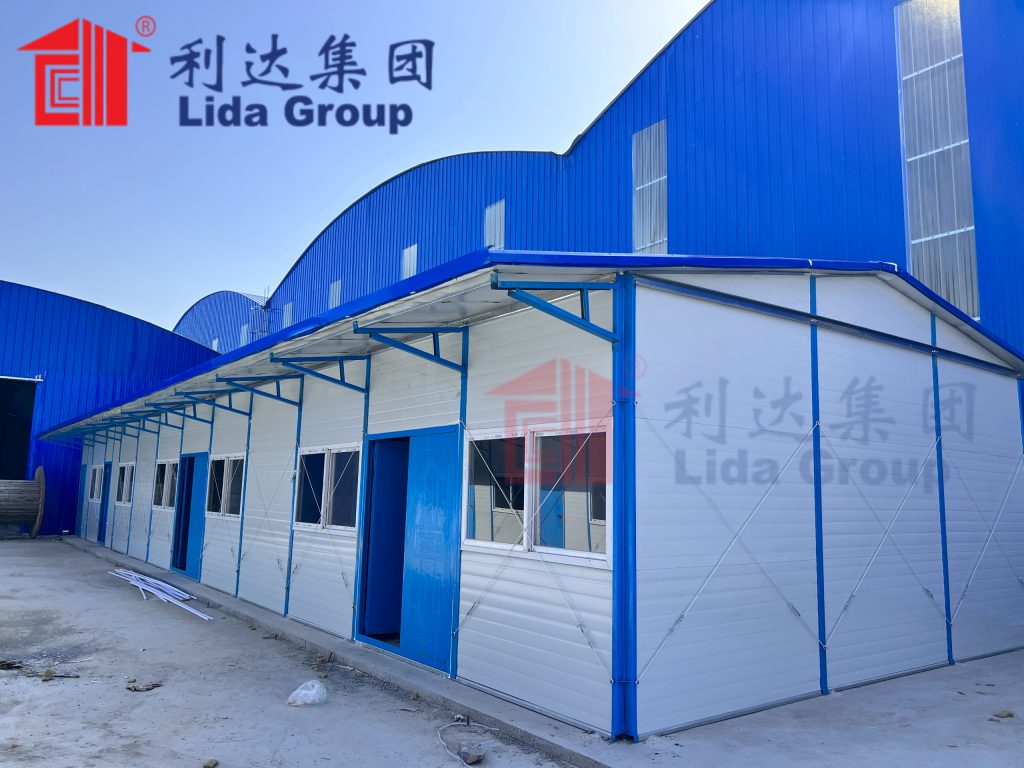
4. Full-Lifecycle Low-Cost Control Mechanism
While achieving rapid construction, Lida’s temporary low-cost building technology realizes comprehensive cost reduction covering upfront construction, mid-term operation, and later turnover, creating optimal economic benefits for oil and gas enterprises.
4.1 Low Upfront Construction Cost
Standardized batch factory production greatly reduces unit manufacturing costs, and the simplified on-site assembly process eliminates the investment in professional technicians, large mechanical equipment, and auxiliary building materials. The foundation-free laying design saves foundation construction costs, and flat-pack stacked transportation improves container loading rate, reducing remote logistics freight by more than 70%. Compared with traditional brick-concrete and welded temporary buildings, Lida’s technology reduces the upfront comprehensive construction cost of oil field dormitories by 35% to 50%, greatly easing the capital pressure in the early stage of project startup.
4.2 Ultra-Low Mid-Term Operation and Maintenance Costs
Lida’s temporary buildings constructed with optimized technology have excellent weather resistance, anti-corrosion, and anti-aging performance. The hot-dip galvanized steel frame effectively resists oil field industrial gas corrosion and salt spray erosion, and the high-density sandwich panels maintain stable thermal insulation and sealing performance for a long time. The overall structure has low failure rate, avoiding frequent rust removal, wall repair, and waterproof reinforcement required by traditional buildings. The annual maintenance cost is less than 3% of the initial investment, far lower than the operational consumption of traditional temporary buildings, realizing long-term maintenance-free stable operation.
4.3 Reusable Turnover Reduces Long-Term Investment
The detachable modular technical design enables repeated disassembly, transportation, and reassembly of dormitory facilities without structural damage and performance attenuation. After the completion of a single oil field project, the buildings can be recycled and reused in new exploration, drilling, and maintenance projects. This reusable technical attribute completely changes the one-time scrapping loss of traditional buildings, reduces the repeated camp construction investment of oil and gas enterprises by more than 40%, and effectively improves the long-term return on investment of project supporting facilities.
5. Harsh Environment Adaptability and Industrial Safety Performance
Lida’s temporary low-cost building technology does not sacrifice product performance for speed and cost. Through targeted technical optimization for oil field extreme environments and high-risk industrial attributes, the dormitories achieve excellent environmental adaptability and high-standard safety performance, fully meeting oil field standardized operation specifications.
5.1 All-Weather Extreme Climate Adaptation Technology
Aiming at the diverse extreme climates of oil fields, Lida’s technology adopts multi-layer composite thermal insulation and fully sealed waterproof and dustproof design. The high-density insulation core material solves the pain points of hot summer and cold winter, realizing constant indoor temperature in desert high temperature and plateau severe cold environments. The overall sealing structure with high-elasticity sealing strips effectively resists sand and dust penetration in windy and sandy areas, and the elevated floor and anti-corrosion spraying technology prevent moisture and salt spray erosion in coastal humid areas. The comprehensive environmental adaptation technology ensures stable and comfortable indoor living conditions in various harsh oil field scenarios.
5.2 High-Standard Fireproof and Structural Safety Technology
In view of the high-risk fire prevention requirements of oil and gas operation sites, Lida’s temporary building technology adopts A-level non-combustible fireproof core materials and standardized fireproof electrical wiring design, which can effectively block fire spread and eliminate electrical fire hazards. The integral rigid steel frame structure passes professional wind resistance, seismic resistance, and snow load tests, capable of resisting level 12 strong winds, moderate earthquakes, and heavy snow extrusion. The high-standard safety technology fully complies with oil field industrial safety management specifications, ensuring the safe residence of workers in all weather conditions.
6. Practical Application Value in Modern Oil Field Projects
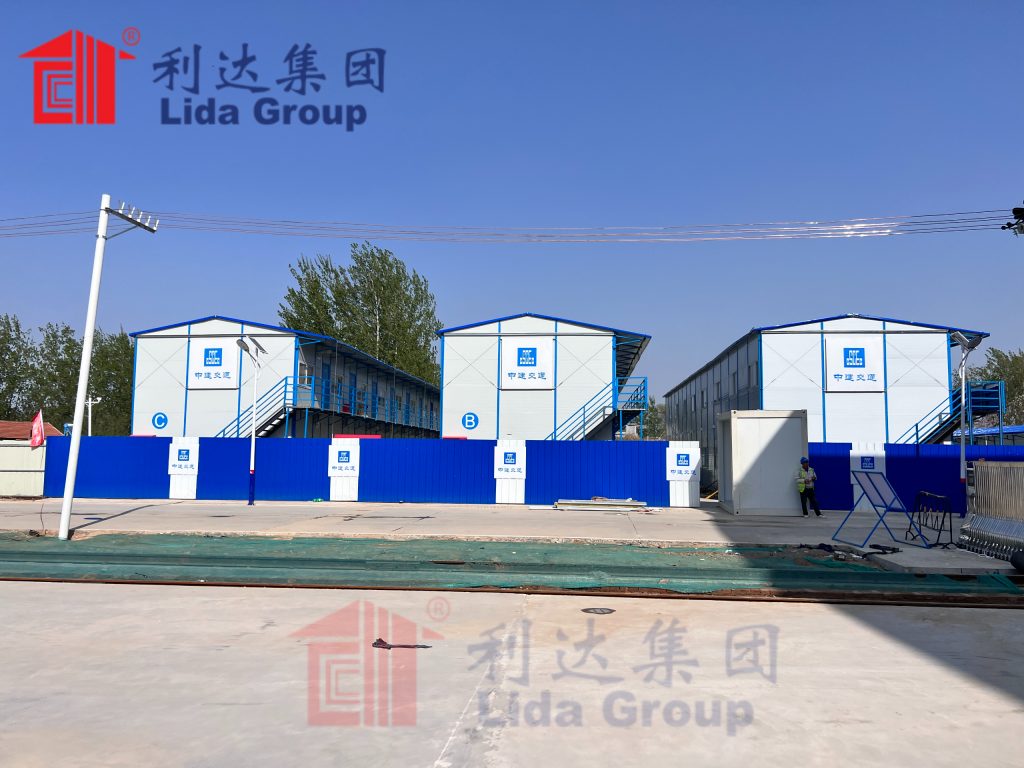
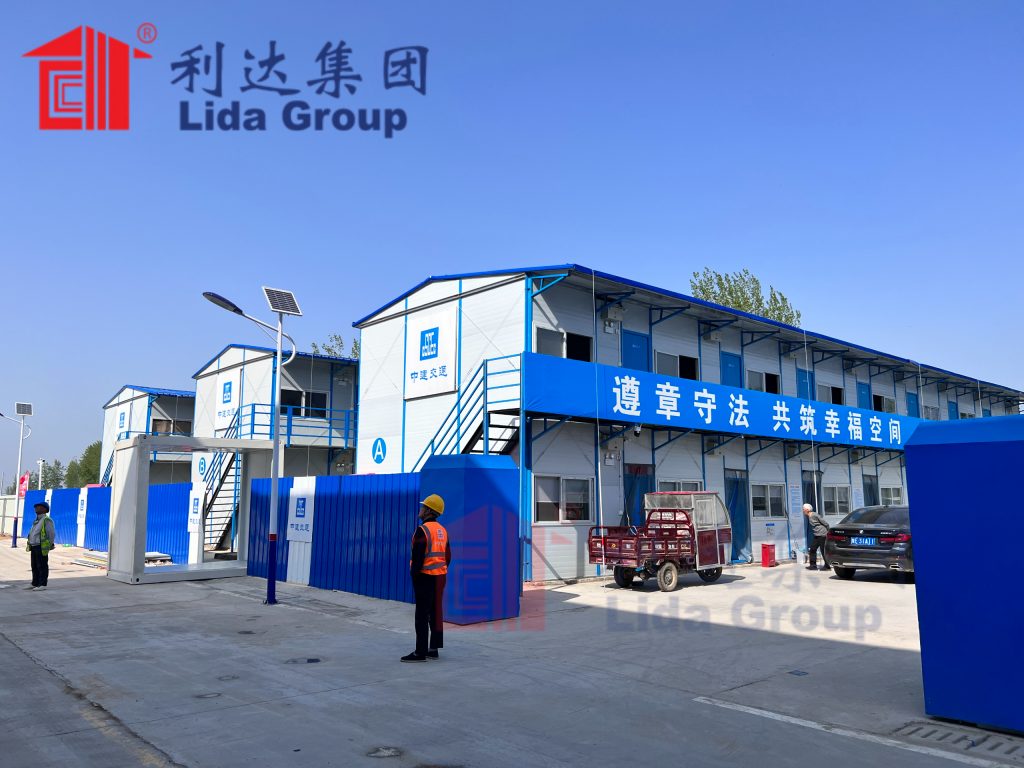
With the dual core advantages of rapid completion and low full-lifecycle cost, Lida’s temporary low-cost building technology has been widely applied in global oil and gas engineering projects. It is suitable for rapid dormitory deployment of desert oil field exploration camps, high-altitude cold-region drilling bases, coastal offshore oil field auxiliary camps, and short-term emergency maintenance projects. The modular design supports flexible combination and scalable layout, which can not only meet standard worker dormitory needs but also be transformed into on-site offices, meeting rooms, material warehouses, and medical rooms, forming a complete set of rapid construction and low-cost standardized oil field camp systems. This advanced building technology effectively solves the problems of slow construction, high cost, and poor flexibility of traditional oil field accommodation, stabilizes frontline workforce teams, and provides strong support for efficient project operation.
7. Conclusion
Traditional oil field worker dormitory construction technologies have long restricted the efficient and economical operation of oil and gas projects due to slow construction speed, high comprehensive cost, high construction threshold, and insufficient environmental adaptability. The single pursuit of construction speed leads to substandard accommodation quality and safety risks, while the pursuit of high quality brings huge cost waste and schedule delays, forming a long-standing industry development dilemma.
Lida Group’s temporary low-cost building technology completely breaks the industry’s balance dilemma of speed, cost, and performance. Through innovative factory prefabrication, simplified bolt assembly, standardized cost matching, and detachable turnover technology, it realizes ultra-fast completion of oil field dormitories, shortening the traditional construction cycle from months to days. At the same time, the full-lifecycle cost control mechanism effectively reduces upfront construction investment and later operational consumption, and the targeted environmental adaptation and industrial safety design ensure safe, comfortable, and stable living conditions for oil field workers. With outstanding rapid construction capability, significant economic benefits, and reliable scenario adaptability, Lida’s temporary low-cost building technology provides a perfect efficient and economical accommodation solution for global oil field projects, continuously promoting the standardized, low-cost, and high-efficiency upgrading of supporting camp construction in the oil and gas industry.
Related news
-
Lida Group Launches Easy Install Sandwich Panel House for Oil Field Worker Dormitory Needs
2026-05-28 16:35:27
-
Temporary Low Cost Building from Lida Group Ideal for Rapid Oil Field Worker Dormitory Setup
2026-05-28 16:30:07
-
Easy Install Sandwich Panel House Creates Comfortable Oil Field Worker Dormitory by Lida Group
2026-05-28 16:22:07
contact us
- Tel: +86-532-88966982
- Whatsapp: +86-13793209022
- E-mail: sales@lidajituan.com
