



Temporary Low Cost Building from Lida Group Ideal for Rapid Oil Field Worker Dormitory Setup
2026-May-28 16:30:07
By Admin
Introduction
The global oil and gas industry is defined by remote operation locations, phased project cycles, and harsh unpredictable working environments. Most oil field exploration, drilling, and maintenance projects are carried out in deserts, Gobi plains, high-altitude plateaus, and coastal salt-spray zones where municipal infrastructure is scarce, transportation is difficult, and climatic conditions are extreme. For oil and gas enterprises, on-site worker dormitories are not only basic living facilities but also key supporting systems that determine project startup speed, workforce stability, and overall operational cost control. Unlike fixed urban buildings, oil field accommodation requires two irreplaceable core attributes: rapid on-site setup to match urgent project schedules and low-cost investment to adapt to temporary and phased construction characteristics.
For decades, the oil and gas sector has faced a long-standing structural dilemma in temporary camp construction. Traditional brick-and-mortar buildings deliver stable quality but require long construction cycles, massive material and labor investment, and generate huge sunk costs after project completion due to non-reusable structures. Simple canvas tents and low-grade makeshift shelters feature low upfront costs but suffer from poor weather resistance, insufficient safety performance, and extremely substandard living conditions, failing to support long-term worker residency and standardized site management. Conventional welded color steel houses balance basic usability but still have prominent drawbacks including complex on-site construction, high labor dependence, and high comprehensive maintenance costs. These traditional solutions cannot perfectly adapt to the rapid deployment and cost-control needs of modern oil field projects, restricting the refined and efficient operation of energy engineering.
As a leading global supplier of modular temporary construction systems, Lida Group targets the unique operational logic of oil field projects and launches customized low-cost temporary buildings exclusively for rapid oil field worker dormitory setup. Breaking the industry’s inherent contradiction between “low cost and low quality” and “high quality and high cost”, Lida’s temporary building solutions adopt standardized modular prefabrication, simplified assembly technology, and cost-effective material matching. They realize ultra-fast on-site deployment, ultra-low full-lifecycle costs, and reliable harsh-environment adaptability, fully meeting the temporary accommodation needs of oil field construction teams. This article systematically elaborates on the practical pain points of traditional oil field dormitory construction, the core advantages of Lida Group’s low-cost temporary buildings in rapid setup and cost control, environmental adaptability, safety performance, and long-term economic value, comprehensively illustrating why Lida’s temporary building systems have become the most ideal choice for modern rapid oil field worker dormitory construction.
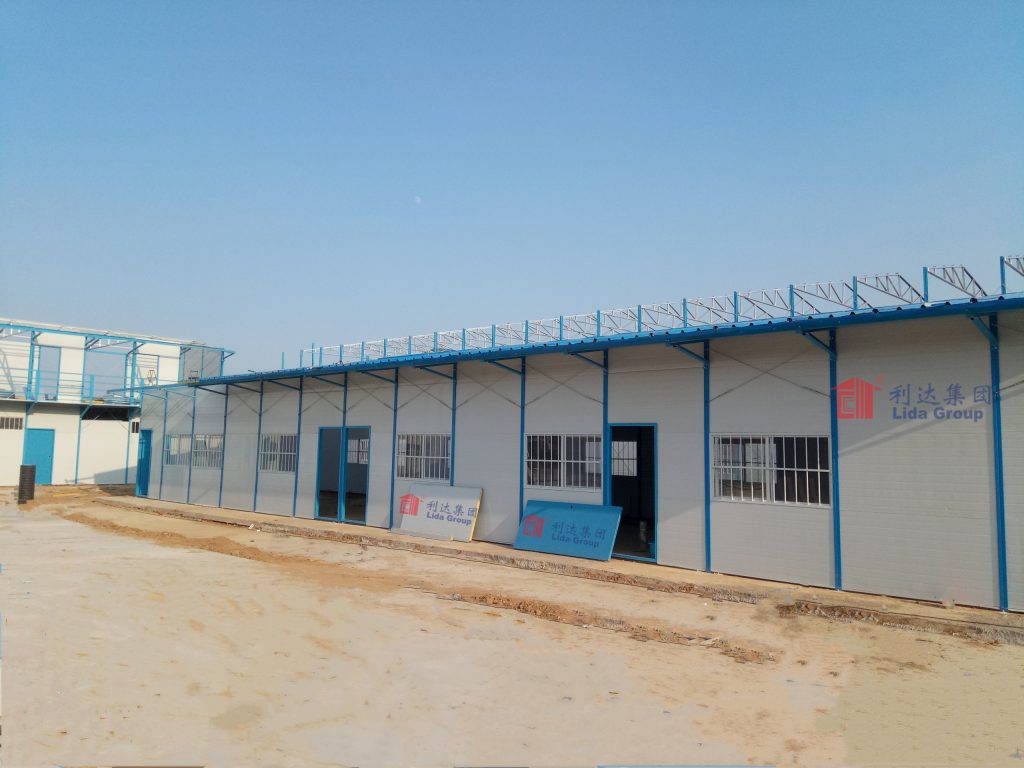
1. Practical Pain Points of Traditional Oil Field Dormitory Construction
Oil field projects have distinct characteristics of remoteness, temporariness, and phased iteration, which put forward higher targeted requirements for temporary residential facilities. Traditional housing solutions are developed for conventional construction scenarios and cannot adapt to the special working conditions of oil fields, resulting in unbalanced construction efficiency, cost input, and living quality.
1.1 Slow Construction Speed Restricts Project Startup
Traditional fixed temporary buildings rely on extensive on-site wet construction processes, including foundation leveling, concrete pouring, steel frame welding, wall masonry, and interior decoration. The whole construction cycle lasts three to six weeks, and the progress is easily affected by bad weather, insufficient on-site machinery, and shortage of professional construction personnel. In remote oil field areas with backward supporting conditions, the construction cycle will be further extended. Delayed dormitory deployment directly hinders worker settlement and manpower scheduling, resulting in delayed project startup schedules and invisible economic losses for oil and gas enterprises. Even simple tent shelters require tedious ground fixing and reinforcement work in windy and sandy oil field environments, failing to achieve instant deployment and occupancy.
1.2 High Comprehensive Investment and Severe Resource Waste
Brick-concrete temporary buildings and welded color steel houses require a large amount of building materials, mechanical equipment leasing, and professional labor services, with extremely high upfront construction costs. More importantly, most traditional temporary buildings adopt fixed integrated structures that cannot be disassembled, transferred, or reused. After the completion of a single oil field exploration or drilling project, the dormitory facilities can only be demolished and discarded, producing massive construction waste and causing one-time sunk investment. For oil and gas enterprises undertaking multiple cross-regional phased projects, repeated camp construction brings long-term and heavy operational cost pressure, seriously affecting project profit margins.
1.3 Poor Adaptability to Harsh Oil Field Environments
Oil fields cover diverse extreme climatic zones: desert areas feature high temperature and strong sandstorms all year round; plateau and northern oil fields face ultra-low temperatures and strong winds in winter; coastal oil fields are eroded by high humidity and salt spray for a long time. Traditional low-cost temporary shelters have thin structural layers and poor sealing performance, unable to resist extreme temperature changes, sand and dust penetration, and corrosive atmospheric erosion. Long-term outdoor use leads to structural rust, wall cracking, water leakage, and indoor dust accumulation, resulting in poor living environments and frequent facility failures. The insufficient environmental adaptability not only reduces worker living satisfaction but also increases daily maintenance workload and costs.
1.4 Inflexible Structure Fails to Match Dynamic Project Demand
The number of workers in oil field projects changes dynamically with exploration, drilling, construction, and maintenance stages. Traditional temporary buildings have fixed spatial scales and cannot be flexibly expanded or reduced according to workforce changes. In peak construction periods, insufficient dormitory accommodation restricts manpower deployment; in idle stages, redundant housing resources are left unused, resulting in resource waste. The rigid structural design cannot adapt to the flexible and changeable operational rhythm of oil field projects, failing to support refined project cost management.
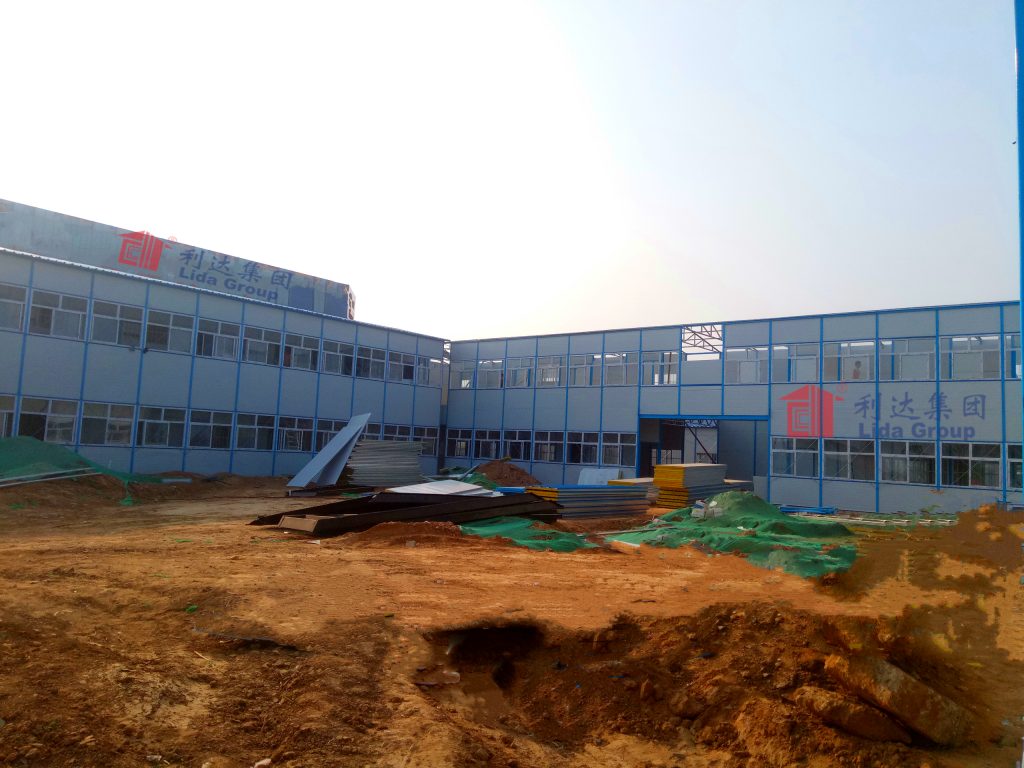
2. Core Advantages of Lida’s Low-Cost Temporary Buildings for Rapid Dormitory Setup
Aiming at the pain points of slow construction, high cost, and inflexibility of traditional oil field dormitories, Lida Group optimizes product design based on oil field scenario characteristics. The low-cost temporary building series takes rapid deployment and full-lifecycle cost reduction as the core, realizing efficient and economical construction of oil field worker dormitories through modular prefabrication, simplified assembly, and standardized scale production.
2.1 Modular Factory Prefabrication Realizes Ultra-Fast Deployment
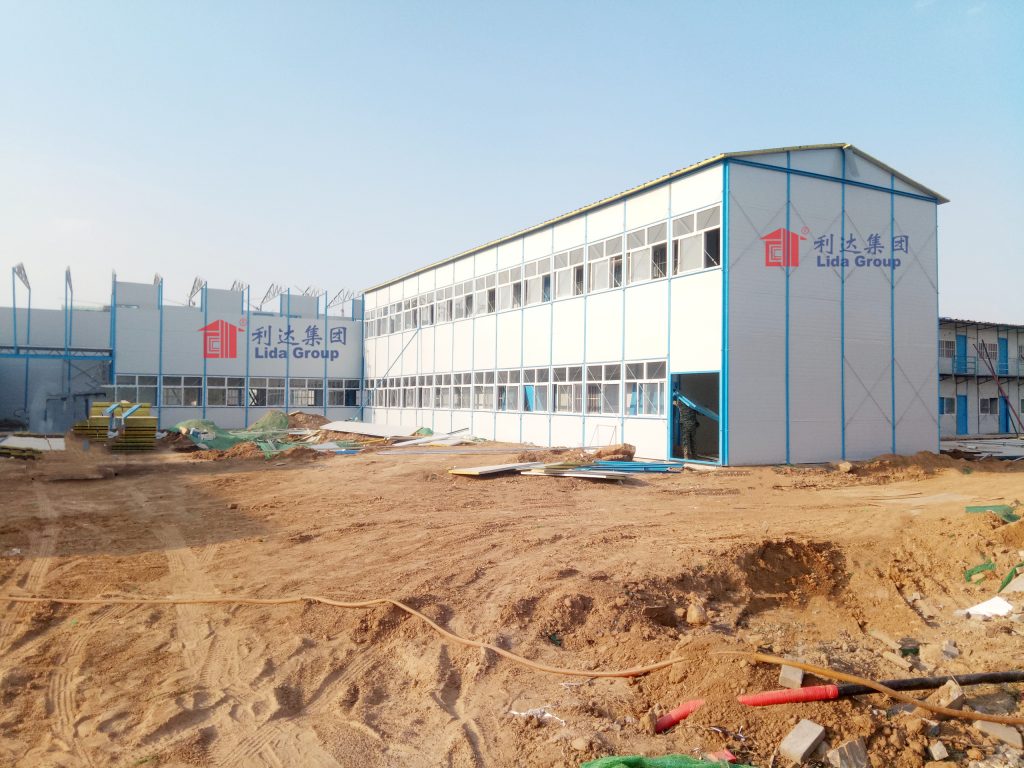
Lida’s temporary low-cost buildings adopt a full factory prefabrication mode, with over 98% of component production, surface treatment, and partial interior decoration completed in standardized industrial workshops. All steel frames, wall panels, roof systems, doors, windows, and electrical accessories are produced as standardized finished parts, requiring no secondary cutting, welding, or modification on site. After being transported to the oil field site, the components only need simple splicing and fixing to complete dormitory construction. This mode completely abandons traditional wet construction processes, shortening the camp construction cycle from weeks to days. A standard oil field worker dormitory unit can be completed and put into use within several hours, and a large-scale worker camp with dozens of units can be fully deployed within three days, providing timely accommodation guarantee for rapid project startup.
2.2 Simplified Bolt Assembly Reduces On-Site Threshold and Labor Costs
Different from the complex welding construction of traditional temporary houses, Lida’s low-cost temporary buildings adopt a full-bolt assembly structure with unified standardized interfaces for all components. The assembly process requires no professional welding technicians, large hoisting equipment, and complex construction processes. Ordinary untrained workers can complete assembly operations according to detailed installation instructions, greatly reducing the technical threshold of on-site construction. The simplified assembly mode cuts on-site labor demand by more than 60% and eliminates mechanical leasing costs, significantly reducing the upfront construction labor expenditure of oil field camps. Meanwhile, the tool-free rapid assembly effectively avoids construction delays caused by insufficient on-site technical personnel in remote oil field areas.
2.3 Foundation-Free Laying Further Accelerates Construction Progress
Lida’s lightweight temporary building structure features uniform stress distribution and low ground bearing requirements, adapting to the complex and uneven ground conditions of oil field sites. The product can be directly laid on gravel ground, hardened ground, and temporary flat open spaces without concrete foundation pouring and long curing cycles. This foundation-free design saves two to three days of foundation construction time for each batch of dormitories, further optimizing the rapid deployment capability. It also eliminates material and labor costs consumed by foundation construction, realizing dual improvement of construction speed and economic benefits.
2.4 Flexible Scalable Layout Adapts to Dynamic Oil Field Demand
Lida’s standardized temporary building units support free horizontal splicing and vertical stacking. Oil field engineering teams can flexibly adjust the number and layout of dormitory units according to real-time changes in workforce scale, realizing dynamic matching of housing resources and project demand. In peak construction stages, dormitory units can be quickly added to meet accommodation demand; in maintenance and idle stages, redundant units can be disassembled and stored to avoid resource waste. The flexible scalable design perfectly fits the phased and iterative operational characteristics of oil field projects, helping enterprises realize refined camp management.
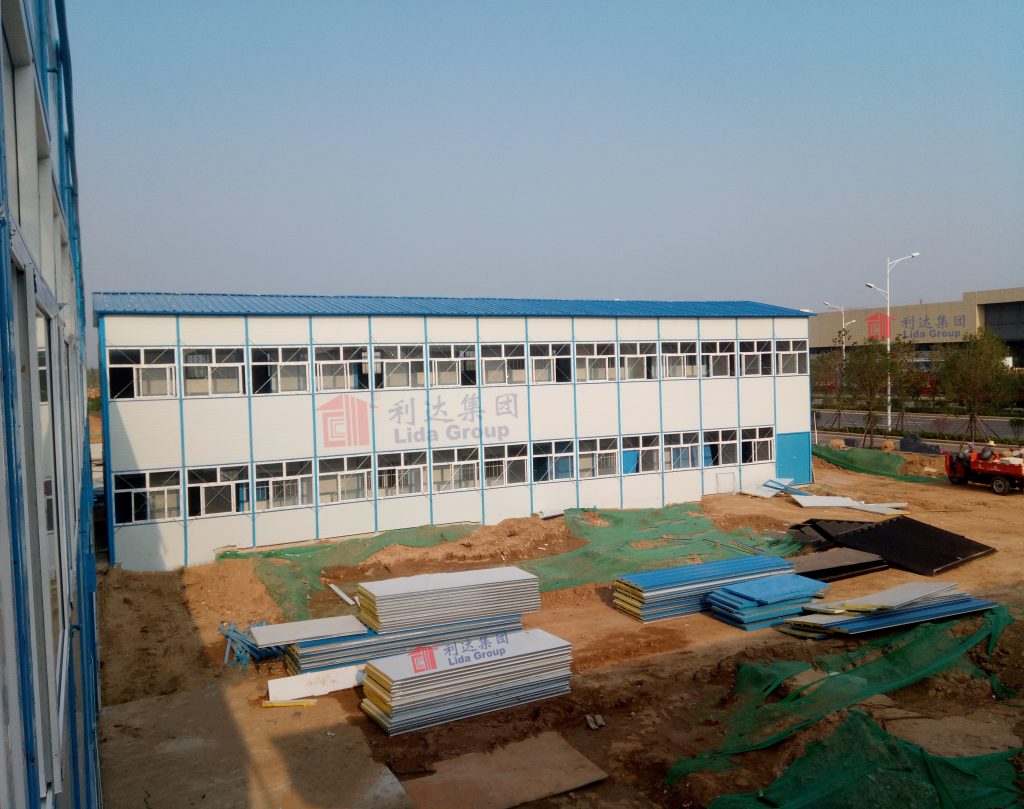
3. Full-Lifecycle Low-Cost System Creates Maximum Economic Value
The core competitiveness of Lida Group’s temporary buildings lies in their comprehensive low-cost advantages throughout the entire product lifecycle, covering upfront construction, transportation, on-site deployment, daily operation, and later turnover. Different from traditional low-cost products with low upfront investment but high later maintenance costs, Lida’s solutions realize real low-cost operation with balanced quality and cost.
3.1 Scale Production Reduces Upfront Manufacturing Costs
Lida Group relies on large-scale standardized industrial production and mature supply chain system to realize batch manufacturing of temporary building components. Unified material procurement, automated production, and standardized process management effectively reduce unit production costs. Compared with customized temporary buildings and on-site constructed houses, Lida’s modular products reduce upfront comprehensive construction costs by 30% to 50%. The streamlined configuration design removes redundant high-end decorative functions that are unnecessary for temporary oil field accommodation, focusing on core practical performance and avoiding functional waste, further optimizing input-output ratio.
3.2 Flat Pack Transportation Cuts Logistics Expenses
Lida’s temporary building components support flat disassembly and stacked transportation, with ultra-high container loading rates. Compared with traditional integral temporary buildings that occupy massive shipping space, the flat packing mode increases loading capacity by more than four times, greatly reducing the number of transportation vehicles and ocean shipments. For remote oil field projects with high logistics costs, this optimized transportation mode saves a large amount of freight, port handling, and transit insurance costs, effectively solving the problem of high transportation costs of construction facilities in remote areas.
3.3 Ultra-Low Daily Maintenance and Operational Costs
Adopting high-quality anti-corrosion and weather-resistant materials, Lida’s temporary buildings have excellent structural stability and anti-aging performance. The steel frame undergoes professional anti-rust treatment, and the wall and roof panels have strong ultraviolet resistance, sand abrasion resistance, and moisture-proof capabilities. During long-term outdoor operation in oil field environments, the products have extremely low failure rates, requiring no frequent rust removal, repainting, and component replacement. The annual maintenance cost is less than 3% of the initial investment, far lower than the high maintenance expenditure of traditional temporary houses, realizing long-term maintenance-free stable operation.
3.4 Reusable Turnover Avoids Repeated Investment
The non-destructive bolt assembly structure enables Lida’s temporary buildings to be disassembled, transported, and reassembled multiple times without structural damage or performance attenuation. After the completion of an oil field project, the dormitory units can be flat-packed and stored for subsequent project use or cross-regional transfer. A single set of temporary building facilities can support more than eight repeated turnover uses, completely changing the disposable use mode of traditional temporary buildings. This recyclable asset mode reduces the long-term repeated construction investment of oil and gas enterprises by more than 40%, bringing sustainable economic benefits.
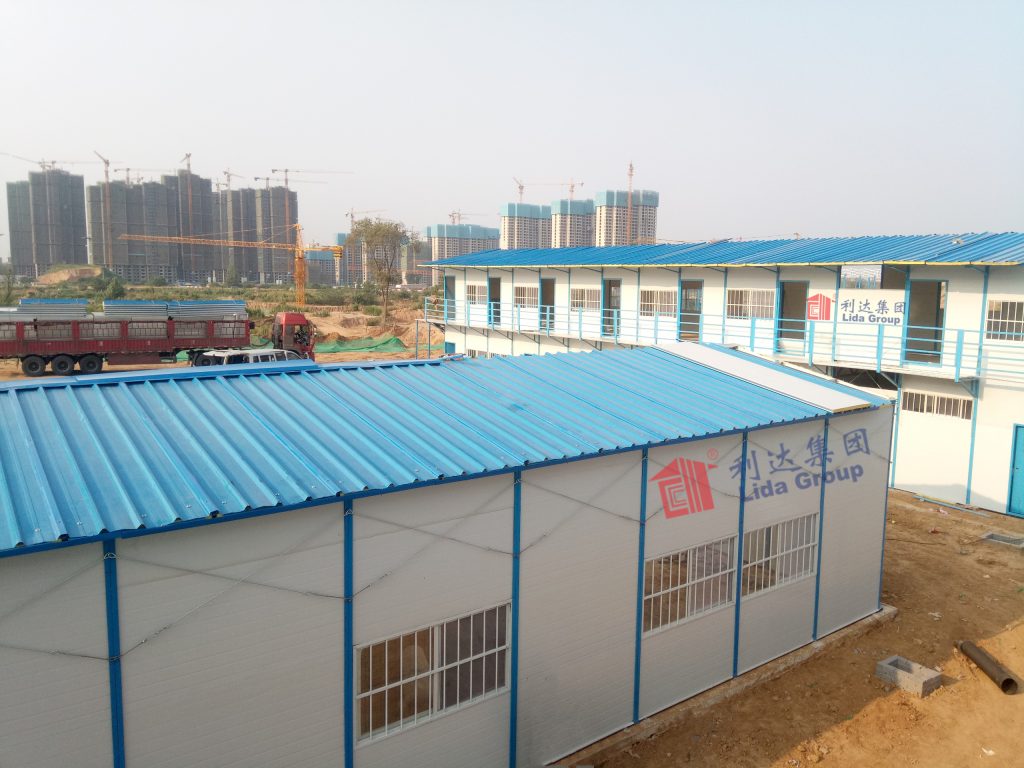
4. Reliable Harsh Environment Adaptability for Oil Field Scenarios
While adhering to low-cost positioning, Lida Group does not sacrifice product practical performance. Through targeted structural optimization and scenario-based material selection, the temporary buildings achieve excellent adaptability to various harsh oil field environments, ensuring stable and safe operation of dormitory facilities in extreme climates.
4.1 All-Weather Thermal Insulation Adapts to Extreme Temperatures
Lida’s temporary building walls and roofs adopt high-density composite thermal insulation layers, which can effectively isolate external extreme temperatures. In high-temperature desert oil fields, the thermal insulation structure blocks solar heat radiation, avoiding overheating of indoor space and maintaining a cool and breathable living environment. In ultra-low temperature plateau oil fields, the thickened thermal insulation layer locks indoor heat to resist severe cold, ensuring basic warm living conditions for workers. The all-weather constant temperature performance solves the common pain points of hot summer and cold winter in traditional low-cost temporary shelters, greatly improving indoor living comfort.
4.2 Windproof and Dustproof Performance for Windy and Sandy Oil Fields
Aiming at the frequent strong winds and sandstorms in Gobi and desert oil fields, Lida’s temporary buildings adopt an integral rigid steel frame structure with excellent wind resistance, capable of resisting level 12 strong winds and long-term sand impact. All component splicing gaps are equipped with high-elasticity sealing strips to realize fully sealed indoor space, effectively blocking external sand and dust from penetrating indoors. This stable sealing performance keeps the indoor environment clean and tidy for a long time, reducing worker cleaning workload and avoiding equipment and daily supplies contamination caused by sand and dust, perfectly adapting to windy and sandy oil field working conditions.
4.3 Anti-Corrosion and Moisture-Proof for Humid Coastal Oil Fields
For coastal oil fields with high humidity and salt spray erosion, Lida’s steel components adopt hot-dip galvanizing anti-corrosion treatment and weather-resistant surface spraying technology, forming a dense protective layer to resist salt spray corrosion and industrial gas erosion. The elevated floor design avoids direct contact between the house and damp ground, preventing floor mildew and structural moisture absorption. The overall waterproof and moisture-proof structure effectively solves the problems of wall peeling, structural rust, and indoor humidity accumulation in humid environments, ensuring long-term stable service performance of the building.
5. Standard Safety and Basic Living Comfort
Oil field sites belong to high-risk industrial operation areas with strict safety management standards. Lida’s low-cost temporary buildings adhere to high-standard safety design and humanized configuration, balancing low-cost advantages with safe and comfortable living experience to meet the standardized accommodation needs of oil field workers.
5.1 High-Level Fireproof Safety Complies with Industrial Standards
All thermal insulation and wall materials of Lida’s temporary buildings reach A-level non-combustible fireproof standard, with excellent flame retardant and smoke suppression capabilities. Different from flammable foam materials used in ordinary low-cost temporary houses, Lida’s fireproof core materials will not burn or release toxic smoke when encountering open fire, effectively blocking fire spread. The internal electrical system adopts standardized fireproof wiring and leakage protection devices, avoiding electrical short circuit and fire hazards. The overall fire safety design fully complies with oil and gas industry camp specifications, eliminating potential safety risks in crowded dormitory areas.
5.2 Basic Humanized Configuration Improves Worker Rest Quality
Each standard dormitory unit is pre-equipped with safe lighting systems, ventilated windows, waterproof floors, and standardized socket systems. The multi-layer sealing structure reduces external construction and mechanical noise, creating a quiet rest environment for workers after high-intensity field operations. The dry, clean, and temperature-stable indoor environment relieves worker fatigue, stabilizes workforce emotions, and reduces turnover rates caused by poor accommodation conditions, providing basic living guarantee for efficient on-site construction.
6. Wide Application in Global Oil Field Projects
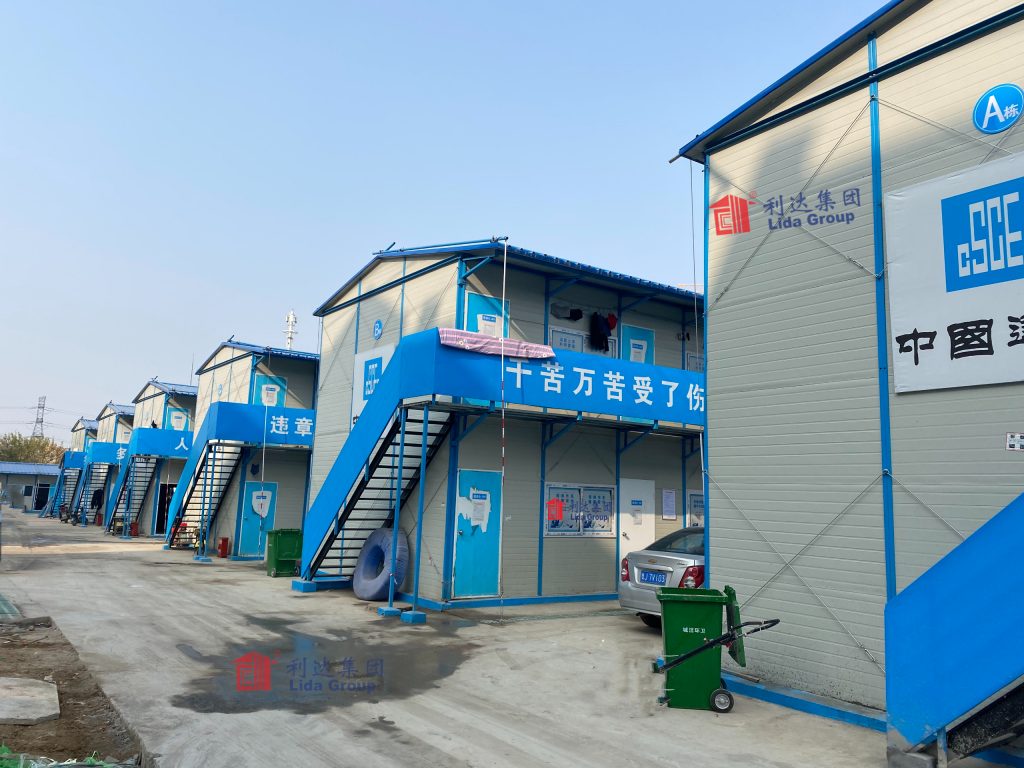
With the dual core advantages of rapid setup and low full-lifecycle cost, Lida Group’s temporary low-cost buildings have been widely applied in global oil and gas engineering projects. They are the preferred dormitory solution for desert oil field exploration camps, plateau cold-region drilling bases, coastal offshore oil field auxiliary camps, and short-term oil field maintenance and renovation projects. In addition to worker dormitories, the modular temporary buildings can be freely combined into on-site offices, meeting rooms, material warehouses, and temporary sanitation rooms, forming a complete low-cost standardized oil field camp system. The flexible, efficient, and economical application mode solves the accommodation dilemma of remote oil field projects and helps energy enterprises achieve low-cost and standardized camp management.
7. Conclusion
Rapid and low-cost worker dormitory setup is an essential guarantee for efficient operation of modern oil field projects. Traditional temporary housing solutions have long restricted the refined development of oil field camps due to slow construction speed, high comprehensive investment, poor environmental adaptability, and non-reusable performance. The contradiction between high construction cost and poor living quality has always plagued the cost control and workforce management of oil and gas enterprises.
Lida Group’s temporary low-cost buildings perfectly solve the industry’s long-standing pain points and become the ideal solution for rapid oil field worker dormitory setup. The modular factory prefabrication and simplified bolt assembly design realize ultra-fast on-site deployment, greatly shortening camp construction cycles and ensuring timely project startup. The standardized scale production, flat-pack logistics, and reusable turnover performance achieve full-lifecycle cost reduction, effectively lowering the long-term operational expenditure of oil field projects. Meanwhile, the products maintain excellent extreme weather adaptability, high-standard industrial safety performance, and basic humanized living configuration, balancing construction efficiency, economic benefits, safety, and comfort. With outstanding comprehensive advantages, Lida’s low-cost temporary building systems continuously empower global oil and gas enterprises to optimize camp construction, control project costs, stabilize workforce teams, and realize efficient and sustainable project operation.
Related news
-
Easy Install Sandwich Panel House Creates Comfortable Oil Field Worker Dormitory by Lida Group
2026-05-28 16:22:07
-
Lida Group Supplies Oil Field Worker Dormitory with Temporary Low Cost Building Systems
2026-05-28 16:08:15
-
Flat Packed Container House from Lida Group Saves Shipping Space and Installation Time
2026-05-28 15:59:15
contact us
- Tel: +86-532-88966982
- Whatsapp: +86-13793209022
- E-mail: sales@lidajituan.com
