



Prefab Container Campsite Dormitory Offers Fast Assembly and Long Service Life
2026-Jun-09 11:05:33
By Admin
1. Introduction
Global infrastructure development, mining exploitation, energy construction, and large-scale engineering projects rely heavily on temporary on-site accommodation facilities to house frontline workers, technical teams, and management personnel. The efficiency of campsite construction and the durability of dormitory buildings directly determine project startup speed, operational stability, and long-term cost control. For decades, traditional temporary accommodation solutions, including brick-built dormitories, simple color steel sheds, and disposable tents, have dominated construction sites worldwide. Nevertheless, these conventional options suffer from inherent drawbacks such as time-consuming construction, poor structural stability, frequent damage, and short service cycles, which severely hinder the efficient operation of modern engineering projects.
In response to the growing demand for high-efficiency, long-lasting, and cost-effective temporary residential facilities, prefabricated container campsite dormitories have emerged as a revolutionary modular building solution. Combining industrial prefabrication technology, standardized modular design, and upgraded durable building materials, modern prefab container dormitories stand out in the construction industry with two core competitive strengths: ultra-fast on-site assembly and exceptional long service life. Unlike traditional temporary buildings that require months of on-site construction and need frequent replacement within several years, high-quality prefab container campsite dormitories can be deployed within days and maintain stable performance for decades. This article elaborates on the technical principles, practical advantages, core values, and diverse applications of prefab container campsite dormitories centered on fast assembly and long service life, demonstrating why they have become the mainstream choice for modern global engineering camps.
2. Critical Shortcomings of Traditional Temporary Campsite Dormitories
To fully highlight the advantages of prefab container dormitories, it is essential to analyze the prominent limitations of traditional temporary accommodation facilities, which have long plagued engineering project management. Traditional campsite solutions struggle to balance construction efficiency and service durability, resulting in low project efficiency and high comprehensive operational costs.
First, extremely slow construction progress delays project commencement. Traditional brick and concrete dormitories require complex foundation treatment, on-site pouring, masonry, plastering, decoration, and utility installation. The entire construction cycle usually lasts two to three months, and rainy weather, strong winds, and insufficient on-site labor will further prolong the schedule. Simple color steel temporary houses also require weeks of on-site assembly and manual adjustment. For time-sensitive infrastructure, emergency construction, and short-cycle engineering projects, slow campsite construction directly delays worker settlement and project startup, causing substantial economic losses such as idle mechanical equipment and delayed progress deadlines.
Second, poor structural durability and short service life. Most traditional temporary buildings adopt lightweight and low-cost materials with simple structural designs. Exposed to outdoor wind, rain, ultraviolet radiation, and temperature changes for a long time, brick walls are prone to cracking and peeling, color steel plates easily rust and deform, and tent structures suffer from aging and tearing. The average service life of traditional temporary facilities is only two to three years. After that, large-scale maintenance or overall demolition and reconstruction are mandatory, resulting in repeated investment and severe resource waste for engineering enterprises.
Third, low reusability and high long-term comprehensive costs. Traditional masonry temporary buildings are disposable structures that cannot be disassembled and relocated. Once a project is completed, the campsite has to be demolished, generating massive construction waste and environmental pollution. Ordinary low-quality temporary houses are severely damaged after single use and cannot be reused for subsequent projects. For construction enterprises with continuous mobile project demands, the repeated construction of campsites greatly increases labor, material, and time costs, reducing overall project profit margins.
Fourth, unstable performance in complex outdoor environments. Traditional temporary dormitories lack professional anti-corrosion, waterproof, and thermal insulation treatments. In remote desert, coastal, alpine, and rainy mountainous areas, they are vulnerable to water leakage, mildew, structural loosening, and thermal failure, failing to provide safe and comfortable long-term living conditions for on-site workers.
3. Fast Assembly: Core Efficiency Advantage of Prefab Container Campsite Dormitories
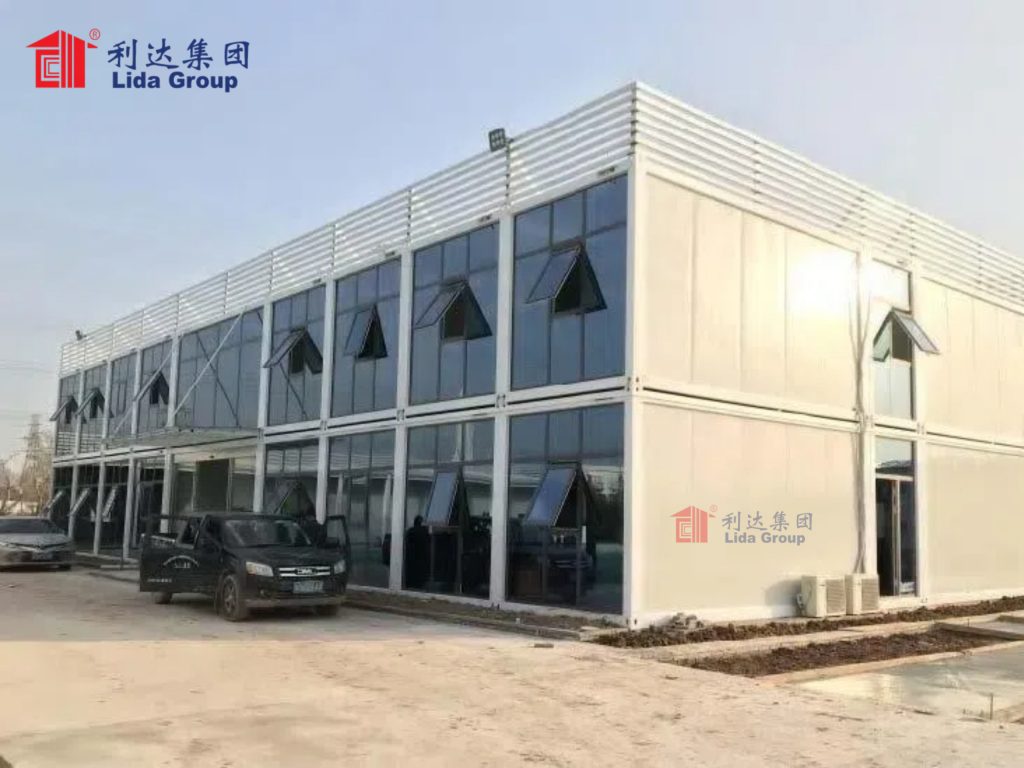
Fast assembly is one of the most intuitive and valuable advantages of modern prefab container campsite dormitories. Supported by factory integrated prefabrication, standardized modular design, and simplified bolted connection technology, prefab container dormitories completely subvert the inefficient on-site construction mode of traditional buildings, achieving rapid deployment and immediate occupancy, which greatly improves the operational efficiency of engineering projects.
3.1 95% Factory Prefabrication Minimizes On-Site Work
Different from traditional buildings that rely entirely on on-site construction, high-quality prefab container dormitories complete nearly all complex production and processing procedures in standardized intelligent factories. All core processes including steel frame welding, anti-corrosion treatment, wall and roof assembly, thermal insulation laying, waterproof sealing, internal water and electricity embedding, lighting installation, and basic interior decoration are finished before product delivery. After leaving the factory, each container unit is a complete independent functional module with standardized specifications and perfect internal facilities. On construction sites, there is no need for concrete pouring, masonry, welding, and secondary decoration, which eliminates most time-consuming and labor-intensive on-site construction links.
3.2 Simplified Bolted Structure Realizes Ultra-Fast On-Site Installation
Prefab container campsite dormitories adopt full bolted assembly structure, abandoning complex welding and fixed connection processes. All modules are equipped with unified reserved connection interfaces, ensuring precise docking between units. The installation process is simple and standardized, requiring no professional construction skills or large-scale mechanical equipment. A small team of two to three ordinary workers can complete the positioning, docking, and fixing of a single container dormitory unit within four hours. For medium-sized engineering camps with dozens of dormitory units and supporting functional rooms, the overall assembly and commissioning can be completed within three to seven days, which is more than 80% faster than traditional temporary building construction cycles.
3.3 Flexible Transportation and Rapid Site Adaptation Accelerate Project Launch
To adapt to the complex terrain and limited transportation conditions of remote engineering sites, prefab container dormitories support dual transportation modes of integral delivery and flat-pack split delivery. Integral units can be directly hoisted and put into use upon arrival at flat and accessible sites with zero secondary assembly. Flat-pack packaging greatly optimizes transportation space, reducing logistics costs and facilitating transportation in mountainous and remote areas with narrow roads. In addition, the reinforced chassis of container dormitories is equipped with adjustable support feet, which can adapt to uneven ground, slopes, and sandy land without complex foundation leveling and pouring. This foundation-free installation feature further shortens the site preparation cycle and enables engineering teams to settle in and start construction ahead of schedule.
3.4 Simultaneous Assembly and Scalable Construction Improve Overall Efficiency
The modular design of prefab container dormitories supports simultaneous multi-unit assembly and free scalable layout. Construction teams can install multiple dormitory units, office modules, canteen modules, and toilet modules at the same time, realizing rapid formation of complete functional camps. When the project workforce expands, new container units can be quickly added to expand camp scale; when the project progresses and personnel decrease, redundant modules can be disassembled and stored in real time. This flexible and efficient construction mode avoids the rigid construction cycle of traditional fixed buildings and perfectly matches the dynamic changes of modern engineering project scales.
4. Long Service Life: Durable Technical Support for Long-Term Camp Operation
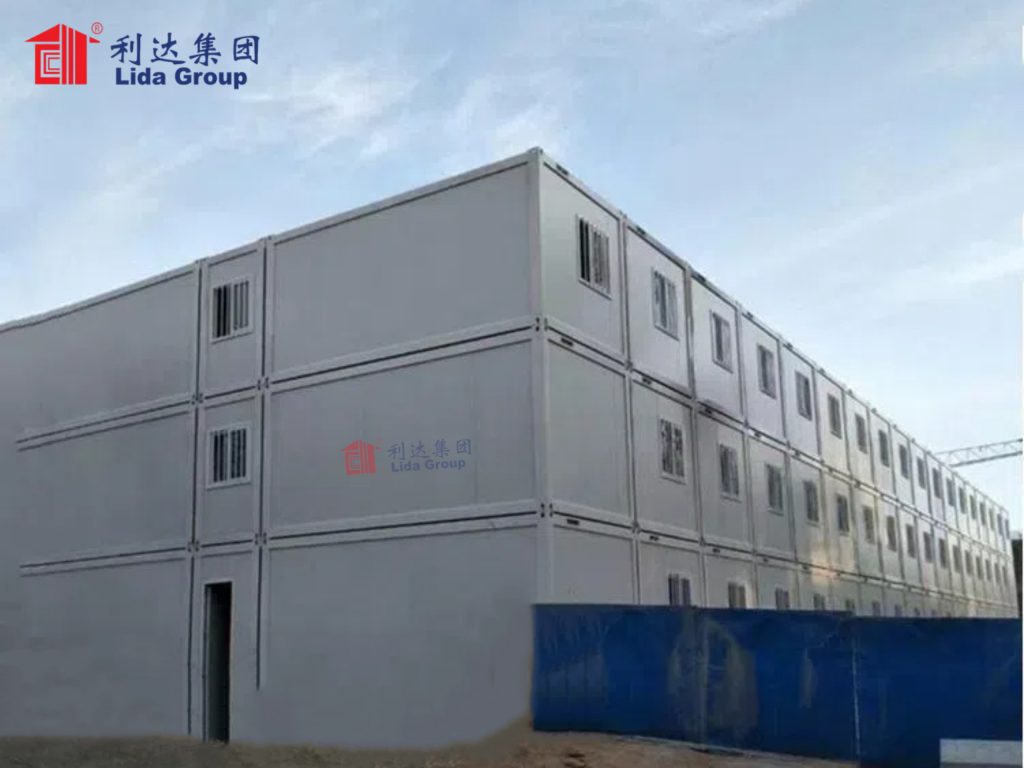
While achieving ultra-fast assembly, high-quality prefab container campsite dormitories also achieve outstanding long-term durability through high-strength material selection, multi-layer anti-aging technology, and scientific structural optimization. Breaking the stereotype that temporary buildings are short-lived and disposable, modern prefab container dormitories can maintain stable structural performance and complete functional integrity for more than 20 years, providing long-term reliable accommodation guarantees for engineering projects.
4.1 High-Strength Galvanized Steel Frame Ensures Structural Permanence
The main load-bearing structure of prefab container dormitories adopts high-grade hot-dip galvanized steel frames with excellent toughness, compression resistance, and impact resistance. Compared with ordinary thin steel plates used in low-quality temporary buildings, hot-dip galvanized steel effectively isolates air, moisture, and ultraviolet radiation, preventing structural oxidation and rust. The integrated welding and reinforcement treatment at key stress parts such as corner columns, top beams, and bottom chassis greatly improve the overall structural rigidity. The whole frame meets international wind resistance, earthquake resistance, and snow pressure resistance standards, and will not deform, loosen, or collapse under long-term outdoor environmental erosion, laying a solid foundation for long-term service life.
4.2 Multi-Layer Anti-Corrosion and Weather-Resistant Process Resists Environmental Erosion
Aiming at the harsh outdoor operating environment of engineering camps, prefab container dormitories adopt a complete set of anti-aging and weather-resistant processes. On the basis of hot-dip galvanizing, the steel surface is sprayed with high-temperature weather-resistant anti-rust coating and decorative protective paint to form a three-layer anti-corrosion barrier. The outer wall uses high weather-resistant color steel plates, which are resistant to ultraviolet aging, color fading, and cracking. The wall core adopts high-density inorganic thermal insulation materials with stable physical properties, which will not shrink, deteriorate, or lose thermal insulation effect after long-term use. These professional treatments enable container dormitories to adapt to high-temperature deserts, humid coasts, snowy alpine regions, and windy wilderness areas, maintaining stable performance all year round.
4.3 Fully Sealed Waterproof and Moisture-Proof Design Avoids Functional Attenuation
Water leakage and indoor moisture are the main factors leading to the shortened service life of temporary buildings. High-quality prefab container dormitories adopt integrated roof waterproof structures and high-elastic sealing strips at all assembly gaps. The fully sealed waterproof system effectively blocks rainwater penetration and humid air invasion, preventing wall mildew, internal pipeline dampness, and structural corrosion. The indoor ground is treated with professional moisture-proof and wear-resistant technology, which can resist long-term outdoor humid environment erosion and keep the indoor living environment dry and tidy. This comprehensive waterproof and moisture-proof design avoids functional failure caused by environmental factors and extends the overall service life of the dormitory.
4.4 Reusable Structural Design Realizes Long-Term Cyclic Utilization
The scientific bolted assembly structure not only realizes fast installation but also ensures zero damage to the main structure during disassembly and relocation. Prefab container dormitories can be disassembled, transported, and reassembled more than ten times without structural performance attenuation. A single set of container dormitories can serve multiple successive engineering projects, realizing long-term cyclic reuse. Even after long-term outdoor use and multiple migrations, the main steel frame and functional modules can still maintain good working condition, far exceeding the service life of traditional disposable temporary buildings.

5. Comprehensive Economic and Operational Value of Dual Core Advantages
The dual strengths of fast assembly and long service life bring far-reaching comprehensive value to engineering enterprises, covering time efficiency, economic cost, project management, and green environmental protection, helping modern engineering projects achieve efficient and sustainable operation.
In terms of time value, ultra-fast assembly greatly shortens the project preparation cycle. Enterprises can complete campsite layout and worker settlement in a short time, advancing the overall project construction progress and creating more economic benefits. For emergency engineering and disaster relief projects, rapid deployment capabilities ensure timely provision of safe accommodation, improving emergency response efficiency.
In terms of economic value, long service life and reusable performance eliminate repeated campsite construction investment. Compared with traditional temporary buildings that need to be replaced every two to three years, prefab container dormitories with a 20-year service life save more than 60% of long-term temporary construction costs for enterprises. Low failure rate and stable performance also reduce daily maintenance and repair expenses, optimizing the full-cycle operating cost of projects.
In terms of management value, standardized and durable container camps form neat and unified functional areas, which is convenient for enterprises to implement standardized personnel management, safety inspection, and daily operation supervision. The stable living environment reduces worker turnover caused by poor accommodation conditions, stabilizes project manpower, and improves overall construction efficiency.
In terms of environmental value, factory prefabrication reduces on-site construction waste and dust pollution. The long service life and high recycling rate avoid resource waste caused by frequent building demolition and reconstruction, conforming to the green and low-carbon development trend of the global construction industry.
6. Diverse Application Scenarios for Fast-Assembly and Long-Life Container Dormitories
Relying on the dual advantages of rapid deployment and long-term durability, prefab container campsite dormitories have been widely applied in various complex engineering and temporary accommodation scenarios worldwide, becoming universal modular building solutions.
In infrastructure construction projects such as highways, railways, bridges, and water conservancy, container dormitories adapt to mobile construction characteristics. Fast assembly meets the rapid settlement needs of temporary construction teams, and long service life supports long-cycle infrastructure construction, effectively reducing project auxiliary costs.
In mining, oil, gas, and new energy projects located in remote deserts, Gobi, and mountainous areas, the excellent weather resistance and durability of container dormitories enable stable operation in harsh environments for many years, solving the problem of easy damage and frequent replacement of traditional remote camps.
In emergency rescue and post-disaster reconstruction projects, ultra-fast assembly allows large-scale temporary resettlement camps to be built in a short time, providing safe and reliable accommodation for rescue workers and affected populations. The durable structure can support long-term post-disaster reconstruction work.
In urban municipal engineering and short-term construction projects, container dormitories realize rapid deployment and zero waste evacuation, meeting the civilized construction and green construction requirements of urban projects while ensuring project progress.
7. Conclusion
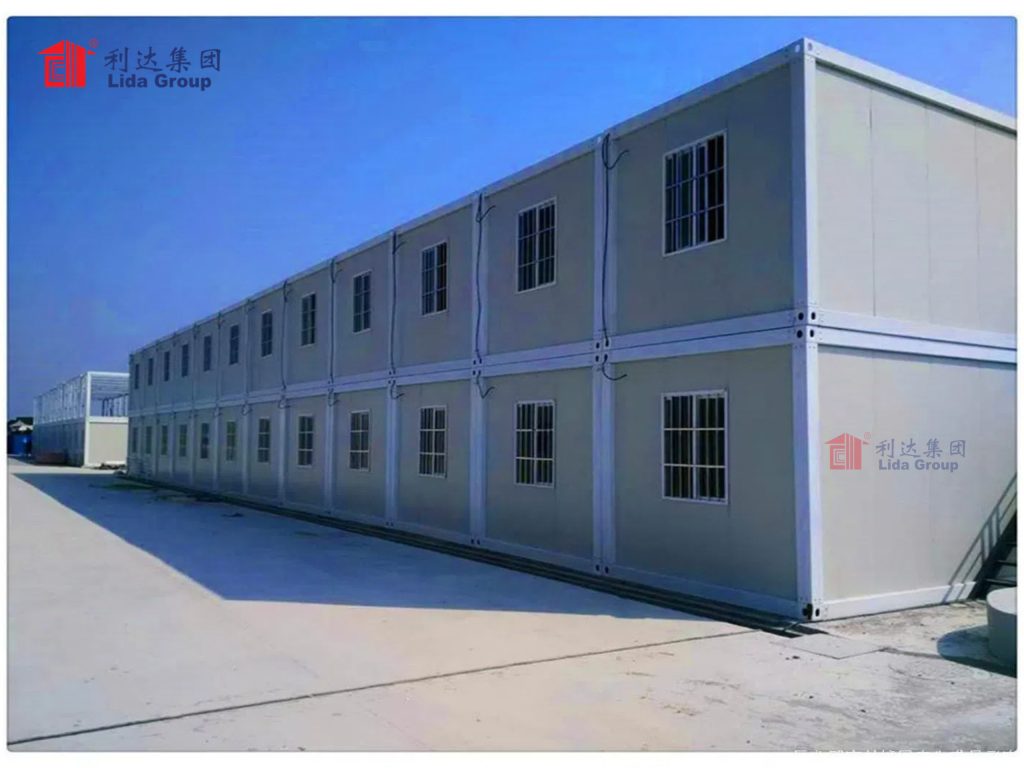
Fast assembly and long service life are the two most core and valuable attributes of modern prefab container campsite dormitories, which perfectly solve the dual pain points of slow construction and short service cycle of traditional temporary accommodation facilities. Through industrial factory prefabrication, simplified modular assembly technology, and high-strength durable material optimization, prefab container dormitories greatly improve the construction efficiency of engineering camps, shorten project preparation cycles, and ensure the rapid launch of various engineering projects.
At the same time, professional anti-corrosion, weather-resistant, and structural reinforcement technologies enable container dormitories to achieve an ultra-long service life of more than 20 years and support multiple cross-project cyclic reuse, realizing significant full-cycle cost savings and resource utilization optimization for engineering enterprises. Compared with traditional brick buildings, color steel sheds, and tents, prefab container campsite dormitories have overwhelming advantages in construction efficiency, structural stability, environmental adaptability, and economic benefits.
With the continuous development of global modular construction technology and the increasingly strict requirements of engineering projects for efficiency, durability, and green environmental protection, prefab container campsite dormitories will further replace traditional temporary buildings and become the mainstream standard configuration for global engineering camps. In the future, continuous technological upgrading will further improve the assembly efficiency, intelligent level, and environmental durability of container dormitories, providing more efficient, stable, and cost-effective temporary accommodation solutions for global infrastructure construction, energy development, and emergency public welfare projects, and promoting the high-quality and sustainable development of the modern construction industry.
Related news
-
Lida Group Expands Range of Prefabricated Container House for International Projects
2026-06-08 17:31:58
-
Living Container House by Lida Group Combines Comfort, Mobility, and Cost-Effectiveness
2026-06-08 17:23:36
-
Efficient Prefab Container Campsite Dormitory Now Available from Lida Group Globally
2026-06-08 17:14:13
contact us
- Tel: +86-532-88966982
- Whatsapp: +86-13793209022
- E-mail: sales@lidajituan.com
