



Lida Group’s Easy Operation Steel Construction Simplifies Steel Structure Building for Low Cost Housing
2026-Jun-05 17:20:16
By Admin
Global housing affordability has become one of the most pressing social and economic challenges in contemporary society. With continuous inflation of construction labor, rising raw material prices, and growing demand for affordable residential spaces in rural areas, underdeveloped regions, and post-disaster reconstruction scenarios, traditional concrete and brick construction can no longer meet the demand for large-scale, low-cost, and rapid housing development. Steel structure buildings have long been recognized for their high strength, durability, and environmental advantages, yet their complex design procedures, cumbersome on-site operations, and high technical thresholds have limited their widespread application in civilian low-cost housing projects for decades.
As a global leading enterprise specializing in steel structure design, prefabrication, and construction, Lida Grouphas thoroughly reformed the traditional steel building construction model. By developing easy operation steel construction systems, optimizing structural design logic, and streamlining the entire construction workflow, Lida Group has successfully simplified the complicated steel structure building process. This innovative construction mode removes unnecessary technical barriers, reduces human and material waste, and delivers high-quality, safe, and comfortable low-cost housing solutions for global users. This article elaborates on the defects of traditional steel structure housing construction, Lida’s core simplified construction technologies, comprehensive advantages, practical application values, and future development trends, fully demonstrating how Lida Group reshapes the new paradigm of low-cost steel residential construction.
1. Limitations of Traditional Steel Structure Construction for Low-Cost Housing
Traditional steel structure construction is originally designed for large industrial plants, high-rise buildings, and long-span public facilities, with strict requirements for design precision, construction technology, and team professionalism. When applied to low-cost civilian housing projects, this traditional model exposes multiple inherent limitations, making it difficult to balance low cost, simple operation and construction efficiency.
First, traditional steel construction involves overly complicated operational procedures. Conventional steel housing construction requires on-site component cutting, precise drilling, professional welding, structural calibration, and multi-layer anti-corrosion treatment. These fragmented processes require high professional literacy, and any operational error may affect the overall structural stability of the building. For ordinary low-cost housing projects with limited budgets and simple functional requirements, such complex procedures cause serious functional overkill and resource waste.
Second, traditional construction relies heavily on skilled labor teams. The global shortage of professional steel construction workers and annual labor cost inflation have become major cost burdens for low-cost housing projects. Statistics show that skilled labor expenses account for nearly 40% of the total investment in traditional steel residential buildings, completely offsetting the material cost advantages of steel structures compared with traditional buildings.
Third, non-standardized construction leads to uncontrollable project cycles and hidden costs. Traditional steel housing adopts scattered component production and random on-site assembly, lacking unified process specifications. The construction progress is easily disturbed by bad weather, site conditions, and human errors. A single ordinary steel residential house often requires 25 to 30 days of on-site construction, while cluster low-cost housing projects take several months. Long construction cycles generate additional costs such as site management, equipment rental, and safety maintenance, further raising the comprehensive housing cost.
Fourth, traditional steel construction has poor adaptability to grassroots housing scenarios. Complex operation steps and dependence on large mechanical equipment make it impossible to carry out efficient construction in remote rural areas, mountainous regions, and post-disaster reconstruction sites. It cannot adapt to the characteristics of low budget, scattered distribution, and urgent construction demand of grassroots low-cost housing, resulting in the low popularization rate of steel structure civilian housing.
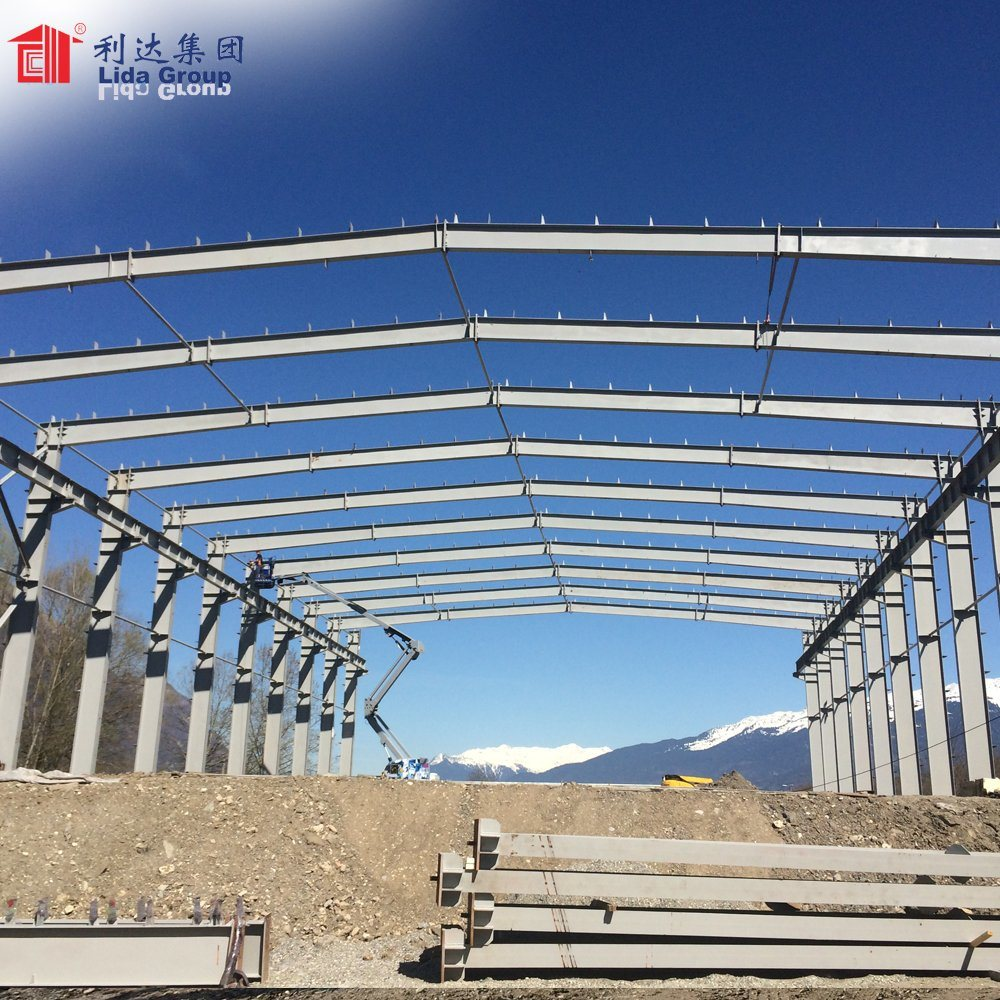
2. Core Innovation: Lida Group’s Simplified Easy-Operation Steel Construction System
Lida Group’s easy-operation steel construction system is a targeted technological innovation for low-cost housing scenarios. Different from the crude simplification of inferior manufacturers that reduces material standards and structural performance, Lida’s simplification is based on structural optimization, process restructuring, and modular upgrading. It eliminates redundant construction links, retains core safety and functional performance, and realizes the organic unity of simplified operation, low cost, high efficiency and stable quality.
2.1 Standardized Modular Design Eliminates Complex On-Site Design Work
Lida Group abandons the personalized complex design mode of traditional steel buildings and adopts standardized universal modular design for low-cost housing. The professional engineering team summarizes the functional needs of civilian residential housing, forms a variety of fixed standard house types covering small, medium and large residential spaces, and unifies the specification parameters of steel frames, wall panels, roof systems and connecting accessories. This standardized design mode reduces engineering design time by more than 70%, completely avoiding repeated design work and personalized customization costs for low-cost housing projects.
All modular units have universal compatibility and interchangeability. Users can freely combine and splice standard modules according to land size and living needs to form personalized residential layouts without complex secondary design and structural adjustment. The preset pipeline interfaces, door and window positions, and thermal insulation structures meet the basic living needs of families, realizing standardized and simplified construction on the premise of ensuring practicality.
2.2 Full Factory Prefabrication Simplifies On-Site Construction Links
The biggest breakthrough of Lida Group’s system is the full transfer of complex construction processes from outdoor sites to indoor automated factories. All core components of steel structure housing, including main load-bearing steel frames, enclosure sandwich panels, floor support systems, and decorative accessories, are precisely processed, pre-assembled and inspected in intelligent production lines. The factory strictly controls the component size error within 0.1mm, and presets all connecting structures and mounting holes in place.
This mode completely cancels all complex on-site operations required by traditional steel construction, including cutting, drilling, welding, and anti-corrosion spraying. The on-site construction work is simplified into three basic steps: component placement, alignment splicing, and fixed locking. More than 80% of the high-precision and high-difficulty construction work is completed in the factory, greatly reducing the technical threshold and workload of on-site operation.
2.3 Patented Quick-Lock Connection Technology Reduces Operation Difficulty
To further simplify on-site assembly, Lida Group independently developed a patented quick-lock tongue-and-groove connection technology, replacing the traditional cumbersome bolt fastening and welding connection mode. The integrated clamping structure is prefabricated on steel frames and enclosure panels. During construction, ordinary workers only need to align and press the components to complete automatic fitting and firm connection without professional tools and welding technology.
The optimized connection structure reserves flexible expansion gaps to adapt to thermal expansion and contraction of steel materials in different temperature environments, effectively avoiding structural deformation, panel cracking and water leakage. While simplifying the operation process, this technology improves the overall sealing and structural integrity of the building, ensuring that the simplified construction process does not sacrifice building stability and weather resistance.
2.4 Lightweight Steel Frame Optimization Reduces Construction Burden
On the premise of fully meeting international residential building safety standards, Lida Group optimizes the steel frame structure by adopting high-strength hot-dip galvanized thin-walled steel materials. Compared with traditional heavy steel structures, the lightweight design reduces the overall weight of the building by nearly 50%, which not only reduces the foundation bearing pressure and saves foundation construction costs, but also makes manual handling and assembly more convenient.
The entire assembly process does not require large cranes and heavy mechanical equipment, which greatly reduces the requirements for site conditions and construction equipment. Even in areas with inconvenient transportation and insufficient mechanical equipment, efficient construction can be completed, perfectly adapting to the complex construction environment of grassroots low-cost housing projects.
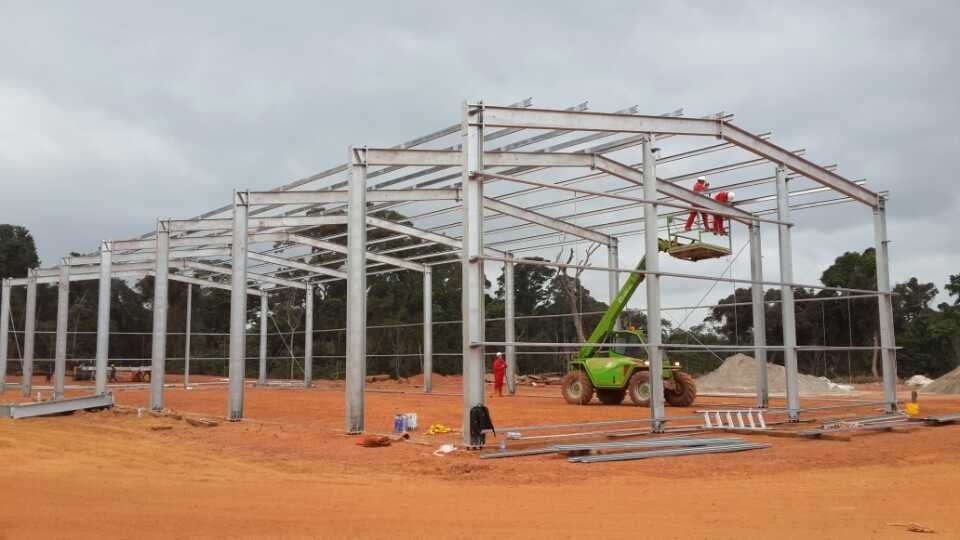
3. Comprehensive Advantages of Simplified Steel Construction for Low-Cost Housing
Lida Group’s simplified easy-operation steel construction system brings multi-dimensional competitive advantages for low-cost housing projects, covering operation difficulty, construction efficiency, economic cost, and building performance, solving various pain points of traditional residential construction.
3.1 Ultra-Low Technical Threshold to Realize Popularized Construction
Traditional steel housing construction can only be completed by professional technical teams, while Lida’s construction mode completely eliminates dependence on skilled workers. The standardized assembly process is intuitive and simple. Ordinary workers without steel construction experience can master the installation skills through 1 to 2 hours of simple training and independently complete high-standard construction work. A traditional steel house project requires 8 to 12 professional technicians, while Lida’s project only needs 3 to 5 ordinary workers, reducing labor dependence by more than 60%.
This advantage makes low-cost steel housing construction no longer limited by regional technical resources. Rural users and grassroots engineering teams can complete housing construction independently, realizing the real popularization of high-performance steel structure residential buildings in low-budget and resource-limited areas.
3.2 Efficient Construction Shortens Cycle and Reduces Time Cost
The streamlined construction workflow of factory prefabrication plus on-site rapid assembly greatly compresses the project cycle. Factory component production and on-site foundation preparation can be carried out in parallel, saving a lot of pre-construction preparation time. The on-site assembly efficiency is 70% higher than that of traditional steel construction. A standard 200-square-meter two-story residential house can be fully completed and delivered in only 5 to 7 working days, while large-scale low-cost housing clusters can be finished in weeks.
Rapid construction enables users to occupy the house in advance and avoid additional time losses caused by long-term construction. For government-subsidized affordable housing and post-disaster resettlement housing, the ultra-fast delivery capability can quickly solve the housing shortage problem, bringing significant social and economic benefits.
3.3 Full-Lifecycle Cost Optimization Improves Housing Cost Performance
Lida Group’s simplified construction realizes all-round cost reduction in the whole life cycle of housing. In terms of upfront investment, standardized batch production improves material utilization rate to 98%, eliminating raw material waste caused by manual operation. The lightweight steel frame reduces foundation construction cost by nearly 50%, and the reduction of labor and mechanical equipment cuts the upfront project cost by 20% to 40% compared with traditional steel houses.
In terms of later operation and maintenance, high-strength galvanized steel materials have excellent anti-corrosion and anti-rust performance, with a service life of more than 50 years. The integrated waterproof and thermal insulation structure avoids common quality problems such as water leakage and heat loss, reducing daily maintenance frequency and cost. The excellent thermal insulation performance also reduces household energy consumption, saving long-term living costs for residents. Compared with traditional concrete houses, Lida’s steel structure low-cost housing has lower comprehensive cost and higher cost performance in the whole life cycle.
3.4 Retain High-Quality Performance While Simplifying Construction
A major concern of low-cost housing users is whether simplified construction will lead to reduced building performance. In fact, Lida Group only optimizes redundant construction procedures and does not reduce any safety and comfort standards. All steel structure houses are designed in strict accordance with international residential building codes, with excellent seismic resistance, wind resistance, and snow load resistance.
In terms of living comfort, high-density polyurethane thermal insulation sandwich panels are adopted for walls and roofs, which can effectively adjust indoor temperature and reduce energy consumption. The multi-layer composite structure has good sound insulation performance, isolating external noise interference. The reasonable indoor space layout and complete supporting facilities fully meet the daily living, study and entertainment needs of family residents, realizing low-cost construction without low-end experience.
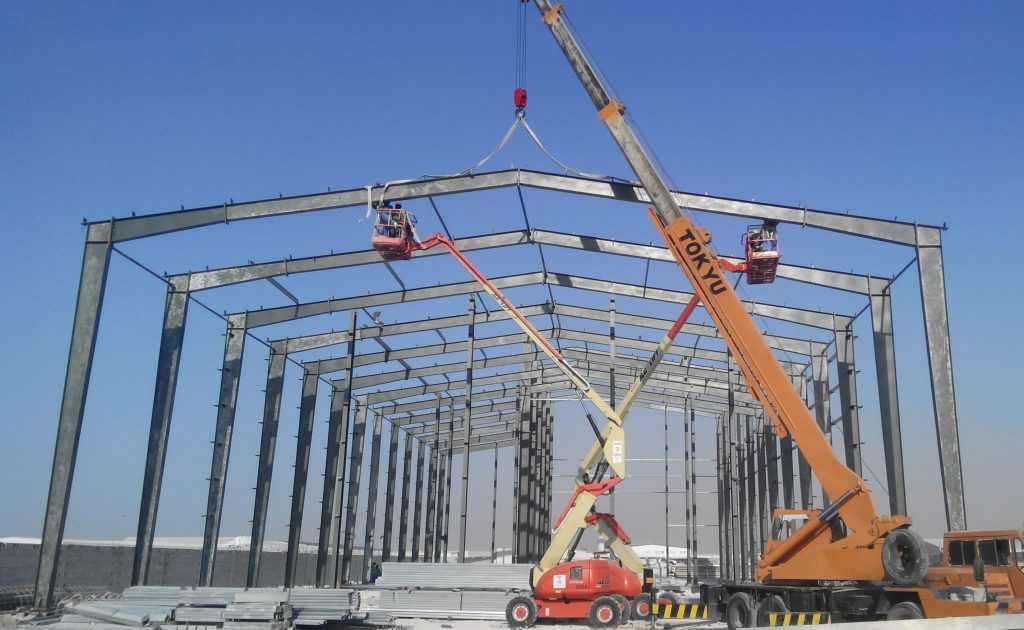
4. Practical Application and Market Verification
Up to now, Lida Group’s simplified easy-operation steel construction system has been successfully applied in low-cost housing projects in more than 150 countries and regions worldwide, covering rural self-built housing, government affordable housing, post-disaster resettlement housing, and remote area poverty alleviation housing, with sufficient market verification and user recognition.
In global rural housing renovation projects, the simple operation and low-cost advantages of Lida’s steel houses solve the dilemma of insufficient rural technical workers and limited family budgets. Many rural users complete high-quality housing construction at low cost without relying on professional construction teams, effectively improving rural living conditions. In the Southeast Asian rural housing project undertaken by Lida Group, hundreds of standardized steel structure residential houses were completed in a short time with local ordinary workers, winning wide praise for their stable quality and low investment.
In emergency post-disaster reconstruction and public welfare affordable housing projects, Lida’s simplified construction mode shows outstanding advantages. The convenient component transportation and ultra-fast assembly speed can quickly complete large-scale housing construction in harsh environments, providing safe and reliable residential guarantee for vulnerable groups. In multiple global disaster relief projects, Lida Group has completed rapid delivery of resettlement houses in half the construction cycle of traditional buildings, demonstrating strong practical value.
5. Environmental and Industrial Significance of Simplified Steel Construction
Lida Group’s innovative simplified steel construction mode not only brings economic benefits to users, but also promotes the green and standardized development of the global low-cost housing construction industry. In terms of environmental protection, factory prefabrication reduces on-site construction waste, dust and noise pollution by more than 60% compared with traditional construction. All steel materials are recyclable and reusable with a recycling rate of over 95%, conforming to the global low-carbon sustainable development concept and reducing construction carbon emissions.
In terms of industrial development, Lida Group breaks the long-term industry solidified cognition that “steel structure housing must be complicated and expensive”. It proves that high-performance steel structure buildings can be constructed through simplified processes and low investment, setting a new standard for the popularization of low-cost steel housing. The standardized construction specifications summarized by Lida Group fill the industry gap of grassroots low-cost steel building construction, guiding the entire industry to develop towards simplification, standardization and high cost performance.
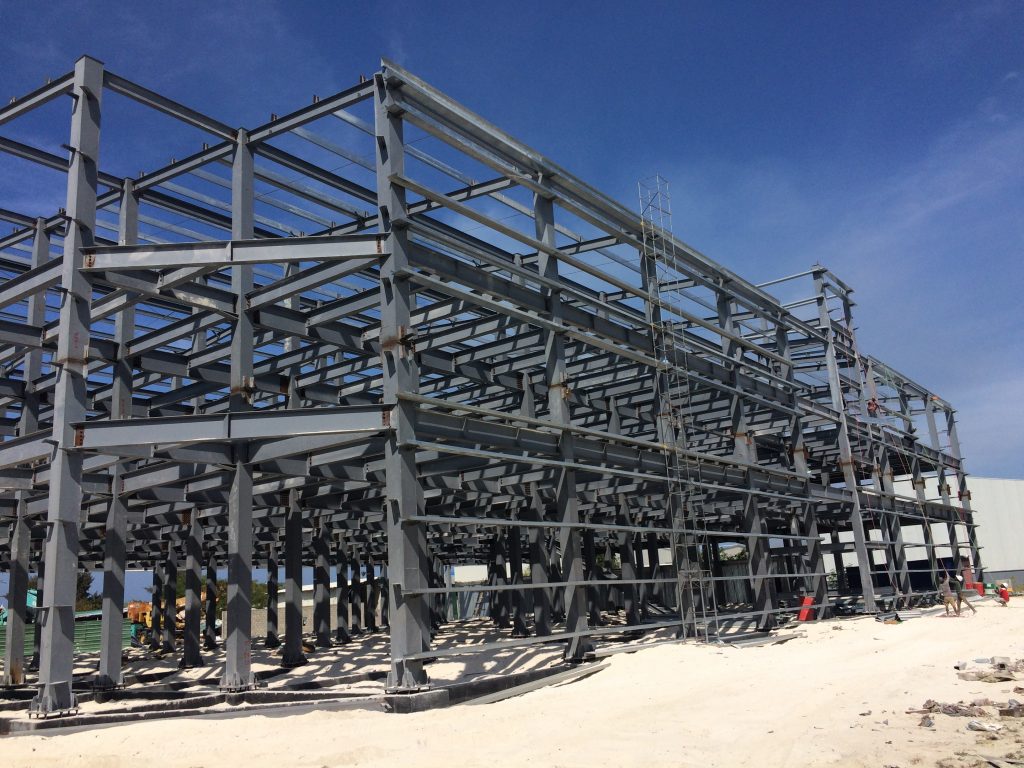
6. Future Development Prospects
With the continuous growth of global affordable housing demand and the in-depth advancement of construction industrialization, Lida Group will continue to iterate and upgrade its easy-operation steel construction system. In the future, the enterprise will further optimize modular combination schemes, enrich standardized house types, and meet the personalized housing needs of different regions and groups on the premise of maintaining simple operation and low cost.
In terms of technological upgrading, Lida Group will integrate new energy-saving and intelligent building technologies, such as intelligent temperature control, natural ventilation systems and energy-saving facade materials, to further improve the living comfort and energy-saving performance of low-cost steel houses. In terms of process optimization, the enterprise will continue to simplify assembly steps, reduce manual operation links, and realize more efficient and labor-saving construction, further lowering the threshold of low-cost steel housing popularization.
7. Conclusion
Lida Group’s easy operation steel construction system effectively simplifies the complex construction process of traditional steel structure buildings, providing a mature and reliable solution for global low-cost housing construction. Through standardized modular design, full factory prefabrication, patented quick-lock connection technology and lightweight structural optimization, Lida Group completely solves the industry pain points of high technical threshold, heavy labor dependence, long construction cycle and high hidden cost of traditional steel residential buildings.
This innovative construction mode realizes the perfect balance of simple operation, rapid construction, low comprehensive cost and high building performance. It not only enables ordinary users and grassroots institutions to obtain high-quality, safe and comfortable residential spaces with low investment, alleviating the global affordable housing pressure, but also promotes the green, standardized and efficient upgrading of the steel structure construction industry. With continuous technological iteration and global market promotion, Lida Group’s simplified steel construction technology will further lead the innovative development of low-cost housing construction, create greater economic, social and environmental value for the global construction industry and people’s livelihood security.
Related news
-
Discover the Benefits of Easy Operation Steel Construction in Lida Group’s Low Cost Metal House
2026-06-04 17:43:25
-
Steel Structure Building Made Simple: Easy Operation Steel Construction for Low Cost Metal House
2026-06-04 10:26:10
-
Lida Group Engineers Easy Operation Steel Construction to Deliver Low Cost Metal House Quickly
2026-06-03 17:55:41
contact us
- Tel: +86-532-88966982
- Whatsapp: +86-13793209022
- E-mail: sales@lidajituan.com
