



Lida Group Introduces Prefabricated Container House for Rapid Deployment Workforce Housing
2026-Jun-08 15:49:03
By Admin
1. Introduction
In the rapidly evolving global construction, mining, energy, and emergency infrastructure industries, the demand for flexible, efficient, and cost-effective workforce housing solutions has grown exponentially. Traditional on-site accommodation methods, including temporary brick buildings, makeshift tents, and renovated second-hand containers, have long plagued project operators with numerous inherent flaws. These conventional solutions suffer from slow construction speeds, poor structural safety, substandard living comfort, high waste generation, and limited reusability, often becoming a bottleneck that restricts project progress and affects employee well-being. As a world-leading provider of modular prefabricated building solutions, Lida Group has long focused on the pain points of global workforce housing, relying on three decades of professional experience in modular building research, development, and manufacturing. To address the universal challenges of mobile workforce accommodation, remote site living, and rapid housing deployment, Lida Group has officially launched a new generation of prefabricated container houses specially optimized for rapid deployment workforce housing. This innovative product integrates factory prefabrication, modular design, structural durability, living comfort, and environmental sustainability, redefining the global standard for temporary workforce housing and providing reliable, efficient, and high-quality accommodation solutions for various mobile engineering and emergency scenarios.
Unlike traditional temporary housing products that prioritize low cost over comprehensive performance, Lida Group’s new prefabricated container house is developed based on in-depth market research and user demand analysis. It abandons the crude design of traditional container houses and realizes a perfect balance of rapid deployment, structural safety, living comfort, economic efficiency, and green environmental protection. The product is widely applicable to construction site dormitories, mining and energy base accommodation, road and railway engineering camps, emergency disaster relief housing, large-scale event support staff accommodation, and other diverse scenarios. With its outstanding comprehensive performance, it effectively solves the problems of difficult, slow, and poor-quality workforce housing construction for global engineering projects, bringing revolutionary changes to the temporary housing industry.
2. Industry Pain Points of Traditional Workforce Housing
For a long time, the global engineering and construction industry has relied on relatively backward temporary workforce housing models, which cannot adapt to the rapid development needs of modern large-scale, short-cycle, and mobile engineering projects. Traditional workforce housing mainly has five core pain points that restrict industrial development and project operation efficiency.
First, slow deployment efficiency and long construction cycles. Traditional brick temporary buildings require foundation construction, on-site masonry, plastering, water and electricity installation, and interior decoration, with a construction cycle of several weeks or even months. Renovated second-hand containers also require on-site cutting, welding, and transformation, consuming a large amount of time and labor resources. For short-term emergency projects, seasonal engineering operations, and sudden disaster relief tasks, such slow construction speed often fails to meet the immediate housing needs of the workforce, seriously delaying project progress.
Second, insufficient structural safety and poor environmental adaptability. Most traditional temporary buildings adopt simple structures with low wind resistance, earthquake resistance, and corrosion resistance. In harsh environments such as high winds, heavy rain, snow, high temperature, and coastal humidity, they are prone to structural deformation, water leakage, rust, and even collapse risks. Ordinary tents have extremely poor weather resistance and cannot provide stable and safe living conditions for workers in extreme weather, bringing potential safety hazards to personnel accommodation.
Third, low living comfort and poor humanization. Traditional temporary housing generally has problems such as poor thermal insulation and heat preservation, single space layout, insufficient lighting and ventilation, and incomplete supporting facilities. In summer, the interior is extremely hot, and in winter, it is cold and humid. Long-term residence will seriously affect workers’ physical and mental health and rest quality, thereby reducing work efficiency. In addition, most traditional temporary houses lack standardized functional partitions, and the living environment is crowded and messy, failing to meet modern workforce’s basic living needs.
Fourth, poor economic performance and serious resource waste. Traditional brick temporary buildings are disposable structures that cannot be disassembled and reused after the completion of the project, generating a large amount of construction waste and increasing project costs. Second-hand renovated containers have short service life, high maintenance costs, and unstable quality. Frequent replacement and maintenance further increase the long-term operating costs of enterprise workforce housing, resulting in serious waste of human, material, and financial resources.
Fifth, non-compliant environmental performance. On-site construction of traditional temporary buildings will produce a large amount of dust, construction waste, and noise pollution, which does not meet the global green construction and environmental protection standards. With the increasing tightening of environmental protection regulations in various countries, backward temporary housing models have gradually become inconsistent with the sustainable development concept of modern engineering construction.
It is these widespread industry pain points that have prompted Lida Group to invest heavily in technological research and development and product iteration, finally launching a new prefabricated container house tailored for rapid deployment workforce housing, aiming to completely subvert the traditional temporary housing model.
3. Core Design and Manufacturing Advantages of Lida Group’s Prefabricated Container House
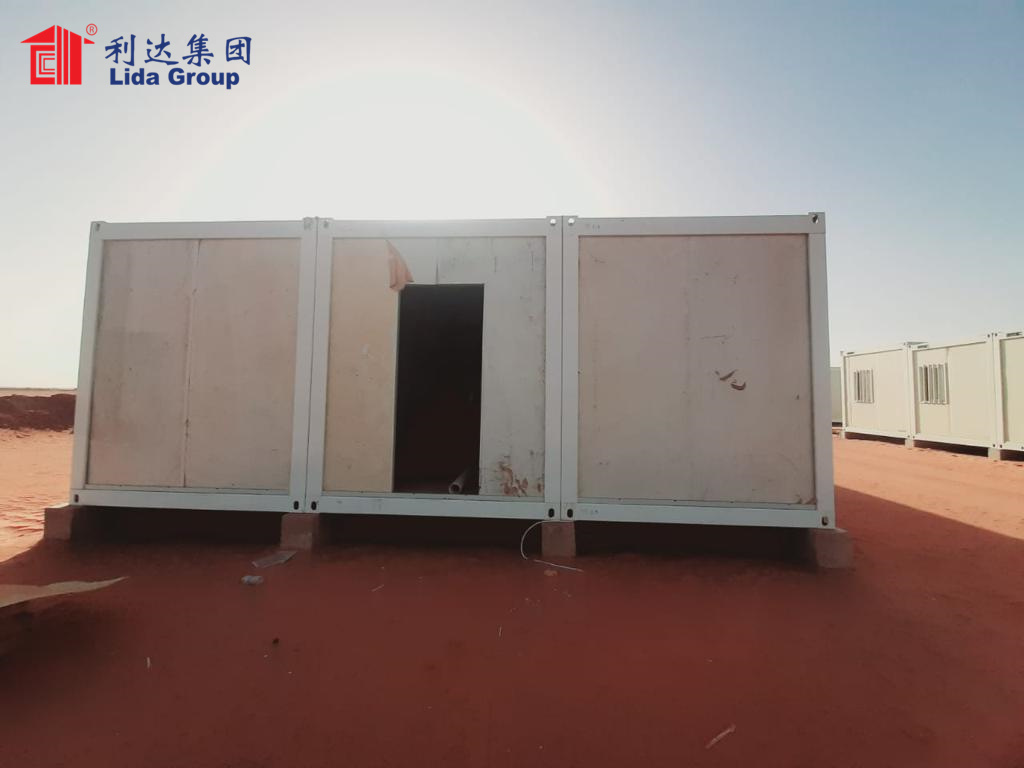
Lida Group’s new prefabricated container house adopts a fully modular and industrialized factory prefabrication design concept. More than 90% of the product manufacturing and assembly work is completed in the company’s automated intelligent factory, including steel frame processing, wall panel assembly, water and electricity wiring laying, interior decoration, and functional facility installation. The on-site operation is only simple hoisting, assembly, and connection, which greatly shortens the deployment cycle and realizes rapid housing supply for the workforce. This section elaborates on the core advantages of the product from design, manufacturing, and deployment dimensions.
3.1 Modular Standardized Design for Flexible Scalability
The product adopts a unified standardized modular design, with independent and complete single-box functional units. Each container house unit has precise size specifications and reserved connection interfaces, which can be freely combined and spliced horizontally and vertically according to project scale and housing demand. Enterprises can flexibly expand or reduce the number of housing units according to the number of project workers, realizing customized construction from small-scale teams of dozens of people to large-scale engineering camps of hundreds or thousands of people. At the same time, the modular design supports the free matching of functional areas, including dormitory areas, office areas, canteen areas, toilet and shower areas, and storage areas, forming a complete closed-loop living and working camp system. This flexible scalability is unmatched by traditional fixed temporary buildings.
3.2 Industrial Factory Prefabrication to Ensure Stable Quality
Different from the uneven quality of on-site constructed temporary houses, Lida Group’s container houses are manufactured in strict accordance with international quality standards in a standardized factory environment. The company introduces advanced automated production equipment and refined production processes, and all raw materials such as steel structures, thermal insulation wall panels, and waterproof materials are strictly screened and tested. The cold-formed galvanized steel frame adopted by the product has undergone professional anti-corrosion and rust-proof treatment, with stable structural performance. The factory’s integrated production mode avoids quality fluctuations caused by on-site construction technology, weather, and human factors, ensuring that each container house has consistent high quality and reliable performance. Each product will pass strict structural safety, waterproof, thermal insulation, and electrical safety tests before leaving the factory, with a qualified rate of 100%.
3.3 Ultra-Fast On-Site Deployment Capability
Rapid deployment is the most core competitive advantage of Lida Group’s new container house. Thanks to the high degree of factory prefabrication, the on-site installation process is extremely simple and efficient. A single container unit can be hoisted and installed in place within 30 minutes, and a professional team of 3 to 4 workers can complete the overall connection and debugging of a single unit within 4 hours, realizing immediate occupancy after installation. For a large-scale engineering camp with 100 housing units, the whole camp can be fully deployed and put into use within 3 to 5 days, while the traditional temporary building construction cycle often takes more than one month. In addition, the product supports integral transportation and split packaging transportation, which can adapt to different transportation conditions of remote mountainous areas, desert regions, and coastal islands, ensuring that the product can be quickly delivered and deployed in various complex geographical environments.

4. Superior Structural Safety and Durability Performance
Workforce housing needs to provide long-term stable and safe living protection for workers in complex and harsh engineering environments. Lida Group’s prefabricated container house takes structural safety and durability as the primary design indicators, and has achieved industry-leading performance through optimized structural design and high-quality material selection.
In terms of structural design, the product adopts an integral reinforced cold-formed galvanized steel frame structure. The high-strength steel frame has excellent compression resistance, impact resistance, and deformation resistance, meeting the international 8-level earthquake resistance and 12-level wind resistance standards. It can maintain structural stability in extreme weather such as strong winds, heavy snowstorms, and severe earthquakes, effectively avoiding structural collapse and safety accidents. The bottom of the container unit is equipped with a reinforced load-bearing chassis, which can bear heavy loads and adapt to uneven ground foundations, without complex foundation treatment on site, further improving the safety and convenience of use.
In terms of material durability, all steel components of the product are treated with hot-dip galvanizing and anti-rust coating, which can effectively resist corrosion, rust, and oxidation in humid, saline-alkali, and high-temperature environments. The wall panels adopt high-density fire-proof and thermal insulation composite materials, which have the characteristics of water resistance, moisture resistance, mildew resistance, and pest resistance, avoiding the problems of wall peeling, mildew, and damage of traditional temporary houses. The overall service life of the product can reach more than 20 years, far exceeding the 3 to 5 years service life of ordinary renovated container houses. In addition, the product has strong reusability. After the completion of a single project, it can be disassembled, transported, and redeployed to other project sites, realizing repeated cyclic use and greatly reducing the comprehensive housing cost of enterprises.
In terms of safety protection, the product is equipped with standardized fire-proof, anti-leakage, and anti-electric shock designs. The internal circuits are laid in a hidden and standardized manner, with overload and leakage protection devices. The wall and ceiling materials meet international fire protection standards, effectively preventing fire risks. The overall fully enclosed structure with waterproof sealing treatment can completely avoid rainwater leakage, ensuring a dry and safe internal living environment.
5. Humanized Comfort Design for Modern Workforce Living
While ensuring rapid deployment and structural safety, Lida Group focuses on improving the living comfort of the container house, abandoning the crude and single design of traditional temporary housing, and integrating humanized design concepts into every detail of the product, creating a comfortable, healthy, and convenient living space for on-site workers.
In terms of thermal insulation and temperature regulation, the product is equipped with high-efficiency thermal insulation and heat preservation composite wall panels and sealed thermal insulation doors and windows. The multi-layer composite structure can effectively isolate external high temperature and cold air, realizing warm in winter and cool in summer. In high-temperature desert areas, the internal temperature can be effectively reduced by 8 to 10 degrees Celsius compared with ordinary container houses; in cold northern regions, it can effectively resist low-temperature frost and keep the interior warm and comfortable, greatly improving the living experience of workers in extreme climates.
In terms of space and lighting design, the container house adopts a reasonable spatial layout, with a spacious and flat interior space, no depressed structure, and flexible space division. The product is equipped with large-size energy-saving glass windows and lighting systems, which ensures sufficient natural light indoors during the day and uniform and soft lighting at night. At the same time, the optimized ventilation design forms a good indoor air circulation system, avoiding the stuffy and humid environment of traditional temporary houses, ensuring fresh indoor air and protecting workers’ respiratory health.
In terms of supporting facilities, Lida Group’s container house supports full set of customized living facilities, including integrated beds, cabinets, tables and chairs, air conditioning, lighting, water supply and drainage systems, and sanitary facilities. The factory completes the pre-installation of basic living facilities, and workers can move in with luggage after on-site deployment, without secondary decoration and facility installation. In addition, the product can be matched with intelligent monitoring systems, fire alarm systems, and access control systems according to project needs, realizing intelligent management of the workforce camp and further improving living safety and convenience.
6. Diverse Application Scenarios and Market Practical Value
Thanks to its rapid deployment, flexible combination, safe and comfortable performance, Lida Group’s prefabricated container house can adapt to almost all scenarios requiring rapid construction of temporary workforce housing, with extremely high market practical value and industrial universality.
In the field of infrastructure engineering, the product is suitable for construction site dormitories, road and railway engineering camps, bridge and tunnel construction teams’ accommodation, solving the problem of rapid housing demand for mobile engineering teams. The short deployment cycle and reusable characteristics can perfectly match the short-term and mobile characteristics of infrastructure projects, greatly saving project time cost and economic cost.
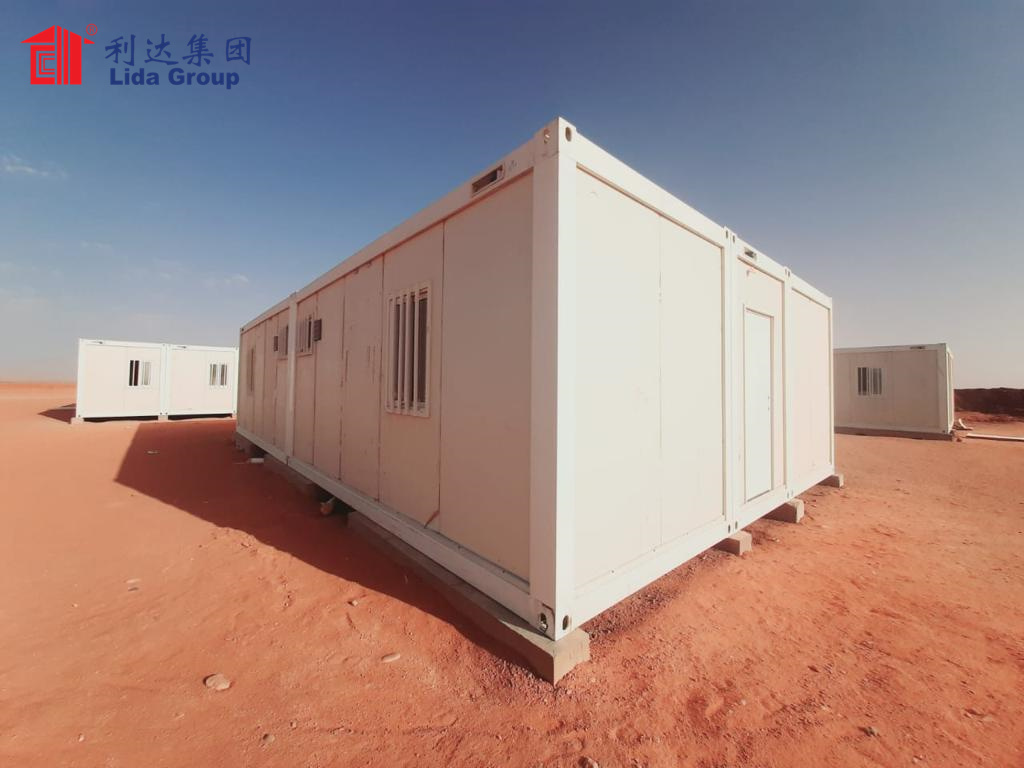
In the field of energy and mining, for remote mining bases, oil and gas exploration teams, and new energy construction projects such as wind power and photovoltaic, the complex geographical environment and harsh living conditions put forward high requirements for housing safety and durability. Lida Group’s container houses can resist harsh natural environments such as strong wind, sand, high cold, and high humidity, providing long-term stable accommodation guarantees for front-line energy and mining workers.
In the field of emergency disaster relief and public welfare support, the product’s ultra-rapid deployment capability plays an irreplaceable role. In the face of sudden natural disasters such as earthquakes, floods, and typhoons, the container house can be quickly transported to the disaster area to provide safe and comfortable temporary resettlement housing for disaster-stricken personnel and rescue workers. Compared with traditional disaster relief tents, it has better safety, comfort, and weather resistance, which can effectively improve the living security level of emergency rescue scenarios.
In addition, the product is also applicable to large-scale event support, field scientific research, military temporary garrison, and other scenarios, with extremely wide market coverage. Its flexible customization ability can meet the personalized housing needs of different industries and different project scales, becoming a universal rapid deployment housing solution in the global market.
7. Green Environmental Protection and Sustainable Development Advantages
Against the background of global advocacy of green construction and sustainable development, Lida Group’s prefabricated container house has outstanding environmental protection advantages, conforming to the green and low-carbon development trend of the construction industry. Different from traditional temporary buildings that produce a large amount of construction waste, dust, and noise pollution, the product realizes full-process green construction.
In the manufacturing stage, factory integrated prefabrication realizes refined production, with almost no raw material waste, and all production materials are environmentally friendly and non-toxic, meeting international environmental protection standards. In the on-site deployment stage, the whole process is dry operation, no concrete pouring, no masonry construction, basically no construction dust and construction waste, and no noise pollution, which will not damage the on-site ecological environment.
In the use and scrapping stage, the product has a high recycling rate. After the end of the project, the steel structure and functional components can be completely disassembled and reused, and the recycling rate of the whole machine is more than 95%, realizing zero construction waste discharge. Compared with disposable traditional temporary buildings, it greatly reduces resource waste and environmental pressure. At the same time, the product’s high-efficiency thermal insulation design can reduce the energy consumption of air conditioning and heating during use, realizing low-carbon and energy-saving operation, and helping enterprises reduce carbon emission costs.
8. Comprehensive Cost-Effectiveness and Industrial Competitiveness
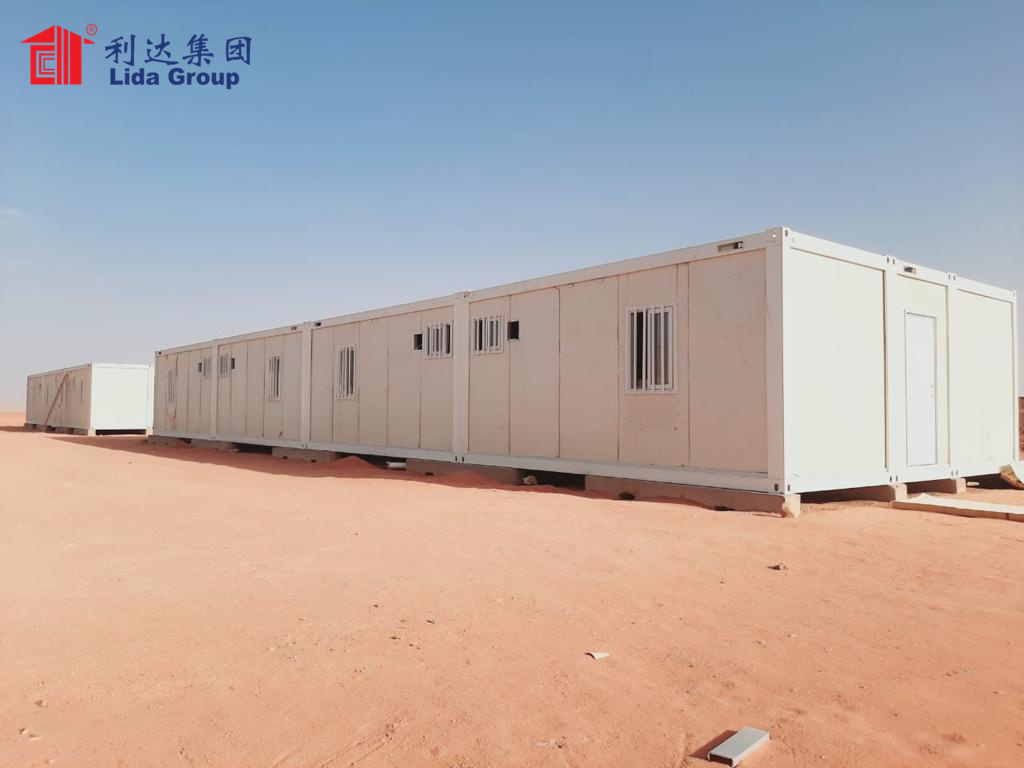
In terms of economic benefits, Lida Group’s prefabricated container house has far higher comprehensive cost-effectiveness than traditional temporary housing solutions. Although the one-time purchase cost is slightly higher than that of simple makeshift houses, its reusable characteristics and long service life greatly reduce the average annual use cost. Traditional temporary buildings need to be rebuilt for each new project, with high repeated investment costs and large waste of resources. Lida Group’s container house can be reused for more than 10 project cycles, with almost no additional construction cost in the later stage, and only simple maintenance is required, which can save more than 60% of the comprehensive housing cost for enterprises in the long run.
In terms of time cost, the ultra-fast deployment speed greatly shortens the project preparation cycle. The rapid completion of workforce housing construction can enable the engineering team to start construction in advance, effectively shortening the overall project cycle and creating greater economic benefits for enterprises. In addition, the product’s stable quality and low failure rate reduce the time and labor cost of later maintenance and replacement, further improving the overall operational efficiency of the project.
In terms of management cost, the standardized and centralized camp layout realized by modular container houses is convenient for enterprises to carry out unified management of workforce, improve the standardization of on-site management, reduce management difficulties, and avoid safety management risks caused by scattered and irregular temporary housing.
9. Conclusion
Lida Group’s newly launched prefabricated container house for rapid deployment workforce housing is a revolutionary innovative product tailored to the pain points of the global temporary housing industry. It perfectly integrates rapid deployment, structural safety, living comfort, green environmental protection, and high cost-effectiveness, completely breaking through the various limitations of traditional workforce housing solutions. Through industrial factory prefabrication, modular flexible design, high-standard safety manufacturing, and humanized comfort optimization, this product provides efficient, reliable, and sustainable housing guarantees for engineering construction, energy mining, emergency disaster relief, and many other fields.
In the context of the rapid development of global infrastructure construction and the continuous improvement of green environmental protection and construction safety standards, modern enterprises have increasingly higher requirements for temporary workforce housing. Traditional backward housing models can no longer meet the dual needs of project efficiency improvement and employee welfare protection. Lida Group’s prefabricated container house not only solves the practical problems of slow deployment, poor safety, low comfort, and serious resource waste in the industry but also sets a new benchmark for standardized, green, and intelligent temporary housing in the global construction industry.
With its excellent comprehensive performance, diverse application scenarios, and outstanding long-term value, Lida Group’s rapid deployment container house will surely be widely promoted and applied in the global market. It will continue to empower the efficient development of various engineering projects, protect the living safety and physical and mental health of front-line workers, and contribute to the sustainable and high-quality development of the global modular construction industry. In the future, Lida Group will continue to focus on technological innovation and product iteration, continuously optimize the performance of modular housing products, and provide more high-quality, personalized, and intelligent prefabricated building solutions for global users.
Related news
-
Lida Group Delivers Low Cost Metal House with Easy Operation Steel Construction Technology
2026-06-05 17:56:58
-
Easy Operation Steel Construction Powers Durable Steel Structure Building for Low Cost Metal House
2026-06-05 17:51:01
-
Lida Group Combines Steel Structure Building and Easy Operation Steel Construction for Affordable Homes
2026-06-05 17:39:14
contact us
- Tel: +86-532-88966982
- Whatsapp: +86-13793209022
- E-mail: sales@lidajituan.com
