



Introduction: A New Standard in Modern Construction
The global construction industry stands at a crossroads. On one side, traditional building methods—labor-intensive, weather-dependent, and notoriously slow—struggle to keep pace with the explosive demand for housing in rapidly urbanizing regions. On the other side, a new paradigm has emerged: modular construction, powered by factory precision and delivered with unprecedented speed. At the forefront of this revolution stands Lida Group, a company that has spent more than three decades perfecting the art of modular building and is now delivering container house solutions for prefab apartment projects across the globe.
Founded in 1993, Lida Group has grown from a modest steel structure workshop into one of China’s largest integrated building engineering enterprises. With over 5,000 completed projects spanning 155 countries and regions, the company has established itself as a trusted partner for developers, governments, and humanitarian organizations worldwide. Its portfolio encompasses container houses, flat-pack housing units, steel structure buildings, and integrated building systems, backed by more than 60 patents and internationally recognized certifications including ISO9001, ISO14001, ISO45001, and CE (EN1090).
This article provides a comprehensive examination of how Lida Group delivers modular container houses for prefab container apartment projects. We explore the company’s technical innovations, real-world project deliveries, sustainability advantages, and the comprehensive service platform that enables seamless execution from design to occupancy.
Chapter 1: The Foundation of Delivery – Technical Innovation
1.1 The Flat Pack Revolution
One of Lida Group’s most significant innovations is the flat pack modular container house, a design that fundamentally reimagines how container buildings are transported and assembled. Traditional integral container houses occupy enormous transportation space—a standard shipping container can typically transport only two to three units, resulting in prohibitively high logistics costs. Lida Group’s flat pack design completely solves this problem.
All component parts—including wall panels, roof panels, floor frames, door and window accessories, and connecting fasteners—are prefabricated and standardized in the factory and flat-packed for centralized transportation. A single standard shipping container can hold up to 12 to 15 sets, dramatically reducing transportation volume and logistics costs by 30-40%. This design enables tool-free, low-labor on-site assembly, making it an ideal solution for cross-border engineering deployment and rapid construction worldwide.
1.2 Standardized Modular Structure
The flat pack container house is developed around the core design concepts of “standardization, lightweight, high efficiency, and versatility”. The frame structure is constructed from high-strength galvanized steel with precise pre-drilled connecting holes and color-coded matching components, ensuring accurate docking and stable connections between parts.
Each independent module is a complete basic unit with independent bearing, heat insulation, and waterproof functions. Multiple single modules can be freely combined horizontally and vertically to form large-scale building complexes such as multi-story dormitories, integrated office buildings, and comprehensive service stations. This standardized design eliminates the dimensional differences and assembly errors of traditional customized prefabricated houses, greatly improving component interchangeability and compatibility.
1.3 Factory Precision Manufacturing
At the heart of Lida Group’s delivery capability is its state-of-the-art manufacturing infrastructure. The company operates six dedicated container modular house production lines and eight steel structure production lines. Within these climate-controlled factories, robotic assembly lines produce complete apartment modules with 0.2mm precision—delivering habitable spaces 63% faster than conventional construction while achieving unprecedented quality standards.
This parallel workflow means that while foundation work is being laid on-site, the structural walls, plumbing networks, electrical grids, and interior finishes of the modular units are being fabricated simultaneously on the factory floor. The result is a highly streamlined manufacturing methodology that eliminates material waste, enforces strict quality control, and delivers finished buildings in a fraction of the time required by traditional methods.
1.4 Durability and Long-Term Performance
Lida Group’s container houses are engineered for exceptional durability. The structures can be assembled and disassembled more than ten times without performance attenuation. According to the company, the structures are designed for long-term use with an expected service life exceeding 25 years, given proper maintenance.
The houses incorporate high-tensile steel frames, impact-resistant coatings, and self-contained systems. Standard specifications include seismic precautionary intensity of Grade 8, wind resistance of 0.6KN/m², and fire-proof Grade 4. This robust construction ensures that Lida Group’s container houses perform reliably whether deployed in the humid tropics, the arid desert, or seismically active regions.
Chapter 2: Delivering Prefab Container Apartment Projects
2.1 The Shanghai Container Apartment Community
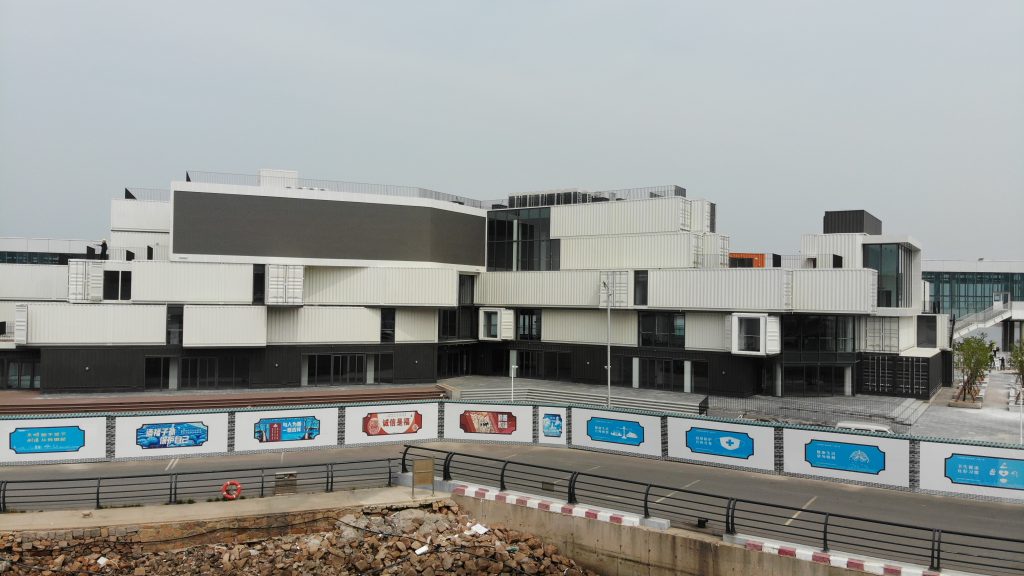
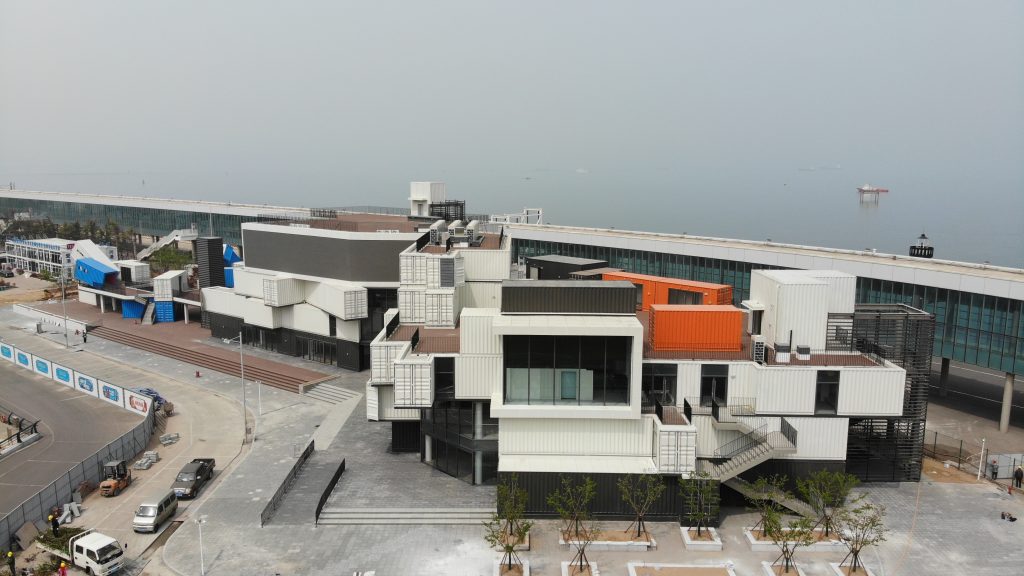
Perhaps the most significant demonstration of Lida Group’s container apartment delivery capability is the completion of China’s first container apartment community, located on the outskirts of Shanghai. The 100-unit development marks a proof of concept that standardized shipping container architecture can deliver cost-effective and sustainable mass housing solutions at scale.
Lida Group fabricated the entire residential complex within its automated production facility, where container modules were joined vertically using welded steel corner fittings and floor cassettes. Fully outfitted with plumbing, electrical systems, and finishes, completed apartment modules were transported just 30 kilometers to the suburban site for rapid assembly. Within only 12 weeks, a dedicated crew erected the four-story stacked container structures layer by layer using crawler cranes. Hardscaping and landscape crews followed to ready outdoor amenities and complete the turnkey community ready for occupancy.
The speed and completeness of construction drew praise from local officials. As the Shanghai Housing Bureau Director noted during a project tour: “A development of this size and complexity would normally take two to three years to complete through conventional means. Lida Group’s off-site modular approach constructs entire neighborhoods factory-style while assuring build quality – this could truly revolutionize affordable housing delivery worldwide”.
Each residence within the 55-120 square meter modular apartments provides efficient spaces and finishes befitting modern lifestyles. Floor-to-ceiling windows, double-stud interior walls, and bright tile surfaces contrast the containers’ industrial origins. Thoughtful layouts optimize storage and flow, while communal gardens, play areas, and a multi-purpose hall promote community spirit. Resident feedback has been overwhelmingly positive, with appreciated aspects including lower utility bills versus traditional construction, minimal drafts or noise transmission between modules, and the privacy of self-contained homes.
2.2 Southeast Asian Apartment Hotel Project
In a Southeast Asian city, Lida Group completed a container house apartment hotel project using 33 modular container units. Each unit was prefabricated off-site and assembled on location using a stackable modular design. The project includes multiple individual living spaces with private bathrooms, as well as shared amenities and reception facilities. The modular units were customized to meet the design requirements of the client, including color schemes for walls, roofs, and doors. A secondary roof was added to enhance weather resistance in the local climate.
This project exemplifies how Lida Group’s modular container houses can be adapted for commercial hospitality applications while maintaining the speed and cost advantages of prefabricated construction. The structures are designed for long-term use with an expected service life exceeding 25 years, demonstrating that container-based construction is not merely a temporary solution but a viable permanent building alternative.
2.3 Lare-Scale MTZ Project Installation
In a separate Southeast Asian effort, Lida Group completed the on-site installation of 150 container housing units as part of a major MTZ project. These prefabricated units were shipped in flat-pack form and assembled by Lida’s team on a large site designated for temporary accommodations. The company reports that the units were equipped with insulation materials, energy-efficient lighting, and double-glazed windows to help reduce environmental impact and operational costs. The modular design enabled faster installation timelines and allowed for cost efficiency throughout the project.
This project demonstrates Lida Group’s ability to deliver large-scale container housing solutions efficiently, even in challenging logistical environments. The flat-pack shipping method reduced transportation costs significantly, while the standardized assembly process enabled rapid deployment of accommodations for a substantial workforce.
2.4 Mining and Remote Site Accommodations
Lida Group’s container apartment solutions are extensively deployed in mining and remote resource extraction projects. A mining company in Africa recently partnered with Lida Group to build a camp house complex with 300 container house units. In Zambia’s Copperbelt, Lida Group’s engineered apartment solutions rise above traditional challenges—multi-story container building complexes delivering unprecedented comfort where conventional constructions fail.
The mining accommodation imperative faces compounding pressures: talent wars with geologists and engineers rejecting remote hardship postings, productivity drain from fatigue in cramped quarters, safety risks from disease spread in poorly ventilated housing, regulatory pressure from stricter living standards enforcement, and cost escalation with 40% budget overruns on traditional builds. Container house technology resolves these tensions through precision engineering and rapid deployment.
Lida Group’s mining site apartment innovations include engineered connections enabling five-story configurations, steel-concrete composite flooring eliminating bounce, and modular linking creating interconnected communities. A case study from a Tanzanian gold mine deployed 200 units in just 19 days. Community infrastructure includes centralized water purification plants, wastewater treatment modules, solar microgrids with battery backup, and recreation modular house complexes.
The technical superiority of these solutions is evident in manufacturing precision—robotic welding achieving 0.2mm tolerances, CNC-cut insulation eliminating thermal bridging, and automated coating applying 300µm protection. Seismic resilience is validated through buckling-restrained braces, slip-friction connections, and base isolation systems that have survived 8.2 magnitude earthquakes. Fire safety engineering includes intumescent steel protection, compartmentalized fire zones, and smoke evacuation systems achieving 120-minute fire integrity ratings.
2.5 West Africa Market Complex
Perhaps the most ambitious demonstration of Lida Group’s delivery capability is the completion of a 30,000-square-meter market complex in West Africa. The project transformed former cassava fields into a state-of-the-art market complex, demonstrating how light steel structure engineering can adapt to equatorial conditions. The project tackled four major environmental challenges: combatting 95% humidity that undermines structural integrity, engineering stability for laterite-rich terrain, overcoming material and logistical limitations, and enhancing local technical expertise.
Beyond the structure itself, the project generated transformative outcomes: over 300 locals trained in specialized steel construction techniques, 5,000 farmers connected to premium markets through cold-chain logistics, and West Africa’s first steel maintenance cooperative established on-site. This project exemplifies Lida Group’s commitment to not just delivering buildings, but creating lasting economic and social impact.
Chapter 3: The Advantages of Lida Group’s Container Apartment Solutions
3.1 Cost-Effectiveness
Lida Group’s container apartment solutions deliver significant cost advantages over traditional construction. By mass-producing standardized apartment designs for repetitive on-site assembly, the company dramatically reduces construction timelines and costs. Lida Group expects to achieve 30-50% savings in materials and 20-40% faster construction compared to traditional apartment buildings through their container assembly model.
The flat-pack shipping system alone cuts shipping costs by 30-40%—a critical advantage for global projects. For example, shipping 100 apartment modules from China to Indonesia costs $320 per unit using Lida’s folding system, compared to $480 per unit for non-foldable alternatives. This cost efficiency makes container apartments accessible to a wider range of developers and communities.
3.2 Speed of Delivery
The speed advantage of Lida Group’s modular approach cannot be overstated. While a conventional development of the size and complexity of the Shanghai container community would normally take two to three years to complete, Lida Group delivered it in just 12 weeks. This dramatic time reduction is made possible by factory-based parallel manufacturing, where modules are fabricated simultaneously while site preparation occurs.
For emergency and humanitarian applications, this speed is literally life-saving. Lida Group has demonstrated the ability to deliver large-scale facilities in record time, including a 74,000-square-meter container hospital station with 1,000 isolation rooms completed in just 12 days from start to delivery.
3.3 Customization and Flexibility
Despite their standardized production, Lida Group’s container houses offer remarkable customization options. Clients can specify everything from layout and floor plan to color schemes and finishing touches. The company’s professional design and engineering teams work closely with clients to understand their specific requirements and develop customized prefabricated solutions.
The modular design allows units to be easily reconfigured, expanded, or relocated as project needs shift. This flexibility is particularly valuable for applications ranging from temporary labor camps to permanent residential communities. Lida Group develops customized container apartment solutions while standardizing design elements that can be mass produced, allowing the company to keep costs low while meeting diverse client requirements.
3.4 Quality and Safety
Quality assurance is embedded throughout Lida Group’s manufacturing process. The company’s certifications include ISO9001 for quality management, ISO14001 for environmental management, and ISO45001 for occupational health and safety. Third-party inspections from organizations including SGS, TUV, and BV validate the company’s commitment to quality.
The factory-controlled environment reduces construction accidents by 62% compared to chaotic building sites. Safety features include seismic resistance up to Grade 8, fire protection, and wind resistance. These quality and safety standards ensure that Lida Group’s container apartments provide not just speed and cost savings, but also peace of mind for occupants and project owners.
Chapter 4: Sustainability and Environmental Stewardship
4.1 Waste Reduction and Resource Efficiency
Lida Group’s container house systems reuse 90% of retired shipping containers, diverting more than 12 tons of steel from landfills per unit. Their factories also recycle 98% of production scrap into new components. This closed-loop approach dramatically reduces the environmental footprint of construction activities.
The company uses eco-friendly materials in its container house units, such as recycled steel, low-VOC paints, and insulation made from renewable resources. All materials are designed to be recyclable, delivering significant environmental benefits throughout the building lifecycle.
4.2 Energy Efficiency
Lida Group’s modular houses are engineered for minimal energy dependence. Features include insulated walls that regulate interior temperatures, energy-efficient lighting, and double-glazed windows. The integration of solar-ready roofing structures and advanced insulation systems further enhances energy efficiency.
Units equipped with these features help reduce environmental impact and operational costs. Lower utility bills for residents and reduced operational costs for project operators make container apartments not just environmentally sustainable but economically attractive over the long term.
4.3 Circular Economy Principles
Different from ordinary container house products on the market, Lida Group’s modular buildings support complete disassembly, migration, and repeated reuse, forming a closed-loop sustainable construction model. The company’s structures can be disassembled, transported, and reinstalled multiple times without performance attenuation.
This reusable feature perfectly matches the circular economy construction trend, allowing project teams to reuse modular facilities in subsequent new projects and avoid repeated resource investment. Relying on its extensive patent portfolio, Lida Group optimizes the connection structure and anti-aging performance of modular units, ensuring that reused buildings still meet local safety and environmental protection standards after multiple deployments in different countries.
Chapter 5: Global Reach and Comprehensive Service
5.1 A Truly International Footprint
Lida Group’s products have been delivered to more than 150 countries and regions worldwide. The company operates multiple subsidiaries and maintains overseas branch offices in locations including Saudi Arabia, Qatar, Indonesia, Chile, Dubai, Kuwait, Russia, Malaysia, Sri Lanka, Maldives, and Angola.
The company’s modular housing systems are used globally in sectors such as mining, oil and gas, construction, and humanitarian relief. Lida Group has established partnerships with major global organizations, including China State Construction, Saudi Aramco, and Salini Italy. The company is a designated integrated camp supplier for the United Nations and has delivered UN integrated camp projects in South Sudan, Mali, Sri Lanka, and other locations.
5.2 One-Stop Service Platform
One of Lida Group’s major strengths is its one-stop service platform for integrated building. Instead of separating design, production, transportation, and installation, Lida Group combines these stages into a single coordinated process. This is particularly important for large camp house developments or multi-unit apartment complexes. Every container building is handled as part of a complete plan, ensuring each unit functions smoothly within the overall system.
From the initial design phase—where the team works with city planners and developers to align with local building codes—to manufacturing, logistics, and on-site installation, Lida Group handles every step. This comprehensive approach eliminates the coordination headaches that often plague large-scale construction projects.
5.3 Scalability and Production Capacity
Scalability is a key advantage of Lida Group’s manufacturing approach. Many small and medium-sized modular suppliers can only stably deliver small-batch single-type container house units, struggling when clients need large-scale cluster construction or multi-functional combined building layouts. As a large-scale mature manufacturer with over three decades of development, Lida Group solves this problem through its extensive production capacity—six container modular housing production lines and eight steel structure production lines supporting large-scale container building orders with stable output.
Chapter 6: The Future of Container Apartment Delivery
6.1 Expanding Urban Applications
The success of Lida Group’s container apartment projects has generated significant investor and developer interest. Provincial governments throughout China have pre-approved standardized container apartment projects to accelerate housing provision through streamlined regulations. Lida Group aims to construct over 10,000 units annually to address China’s housing backlog estimated at more than 40 million homes.
The company continues researching taller modular construction through optimized frame designs and mass timber components. Expandable units are being developed to adapt for multi-generational living, and communal farms are being trialed to sustain micro-communities energy independently.
6.2 International Partnerships and Opportunities
International partnerships are widening opportunities globally for delivering dignified shelter innovatively through mass modular construction. Lida Group’s proven design-build solutions are adaptable across cultures through optimized modular methodologies. By pioneering accountable urbanization through scalable eco-friendly industrialization, Lida Group envisions a future where housing sustains communities and the planet equitably.
Conclusion: Delivering the Future of Housing
Lida Group’s delivery of modular container houses for prefab container apartment projects represents far more than a product line—it embodies a fundamental reimagining of how the world approaches construction. In an era defined by rapid urbanization, housing affordability crises, climate volatility, and an urgent need for sustainable building practices, the company has demonstrated that modular construction is not merely an alternative to traditional building methods but a superior solution for the challenges of the twenty-first century.
The technical innovations underpinning Lida Group’s delivery capability—from flat pack logistics that reduce transportation costs by up to 40% to closed-loop reusability that enables structures to be disassembled and redeployed multiple times without performance loss—address the core inefficiencies that have plagued the construction industry for generations. The factory-based precision manufacturing eliminates the variability, waste, and delays inherent in on-site construction, delivering buildings up to 63% faster than traditional techniques.
The real-world results speak for themselves. A 100-unit container apartment community in Shanghai delivered in 12 weeks instead of two to three years. A 33-unit apartment hotel in Southeast Asia with customized finishes and enhanced weather resistance. A 150-unit installation completed efficiently through flat-pack shipping and rapid on-site assembly. A 30,000-square-meter market complex in West Africa completed three months ahead of schedule despite challenging equatorial conditions. These are not theoretical possibilities—they are delivered realities.
Equally significant is the sustainability dimension. With 90% of retired shipping containers reused, 98% of production scrap recycled, structures engineered for minimal energy dependence, and all materials designed to be recyclable, Lida Group has embedded environmental stewardship into the DNA of its products. This is not greenwashing—it is a fundamental reimagining of what construction can and should be.
The company’s global footprint—over 5,000 projects across 152 countries, strategic partnerships with organizations ranging from Saudi Aramco to the United Nations, and a track record of delivering everything from emergency hospitals in 12 days to large-scale residential communities in weeks—demonstrates that modular container construction is ready for prime time.
For developers, project managers, urban planners, and humanitarian organizations, the message is clear: the future of housing delivery is modular, and Lida Group is leading the way. Whether the need is for a single container house on a remote mining site, a multi-story container apartment complex in a dense urban center, or a sprawling camp housing community for thousands of workers, Lida Group’s integrated service platform delivers turnkey solutions that combine speed, quality, sustainability, and cost-effectiveness.
As the global construction industry continues its inevitable shift toward industrialized prefabrication, Lida Group stands ready to meet the challenge—not as a follower of trends, but as the pioneer that has been perfecting the art of modular building for more than three decades. The modular container house and the prefab container apartment are no longer experimental concepts or niche alternatives. They are the new standard for smart, sustainable, and scalable housing in the modern world. And with Lida Group at the helm, that future is already being delivered.
Related news
-
Living Container House Solutions from Lida Group: Modular and Prefab Apartments
2026-07-15 15:34:07
-
Lida Group Unveils Modular Container House and Prefab Container Apartment Options
2026-07-09 17:32:17
-
Durable Steel Structure Warehouse Meets Environmental Metal House Standards at Lida Group
2026-06-30 10:28:14
contact us
- Tel: +86-532-88966982
- Whatsapp: +86-13793209022
- E-mail: sales@lidajituan.com
