



Durable Steel Structure Warehouse Meets Environmental Metal House Standards at Lida Group
2026-Jun-30 10:28:14
By Admin
The global construction industry is currently undergoing a critical dual transformation centered on structural durability and ecological sustainability. For decades, industrial steel warehouses have prioritized load-bearing capacity and long-term service performance but often neglected green building standards, while traditional modular metal houses have focused on environmental friendliness at the cost of structural robustness and weather resistance. This long-standing performance imbalance has created a market gap for integrated steel buildings that combine industrial-grade durability and residential-level environmental compliance. As a globally renowned steel structure manufacturing enterprise with 30 years of professional experience, Lida Group has broken the industry’s fragmented performance design concept. The company has successfully realized a perfect integration of high durability for industrial steel structure warehouses and full environmental compliance for eco-friendly metal houses, enabling heavy-duty industrial facilities to meet strict environmental metal house standards while allowing lightweight residential metal buildings to achieve industrial-level structural stability. This article elaborates on Lida Group’s standardized system, technical optimization strategies, core performance advantages, practical application values, and industry pioneering significance in balancing warehouse durability and environmental housing standards, providing a comprehensive interpretation of the enterprise’s leading strength in green and durable steel building manufacturing.
1. Industry Dilemma: Separate Standards for Industrial Steel Warehouses and Eco Metal Houses
In the traditional prefabricated steel building market, industrial steel warehouses and residential metal houses have always adopted independent and disjointed manufacturing and evaluation standards, forming an obvious dual-standard dilemma. Industrial steel structure warehouses belong to heavy-duty infrastructure products, whose design and manufacturing standards focus on structural safety, load-bearing durability, extreme weather adaptability, and long-term operational stability. International industrial building codes require professional warehouses to have a service life of more than 30 years, with strict indicators for steel strength, anti-corrosion performance, wind and seismic resistance, and structural fatigue resistance. However, most ordinary industrial steel warehouses ignore green building specifications in material selection, energy consumption control, and waste recycling, resulting in high embodied carbon, poor thermal insulation performance, and low resource reuse rate, failing to meet the environmental assessment standards of eco-friendly metal houses.
On the contrary, eco-friendly metal houses, which are mainly used for residential and commercial scenarios, take green environmental protection, low energy consumption, non-toxic materials, and recyclability as core evaluation standards. They need to comply with LEED, BREEAM, and EU green housing certification requirements, with strict restrictions on carbon emissions, indoor air quality, and building energy consumption. Nevertheless, limited by lightweight design and cost control, most environmental metal houses have weak structural durability, poor anti-corrosion and wind resistance capabilities, and short service life, unable to reach the safety and durability standards of professional industrial steel warehouses.
This dual-standard separation severely restricts the high-quality development of the prefabricated building industry. Modern customers, including industrial parks, scenic areas, and comprehensive construction projects, often need both durable industrial storage facilities and green supporting residential buildings. The inconsistent technical standards and performance systems of the two products increase project procurement costs, construction difficulty, and later maintenance pressure. To solve this industry pain point, Lida Group has taken the lead in launching a unified standard system, realizing the mutual integration of industrial warehouse durability standards and eco-friendly metal house environmental standards, and creating a new type of steel building product that is both durable and green.
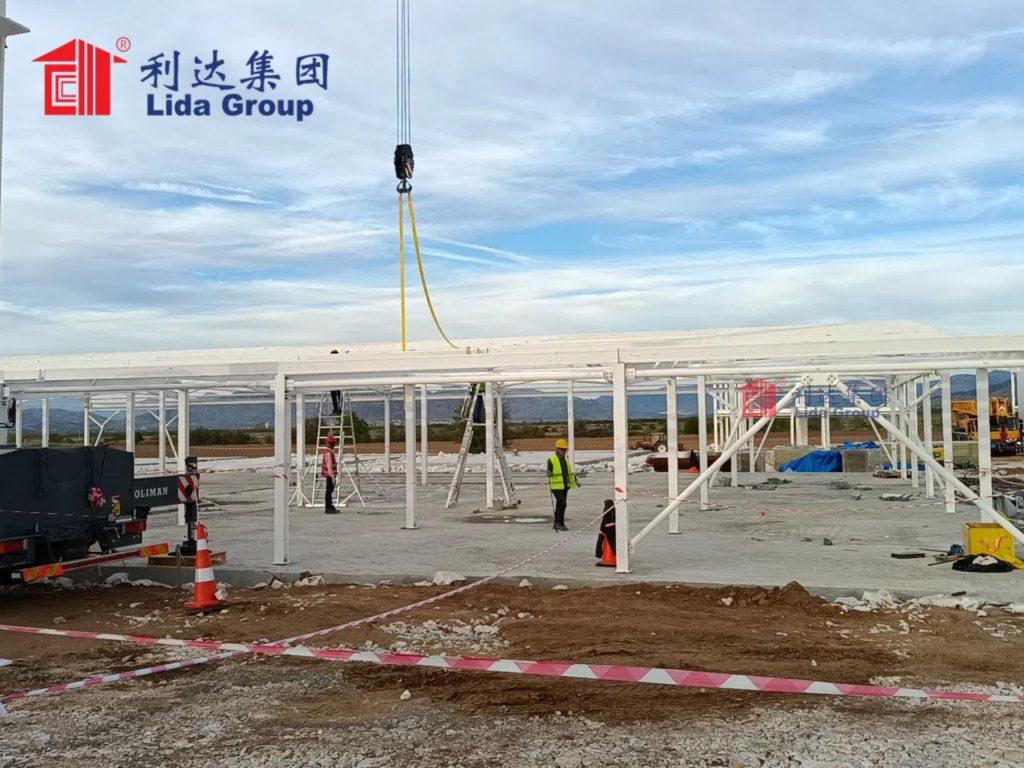
2. Lida Group’s Unified Standard System: Breaking the Dual-Standard Barrier
The core innovation of Lida Group’s steel building products lies in the establishment of a compatible and unified manufacturing standard system, which organically integrates industrial durability specifications and residential environmental protection standards. The group’s professional R&D team has optimized and upgraded the entire process from raw material selection, structural design, and production technology to finished product inspection, enabling heavy-duty steel warehouses to fully meet the environmental indicators of eco-friendly metal houses, and lightweight metal houses to reach the industrial durability level of professional warehouses, realizing the dual upgrading of product performance.
2.1 Integrated Material Standards: Durable and Eco-Friendly Dual Qualification
Material standard unification is the foundation of dual-performance integration. Traditional industrial warehouses use ordinary carbon steel with high hardness but poor environmental performance, while ordinary metal houses use lightweight recycled steel with low strength. Lida Group formulates exclusive dual-qualified material standards for all steel building products. For main structural components, the group selects high-strength Q355B low-alloy structural steel and weather-resistant aluminum-zinc coated steel. This type of steel has a tensile strength 32% higher than ordinary steel, with excellent fatigue resistance and structural stability, fully meeting the 50-year durability standard of industrial warehouses.
At the same time, all steel materials are 100% recyclable and reusable, with no harmful substances precipitated, and the carbon emission of recycled steel is 67% lower than that of virgin steel, completely complying with the low-carbon and environmental protection material standards of eco-friendly metal houses. In terms of auxiliary materials such as wall panels, roof insulation layers, and waterproof coatings, Lida uniformly adopts formaldehyde-free, non-toxic, and pollution-free green building materials. The aerogel thermal insulation materials and nano waterproof coatings used not only meet the industrial building’s fireproof and weather-resistant durability requirements but also pass international indoor environmental quality tests, reaching the residential environmental protection standard of eco-friendly metal houses.
2.2 Unified Design Specifications: Balancing Structural Safety and Green Energy Saving
In terms of structural design, Lida Group abandons the single design idea of focusing only on durability or environmental protection. For steel structure warehouses, on the premise of retaining large-span load-bearing and extreme weather resistance advantages, the team adds green energy-saving design modules of eco-friendly metal houses. Through BIM 3D digital simulation and finite element stress analysis, the group optimizes the steel frame structure layout, reduces redundant steel consumption by 28%, and effectively lowers embodied carbon emissions. The integrated thermal insulation and enclosure system of the warehouse adopts the same energy-saving and heat preservation standards as environmental metal houses, solving the long-standing problem of high energy consumption and poor thermal insulation of traditional industrial warehouses.
For eco-friendly metal houses, Lida introduces industrial warehouse structural design specifications, upgrading the frame connection mode, steel material thickness, and anti-corrosion process. The lightweight metal house abandons the simple thin-wall structure of traditional products, adopts high-strength bolted truss structure, and realizes industrial-grade seismic resistance, level 12 wind resistance, and heavy snow pressure resistance. The structural design service life is extended from the traditional 15 years to more than 30 years, reaching the durability standard of professional industrial steel warehouses. This unified design specification realizes the perfect balance of structural safety, long-term durability, and green energy saving for both product lines.
2.3 Synchronized Production and Inspection Standards
Lida Group realizes synchronous standardized production and unified quality inspection for warehouses and metal houses in intelligent factories. All products adopt full factory prefabrication and automated precision processing, with component processing accuracy controlled within 0.2mm. In the production process, the group implements green production standards for industrial warehouse products, adopts clean energy processing and zero-waste production technology, and controls production carbon emissions and pollution discharge in accordance with the environmental standards of metal houses. Meanwhile, lightweight metal houses are inspected in strict accordance with industrial warehouse quality standards in terms of structural strength, anti-corrosion performance, and load-bearing capacity, eliminating the quality defects of poor durability of traditional environmental houses.
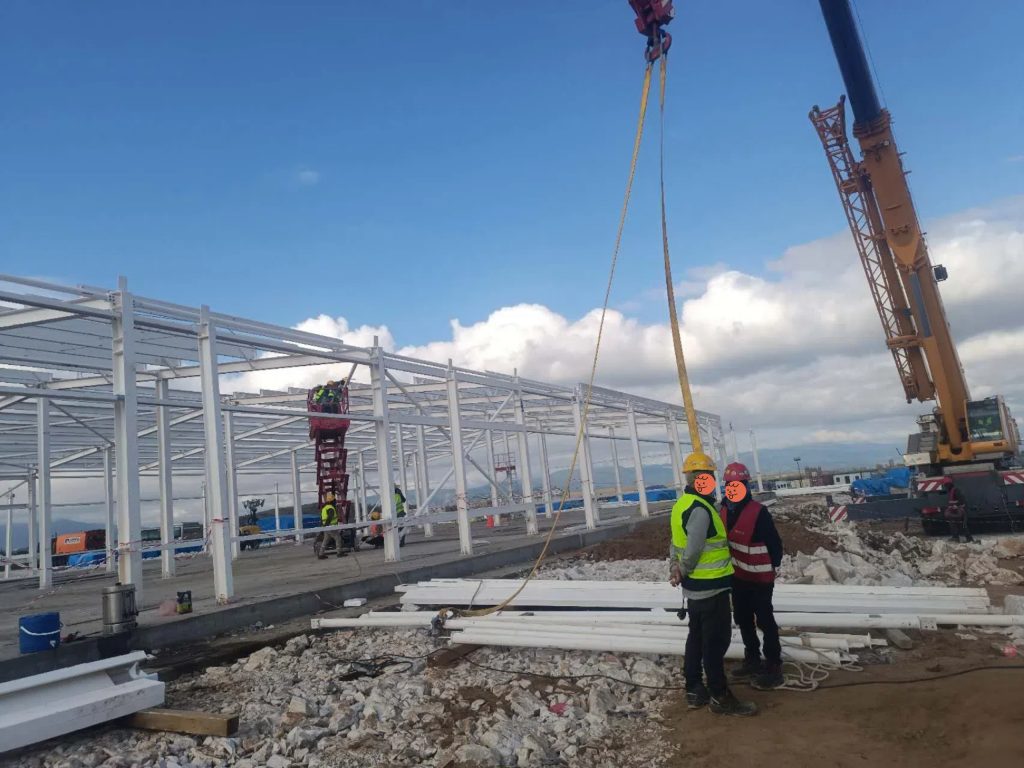
3. Durable Steel Warehouse: Fully Compliant with Eco-Friendly Metal House Environmental Standards
Lida Group’s upgraded durable steel structure warehouse is no longer a single functional industrial facility. On the basis of maintaining industrial super durability, it fully meets the full-cycle environmental protection standards of eco-friendly metal houses, becoming a new generation of green industrial building with dual advantages of durability and low carbon.
3.1 Industrial-Grade Durability Performance Retention
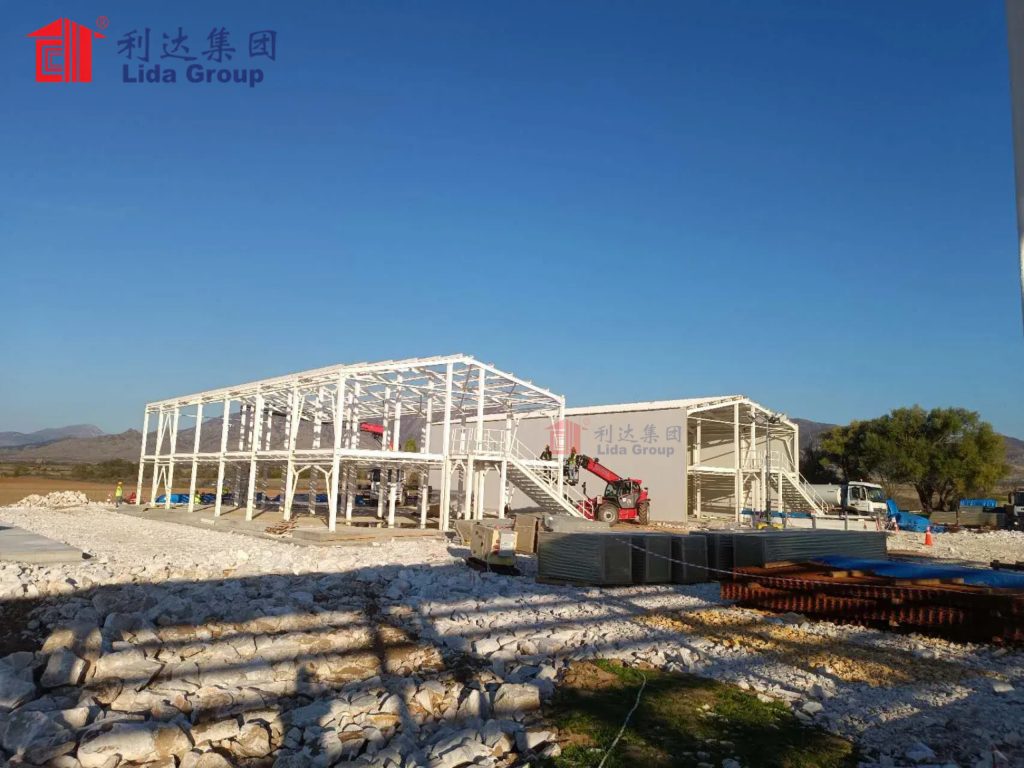
Lida’s steel warehouse retains all the core durability advantages of professional industrial buildings. The high-strength steel frame and optimized truss structure realize a maximum unsupported span of 65 meters and an adjustable eaves height of 6 to 30 meters, with super load-bearing capacity and structural stability. Adopting hot-dip galvanizing and fluorocarbon composite anti-corrosion process, the steel frame can resist coastal salt fog corrosion, tropical high temperature and humidity, and northern severe cold freezing, with a design service life of more than 50 years. The building can withstand magnitude 8 earthquakes and level 12 strong winds, with no structural deformation or damage in extreme weather, fully meeting the long-term safe operation needs of industrial production and logistics storage.
In terms of industrial practicality, the warehouse cancels dense internal support columns, supports free space partitioning and modular expansion, and is compatible with intelligent storage equipment and automated production lines. The upgraded waterproof, dustproof, and thermal insulation enclosure system can stably control indoor temperature and humidity, meeting the high-standard storage requirements of precision parts, food, and chemical materials, with outstanding industrial application value.
3.2 Full Compliance with Environmental Metal House Green Standards
Different from traditional high-carbon industrial warehouses, Lida’s durable steel warehouse fully complies with the green evaluation standards of eco-friendly metal houses in the whole lifecycle. In terms of material environmental protection, all building materials are non-toxic and harmless, with zero formaldehyde emission, meeting residential indoor air quality standards. All steel components can be 100% recycled and reused, with a resource reuse rate far exceeding the industry average.
In terms of energy-saving and low-carbon performance, the warehouse’s high-efficiency thermal insulation system reduces annual building energy consumption by more than 35%, reaching the energy-saving level of high-standard environmental metal houses. The dry assembly construction mode produces almost no construction waste, dust, and noise pollution, reducing construction carbon emissions by 42% compared with traditional concrete warehouses. In the long-term operation process, the building has low energy consumption and zero pollutant discharge, and can be completely disassembled and recycled after the end of the service cycle, achieving zero-pollution exit, fully conforming to the core environmental protection standards of eco-friendly residential metal houses.
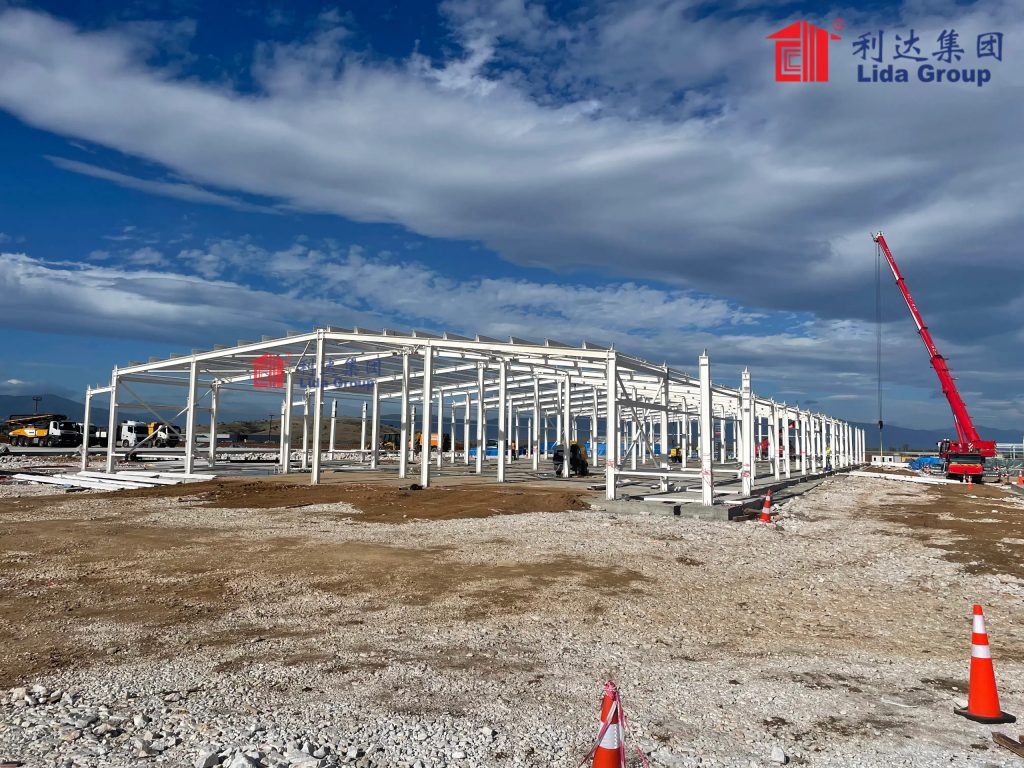
4. Eco-Friendly Metal House: Upgraded to Industrial Warehouse Durability Standards
Lida Group’s eco-friendly metal house inherits the complete green environmental protection system of traditional residential metal houses, and comprehensively upgrades structural performance, weather resistance, and service life in accordance with industrial steel warehouse durability standards, solving the durability defects of traditional green houses and realizing the dual improvement of environmental protection and safety.
4.1 Inherent Full Green Environmental Protection Advantages
Lida’s eco-friendly metal house strictly abides by international green building standards and retains all environmental protection advantages of high-quality metal houses. The main frame adopts recycled high-purity galvanized steel, with ultra-low embodied carbon, and all decorative and thermal insulation materials are environmentally friendly and odorless. The modular assembly mode greatly reduces construction waste and carbon emissions, and the intelligent thermal insulation system effectively reduces daily energy consumption. The product supports personalized aesthetic customization, can be integrated with various ecological environments, and meets the diversified green construction needs of residential living, scenic homestays, commercial offices, and emergency resettlement.
4.2 Industrial-Level Durability and Safety Upgrade
On the basis of environmental protection, the metal house takes the durability standards of industrial steel warehouses as the upgrading benchmark. The overall structural strength, anti-corrosion process, and wind and seismic resistance are fully upgraded to industrial standards. The high-strength steel frame structure has strong structural toughness and fatigue resistance, avoiding deformation and damage caused by long-term wind and rain erosion. The multi-layer anti-corrosion coating process ensures that the metal house can adapt to various complex climatic environments worldwide, with a service life extended to more than 30 years, far exceeding the service life of ordinary environmental metal houses.
In terms of safety performance, the product’s fire resistance limit reaches 1.5 hours, with excellent sound insulation, waterproof, and pressure resistance capabilities, reaching the safety standard of industrial warehouses. The standardized ventilation, lighting, and water and electricity systems ensure indoor comfort while maintaining long-term stable operation, realizing the perfect integration of residential green comfort and industrial durable safety.
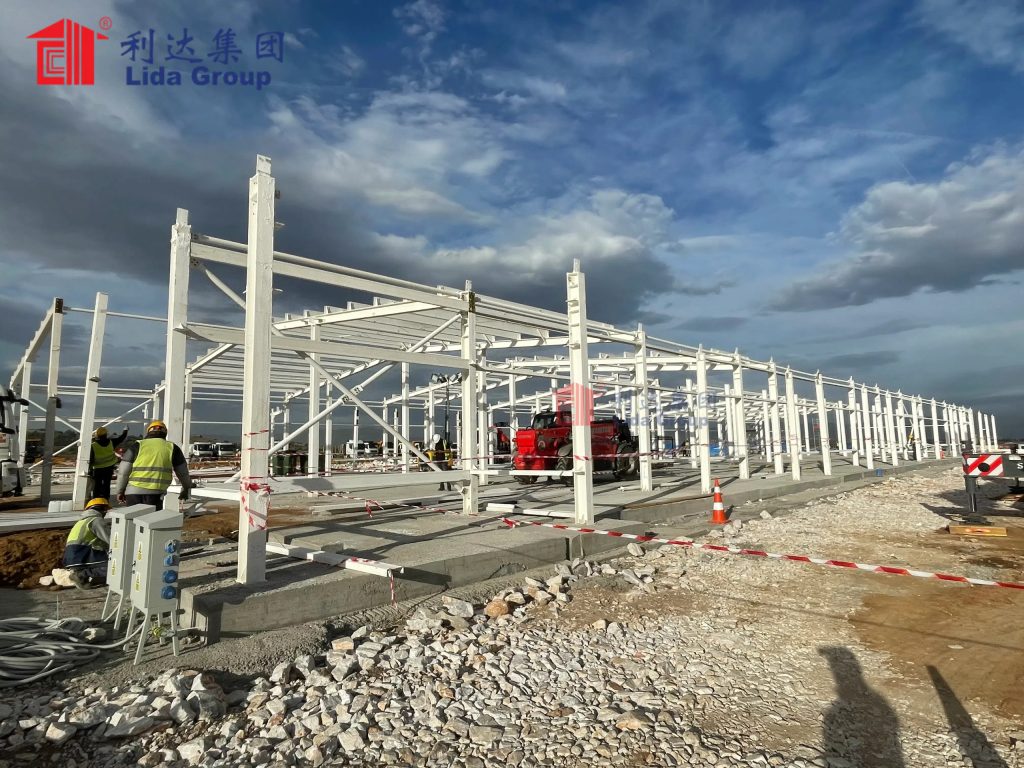
5. Core Competitive Advantages of Dual-Standard Integrated Steel Buildings
Lida Group’s innovative model of making durable warehouses meet environmental house standards and green houses reach industrial durability standards brings unique competitive advantages to its products, breaking the performance bottlenecks and standard barriers of traditional industry products.
5.1 Full-Scenario Adaptability and Strong Compatibility
Dual-standard integrated products have ultra-high scenario compatibility. The steel warehouse not only meets industrial production and storage needs but also complies with green building environmental assessment, which can be used for green industrial parks, low-carbon logistics bases, and other high-standard ecological industrial projects. The eco-friendly metal house, with industrial durability, can be used not only for temporary residential scenarios but also for long-term fixed residential, commercial, and public service buildings, realizing the integration of temporary and permanent use. The two products can be matched and combined freely to provide one-stop green and durable building solutions for comprehensive construction projects.
5.2 Excellent Full-Lifecycle Economic Benefits
The dual-standard design effectively reduces the comprehensive cost of the project. The durable warehouse avoids the energy consumption cost and environmental rectification cost of traditional industrial buildings, and the long service life reduces later maintenance and replacement costs. The upgraded metal house eliminates the frequent replacement and repair costs of traditional low-durability environmental houses. At the same time, the high recycling rate of steel components realizes resource reuse, further improving the full-lifecycle economic return of the building, with higher cost performance than traditional single-performance products.
5.3 Standardized and Professional Full-Chain Service
Lida Group supports dual-standard products with a complete one-stop service system. The professional technical team conducts personalized design according to customer scenario needs, regional climate, and local green building codes to ensure that products accurately meet dual durability and environmental standards. The intelligent factory ensures standardized product production, and the global professional engineering team efficiently completes on-site assembly. The long-term after-sales maintenance service ensures the stable operation of dual-performance buildings throughout the lifecycle, providing customers with full-process guaranteed services.
6. Industry Value and Development Prospect
Lida Group’s initiative to unify industrial warehouse durability standards and eco-friendly metal house environmental standards has revolutionary industry significance. It completely breaks the long-standing dual-standard segmentation of the prefabricated steel building industry, establishes a new integrated standard system of “durability + environmental protection”, and guides the industry to bid farewell to the single-performance development mode. This innovative standard system promotes the upgrading of global steel building manufacturing technology, making industrial infrastructure more green and low-carbon, and civilian residential buildings more safe and durable.
In the context of global carbon neutrality and green industrial upgrading, dual-standard integrated steel buildings have broad market prospects. They can meet the dual development needs of industrial economic construction and ecological environmental protection, and are widely applicable to global industrial upgrading, rural green construction, scenic ecological development, and emergency public welfare construction. With the continuous improvement of global green building standards and industrial safety specifications, Lida Group’s dual-standard integrated products will become the mainstream development trend of the prefabricated building industry, leading the industry’s sustainable and high-quality development.
7. Conclusion
In summary, Lida Group has successfully solved the long-standing industry problem of separated durability and environmental protection standards through standardized innovation and technical iteration. The group’s durable steel structure warehouse has achieved a comprehensive breakthrough in green environmental protection performance on the basis of retaining industrial-grade load-bearing, anti-corrosion, and extreme weather resistance, fully meeting the strict environmental assessment standards of eco-friendly metal houses. Meanwhile, the upgraded eco-friendly metal house inherits the core green and low-carbon advantages of residential buildings and reaches the industrial durability standard of professional steel warehouses, realizing the perfect integration of structural safety, long-term durability, and ecological environmental protection.
This dual-standard integrated building model pioneered by Lida Group breaks the performance limitations and standard barriers of traditional steel buildings, with full-scenario adaptability, excellent economic benefits, and high industry promotion value. Driven by technological innovation and standard optimization, Lida Group not only improves the core competitiveness of its products in the global market but also establishes a new benchmark for the standardized, green, and durable development of the global prefabricated steel building industry. In the future, Lida Group will continue to deepen dual-standard technical research and development, continuously optimize product performance, and provide more high-quality integrated steel building solutions for global customers, empowering the sustainable development of the global construction industry.
Related news
-
Lida Group Expands Portfolio with Steel Building for Warehouse and Eco-Friendly Metal Home
2026-06-30 10:24:31
-
Steel Structure Building Solution: Lida Group Delivers Durable Warehouse and Eco House
2026-06-30 10:22:17
-
Lida Group Introduces Integrated Steel Building for Durable Warehouse and Green Metal Housing
2026-06-30 10:15:13
contact us
- Tel: +86-532-88966982
- Whatsapp: +86-13793209022
- E-mail: sales@lidajituan.com
