



Lida Group Combines Affordability and Efficiency in Oil Field Worker Dormitory Projects
2026-May-28 17:14:15
By Admin
Introduction
The global oil and gas industry operates on a strict profit and schedule balance, where every phase of field exploration, drilling, and maintenance demands efficient resource allocation and cost control. Most oil field projects are located in remote, infrastructure-free regions characterized by extreme temperatures, frequent sandstorms, salt spray corrosion, and inconvenient transportation. On-site worker dormitories serve as essential supporting facilities that guarantee workforce stability and continuous project operation. Unlike permanent civil buildings that pursue long-term fixed use, oil field dormitories focus on temporary, phased, and mobile application scenarios, putting forward two core demands: low comprehensive construction costs and rapid deployment efficiency.
For decades, oil and gas enterprises have faced a universal industry dilemma in camp construction: high-efficiency temporary housing often comes with high procurement and maintenance costs, while ultra-low-cost simple shelters suffer from low construction efficiency, poor quality, and short service life. Traditional brick-concrete dormitories deliver stable quality but require lengthy wet construction cycles, massive labor and material investment, and huge sunk costs, failing to adapt to the temporary attributes of oil field projects. Conventional welded prefabricated houses shorten construction time to a certain extent but retain high manual processing costs, frequent later maintenance, and non-reusable defects, resulting in poor full-lifecycle cost performance. Low-grade canvas tents and iron sheet huts feature low upfront investment but cannot support standardized long-term residency due to poor safety and comfort, triggering workforce turnover and invisible operational losses. This long-standing contradiction between affordability and construction efficiency has always restricted the refined cost management and efficient operation of oil field camps.
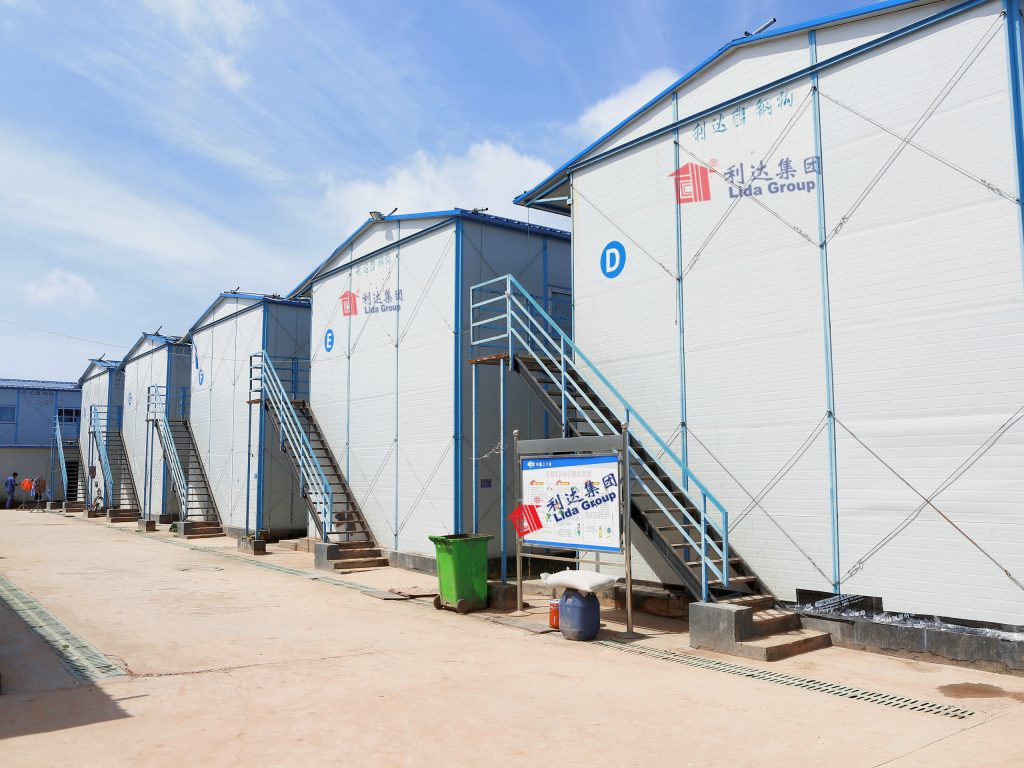
As a leading global manufacturer of modular prefabricated buildings, Lida Group targets the dual pain points of high cost and low efficiency in traditional oil field dormitory projects, launching a series of optimized modular sandwich panel house solutions. Breaking the inherent industry stereotype that “low cost equals low efficiency and low quality”, Lida perfectly integrates economical affordability and rapid construction efficiency through factory standardized prefabrication, simplified bolt assembly technology, reusable modular design, and scenario-based precise material matching. These solutions drastically compress on-site construction cycles, reduce full-lifecycle investment costs, and maintain reliable environmental adaptability and residential safety. This article systematically analyzes the cost and efficiency bottlenecks of traditional oil field dormitory construction, Lida’s core technical strategies for balancing affordability and efficiency, practical project advantages, long-term economic benefits, and industrial application value, fully demonstrating how Lida’s professional modular solutions reshape the cost-performance standard of modern oil field worker dormitory projects.
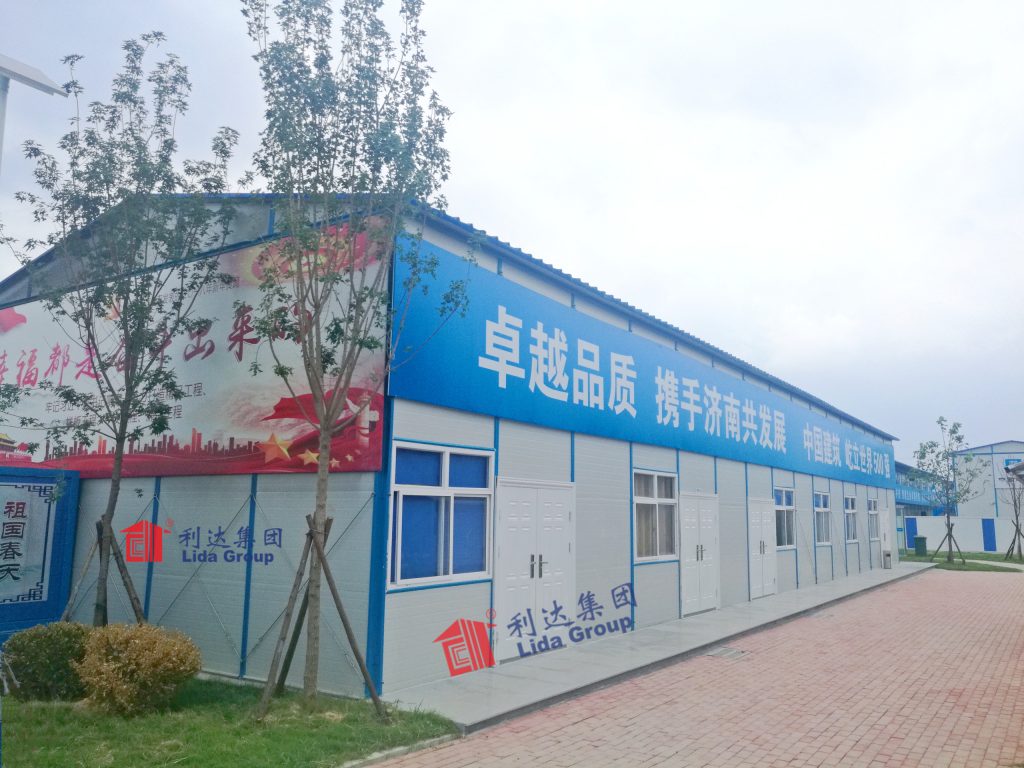
1. Dual Bottlenecks of Cost and Efficiency in Traditional Oil Field Dormitory Construction
Traditional oil field dormitory construction modes cannot balance economic benefits and construction efficiency, forming a dual development bottleneck. Either excessive pursuit of construction quality leads to cost waste, or blind cost reduction results in low construction efficiency and substandard residential performance, seriously affecting the standardized operation of oil field projects.
1.1 High Comprehensive Costs and Severe Capital Waste
Permanent brick-concrete dormitories involve multiple high-cost links including raw material procurement, foundation pouring, professional team construction, and mechanical equipment leasing. The one-time upfront investment is extremely high, and the fixed building structure cannot be disassembled and reused after project completion, forming total sunk costs and serious resource waste. Conventional welded color steel houses reduce partial material costs but rely on skilled welders and complex on-site processing, resulting in high remote-site labor costs. In addition, inferior ordinary materials have poor weather resistance, requiring frequent rust removal, repainting, and component replacement in later stages, with annual maintenance costs accounting for 8% to 12% of the initial investment. For short-cycle and mobile oil field projects, repeated construction and high maintenance expenditure greatly increase the long-term operational burden of enterprises. Even some modular products with simple structures fail to achieve cost optimization due to non-standard production and low component universality, lacking practical affordability.
1.2 Cumbersome Processes Lead to Low Construction Efficiency
Traditional construction modes rely heavily on on-site manual operation and wet construction processes. Brick-concrete dormitories require foundation curing, wall masonry, and interior decoration, with a construction cycle of 30 to 60 days. Welded prefabricated houses need on-site frame welding, panel cutting, gap sealing, and electrical debugging, with a medium-sized camp construction cycle of 15 to 25 days. Complex processes and long cycles make it impossible to synchronize dormitory deployment with project mobilization, leading to delayed worker settlement and postponed project startup. In remote oil field areas with changeable extreme weather, construction progress is easily interrupted, further reducing construction efficiency and triggering invisible economic losses. Although ultra-low-cost tent shelters can be deployed quickly, their poor structural stability and unqualified safety standards make them unable to meet formal camp construction specifications, resulting in false efficiency without practical application value.
1.3 Unbalanced Cost-Efficiency Ratio Restricts Industrial Upgrading
The core defect of traditional dormitory construction lies in the uncorrectable contradiction between cost and efficiency. High-standard construction guarantees quality but sacrifices cost and efficiency; low-cost construction reduces investment but sacrifices construction speed, safety, and durability. There is a serious lack of intermediate high-cost-performance solutions that balance affordability, efficiency, and quality. This unbalanced development mode makes oil field camp construction always in a passive state, unable to adapt to the rapid iteration and refined cost control needs of modern oil and gas projects, restricting the overall upgrading of the industry’s supporting facility construction level.
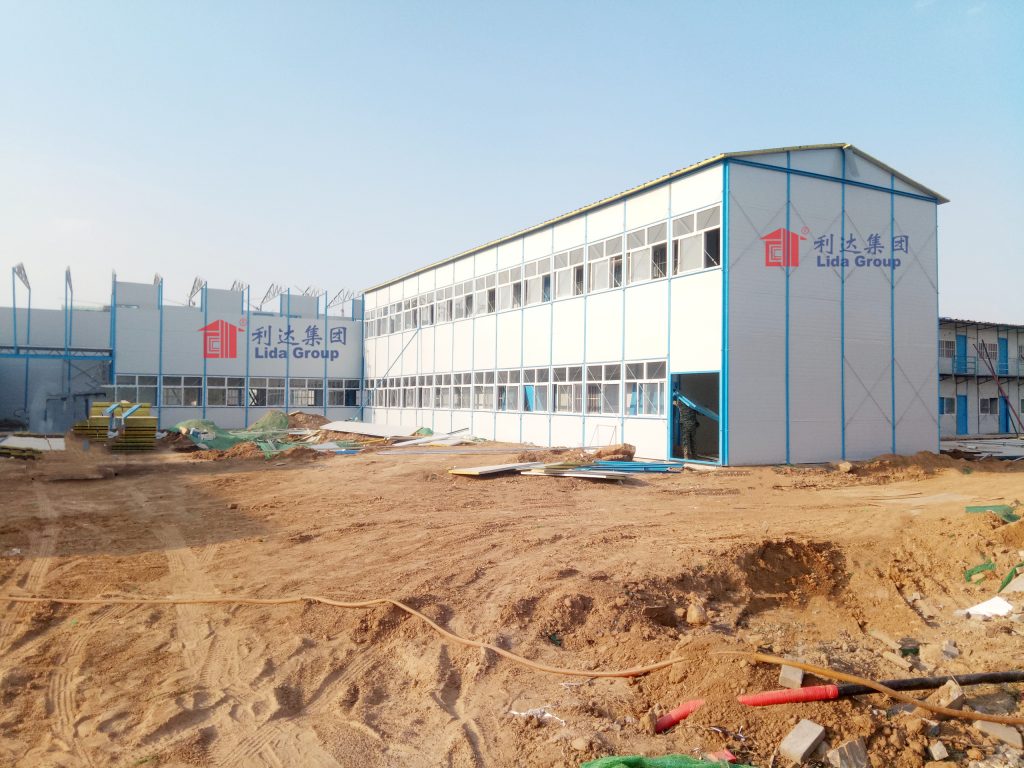
2. Core Strategies of Lida Group for Balancing Affordability and Efficiency
Lida Group’s optimized modular sandwich panel house solutions take “cost reduction without quality reduction, efficiency improvement without resource increase” as the core design concept. Through innovative production modes, assembly technology, and structural design, the brand fundamentally solves the cost-efficiency contradiction of traditional oil field dormitories, realizing organic integration of ultra-low full-lifecycle cost and ultra-high construction efficiency.
2.1 Factory Batch Prefabrication Improves Production Efficiency and Cuts Unit Costs
Lida adopts a full industrial standardized prefabrication mode, with more than 98% of building components completed in automated factories. All steel frames, sandwich panels, doors, windows, and electrical accessories are produced in batches through automated assembly lines, realizing unified size calibration and quality control. Batch production greatly reduces unit manufacturing costs, avoiding the high cost of scattered customized processing in traditional on-site construction. Meanwhile, factory prefabrication integrates multiple processes such as component forming, anti-corrosion treatment, and functional debugging, eliminating redundant on-site processing links. This mode not only improves production efficiency by more than 60% compared with traditional on-site construction but also reduces material waste rate to below 2%, effectively controlling upfront construction costs while ensuring component precision and stability.
2.2 Simplified Bolt Assembly Boosts On-Site Efficiency and Saves Labor Costs
Abandoning the complex welding and wet construction processes of traditional buildings, Lida’s sandwich panel house adopts an all-bolt non-destructive assembly structure. All components are reserved with unified precise positioning interfaces, realizing seamless docking and rapid fixing. The whole assembly process only requires conventional manual tools, without the need for professional welders, large hoisting equipment, and fireproof construction conditions. Ordinary untrained workers can complete standardized assembly according to color-coded labels and detailed installation manuals. This innovative technology reduces on-site labor demand by more than 60% and eliminates high mechanical leasing costs, greatly improving on-site construction efficiency while cutting labor expenditure, achieving dual optimization of efficiency and cost.
2.3 Foundation-Free Laying Simplifies Processes and Compresses Construction Cycles
Optimized lightweight force-bearing structural design enables Lida’s dormitory houses to adapt to complex oil field ground conditions. The products can be directly laid on flat gravel ground, hardened ground, and temporary open spaces without concrete foundation pouring, steel bar laying, and long curing cycles. This foundation-free construction technology saves 3 to 5 days of foundation treatment time for each batch of dormitories, eliminates foundation material and labor investment, and realizes zero-delay rapid deployment. Compared with traditional construction modes, the overall camp construction cycle is compressed by more than 80%, which can complete medium-sized camp deployment within 2 to 3 days, fully meeting the urgent settlement needs of oil field workers.
2.4 Reusable Modular Design Reduces Long-Term Iterative Costs
Lida’s exclusive non-destructive assembly structure supports repeated disassembly, transportation, and cross-project reassembly without structural damage and performance attenuation. A single set of modular dormitory units can withstand more than eight turnover uses, retaining 55% to 70% residual value after long-term use. This design completely changes the disposable construction mode of traditional dormitories, turning temporary housing investment into sustainable enterprise assets. It effectively reduces the repeated construction investment of oil field enterprises by more than 40%, fundamentally optimizing the full-lifecycle cost structure and realizing long-term economical operation.

3. High Construction Efficiency Empowers Rapid Oil Field Project Operation
Efficiency improvement is the core advantage of Lida’s modular dormitory solutions. Through streamlined production and construction processes, Lida realizes ultra-fast deployment of oil field dormitories, eliminating schedule delays caused by slow housing construction and providing strong support for rapid project launch.
3.1 Ultra-Short Single-Unit Assembly Cycle
Benefiting from fully finished factory components and intuitive modular docking design, a standard 20-square-meter oil field dormitory unit can be fully assembled, electrically debugged, and officially occupied within 4 to 6 hours by a three-person team. Compared with the 7 to 10-day assembly cycle of conventional prefabricated houses and the one-month cycle of brick-concrete buildings, the single-unit construction efficiency is increased by over 90%. This ultra-fast assembly speed supports flexible incremental deployment of dormitories according to real-time changes in oil field workforce, avoiding housing shortage in peak construction periods.
3.2 Large-Scale Rapid Camp Deployment Capacity
Lida’s modular system supports multi-team parallel operation, realizing simultaneous assembly of multiple dormitory units. A medium-sized oil field camp with 50 to 80 worker dormitories can be fully deployed, debugged, and put into use within 2 to 3 days, while a large-scale comprehensive camp supporting hundreds of workers can be completed within one week. This efficient large-scale deployment capability completely solves the problem of slow camp formation in traditional construction, ensuring synchronous matching between worker settlement and project mobilization, and effectively improving the overall operational efficiency of oil field projects.
3.3 Predictable Construction Progress Reduces Uncertain Risks
Traditional on-site construction is easily affected by weather, manpower, and environmental factors, with uncontrollable progress and frequent delays. Lida’s modular construction mode turns uncertain on-site construction into predictable factory production and standardized assembly. All construction links are streamlined and standardized, with fixed working hours and stable progress. Enterprises can accurately predict camp completion time, realizing refined project schedule management, eliminating invisible losses caused by construction delays, and further amplifying the efficiency value of the solution.
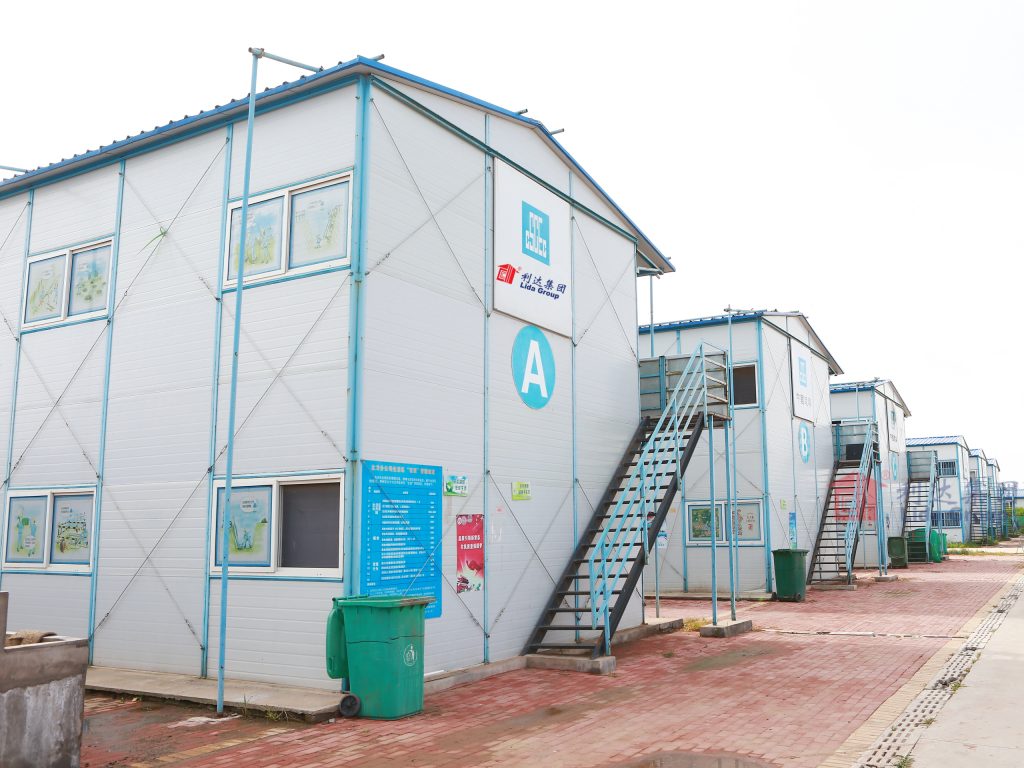
4. Full-Lifecycle Affordable Cost Control Mechanism
While improving construction efficiency, Lida’s solutions realize comprehensive cost reduction covering upfront construction, mid-term operation, and long-term asset iteration, creating industry-leading full-lifecycle cost performance for oil field dormitory projects.
4.1 Low Upfront Construction Investment
Factory batch production reduces unit manufacturing costs, flat-pack stacked transportation improves container loading rate, cutting remote logistics freight by more than 70%. The foundation-free laying mode eliminates foundation construction costs, and the tool-free assembly mode saves skilled labor and mechanical leasing expenses. Compared with traditional brick-concrete and conventional prefabricated dormitories, Lida’s solutions reduce upfront comprehensive construction costs by 30% to 50%, greatly easing the capital pressure of oil field project startup.
4.2 Ultra-Low Mid-Term Operation and Maintenance Costs
Lida’s dormitories adopt high-strength hot-dip galvanized steel frames and weather-resistant PVDF coated sandwich panels, with excellent anti-corrosion, anti-aging, and weather-resistant performance. The precise modular assembly avoids gap expansion and structural looseness caused by manual errors, effectively reducing component failure rate. The annual maintenance cost is less than 2% of the initial investment, far lower than the industry average of 8% to 12%. Long-term maintenance-free stable operation greatly reduces the daily management workload and operational expenditure of oil field camps.
4.3 High Residual Asset Value Optimizes Long-Term Returns
The reusable modular structure enables Lida’s dormitory facilities to maintain stable performance after multiple disassembly and assembly cycles. After the completion of a single oil field project, the facilities can be quickly disassembled, stored, and redeployed in new projects, retaining high residual asset value. This mode avoids total sunk costs of traditional disposable housing, improves enterprise capital utilization efficiency, and brings sustainable long-term economic returns, maximizing the cost advantages of oil field camp construction.
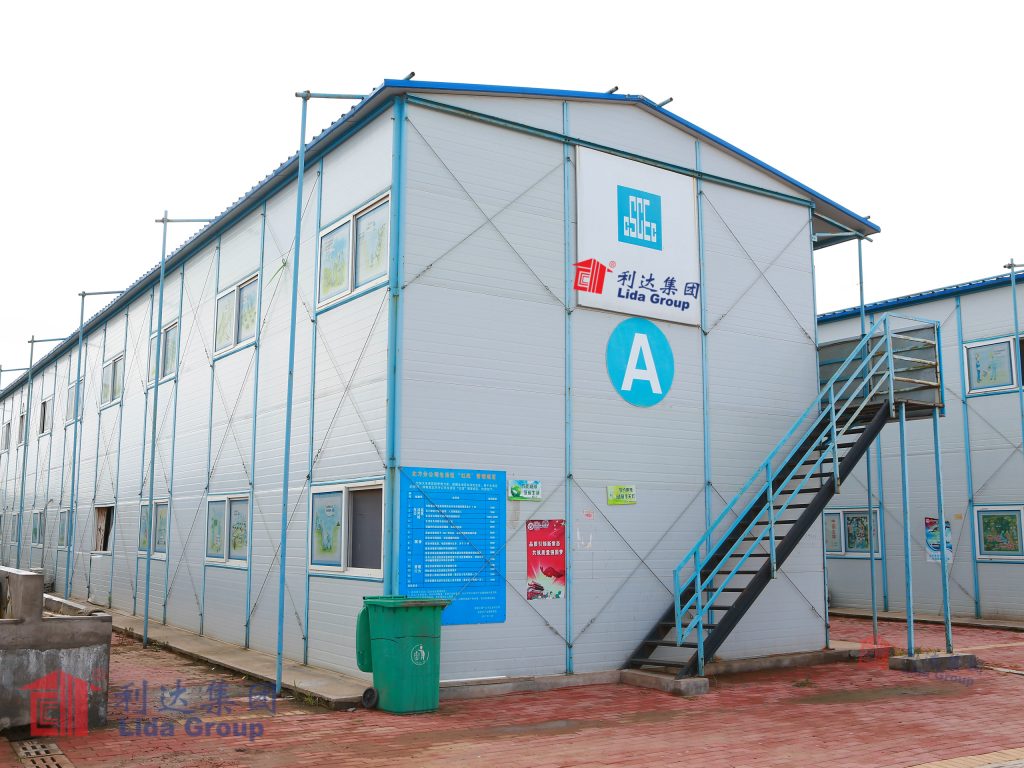
5. Stable Comprehensive Performance Without Sacrificing Quality
The core competitiveness of Lida’s solutions lies in achieving perfect balance of affordability, efficiency, and quality. While reducing costs and improving efficiency, the products retain excellent harsh environment adaptability, industrial safety, and residential comfort, avoiding the low-quality defects of traditional low-cost and fast-built housing.
5.1 Harsh Environment Adaptability for Oil Field Scenarios
Lida’s customized oil field-grade sandwich panels have stable physical and chemical properties, adapting to diverse extreme climates. The high-density thermal insulation core material realizes constant indoor temperature, resisting high-temperature baking in deserts and ultra-low temperature freezing in plateaus. The fully sealed structure with high-elasticity sealing strips effectively blocks sand and dust penetration and rainwater leakage. The anti-corrosion coating and galvanized steel frame prevent salt spray and industrial gas erosion in coastal and inland oil fields, ensuring long-term stable operation of dormitories in harsh environments.
5.2 Industrial-Grade Safety Performance
All sandwich panel core materials reach A-level non-combustible fireproof standard, with stable flame retardant and smoke suppression capabilities, eliminating fire hazards in crowded dormitory areas. The integral steel frame structure passes professional grade-12 wind resistance, grade-7 seismic resistance, and heavy snow load tests, resisting extreme weather impacts and slight geological fluctuations. The standardized fireproof electrical system and leakage protection devices avoid electrical safety risks, fully complying with oil field high-risk operation safety specifications.
5.3 Humanized Residential Comfort
The composite sandwich panel has excellent sound insulation and noise reduction performance, isolating external mechanical operation and construction noise to create a quiet rest environment. Scientific indoor layout, standardized ventilation, and lighting configurations ensure dry, clean, and temperature-stable indoor conditions. The humanized design effectively relieves workers’ fatigue after high-intensity field operations, stabilizes workforce teams, and avoids invisible economic losses caused by worker turnover.
6. Practical Application Value in Global Oil Field Projects
With the dual advantages of high efficiency and high affordability, Lida Group’s modular dormitory solutions have been widely applied in global oil and gas engineering projects. They are suitable for rapid camp construction of desert emergency exploration, high-altitude drilling base expansion, coastal oil field auxiliary facilities, and short-term maintenance projects. The flexible modular design supports free combination and scalable layout, which can be transformed into dormitories, offices, warehouses, and temporary medical rooms to form a complete standardized camp system. A large number of engineering practices have verified that Lida’s solutions can effectively shorten project construction cycles, reduce comprehensive operational costs, and improve camp management standards, becoming the preferred high cost-performance housing solution for modern oil field projects.
7. Conclusion
Cost control and construction efficiency are two core indicators that determine the economic benefits and operational quality of oil field worker dormitory projects. Traditional housing construction modes have long been trapped in the unbreakable contradiction between high cost and low efficiency, failing to meet the refined and efficient development needs of modern oil and gas enterprises. Excessively high construction investment causes capital waste, while one-sided cost reduction leads to substandard construction efficiency and residential quality, restricting the stable operation and sustainable development of oil field projects.
Lida Group’s modular sandwich panel house solutions completely break this industry dilemma, perfectly combining affordable full-lifecycle cost advantages and ultra-high rapid construction efficiency. Through factory batch prefabrication, simplified bolt assembly, foundation-free rapid laying, and reusable modular design, Lida drastically compresses dormitory construction cycles, saves massive labor, logistics, and mechanical costs, and realizes low-cost and high-efficiency deployment of oil field camps. At the same time, the products maintain excellent extreme environment adaptability, industrial-grade safety performance, and humanized living comfort, ensuring no quality sacrifice while optimizing cost and efficiency. With outstanding comprehensive cost performance, stable practical performance, and wide scenario adaptability, Lida’s solutions effectively solve the pain points of traditional oil field dormitory construction, help oil and gas enterprises optimize resource allocation, reduce operational costs, and improve project operational efficiency, and continuously lead the high-quality, economical, and efficient upgrading of global oil field supporting facility construction.
Related news
-
Lida Group’s Easy Install Sandwich Panel House Delivers Durable Oil Field Worker Dormitory
2026-05-28 16:53:19
-
Temporary Low Cost Building Solutions by Lida Group Transform Oil Field Worker Dormitory Housing
2026-05-28 17:01:22
-
Fast Assembly of Oil Field Worker Dormitory with Easy Install Sandwich Panel House from Lida Group
2026-05-28 17:08:51
contact us
- Tel: +86-532-88966982
- Whatsapp: +86-13793209022
- E-mail: sales@lidajituan.com
