



Efficient and Safe Temporary Worker Dormitories Built with Sandwich Panel Technology from Lida Group Now Available
2026-Jul-28 17:58:36
By Admin
Global infrastructure construction, engineering projects, resource development, and emergency construction initiatives generate massive demand for standardized, fast-deployable, and high-safety temporary worker accommodation. Traditional on-site temporary dormitories have long been plagued by prominent drawbacks, including slow on-site construction, poor fire resistance, insufficient structural stability, crude living conditions, serious environmental pollution, and high maintenance costs. Many temporary residential facilities fail to meet modern construction safety specifications and staff living health standards, bringing potential safety hazards and management difficulties for engineering projects. To solve the industry pain points of backward temporary accommodation construction and unbalanced safety and efficiency performance, Lida Group, a global leading manufacturer of modular prefabricated buildings, has officially launched upgraded temporary worker dormitory products built with advanced sandwich panel technology. The newly available dormitory series integrates efficient prefabricated assembly technology, A1-level fireproof safety performance, all-weather structural stability, and eco-friendly low-carbon design, becoming a new generation of standard temporary accommodation solutions for global engineering construction projects. This article comprehensively elaborates on the technical advantages, core performance characteristics, construction efficiency, living comfort, environmental protection value, application scenarios, and industrial significance of Lida Group’s sandwich panel worker dormitories, presenting a complete and professional interpretation of this efficient and safe temporary housing product.
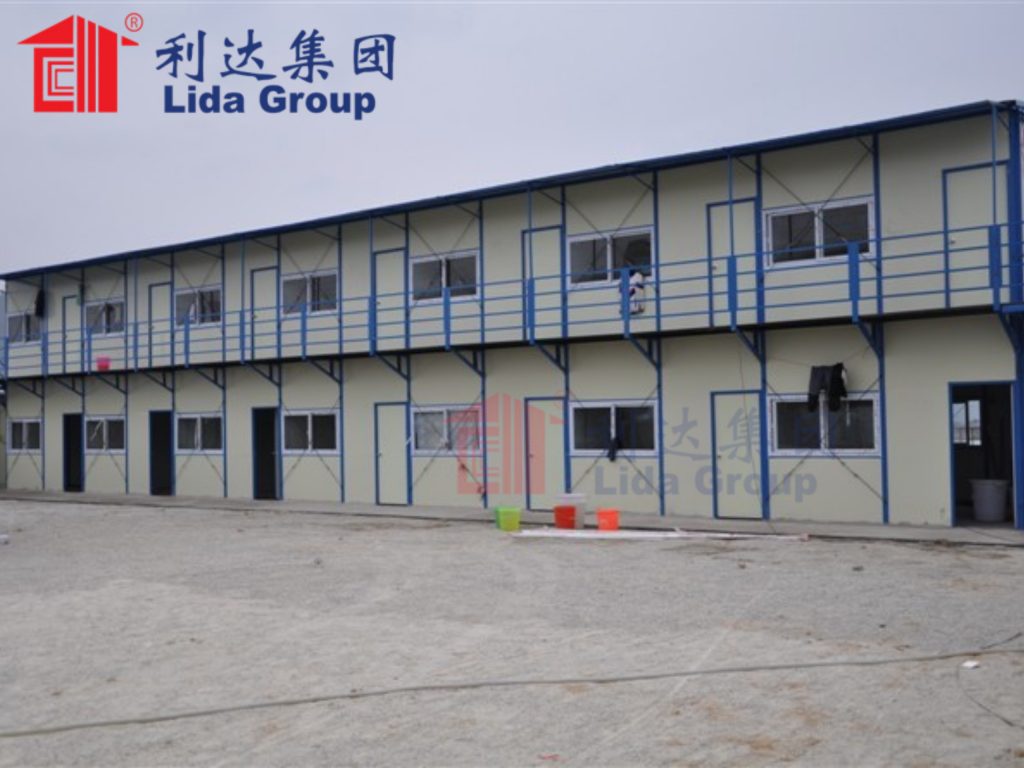
1. Industry Pain Points of Traditional Temporary Worker Dormitories
In the traditional construction industry system, temporary worker dormitories are mostly built with simple color steel plates, brick tiles, or crude tents. Restricted by backward building materials and single construction technology, these traditional temporary residences have obvious performance defects, which cannot adapt to the standardized, safe, and green development requirements of modern engineering construction. In terms of construction efficiency, traditional temporary dormitories rely on a large number of on-site wet operations and manual laying, with long construction cycles, heavy labor dependence, and low construction efficiency. Affected by rainy days, low temperature, and other bad weather, the construction progress is often delayed, unable to meet the rapid staffing and accommodation needs of short-cycle engineering projects.
In terms of safety performance, traditional temporary dormitories have prominent hidden dangers. Ordinary color steel plate buildings mostly use flammable foam core materials, which have poor fire resistance and are extremely easy to burn and spread rapidly in case of open fire, easily triggering group fire accidents. In addition, simple temporary buildings have low overall structural rigidity, poor wind resistance, seismic resistance, and snow pressure resistance, and are prone to deformation, leakage, and even collapse under extreme weather such as strong winds, heavy snow, and earthquakes, seriously threatening the personal safety of construction workers.
In terms of living experience and environmental protection, traditional temporary dormitories have many deficiencies. The thermal insulation and sound insulation performance of ordinary building materials is poor, resulting in extremely high indoor temperature in summer and severe cold in winter, with obvious noise interference, unable to guarantee basic living comfort for workers. At the same time, on-site mixed construction produces a large amount of construction waste, dust, and sewage pollution, and the building materials cannot be recycled after project completion, resulting in serious resource waste and environmental damage. In view of these industry pain points, Lida Group’s new sandwich panel temporary worker dormitories completely subvert the traditional temporary housing construction mode, realizing a comprehensive upgrade of construction efficiency, safety performance, living quality, and environmental protection level.
2. Core Technical Advantages of Lida Group’s Sandwich Panel Technology
The excellent comprehensive performance of Lida Group’s new temporary worker dormitories is rooted in the independently optimized high-performance sandwich panel technology and matching modular steel frame system. Different from ordinary sandwich panels on the market with single performance and unstable quality, Lida’s customized sandwich panels adopt composite multi-layer structure design and industrial integrated pressing and forming technology, realizing organic integration of fire resistance, thermal insulation, sound insulation, waterproofing, weather resistance, and environmental protection. Cooperated with high-strength galvanized steel frame structure, it forms a stable, safe, and efficient modular building system, laying a solid technical foundation for high-quality temporary dormitory construction.
2.1 A1-Level Fireproof Core Material for Ultimate Safety Guarantee
Safety is the primary core advantage of Lida Group’s sandwich panel dormitories. Aiming at the frequent fire hazards of traditional temporary dormitories, Lida adopts high-purity rock wool A1-level non-combustible core material for all building wall and roof sandwich panels. This inorganic fireproof material has ultra-high flame retardant performance, which will not burn, deflagrate, or produce toxic smoke and harmful gases when encountering open fire or high temperature. It can effectively block fire spread and isolate fire sources, fully complying with international NFPA fire protection standards and global engineering construction safety specifications.
Different from flammable EPS foam core materials used in ordinary temporary buildings, Lida’s rock wool sandwich panel maintains stable physical and chemical properties under high-temperature combustion conditions, with a fire resistance limit of up to 1.5 hours. It effectively avoids the risk of rapid fire spread and collapse burning of temporary buildings, thoroughly solving the core safety hazard of traditional worker dormitories. For high-risk engineering scenarios such as oil and gas field construction, chemical engineering projects, and mining operations, this high-standard fireproof performance can greatly reduce project safety risks and ensure the life safety of on-site workers.
2.2 Composite Thermal and Sound Insulation Structure for Improved Living Comfort
Lida Group’s optimized sandwich panel adopts a three-layer composite structure of color steel outer plate, high-density rock wool core layer, and anti-corrosion inner plate. The thickened core layer structure has excellent thermal insulation and heat preservation performance, which can effectively isolate indoor and outdoor heat exchange. In high-temperature summer environments, it blocks external heat radiation to keep indoor temperature cool; in severe cold winter, it locks indoor heat to avoid rapid temperature loss, solving the problems of sweltering heat in summer and coldness in winter of traditional temporary dormitories.
Meanwhile, the dense fiber structure of rock wool materials has outstanding sound absorption and noise reduction functions, which can effectively isolate external construction noise, wind noise, and equipment operation noise, creating a quiet and comfortable indoor rest environment. The integrated fully enclosed structure of the sandwich panel also has excellent waterproof and moisture-proof performance, which can avoid wall moisture, mildew, and indoor water leakage caused by rainy weather and humid environment, greatly improving the living comfort and hygiene level of temporary dormitories.
2.3 Weather-Resistant and Anti-Corrosion Panel Design for Long-Term Durability
Facing the complex and changeable construction site environment, Lida’s sandwich panels adopt multi-layer anti-corrosion and weather-resistant coating treatment on the outer color steel surface. After special surface spraying process, the panels have strong ultraviolet resistance, high-temperature aging resistance, salt fog corrosion resistance, and wind and rain erosion resistance. They can maintain stable structural and appearance performance in extreme environments such as coastal high humidity, desert high temperature, plateau severe cold, and rainy mountainous areas, without fading, rusting, or deforming for a long time.
Matched with the overall hot-dip galvanized steel frame structure, the sandwich panel dormitory realizes integrated anti-corrosion and weather resistance of the whole building. The overall design service life can reach more than 15 years, far exceeding the 3 to 5 years service life of ordinary simple temporary dormitories. Even after long-term outdoor exposure and use, the building can still maintain complete structural performance and beautiful appearance, greatly reducing the frequency of later maintenance and replacement, and bringing long-term stable use value to engineering projects.
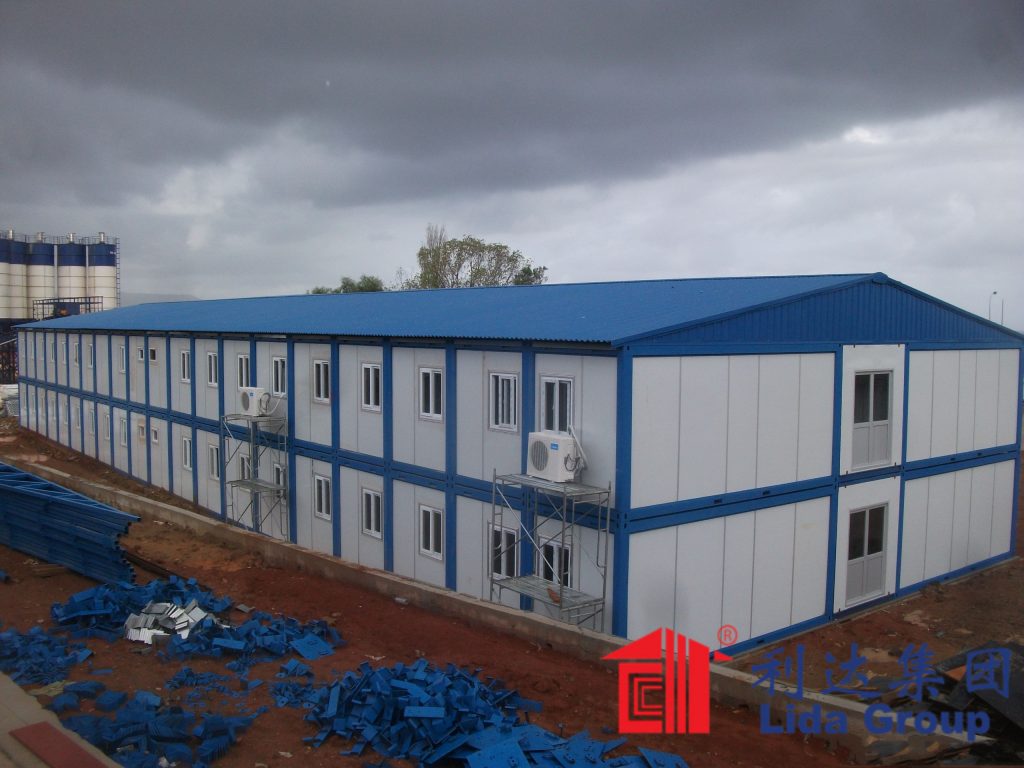
3. High-Efficiency Prefabricated Construction Mode Shortens Project Cycle
The newly launched sandwich panel temporary worker dormitories fully adopt factory prefabrication and on-site bolt assembly mode, completely changing the inefficient construction mode of traditional temporary buildings relying on on-site processing and wet operation. All sandwich panels, steel frames, decorative accessories, and internal supporting facilities are precisely processed and prefabricated in Lida Group’s intelligent automated production workshop. The standardized batch production mode ensures consistent product quality and greatly improves production efficiency.
3.1 Full Factory Prefabrication and Zero On-Site Wet Operation
Different from traditional temporary dormitories that require on-site cutting, welding, painting, and concrete pouring, Lida’s sandwich panel dormitories realize 100% factory prefabrication of core components. The factory completes panel pressing, cutting, punching, surface treatment, and steel frame welding and anti-corrosion treatment in advance. All components are shipped with standard sizes and complete accessories, requiring no secondary processing on site. The on-site construction completely abandons wet operation processes such as mortar mixing and concrete curing, realizing pure dry bolt assembly construction.
This innovative construction mode is almost unaffected by weather and seasonal factors, and can be constructed normally in rainy days, low temperature, and other harsh weather conditions, effectively avoiding construction delays caused by bad weather. The whole construction process produces no construction waste, dust pollution, or sewage discharge, which is clean, efficient, and environmentally friendly, meeting the civilized construction management standards of modern engineering projects.
3.2 Ultra-Fast On-Site Assembly Improves Project Efficiency
The standardized modular design enables Lida’s sandwich panel dormitories to achieve extremely high on-site assembly efficiency. A single standard dormitory unit can be quickly assembled and put into use by a small construction team within 8 hours. For large-scale worker dormitory clusters that can accommodate hundreds of employees, the overall delivery and assembly can be completed within 15 to 20 days, which is more than 70% shorter than the construction cycle of traditional brick-concrete and simple color steel dormitories.
The efficient construction speed helps engineering projects quickly complete staff accommodation deployment, solve the problem of lagging supporting living facilities, and ensure the smooth progress of main engineering construction. At the same time, the simple bolt assembly mode reduces the dependence on large mechanical equipment and senior construction workers, greatly saving labor costs and mechanical leasing costs for project construction, and effectively improving the overall economic benefits of the project.
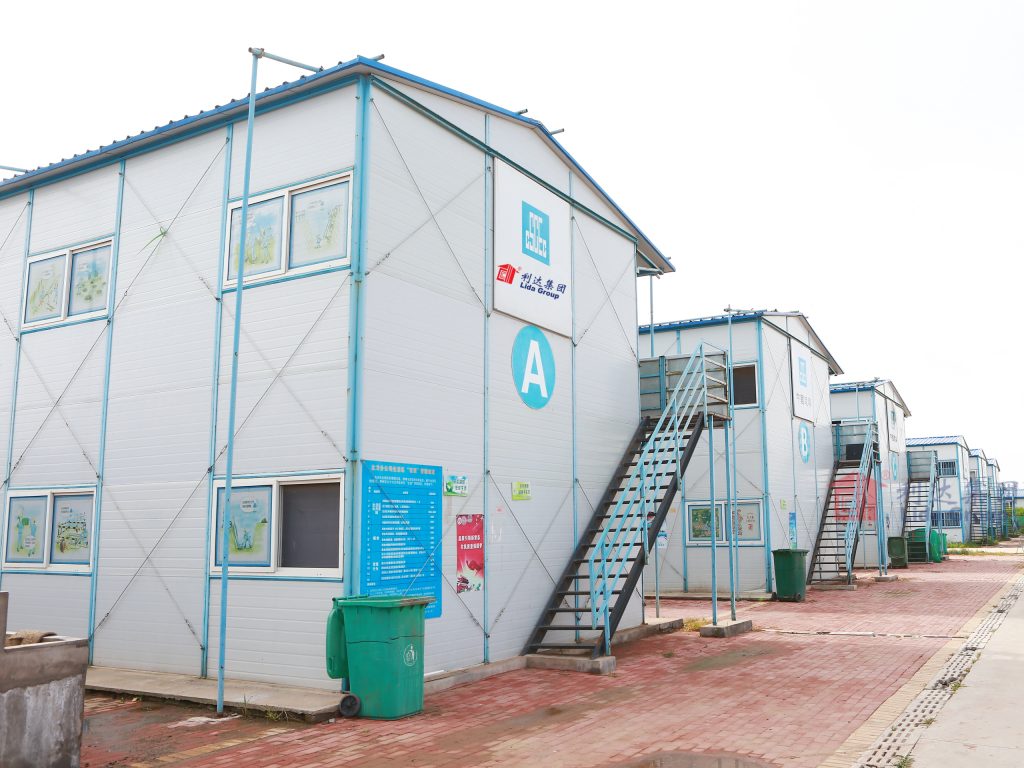
4. Structural Safety and Standardized Living Configuration
While pursuing high-efficiency construction, Lida Group’s new sandwich panel dormitories take building safety and standardized living experience as the core design indicators, realizing double improvement of structural stability and living quality. The product strictly complies with international temporary building safety standards and engineering staff accommodation management specifications, with comprehensive and reliable performance in structural resistance, safety configuration, and functional supporting facilities.
4.1 Super Structural Stability Adapts to Complex Environments
Lida’s sandwich panel dormitory adopts an integrated steel frame and sandwich panel composite stress system. The high-strength galvanized steel frame forms a stable overall load-bearing structure, and the sandwich panels are closely connected with the steel frame through professional fasteners, with high overall rigidity and strong structural integrity. Professional environmental simulation tests verify that the whole building can resist magnitude 8 earthquakes and level 12 strong winds, and can stably resist heavy snow pressure and storm impact.
Whether it is open construction sites, windy coastal areas, snowy plateau regions, or desert Gobi environments, the dormitory structure can maintain stable operation without deformation, displacement, or damage. The scientific force transmission structure and firm connection mode completely avoid the safety hazards of loose assembly and structural instability of traditional temporary dormitories, providing a solid and safe living guarantee for on-site construction workers.
4.2 Standardized Humanized Living Configuration
Breaking the crude and single functional design of traditional temporary dormitories, Lida Group’s new products adopt humanized standardized configuration design. The indoor space layout is scientific and reasonable, with sufficient daylighting and ventilation windows to ensure smooth indoor air circulation and sufficient natural light, avoiding the problems of dampness, stuffiness, and poor air quality of traditional temporary houses. The dormitory is pre-equipped with standardized water supply, drainage, circuit systems, and lighting facilities, which can meet the basic daily living and rest needs of workers after simple debugging.
In addition, the product supports personalized functional customization. According to project management needs, it can be flexibly configured with independent dormitory rooms, public activity rooms, bath rooms, toilet areas, and storage spaces. The indoor anti-slip, dust-proof, and mildew-proof treatments effectively improve the indoor hygiene environment. The standardized and humanized design makes the temporary worker dormitory no longer a simple makeshift shelter, but a safe, clean, and comfortable temporary living space that conforms to modern staff management standards.
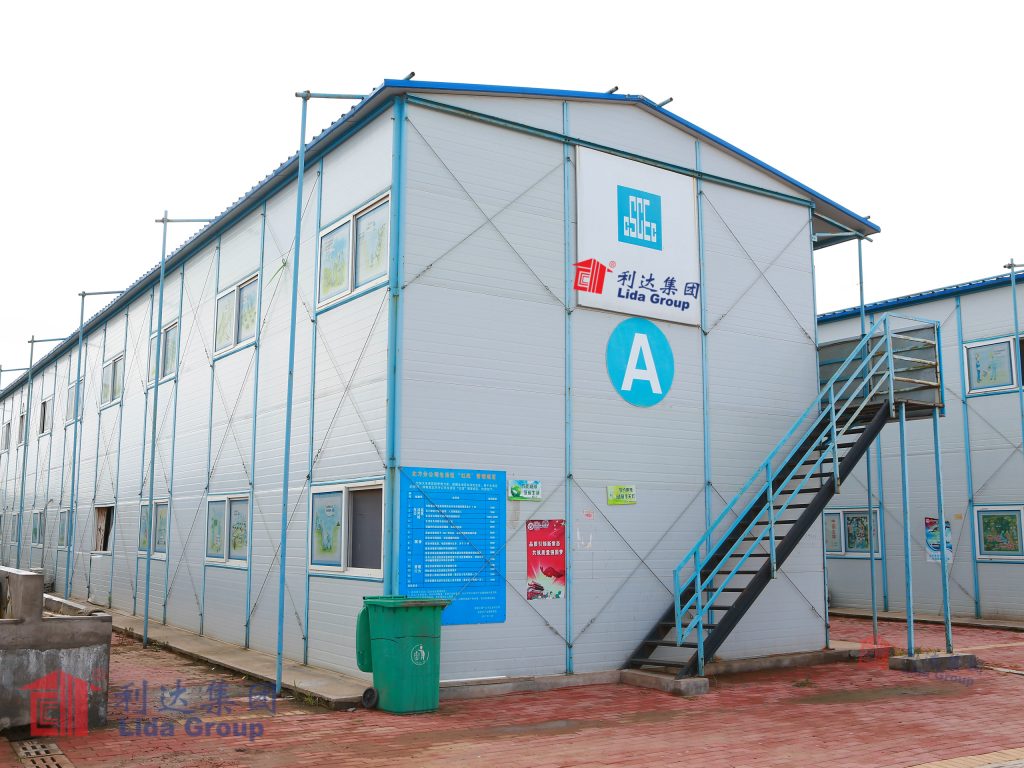
5. Eco-Friendly Performance and Reusable Economic Value
In the context of global green construction and low-carbon environmental protection development, Lida Group’s sandwich panel temporary dormitories have outstanding ecological advantages and full-lifecycle economic benefits, realizing the organic unity of environmental protection, energy saving, and cost reduction.
5.1 Full-Lifecycle Green and Low-Carbon Environmental Protection
All core materials of Lida’s sandwich panel dormitories are environmentally friendly, non-toxic, and pollution-free, with zero formaldehyde emission and no harmful gas volatilization, meeting international indoor environmental quality standards. The factory integrated production mode reduces resource waste and carbon emissions in the construction process by more than 40% compared with traditional on-site construction. The dry assembly construction produces almost no construction waste, dust, and sewage, realizing green and civilized construction.
In the long-term use stage, the high-efficiency thermal insulation performance of sandwich panels reduces building energy consumption such as air conditioning and heating, realizing daily energy conservation and emission reduction. After the completion of the engineering project, all steel frames and sandwich panel components can be completely disassembled, recycled, and reused, with no construction residue left on the site, realizing zero-pollution site restoration. This recyclable green building mode completely solves the problem of serious resource waste and environmental damage caused by one-time use of traditional temporary buildings.
5.2 Reusable Design Reduces Project Comprehensive Costs
Lida Group’s sandwich panel dormitories adopt detachable modular design, with strong component compatibility and high reusability. After disassembly, all components will not have structural performance attenuation and appearance damage, and can be directly transported to other engineering projects for secondary assembly and use. The repeated utilization rate of products can reach more than 90%, which greatly saves the repeated construction investment of temporary supporting facilities for enterprises.
Compared with traditional temporary dormitories that are discarded after single use and require repeated investment in reconstruction, Lida’s reusable sandwich panel dormitories can reduce the comprehensive construction cost of project temporary facilities by 30% to 50%. Combined with ultra-low later maintenance costs and long service life, the product has extremely high full-lifecycle cost performance, bringing significant economic benefits and resource-saving value to construction enterprises.
6. Diversified Application Scenarios and Market Advantages
With the dual advantages of high efficiency and high safety, Lida Group’s newly available sandwich panel temporary worker dormitories have ultra-wide market adaptability and can be widely used in various engineering construction and temporary resettlement scenarios. In infrastructure construction fields such as highway, railway, bridge, and municipal engineering, the product can quickly build large-scale worker dormitory clusters to meet the centralized accommodation needs of construction teams.
In special engineering scenarios such as oil and gas field development, mining construction, and new energy project construction, the product’s A1-level fireproof performance and extreme weather resistance can perfectly adapt to high-risk and harsh construction environments. In post-disaster emergency resettlement, temporary project construction, and short-term engineering support scenarios, the ultra-fast assembly efficiency and flexible disassembly and transfer advantages can quickly solve temporary housing problems.
In addition, the product can also be matched with temporary offices, canteens, storage rooms, and other supporting facilities to form a complete standardized temporary construction camp, providing one-stop temporary facility solutions for global engineering projects. The comprehensive advantages of safety, efficiency, environmental protection, and economy make it the preferred temporary housing product for modern construction enterprises and engineering management units.

7. Conclusion
In summary, the newly available efficient and safe temporary worker dormitories built with sandwich panel technology from Lida Group represent the advanced development direction of modern modular temporary construction facilities. Breaking through the multiple pain points of traditional temporary dormitories such as poor safety, low construction efficiency, poor living comfort, and serious resource waste, Lida Group relies on high-performance rock wool sandwich panel composite technology and modular prefabricated construction mode to realize comprehensive upgrades in fire safety, structural stability, construction efficiency, living experience, and green environmental protection.
The A1-level fireproof design thoroughly eliminates the fire safety hazards of on-site temporary accommodation, the all-weather stable structure adapts to complex global construction environments, and the factory prefabricated assembly technology greatly shortens the project construction cycle and reduces labor and time costs. At the same time, the product’s reusable green design reduces resource consumption and project comprehensive costs, realizing the perfect integration of construction efficiency, residential safety, economic benefits, and ecological environmental protection.
As a high-quality standardized temporary housing solution, Lida Group’s sandwich panel worker dormitories effectively solve the accommodation guarantee problems of various engineering projects, helping construction enterprises realize standardized, safe, and civilized site management. In the future, Lida Group will continue to optimize sandwich panel technology and modular building design, launch more efficient, safer, and more environmentally friendly temporary building products, and continuously empower the high-quality and green development of the global engineering construction industry.
contact us
- Tel: +86-532-88966982
- Whatsapp: +86-13793209022
- E-mail: sales@lidajituan.com
