



Your Premier Partner for Metal Frame Warehouse Construction
2025-Dec-12 13:59:37
By Admin
In the dynamic landscape of modern logistics, manufacturing, and retail, the demand for efficient, durable, and adaptable warehousing facilities has never been higher. Businesses worldwide are recognizing that their warehouse infrastructure is not merely a storage space but a critical component of operational success—one that directly impacts supply chain efficiency, cost management, and scalability. Among the various construction solutions available, metal frame warehouses have emerged as the gold standard, offering unparalleled advantages in terms of structural performance, construction speed, and long-term value. As your premier partner for metal frame warehouse construction, we combine technical expertise, industry-leading practices, and a client-centric approach to deliver facilities that exceed expectations and drive business growth.
The Rise of Metal Frame Warehouses: Why They Dominate Modern Storage Solutions
The shift toward metal frame construction in warehouse design is not a passing trend but a strategic response to the evolving needs of businesses. Traditional construction materials such as concrete and wood, once the default choices, are increasingly being replaced by steel and aluminum frameworks due to their superior performance across key metrics. To understand why metal frame warehouses have become the preferred option for industry leaders like SF Express, JD.com, and Cainiao , it is essential to examine their core advantages and how they address the limitations of conventional structures.
Unmatched Spatial Efficiency: Maximizing Storage Capacity
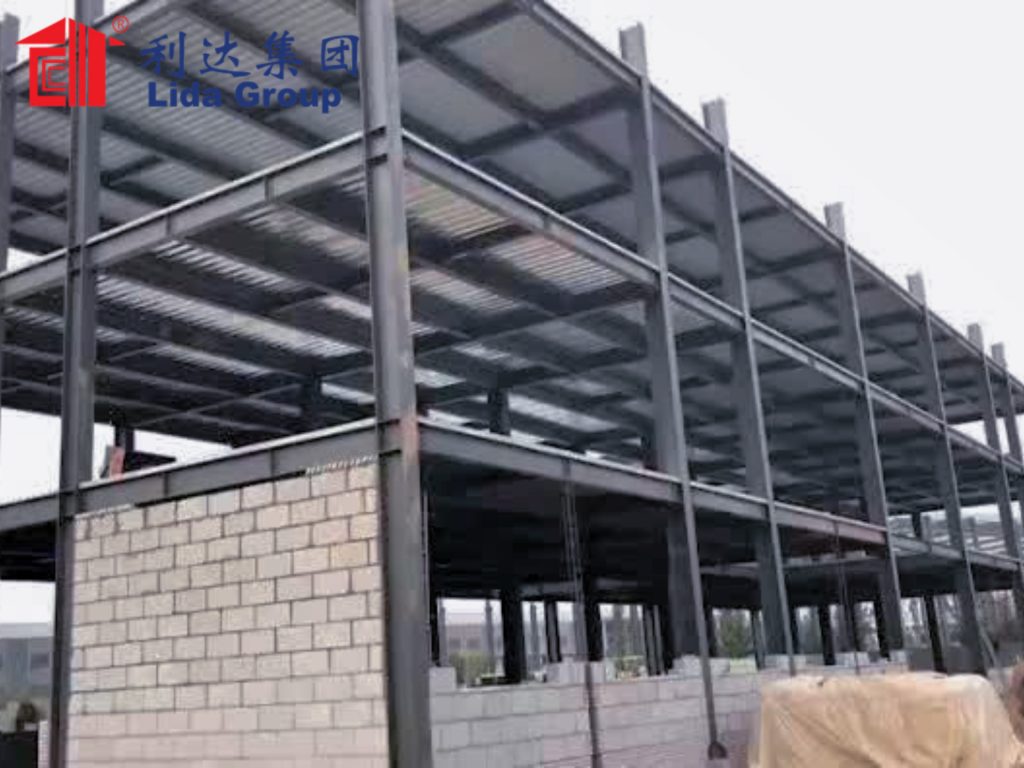
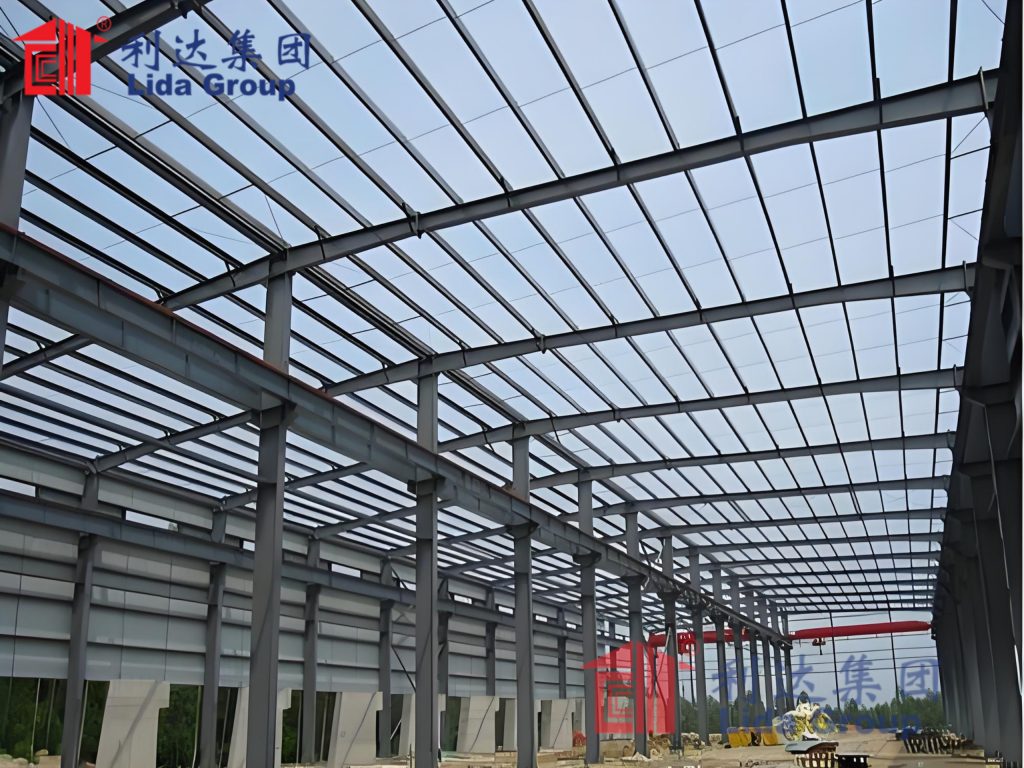
One of the most significant benefits of metal frame warehouses is their ability to create large, unobstructed spans without the need for intermediate columns. Unlike concrete warehouses, which typically require support columns every 8–10 meters , metal frames can achieve clear spans of 30 meters or more—with some designs reaching up to 60 meters . This game-changing feature transforms how businesses utilize their storage space. For a 5,000-square-meter warehouse, the elimination of columns translates to a 15% increase in usable shelf space and a 20% boost in overall storage capacity . For logistics and e-commerce companies, where every square meter counts, this efficiency directly translates to higher inventory turnover, reduced handling costs, and improved order fulfillment rates.
The spatial flexibility of metal frames also supports the integration of modern warehouse technologies. Automated storage and retrieval systems (AS/RS), heavy-duty shelving units, and large-scale forklift operations all require unimpeded movement and high ceiling heights—capabilities that metal frame structures deliver effortlessly. With ceiling heights often exceeding 10 meters , businesses can implement vertical storage solutions, further maximizing their storage density without expanding their footprint. This is particularly valuable in urban areas where land costs are prohibitive, allowing companies to optimize existing real estate rather than investing in new properties.
Accelerated Construction Timelines: Reducing Time-to-Operation
In today’s fast-paced business environment, time is a critical resource. Delays in warehouse construction can result in missed market opportunities, disrupted supply chains, and significant financial losses—especially for seasonal businesses or those experiencing rapid growth. Metal frame warehouses address this challenge by offering drastically shorter construction timelines compared to traditional methods.
The key to this speed lies in the prefabrication of metal components. Steel beams, columns, and roof trusses are manufactured in controlled factory environments to precise specifications, then transported to the construction site for assembly. This off-site production eliminates the need for on-site casting, curing, and extensive manual labor, reducing construction time by 30%–50% . For example, a 1,000-square-meter metal frame warehouse can be completed in just 2–3 months from the arrival of components, whereas a concrete structure of the same size might take 6 months or longer . In one notable case, a cross-border e-commerce client needed to expand their warehouse to meet peak demand during the Double 11 shopping festival. Our metal frame solution was designed, fabricated, and installed in just 60 days, allowing the client to capitalize on the seasonal rush and avoid costly downtime .
The speed of metal frame construction also minimizes disruptions to surrounding operations. Unlike concrete construction, which generates significant noise, dust, and debris, metal frame assembly is a cleaner, quieter process. This makes it an ideal choice for businesses looking to expand existing facilities without interrupting day-to-day operations. Additionally, metal frame construction is less vulnerable to weather delays. Steel components are resistant to rain, snow, and extreme temperatures, ensuring that construction can proceed year-round—even in harsh climates .
Cost-Effectiveness: Delivering Long-Term Value
While the initial cost of steel may be higher than that of concrete, metal frame warehouses offer superior long-term cost benefit when considering the full lifecycle of the facility. This cost advantage stems from several key factors, including lower construction costs, reduced maintenance expenses, and energy efficiency.
In terms of construction costs, metal frame warehouses are often more economical than concrete structures for single-story facilities with spans between 18–36 meters . The prefabrication process reduces material waste to just 10% of that generated by traditional construction methods , while the reduced labor requirements lower overall installation costs. For example, a metal frame warehouse typically requires 40% fewer workers than a concrete structure of the same size , resulting in significant savings on labor and equipment rentals.
Over the long term, metal frame warehouses offer substantial maintenance savings. Steel components are inherently durable and resistant to rot, mold, and insect infestations—common issues that plague wood and concrete structures . When protected with galvanized or fluorocarbon coatings, steel frames can withstand harsh environmental conditions, including high humidity, saltwater exposure, and extreme temperatures, with a lifespan of 50 years or more . This durability translates to minimal maintenance requirements: most metal frame warehouses only require repainting every five years, with an annual maintenance cost of just 0.1% of the initial investment . In contrast, concrete warehouses often require costly repairs to address cracks, water damage, and structural degradation, while wood structures need regular treatments to prevent rot and pest infestations.
Energy efficiency is another key driver of cost savings for metal frame warehouses. Modern metal frame designs incorporate advanced insulation materials, such as centrifugal glass wool and EPS sandwich panels, which reduce heat transfer and improve thermal performance . When combined with strategic window placement, skylights, and LED lighting systems, these features can reduce energy consumption by up to 20% compared to traditional warehouses . For 冷库 facilities, which require constant cooling, metal frame structures offer even greater energy savings—up to 15%–20% more efficient than concrete cold storage . Additionally, many insurance companies offer reduced premiums for metal frame warehouses due to their fire resistance and structural stability, further lowering operational costs.
Flexibility and Adaptability: Supporting Business Growth
In today’s rapidly changing market, businesses need warehouse facilities that can adapt to evolving needs. Whether expanding storage capacity, reconfiguring internal layouts, or repurposing the space for new uses, metal frame warehouses offer unmatched flexibility compared to traditional structures.
The modular design of metal frame warehouses makes expansions and modifications straightforward. Unlike concrete structures, which are difficult to alter without significant demolition, metal frames can be easily extended by adding new bays or sections to the existing structure . This allows businesses to scale their storage capacity incrementally as demand grows, avoiding the need for costly and time-consuming new construction. For example, an e-commerce company that initially built a 5,000-square-meter metal frame warehouse was able to expand by 2,000 square meters in just one month, with minimal disruption to ongoing operations .
Metal frame warehouses also support flexible internal reconfigurations. The absence of intermediate columns allows businesses to rearrange shelving, install new equipment, or rezone the space to accommodate changing storage needs. This is particularly valuable for industries with dynamic inventory requirements, such as retail, manufacturing, and logistics. For instance, a warehouse used for general storage can be quickly converted into a cold storage facility by adding insulation and refrigeration systems , or reconfigured to support automated sorting lines as order volumes increase . The ability to adapt the space without major structural modifications ensures that businesses can respond quickly to market changes and maintain operational efficiency.
Sustainability: Building for a Greener Future
As environmental concerns become increasingly central to business strategy, sustainability has emerged as a key consideration in warehouse construction. Metal frame warehouses are inherently more sustainable than traditional structures, offering significant environmental benefits throughout their lifecycle.
One of the most notable sustainability features of metal frame warehouses is the recyclability of steel. Steel is 100% recyclable, with a recycling rate exceeding 90%—far higher than concrete (less than 30%) or wood (which has limited recyclable value) . This means that at the end of the warehouse’s lifecycle, the steel components can be recycled and repurposed, reducing waste and minimizing the environmental impact. Additionally, the use of recycled steel in the manufacturing process further reduces carbon emissions. Many steel producers now use recycled scrap metal to manufacture new steel, which requires 74% less energy than producing steel from raw materials .
Metal frame construction also minimizes environmental impact during the building process. The prefabrication of components reduces on-site waste, while the efficient use of materials ensures that resources are not wasted . Additionally, metal frame construction generates less noise and dust pollution than traditional methods, making it a more environmentally friendly choice for urban and suburban areas .
Once operational, metal frame warehouses can be further optimized for sustainability through the integration of green technologies. Solar panels can be installed on the roof to generate renewable energy, while rainwater harvesting systems can collect and store water for non-potable uses such as irrigation and cleaning . Advanced HVAC systems and energy-efficient lighting further reduce the warehouse’s carbon footprint, helping businesses meet their sustainability goals and improve their brand reputation.
Our Comprehensive Approach to Metal Frame Warehouse Construction
As your premier partner for metal frame warehouse construction, we understand that every business has unique needs and challenges. That’s why we take a comprehensive, end-to-end approach to every project, from initial consultation and design to construction, installation, and post-completion support. Our goal is to deliver a warehouse facility that not only meets your current requirements but also supports your long-term growth and success.
1. Consultation and Needs Assessment
The foundation of any successful warehouse project is a clear understanding of the client’s needs. We begin every engagement with a detailed consultation, where our team of experts works closely with you to identify your specific requirements, including storage capacity, load-bearing needs, operational workflows, and future expansion plans. We also conduct a thorough analysis of your industry, market trends, and regulatory requirements to ensure that the warehouse design is compliant and optimized for your unique operating environment.
During the needs assessment phase, we consider a range of factors, including:
- The type and volume of goods to be stored (e.g., heavy machinery, palleted goods, perishables)
- Required load-bearing capacity (static loads from shelving and inventory, dynamic loads from forklifts and equipment)
- Operational workflows (e.g., loading/unloading processes, order picking routes, automation integration)
- Environmental conditions (e.g., climate, seismic activity, wind and snow loads)
- Regulatory compliance (e.g., building codes, fire safety standards, environmental regulations)
- Budget and timeline constraints
By taking the time to understand your business and its needs, we can develop a customized solution that aligns with your goals and delivers maximum value.
2. Design and Engineering
Once we have a clear understanding of your requirements, our team of experienced engineers and designers develops a comprehensive warehouse design that balances functionality, efficiency, and sustainability. We use advanced 3D modeling and structural analysis software to ensure that the design is technically sound, cost-effective, and optimized for performance.
Key aspects of our design process include:
- Structural Design: We select the appropriate metal frame system (e.g., prefabricated steel, heavy-duty steel, cold-formed thin-walled steel) based on your load-bearing needs and span requirements . Our engineers conduct detailed structural analyses to ensure that the frame can withstand static and dynamic loads, as well as environmental factors such as wind, snow, and seismic activity . We use high-quality steel grades such as Q235 and Q355B, which offer excellent strength and durability .
- Spatial Planning: We optimize the warehouse layout to maximize storage capacity and operational efficiency. This includes designing clear pathways for forklifts and equipment, strategically placing shelving and storage systems, and integrating office spaces, mezzanines, and loading docks where needed . We also consider factors such as ceiling height, column spacing, and door placement to ensure that the space is flexible and adaptable .
- Envelope Design: We select high-performance Enclosure materials to improve energy efficiency, weather resistance, and durability. This includes options such as insulated sandwich panels, standing-seam metal roofing, and energy-efficient windows . We also incorporate features such as rainwater harvesting systems, solar panels, and natural ventilation to enhance sustainability .
- Safety and Compliance: We design the warehouse to meet all relevant building codes and safety standards, including fire safety, seismic resistance, and occupational health requirements . This includes installing fire suppression systems, emergency lighting, and proper ventilation, as well as ensuring that the structure meets load-bearing and stability requirements .
Throughout the design process, we maintain open communication with you, providing regular updates and incorporating your feedback to ensure that the final design meets your expectations.
3. Material Sourcing and Quality Control
The quality of materials used in metal frame warehouse construction directly impacts the structure’s durability, performance, and longevity. That’s why we source only the highest-quality materials from trusted suppliers and implement rigorous quality control measures to ensure that every component meets our strict standards.
Our material sourcing and quality control process includes:
- Steel Selection: We use high-grade steel that meets international standards for strength, durability, and corrosion resistance . All steel components are tested for mechanical properties such as tensile strength and yield strength to ensure that they can withstand the required loads .
- Coatings and Treatments: We apply protective coatings such as galvanization or fluorocarbon paint to steel components to prevent corrosion and extend their lifespan . These coatings are tested for adhesion, thickness, and resistance to environmental factors such as UV radiation and moisture .
- Enclosure Materials: We select enclosure materials such as insulated panels and roofing systems based on their thermal performance, weather resistance, and fire safety ratings . All materials are inspected for quality upon arrival at the construction site to ensure that they meet design specifications .
- Fasteners and Connections: We use high-strength bolts, screws, and other fasteners that are designed to withstand the loads and stresses of the structure . These fasteners are tested for torque, shear strength, and corrosion resistance to ensure that they provide a secure and durable connection .
By maintaining strict quality control over materials, we ensure that your metal frame warehouse is built to last and perform reliably for decades.
4. Construction and Installation
Our construction and installation process is designed to be efficient, safe, and minimally disruptive to your operations. We use a team of experienced, certified professionals who are trained in the latest metal frame construction techniques and safety protocols.
Key aspects of our construction and installation process include:
- Site Preparation: We begin by preparing the construction site, which includes clearing and grading the land, excavating for foundations, and installing drainage systems . We ensure that the site is level and stable, with a compaction coefficient of at least 0.93 to support the structure .
- Foundation Construction: We construct foundations that are tailored to the soil conditions and structural requirements of the warehouse . This may include shallow foundations such as spread footings for stable soil or deep foundations such as piles for soft or unstable soil . All foundations are reinforced with steel to ensure that they can support the weight of the metal frame and the stored goods .
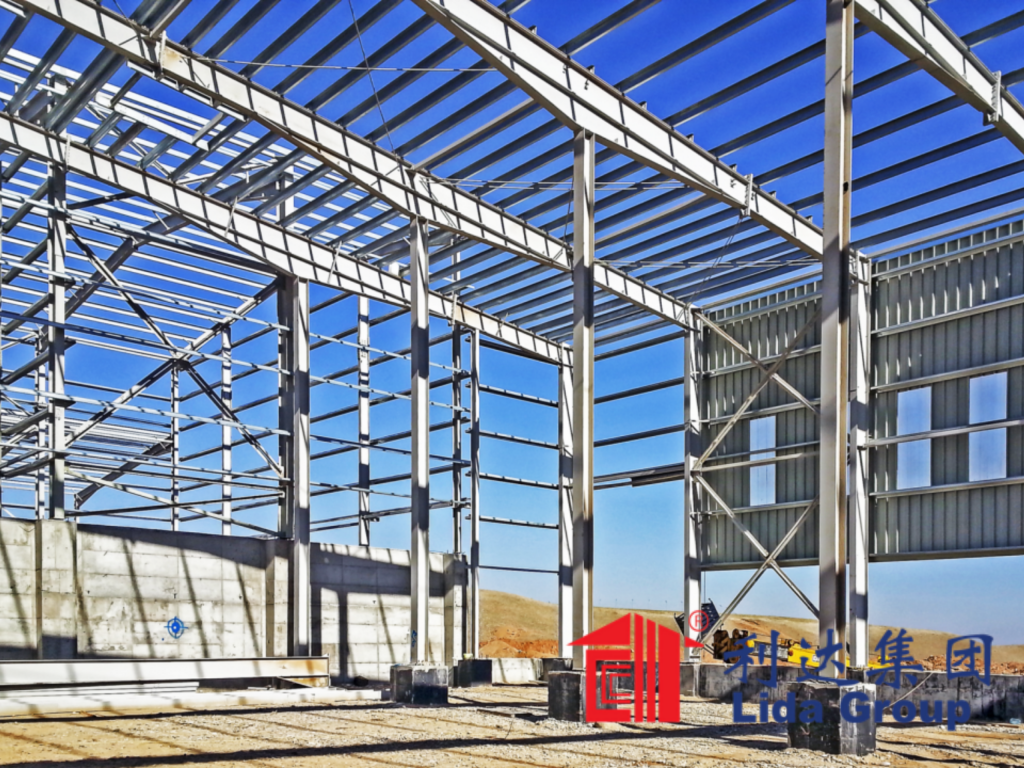
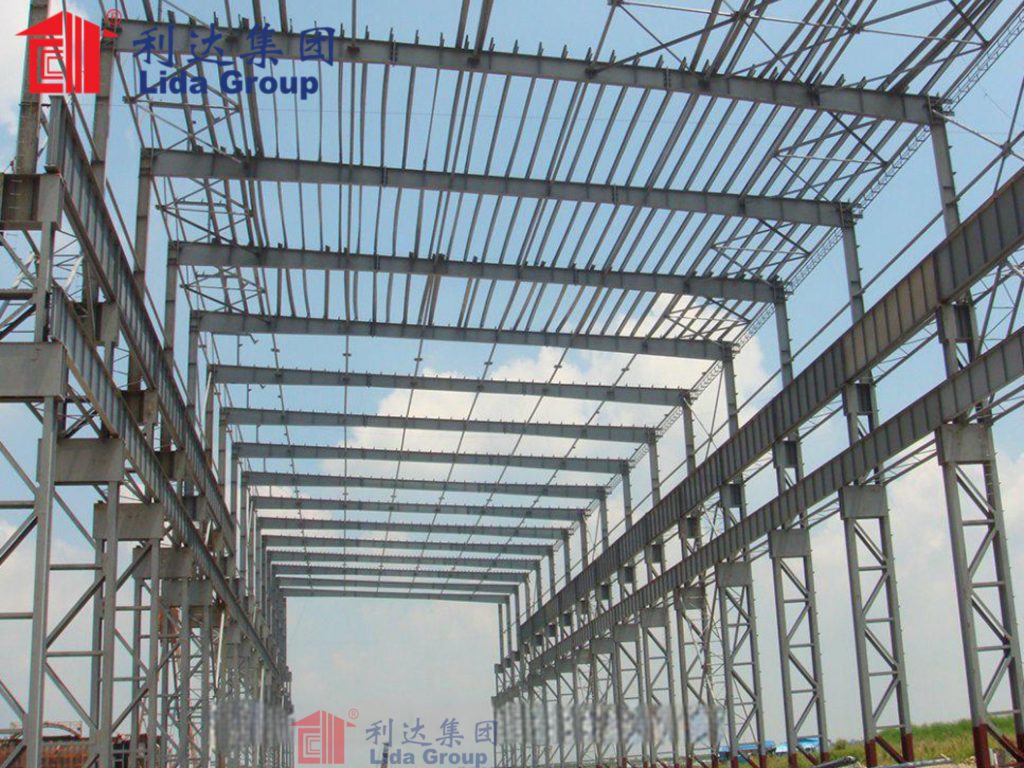
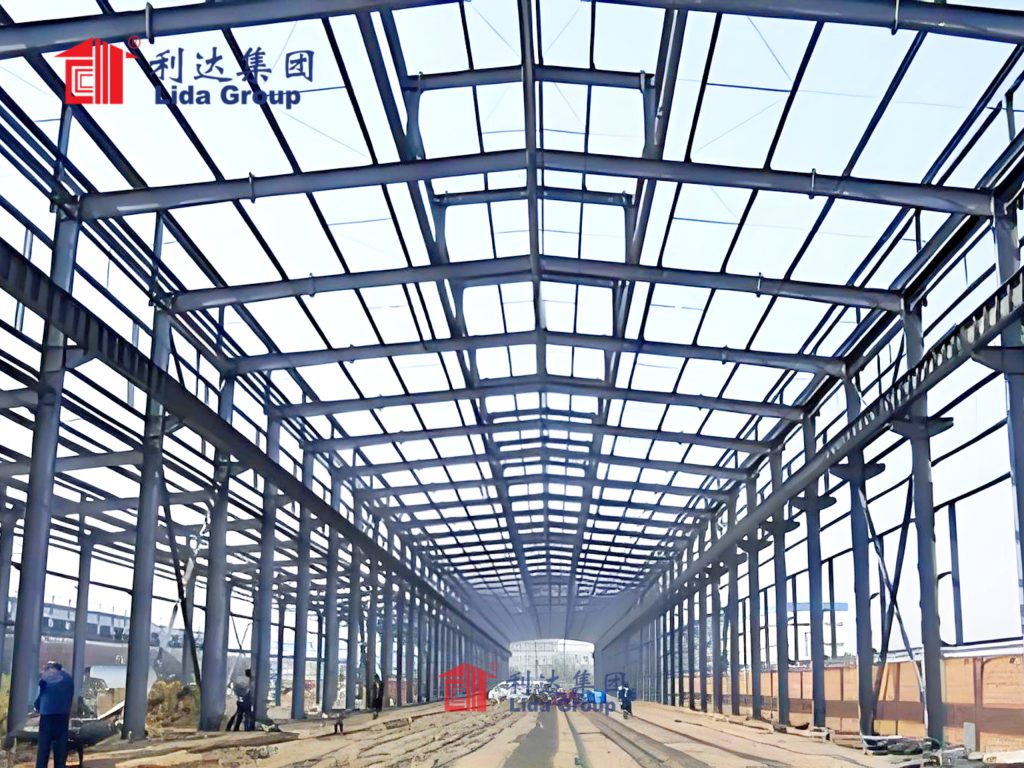
- Steel Frame Assembly: The steel frame is assembled on-site using prefabricated components. Our team uses cranes and other specialized equipment to lift and position the beams, columns, and trusses, ensuring that they are aligned correctly and securely fastened . We follow a strict assembly sequence to maintain structural stability during construction, typically starting with the columns and then installing the beams and roof trusses .
- Enclosure Installation: Once the steel frame is in place, we install the enclosure systems, including walls, roofing, and windows . We ensure that all joints and seams are properly sealed to prevent water infiltration and improve energy efficiency .
- Finishing Work: We complete the interior and exterior finishing work, including installing flooring, lighting, HVAC systems, and fire suppression systems . We also conduct a thorough cleaning of the site and remove any construction debris .
Throughout the construction process, we maintain strict safety standards to protect our workers, your property, and the surrounding environment. We conduct regular safety inspections and provide ongoing training to our team to ensure that all work is performed in compliance with safety regulations .
5. Quality Assurance and Testing
Before handing over the completed warehouse to you, we conduct a comprehensive quality assurance and testing process to ensure that the structure meets all design specifications and performance requirements. Our testing includes:
- Structural Testing: We perform load tests to verify that the steel frame can withstand the required static and dynamic loads . We also inspect the connections and fasteners to ensure that they are secure and functioning properly .
- Weather Resistance Testing: We test the enclosure systems for water tightness and resistance to wind and other environmental factors . This includes conducting water spray tests on the roof and walls to check for leaks .
- Energy Efficiency Testing: We measure the thermal performance of the warehouse to ensure that it meets the designed energy efficiency standards . This may include testing the insulation levels and air tightness of the building envelope .
- Safety Systems Testing: We test all safety systems, including fire suppression systems, emergency lighting, and alarm systems, to ensure that they are functioning properly .
If any issues are identified during testing, we address them promptly to ensure that the warehouse meets our high standards of quality and performance.
6. Post-Completion Support and Maintenance
Our commitment to your success doesn’t end with the completion of construction. We provide comprehensive post-completion support and maintenance services to ensure that your metal frame warehouse continues to perform optimally for years to come.
Our post-completion services include:
- Training: We provide training to your team on the proper operation and maintenance of the warehouse, including how to inspect the structure, maintain equipment, and address minor issues .
- Warranty Coverage: We offer a comprehensive warranty on all materials and workmanship, giving you peace of mind that your investment is protected .
- Preventive Maintenance: We offer preventive maintenance programs to help you keep your warehouse in top condition. This includes regular inspections, cleaning, and minor repairs to prevent small issues from becoming major problems .
- Emergency Repairs: In the event of unexpected damage or issues, we provide 24/7 emergency repair services to minimize downtime and ensure that your operations can resume as quickly as possible .
By providing ongoing support and maintenance, we help you maximize the lifespan of your metal frame warehouse and protect your investment.
Case Studies: Success Stories of Our Metal Frame Warehouse Projects
To demonstrate the value of our metal frame warehouse construction services, we’ve compiled a selection of case studies highlighting successful projects for clients across various industries. These case studies showcase our ability to deliver customized solutions that address unique challenges and drive business success.
Case Study 1: E-Commerce Fulfillment Center Expansion
Client: A leading cross-border e-commerce company specializing in consumer electronics.
Challenge: The client needed to expand their existing warehouse to meet growing demand during the peak holiday season. They required a 3,000-square-meter addition that could be completed in just 60 days to avoid missing the critical shopping period. Additionally, the new warehouse needed to integrate with their existing automated storage and retrieval system (AS/RS) and support high-density shelving.
Solution: We designed and constructed a prefabricated steel frame warehouse with a 30-meter clear span to maximize storage space. The modular design allowed for quick assembly, and we coordinated closely with the client’s team to ensure that the new warehouse integrated seamlessly with their existing operations. We also incorporated high-strength steel components to support the AS/RS and heavy shelving, and installed energy-efficient lighting and insulation to reduce operational costs.
Result: The warehouse was completed on time, within budget, and successfully supported the client’s peak season operations. The additional storage space allowed the client to increase their inventory capacity by 40%, resulting in a 25% increase in order fulfillment rates. The energy-efficient design reduced the client’s monthly utility costs by 18%, and the flexible layout has allowed them to reconfigure the space as their product mix has changed.
Case Study 2: Cold Storage Facility for Food Distribution
Client: A regional food distribution company specializing in fresh produce and frozen foods.
Challenge: The client needed a new cold storage facility to expand their distribution network. The facility needed to maintain temperatures between -20°C and 4°C, support heavy-duty refrigeration equipment, and have a lifespan of at least 50 years. Additionally, the client wanted the facility to be energy-efficient to reduce operating costs.
Solution: We designed a heavy-duty steel frame warehouse with insulated sandwich panels and a standing-seam metal roof to minimize heat transfer. The steel frame was engineered to support the weight of the refrigeration equipment and the stored goods, and we incorporated a rainwater harvesting system to reduce water usage. We also installed energy-efficient HVAC systems and LED lighting to further reduce energy consumption.
Result: The cold storage facility meets all the client’s temperature requirements and has a storage capacity of 5,000 pallets. The energy-efficient design has reduced the client’s monthly utility costs by 22% compared to their existing facility, and the durable steel frame has required minimal maintenance over the first five years of operation. The client has since expanded the facility by an additional 2,000 square meters using our modular expansion solution, with no disruption to ongoing operations.
Case Study 3: Manufacturing Warehouse for Automotive Parts
Client: An automotive parts manufacturer with a production facility in a seismically active region.
Challenge: The client needed a new warehouse to store raw materials and finished products. The warehouse needed to be seismically resistant, support heavy-duty shelving and forklift traffic, and have a flexible layout that could be reconfigured as production needs changed. Additionally, the client wanted the warehouse to be environmentally friendly to align with their sustainability goals.
Solution: We designed a steel frame warehouse with a seismic-resistant structure that meets local building codes for earthquake safety. The frame was engineered to withstand dynamic loads from forklifts and heavy shelving, and we incorporated a modular design that allows for easy reconfiguration. We used recycled steel for the frame components and installed solar panels on the roof to generate renewable energy. We also incorporated natural ventilation and daylighting to reduce energy usage.
Result: The warehouse has successfully withstood several minor earthquakes with no structural damage. The flexible layout has allowed the client to reconfigure the space three times over the past five years to accommodate changes in production, and the solar panels generate 15% of the warehouse’s energy needs. The use of recycled steel and other sustainable materials has helped the client achieve their sustainability goals and improve their brand reputation.
Why Choose Us as Your Metal Frame Warehouse Construction Partner
In a crowded market of construction companies, what sets us apart as your premier partner for metal frame warehouse construction? Here are the key reasons why businesses across industries trust us with their most critical warehouse projects:
1. Expertise and Experience
With over 20 years of experience in metal frame construction, we have the technical expertise and industry knowledge to deliver successful projects of all sizes and complexities. Our team of engineers, designers, and construction professionals has worked on hundreds of warehouse projects across various industries, giving us a deep understanding of the unique challenges and requirements of each sector. We stay up-to-date with the latest industry trends, technologies, and building codes to ensure that our solutions are always at the cutting edge.
2. Client-Centric Approach
We believe that every client is unique, and we tailor our services to meet your specific needs and goals. From the initial consultation to post-completion support, we work closely with you to ensure that your voice is heard and that the final product meets your expectations. We take the time to understand your business, your operations, and your long-term plans, and we use this information to develop a customized solution that delivers maximum value.
3. Quality and Reliability
We are committed to delivering the highest quality products and services. We use only the best materials from trusted suppliers, and we implement rigorous quality control measures throughout the design, construction, and testing process. Our team of certified professionals is dedicated to ensuring that every project is completed on time, within budget, and to the highest standards of quality and safety.
4. Innovation and Sustainability
We are constantly innovating to improve our solutions and deliver greater value to our clients. We invest in research and development to stay ahead of industry trends, and we incorporate the latest technologies and sustainable practices into our projects. Whether it’s using recycled materials, implementing energy-efficient designs, or developing modular expansion solutions, we are committed to helping our clients build warehouses that are both environmentally friendly and economically viable.
5. Comprehensive Services
We offer a full range of services, from initial consultation and design to construction, installation, and post-completion support. This end-to-end approach ensures that every aspect of your project is managed by a single team, reducing communication gaps and ensuring a seamless process. We handle all the details, from obtaining permits and approvals to coordinating with subcontractors, so you can focus on running your business.

Conclusion
In today’s fast-paced business environment, a well-designed, efficient warehouse is a critical asset for success. Metal frame warehouses offer unparalleled advantages in terms of spatial efficiency, construction speed, cost-effectiveness, flexibility, and sustainability, making them the ideal choice for businesses across industries. As your premier partner for metal frame warehouse construction, we combine technical expertise, industry-leading practices, and a client-centric approach to deliver facilities that exceed expectations and drive business growth.
From the initial consultation and design to construction, installation, and post-completion support, we are committed to delivering a seamless, stress-free experience for our clients. Our team of experts works closely with you to understand your unique needs and develop a customized solution that meets your goals and budget. We use only the highest-quality materials and implement rigorous quality control measures to ensure that your warehouse is built to last and perform reliably for decades.
Whether you need a small storage facility for your growing business or a large-scale distribution center for a multinational corporation, we have the expertise and experience to deliver the perfect solution. Contact us today to learn more about our metal frame warehouse construction services and how we can help you build a warehouse that supports your long-term success.
Related news
-
Lida Group Excels in Cost-Effective Durable Construction
2025-12-11 16:13:46
-
Innovative Steel Structure Building Designs for Modern Needs.
2025-12-11 17:33:06
-
Optimize Space with a Metal Frame Warehouse/Workshop
2025-12-11 15:18:17
contact us
- Tel: +86-532-88966982
- Whatsapp: +86-13793209022
- E-mail: sales@lidajituan.com
