



**Introduction**
Remote construction sites present some of the most demanding challenges in the building industry. Located far from supply chains, infrastructure, and support services, these projects require solutions that are not only functional but also self-sufficient, durable, and increasingly—environmentally responsible. The traditional approach to workforce housing in remote locations has often involved energy-intensive materials, wasteful construction practices, and structures ill-suited to the extreme climates that characterize many resource extraction and infrastructure development sites.
In response to these challenges, Lida Group has developed the sustainable eco-friendly sandwich panel house—a building system engineered specifically for remote construction site applications. Combining advanced material science with precision manufacturing, these structures deliver exceptional thermal performance, rapid deployment capabilities, and comprehensive sustainability features that dramatically reduce environmental impact while providing comfortable, durable accommodation for workforces operating in the world’s most isolated locations.
This article explores the comprehensive features and benefits of Lida Group’s sustainable eco-friendly sandwich panel house for remote construction sites. We will examine the material composition and environmental advantages of modern sandwich panels, the energy efficiency strategies that reduce operational carbon, the self-sufficiency features that enable off-grid operation, the manufacturing processes that minimize waste, the real-world projects that validate this approach, and the economic case for sustainable remote workforce housing. By the conclusion, it will be evident that the sandwich panel house represents the definitive solution for sustainable accommodation in remote construction environments.
**Chapter 1: The Unique Challenges of Remote Construction Sites**
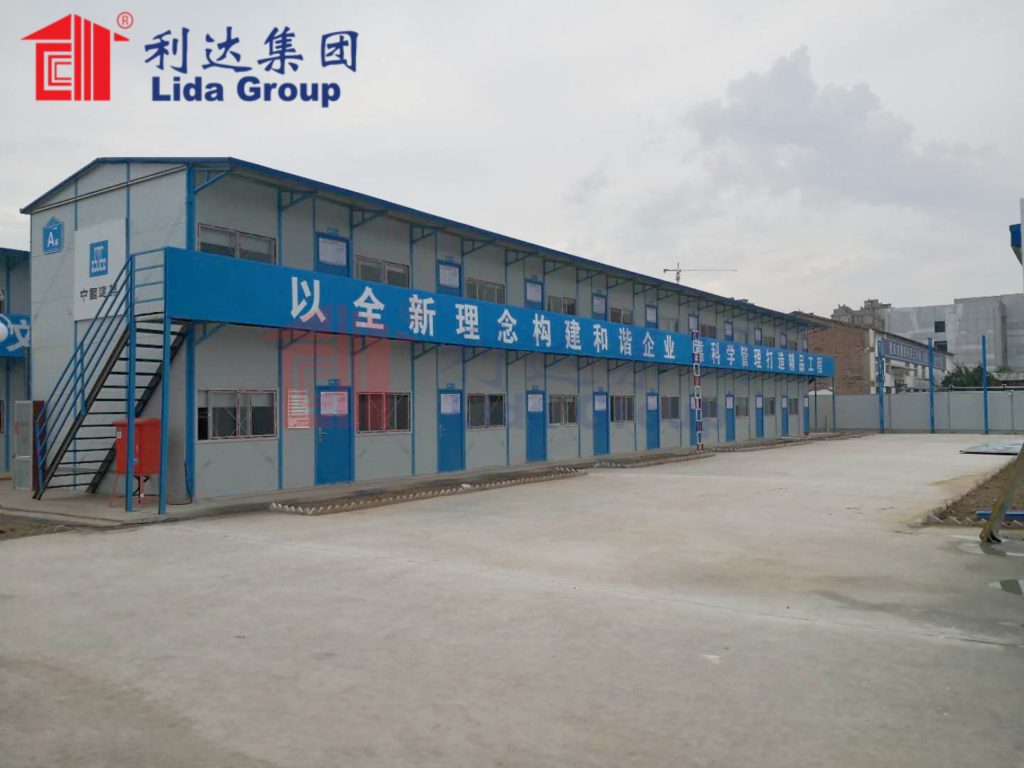
Remote construction sites differ fundamentally from urban or suburban projects in ways that profoundly impact workforce accommodation requirements.
**1.1 Logistical Isolation**
Remote sites are characterized by extreme logistical challenges. Access roads may be unpaved or seasonal, ports may be rudimentary, and local supply chains may be nonexistent. Every material, every piece of equipment, and every worker must be transported over long distances, often at significant cost and with extended lead times. For construction projects in the Arctic, desert, or jungle environments, the logistical complexity multiplies.
**1.2 Extreme Environmental Conditions**
Remote construction sites are frequently located in regions with harsh climates. Arctic projects face winter temperatures below -40°C, permafrost conditions, and months of darkness. Desert projects contend with summer temperatures exceeding 45°C, intense solar radiation, and dust storms. Tropical projects encounter persistent rainfall, humidity levels approaching 100%, and corrosive salt spray in coastal areas. Accommodation must perform reliably across this full spectrum.
**1.3 Energy and Water Scarcity**
Remote sites often lack connection to grid power or municipal water supplies. Workforce accommodation must generate its own electricity, typically via diesel generators, and source water from wells, rainwater, or trucked-in supplies. Energy and water are precious resources—their cost and availability directly impact project economics and environmental footprint.
**1.4 Waste Management Constraints**
Waste disposal in remote locations is challenging. Landfills may be distant, recycling infrastructure may be absent, and environmental regulations may impose strict requirements. Construction methods that generate significant waste or produce hard-to-manage refuse create operational burdens.
**1.5 Workforce Retention**
Skilled workers in remote locations have choices about where to work. Accommodation that is uncomfortable, poorly maintained, or environmentally degraded leads to high turnover, safety incidents, and reduced productivity. In the competitive market for skilled labor, quality housing is a critical recruitment and retention tool.
**Chapter 2: Sandwich Panel Technology—The Sustainable Core**
At the heart of Lida Group’s sustainable remote site accommodation is advanced sandwich panel technology—a sophisticated composite material engineered for exceptional thermal performance, structural integrity, and environmental responsibility.
**2.1 Composition and Structure**
A sandwich panel consists of three layers: two outer steel skins bonded to a lightweight insulation core. This combination creates a structure with exceptional strength-to-weight ratio and superior thermal insulation properties.
The sandwich panels used in Lida’s remote site accommodation feature:
– **External facing:** High-quality aluminum-zinc coated steel sheet (0.4-0.6mm thickness) with corrosion-resistant and UV-stable finishes. The aluminum-zinc coating provides superior corrosion protection compared to standard galvanized steel—essential for coastal or high-humidity environments common to many remote sites.
– **Core material:** Rigid insulation with high R-value per unit thickness. Options include expanded polystyrene (EPS), polyurethane (PUR), polyisocyanurate (PIR), and mineral wool, each selected based on climate conditions and performance requirements.
– **Internal facing:** Smooth finished steel sheet (0.4-0.5mm thickness) that provides a clean, durable interior surface requiring minimal maintenance.
**2.2 Environmentally Preferred Core Materials**
The choice of core material significantly influences the environmental profile of sandwich panels:
– **Expanded Polystyrene (EPS):** EPS contains no chlorofluorocarbons (CFCs) or hydrochlorofluorocarbons (HCFCs), which harm the ozone layer. It is 100% recyclable and can be reprocessed into new insulation products. EPS panels achieve thermal conductivity values of 0.033-0.038 W/(m·K).
– **Mineral Wool:** Made from natural stone or recycled slag, mineral wool offers superior fire resistance and acoustic performance. It contains no blowing agents with global warming potential and can incorporate up to 40% recycled content. Mineral wool is inert, does not emit volatile organic compounds (VOCs), and is fully recyclable.
– **Polyurethane (PUR) and Polyisocyanurate (PIR):** These materials offer the highest thermal efficiency, with conductivity values as low as 0.022 W/(m·K). Modern formulations use hydrocarbon blowing agents with minimal global warming potential.
**2.3 Thermal Performance Specifications**
The thermal performance of sandwich panels is measured by their thermal transmittance (U-value). Lida’s sandwich panels achieve:
– **Wall panels:** U-values of 0.25-0.35 W/(m²·K) with 75-100mm core thickness
– **Roof panels:** U-values of 0.20-0.30 W/(m²·K) with 100-150mm core thickness
For context, a typical timber-framed wall with fiberglass batt insulation achieves U-values of approximately 0.50-0.60 W/(m²·K). The sandwich panel provides 50-60% better thermal performance with the same wall thickness.
**2.4 Thermal Bridging Elimination**
Thermal bridging occurs when structural elements penetrate the insulation layer, creating pathways for heat to bypass insulation. In traditional construction, wood or steel studs create thermal bridges that can reduce effective insulation performance by 20-30%. Sandwich panels eliminate thermal bridges entirely—the continuous insulation core extends uninterrupted across the entire wall or roof surface.
**2.5 Airtightness**
Factory manufacturing enables precision panel joints with engineered interlocking profiles that, combined with EPDM gaskets and sealants, create an exceptionally airtight building envelope. Testing has demonstrated airtightness levels of 0.23 ACH@50Pa—well below the Passivhaus standard requirement of 0.6 ACH@50Pa. This airtightness dramatically reduces uncontrolled air leakage, the primary source of energy waste in remote camp operations.
**Chapter 3: Energy Efficiency—Reducing Operational Carbon**
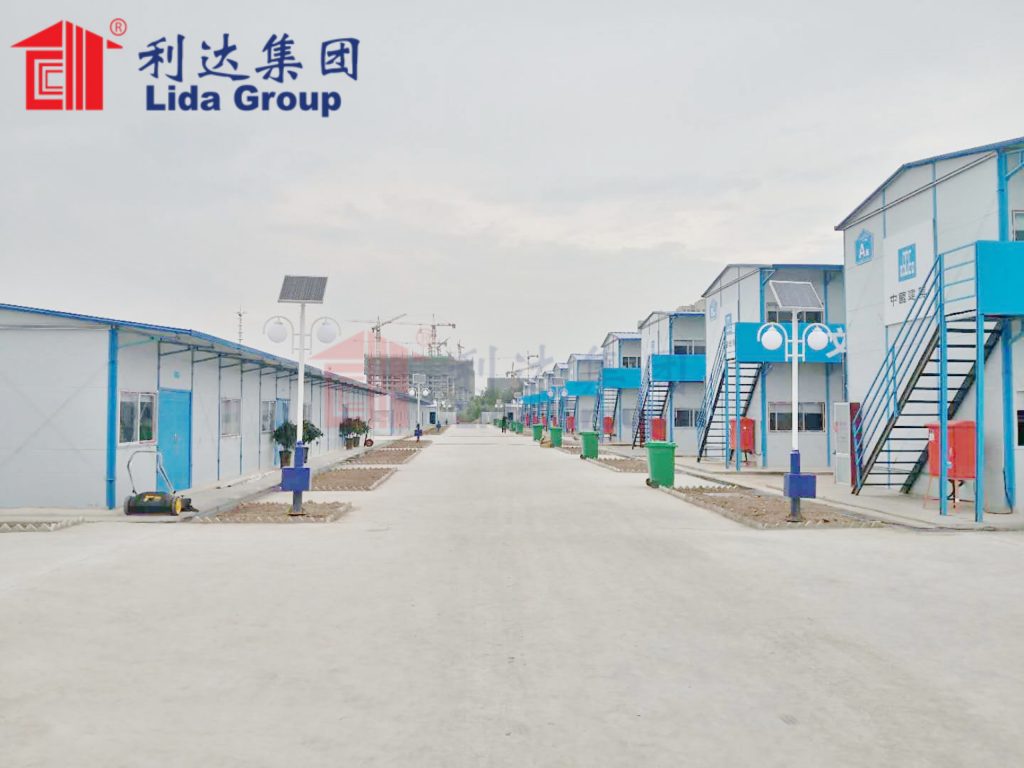
For remote construction sites reliant on diesel generators, energy efficiency is not merely an environmental consideration but a direct operational cost driver.
**3.1 Measured Energy Savings**
The combination of superior insulation, elimination of thermal bridges, and airtight construction delivers substantial energy savings. Field studies of sandwich panel workforce housing in remote locations demonstrate:
– **Heating energy consumption:** 50-65% reduction compared to traditional construction
– **Cooling energy consumption:** 35-50% reduction in hot climates
– **Overall HVAC energy:** 45-55% reduction across mixed climates
For a 200-person remote construction camp operating in a cold climate, this translates to annual diesel fuel savings of 300,000-500,000 liters and CO₂ emissions reduction of 800-1,300 metric tons annually.
**3.2 Solar-Ready Design**
Sandwich panel roofs are designed for integration with photovoltaic systems:
– Pre-engineered attachment points for solar panel mounting
– Concealed conduits for wiring
– Structural capacity for additional roof loads
– Optional integrated PV panels that replace conventional roof cladding
In remote sites with high solar insolation, these systems can reduce or eliminate diesel generator runtime, further reducing fuel consumption, emissions, and operational costs.
**3.3 Passive Solar Design**
For remote sites in cold climates, Lida’s sandwich panel houses can incorporate passive solar design features:
– Optimized window placement and sizing for solar gain
– Thermal mass within the panel structure to store daytime heat
– Overhangs and shading devices to prevent overheating in summer
**Chapter 4: Self-Sufficiency—Off-Grid Capability**
Remote construction sites require accommodation that can operate independently of external infrastructure. Lida’s sandwich panel houses are designed for self-sufficiency.
**4.1 Integrated Power Systems**
The electrical systems in Lida’s sandwich panel houses are designed for off-grid operation:
– Solar-ready distribution panels with pre-wired connections
– Battery storage capacity for 24-72 hours of operation
– Generator integration with automatic transfer switches
– Load management systems prioritizing critical circuits
For the West Africa market complex, Lida integrated solar photovoltaic systems producing up to 1.2 MW daily, significantly reducing reliance on diesel generation.
**4.2 Water Management**
Water scarcity is a common challenge at remote sites. Lida’s solutions incorporate comprehensive water management:
– **Rainwater harvesting:** Roof surfaces collect water for storage and treatment
– **On-site storage:** Tanks sized for extended periods without resupply
– **Filtration and treatment:** Multi-stage systems ensuring water quality
– **Greywater recycling:** Treatment of wastewater from sinks and showers for reuse in flushing and landscaping
These systems can reduce freshwater demand by 40-60%, a critical advantage in arid regions.
**4.3 Waste Management**
Remote sites often lack access to municipal waste services. Lida’s camps incorporate on-site waste management solutions:
– **Recycling stations:** Segregated collection for recyclable materials
– **Composting systems:** Processing of organic waste
– **Wastewater treatment:** On-site plants that process sewage to discharge standards
– **Incineration options:** For medical or hazardous waste where permitted
**4.4 Telecommunications Connectivity**
Modern remote construction sites require reliable communication. Lida’s units include:
– Structured cabling for Wi-Fi networks
– Satellite backhaul integration for internet connectivity
– Two-way radio systems for site coordination
– Emergency communications equipment

**Chapter 5: Sustainable Manufacturing and Construction**
The environmental benefits of sandwich panel houses extend beyond operational energy to embodied carbon and construction waste.
**5.1 Factory Prefabrication**
Lida’s sandwich panel houses are manufactured in controlled factory environments with significant environmental advantages:
– **Material efficiency:** Precision manufacturing achieves material utilization rates exceeding 95%, compared to 70-80% for on-site construction.
– **Waste management:** Factory-generated scrap is sorted and recycled. Steel offcuts return to steel mills; insulation scrap is reprocessed; packaging materials are recycled.
– **Quality control:** Consistent manufacturing ensures thermal and structural specifications are met, eliminating the performance variability that leads to energy waste in poorly constructed buildings.
**5.2 Reduced Transport Emissions**
The lightweight nature of sandwich panels reduces transport-related emissions. A typical sandwich panel wall assembly weighs 15-20 kg/m²; a traditional masonry wall weighs 200-250 kg/m². For remote sites where materials must be transported over long distances, this weight reduction translates directly into reduced fuel consumption and CO₂ emissions.
Flat-pack shipping further optimizes transport efficiency—a single 40-foot container can carry components for 200-300 square meters of wall and roof area, reducing shipping volume by 70% compared to volumetric modules.
**5.3 Minimal On-Site Impact**
On-site construction of sandwich panel houses is rapid and low-impact:
– **No wet trades:** Elimination of concrete mixing, mortar preparation, and curing reduces water consumption and eliminates cement-related emissions
– **Minimal equipment:** Lightweight panels can be erected with small mobile cranes or even manually, reducing fuel consumption and site disturbance
– **No formwork:** Traditional concrete construction requires formwork that is often used once and discarded; sandwich panels require no formwork
– **Reduced site footprint:** Compact construction staging areas minimize land disturbance
**5.4 Lifecycle Carbon Assessment**
Comprehensive lifecycle assessments comparing sandwich panel workforce housing to traditional construction reveal significant carbon advantages:
| Lifecycle Stage | Traditional Construction | Sandwich Panel | Reduction |
|—————–|————————–|—————-|———-|
| Materials | 100% | 60-70% | 30-40% |
| Manufacturing | 100% | 50-60% | 40-50% |
| Transport | 100% | 30-40% | 60-70% |
| Construction | 100% | 20-30% | 70-80% |
| Operation (10 years) | 100% | 40-50% | 50-60% |
| **Total Lifecycle** | **100%** | **45-55%** | **45-55%** |
**Chapter 6: Durability for Remote Environments**
Remote construction sites demand structures that can withstand harsh conditions with minimal maintenance. Lida’s sandwich panel houses are engineered for durability.
**6.1 Structural Integrity**
The steel frames and sandwich panel construction provide exceptional structural performance:
– **Wind load resistance:** 0.6-1.2 KN/m², equivalent to 120-180 mph wind speeds
– **Earthquake resistance:** Grade 8-9 on seismic intensity scale
– **Snow load capacity:** Roofs engineered for regional accumulation
– **Corrosion resistance:** Multi-layer protection systems for coastal and industrial environments
**6.2 Corrosion Protection**
Steel components are protected by multi-layer coating systems:
– **Galvanization:** Hot-dip galvanized steel provides sacrificial corrosion protection
– **Primer coating:** Epoxy primer with 20-40 μm thickness
– **Finishing coat:** Polyurethane or polyester coating with 40-50 μm thickness
– **Total protection:** Exceeding 80 μm of coating thickness
For coastal projects, additional marine-grade coatings are available.
**6.3 Moisture Management**
In tropical and humid environments, moisture management is critical:
– **Vapor barriers:** Integrated into wall and roof assemblies
– **Condensation control:** Insulation thickness calculated to prevent interior condensation
– **Elevated foundations:** Lifting units above ground level to prevent moisture intrusion and promote airflow
**6.4 Service Life**
With proper maintenance, Lida’s sandwich panel houses are engineered for service lives of 25-50 years—comparable to permanent construction but with the added benefit of relocatability.
**Chapter 7: Real-World Validation—Remote Site Projects**
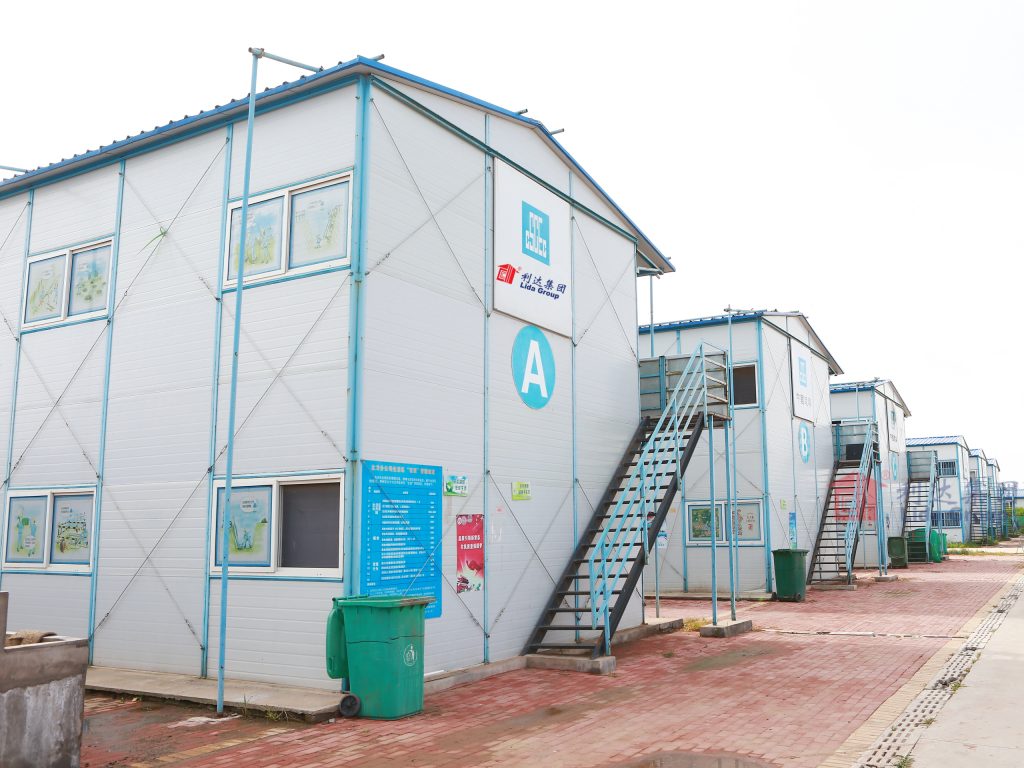
The sustainability and performance of Lida’s sandwich panel houses are validated through successful deployment at remote construction sites worldwide.
**7.1 West Africa Market Complex**
In equatorial West Africa, Lida Group completed a 30,000-square-meter market complex that included workforce accommodation. The region experiences persistent rainfall, high humidity, and temperatures consistently above 30°C.
The project incorporated sustainable features including:
– **Solar-integrated roofing:** Producing up to 1.2 MW daily
– **Rainwater harvesting:** Systems sustaining landscaping without drawing on municipal supplies
– **Greywater recycling:** Reducing overall water consumption
– **Light steel construction:** Using 40% less material than traditional concrete
Embodied emissions for the project were measured at 35% below industry standards. The project was completed three months ahead of schedule despite challenging conditions, demonstrating that sustainable construction need not compromise project timelines.
**7.2 European Mountain Modular Camp**
In a remote mountainous region of Eastern Europe, Lida Group completed a modular steel camp housing project for a hydroelectric construction site. The project faced significant challenges: winter temperatures dropping to -20°C, snowstorms, tight timelines, and strict environmental regulations.
The solution utilized steel frame structures with 8-grade earthquake resistance and wind resistance of 1.5 kN/m². Sandwich panels with thicknesses from 75-150mm (EPS and rock wool) supported thermal performance in temperatures ranging from -45°C to 50°C. Prefabricated modules were manufactured in 25 days and shipped in 40-foot containers. Six workers assembled each unit in 8 hours, and bolt-connected steel frames reduced on-site welding while cutting labor costs by 40%. The project achieved 30% faster completion compared to traditional construction methods.
Energy monitoring confirmed heating consumption 55% lower than comparable traditional buildings, saving an estimated 80,000 liters of diesel annually.
**7.3 Canadian Oil Sands Remote Camp**
In northern Alberta, Canada, Lida Group’s sandwich panel units have operated continuously through multiple winters with temperatures reaching -45°C. The units feature 100mm insulation in walls and 150mm in roofs, triple-glazed windows, and trace heating for water lines.
Energy monitoring confirmed that the sandwich panel units achieve heating energy consumption 62% lower than comparable conventional workforce housing in the region. Over a 10-year project life, this translates to approximately 8,000 metric tons of CO₂ emissions avoided—equivalent to removing 1,700 cars from the road for one year.
**7.4 Australian Remote Mining Expansion**
A major iron ore mining operation in Western Australia required additional accommodation to support a production expansion. The site was located 1,200 kilometers from the nearest major city, with limited local construction resources.
Using flat-pack sandwich panel buildings, the supplier delivered all materials within four weeks. A 12-person assembly crew completed the installation in 21 days, with the first units occupied within 10 days. The camp included sleeping quarters, dining facilities, a gym, and a recreation building. The rapid deployment enabled the mining operation to accelerate production by three months.
**Chapter 8: Economic Case for Sustainable Remote Housing**
The environmental benefits of sandwich panel workforce housing are matched by compelling economic advantages.
**8.1 Reduced Operational Costs**
– **Fuel savings:** 45-55% reduction in heating and cooling fuel consumption
– **Water savings:** 40-60% reduction through conservation measures
– **Waste disposal:** Reduced waste volumes lower disposal costs
– **Maintenance:** Durable construction reduces repair frequency
For a 200-person camp with a 10-year operational life, these savings typically range from $1.5 million to $3 million.
**8.2 Lower Construction Costs**
While high-quality sandwich panels may have higher initial material costs than some traditional materials, overall construction cost is often lower due to:
– **Reduced labor:** Prefabricated panels install faster than traditional construction
– **Eliminated trades:** No need for masons, plasterers, or other trades
– **Minimal foundations:** Lightweight construction reduces foundation requirements
– **Faster schedules:** Shorter construction periods reduce financing costs
**8.3 Asset Value Retention**
Sandwich panel workforce housing retains significant asset value:
– **Resale market:** Used panels and units can be sold to other operators
– **Relocation value:** Units can be moved to subsequent projects
– **Reusability:** Panels can be used for multiple cycles across different sites
**8.4 Regulatory and Reputational Benefits**
Increasingly, project approvals require sustainability commitments. Sustainable workforce housing helps organizations:
– Meet corporate carbon reduction targets
– Comply with environmental regulations
– Enhance reputation with stakeholders and local communities
**Chapter 9: The Future of Sustainable Remote Workforce Housing**
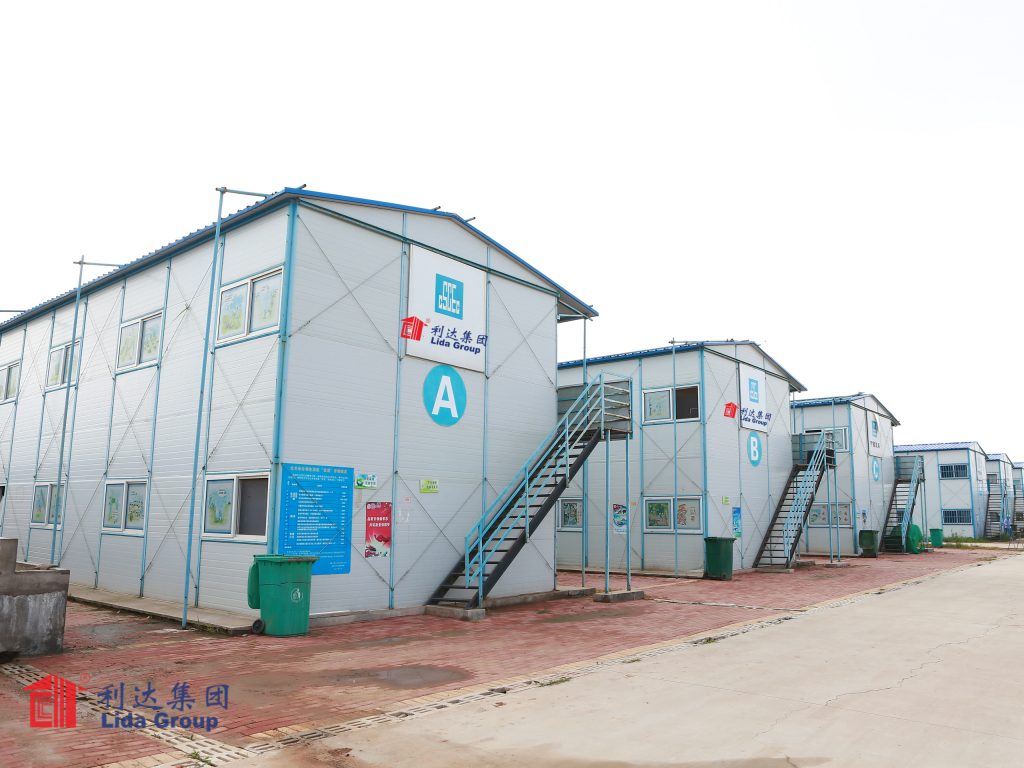
As environmental pressures intensify and technology advances, sustainable remote workforce housing will continue to evolve.
**9.1 Net-Zero Energy Camps**
The combination of sandwich panel efficiency and renewable energy enables net-zero energy workforce camps. Solar photovoltaic systems integrated into roof panels, combined with battery storage and energy management systems, can achieve complete energy independence.
**9.2 Advanced Materials**
Research into new materials promises further improvements:
– **Bio-based insulation:** Hempcrete, cellulose, and mycelium composites offering lower embodied carbon
– **Phase-change materials:** Integrated into walls to passively regulate temperature
– **Self-healing coatings:** Protecting steel surfaces from corrosion
**9.3 Hydrogen Integration**
As the energy transition advances, camps will increasingly incorporate hydrogen fuel cells and storage for zero-emission power generation.
**9.4 Circular Economy Models**
Future workforce housing may be delivered through circular economy business models where manufacturers retain ownership of panels and provide housing as a service, with responsibility for end-of-life recovery.
**Conclusion**
The sustainable eco-friendly sandwich panel house developed by Lida Group represents a transformative solution for workforce accommodation at remote construction sites. Through advanced material science, energy-efficient design, and precision manufacturing, these structures deliver the durability, comfort, and self-sufficiency that remote projects demand while dramatically reducing environmental impact.
The technical foundations of this sustainability are robust. Sandwich panel construction eliminates thermal bridging and achieves exceptional airtightness, reducing heating and cooling energy consumption by 45-55% compared to traditional methods. For remote sites reliant on diesel generation, these savings translate directly into reduced fuel consumption, lower emissions, and significant operational cost reductions.
Material efficiency is achieved through factory prefabrication, with utilization rates exceeding 95% and construction waste reduced by 70-80% compared to traditional methods. The lightweight nature of sandwich panels reduces transport-related emissions by 60-70%, while the elimination of wet trades minimizes water consumption and site disturbance. Lifecycle carbon assessments demonstrate total reductions of 45-55% across materials, manufacturing, transport, construction, and operation.
Self-sufficiency features enable operation in the most isolated locations. Solar-ready roofs, battery storage, rainwater harvesting, greywater recycling, and on-site waste management reduce or eliminate dependence on external infrastructure. These systems not only reduce environmental impact but also enhance operational reliability.
Real-world validation across continents confirms the performance of these systems. In West Africa, a 30,000-square-meter complex achieved 35% lower embodied emissions while completing three months ahead of schedule. In Eastern Europe, remote mountain camps achieved 55% heating energy reduction while withstanding -45°C temperatures. In the Canadian oil sands, 62% heating energy savings over a decade of operation translated to 8,000 metric tons of CO₂ avoided.
For construction project managers, operations directors, and organizational leaders facing the challenges of remote site accommodation, the message is clear: sustainable workforce housing is not only achievable but economically advantageous. Lida Group’s eco-friendly sandwich panel houses deliver the durability to withstand harsh conditions, the energy efficiency to reduce operational costs, the self-sufficiency to operate independently, and the environmental responsibility to meet regulatory requirements and stakeholder expectations. They represent a new standard for remote construction site accommodation—one that proves environmental sustainability and operational excellence are not competing priorities but complementary goals. As the global construction industry increasingly operates in remote and sensitive environments, the sandwich panel house stands as a model of responsible, efficient, and comfortable workforce housing.
Related news
-
Rapid Deployment with Our Prefab Easy Assembly Building Systems
2026-03-26 16:21:39
-
Lida Group Delivers Comfortable Construction Site Labor Accommodation
2026-03-26 16:39:14
-
Lida Group Completes Major Construction Site Labor Accommodation Project
2026-03-26 15:36:08
contact us
- Tel: +86-532-88966982
- Whatsapp: +86-13793209022
- E-mail: sales@lidajituan.com
