



Streamline Your Build with Lida Group’s Mobile Construction Methods
2026-Jan-09 14:06:27
By Admin
The global construction industry is witnessing an urgent shift toward flexibility, efficiency, and rapid deployment. Traditional construction approaches, characterized by on-site masonry, prolonged timelines, and heavy reliance on fixed infrastructure, struggle to meet the demands of modern projects—from remote mining camps and emergency relief shelters to temporary commercial spaces and cross-border infrastructure. In this context, mobile construction methods have emerged as a transformative solution, redefining how buildings are designed, manufactured, transported, and assembled. Lida Group, a pioneering leader in prefabricated and mobile building solutions with over three decades of expertise, has refined its mobile construction methodologies to streamline every phase of the building process, delivering agile, cost-effective, and high-performance outcomes for clients across 96 countries. This article explores how Lida Group’s mobile construction methods address industry pain points, the core technologies driving its success, real-world applications, and the broader impact on the global construction landscape.
Founded in 1993, Lida Group has evolved from a regional steel structure manufacturer to a global provider of integrated mobile construction solutions. Headquartered in Shandong, China, the group operates a 73,000-square-meter production base equipped with 10 specialized automated lines, supporting a daily production capacity of 5,000 square meters of mobile building components and 800 modular units per month. Certified by ISO 9001, CE, SGS, and BV, Lida’s mobile construction systems adhere to stringent international safety and quality standards, including fire resistance (Grade A) and wind resistance (up to Grade 12). What sets Lida apart is its holistic approach to mobility—not just focusing on portable structures, but integrating design, manufacturing, logistics, and on-site assembly into a seamless workflow that eliminates inefficiencies of traditional construction. By prioritizing adaptability, speed, and sustainability, Lida’s mobile methods have become the preferred choice for industries ranging from mining and energy to disaster relief and urban infrastructure.
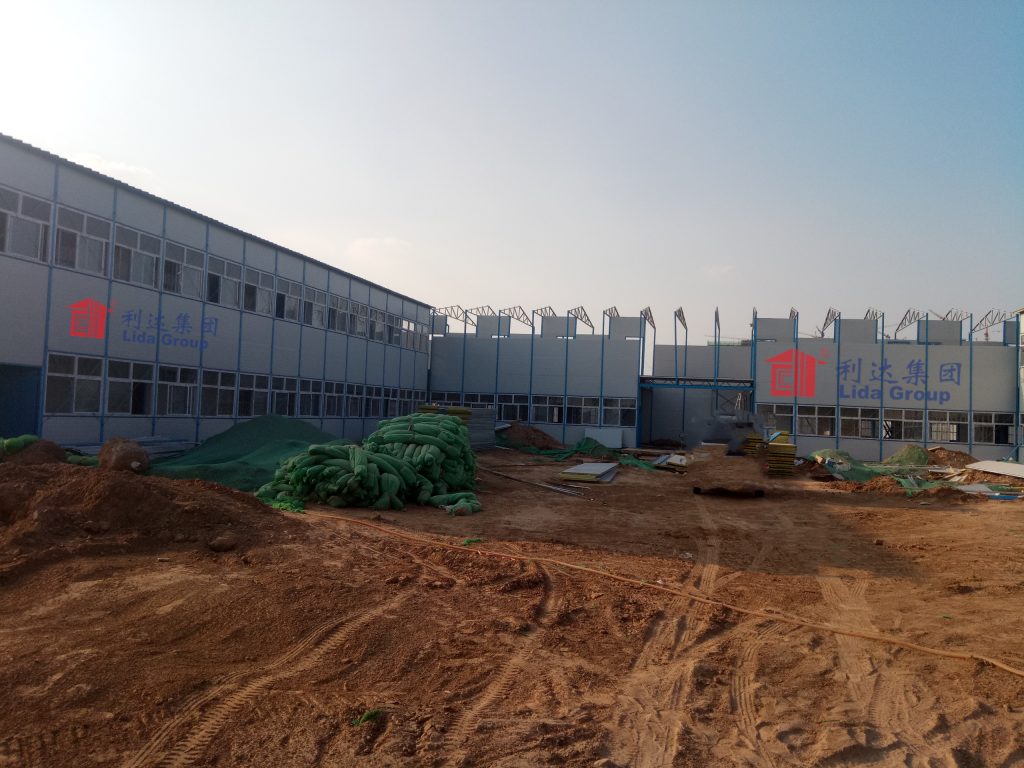
Core Technologies of Lida Group’s Mobile Construction Methods
Lida Group’s mobile construction methods are built on four foundational technologies: foldable modular systems, rapid-assembly prefabricated units, integrated hydraulic lifting mechanisms, and intelligent logistics coordination. These technologies work in tandem to minimize on-site work, reduce transportation costs, and accelerate project delivery while maintaining structural integrity and performance. Unlike conventional mobile structures that sacrifice durability for portability, Lida’s solutions balance mobility with long-term usability, supporting both temporary and semi-permanent applications.
Foldable Modular Container Systems: The Epitome of Mobility
Lida’s foldable container houses represent the core of its mobile construction portfolio, addressing the industry’s key pain points of inefficient transportation and slow deployment. Engineered with a hydraulic or manual folding mechanism, these units can be collapsed to 1/3 of their expanded volume, drastically optimizing shipping efficiency. A single standard truck can carry 8-10 folded units—3 to 4 times more than traditional non-foldable modular structures—reducing transportation costs by 30% to 40% . When deployed, 2-3 workers can fully expand a unit in 15 to 30 minutes using basic tools, eliminating the need for specialized installation teams and cutting on-site labor time by 60% compared to traditional temporary buildings.
Technical specifications of Lida’s foldable containers underscore their performance and versatility. Available in standard sizes (GP 20, GP 40, and HQ 40) and customizable dimensions, the units feature a galvanized steel frame with 50mm silicon rock insulation boards (Grade A fire rating, complying with DIN 4102 A2 standards) for walls and ceilings. The wall system uses double-sided 4mm high-galvanized purification panels, delivering a thermal conductivity coefficient of 0.442 W/(m·K) for walls and 0.55 W/(m²·K) for ceilings—ensuring thermal comfort in extreme climates from Arctic cold to tropical heat . The floor system comprises 18mm cement-calcium silicate boards (density 1.75-1.95 g/cm³) with PVC flooring, supporting a load capacity of 2.5 kN/㎡, while high-density polyurethane foam sealant ensures waterproofing, moisture resistance, and sound insulation. With a wind resistance rating of Grade 12 and corrosion-resistant coatings, these units are durable enough for long-term use in harsh environments, including coastal areas and industrial sites.
Rapid-Assembly Prefabricated Modules: Scalability and Flexibility
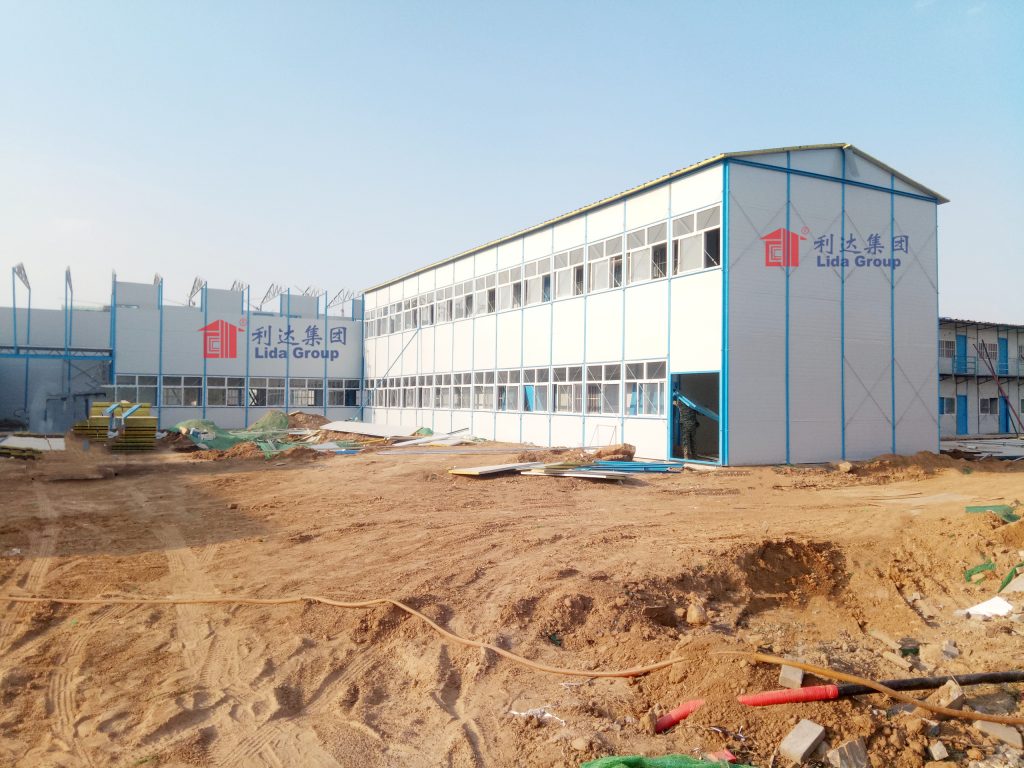
Complementing its foldable systems, Lida offers rapid-assembly prefabricated modules designed for large-scale projects requiring customization and scalability. These modules—including dormitories, offices, kitchens, and bathrooms—feature standardized bolt connections that enable horizontal and vertical splicing without on-site welding. A 2-person team can assemble 3-4 modules per day, and the system supports multi-story structures, making it ideal for construction camps, worker dormitories, and temporary commercial facilities. For example, a 1,000-square-meter construction camp using Lida’s rapid-assembly modules can be fully operational in 7-10 days, compared to 4-6 weeks with traditional brick-and-mortar construction.
The modules integrate Lida’s proprietary sandwich panel technology (EPS, rock wool, or PU cores) to enhance performance. For fire-sensitive applications (e.g., industrial workshops, emergency medical facilities), rock wool core modules provide superior fire resistance and sound absorption (reducing noise by up to 21.5 decibels). For cold storage or temperature-controlled spaces, PU core modules offer thermal conductivity as low as 0.022 W/(m·K), cutting energy consumption by 40% . The modular design also allows for easy reconfiguration—units can be disassembled, relocated, and reused for multiple projects, reducing material waste and aligning with circular economy principles.
Hydraulic Lifting and Integrated Installation Systems
Lida’s mobile construction methods prioritize safety and efficiency in on-site assembly through hydraulic lifting systems and integrated installation protocols. For high-rise modular structures, hydraulic jacking systems enable precise vertical positioning of modules, eliminating the need for heavy cranes and reducing on-site safety risks. These systems comply with global safety standards, including China’s JGJ202-2010 and JGJ/T183-2019, and feature real-time load monitoring to prevent overloading . For remote sites with limited access to heavy machinery, Lida’s lightweight modules (weighing 30-50% less than traditional prefabricated units) can be deployed via helicopter or off-road vehicles, expanding the reach of mobile construction to roadless areas.
Installation is further streamlined through Lida’s “one-stop” service model, which integrates design, manufacturing, delivery, and assembly. The group provides detailed installation manuals, video tutorials, and remote video guidance (via Zoom or WeChat) to support on-site teams, reducing the need for Lida’s own technicians to travel—critical for overseas projects with complex logistics . This model has reduced secondary service visits by 75%, lowering overall project costs by 15-20%.
Intelligent Logistics and Cross-Border Adaptation
Mobile construction’s effectiveness depends on efficient logistics, especially for international projects. Lida leverages AI-powered route optimization and nesting algorithms to maximize container space utilization and minimize delivery delays. The group’s logistics team accounts for regional regulations, customs clearance procedures, and local infrastructure constraints—for example, in Saudi Arabia, Lida’s pre-packaged modules reduce customs clearance time by 3-5 days compared to disassembled components . For projects in remote regions (e.g., Arctic mining sites, African rural areas), Lida partners with local logistics providers to ensure last-mile delivery, even in challenging terrain.
To address cross-border compliance issues, Lida customizes its mobile systems to meet local building codes and climate requirements. For tropical regions like Indonesia, modules are enhanced with anti-corrosion coatings and improved ventilation to resist humidity and termites. For high-seismic zones, units are reinforced with shock-absorbing components to meet Grade 8 earthquake resistance standards. All components are certified to local standards—CE for Europe, ATEX for explosive environments, and AS/NZS for Australia—ensuring seamless integration into global projects.
Streamlining Construction: Advantages of Lida’s Mobile Methods
Lida’s mobile construction methods deliver tangible benefits across the project lifecycle, addressing the core inefficiencies of traditional construction while adding value through flexibility, cost savings, and sustainability. These advantages have made Lida’s solutions indispensable for time-sensitive, resource-constrained, or geographically remote projects.
Unmatched Speed and Rapid Deployment
The most significant advantage of Lida’s mobile methods is their ability to accelerate project delivery. Traditional construction often faces delays due to weather, labor shortages, and on-site errors, but Lida’s factory-manufactured components and rapid-assembly systems minimize these risks. For emergency relief projects, Lida can deliver and install medical modules, temporary housing, or command centers within 72 hours—the critical “golden rescue period” after natural disasters . In one case, after a typhoon in Southeast Asia destroyed local hospitals, Lida deployed 20 foldable medical modules with integrated sterile rooms and equipment connections, enabling the facility to resume operations in 3 days—far faster than the 4-6 weeks required for conventional reconstruction.
Even for non-emergency projects, speed translates to financial benefits. A mining client in Mongolia required a 200-person camp to support a new operation; Lida’s foldable containers and rapid-assembly modules were shipped flat-packed to a nearby port, transported by helicopter to the site, and fully installed in 19 days. This allowed the mining operation to start 3 months ahead of schedule, generating early revenue of over $2 million for the client.
Cost Efficiency Across the Lifecycle
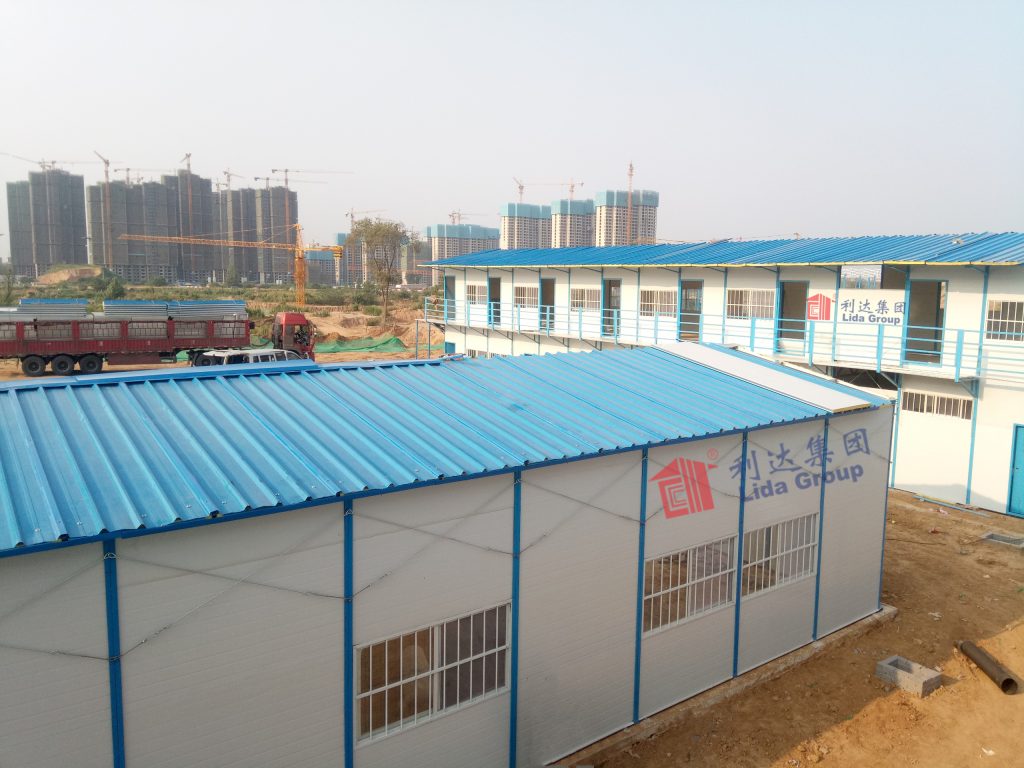
Lida’s mobile construction methods reduce costs at every stage: design, manufacturing, transportation, installation, and operation. Factory-based production minimizes material waste (by up to 30% compared to on-site construction) through precise cutting and automated processes. Optimized logistics cut transportation costs by 30-40%, while rapid assembly reduces labor hours by 50-60% . For example, a 2,000-square-meter worker dormitory using Lida’s mobile methods costs 20-40% less than a traditional dormitory, considering labor, materials, and equipment savings.
Operational costs are also lower due to energy-efficient insulation and low maintenance requirements. Lida’s modules have a service life of 15-20 years, and their reusable design adds value—after a project concludes, units can be disassembled and relocated to new sites, reducing the need for new construction. A European construction company reported saving 25% on temporary facilities costs by reusing Lida’s foldable containers across 5 different projects.
Adaptability to Diverse Environments and Needs
Lida’s mobile systems are engineered to thrive in extreme conditions, from -30°C Arctic winters to 45°C Middle Eastern summers. The silicon rock insulation and airtight sealing of foldable containers maintain internal temperatures between 18-25°C in harsh climates, reducing heating and cooling costs. For coastal projects, galvanized steel frames and anti-corrosion coatings resist salt spray, while for desert regions, sand-proof seals prevent debris from entering the units.
Beyond climate adaptation, Lida’s mobile methods support diverse functional needs. Explosion-proof modules for oil and gas sites feature reinforced walls and spark-proof electrical systems (complying with ATEX standards). Luxury modular villas for Culture and Tourism projects include custom finishes, expandable balconies, and smart home integration. Disaster relief modules can be quickly reconfigured as hospitals, shelters, or food distribution centers—demonstrating the flexibility to address evolving project requirements.
Enhanced Safety and Compliance
Safety is a cornerstone of Lida’s mobile construction methods, with systems designed to meet global safety standards for fire, structural integrity, and operation. All modules undergo rigorous factory testing, including load-bearing, fire resistance, and waterproofing assessments, before shipment—eliminating on-site quality issues that often lead to accidents. Lida’s hydraulic lifting systems and installation protocols comply with regional safety regulations, such as China’s “附着式升降脚手架安全管理规定” and Europe’s EN 1090 standards .
On-site safety is further improved by reducing the need for high-risk activities, such as scaffolding work and on-site welding. Lida’s modules are pre-fitted with electrical, plumbing, and HVAC systems in the factory, minimizing on-site wiring and piping—tasks that account for 30% of construction accidents. For example, on a Singaporean construction site, using Lida’s mobile modules reduced on-site accidents by 40% compared to traditional methods, thanks to fewer high-risk tasks and standardized installation.
Global Application Case Studies: Transforming Projects Worldwide
Lida Group’s mobile construction methods have been deployed across 96 countries, delivering results in diverse industries and challenging environments. These case studies demonstrate how mobility, speed, and flexibility translate to tangible project success.
Indonesian Mining Camp: Remote Deployment and Durability
A leading mining company in Indonesia required a 300-person camp in a remote rainforest region with no road access, high humidity, and frequent heavy rains. Traditional construction was impractical due to logistics challenges and long timelines; Lida proposed a solution using foldable containers and rapid-assembly modules.
Lida’s foldable containers were shipped flat-packed to a coastal port, then transported by barge and helicopter to the site. The units were enhanced with anti-corrosion coatings, improved ventilation, and waterproof seals to withstand the tropical climate. The camp included dormitories, a kitchen, a medical clinic, and administrative offices—all assembled in 22 days by a 10-person team. The modules’ Grade A fire-resistant insulation ensured compliance with Indonesia’s mining safety regulations, while their reusable design allowed the camp to be relocated to a new mining site after 3 years. The client reported saving 35% on construction costs and 60% on deployment time compared to traditional methods.
Saudi Arabian Solar Farm: Cross-Border Logistics and Climate Adaptation
A renewable energy firm needed temporary facilities for a 500-person team working on a solar farm in Saudi Arabia’s desert region, where temperatures exceed 45°C and sandstorms are common. The project required rapid deployment, compliance with Saudi building codes, and minimal environmental impact.
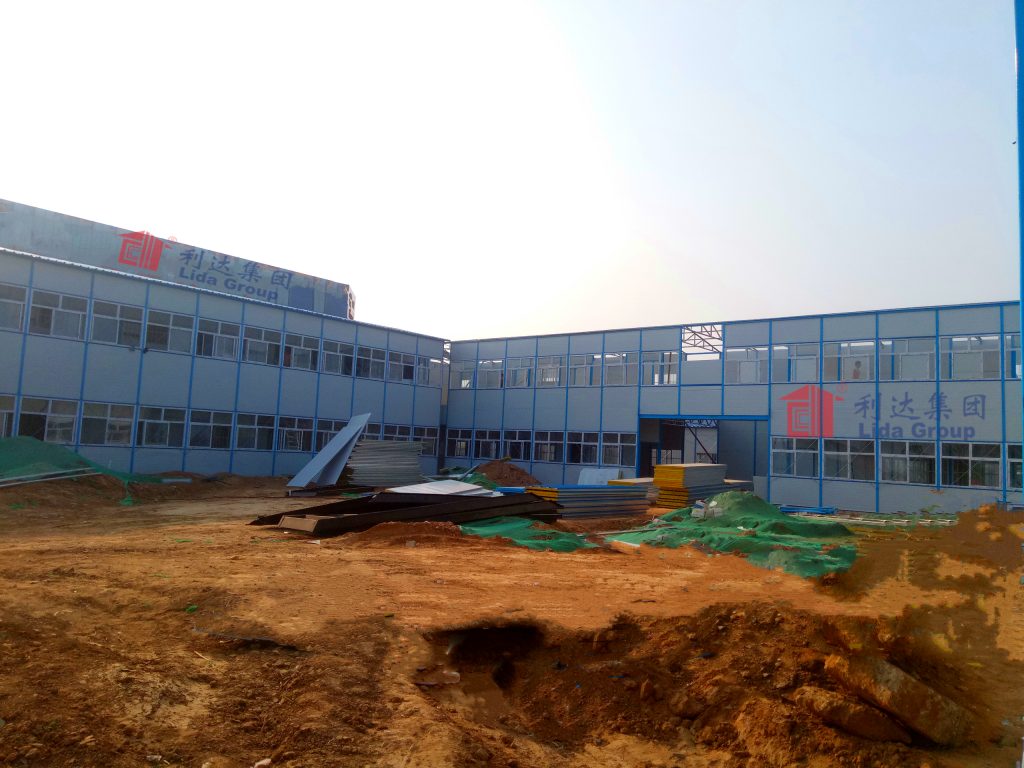
Lida delivered 120 foldable containers and 80 rapid-assembly modules, customized with heat-reflective roofing, enhanced insulation, and sand-proof seals. The units were pre-fitted with solar-powered HVAC systems to reduce energy consumption in the desert heat. Lida’s intelligent logistics team optimized the shipping route, using nested packaging to minimize container volume and expedite customs clearance—reducing delivery time by 5 days. The camp was fully operational in 14 days, with modules arranged to create shaded walkways and outdoor spaces. The client praised the solution’s adaptability, noting that internal temperatures remained comfortable even during sandstorms, and the reusable modules would be repurposed for future solar projects in the region.
European Emergency Relief: Rapid Response to Floods
After severe floods in Central Europe destroyed over 1,000 homes, a humanitarian organization needed temporary housing and medical facilities to support 500 displaced residents. The project required delivery within 7 days, compliance with EU fire and safety standards, and accessibility for elderly and disabled residents.
Lida deployed 150 foldable containers, including 20 medical modules, 100 housing units, and 30 administrative modules. The units were equipped with ramps for accessibility, thermal insulation (to withstand cool European winters), and fire-resistant materials (complying with CE and DIN 4102 standards). Lida’s logistics team coordinated with local authorities to bypass customs delays, delivering the modules by truck to the flood zone. A 15-person team, supported by remote video guidance from Lida’s engineers, installed the facilities in 6 days—meeting the 7-day deadline. The medical modules included integrated examination rooms, pharmacies, and storage spaces, enabling the organization to provide critical healthcare services. After 6 months, the modules were disassembled and donated to another region for future emergency use, demonstrating the sustainability of Lida’s mobile methods.
Chinese Urban Infrastructure: Temporary Commercial Spaces
A city in China required temporary commercial and office spaces for a 2-year urban renewal project, with the goal of minimizing disruption to local businesses and residents. The project needed flexible spaces that could be easily reconfigured and relocated after the project concluded.
Lida provided 50 rapid-assembly modules, including retail units, offices, and public restrooms, designed with modern finishes and large windows to attract customers. The modules were assembled in 10 days, with a modular layout that allowed for future reconfiguration—retail units could be expanded or combined as needed. The units’ lightweight design reduced the load on the temporary foundation, minimizing ground preparation work. After the urban renewal project concluded, the modules were relocated to a new development area, where they were repurposed as a temporary community center. The city government reported saving 40% on construction costs compared to traditional temporary structures and received positive feedback from businesses for the minimal disruption.
Economic and Environmental Impact: Shaping the Future of Construction
Lida Group’s mobile construction methods are not just streamlining individual projects—they are driving broader economic and environmental change in the global construction industry. As the demand for agile, sustainable building solutions grows, Lida’s approach aligns with global trends toward modularization, circular economy, and carbon reduction.
Economic Contribution: Empowering Global Projects
Lida’s mobile methods lower barriers to entry for projects in remote or resource-poor regions, enabling economic development where traditional construction is unfeasible. For example, in rural Africa, Lida’s mobile clinics and schools have been deployed to underserved communities, improving access to healthcare and education without the need for permanent infrastructure. In emerging markets, Lida’s solutions support rapid industrialization by providing temporary facilities for factories and construction sites, accelerating economic growth.
The global modular construction market, valued at $1450 billion in 2025 with a CAGR of 6.2%, is driven by demand for speed and flexibility . Lida Group, with its global footprint and technical expertise, is well-positioned to capture this growth, supporting industries from mining and energy to healthcare and urban development. The group’s mobile methods also create local jobs—by training local teams to install and maintain modules, Lida contributes to capacity building in host countries, further stimulating economic growth.
Environmental Sustainability: Reducing Carbon Footprint
Mobile construction is inherently more sustainable than traditional building, and Lida’s methods amplify these benefits. Factory production reduces material waste by 30% and cuts transport emissions by 41% through optimized logistics . The reusable design of Lida’s modules reduces the need for new construction, lowering carbon emissions associated with material extraction and manufacturing. For example, reusing a single foldable container 3 times reduces its lifecycle carbon footprint by 60% compared to a disposable structure.
Lida’s focus on energy efficiency further reduces environmental impact. The insulation and sealing of its modules cut heating and cooling energy consumption by 30-40%, lowering operational carbon emissions. The group also uses eco-friendly materials, such as recyclable galvanized steel and low-VOC coatings, and its production processes comply with strict environmental standards, minimizing air and water pollution. By aligning with global sustainability goals—such as China’s “double carbon” targets and the EU’s REACH regulations—Lida’s mobile methods help clients meet their environmental commitments.
Challenges and Future Trends: Advancing Mobile Construction
While Lida Group has achieved significant success with its mobile construction methods, the industry faces ongoing challenges, including market perception, regulatory fragmentation, and technological competition. Some clients still view mobile structures as “temporary” or low-quality, despite advances in durability and performance. Lida addresses this by showcasing its project portfolio, certifications, and long-term service records, demonstrating that mobile solutions can meet the needs of permanent applications.
Regulatory fragmentation across countries remains a barrier, with varying building codes and safety standards creating complexity for global projects. Lida mitigates this by maintaining a team of compliance experts who customize solutions to local requirements and collaborate with local authorities to ensure adherence. The group’s international certifications (CE, SGS, BV) facilitate market access, but ongoing adaptation to new regulations is essential.
Looking ahead, Lida Group is focusing on three key trends to advance its mobile construction methods:智能化 (intelligentization), lightweighting, and circular design. The group is integrating AI and IoT into its modules, enabling remote monitoring of structural health, energy use, and maintenance needs—improving operational efficiency and reducing downtime. Lightweighting efforts involve developing aluminum honeycomb cores and composite materials to further reduce module weight, enhancing transportability and expanding applications to high-rise structures. Circular design initiatives focus on increasing recyclability, with plans to use 100% recycled steel in modules by 2030 and develop modular components that can be easily disassembled and repurposed.
The future of mobile construction is also shaped by growing demand for affordable housing, emergency response capabilities, and sustainable infrastructure. Lida Group, with its proven track record, global supply chain, and commitment to innovation, is poised to lead this transformation, further streamlining construction and delivering value for clients worldwide.
Conclusion
Lida Group’s mobile construction methods represent a paradigm shift in the global construction industry, redefining what it means to build efficiently, flexibly, and sustainably. By integrating foldable modular systems, rapid-assembly technology, intelligent logistics, and compliance expertise, Lida has eliminated the inefficiencies of traditional construction, delivering projects in a fraction of the time with lower costs, enhanced safety, and minimal environmental impact.
The group’s solutions address the core pain points of modern construction—slow deployment, high costs, inflexibility, and regulatory complexity—across diverse industries and environments, from remote mining camps to urban renewal projects. Case studies from Indonesia, Saudi Arabia, Europe, and China demonstrate that Lida’s mobile methods are not just theoretical innovations but practical, proven solutions that drive project success.
As the global construction industry continues to prioritize speed, flexibility, and sustainability, Lida Group remains at the forefront of innovation, advancing mobile construction technology to meet evolving client needs. By combining technical excellence with a customer-centric approach, Lida is not just streamlining builds—it is shaping a more agile, resilient, and sustainable future for the built environment. For clients seeking to overcome the limitations of traditional construction and deliver projects that are fast, cost-effective, and adaptable, Lida Group’s mobile construction methods offer a future-ready solution.
Related news
-
Flexible and Durable Prefab House for Modern Needs
2026-01-07 17:51:02
-
The Future of Rapid Building: Modern Mobile Construction
2026-01-06 17:54:33
-
Sustainable Prefab House Designs from Lida Group
2026-01-06 16:18:41
contact us
- Tel: +86-532-88966982
- Whatsapp: +86-13793209022
- E-mail: sales@lidajituan.com
