



Simplify Construction with Our Easy Assembly Container Apartments
2026-Jan-22 17:43:30
By Admin
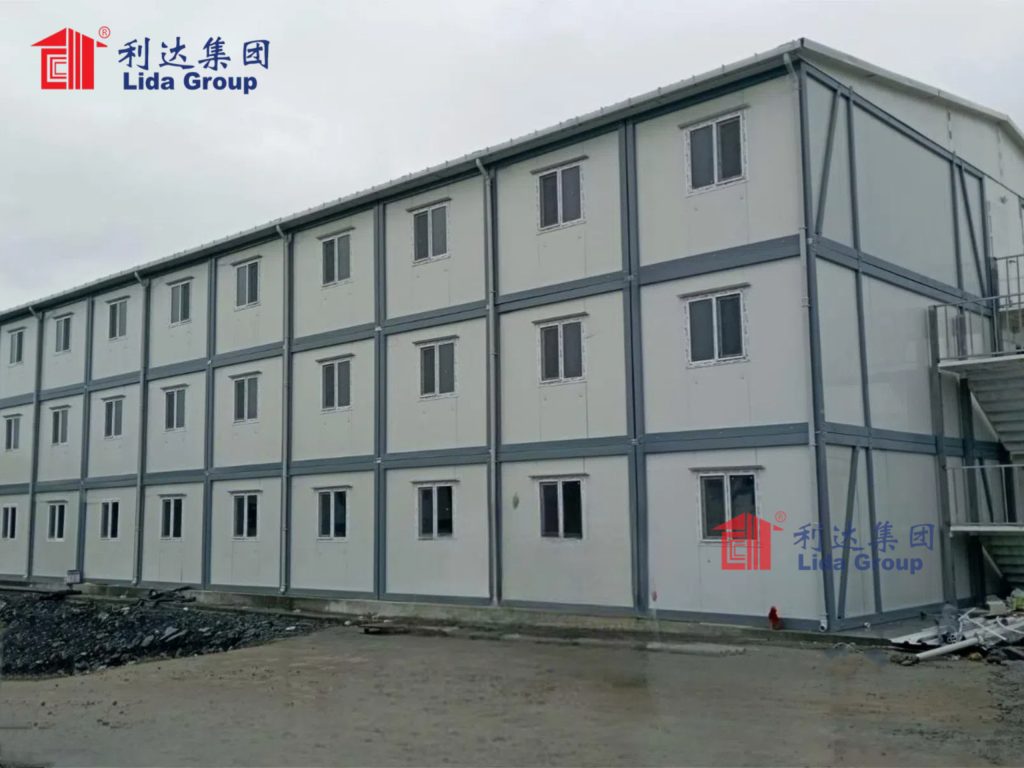
The global construction industry is grappling with mounting challenges—prolonged project timelines, acute skilled labor shortages, soaring material costs, and stringent sustainability mandates—that have exposed the inefficiencies of traditional on-site building methods. In this context, our easy assembly container apartments emerge as a transformative solution, redefining construction paradigms by prioritizing simplicity, efficiency, and adaptability. Unlike conventional brick-and-mortar structures that rely on labor-intensive on-site fabrication, our container apartments leverage modular engineering, standardized components, and user-friendly assembly systems to streamline every phase of construction. From urban affordable housing and student dormitories to emergency shelters and infrastructure camp accommodations, these apartments simplify construction without compromising on safety, durability, or livability. This article explores how our easy assembly container apartments address industry pain points, details the core technologies enabling simplified construction, showcases real-world application successes, and analyzes their market impact and future potential, demonstrating why they are the future of efficient building.
1. Market Context: The Urgent Need for Simplified Construction Solutions
The demand for simplified construction methods has never been more pressing, driven by converging industry challenges and favorable policy shifts. The global residential container market has witnessed robust growth, scaling to 914.96 billion yuan in 2025 and projected to exceed 1751 billion yuan by 2032, with a compound annual growth rate (CAGR) of 9.72% 。 In China alone, the container house market reached 128.6 billion yuan in 2024 and is expected to grow to 150.2 billion yuan in 2025, a year-on-year increase of 16.8% 。 This growth is not merely quantitative but a direct response to the industry’s urgent need for solutions that cut through construction complexities.
1.1 Pain Points of Traditional Construction
Traditional construction methods are plagued by inefficiencies that inflate costs and delay projects. First, extended timelines: A standard mid-rise apartment building takes 12-18 months to complete using conventional methods, with on-site wet work (concreting, plastering) and weather dependencies causing frequent delays. Second, skilled labor shortages: The global construction industry faces a deficit of over 10 million skilled workers, leading to increased labor costs and compromised quality. Third, material waste: On-site fabrication generates 15-20% material waste, driving up costs and environmental impact. Fourth, complex coordination: Traditional projects require coordinating dozens of trades (electricians, plumbers, carpenters), increasing the risk of errors and rework. Our easy assembly container apartments address all these pain points by shifting construction from the field to the factory and simplifying on-site operations.
1.2 Policy Support for Simplified, Modular Construction
Governments worldwide are backing modular and prefabricated construction as a means to simplify building processes and meet sustainability goals. China’s 14th Five-Year Plan for Construction Industry Development mandates that prefabricated buildings account for over 30% of new constructions by 2025, with the central government allocating 38.7 billion yuan in 2024 to support container-based housing 。 Local policies further incentivize adoption: Guangdong Province requires 100% of temporary housing for large infrastructure projects to use container systems, while Jiangsu Province offers subsidies of 300 yuan per square meter for easy assembly container buildings 。 In the European Union, the Green Deal provides funding for modular construction solutions, and the U.S. Federal Emergency Management Agency (FEMA) prioritizes easy assembly container units for disaster relief, recognizing their rapid deployment capabilities. These policies create a favorable ecosystem for our easy assembly container apartments to replace traditional construction in key sectors.
2. Core Technologies: Enabling Simplified Construction of Container Apartments
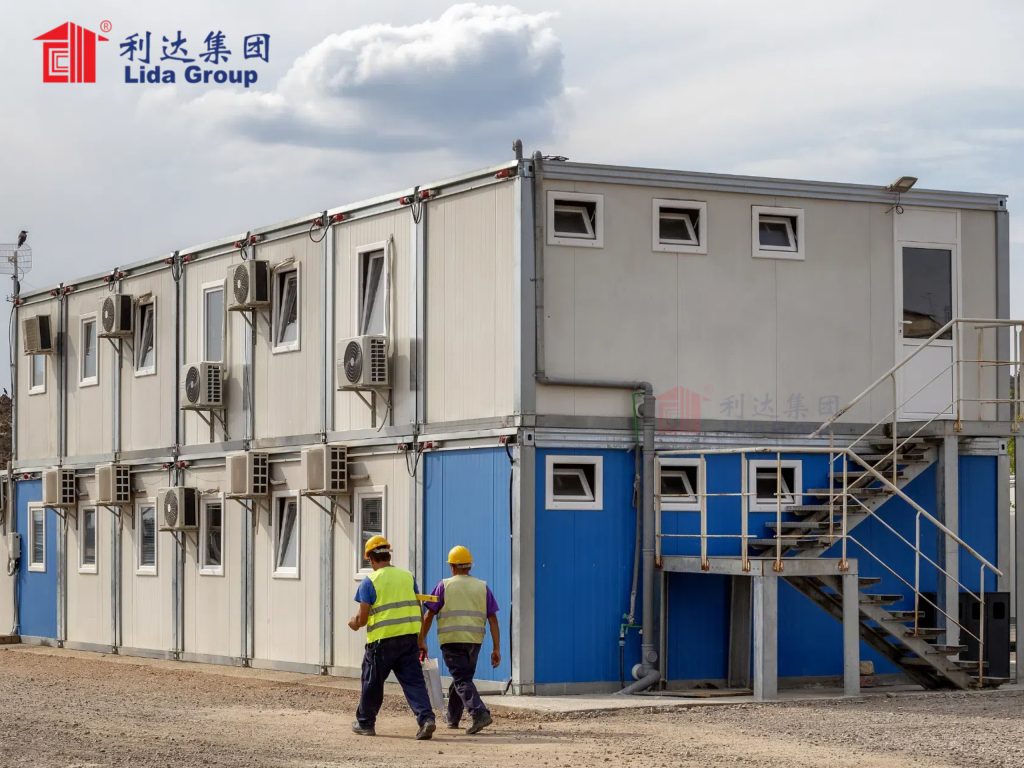
The simplicity of constructing our container apartments stems from three integrated technological pillars: standardized modular design, innovative connection systems, and factory-integrated prefabrication. These technologies work in tandem to minimize on-site work, eliminate complex processes, and reduce reliance on specialized labor.
2.1 Standardized Modular Design
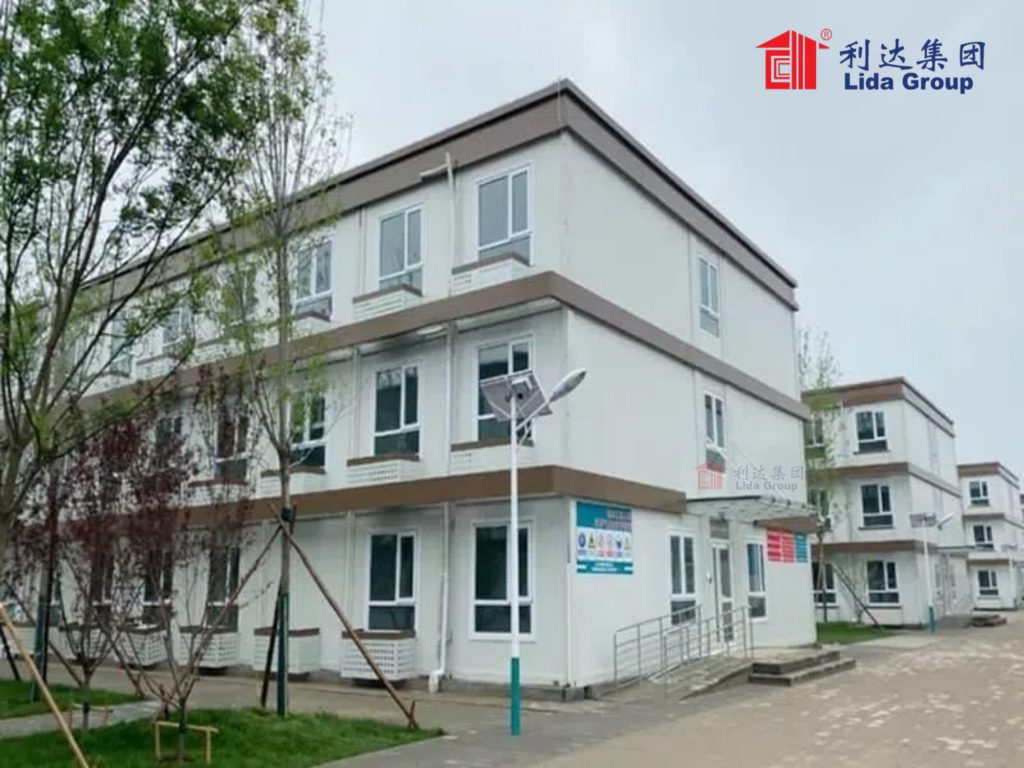
Our container apartments are built on a foundation of standardized modular units (20ft, 40ft, and custom sizes) that follow global ISO standards, ensuring interchangeability and seamless assembly. Each module is a self-contained unit with pre-installed walls, floors, roofs, electrical systems, and plumbing—eliminating the need for on-site integration of disparate components. The modular design allows for horizontal and vertical combination, enabling the construction of complexes ranging from single-story residences to 3-story apartment buildings (compliant with EN 12079 seismic and wind resistance standards). For example, a 10-unit apartment complex can be constructed by combining standardized modules, with pre-defined layouts reducing design complexity and on-site decision-making.
Standardization also extends to internal components, with pre-fitted furniture, fixtures, and smart systems that require no on-site modification. Our modules are designed with precision engineering (tolerance ±0.5mm), ensuring that every unit fits perfectly during assembly, eliminating the need for on-site adjustments or rework.
2.2 Innovative Connection Systems: No Welding, No Specialized Skills
The hallmark of our easy assembly system is our advanced connection technology, which eliminates welding and specialized tools, enabling assembly by semi-skilled workers. We utilize two core connection systems to simplify on-site operations:
-
Solderless Twistlock Connectors: Adopting high-performance solderless connector technology, our ISO-compatible Twistlock systems create secure, vibration-resistant connections between modules 。 Each connector can bear up to 25 tons of load, ensuring structural stability for vertical stacking. A 2-person team can connect two modules in 15 minutes, with no welding or heavy machinery required. This system reduces assembly time by 60% compared to traditional bolted connections.
-
Hydraulic Folding Mechanisms: For temporary or emergency projects, our folding container apartments use hydraulic rods to expand from a compact transport size to a livable space in 15-20 minutes. Ten folded units fit into a single 40ft shipping container, reducing logistics costs by 50%. The hydraulic system requires no manual labor beyond a simple control lever, enabling deployment in remote areas with limited workforce.
Both systems are designed for repeatable assembly and disassembly, allowing modules to be reused across multiple projects without structural damage—further simplifying lifecycle management.
2.3 Factory-Integrated Prefabrication
We shift 90% of construction work to our smart factories, where modules are fabricated in controlled environments using automated production lines. This approach eliminates weather dependencies and on-site waste, while ensuring consistent quality. Our factories integrate 83 cutting-edge technologies, including robotic welding, 3D-printed custom components, and digital twin simulation, to pre-install all systems (electrical, plumbing, HVAC) with precision 。 Each module undergoes rigorous quality control before shipment, ensuring that it is ready for immediate assembly on-site.
The factory prefabrication process reduces on-site construction to a simple “plug-and-play” operation. For example, our single-story apartment modules require only foundation preparation and module connection—no on-site plumbing or electrical work is needed. This level of integration simplifies construction to the extent that a 200-square-meter apartment complex can be fully assembled in 3 days, compared to 3-4 months for traditional construction.
3. How Our Easy Assembly Container Apartments Simplify Construction: Core Advantages
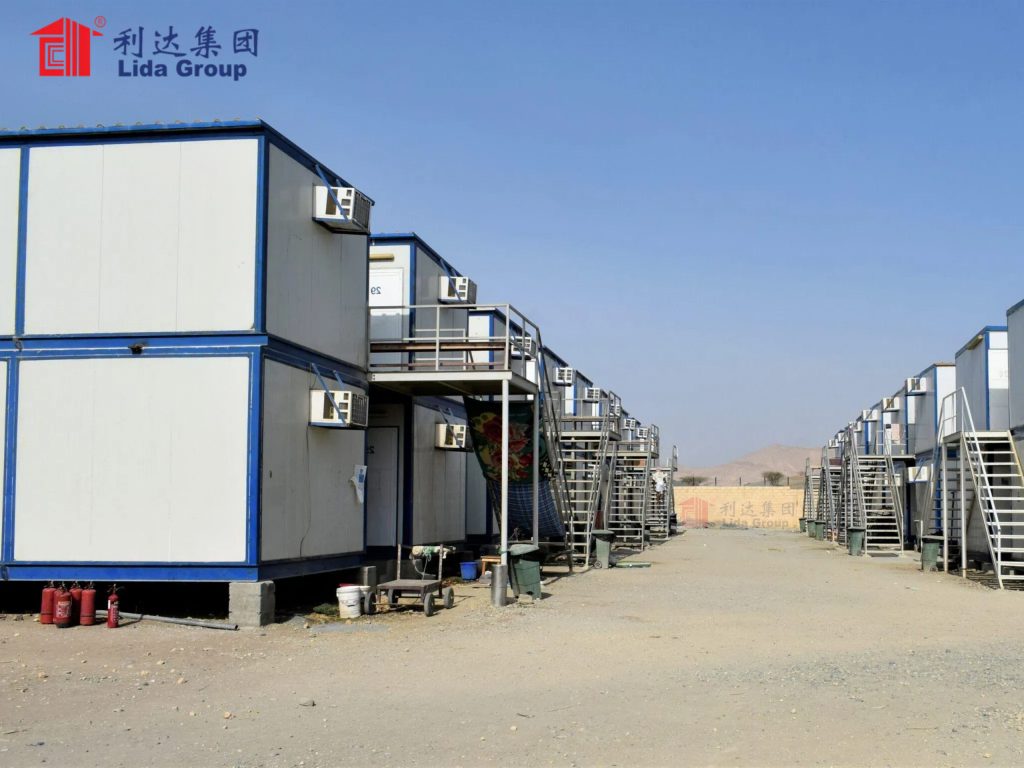
Our container apartments simplify construction across every phase of the project lifecycle, delivering tangible benefits in terms of time, cost, labor, and sustainability.
3.1 Dramatically Reduced Construction Timelines
The most significant advantage of our easy assembly system is the drastic reduction in project timelines. Factory prefabrication allows modules to be produced while on-site foundation work is underway—enabling parallel workflows that cut overall project time by 60-70%. For example, a 5-story, 40-unit apartment building using our system takes just 8 weeks to complete (including factory production and on-site assembly), compared to 12-18 months for a traditional concrete building. Even large-scale projects benefit: our team completed a 6000-vehicle parking building in Jinan in just 3 months, a project that would take over 1 year using traditional methods 。
Emergency projects see even more dramatic time savings. Our folding container apartments can be deployed and assembled into livable spaces within 48 hours, making them ideal for disaster relief and temporary housing needs.
3.2 Minimal Labor Requirements, No Specialized Skills
Our easy assembly system eliminates the need for skilled tradespeople on-site. A team of 2-4 semi-skilled workers can assemble a 10-unit complex in 5 days, with no prior experience in construction 。 This addresses the global skilled labor shortage while reducing labor costs by 40-50%. We provide on-site training and simple assembly guides, further simplifying workforce management for clients.
For international projects, this labor flexibility is invaluable. In a mining camp project in Indonesia, we trained 10 local workers (with no construction background) to assemble 40 units in 5 days, avoiding the high cost of importing skilled labor.
3.3 Lower Total Construction Costs
Simplified construction translates to significant cost savings across the board. Upfront costs are 20-40% lower than traditional construction, driven by: reduced labor costs, minimal material waste (3% vs. 15-20% for traditional methods), and streamlined logistics (compact module design cuts transportation costs by 50%). Long-term costs are also lower, with our apartments requiring minimal maintenance (annual costs under $500 per unit) and offering a 20+ year service life.
Subsidies for modular construction further enhance cost-effectiveness. Clients in Jiangsu Province, for example, can reduce costs by 300 yuan per square meter through government subsidies, making our easy assembly apartments an even more affordable solution.
3.4 Enhanced Safety and Compliance
Simplified construction does not mean compromised safety. Our container apartments meet global safety standards, including grade 8 seismic resistance, level 12 wind resistance (220 km/h), and A-class fire resistance (GB 8624-2012). The steel frame (Q235 galvanized steel with 40 g/m² zinc coating) offers superior durability in harsh environments (-45℃ to 50℃), while factory prefabrication eliminates on-site safety hazards (such as falling debris and welding accidents).
Compliance is also simplified, as our modules are pre-certified to ISO, CE, and TÜV standards. This eliminates the need for complex on-site inspections and certifications, reducing administrative burdens and legal risks for clients.
3.5 Sustainable, Waste-Reduced Construction
Our easy assembly system aligns with circular economy principles, simplifying sustainable construction. Factory production minimizes material waste to just 3%, while the use of recycled steel (65% of frame materials) reduces carbon emissions by 65% compared to traditional concrete buildings 。 Our apartments also integrate green technologies, such as roof-mounted photovoltaic panels (6.6kW capacity) and energy-efficient insulation, enabling energy self-sufficiency and reducing operational carbon footprints.
The reusability of modules further enhances sustainability. After a project’s completion, modules can be disassembled, transported to new sites, and reassembled—eliminating demolition waste and extending their useful life. For example, modules used as student dormitories can later be repurposed as worker housing or community centers with minimal modifications.
4. Real-World Applications: Simplifying Construction Across Sectors
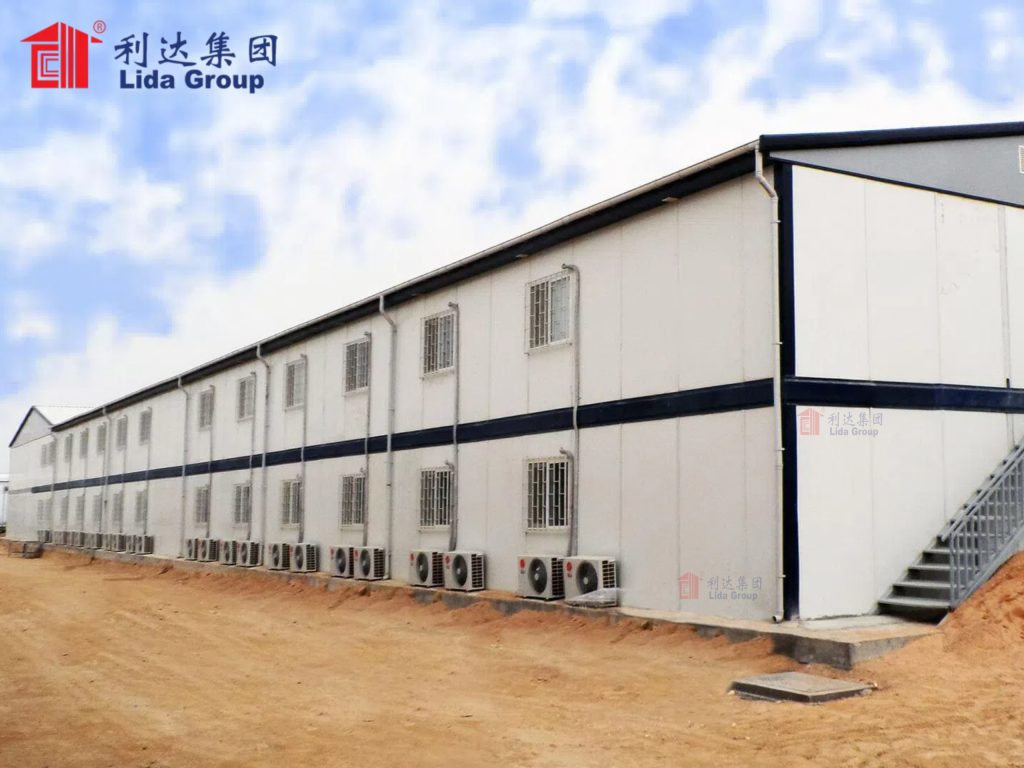
Our easy assembly container apartments have simplified construction in diverse sectors, from urban housing to emergency relief, demonstrating their versatility and adaptability.
4.1 Urban Affordable Housing: Shanghai’s Young Professional Complex
We partnered with Shanghai developers to construct a 156-unit affordable housing complex for young professionals. Using our easy assembly system, the project was completed in just 60 days—3 months faster than the client’s original timeline. The complex features 1- and 2-bedroom modules with pre-fitted smart home systems, and the simplified construction process allowed the developer to price units 30% lower than nearby traditional apartments. Post-construction, the client noted that the assembly process was “as simple as building with Lego,” with no on-site delays or rework.
4.2 Emergency Relief: Tibet Tingri Earthquake Response
After the 2024 6.8-magnitude earthquake in Tingri County, Tibet, our team deployed 20 folding container apartments in 24 hours, housing 200 displaced residents. The hydraulic folding system allowed local volunteers (with no construction experience) to expand and assemble units in 20 minutes per module. Within 3 days, some units were converted into medical rooms using pre-fitted removable equipment—simplifying the transition from shelter to functional healthcare space. After the relief effort, the modules were relocated to rural areas to address teacher housing shortages, demonstrating their reusable value.
4.3 Student Housing: Dutch University Campus
A leading Dutch university needed temporary student housing for 500 international students ahead of the new semester. Our team delivered 125 modules, which were assembled on-site in 7 days by a small team of 6 workers. The modules featured pre-installed study desks, soundproof partitions, and high-speed Wi-Fi, requiring no additional on-site work. The simplified construction process allowed the university to meet its deadline, while the modular design enabled easy expansion the following year (adding 50 more units in 3 days).
4.4 Infrastructure Camp: Saudi Arabia’s NEOM Project
For Saudi Arabia’s NEOM Future City project, we supplied 500 easy assembly units to house construction workers. The modules were customized for high-temperature climates (up to 50℃) with pre-installed solar cooling systems and insulation. Our solderless connection system allowed assembly in the desert environment with minimal equipment, and the entire camp was completed in 2 weeks—saving the client 3 months of construction time. The modules will be relocated to other NEOM sites as the project progresses, simplifying long-term housing management.
5. Industry Impact and Future Innovations
Our easy assembly container apartments are reshaping the construction industry, driving a shift toward simplified, modular, and sustainable building practices. As market demand grows, we continue to innovate to further simplify construction and expand our solution’s capabilities.
5.1 Transforming Industry Standards
Our system is setting new benchmarks for construction efficiency, with leading industry players adopting similar easy assembly approaches. We have collaborated with Shanghai Construction Engineering Group to develop national standards for box-type steel structure temporary housing, influencing design, production, and assembly practices across China 。 Our success has also accelerated the mainstream adoption of container apartments, moving them from “temporary” to “permanent” solutions in urban development plans.
5.2 Future Innovations to Simplify Construction Further
We are investing in three key innovation areas to make construction even simpler: AI-Powered Design Automation: AI tools will generate optimized module layouts based on client needs, eliminating manual design work and reducing lead times. Robotic On-Site Assembly: Autonomous robots will handle module connection and placement, reducing human labor requirements to near-zero. Carbon-Negative Materials: We are developing recycled ocean plastic insulation and carbon-negative steel frames to enhance sustainability while simplifying material sourcing.
We are also integrating digital twin technology to enable remote monitoring of assembly processes, allowing our team to troubleshoot issues in real time and further simplify on-site management.

6. Conclusion
Our easy assembly container apartments represent a paradigm shift in construction, proving that building can be simple, efficient, and sustainable without compromising on quality or functionality. By leveraging standardized modular design, innovative solderless connection systems, and factory-integrated prefabrication, we have eliminated the complexities of traditional construction—reducing timelines by 60-70%, cutting labor costs by 40-50%, and minimizing material waste to just 3%.
Real-world projects across sectors—from Shanghai’s affordable housing complex to Tibet’s emergency shelters and Saudi Arabia’s infrastructure camps—demonstrate the transformative impact of our solution. By simplifying construction, we enable clients to meet tight deadlines, reduce costs, and address labor shortages, while contributing to global sustainability goals.
As the construction industry evolves, our easy assembly container apartments will remain at the forefront of innovation, continuously simplifying processes and expanding capabilities. For developers, governments, and organizations seeking to build smarter, faster, and more sustainably, our solution is not just a building product—it is a simplified approach to construction that redefines what is possible. In an era where efficiency and sustainability are paramount, our easy assembly container apartments are the key to unlocking a more agile, inclusive, and sustainable built environment.
Related news
-
Flexible Design in Modern Mobile Container Dormitory Solutions
2026-01-22 17:37:24
-
Lida Group Delivers Affordable Cost-Effective Prefab House Projects
2026-01-22 17:22:03
-
Streamline Housing with Easy Assembly Container Apartment Systems
2026-01-22 16:50:35
contact us
- Tel: +86-532-88966982
- Whatsapp: +86-13793209022
- E-mail: sales@lidajituan.com
