



Scalable Prefabricated Container Worker Camp for Large Projects
2026-Feb-14 14:10:01
By Admin
Large-scale projects—including infrastructure construction, mining operations, renewable energy installations, cross-border transportation hubs, and industrial plant construction—are characterized by long construction cycles, large workforce sizes, dynamic personnel adjustments, and often remote or harsh project locations. These projects pose unique challenges for workforce accommodation: the need to house hundreds or even thousands of workers, adapt to fluctuating staffing levels (e.g., peak construction periods vs. maintenance phases), ensure rapid deployment to meet tight project timelines, and provide a safe, comfortable living environment that supports worker productivity and well-being. Traditional worker accommodation solutions—such as temporary shanties, fixed brick-and-mortar dormitories, or standard container camps—often fall short of these requirements. They lack scalability, take months to deploy, incur high costs when adjusting to workforce changes, and struggle to maintain durability in harsh environments.
Recognizing this critical gap, Lida Group—a global leader in modular container construction with over 30 years of expertise in serving large-scale industrial and infrastructure projects—has developed a Scalable Prefabricated Container Worker Camp specifically engineered for the unique demands of large projects. This innovative solution redefines workforce accommodation by combining prefabrication technology, modular design, and scalable architecture, allowing project managers to flexibly expand or shrink the camp size in line with staffing needs, deploy rapidly to remote sites, and maintain high standards of safety, durability, and comfort. Unlike conventional worker camps that are static and inflexible, Lida Group’s scalable solution is a dynamic, cost-effective asset that adapts to the evolving needs of large projects, from initial construction to long-term maintenance.
This article provides a comprehensive overview of Lida Group’s Scalable Prefabricated Container Worker Camp for Large Projects, exploring its core design principles, technical features, scalability advantages, practical applications in major project scenarios, real-world case studies, technical specifications, quality control processes, market positioning, and deployment challenges and solutions. By delving into the engineering innovation and practical value of this solution, we aim to demonstrate how it addresses the key pain points of workforce accommodation in large projects and why it has become the preferred choice for project managers worldwide. With a focus on scalability, efficiency, and durability, Lida Group’s worker camp is not just a temporary housing solution—it is a strategic component that supports the smooth execution of large-scale projects.
1. Overview of Large-Scale Projects and the Need for Scalable Worker Camps
Large-scale projects—such as cross-country highways, high-speed rail networks, large-scale mining operations, offshore wind farms, solar energy bases, and industrial parks—typically span multiple years, cover vast geographical areas, and require a large and dynamic workforce. The workforce size of these projects often fluctuates significantly: during the peak construction phase, hundreds or even thousands of workers may be deployed to the site, while during the maintenance or completion phase, the number of workers may decrease by 50% or more. This dynamic staffing pattern presents a major challenge for traditional worker accommodation solutions, which are often designed as fixed-size facilities.
Traditional worker camps for large projects often suffer from three critical limitations: inflexibility, high deployment costs, and poor adaptability. Fixed brick-and-mortar camps, for example, require long construction times (6-12 months) and large upfront investments, but they cannot be adjusted if the workforce size changes—leading to either overcapacity (wasting resources) or undercapacity (overcrowding). Standard container camps, while more portable than brick-and-mortar facilities, lack scalable design and can only be expanded in a limited, inefficient manner, often requiring major modifications to the existing camp layout.
In addition to dynamic staffing needs, large-scale projects often take place in remote or harsh environments—such as deserts, mountains, coastal areas, or remote mining regions—where infrastructure is underdeveloped. This means that worker camps must be self-sufficient (with independent water, electricity, and sanitation systems) and durable enough to withstand extreme weather conditions, including high winds, heavy snow, extreme temperatures, and corrosion. They must also be deployed quickly to avoid delaying project timelines, as any delay in accommodating workers can impact the overall project schedule.
Lida Group’s Scalable Prefabricated Container Worker Camp is designed to address these challenges head-on. Built on the principles of modularity, prefabrication, and scalability, this solution offers project managers the flexibility to adjust the camp size in days, not months; deploy the entire camp in a fraction of the time required for traditional construction; and ensure that the camp remains durable, comfortable, and self-sufficient even in the harshest environments. By aligning the worker camp with the dynamic needs of large projects, Lida Group’s solution helps project managers reduce costs, improve efficiency, and enhance worker satisfaction—all critical factors for the success of large-scale projects.
As a global leader in modular container construction, Lida Group has over 30 years of experience in delivering customized accommodation solutions for large-scale projects. With headquarters in China and a global network of manufacturing facilities, logistics partners, and service centers, Lida Group serves clients in over 120 countries, including major infrastructure developers, mining companies, and renewable energy firms. The company’s core mission is to “deliver scalable, efficient, and durable modular solutions that support the success of large-scale projects and enhance the quality of life for workers.” This mission is at the heart of its Scalable Prefabricated Container Worker Camp line, which has been deployed in some of the world’s most challenging large-scale projects.
2. Core Technical Features of Lida Group’s Scalable Prefabricated Container Worker Camp
Lida Group’s Scalable Prefabricated Container Worker Camp owes its unique value to a set of core technical features, each engineered to support scalability, efficiency, durability, and comfort. These features work together to create a worker camp that can be easily expanded or contracted, deployed rapidly, and maintained with minimal effort—all while meeting the high standards required for large-scale projects. Below is a detailed overview of the key technical features:
2.1 Modular Scalable Design: The Foundation of Flexibility
The most distinguishing feature of Lida Group’s worker camp is its modular scalable design, which allows the camp to be expanded or shrunk in line with the project’s workforce needs. Unlike conventional container camps that use fixed-size modules with limited connection options, Lida’s camp is built using standardized, interlocking modular units that can be easily added, removed, or reconfigured without disrupting the existing camp operations.
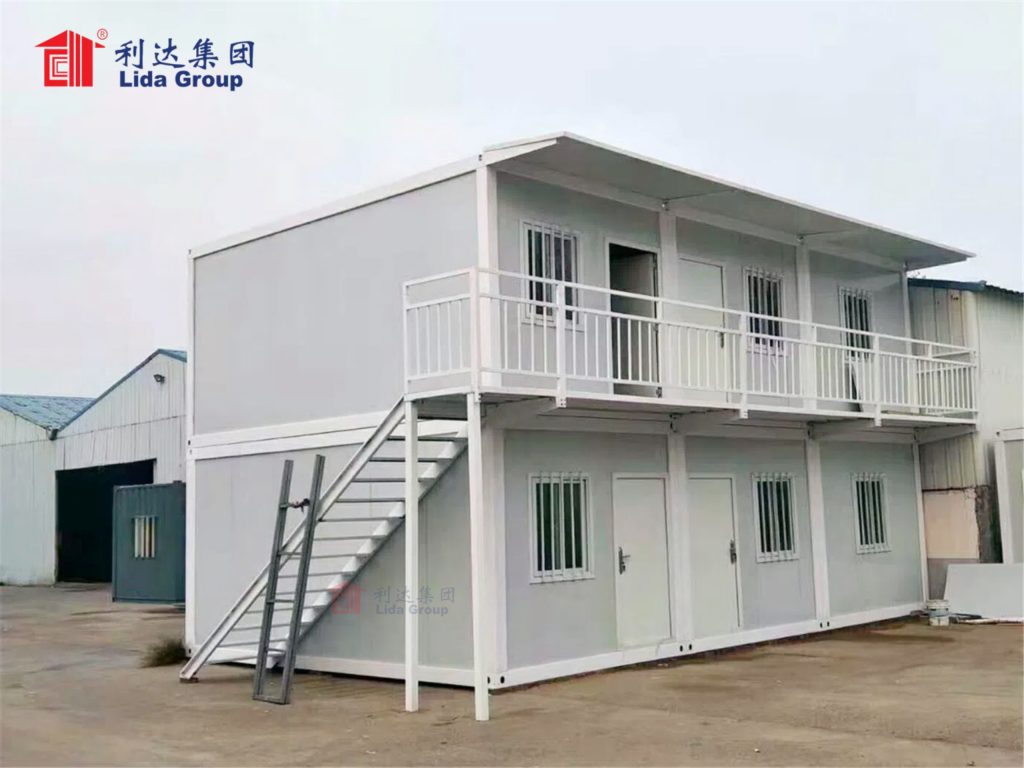
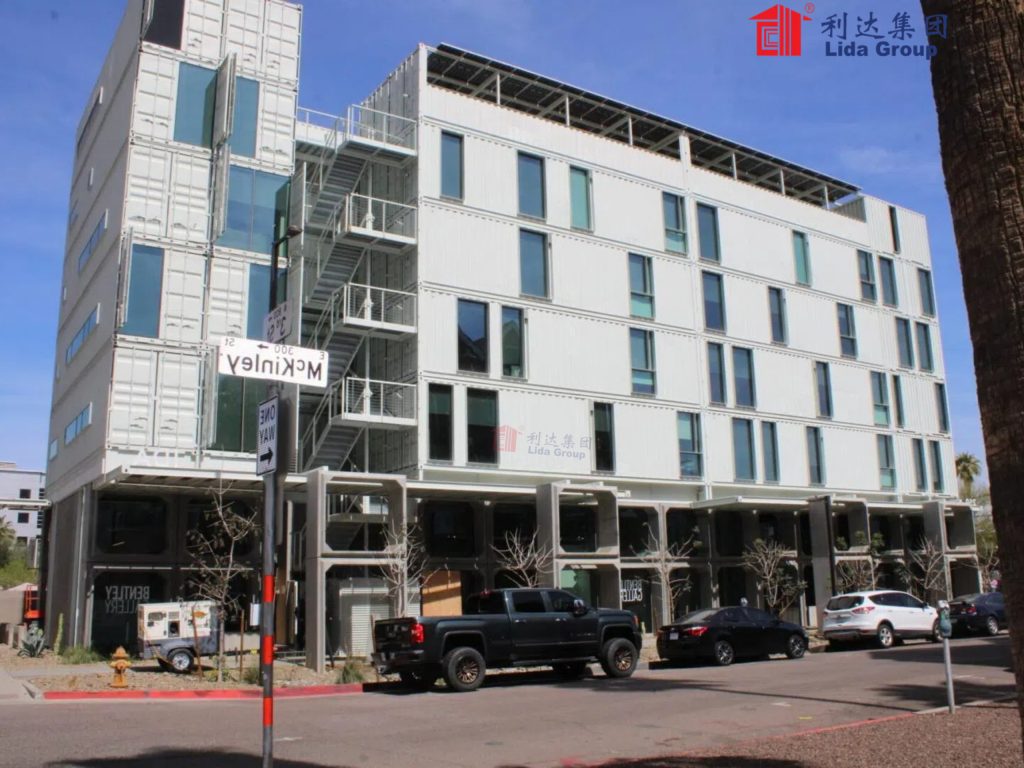
Each modular unit is designed as a self-contained “building block” that can serve a specific function—such as dormitories, bathrooms, kitchens, dining halls, recreation rooms, or office spaces. These units are manufactured in standard sizes (20-foot and 40-foot) to ensure compatibility with global shipping and transportation standards, but they can also be customized to meet specific project requirements. The key to scalability lies in the innovative connection system, which allows modular units to be joined together horizontally (to expand the camp’s footprint) or vertically (to stack up to 4 levels, saving space in dense project sites) in a matter of hours.
Lida’s engineering team uses advanced parametric design software to create scalable camp layouts that can be adjusted dynamically. For example, a camp designed to house 500 workers can be expanded to accommodate 1,000 workers by adding additional dormitory, bathroom, and kitchen modules—without requiring major modifications to the existing infrastructure (such as water, electricity, or sewage systems). Similarly, if the workforce size decreases, excess modules can be easily removed and relocated to other project sites or stored for future use—maximizing resource utilization and reducing waste.
2.2 High-Efficiency Prefabrication Technology
To ensure rapid deployment and consistent quality, Lida Group’s worker camp modules are fully prefabricated in a controlled factory environment, with a prefabrication rate of 95% or higher. This means that nearly all components of the modules—including walls, roofs, floors, fixtures, and utilities—are manufactured and assembled in the factory before being shipped to the project site. This prefabrication process offers several key advantages for large-scale projects:
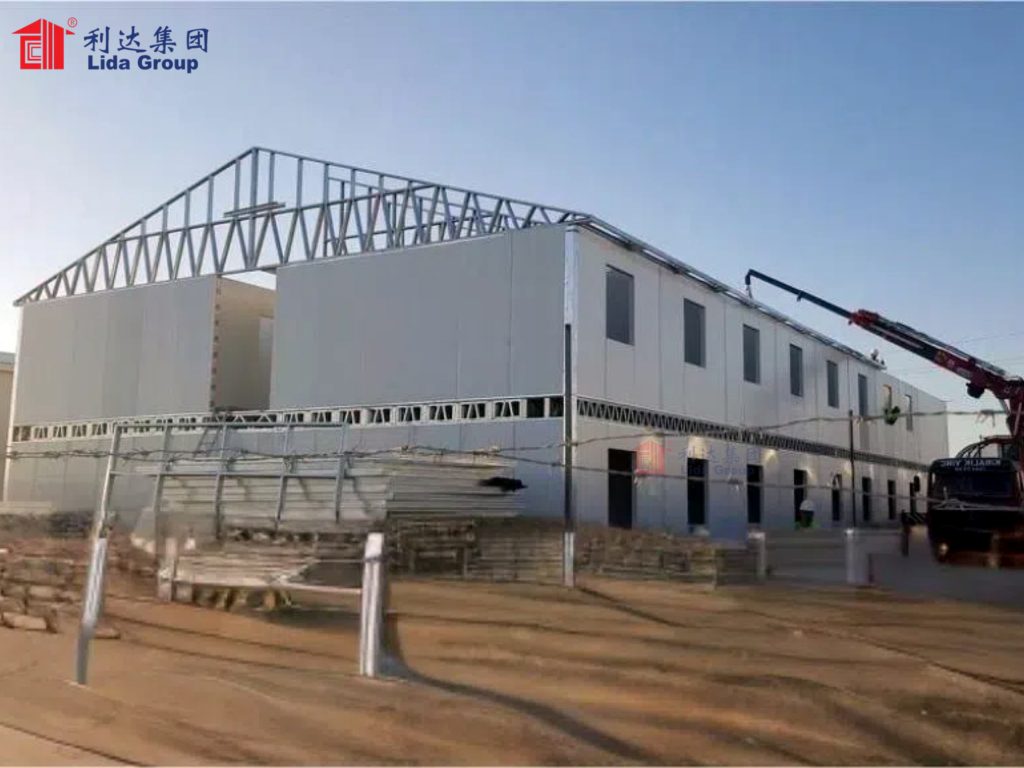
First, it significantly reduces on-site construction time. A typical worker camp for 500 workers can be fully deployed and operational in 7-10 days, compared to 6-12 months for a traditional brick-and-mortar camp. This rapid deployment is critical for large-scale projects, where delays in worker accommodation can impact the entire project timeline. Second, prefabrication ensures consistent quality, as all modules are manufactured under strict factory conditions, with rigorous quality control checks at every stage. This eliminates the variability in quality that is common with on-site construction, particularly in remote or harsh environments where skilled labor may be scarce.
Lida Group uses advanced manufacturing technologies to streamline the prefabrication process, including robotic welding, automated panel production, and modular assembly lines. These technologies not only improve efficiency but also reduce material waste by 70%-80% compared to traditional construction—aligning with the company’s commitment to environmental sustainability. Each module is also pre-tested in the factory to ensure that all utilities (water, electricity, sewage) are functioning properly before shipping, further reducing on-site installation time and potential delays.
2.3 Durable Construction for Harsh Project Environments
Large-scale projects often take place in remote or harsh environments, so Lida Group’s worker camp modules are built to withstand extreme conditions while maintaining structural integrity and comfort. The modules feature a heavy-duty steel frame made from Q355B high-strength galvanized steel, with a frame thickness of 3.0mm-4.0mm—providing exceptional structural strength and resistance to impact, high winds, and seismic activity.
The steel frame is treated with a dual-layer anti-corrosion coating: a hot-dip galvanized layer (100μm-120μm) to prevent rust and a fluorocarbon paint finish (30μm-40μm) to protect against moisture, UV radiation, and chemical exposure. This dual-layer treatment ensures that the modules can withstand coastal saltwater, industrial chemicals, and extreme humidity for 15-20 years with minimal maintenance—critical for large-scale projects with long lifecycles.
The walls, roofs, and floors of the modules are made from high-density sandwich panels, consisting of two high-strength steel sheets (1.0mm-1.2mm thick) bonded to a high-density insulation core (rock wool, polyurethane, or XPS). These panels provide exceptional thermal insulation (thermal conductivity ≤0.038W/(㎡·K)), ensuring that the interior of the modules remains comfortable in extreme temperatures (from -40℃ to 50℃). They also offer excellent sound insulation (≥50dB) and impact resistance (compression strength ≥1500kPa), creating a quiet, safe living environment for workers even in noisy industrial settings.
2.4 Integrated Utility Systems for Self-Sufficiency
Large-scale projects in remote areas often lack access to municipal infrastructure (water, electricity, sewage), so Lida Group’s worker camp is equipped with integrated utility systems that ensure self-sufficiency. These systems are designed to be scalable, so they can be easily expanded as the camp grows—eliminating the need for costly upgrades to utility infrastructure.
The water supply system includes modular water storage tanks (ranging from 5,000L to 50,000L), water purification systems (capable of treating groundwater or surface water to drinking standards), and a distributed piping network that can be extended to new modules as the camp expands. The sewage system features modular septic tanks or wastewater treatment plants, which can be scaled up by adding additional units to handle increased wastewater volume. The electrical system includes solar power systems (for off-grid sites), diesel generators (as backup), and a modular distribution network that ensures stable power supply to all modules—even as the camp size increases.
In addition to these core utility systems, the camp can be equipped with additional amenities to enhance worker comfort, such as air conditioning, heating systems, laundry facilities, and internet connectivity. These amenities are integrated into the modular units during prefabrication, ensuring that they are fully functional upon deployment.
2.5 Flexible Layout and Functionality
Lida Group’s Scalable Prefabricated Container Worker Camp is designed to be flexible in both layout and functionality, allowing it to adapt to the specific needs of different large-scale projects. The modular units can be configured to create a wide range of layouts—from linear camps (ideal for long, narrow project sites) to clustered camps (ideal for maximizing space utilization). The units can also be customized to serve different functions, depending on the project’s requirements:
– Dormitory modules: Available in 20-foot (accommodating 4-6 workers) and 40-foot (accommodating 8-12 workers) sizes, with built-in beds, storage cabinets, desks, and ventilation systems.
– Communal modules: Including kitchens (equipped with commercial-grade appliances), dining halls (with seating for 50-200 workers), bathrooms (with showers, toilets, and sinks), laundry rooms (with washing machines and dryers), and recreation rooms (with televisions, tables, and seating).
– Administrative modules: Including offices for project managers, meeting rooms, first aid clinics, and security offices.
This flexibility ensures that the worker camp can be tailored to the unique needs of each large-scale project—whether it is a mining operation requiring robust, dust-resistant modules or a renewable energy project requiring modules with enhanced insulation for extreme cold.

3. Key Advantages of Lida Group’s Scalable Prefabricated Container Worker Camp for Large Projects
Lida Group’s Scalable Prefabricated Container Worker Camp offers a range of advantages over traditional worker accommodation solutions, particularly for large-scale projects. These advantages are directly derived from its core technical features and address the key pain points of project managers—flexibility, cost, efficiency, and worker comfort. Below are the core advantages:
3.1 Unmatched Scalability to Meet Dynamic Workforce Needs
The most significant advantage of Lida’s worker camp is its unmatched scalability, which allows project managers to adjust the camp size in line with the project’s workforce fluctuations. This scalability eliminates the need to build oversized fixed camps (which waste resources) or deal with overcrowding (which reduces worker satisfaction and productivity). For example, a large highway construction project may start with 300 workers, expand to 800 workers during peak construction, and then shrink to 200 workers during the maintenance phase. Lida’s camp can be easily adjusted to accommodate each of these stages—adding modules as the workforce grows and removing them as it shrinks—without disrupting camp operations.
This scalability also allows project managers to optimize costs, as they only pay for the modules they need at each stage of the project. Excess modules can be relocated to other project sites or stored for future use, maximizing the return on investment. In contrast, traditional fixed camps require a large upfront investment that cannot be recovered if the workforce size is smaller than anticipated.
3.2 Rapid Deployment to Avoid Project Delays
Large-scale projects have tight timelines, and delays in worker accommodation can have a cascading effect on the entire project. Lida Group’s worker camp addresses this by offering rapid deployment: a typical camp for 500 workers can be fully operational in 7-10 days, compared to 6-12 months for a traditional brick-and-mortar camp. This rapid deployment is made possible by the high prefabrication rate (95%+) and the modular connection system, which allows modules to be assembled on-site in a matter of hours.
The rapid deployment also reduces the need for on-site skilled labor, which is often scarce in remote project locations. A small team of 4-6 workers can assemble a 500-worker camp in 10 days, eliminating the need to hire large teams of construction workers. This not only saves time but also reduces labor costs—another critical advantage for large-scale projects with tight budgets.
3.3 Cost-Effectiveness Across the Project Lifecycle
Lida’s Scalable Prefabricated Container Worker Camp is cost-effective not just in terms of initial deployment, but across the entire project lifecycle. The key cost-saving factors include:
– Lower upfront costs: Prefabricated modules are cheaper to manufacture than traditional brick-and-mortar construction, and the rapid deployment reduces labor costs.
– Reduced maintenance costs: The durable construction and dual-layer anti-corrosion coating ensure that the modules require minimal maintenance (only regular inspections and occasional cleaning) over their 15-20 year service life. This reduces maintenance costs by 60%-70% compared to traditional camps.
– Reusability: Modules can be relocated to other project sites or stored for future use, eliminating the need to build new camps for each project. This reusability reduces the total cost of worker accommodation across multiple projects by 40%-50%.
– Scalable utility costs: The integrated utility systems can be scaled up or down with the camp size, ensuring that project managers only pay for the water, electricity, and sewage capacity they need—avoiding the waste associated with fixed utility systems.
3.4 Durability and Reliability in Harsh Environments
Large-scale projects often take place in harsh environments, and worker camps must be durable enough to withstand extreme weather conditions and heavy use. Lida’s worker camp modules are built with high-strength steel frames, dual-layer anti-corrosion coatings, and high-density sandwich panels—ensuring that they can withstand high winds (up to 14 levels), seismic activity (up to 7.5 magnitudes), heavy snow loads (up to 2.0kN/㎡), extreme temperatures (-40℃ to 50℃), and corrosion from coastal saltwater or industrial chemicals.
This durability ensures that the camp remains operational throughout the project lifecycle, even in the most challenging conditions. It also reduces the risk of downtime due to camp damage—critical for large-scale projects where any disruption to worker accommodation can impact the project timeline. In tests conducted by independent laboratories, Lida’s modules showed no signs of rust or structural damage after 10 years of exposure to coastal salt spray, demonstrating their long-term reliability.
3.5 Enhanced Worker Comfort and Productivity
Worker satisfaction and productivity are critical for the success of large-scale projects, and Lida’s worker camp is designed to provide a comfortable, safe living environment that supports both. The high-density sandwich panels provide excellent thermal and sound insulation, ensuring that the interior of the modules remains comfortable and quiet—even in extreme temperatures or noisy industrial settings. The dormitory modules are equipped with comfortable beds, storage space, and ventilation systems, while the communal modules (kitchens, dining halls, recreation rooms) provide workers with spaces to relax and socialize.
The camp also includes essential amenities such as clean drinking water, hot showers, laundry facilities, and first aid clinics—ensuring that workers have access to the basic necessities they need to stay healthy and productive. Studies have shown that workers housed in comfortable, well-equipped camps are more productive, have lower absenteeism rates, and are more likely to stay with the project for its entire duration—reducing turnover costs for project managers.
4. Practical Applications and Real-World Case Studies of Large-Scale Projects
Lida Group’s Scalable Prefabricated Container Worker Camp has been deployed in a wide range of large-scale projects worldwide, demonstrating its scalability, durability, and efficiency in diverse environments and project types. Below are key application scenarios and real-world case studies that highlight the effectiveness of the solution:
4.1 Large-Scale Infrastructure Construction: Cross-Country Highway Project
Large cross-country highway projects are among the most demanding large-scale projects, requiring worker camps to be deployed across remote regions with dynamic workforce sizes. Lida’s scalable worker camp is ideal for these projects, as it can be easily expanded to accommodate peak construction teams and relocated as the project advances along the highway route.
Case Study: A major infrastructure developer in Southeast Asia was constructing a 600-kilometer cross-country highway, requiring accommodation for 1,200 workers during peak construction and 300 workers during the maintenance phase. The project spanned remote mountainous regions and coastal areas, with extreme temperatures (ranging from 25℃ to 45℃) and heavy rainfall.
The developer chose Lida Group’s Scalable Prefabricated Container Worker Camp to create 4 satellite camps along the highway route, each designed to be scalable. Lida delivered 240 modular units, including 180 dormitory modules, 30 communal modules (kitchens, bathrooms, dining halls), and 30 administrative modules. The initial camp size for each satellite camp was 300 workers, but as the project entered peak construction, Lida added 60 additional modules to each camp—expanding the total capacity to 1,200 workers in just 5 days.
The modules were customized with enhanced corrosion resistance (for coastal sections) and heat insulation (for mountainous sections), and the integrated utility systems ensured self-sufficiency in remote areas with no municipal infrastructure. As the highway construction advanced, 2 of the satellite camps were disassembled and relocated to new sections of the route—demonstrating the camp’s portability and reusability. After 4 years of use, the modules were still in excellent condition, and the developer reported a 40% reduction in worker accommodation costs compared to traditional camps.
4.2 Large-Scale Mining Operations: Open-Pit Coal Mine
Large open-pit coal mines require worker camps to house hundreds of miners in remote, harsh environments—often characterized by dust, extreme temperatures, and corrosive conditions. Lida’s scalable worker camp is ideal for these operations, as it can be expanded to accommodate new miners as the mine expands and provides a durable, dust-resistant living environment.
Case Study: A large mining company in Australia was expanding its open-pit coal mine in the Queensland outback, requiring accommodation for 800 miners during peak operations and 400 miners during the exploration phase. The site is characterized by extreme heat (up to 48℃), frequent dust storms, and high humidity.
The mining company chose Lida Group’s Scalable Prefabricated Container Worker Camp, which was customized with dust-resistant modules, reflective roof coatings (to reduce interior temperatures), and enhanced ventilation systems. Lida delivered 160 modular units, including 120 dormitory modules, 20 communal modules, and 20 administrative modules. The initial camp size was 400 workers, but as the mine expanded, Lida added 80 additional modules—expanding the capacity to 800 workers in 3 days.
The camp’s integrated utility systems included solar power (to reduce reliance on diesel generators), large water storage tanks (to handle water scarcity), and dust filtration systems (to ensure clean air in the modules). The dual-layer anti-corrosion coating prevented rust from dust and humidity, and the high-density sandwich panels kept the interior temperature comfortable (28-30℃) without excessive energy consumption. After 5 years of use, the camp required minimal maintenance, and the mining company reported a 35% reduction in turnover rates due to improved worker comfort.
4.3 Large-Scale Renewable Energy: Offshore Wind Farm
Large offshore wind farms require worker camps to house construction and maintenance workers in coastal areas, where corrosion from saltwater and high winds are major challenges. Lida’s scalable worker camp is ideal for these projects, as it can be expanded to accommodate construction teams and then scaled down for maintenance teams once the wind farm is operational.
Case Study: A European renewable energy firm was constructing a large offshore wind farm off the coast of Denmark, requiring accommodation for 600 construction workers for 2 years and 150 maintenance workers for the subsequent 20 years. The site is characterized by high winds (up to 12 levels), coastal salt spray, and cold temperatures (down to -5℃).
The firm chose Lida Group’s Scalable Prefabricated Container Worker Camp, which was customized with enhanced corrosion resistance (dual-layer anti-corrosion coating + saltwater-resistant paint) and wind-resistant design. Lida delivered 120 modular units, including 90 dormitory modules, 15 communal modules, and 15 administrative modules. The initial camp size was 600 workers, but after the construction phase, 90 modules were removed and relocated to another wind farm project—reducing the camp size to 150 workers for maintenance.
The camp’s integrated utility systems included a desalination plant (to convert seawater to drinking water), wind-powered electricity (as backup), and a robust drainage system (to handle heavy rainfall). The modules were stacked 3 levels high to save space on the coastal site, and the connection system ensured that the stacked modules remained stable even in high winds. After 2 years of construction and 3 years of maintenance, the camp showed no signs of corrosion or structural damage, and the firm reported a 50% reduction in worker accommodation costs compared to traditional coastal camps.
4.4 Large-Scale Industrial Plant Construction: Petrochemical Complex
Large petrochemical complexes require worker camps to house hundreds of construction workers in industrial environments, where chemical exposure and fire risks are major concerns. Lida’s scalable worker camp is ideal for these projects, as it can be expanded to accommodate peak construction teams and is built with fire-resistant materials to ensure worker safety.
Case Study: A major petrochemical company in the Middle East was constructing a large petrochemical complex in a remote desert region, requiring accommodation for 1,000 workers during peak construction and 200 workers during the commissioning phase. The site is characterized by extreme heat (up to 50℃), industrial chemicals, and high fire risks.
The company chose Lida Group’s Scalable Prefabricated Container Worker Camp, which was customized with fire-resistant modules (rock wool insulation, fire-resistant steel sheets), chemical-resistant coatings, and enhanced air conditioning systems. Lida delivered 200 modular units, including 150 dormitory modules, 30 communal modules, and 20 administrative modules. The initial camp size was 500 workers, but as the project entered peak construction, Lida added 100 additional modules—expanding the capacity to 1,000 workers in 4 days.
The camp’s integrated utility systems included a chemical-resistant sewage treatment plant, large-scale air conditioning (powered by solar and diesel), and fire safety systems (smoke detectors, fire extinguishers, and emergency exits). The modules were arranged in clustered layouts to minimize fire risks, and the scalable design allowed the camp to be reduced to 200 workers after the construction phase. After 3 years of use, the camp remained in excellent condition, and the company reported zero safety incidents related to the worker camp.
5. Technical Specifications and Quality Control Processes
Lida Group’s Scalable Prefabricated Container Worker Camp is built to strict technical standards and undergoes rigorous quality control processes to ensure scalability, durability, and safety—critical requirements for large-scale projects. Below is a detailed overview of the key technical specifications and quality control processes:
5.1 Technical Specifications
-
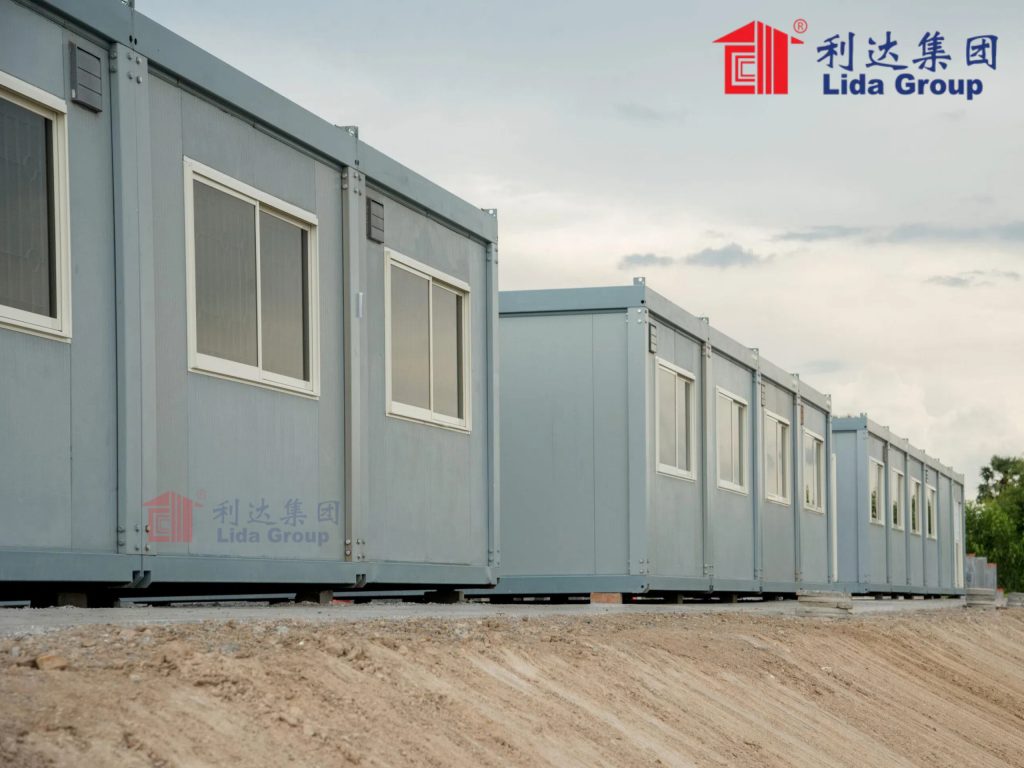
Modular Unit Dimensions: Standard 20-foot (6055mm × 2438mm × 2896mm); 40-foot (12192mm × 2438mm × 2896mm); custom sizes available
-
Frame Material: Q355B high-strength galvanized steel, frame thickness 3.0mm-4.0mm
-
Anti-corrosion Treatment: Hot-dip galvanized layer (100μm-120μm) + fluorocarbon paint finish (30μm-40μm); optional saltwater-resistant paint for coastal projects
-
Wall/Roof/Floor: 150mm-200mm thick high-density sandwich panels (steel sheets + insulation core); outer steel sheet thickness 1.0mm-1.2mm
-
Insulation Core: Rock wool (density ≥120kg/㎥, fire-resistant), polyurethane (PU) (density ≥40kg/㎥, thermal insulation), or XPS (density ≥32kg/㎥, moisture-resistant)
-
Scalability: Horizontal expansion (unlimited, based on site size); vertical stacking up to 4 levels (with concrete foundation support)
-
Deployment Time: 10-15 modules (50-75 workers) per day; full camp (500 workers) in 7-10 days
-
Utility Systems: Modular water storage (5,000L-50,000L), water purification (capacity 1,000L-10,000L/day), sewage treatment (capacity 500L-5,000L/day), solar/diesel power (10kW-100kW)
-
Structural Performance: Wind resistance up to 14 levels; seismic resistance up to 7.5 magnitudes; snow load resistance up to 2.0kN/㎡; fire resistance up to 2 hours (rock wool insulation)
-
Service Life: 15-20 years (with proper maintenance); Reusable for ≥10 relocations
-
Safety Compliance: ISO 9001 certified, CE certified, compliant with GB50011-2010 (seismic standard), ISO 14001 (environmental standard), and OSHA (worker safety standards)
5.2 Quality Control Processes
Lida Group places a high priority on quality control, with a comprehensive quality management system that covers every stage of the manufacturing, deployment, and maintenance process. This ensures that each modular unit meets the highest standards of scalability, durability, and safety—critical for large-scale projects where any defect can lead to costly delays or safety incidents.
1. Raw Material Inspection: All raw materials (steel, sandwich panels, bolts, insulation, utilities) are inspected before entering the factory. The steel is tested for tensile strength, impact resistance, and corrosion resistance; the sandwich panels are tested for compression strength, thermal insulation, and fire resistance; and the utility components (pumps, generators, water purification systems) are tested for performance and durability. Only materials that meet Lida’s strict standards are used in production.
2. In-Process Inspection: During the prefabrication process, each modular unit undergoes regular inspections. The steel frame is inspected for weld quality, dimensions, and anti-corrosion coating thickness; the sandwich panels are inspected for bonding strength and surface quality; and the utility systems are inspected for proper installation and functionality. Automated quality control systems (such as 3D scanning) are used to ensure that modules are manufactured to precise specifications—critical for scalability and compatibility between units.
3. Pre-Shipment Testing: Before shipping, each modular unit is fully assembled and tested in the factory. This includes testing the connection system (to ensure compatibility between units), the utility systems (to ensure water, electricity, and sewage function properly), and the structural integrity (to ensure compliance with wind, seismic, and snow load standards). Only units that pass all tests are shipped to the project site.
4. On-Site Installation Inspection: Lida’s quality control team provides on-site inspection during installation to ensure that modules are connected properly, the foundation is stable, and the utility systems are integrated correctly. This ensures that the camp is scalable, safe, and fully operational upon deployment.
5. Post-Deployment Maintenance Support: Lida Group provides ongoing maintenance support for the worker camp, including regular inspections, component replacement (if needed), and upgrades to the utility systems. This ensures that the camp remains scalable and durable throughout the project lifecycle.
6. Market Advantages of Lida Group’s Scalable Prefabricated Container Worker Camp
In addition to its core advantages of scalability, rapid deployment, and durability, Lida Group’s Scalable Prefabricated Container Worker Camp offers several market advantages that set it apart from competitors—making it the preferred choice for project managers of large-scale projects worldwide:
6.1 Customization Capabilities for Diverse Project Needs
Large-scale projects vary widely in their requirements—from environmental conditions (desert, coastal, mountainous) to worker needs (accommodation size, amenities, safety standards). Lida Group offers extensive customization capabilities, allowing project managers to tailor the worker camp to their specific needs. This includes custom module sizes, insulation materials, utility systems, and amenities (such as first aid clinics, recreation rooms, or office spaces). Lida’s engineering team works closely with clients to design a camp that meets their project’s unique requirements—ensuring that the camp is both scalable and functional.
6.2 Global Logistics and Deployment Expertise
Large-scale projects often take place in remote or hard-to-reach locations, and transporting modular units to these sites can be a major challenge. Lida Group has a global network of manufacturing facilities, logistics partners, and service centers, allowing it to deliver modular units to clients in over 120 countries. The company’s logistics team specializes in transporting modular units to remote locations, using standard shipping methods (trucks, ships, trains) and specialized transportation (helicopters, off-road trucks) when needed. Lida also provides on-site installation teams with extensive experience in remote deployment—ensuring that the camp is deployed quickly and efficiently, even in the most challenging locations.
6.3 Environmental Sustainability
Large-scale projects are increasingly focused on environmental sustainability, and Lida Group’s worker camp aligns with these goals. The high prefabrication rate reduces construction waste by 70%-80% compared to traditional construction; the steel frame is made from recycled steel (where possible); and the insulation materials are eco-friendly and recyclable. The scalable utility systems reduce energy and water waste by aligning capacity with demand, and the modules’ reusability reduces the need for new construction—minimizing the camp’s environmental impact. Lida’s worker camp is also compliant with global environmental standards (ISO 14001), making it a sustainable choice for large-scale projects.
6.4 Comprehensive After-Sales Support
Large-scale projects have long lifecycles, and project managers need reliable after-sales support to ensure that the worker camp remains operational throughout the project. Lida Group provides comprehensive after-sales support, including on-site maintenance, component replacement, utility system upgrades, and technical assistance. The company’s global service network ensures that support is available 24/7—critical for remote project sites where downtime can be costly. Lida also offers training for client teams on camp maintenance and operation, empowering project managers to manage the camp independently if needed.
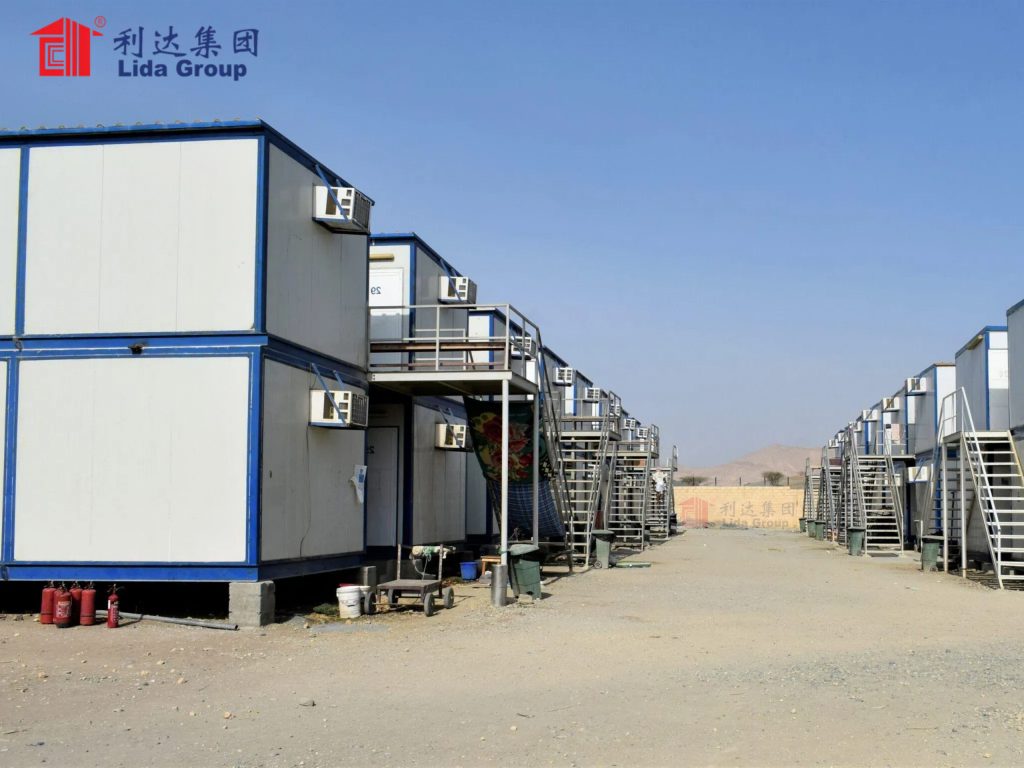
7. Challenges and Solutions in Deploying Scalable Worker Camps for Large Projects
While Lida Group’s Scalable Prefabricated Container Worker Camp offers numerous advantages for large-scale projects, it also faces several challenges in deployment—particularly in remote, harsh, or heavily regulated environments. Below are the key challenges and Lida’s practical solutions to address them:
7.1 Challenge: High Transportation Costs for Remote Locations
Shipping modular units to remote project sites (such as mountainous mining regions or offshore islands) can be expensive, particularly for large camps requiring hundreds of modules. This can increase the overall cost of the camp for project managers.
Solution: Lida Group has partnered with local logistics providers in remote regions to reduce transportation costs. The company also offers foldable modular units, which reduce shipping volume by 60%-70%—allowing more units to be transported in a single shipment. For extremely remote locations, Lida provides kit-form modules, where components are shipped separately and assembled on-site—reducing the size and weight of each shipment. Additionally, Lida’s global manufacturing facilities allow the company to produce modules closer to the project site (where possible), further reducing transportation costs.
7.2 Challenge: Adapting to Extreme Environmental Conditions
Large-scale projects often take place in extreme environments (e.g., arctic cold, desert heat, coastal saltwater), which can pose challenges to the camp’s functionality and comfort—even with durable construction.
Solution: Lida offers specialized modules for extreme environments, including arctic modules (enhanced insulation, floor heating, wind-resistant design), desert modules (reflective roof coatings, solar-powered cooling, dust-resistant materials), and coastal modules (enhanced corrosion resistance, saltwater desalination). The company also provides custom utility solutions for extreme environments—such as ice-melting systems for arctic camps and water conservation systems for desert camps. These specialized solutions ensure that the camp remains comfortable and operational, even in the harshest conditions.
7.3 Challenge: Regulatory Compliance in Different Countries
Building codes, safety standards, and environmental regulations vary widely by country and region—making it difficult for project managers to obtain permits for worker camps, particularly for large-scale projects with long lifecycles.
Solution: Lida Group works closely with local governments, building code organizations, and regulatory bodies to ensure that its worker camp complies with local regulations. The company’s products are certified to international standards (ISO, CE, OSHA), which demonstrate compliance with global safety and environmental requirements. Lida also partners with local architects and engineers to adapt its camp designs to local building codes—ensuring that project managers can obtain permits quickly and easily. Additionally, Lida provides documentation and testing reports to support permit applications, streamlining the regulatory process.
7.4 Challenge: Integrating with Existing Project Infrastructure
Large-scale projects often have existing infrastructure (such as power plants, water sources, or sewage systems), and integrating the worker camp’s utility systems with this infrastructure can be challenging—particularly if the camp is scalable.
Solution: Lida Group’s worker camp is designed with flexible utility connections that allow it to integrate seamlessly with existing project infrastructure. The modular utility systems can be configured to connect to existing power grids, water sources, or sewage systems—reducing the need for additional infrastructure investments. Lida’s engineering team also works with project managers to design a utility integration plan that supports the camp’s scalability—ensuring that the camp can be expanded or shrunk without disrupting the existing infrastructure.
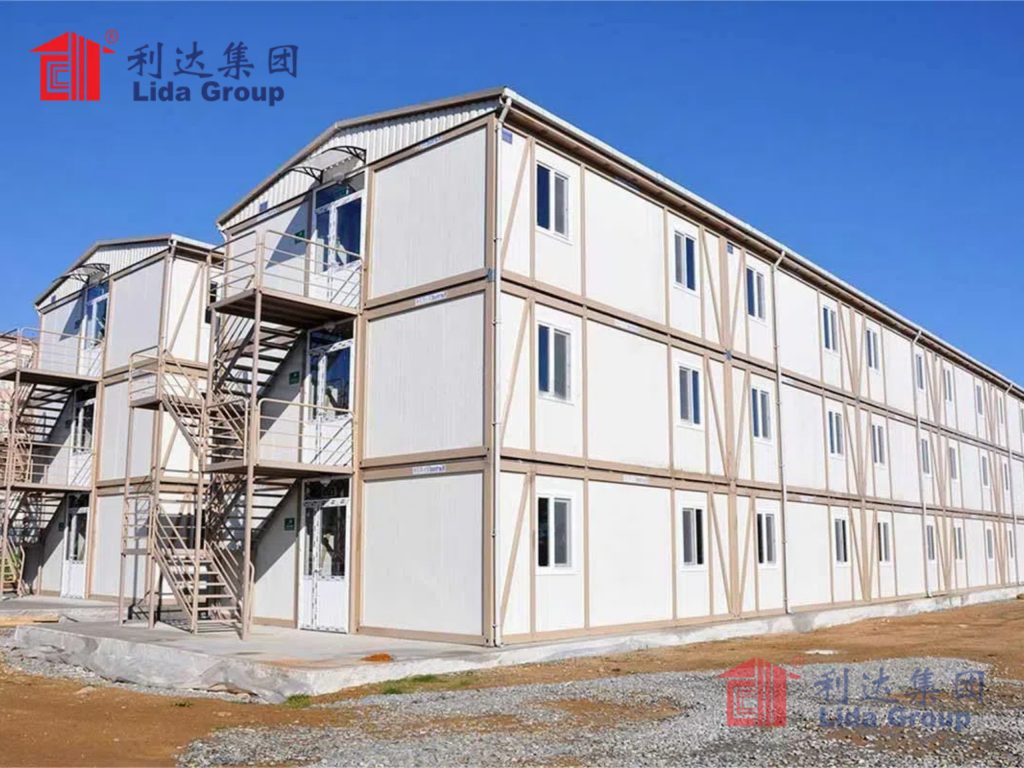
8. Conclusion
Lida Group’s Scalable Prefabricated Container Worker Camp represents a transformative solution for large-scale projects, addressing the key pain points of traditional worker accommodation—inflexibility, slow deployment, high costs, and poor adaptability. Designed around the principles of scalability, modularity, and durability, this worker camp allows project managers to adjust the camp size in line with dynamic workforce needs, deploy rapidly to remote sites, and maintain a safe, comfortable living environment for workers—all while reducing costs and supporting project success.
This article has provided a comprehensive overview of Lida Group’s solution, exploring its core technical features, key advantages, practical applications, technical specifications, quality control processes, and market positioning. The real-world case studies—spanning infrastructure construction, mining, renewable energy, and industrial plant construction—demonstrate that the camp is not just a theoretical concept, but a proven, effective tool that has been successfully deployed in some of the world’s most challenging large-scale projects. Whether housing 400 miners in the Australian outback, 1,200 highway workers in Southeast Asia, or 600 offshore wind farm workers in Denmark, Lida’s worker camp has consistently delivered scalability, durability, and efficiency.
The core strength of Lida’s solution lies in its ability to align with the dynamic needs of large-scale projects. Unlike traditional fixed camps that are designed for a single workforce size, Lida’s camp is a dynamic asset that grows and shrinks with the project—eliminating waste, reducing costs, and ensuring that worker accommodation never becomes a bottleneck for project progress. Its rapid deployment capability ensures that workers can be housed quickly, avoiding project delays, while its durable construction ensures that the camp remains operational throughout the project lifecycle—even in the harshest environments.
Lida Group’s commitment to innovation, quality, and customer-centricity sets it apart from competitors. The company’s extensive customization capabilities, global logistics network, comprehensive after-sales support, and focus on environmental sustainability ensure that project managers receive a tailored solution that meets their unique needs—whether the project is in a remote desert, a coastal region, or a mountainous area. By combining advanced manufacturing technologies, rigorous quality control, and practical engineering, Lida Group has created a worker camp that not only meets the demands of large-scale projects but also enhances worker satisfaction and productivity—critical factors for project success.
As large-scale projects continue to expand globally—driven by infrastructure development, renewable energy transition, and industrial growth—the demand for scalable, efficient, and durable worker accommodation will only increase. Lida Group’s Scalable Prefabricated Container Worker Camp is well-positioned to meet this demand, offering a reliable, cost-effective, and sustainable solution that redefines workforce accommodation for large-scale projects. With its unwavering focus on scalability, durability, and efficiency, Lida Group remains a leader in modular container construction, delivering innovative solutions that support the success of large-scale projects and enhance the quality of life for workers worldwide.
In conclusion, Lida Group’s Scalable Prefabricated Container Worker Camp is more than just a worker accommodation solution—it is a strategic investment that helps project managers optimize costs, improve efficiency, and ensure the success of their large-scale projects. For organizations seeking a flexible, durable, and efficient worker camp that can adapt to the dynamic needs of large projects, Lida Group stands as the trusted partner, delivering solutions that perform reliably in the most challenging environments, anywhere in the world.
Related news
-
Rapid Deployment with Easy Install Container House Technology
2026-02-14 13:55:22
-
High-Strength Durable Modular Container Dormitory by Lida Group
2026-02-14 14:02:41
-
Lida Group Delivers Turnkey Prefabricated Container Worker Camp
2026-02-14 13:48:00
contact us
- Tel: +86-532-88966982
- Whatsapp: +86-13793209022
- E-mail: sales@lidajituan.com
