



**Introduction**
In the high-stakes world of large-scale construction, mining, energy, and infrastructure development, project schedules are measured not in months but in days. Every delay translates directly into escalating costs, missed operational milestones, and competitive disadvantage. For project managers facing aggressive timelines, traditional construction methods—with their sequential processes, weather dependencies, and labor-intensive on-site work—often become the critical path constraint that jeopardizes the entire project.
The solution to this scheduling challenge lies in scalable prefab easy assembly building systems. Engineered for speed, designed for flexibility, and manufactured with precision, these systems represent a fundamental departure from conventional construction. By shifting the majority of building work from chaotic job sites to controlled factory environments, they enable project managers to scale workforce accommodation and support facilities rapidly, aligning with the dynamic needs of demanding project schedules.
This article explores how scalable prefab easy assembly building systems meet demanding project schedules through integrated design, parallel processing, rapid deployment, and inherent flexibility. We will examine the principles of scalability that enable camps to grow with project phases, the engineering innovations that compress timelines, the logistical strategies that ensure timely delivery, the real-world projects that validate performance, and the economic benefits of schedule certainty. By the conclusion, it will be evident that scalable prefab easy assembly buildings are not merely an alternative to traditional construction but a strategic tool for meeting the most aggressive project timelines.
**Chapter 1: The Scheduling Challenge in Large-Scale Projects**
To understand the value of scalable prefab easy assembly buildings, one must first appreciate the scheduling challenges inherent in large-scale projects.
**1.1 The Critical Path Constraint**
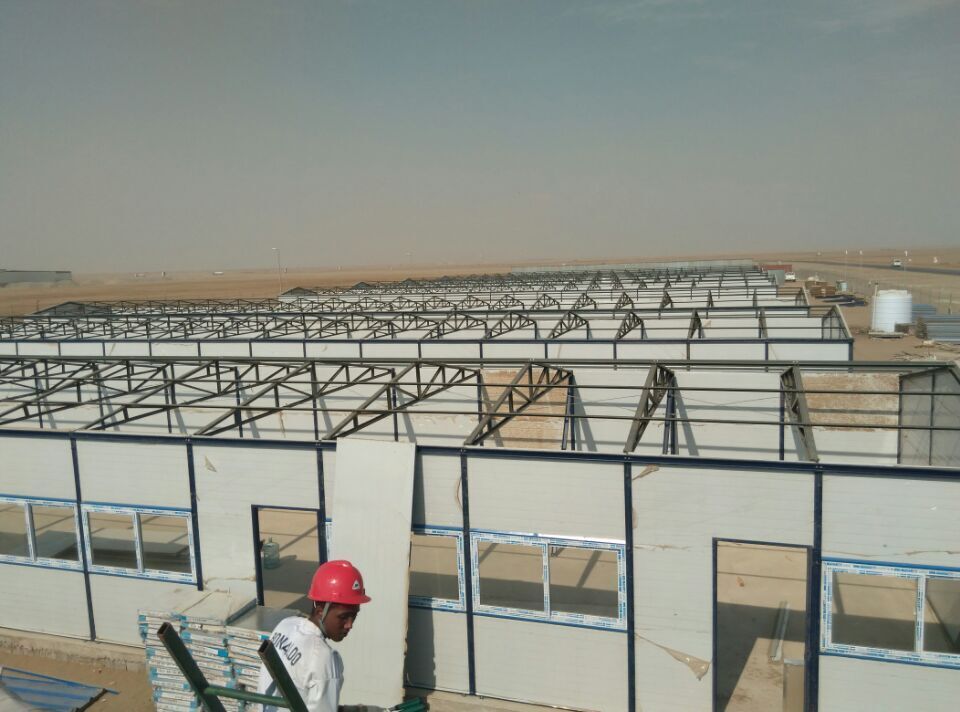
Large-scale projects—whether mining operations, infrastructure developments, or industrial facilities—follow a critical path that determines the earliest possible completion date. Workforce accommodation is rarely the most glamorous element of this critical path, but it is frequently the most consequential. Without adequate housing, workers cannot be deployed. Without workers, project activities cannot commence. When accommodation falls behind schedule, the entire project is delayed.
Traditional accommodation construction requires 6-12 months from groundbreaking to occupancy. For projects that need to deploy workforces rapidly, this timeline is untenable. Prefab easy assembly systems compress this to 4-6 weeks for camps of 100-200 workers, removing accommodation from the critical path entirely.
**1.2 Workforce Fluctuations**
Project workforces rarely remain constant. During mobilization, workforce numbers ramp up gradually. During peak construction phases, workforce size may double or triple. As projects near completion, workforce numbers taper off. Traditional construction produces fixed-capacity camps that are either oversized and underutilized during off-peak periods or undersized and overcrowded during peak periods. This mismatch wastes capital and compromises worker welfare.
Scalable prefab systems address this challenge through modular design. Additional units can be deployed as workforce numbers increase; units can be removed or redeployed as numbers decline. This scalability ensures that accommodation capacity precisely matches workforce requirements at every project phase.
**1.3 Unpredictable Site Conditions**
Remote project sites present unpredictable conditions. Unexpected rock formations delay foundation work. Seasonal weather windows close earlier than anticipated. Supply chain disruptions delay material deliveries. Traditional construction, with its linear sequential process, is vulnerable to each of these disruptions. A single delay propagates through the entire schedule.
Prefab easy assembly systems mitigate this vulnerability through parallel processing. While site preparation occurs, building components are manufactured in the factory. Foundation work can proceed even if component deliveries are slightly delayed; component delivery can proceed even if site work is delayed. The schedule is less vulnerable to any single point of failure.
**Chapter 2: The Scalability Principle—Design for Growth**
Scalability is not an afterthought in prefab easy assembly building systems; it is a fundamental design principle.
**2.1 Modular Architecture**
The foundation of scalability is modular architecture. Every building component is designed to standardized dimensions with standardized connection points. This standardization enables:
– **Incremental expansion:** Additional units can be added without disrupting existing operations
– **Reconfiguration:** Units can be rearranged to accommodate changing requirements
– **Vertical stacking:** Where land area is limited, units can be stacked up to three stories
– **Horizontal connection:** Multiple units can be combined to create larger spaces
The modular approach means that a camp can start with a core of 50 units to house the initial construction crew and expand to 500 units as the project enters full operation. This incremental investment avoids the capital waste of building full capacity before it is needed.
**2.2 Standardized Connection Systems**
Scalability depends on connection systems that enable rapid assembly and disassembly. Prefab easy assembly buildings utilize high-strength bolted connections rather than welding. Bolted connections offer:
– **Speed:** Installation with basic tools, no welding certification required
– **Reusability:** Connections can be undone and redone multiple times without damage
– **Inspectability:** Visual confirmation of proper installation
– **Flexibility:** Accommodates slight misalignments during expansion
These connection systems enable camps to be reconfigured as project phases evolve. A building that serves as a dining hall during one phase can be converted to office space during another.
**2.3 Phased Delivery**
Scalable prefab systems support phased delivery aligned with project milestones. A typical phased delivery might include:
– **Phase 1 (Mobilization):** 50 units for initial crew, basic dining and sanitation
– **Phase 2 (Peak Construction):** Additional 150 units, expanded dining, recreation facilities
– **Phase 3 (Operations):** Maintenance facilities, medical clinic, permanent offices
– **Phase 4 (Demobilization):** Removal of temporary units, repurposing or relocation
Each phase is delivered precisely when needed, avoiding the capital costs and maintenance burdens of early deployment.
**Chapter 3: Rapid Deployment—Compressing Timelines**
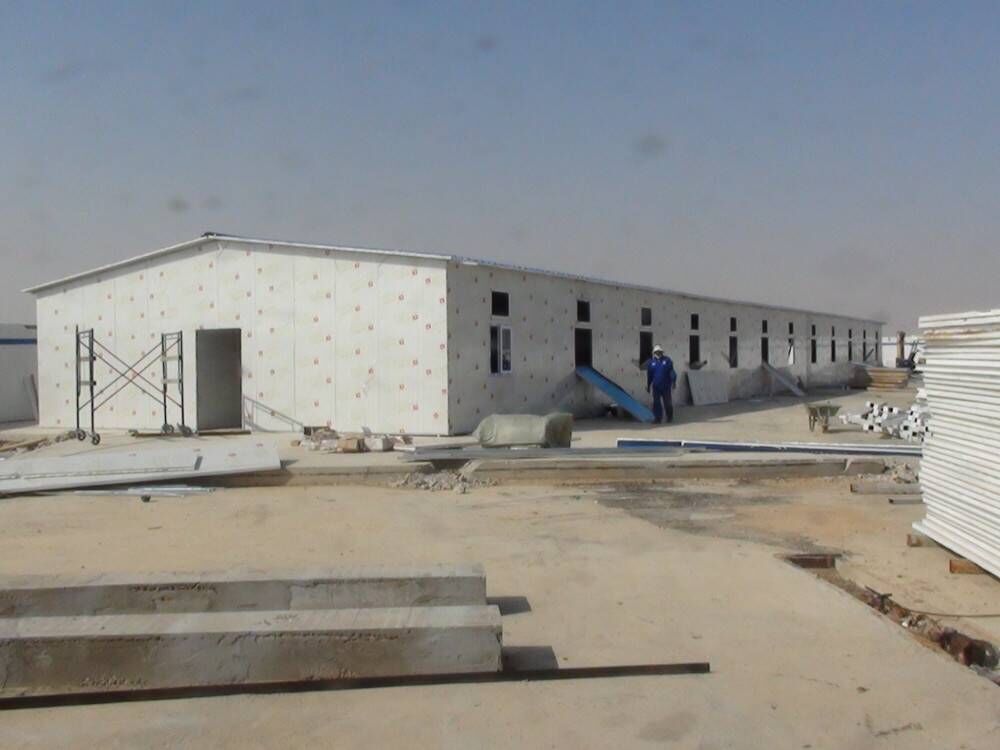
The speed of prefab easy assembly buildings is achieved through a holistic process optimized at every stage.
**3.1 Factory Prefabrication**
All building components are manufactured in controlled factory environments where:
– **CNC cutting** achieves tolerances of 0.5mm or better
– **Automated welding** ensures consistent, strong joints
– **Quality control** inspections occur at every production stage
– **Climate control** eliminates weather delays
Factory fabrication compresses production timelines dramatically. A complete 100-unit camp can be manufactured in 4-6 weeks while site preparation proceeds concurrently.
**3.2 Parallel Processing**
The time savings begin with parallel processing. While site preparation occurs on location—clearing, grading, foundation installation—building components are being manufactured in the factory. These parallel work streams eliminate the sequential dependency of traditional construction. By the time the foundation is ready, the building components are already fabricated, packed, and awaiting shipment.
**3.3 Accelerated Foundation Solutions**
Traditional foundations require excavation, formwork, steel reinforcement, concrete pouring, and weeks of curing. Prefab easy assembly buildings utilize accelerated foundation solutions:
– **Screw piles:** Steel piers screwed into the ground, installed in hours rather than days
– **Precast concrete pads:** Factory-manufactured elements placed directly on prepared ground
– **Gravel pads:** Compacted stone bases requiring no curing
– **Adjustable steel supports:** Leveling systems accommodating uneven terrain
These foundation options can be installed in 1-2 days, compared to 2-4 weeks for traditional concrete foundations.
**3.4 Streamlined Assembly**
The assembly process is designed for speed:
| Activity | Duration (100-unit camp) |
|———-|————————–|
| Foundation installation | 2-3 days |
| Component delivery/staging | 2 days |
| Floor assembly | 3-4 days |
| Wall erection | 5-7 days |
| Roof installation | 3-4 days |
| Utility connections | 2-3 days |
| Finishing | 3-4 days |
| Inspection/handover | 1 day |
| **Total** | **21-28 days** |
A 100-unit workforce camp that would require 12-18 months with traditional construction can be operational in 4 weeks with prefab easy assembly systems.
**Chapter 4: Engineering for Speed and Reliability**
Rapid deployment does not mean sacrificing quality or durability. Prefab easy assembly buildings are engineered to meet or exceed building codes applicable to permanent structures.
**4.1 Structural Integrity**
The structural framework utilizes cold-rolled galvanized steel—Q235B grade—offering tensile strength exceeding 400 MPa while remaining lightweight. Structural parameters meet rigorous standards:
– **Floor live load:** 2.0 KN/m², sufficient for residential and commercial occupancy
– **Roof live load:** 0.5-1.0 KN/m², accommodating snow accumulation
– **Wind load resistance:** 0.6-1.2 KN/m², equivalent to 120-180 mph wind speeds
– **Earthquake resistance:** Grade 8-9 on seismic intensity scale
– **Stacking capacity:** Up to three stories
**4.2 Advanced Insulation**
The building envelope is critical for energy efficiency and occupant comfort. Sandwich panel construction delivers:
– **Wall panels:** 75mm insulation core, U-values of 0.25-0.35 W/(m²·K)
– **Roof panels:** 100-150mm insulation core, U-values of 0.20-0.30 W/(m²·K)
– **Thermal bridging elimination:** Continuous insulation across entire surface
– **Airtightness:** 0.23 ACH@50Pa, exceeding Passivhaus standards
These values represent 50-60% better thermal performance than conventional construction.
**4.3 Corrosion Protection**
Steel components are protected by multi-layer coating systems ensuring service lives of 25-50 years:
– **Galvanization:** Hot-dip galvanized steel
– **Primer coating:** Epoxy primer, 20-40 μm thickness
– **Finishing coat:** Polyurethane coating, 40-50 μm thickness
**Chapter 5: Real-World Validation—Projects Meeting Demanding Schedules**
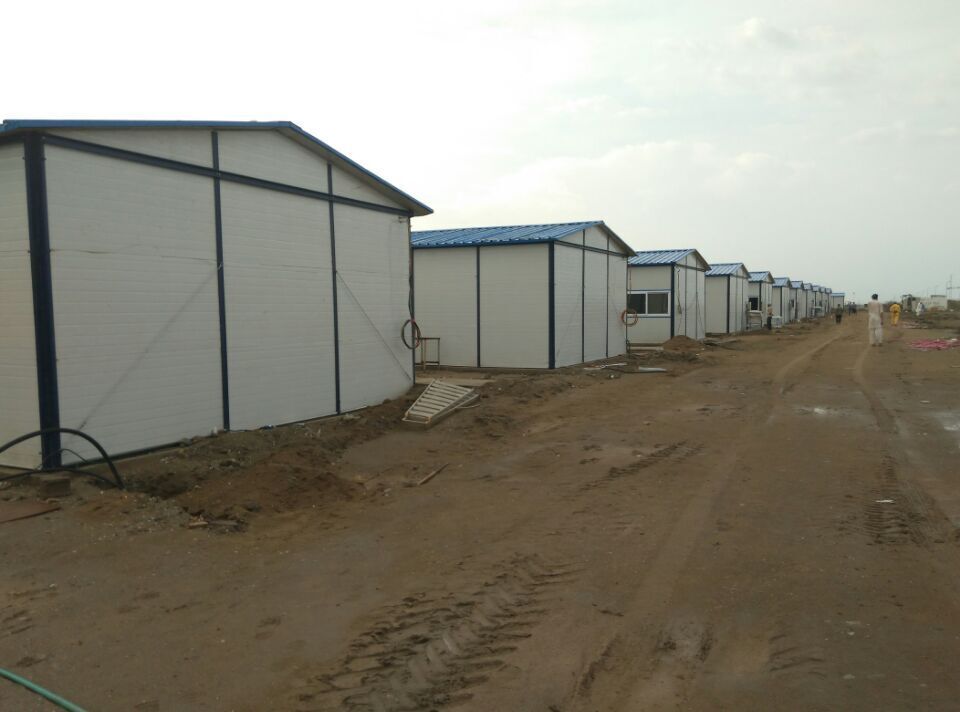
The ability of scalable prefab easy assembly buildings to meet demanding project schedules is validated through successful projects worldwide.
**5.1 European Mountain Hydroelectric Camp**
In a remote mountainous region of Eastern Europe, a hydroelectric project required workforce housing for 200 workers before winter conditions made construction impossible. The window was 60 days. Traditional construction would have required 12-18 months.
The developer utilized prefab easy assembly buildings with 100mm sandwich panel walls and 150mm roof insulation. Components were manufactured in 25 days, shipped flat-packed, and assembled by a six-person crew. The entire 50-unit camp—including sleeping quarters, dining facilities, recreation areas, and a medical clinic—was operational in 21 days. The project commenced on schedule, avoiding a full season of delay.
**5.2 Australian Mining Expansion**
A major iron ore mining operation in Western Australia required 200 additional accommodation units to support a production expansion. The site was 1,200 kilometers from the nearest city. Every day of delay meant millions in lost production revenue.
Using flat-pack prefab easy assembly buildings, materials were delivered within four weeks of order confirmation. A 12-person assembly crew completed installation in 21 days, with first units occupied within 10 days. The rapid deployment enabled production acceleration by three months, generating millions in additional revenue.
**5.3 North American Affordable Housing**
A developer needed to deliver 25 affordable housing units to qualify for government incentives with a firm deadline. Traditional construction would have required 8-10 months, causing the developer to miss the deadline.
The developer utilized prefab easy assembly homes. The entire community was completed in 14 weeks, with individual homes averaging 10 days of on-site assembly. The accelerated timeline allowed the project to meet the incentive deadline, securing funding that would otherwise have been lost.
**5.4 Caribbean Disaster Response**
Following a devastating hurricane, a humanitarian organization needed to establish shelter for displaced families before the next storm season. Traditional construction was impossible due to damaged infrastructure.
The organization deployed 100 prefab easy assembly units that shipped within 10 days. Local workers, with supervisor guidance, assembled the units on screw-pile foundations, completing the community in 18 days. Families moved in before the next storm season—a timeline impossible with any other construction method.
**5.5 Qingdao Huangdao Container Hospital**
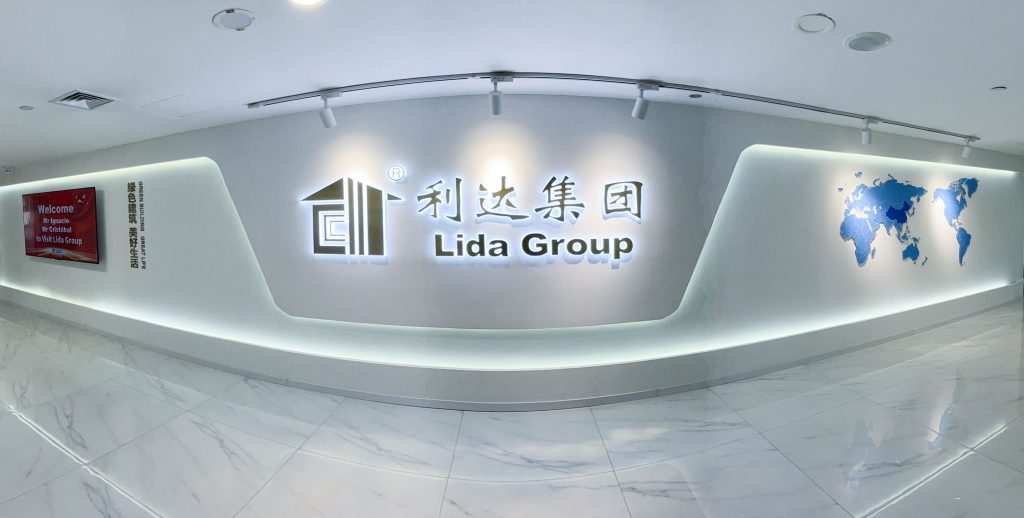
During the pandemic, Lida Group delivered the Qingdao Huangdao Container Hospital Station—a 36,000-square-meter facility including 1,000 isolation rooms and support facilities. The entire facility was delivered in 12 days from start to completion—a timeline that demonstrated the ultimate capability of prefab systems to meet emergency schedules.
**Chapter 6: Economic Benefits of Scalability and Speed**
The combination of scalability and rapid deployment delivers compelling economic advantages.
**6.1 Reduced Financing Costs**
Construction loans accrue interest throughout the building period. A shorter construction timeline means less interest paid. For a $5 million camp, reducing construction time from 12 months to 2 months saves $150,000-$250,000 in interest costs.
**6.2 Earlier Revenue Generation**
For income-producing projects, every month of earlier occupancy generates revenue. A mining operation generating $10 million monthly revenue gains $30 million if production starts three months earlier.
**6.3 Lower Overhead Costs**
Extended construction periods require extended site management, security, temporary facilities, and insurance. A shorter construction period reduces these carrying costs by 70-80%.
**6.4 Capital Efficiency**
Scalable deployment means capital is not tied up in accommodation capacity before it is needed. Phased delivery aligns capital expenditure with project cash flow, improving overall return on investment.
**6.5 Reduced Cost Overruns**
Traditional construction is notorious for cost overruns driven by weather delays, labor shortages, and material price fluctuations. Prefab easy assembly buildings offer cost predictability through fixed-price contracts and factory-controlled production.
**Chapter 7: Scalability in Practice—Phased Deployment**
The scalability of prefab easy assembly buildings enables phased deployment that precisely matches project needs.
**7.1 Phase 1: Mobilization**
During initial mobilization, the project requires basic accommodation for a small advance crew. Deployment includes:
– 20-50 sleeping units
– Basic dining facilities
– Temporary office space
– Portable sanitation
This phase can be delivered in 1-2 weeks, enabling immediate project commencement.
**7.2 Phase 2: Ramp-Up**
As workforce numbers increase, the camp expands to accommodate the growing crew. Additional elements include:
– Expanded sleeping capacity (100-200 units)
– Permanent dining facilities with commercial kitchen
– Recreation and fitness areas
– Medical clinic
– Laundry facilities
This phase can be delivered incrementally, with new units added weekly.
**7.3 Phase 3: Peak Operations**
During peak construction, workforce numbers reach maximum. The camp expands to full capacity with:
– Full sleeping capacity (500+ units)
– Multiple dining halls
– Comprehensive recreation facilities
– Administrative complex
– Maintenance and storage facilities
**7.4 Phase 4: Demobilization**
As the project concludes, workforce numbers decline. The camp contracts through removal of units, which can be:
– Relocated to subsequent projects
– Sold to other operators
– Repurposed for alternative uses
– Stored for future deployment
**Chapter 8: Overcoming Scheduling Challenges**
While prefab easy assembly buildings offer substantial scheduling advantages, successful implementation requires addressing certain challenges.
**8.1 Permitting and Regulatory Approval**
Building codes in some jurisdictions have not fully adapted to prefab construction. Strategies for successful permitting include:
– Engaging local building departments early
– Working with manufacturers providing engineered drawings
– Presenting systems as pre-engineered metal buildings—a well-established classification
**8.2 Site Access and Logistics**
Remote sites may have limited road access. Experienced manufacturers manage:
– Route surveys identifying obstacles
– Multi-modal transport coordination
– Staging area requirements
**8.3 Assembly Supervision**
While assembly is designed to be simple, quality depends on proper execution. Suppliers providing on-site supervisors ensure specifications are met.
**Chapter 9: The Future of Scalable Prefab Construction**
As technology advances, the scalability and speed of prefab easy assembly buildings will continue to improve.
**9.1 Digital Integration**
Building Information Modeling (BIM) and digital twins will enable:
– Real-time schedule tracking
– Predictive logistics optimization
– Virtual assembly verification
**9.2 Automated Assembly**
Robotics and automation will further reduce assembly time:
– Automated guided vehicles transporting components
– Robotic positioning and fastening
– Drone-based quality inspection
**9.3 Advanced Materials**
Next-generation materials will enhance performance:
– Phase-change materials for passive temperature regulation
– Self-healing coatings for extended durability
– Bio-based insulation with lower embodied carbon
**9.4 AI-Optimized Phasing**
Artificial intelligence will optimize phased deployment:
– Predictive workforce forecasting
– Dynamic camp reconfiguration
– Real-time resource allocation
**Conclusion**
Scalable prefab easy assembly building systems represent a fundamental advancement in construction capability—one that enables project managers to meet the most demanding schedules while maintaining quality, comfort, and cost control. By shifting the majority of building work from chaotic job sites to controlled factory environments, these systems compress timelines from months to weeks and enable capacity to scale precisely with project requirements.
The scalability of these systems is built on modular architecture and standardized connection systems. Camps can start small, expand incrementally, and contract as projects conclude—aligning capacity with need and avoiding capital waste. Phased deployment aligns capital expenditure with project cash flow, improving overall return on investment.
The speed of deployment is achieved through parallel processing, factory prefabrication, and accelerated foundation solutions. A 100-unit workforce camp that would require 12-18 months with traditional construction can be operational in 4 weeks. A single-family home that would require 6-12 months can be assembled in 2-6 weeks. An emergency medical facility can be delivered in 12 days. These compressed timelines remove accommodation from the critical path, enabling projects to commence and generate revenue months earlier.
The engineering that enables this speed does not compromise quality. High-strength steel frames provide structural integrity rated for magnitude 8 earthquakes and 150 mph winds. Advanced sandwich panel insulation achieves thermal performance that reduces energy consumption by 30-50% while maintaining occupant comfort. Corrosion protection systems enable service lives of 25-50 years, even in coastal or industrial environments.
Real-world validation across continents confirms these capabilities. European mountain camps delivered in 21 days despite -20°C conditions. Australian mining expansions enabling three months of accelerated production. Caribbean disaster response communities providing shelter before the next storm season. North American affordable housing meeting government incentive deadlines. Each project demonstrates that scalable prefab easy assembly buildings can meet schedules that traditional construction cannot.
For project managers, developers, and organizational leaders facing aggressive timelines, the message is clear: scalable prefab easy assembly buildings offer a proven solution for meeting demanding project schedules. They transform workforce accommodation from a critical path constraint into a strategic asset—enabling projects to start sooner, scale efficiently, and complete on time. In an era where every day of delay carries significant cost and competitive disadvantage, the ability to deploy buildings rapidly and scale precisely is not merely an advantage but a necessity. Prefab easy assembly building systems deliver that capability, providing project managers with the confidence that their workforce will be housed when needed, at the scale required, and with the quality expected.
Related news
-
Sustainable Eco-Friendly Sandwich Panel House for Remote Construction Sites
2026-03-26 16:54:06
-
Lida Group Delivers Comfortable Construction Site Labor Accommodation
2026-03-26 16:39:14
-
Rapid Deployment with Our Prefab Easy Assembly Building Systems
2026-03-26 16:21:39
contact us
- Tel: +86-532-88966982
- Whatsapp: +86-13793209022
- E-mail: sales@lidajituan.com
