



**Introduction**
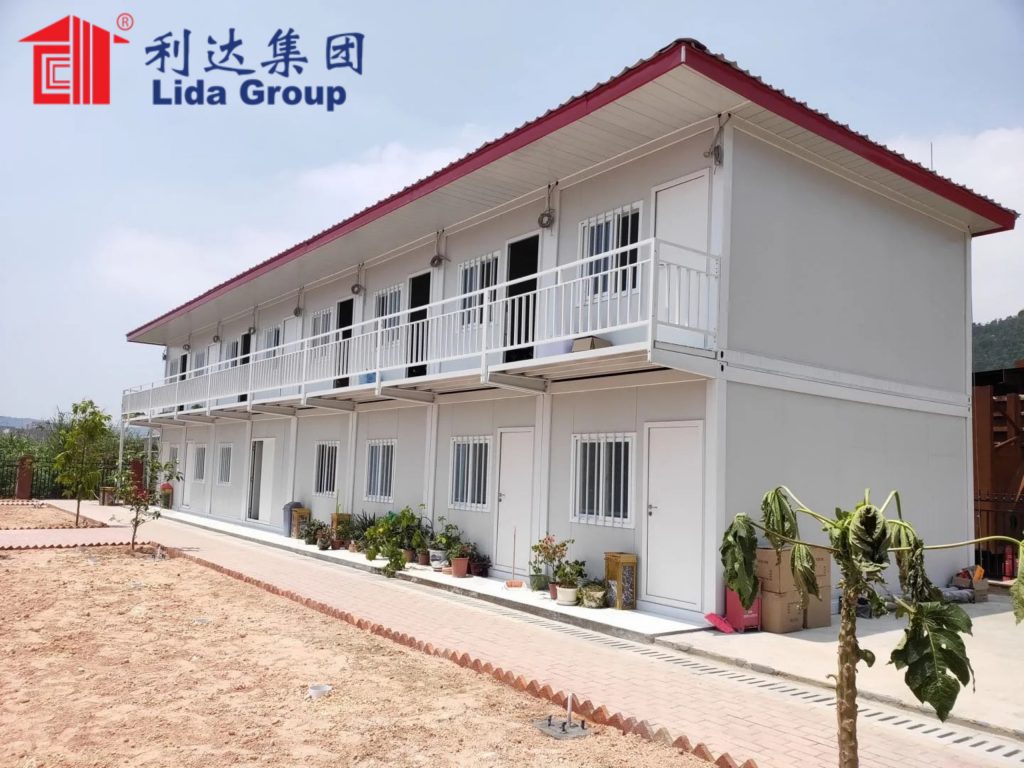
In the most unforgiving corners of the world—where roads are unpaved, temperatures are extreme, and the nearest town is days away—the success of large-scale industrial projects hinges on one critical factor: reliable workforce accommodation. Mining operations in the Atacama Desert, oil and gas exploration in the Siberian tundra, hydroelectric projects in the jungles of Southeast Asia, and infrastructure development in the mountains of Central Asia all share a common challenge. They require housing that can be deployed to remote locations, withstand harsh conditions, and function reliably for years without interruption.
Traditional construction methods often fail in such contexts. The logistical challenges of transporting materials, the scarcity of skilled labor, the unpredictability of weather, and the absence of supply chains make conventional building impractical. In these environments, a different solution is required—one that is engineered for reliability from the ground up.
The prefabricated container labor camp has emerged as the definitive answer to this challenge. Designed specifically for remote project deployment, these camps combine the inherent durability of steel shipping containers with sophisticated engineering that ensures reliable operation in even the most demanding conditions. They are not temporary shelters in the traditional sense but robust, self-sufficient communities capable of supporting workforces for months or years.
This article explores the comprehensive reliability features of prefabricated container labor camps designed for remote projects. We will examine the structural engineering that ensures durability, the logistical systems that enable reliable deployment, the utility infrastructure that guarantees self-sufficiency, the climate-specific adaptations that maintain comfort, the maintenance strategies that sustain long-term operation, and the real-world projects that demonstrate this reliability in action. By the conclusion, it will be evident that these camps represent the gold standard for remote workforce accommodation—delivering the reliability that project success demands.
**Chapter 1: The Reliability Imperative in Remote Projects**
Reliability in workforce accommodation is not merely a matter of comfort; it is a fundamental determinant of project viability. When a project is located hundreds of kilometers from the nearest city, failures in accommodation infrastructure cannot be resolved with a simple service call. The consequences of unreliable housing cascade through every aspect of project operations.
**1.1 Operational Continuity**
A remote project operates on a continuous basis. Mining operations run 24 hours a day, seven days a week. Construction schedules are dictated by weather windows that may be only a few months long. Any interruption in workforce accommodation—whether from structural failure, utility breakdown, or safety concerns—forces work stoppages that can cost hundreds of thousands of dollars per day.
**1.2 Workforce Stability**
Workers in remote locations are making significant sacrifices to be away from their families and communities. When accommodation is unreliable—when heating fails in winter, when water supplies are inconsistent, when safety is compromised—workers leave. High turnover rates in remote projects create a vicious cycle: departing workers increase workloads on remaining staff, leading to fatigue, safety incidents, and further departures.
**1.3 Safety and Risk Management**
In remote locations, emergency services are hours or days away. A structural failure, fire, or utility breakdown that would be manageable in an urban context becomes a life-threatening emergency in a remote setting. Reliable accommodation must therefore incorporate redundancy, fail-safes, and robust safety systems that protect occupants even when external support is unavailable.
**1.4 Long-Term Asset Value**
For projects that span multiple years, accommodation is not a short-term expense but a long-term asset. Reliable construction ensures that the camp retains value over time, either for continued use through subsequent project phases or for resale and relocation to new sites.
**Chapter 2: Structural Reliability—Engineering for Durability**
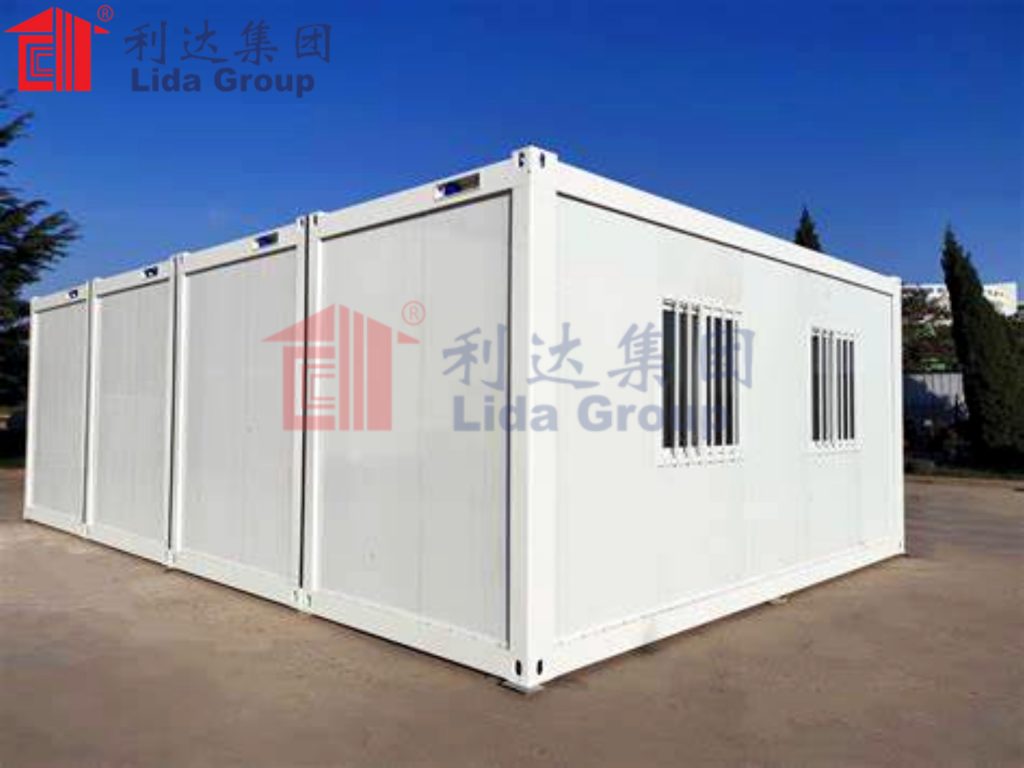
The foundation of any reliable labor camp is structural integrity. Prefabricated container camps are engineered to withstand the most demanding conditions while maintaining safety and functionality.
**2.1 Steel Frame Construction**
The use of steel as the primary structural material is fundamental to reliability. Shipping containers are engineered to withstand stacking loads of up to nine units high, ocean transport in extreme sea conditions, and decades of exposure to saltwater corrosion. When these same structures are repurposed for workforce accommodation, they inherit this inherent durability.
For camps utilizing purpose-built steel frames rather than repurposed containers, the same principles apply. Cold-rolled steel profiles are fabricated to precise specifications, with corrosion-resistant coatings that protect against rust. The structural design accounts for:
– **Wind loads:** Engineered for winds up to 150 mph (240 km/h), suitable for cyclone-prone regions
– **Seismic forces:** Designed for Zone 4 earthquake standards, allowing structures to flex without failure
– **Snow loads:** Rated for heavy snow accumulation in alpine and arctic environments
– **Stacking loads:** Supporting multi-story configurations that maximize site utilization
**2.2 Modular Redundancy**
The modular nature of container camps provides inherent reliability through redundancy. In a conventional building, failure of a structural element can compromise the entire structure. In a container camp, the modular units are structurally independent, with connections designed to distribute loads while maintaining individual integrity. This means that even in the unlikely event of damage to a single unit, the surrounding units remain intact and functional.
**2.3 Connection Systems**
All structural connections utilize high-strength bolted systems rather than welding. Bolted connections offer several reliability advantages:
– **Inspectability:** Bolts can be visually inspected for tightness and corrosion
– **Repairability:** Damaged components can be replaced without cutting or welding
– **Flexibility:** Bolted connections allow for slight movement during seismic events, reducing stress concentrations
– **Disassembly:** Camps can be relocated and reassembled without damage to components
**2.4 Corrosion Protection**
Corrosion is the primary threat to steel structures, particularly in coastal or industrial environments. Lida Group’s container units incorporate multiple layers of corrosion protection:
– **Galvanization:** Steel components are hot-dip galvanized, coating the metal with a protective zinc layer
– **Paint systems:** High-durability epoxy and polyurethane coatings provide additional protection
– **Stainless steel hardware:** Fasteners, hinges, and fittings are specified in corrosion-resistant materials
In coastal installations such as the Australian mining projects, these corrosion protection systems have demonstrated service lives exceeding 20 years with minimal maintenance.
**Chapter 3: Logistical Reliability—Delivering to the Most Remote Locations**
A camp that cannot be delivered reliably to the project site cannot fulfill its purpose. Prefabricated container systems are designed specifically to overcome the logistical challenges of remote deployment.
**3.1 Transportation Optimization**
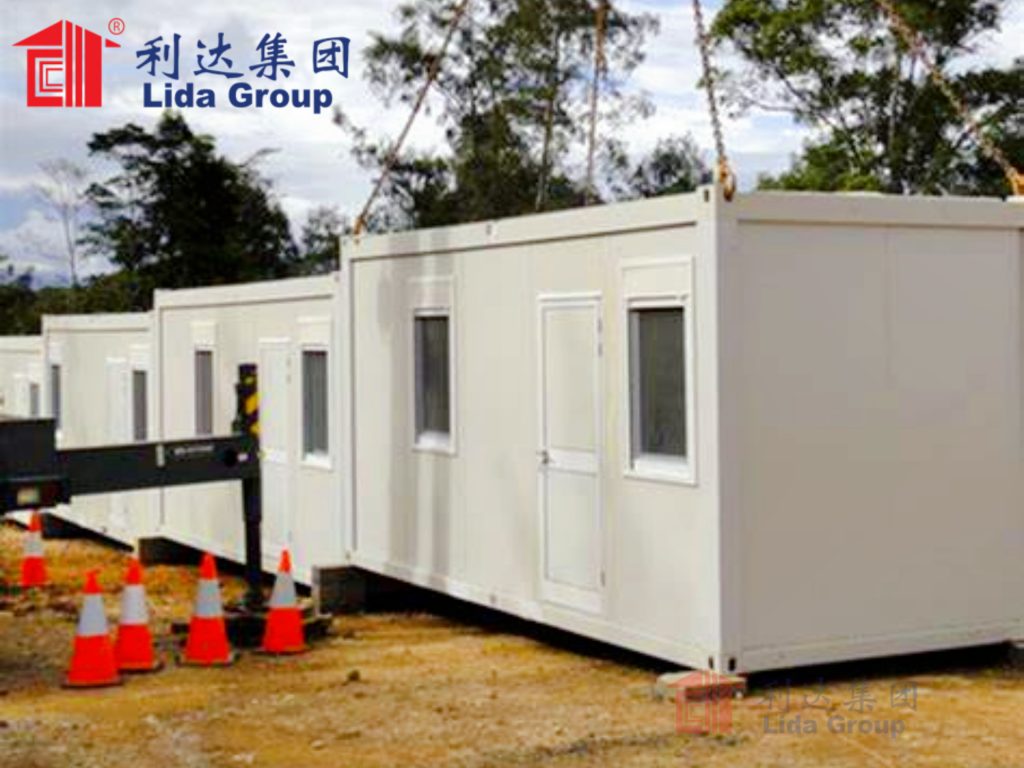
The flat-pack design of modern container camps represents a significant advance in logistical reliability. By shipping components as flat panels rather than volumetric modules, a single 40-foot shipping container can carry components for three to five living units. This reduces the number of shipments required, lowering freight costs and, more importantly, reducing the points of failure in the logistics chain.
For projects in locations without road access, container components can be transported via:
– **Helicopter:** Units are sized and weighted for sling loading under heavy-lift helicopters
– **Barge:** Flat-pack components can be palletized and shipped to river or coastal sites
– **Rail:** Standard container dimensions allow for rail transport to remote railheads
– **Overland trucking:** Units are designed to withstand the vibrations and impacts of unpaved roads
**3.2 Supply Chain Redundancy**
Reliable suppliers maintain inventory of standard components, enabling rapid response to urgent project needs. For the MTZ Project in Southeast Asia, Lida Group delivered 150 container housing units on a compressed timeline, with flat-pack components shipped and assembled on site according to a carefully orchestrated schedule. The ability to draw from existing inventory rather than manufacturing to order ensured that the project timeline was met despite challenging logistics.
**3.3 On-Site Assembly Reliability**
The assembly process itself is engineered for reliability in remote conditions. Connection systems are designed for installation with basic tools—ratchets, wrenches, and levels—eliminating the need for specialized equipment that may be unavailable. Detailed assembly manuals and color-coded components ensure that even crews with limited construction experience can assemble units correctly.
For projects where local labor is used, supplier-provided supervisors provide on-site guidance, ensuring that assembly quality meets specifications. This combination of simplified assembly and expert supervision delivers reliable results even in the most challenging circumstances.
**Chapter 4: Utility Reliability—Self-Sufficiency in Remote Environments**
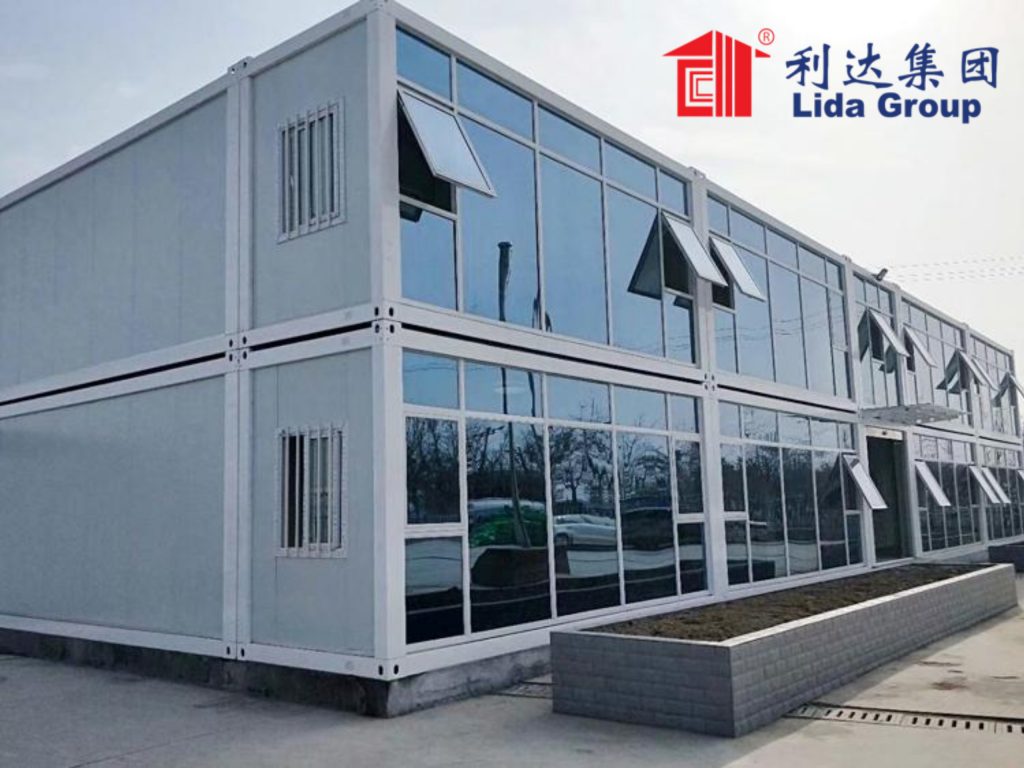
In remote locations, the utilities that urban dwellers take for granted—electricity, water, sanitation, communications—cannot be taken for granted. Reliable container camps are designed as self-sufficient systems that provide these essential services independently.
**4.1 Power Systems**
Electrical reliability is paramount. Container camps utilize redundant power systems to ensure continuous operation:
– **Primary generation:** Diesel generator sets sized for camp load, with fuel storage for extended operation
– **Secondary generation:** Backup generators that automatically engage in the event of primary failure
– **Solar integration:** Photovoltaic arrays that supplement generator power, reducing fuel consumption and providing power during generator maintenance
– **Battery storage:** Lithium-ion or lead-acid battery banks that provide ride-through capability during generator transfer
The electrical distribution system is designed with redundancy as well. Critical loads—medical facilities, communications, security lighting—are served by separate circuits that can be powered from multiple sources.
**4.2 Water Systems**
Reliable water supply is perhaps the most critical utility in remote locations. Container camps incorporate multiple water management strategies:
– **On-site storage:** Large-capacity water tanks sized for extended periods without resupply
– **Water sourcing:** Depending on location, water may be trucked in, drawn from wells, or collected from rainfall
– **Filtration and treatment:** Multi-stage filtration, UV treatment, or reverse osmosis ensures water quality
– **Distribution:** Pump systems with redundancy ensure consistent pressure throughout the camp
For the West Africa market complex, Lida Group implemented water systems that reduced reliance on municipal supply by 70% through rainwater harvesting and greywater recycling, ensuring reliable operation despite local infrastructure limitations.
**4.3 Sanitation Systems**
Waste management in remote locations requires careful engineering. Container camps utilize:
– **Sewage treatment:** On-site treatment plants that process waste to discharge standards
– **Holding tanks:** For temporary storage where treatment is not feasible
– **Vacuum systems:** In cold climates, vacuum toilets prevent freezing in waste lines
The reliability of sanitation systems directly impacts camp habitability. Lida’s systems are designed with redundancy and ease of maintenance, ensuring that sanitation failures do not occur.
**4.4 Communications**
In remote projects, reliable communication is essential for safety and coordination. Container camps are equipped with:
– **Satellite backhaul:** Providing internet and voice connectivity independent of terrestrial infrastructure
– **Wi-Fi networks:** Structured cabling and access points providing coverage throughout the camp
– **Radio systems:** VHF or UHF radios for on-site coordination
– **Emergency communications:** Satellite phones or emergency beacons for backup
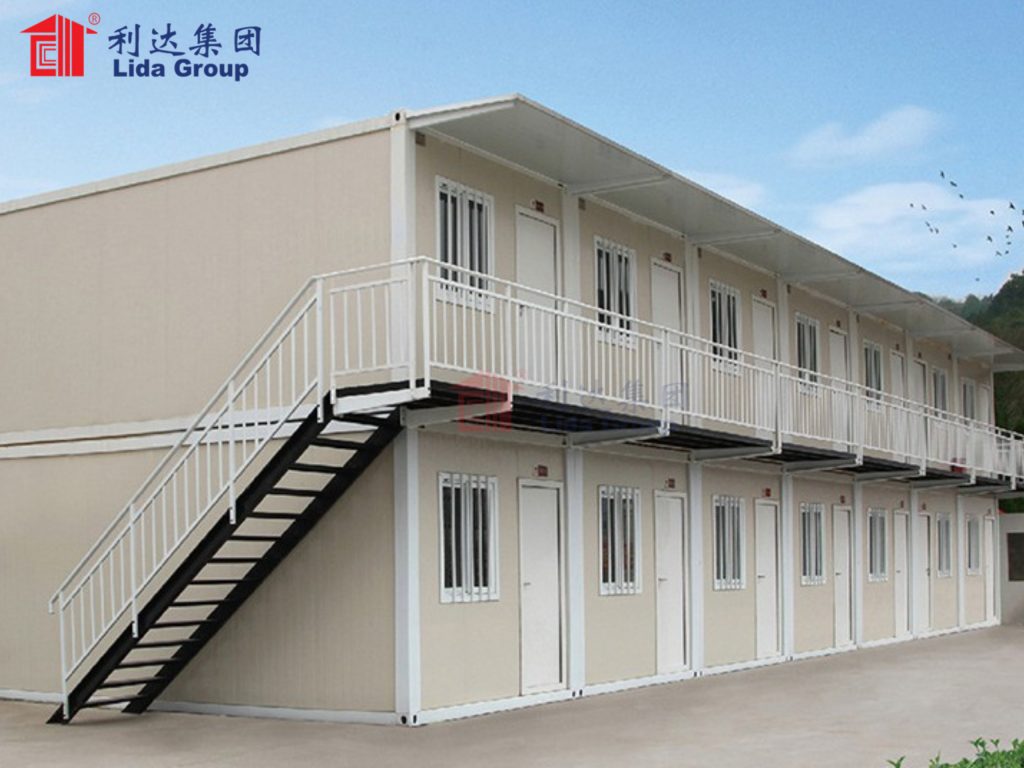
**Chapter 5: Climate-Specific Reliability—Adapting to Extreme Conditions**
Remote projects are often located in regions with extreme climates. Reliable container camps are designed and adapted for the specific conditions of their deployment location.
**5.1 Arctic and Sub-Arctic Operations**
In environments where temperatures drop to -45°C, reliability requires specialized engineering:
– **Enhanced insulation:** 100mm or thicker insulation in walls and roofs, achieving R-values exceeding R-40
– **Triple-glazed windows:** Multiple panes with inert gas fills to prevent heat loss and condensation
– **Trace heating:** Self-regulating heating cables on water pipes, waste lines, and critical infrastructure
– **Permafrost protection:** Elevated foundations that allow cold air to circulate, preventing ground thaw and structural settlement
– **Vestibules:** Double-door entry systems that minimize heat loss during ingress and egress
In northern Canadian oil sands projects, Lida’s Arctic-grade container units have operated continuously through multiple winters, with no failures attributable to cold conditions.
**5.2 Desert and Arid Operations**
In desert environments with daytime temperatures exceeding 45°C, reliability focuses on heat management:
– **Reflective coatings:** Cool-roof coatings that reflect solar radiation, reducing heat gain
– **Increased insulation:** Thermal barriers that slow heat transfer during peak temperatures
– **High-capacity cooling:** Air conditioning systems sized for extreme heat loads
– **Dust protection:** Sealed enclosures and positive pressure systems that prevent dust infiltration
– **Shading structures:** Canopies and awnings that shade walls and windows from direct sun
In the Atacama Desert of Chile, Lida’s container apartments have operated reliably at altitudes above 3,000 meters, where temperature swings exceed 40°C daily and solar radiation is intense.
**5.3 Tropical and Rainforest Operations**
In tropical environments with high humidity and heavy rainfall, reliability requires:
– **Mold and mildew resistance:** Materials selected for resistance to fungal growth
– **Elevated foundations:** Raising units above ground level to prevent flooding and promote airflow
– **Corrosion-resistant finishes:** Additional coatings to protect against humidity
– **Drainage systems:** Gutters, downspouts, and site grading that manage heavy rainfall
– **Ventilation:** Systems that control humidity and prevent condensation
In Southeast Asian projects, Lida’s units have operated reliably through monsoon seasons with no water intrusion or mold issues.
**5.4 Coastal and Offshore Operations**
In coastal environments with salt spray and high winds, reliability demands:
– **Marine-grade coatings:** Enhanced corrosion protection systems
– **Stainless steel hardware:** All exposed fasteners and fittings in corrosion-resistant materials
– **Wind bracing:** Additional structural elements for cyclone resistance
– **Flood protection:** Elevation above storm surge levels
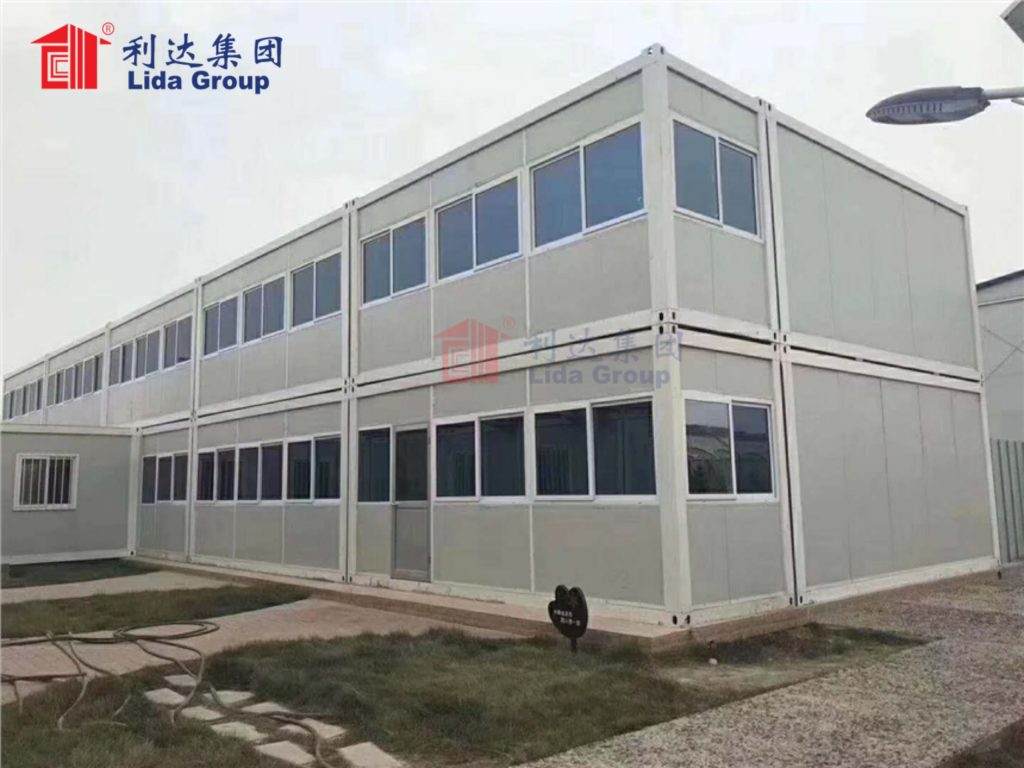
**Chapter 6: Long-Term Reliability—Maintenance and Serviceability**
A camp that is reliable at deployment must remain reliable over years of continuous operation. Prefabricated container systems are designed for maintainability, ensuring that minor issues can be addressed before they become major failures.
**6.1 Accessible Systems**
Critical systems are designed for easy access and service:
– **Electrical panels:** Centrally located with clear labeling and spare capacity
– **Plumbing access:** Wet walls designed with removable panels for pipe access
– **Roof access:** Ladders and walkways for safe inspection and maintenance
– **Utility corridors:** Dedicated spaces for main utility runs, separate from living areas
**6.2 Component Standardization**
Standardization is key to reliable long-term operation. Lida’s units utilize:
– **Common electrical components:** Breakers, outlets, and switches from widely available manufacturers
– **Standard plumbing fittings:** Fixtures that can be replaced with locally available parts
– **Modular spare parts:** Critical components that can be swapped between units
When a component fails—as all components eventually do—standardization ensures that replacements are available without extended lead times or specialized ordering.
**6.3 Predictive Maintenance**
Modern container camps increasingly incorporate sensors and monitoring systems that enable predictive maintenance:
– **Vibration sensors:** Detecting bearing wear in pumps and generators before failure
– **Temperature monitoring:** Identifying overheating in electrical systems
– **Leak detection:** Sensors that alert to water leaks before structural damage occurs
– **Remote monitoring:** Centralized systems that allow off-site technical staff to monitor camp systems
By identifying developing issues early, predictive maintenance prevents the unexpected failures that can disrupt camp operations.
**6.4 Manufacturer Support**
Reliability is supported by manufacturer commitments. Lida Group provides:
– **Warranties:** Structural warranties extending to 25 years on steel frames
– **Spare parts availability:** Ongoing availability of replacement components
– **Technical support:** Remote and on-site support for troubleshooting
– **Training:** Operator training programs for camp maintenance staff
**Chapter 7: Safety Reliability—Protecting Occupants**
In remote locations, safety systems must function without external support. Container camps incorporate multiple layers of safety protection.
**7.1 Fire Protection**
Fire is one of the greatest risks in remote accommodation. Container camps address this through:
– **Non-combustible construction:** Steel frames and mineral wool insulation do not burn
– **Compartmentalization:** Each container unit acts as a fire compartment, limiting spread
– **Fire suppression:** Sprinkler systems in communal areas, fire extinguishers in all units
– **Detection:** Smoke and heat detectors connected to central alarm systems
– **Egress:** Multiple exits from all buildings, with illuminated exit signs
**7.2 Structural Safety**
The inherent strength of steel construction provides safety against natural hazards:
– **Wind resistance:** Structures engineered for regional wind loads, with tie-down systems for cyclone-prone areas
– **Seismic performance:** Bolted connections and flexible designs that withstand ground motion
– **Snow load capacity:** Roofs engineered for expected accumulation
**7.3 Security**
In remote locations, security is a reliability concern. Container camps incorporate:
– **Perimeter fencing:** Secure boundaries with controlled access points
– **Access control:** Electronic systems that restrict entry to authorized personnel
– **Lighting:** Illuminated perimeters and pathways
– **Communication:** Emergency call systems and two-way radios
**7.4 Emergency Response**
Despite all precautions, emergencies occur. Reliable camps include:
– **Medical facilities:** Clinics equipped for emergency care, with telemedicine capabilities
– **Emergency supplies:** First aid kits, stretchers, and emergency oxygen
– **Evacuation plans:** Documented procedures for evacuation to safe zones
– **Communication systems:** Redundant means of summoning external emergency services
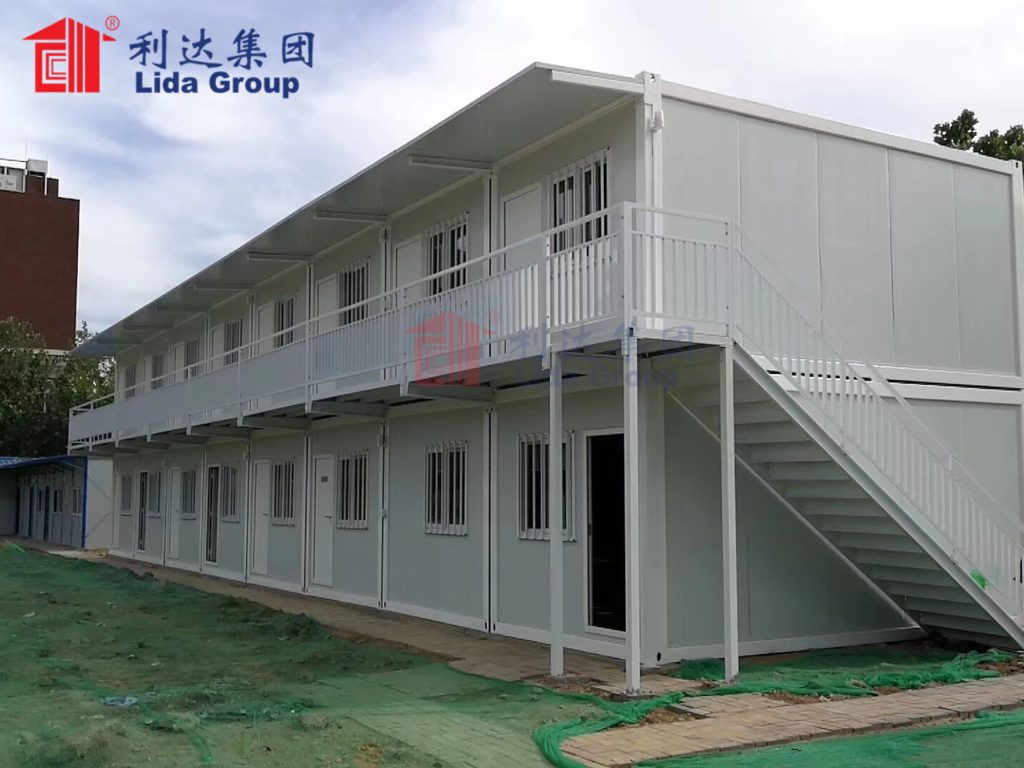
**Chapter 8: Real-World Validation—Projects That Demonstrate Reliability**
The reliability of prefabricated container labor camps is demonstrated through successful deployment across the world’s most challenging environments.
**8.1 Chilean Mining Operations**
In the Atacama Desert of Chile, Lida Group’s container apartments have operated continuously at elevations exceeding 3,000 meters. The site experiences daily temperature swings from below freezing at night to over 40°C during the day, intense solar radiation, and high-altitude conditions that challenge both equipment and personnel. The container units were equipped with oxygen-enriched air systems and thermal mass walls that moderated temperature extremes. Over multiple years of operation, the camp has experienced zero failures of critical systems, and worker altitude sickness cases were eliminated.
**8.2 Canadian Oil Sands**
In northern Alberta, Canada, Lida’s Arctic-grade container units have operated through multiple winters with temperatures reaching -45°C. The camp includes over 500 units configured for single and double occupancy, with dining, recreation, and medical facilities. Trace heating systems on water lines, triple-glazed windows, and elevated foundations on permafrost have ensured uninterrupted operation through seasons that would render conventional structures unusable.
**8.3 West African Market Complex**
In equatorial West Africa, Lida Group completed a 30,000-square-meter market complex that included workforce accommodation. The region experiences persistent rainfall, high humidity, and temperatures consistently above 30°C. Despite these conditions, the project was completed three months ahead of schedule. The container structures have operated reliably, with no water intrusion, mold issues, or corrosion failures. The project established West Africa’s first steel maintenance cooperative, ensuring long-term reliability through local capacity building.
**8.4 Zambian Copperbelt**
In Zambia’s Copperbelt region, Lida’s container apartments transformed worker housing conditions. The installation delivered measurable improvements in workforce reliability: worker turnover decreased by 41% and illness-related downtime dropped by 63%. The camp has operated continuously for over five years with no structural failures, demonstrating that reliable accommodation directly contributes to project stability.
**8.5 Southeast Asian Hydroelectric Project**
A hydroelectric project in a remote region of Southeast Asia required accommodation for 800 workers during a three-year construction period. The site was accessible only by river, with no road connections. Lida delivered flat-pack container units that were shipped by barge, then assembled on site. The camp included sleeping quarters, dining facilities, recreation areas, a medical clinic, and water treatment systems. Despite the logistical challenges, the camp was fully operational within six weeks of delivery, and it supported the project through completion with no major disruptions.
**Chapter 9: Economic Reliability—Predictable Costs and Asset Value**
Reliability extends beyond physical performance to economic predictability. Prefabricated container camps deliver economic reliability through predictable costs and retained asset value.
**9.1 Cost Predictability**
Unlike conventional construction, where cost overruns are the norm rather than the exception, prefabricated container systems offer predictable costs:
– **Fixed-price contracts:** Manufacturers provide firm pricing for materials, shipping, and installation
– **No weather delays:** Factory fabrication eliminates weather-related schedule extensions and associated costs
– **Minimal change orders:** The standardized design reduces the scope for changes that drive cost increases
For project budgets, this predictability is itself a form of reliability—the confidence that the accommodation line item will not escalate unexpectedly.
**9.2 Reduced Operational Costs**
The operational efficiency of container camps contributes to economic reliability:
– **Energy efficiency:** High insulation values reduce fuel consumption for heating and cooling
– **Low maintenance:** Steel construction requires minimal ongoing maintenance
– **Durability:** Long service life spreads capital costs over many years
**9.3 Asset Retention**
Unlike site-built accommodation that has no residual value after demolition, container camps retain significant asset value:
– **Resale market:** Used units can be sold to other operators
– **Relocation:** Units can be moved to subsequent project sites
– **Repurposing:** Units can be converted to storage, office, or other uses
This asset retention provides a hedge against project life-cycle risks, ensuring that the investment in accommodation is not lost when a project concludes.
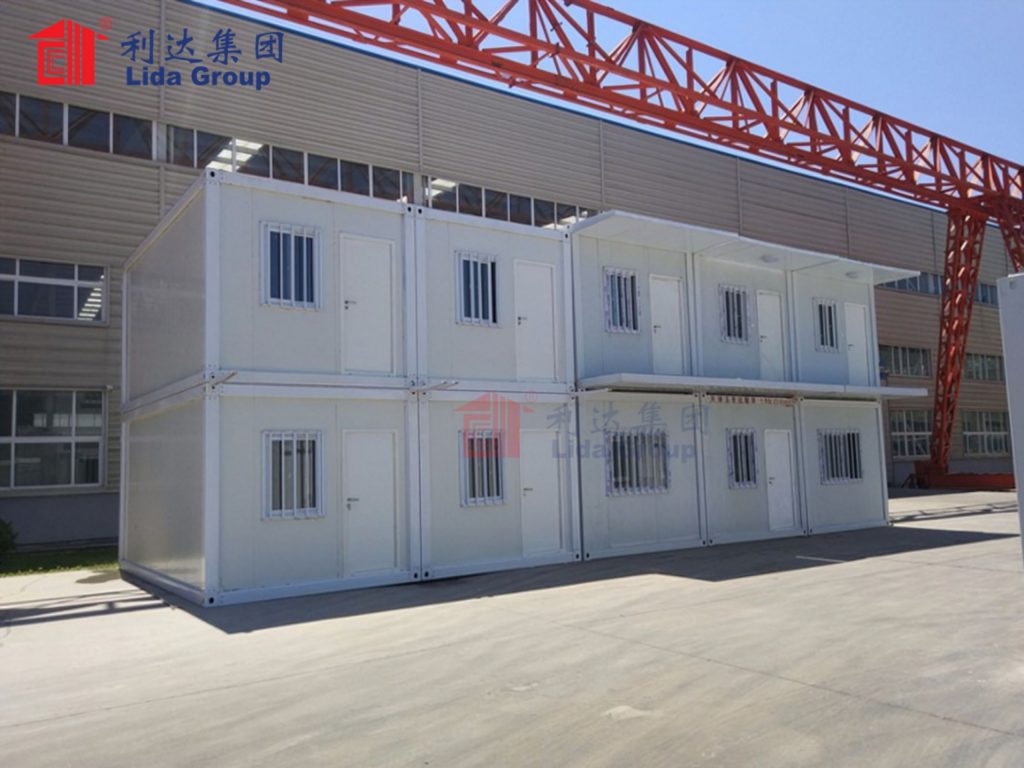
**Chapter 10: The Future of Reliable Remote Accommodation**
The evolution of prefabricated container camps continues, with emerging technologies and approaches promising even greater reliability.
**10.1 Autonomous Camp Systems**
Future camps will incorporate autonomous systems that manage themselves with minimal human intervention:
– **Automated power management:** Systems that optimize generator operation, battery charging, and solar integration
– **Predictive maintenance:** AI systems that analyze sensor data to predict failures before they occur
– **Remote operation:** Centralized control centers that manage multiple camps from a single location
**10.2 Enhanced Material Technologies**
Advanced materials will further improve reliability:
– **Self-healing coatings:** Paints and coatings that repair minor scratches and corrosion automatically
– **Phase-change materials:** Passive thermal regulation that reduces mechanical system loads
– **Advanced composites:** Lightweight, corrosion-resistant materials for non-structural components
**10.3 Standardization and Interoperability**
Industry-wide standardization will improve reliability by ensuring that components from different manufacturers are interchangeable. This reduces supply chain risks and simplifies maintenance.
**10.4 Sustainability Integration**
Sustainability features increasingly contribute to reliability:
– **Solar integration:** Reduces dependence on fuel deliveries
– **Water recycling:** Ensures water availability even during supply disruptions
– **Waste-to-energy:** Converts waste to usable energy, reducing disposal requirements
**Conclusion**
Reliable prefabricated container labor camps have fundamentally transformed the possibility of remote project execution. What was once a major operational risk—workforce accommodation in locations far from supply chains and support infrastructure—has become a manageable, predictable element of project planning.
This reliability is built on multiple foundations. Structural engineering ensures that camps withstand the most demanding environmental conditions, from arctic cold to desert heat, from cyclone winds to seismic ground motion. Logistical systems enable reliable delivery to even the most inaccessible locations, with flat-pack designs optimizing transport and simplified assembly ensuring successful installation. Utility infrastructure provides self-sufficiency, with redundant power generation, reliable water systems, and on-site sanitation ensuring continuous operation. Climate-specific adaptations address the unique challenges of each deployment environment, from permafrost preservation to desert cooling.
Safety systems protect occupants with non-combustible construction, fire detection and suppression, secure access, and emergency response capabilities. Long-term maintainability ensures that reliability persists over years of operation, with accessible systems, standardized components, and predictive maintenance strategies. Economic predictability provides budget certainty, while asset retention ensures that investment in accommodation delivers long-term value.
Real-world validation across continents confirms these reliability claims. In the Atacama Desert, camps have operated at 3,000 meters elevation with zero critical system failures. In the Canadian oil sands, Arctic-grade units have endured multiple -45°C winters. In West Africa, container structures have resisted humidity, rainfall, and corrosion. In Zambia, reliable accommodation has reduced worker turnover by 41% and illness downtime by 63%. These are not theoretical advantages but demonstrated outcomes.
For project managers, operations directors, and organizational leaders facing the challenge of remote workforce accommodation, the message is clear: reliability is achievable. Prefabricated container camps engineered for remote conditions deliver the structural integrity, utility independence, safety protection, and economic predictability that remote projects demand. They transform the accommodation challenge from a project risk into a proven solution.
As technology advances, the reliability of these systems will only increase. Autonomous operations, advanced materials, industry standardization, and sustainability integration will further reduce risks and enhance performance. The container camp, once viewed as a temporary expedient, has matured into a sophisticated, reliable infrastructure solution.
In the demanding world of remote projects—where every day of operation matters, where worker safety is paramount, and where the nearest support is hours or days away—reliability is not a luxury but a necessity. Prefabricated container labor camps deliver that reliability, enabling projects to proceed with confidence, workers to perform safely, and organizations to achieve their objectives in even the most challenging environments on Earth.
Related news
-
Lida Group's Modular Modern Container Accommodation Ensures Comfort
2026-03-25 15:18:10
-
Innovative Easy Assembly Container House Saves Time and Cost
2026-03-25 14:32:23
-
Rapid Deployment Prefabricated Container Labor Camp Now Available
2026-03-25 14:24:31
contact us
- Tel: +86-532-88966982
- Whatsapp: +86-13793209022
- E-mail: sales@lidajituan.com
