



Rapid Deployment of Prefab Mobile Container Houses by Lida Group
2025-Dec-16 15:55:28
By Admin
Introduction
In a world increasingly shaped by crises—natural disasters, humanitarian emergencies, and urgent infrastructure demands—speed has become a non-negotiable requirement for housing solutions. Traditional construction, with its prolonged timelines (often 3-6 months for temporary housing), fails to address the critical need for immediate shelter, operational spaces, or temporary accommodations. Prefab mobile container houses have emerged as a transformative answer, and Lida Group, a global leader in integrated modular construction, has distinguished itself by mastering the art of rapid deployment. For over a decade, Lida has refined a system that delivers fully functional, durable container houses in days—not months—catering to clients ranging from governments and NGOs to construction firms and event organizers.
This article explores how Lida Group has revolutionized rapid deployment in prefab mobile container housing, examining the technical, logistical, and operational innovations that enable its speed-to-market advantage. From disaster relief in earthquake-stricken regions to worker camps for large-scale infrastructure projects, Lida’s solutions demonstrate that rapid deployment does not require sacrificing quality, sustainability, or customization. Backed by industry data—including a projected 18.7% CAGR for the global mobile prefab housing market (reaching $89.6 billion by 2028, Fortune Business Insights)—we highlight how Lida’s approach addresses urgent global needs while setting new standards for efficiency in the construction industry.
The demand for rapid-deployment housing is driven by three interconnected global trends: the rising frequency and intensity of natural disasters (with 306 catastrophic events in 2023 alone, displacing 70 million people), the acceleration of infrastructure development in emerging markets (requiring 12 million temporary worker accommodations annually), and the need for flexible, scalable spaces for events, healthcare, and emergency response. Lida Group’s mobile container houses meet these demands by combining prefabrication excellence with logistical precision: 90% of components are factory-built, enabling on-site assembly in as little as 4 hours per unit, and modular design allows for seamless scaling from single units to 1,000+ unit complexes. With dual manufacturing bases in China (Zhangzhou, Fujian) and Thailand (Chachoengsao), Lida ensures regional accessibility, reducing shipping times and enabling deployment within 72 hours for emergency scenarios.
1. The Foundations of Lida’s Rapid Deployment Model
1.1 Modular Standardization: The Backbone of Speed
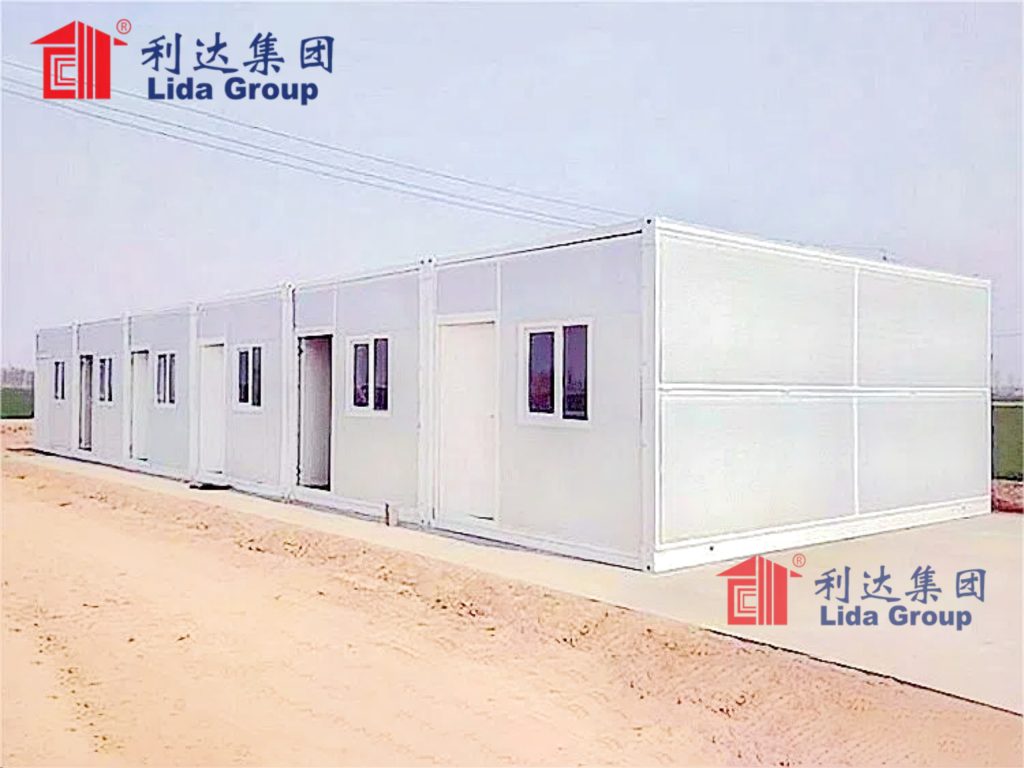
At the core of Lida’s rapid deployment capability is its modular standardization framework. Unlike custom-built container solutions that require time-consuming design iterations, Lida has developed a library of pre-engineered, interchangeable modules that cover 95% of common use cases—from 20ft single-person shelters to 40ft family units and specialized spaces (e.g., medical clinics, offices, kitchens). These modules adhere to international shipping standards (ISO 668) and are designed for plug-and-play integration, eliminating the need for on-site customization.
Key to this standardization is Lida’s “three-unified” principle: unified component specifications, unified connection interfaces, and unified assembly processes. For example, all Lida container modules feature standardized corner castings (rated for 40.5-ton load capacity) and quick-connect locking systems, enabling workers to join modules horizontally or vertically in minutes. Interior components—including pre-installed MEP (mechanical/electrical/plumbing) systems, insulation, and fixtures—are factory-fitted, reducing on-site work to mere assembly. This standardization reduces design time by 80% compared to custom solutions: a 50-unit worker camp can move from concept to production in 72 hours, whereas traditional custom designs take 4-6 weeks.
Lida’s modules are also engineered for maximum compatibility. A 20ft housing unit can be paired with a 40ft kitchen module or a 10ft bathroom module, allowing clients to mix and match based on needs—all without redesign delays. This flexibility, combined with standardization, ensures that Lida can respond to diverse requests with unprecedented speed, whether it’s a 10-unit emergency shelter for flood victims or a 500-unit camp for a mining project.
1.2 Factory Prefabrication: Minimizing On-Site Work
Lida’s rapid deployment model is predicated on shifting 90% of construction work from chaotic job sites to controlled factory environments. The company’s two manufacturing facilities—covering 360,000㎡ in Zhangzhou and 180,000㎡ in Chachoengsao—feature automated production lines, CNC precision machinery, and lean manufacturing processes that ensure consistent quality and speed.
Factory prefabrication eliminates the delays associated with on-site construction: weather disruptions, skilled labor shortages, and material waste. For example, Lida’s container walls are produced using automated roll-forming machines that cut and assemble light steel frames with ±2mm precision, then clad with insulated sandwich panels (thermal conductivity ≤0.038 W/(m·K)) in a single production line. MEP systems are pre-wired and pre-plumbed, with connections labeled for quick on-site linking. Even finishing touches—such as flooring, lighting, and cabinetry—are installed in the factory, meaning units are “move-in ready” upon assembly.
The efficiency of Lida’s factories is further enhanced by its just-in-time (JIT) production system. Using real-time demand data, Lida optimizes inventory levels and production schedules, ensuring modules are manufactured and shipped exactly when needed. For emergency projects, this means production can start within 24 hours of order confirmation, with modules leaving the factory within 3-5 days. For large-scale projects, Lida’s monthly production capacity of 12,000+ modules enables continuous delivery, supporting phased deployment.
1.3 Streamlined Logistics: From Factory to Site in Record Time
Rapid deployment is meaningless without efficient logistics, and Lida has built a global supply chain and transportation network to ensure modules reach sites quickly. Leveraging its dual manufacturing bases, Lida can serve Asia-Pacific, Africa, and Europe with regional shipping times of 3-14 days—far faster than competitors relying on single-location production.
Lida’s logistics strategy focuses on three key optimizations:
- Standardized Packaging: Modules are designed to fit on standard shipping containers, flatbed trucks, and railcars, eliminating the need for specialized transport. A 20ft Lida module weighs 3.2 tons (20% lighter than industry averages) due to its light steel frame, reducing transport costs and enabling delivery to remote areas via smaller vehicles.
- Global Partnerships: Lida has established long-term agreements with leading logistics providers (e.g., Maersk, 中远海运) to secure priority shipping and emergency airfreight options. For crisis response, Lida can arrange air transport of modules, cutting delivery time from weeks to days—critical for post-disaster scenarios.
- On-Site Readiness Planning: Lida’s team collaborates with clients to prepare sites in parallel with module production. This includes foundation design (Lida’s modules require only simple concrete pads or gravel bases, reducing site prep time by 50%) and logistics coordination (e.g., crane access, assembly area setup). By the time modules arrive, sites are “assembly-ready,” minimizing downtime.
For example, during a 2023 flood emergency in Southeast Asia, Lida shipped 100 modules from its Chachoengsao factory to the affected region via air and sea: 30 critical units arrived by air in 48 hours, with the remaining 70 delivered by sea in 5 days. On-site assembly began immediately upon arrival, with the entire camp operational within 10 days—compared to the 4-6 weeks required for traditional emergency housing.

2. Technical Innovations Accelerating Deployment
2.1 Quick-Connect Technology: Reducing Assembly Time
Lida’s most impactful technical innovation for rapid deployment is its proprietary quick-connect system, which cuts on-site assembly time by 70% compared to industry standards. Traditional container connections require welding or bolted fasteners (taking 2-3 hours per joint), but Lida’s system uses cam-lock mechanisms and pre-aligned guides that enable workers to secure modules in 15-20 minutes per connection—no specialized skills required.
The quick-connect system has three key components:
- Self-Aligning Corner Castings: Modules feature tapered corner castings that guide alignment, eliminating the need for precise manual positioning. Workers simply lower a module onto the base unit, and the castings lock into place.
- Cam-Lock Fasteners: Internal cam locks activate with a single tool, creating a secure connection that meets structural safety standards (ISO 10855) for wind resistance (up to 120 km/h) and seismic performance (up to 8.0 magnitude).
- Integrated Utility Connections: MEP lines are routed through standardized ports in the module walls, with color-coded quick-disconnect fittings. Electrical, water, and sewage connections can be completed in 30 minutes per module, compared to 2-3 hours for traditional hardwiring.
This technology enables a 4-person assembly team to install 10 modules per day—equivalent to 200㎡ of usable space. For large projects, Lida deploys mobile assembly teams with pre-packaged tools and training, ensuring consistent speed regardless of location. In a 2024 infrastructure project in Africa, Lida’s team assembled 300 modules (600 units) in 30 days, with zero assembly errors—a feat that would take 3-4 months with traditional methods.
2.2 Lightweight yet Durable Materials: Enhancing Mobility
Lida’s container modules are engineered with lightweight, high-strength materials that balance durability with transportability—critical for rapid deployment to remote or hard-to-reach sites. The core structural frame uses cold-formed light steel (CFS) with a yield strength of 350 MPa, which is 30% lighter than traditional hot-rolled steel but equally strong. This reduces module weight by 20-25%, enabling transport via smaller trucks or even helicopters in emergency scenarios.
Exterior cladding options include galvanized steel (corrosion-resistant for coastal areas), aluminum composite panels (lightweight and fire-retardant), and fiber-reinforced polymer (FRP) (impact-resistant for harsh environments). All materials undergo rigorous testing: Lida’s modules meet IPX5 waterproof standards, UL94-V0 fire safety ratings, and can withstand temperatures ranging from -40°C to 60°C—making them suitable for deserts, arctic regions, and tropical climates.
Interior materials are chosen for speed of installation and durability. Lida uses pre-finished wall panels (PVC or magnesium oxide) that snap into place, eliminating the need for on-site painting or plastering. Flooring is a one-piece vinyl sheet that resists stains and wear, while insulation is factory-installed as a continuous layer (rock wool or polyurethane foam) for maximum energy efficiency. These materials not only speed up production and assembly but also reduce maintenance needs, ensuring modules remain functional for 15+ years—even in demanding conditions.
2.3 Digitalization: From Design to Assembly in Days
Lida leverages digital technologies to streamline every stage of the deployment process, from initial design to on-site assembly. Building Information Modeling (BIM) software is central to this digital transformation: Lida’s engineers use BIM to create 3D models of projects, integrating structural, MEP, and logistics data to identify potential issues before production begins.
BIM enables three key speed enhancements:
- Rapid Design Iterations: Clients can review 3D renderings and virtual walkthroughs within 24 hours of initial consultation, with changes implemented in real time. For example, a client requesting additional windows or a modified floor plan can see updates within hours, rather than days.
- Clash Detection: BIM software identifies conflicts (e.g., MEP pipe line interference, structural weaknesses) during the design phase, reducing rework by 90% compared to traditional methods. This is critical for rapid deployment, as on-site changes can cause costly delays.
- Digital Assembly Guides: Lida provides workers with tablet-based assembly guides that include step-by-step videos, 3D diagrams, and real-time support. This reduces training time for on-site teams: new workers can become proficient in module assembly in 4 hours, compared to 2-3 days for traditional construction.
Complementary digital tools include a cloud-based project management platform that tracks module production, shipping, and assembly in real time. Clients can monitor progress via a dashboard, receiving alerts when modules leave the factory, arrive on site, and are installed. For emergency projects, this transparency enables stakeholders to make informed decisions, ensuring deployment stays on schedule.

3. Global Case Studies: Rapid Deployment in Action
3.1 Emergency Disaster Relief: Qinghai Earthquake Response (2023)
In December 2023, a 6.2-magnitude earthquake struck Minhe County, Qinghai Province, China, destroying over 3,000 homes and displacing 9,551 people. The local government urgently needed temporary shelters that could be deployed before winter temperatures dropped below -10°C. Lida Group was selected for the project due to its rapid deployment capability and experience in cold-climate housing.
Lida’s response began within 24 hours of the earthquake:
- Design & Production: Using its standard 20ft family modules (32㎡, accommodating 4-5 people), Lida adapted the design for cold weather by adding extra insulation (rock wool, R-value 30) and energy-efficient heating systems. Production started immediately at the Zhangzhou factory, with 2,230 modules manufactured in 10 days—thanks to round-the-clock shifts and automated lines.
- Logistics: Modules were transported via 120 trucks (each carrying 18 modules) to Qinghai, a 2,000km journey completed in 48 hours. Lida coordinated with local authorities to clear transport routes and set up temporary staging areas near the disaster zone.
- Assembly: 20 Lida assembly teams (80 workers total) were deployed to the site, using quick-connect technology to assemble modules. Each team installed 11 modules per day, with the entire 2,230-unit settlement completed in 14 days—well ahead of the 30-day deadline.
Key outcomes:
- Speed: 9,551 displaced people were housed within 16 days of the earthquake, compared to the 3-4 months required for traditional temporary housing.
- Durability: Modules withstood -15°C temperatures and 70km/h winds, with zero structural issues reported.
- Functionality: Each unit included heating, electricity, running water, and a private bathroom—critical for winter survival.
- Legacy: 60% of the modules were repurposed as permanent low-income housing after reconstruction, demonstrating Lida’s focus on lifecycle value.
The Qinghai project was recognized by the Chinese government as a model for disaster relief housing, highlighting how Lida’s rapid deployment model can save lives in crises.
3.2 Infrastructure Support: Southeast Asia Mining Camp (2024)
A global mining company required a 500-unit worker camp for a new gold mine in remote Southeast Asia, with a tight deadline: the camp needed to be operational within 60 days to support the start of mining activities. The site was accessible only via unpaved roads, and local skilled labor was scarce—making traditional construction unfeasible.
Lida’s solution leveraged its modular standardization and rapid assembly capabilities:
- Customization Within Standardization: The client required a mix of single-person units (300 units), family units (150 units), and support facilities (50 units: kitchens, clinics, offices). Lida used its existing module library to design the camp, with only minor modifications (e.g., mosquito screens for the tropical climate, solar panels for off-grid power).
- Logistics Optimization: Modules were manufactured at Lida’s Chachoengsao factory (Thailand) and transported via trucks to the mine site— a 500km journey completed in 3 days. Lida’s lightweight modules (3.2 tons each) were able to navigate the unpaved roads, whereas heavier traditional containers would have required road upgrades.
- Rapid Assembly: A 10-person Lida team trained 40 local workers in module assembly, using digital guides and on-the-job training. The team assembled 25 modules per day, with the entire camp completed in 45 days—15 days ahead of schedule.
Key outcomes:
- Cost Savings: The camp was delivered at 35% lower cost than traditional construction, with savings coming from reduced labor costs (local workers required minimal training) and faster deployment (mining operations started 15 days early, generating $2.3 million in additional revenue).
- Sustainability: Solar panels reduced energy costs by 40%, while rainwater harvesting systems cut water usage by 30%.
- Flexibility: The modular design allows the camp to be expanded by 200 units as the mine scales, with additional modules deployable in 2 weeks.
The project demonstrated Lida’s ability to deliver rapid, cost-effective solutions for remote infrastructure projects, even in challenging logistical conditions.
3.3 Event & Temporary Accommodation: European Music Festival (2024)
A major European music festival required 1,000 temporary accommodations for staff and performers, with strict requirements: deployment in 7 days, compliance with EU safety standards, and easy disassembly after the 10-day event. Lida’s mobile container houses were chosen for their speed, safety, and reusability.
Lida’s approach focused on speed and scalability:
- Pre-Stocked Modules: Lida maintains a stock of 5,000 standard modules in Europe (via its Chachoengsao factory’s European distribution center), enabling immediate shipment. 1,000 modules were loaded onto trucks and transported to the festival site in 3 days.
- Plug-and-Play Assembly: Using Lida’s quick-connect system, a 50-person team assembled 200 modules per day, completing the entire accommodation village in 5 days. Each module included beds, lighting, charging ports, and air conditioning—all pre-installed.
- Compliance Assurance: Lida’s modules meet EU standards (CE certification, EN 1090 structural safety, EN 13501 fire resistance), eliminating the need for time-consuming on-site inspections. The company provided all required documentation upfront, ensuring regulatory approval within 48 hours.
Key outcomes:
- Speed: The accommodation village was operational 2 days ahead of schedule, giving staff and performers ample time to settle in.
- Safety: Zero incidents were reported during the festival, with modules withstanding heavy rain and 50km/h winds.
- Reusability: All modules were disassembled in 3 days and transported to a warehouse for future events, with zero waste generated.
The project showcased Lida’s ability to deliver rapid, large-scale temporary solutions for events, highlighting the versatility of its deployment model.
4. Sustainability: Rapid Deployment Without Environmental Compromise
Lida Group’s rapid deployment model is not just about speed—it’s about delivering sustainable solutions that minimize environmental impact. Container houses are inherently eco-friendly (each module diverts 2.5 tons of steel from landfills), and Lida amplifies this sustainability through design and process innovations.
4.1 Carbon Footprint Reduction
Lida’s prefab mobile container houses reduce carbon emissions by 40% compared to traditional construction, through three key mechanisms:
- Material Reusability: Steel containers have a 95% recycling rate, and Lida prioritizes using recycled steel in its modules (60% of structural steel is recycled). Recycling steel saves 74% of the energy required to produce new steel, reducing embodied carbon.
- Efficient Production: Lida’s factories use renewable energy (20% of electricity from solar panels) and lean manufacturing processes that reduce waste to 5%—far below the 15-20% waste rate in traditional construction.
- Low Operational Emissions: Standard modules include energy-efficient insulation, LED lighting, and optional solar panels, reducing operational carbon emissions by 30% over a 10-year lifespan.
For example, a 100-unit Lida container camp emits 120 tons of CO2 during production and deployment, compared to 200 tons for a traditional camp. Over 10 years, operational emissions are 50 tons lower, resulting in a total carbon footprint 45% smaller than conventional solutions.
4.2 Circular Economy Principles
Lida’s modules are designed for disassembly and reuse, aligning with circular economy principles. Each module can be disassembled, transported, and reassembled up to 10 times with minimal wear, extending their lifecycle to 25+ years. This reusability is critical for temporary projects: a module used for a 6-month event can be redeployed for a construction camp, then repurposed as low-income housing—avoiding the waste of demolition.
Lida also offers a take-back program for end-of-life modules, ensuring 95% of materials are recycled. Steel components are melted down and reused, while insulation and fixtures are repurposed or recycled. This closed-loop system reduces waste and creates value: a module recycled after 25 years generates \(300-\)500 in material recovery revenue, offsetting disposal costs.
4.3 Green Certifications & Compliance
Lida’s container houses meet global green building standards, including LEED (Leadership in Energy and Environmental Design), BREEAM (Building Research Establishment Environmental Assessment Method), and China’s Green Building Three-Star Certification. Compliance with these standards unlocks benefits for clients: tax incentives, subsidies, and enhanced brand reputation.
For example, a LEED Silver-certified Lida camp in the U.S. qualified for a 7% reduction in property taxes, while a BREEAM Excellent project in the UK received a £50,000 government grant for renewable energy upgrades. Lida’s design team navigates the certification process at no extra cost, ensuring clients maximize sustainability-related benefits without delaying deployment.
5. Overcoming Deployment Challenges: Lida’s Competitive Edge
Rapid deployment in the container housing industry is fraught with challenges: logistical bottlenecks, regulatory hurdles, and quality control issues. Lida Group has addressed these challenges through strategic investments in technology, partnerships, and process optimization.
5.1 Navigating Logistical Complexity
Deploying container houses to remote or crisis-stricken areas requires overcoming logistical barriers: poor infrastructure, limited transport options, and customs delays. Lida’s solution is a “three-tier” logistics network:
- Regional Hubs: Lida maintains stockpiles of modules in 12 regional hubs worldwide (e.g., Dubai, Singapore, Houston), enabling 72-hour delivery for emergency projects.
- Multi-Modal Transport: Lida uses a combination of sea, air, road, and rail transport, adapting to site conditions. For example, modules can be shipped by sea to a port, then transferred to trucks or helicopters for last-mile delivery.
- Customs Expertise: Lida’s in-house customs team handles all documentation and compliance, reducing clearance times by 50%. The company has pre-approved customs procedures in 40+ countries, ensuring modules reach sites without delays.
During the 2023 Turkey-Syria earthquake, Lida deployed 500 modules to Syria via a combination of sea transport to Lebanon, then overland via trucks—navigating border crossings and poor road conditions to deliver modules in 7 days. This logistical flexibility is a key differentiator, enabling Lida to deploy solutions where other providers cannot.
5.2 Ensuring Regulatory Compliance
Building codes and safety standards vary widely by country and region, posing a challenge for rapid deployment. Lida addresses this through a “localization + standardization” approach:
- Pre-Approved Designs: Lida’s core modules are pre-approved for compliance with 60+ countries’ building codes, including the U.S. IRC, EU EN standards, and Australia’s AS codes. This reduces approval time from weeks to days.
- Local Expertise: Lida employs regional engineers who adapt modules to local requirements (e.g., seismic standards in Japan, wind resistance in the Caribbean) without redesign delays.
- Documentation Support: Lida provides a comprehensive compliance package with every order, including structural calculations, material certifications, and safety reports. This eliminates the need for clients to hire external consultants, speeding up regulatory approval.
For example, a Lida project in the Middle East required compliance with strict fire safety standards (BS 476) and privacy laws (enclosed courtyards, small windows). The regional engineering team adapted standard modules to meet these requirements in 48 hours, with no impact on deployment time.
5.3 Maintaining Quality at Speed
A common concern with rapid deployment is compromised quality, but Lida has implemented a rigorous quality control (QC) system that ensures consistency and safety—without slowing down production.
Lida’s QC process includes three key stages:
- Incoming Material Inspection: All steel, insulation, and fixtures are tested for compliance with Lida’s standards (e.g., steel yield strength, insulation thermal conductivity) before entering production.
- In-Process Testing: Automated machines perform real-time checks during production (e.g., frame dimensions, welding quality), with defective components rejected immediately.
- Final Module Testing: Each module undergoes a 28-point inspection before shipping, including water tightness, structural integrity, and MEP functionality. Modules are also tested for compliance with safety standards (e.g., fire resistance, seismic performance) by third-party labs (SGS, TÜV).
Lida’s QC system has a 99.8% pass rate, ensuring that rapid deployment does not come at the cost of quality. The company also offers a 10-year structural warranty and 5-year warranty on fixtures, providing clients with peace of mind.

6. The Future of Rapid Deployment: Lida’s Innovation Roadmap
Lida Group is not resting on its laurels— it is investing in next-generation technologies to further accelerate deployment and enhance functionality. The company’s future focus is on three key areas: automation, smart integration, and material innovation.
6.1 Automated Assembly: Reducing Human Dependency
Lida is developing robotic assembly systems that will further reduce on-site assembly time. The company’s prototype robotic arm can connect modules in 5 minutes—down from 15 minutes with manual labor— and operate 24/7 without fatigue. These robots are designed to work in remote or hazardous environments, eliminating the need for human workers in high-risk areas.
Lida is also testing autonomous delivery drones for small modules (e.g., 10ft bathroom units), enabling deployment to areas inaccessible by road. These drones can carry modules weighing up to 500kg and deliver them with precision, cutting last-mile delivery time by 80%.
6.2 Smart Home Integration: Enhancing Functionality
Lida is integrating smart technology into its modules as a standard feature, not an upgrade. Future modules will include:
- IoT Sensors: Monitor temperature, humidity, energy use, and structural performance, with real-time alerts for maintenance needs.
- Automation: Smart lighting, heating/cooling, and security systems controlled via mobile apps, reducing energy use by 20%.
- Digital Twins: BIM-derived digital replicas of modules, enabling remote management and predictive maintenance.
For example, a smart Lida module can automatically adjust heating based on occupancy and weather data, while sensors detect water leaks or structural issues—alerting maintenance teams before problems escalate. These features enhance comfort and reduce long-term costs, making Lida’s solutions even more attractive for both temporary and permanent use.
6.3 Material Innovation: Lighter, Stronger, Faster
Lida is partnering with research institutions to develop advanced materials that will further improve deployment speed and sustainability:
- Carbon Fiber Reinforced Polymer (CFRP): CFRP components reduce module weight by 30% while increasing strength, enabling easier transport and reducing foundation requirements.
- Self-Healing Insulation: Insulation materials that automatically repair cracks, improving energy efficiency and reducing maintenance needs.
- 3D-Printed Components: On-site 3D printing of custom fixtures (e.g., shelves, countertops) eliminates the need for factory-fitted components, enabling last-minute customization without delays.
These material innovations will make Lida’s modules even more versatile and efficient, supporting rapid deployment in an even wider range of scenarios.
7. Conclusion
Lida Group’s rapid deployment of prefab mobile container houses represents a paradigm shift in the construction industry—proving that speed, quality, and sustainability can coexist. By leveraging modular standardization, factory prefabrication, quick-connect technology, and global logistics, Lida has redefined what is possible in terms of deployment timelines: delivering functional, durable housing in days, not months.
The global case studies highlighted in this article—from emergency disaster relief in Qinghai to infrastructure support in Southeast Asia and event accommodation in Europe—demonstrate the versatility and effectiveness of Lida’s model. These projects deliver tangible benefits: 30-50% faster deployment than traditional construction, 25-40% lower costs, 40% reduced carbon emissions, and the flexibility to adapt to diverse needs. Lida’s dual manufacturing bases, global logistics network, and commitment to quality ensure that it can respond to urgent requests anywhere in the world, making it a trusted partner for governments, NGOs, and businesses.
Lida’s success is built on a simple yet powerful insight: in a world where time is often a matter of life and death, or business success and failure, rapid deployment is not a luxury—it’s a necessity. The company’s innovations—from modular standardization to robotic assembly—are driven by a mission to provide timely, sustainable housing solutions that address the world’s most pressing challenges.
As the global demand for rapid-deployment housing continues to grow—fueled by natural disasters, infrastructure development, and event needs—Lida Group is well-positioned to lead the industry. Its focus on automation, smart integration, and material innovation will further enhance its speed and functionality, ensuring that it remains at the forefront of modular construction.
For clients, Lida’s rapid deployment model offers more than just fast housing—it offers peace of mind. Whether it’s shelter for disaster victims, accommodation for workers, or temporary spaces for events, Lida delivers solutions that are reliable, sustainable, and tailored to needs. For the industry, Lida sets a new standard for efficiency, proving that rapid deployment does not require compromising on quality or sustainability. And for the planet, Lida’s solutions represent a more responsible way to build—reducing waste, lowering carbon emissions, and promoting circularity.
In a world that needs answers faster than ever, Lida Group’s rapid deployment of prefab mobile container houses is not just a business model—it’s a force for good. By turning urgency into opportunity, Lida is building a better, more resilient future—one module at a time.
Related news
-
Your Vision, Our Build: Free Design Container Apartment Solutions
2025-12-16 15:37:59
-
Lida Group Champions Cost-Effective Prefab Construction Methods
2025-12-16 15:19:59
-
Experience Ultimate Flexibility with Free Design Container Apartments
2025-12-15 17:07:03
contact us
- Tel: +86-532-88966982
- Whatsapp: +86-13793209022
- E-mail: sales@lidajituan.com
