



Optimize Storage with a High-Quality Metal Frame Warehouse
2026-Jan-28 15:31:19
By Admin
In the era of global supply chain intensification and digital transformation, storage has evolved from a simple goods-keeping function into a core link affecting operational efficiency, cost control, and market responsiveness. For enterprises across logistics, e-commerce, manufacturing, and cold chain sectors, optimizing storage capacity, improving space utilization, and reducing long-term operational costs have become strategic priorities. Amid this context, high-quality metal frame warehouses have emerged as the optimal solution for storage optimization, surpassing traditional concrete and masonry structures in flexibility, durability, cost-efficiency, and scalability. Backed by advanced materials, intelligent construction technologies, and modular design concepts, metal frame warehouses redefine storage space potential—enabling high-density storage, rapid layout adjustment, and low-carbon operation. This article explores how high-quality metal frame warehouses drive storage optimization, delving into their core advantages, technical supports, industry-specific applications, and future development trends, while verifying their practical value through real-world cases.
1. The Strategic Value of Metal Frame Warehouses in Storage Optimization
The global industrial storage market is experiencing steady growth, driven by the expansion of e-commerce logistics, the upgrading of manufacturing supply chains, and the booming cold chain industry. Data shows that the global steel structure warehouse market is expected to maintain a compound annual growth rate (CAGR) of 9.4% from 2025 to 2030, with annual new construction area exceeding 180 million square meters by 2025. This growth is not accidental—high-quality metal frame warehouses address the core pain points of traditional storage facilities, such as low space utilization, long construction cycles, poor adaptability, and high maintenance costs. Their strategic value in storage optimization is reflected in three core dimensions: maximizing space efficiency, minimizing total lifecycle costs, and enhancing operational flexibility.
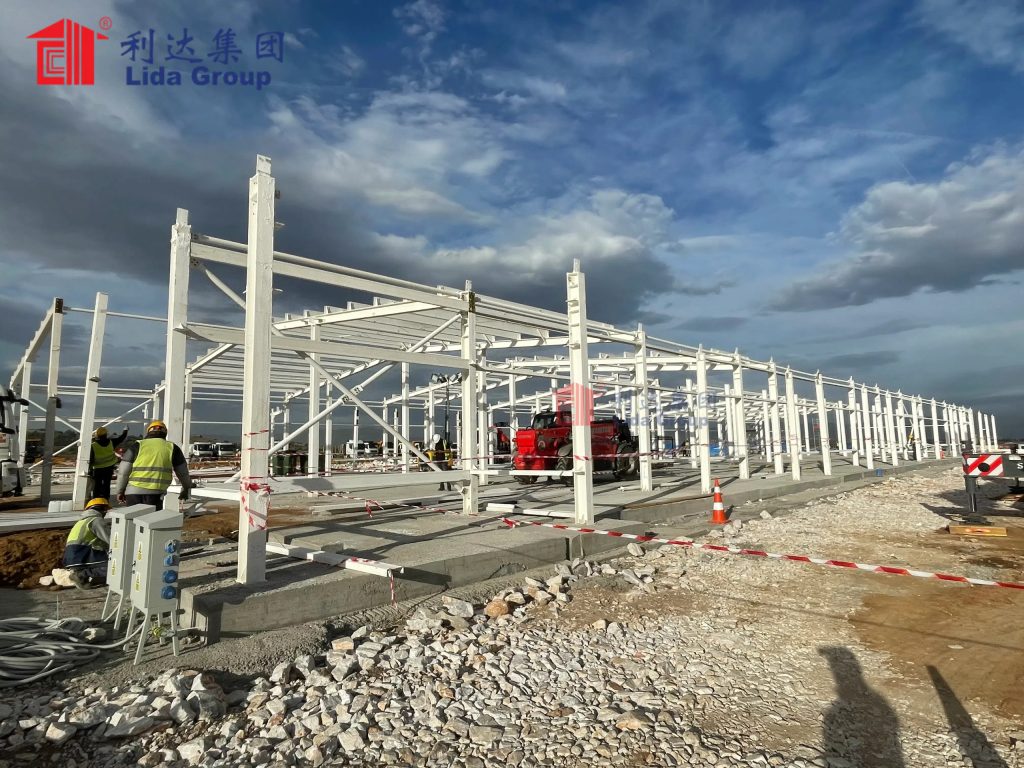
Traditional concrete warehouses are constrained by structural limitations, with interior columns densely arranged and ceiling heights generally below 8 meters, resulting in space utilization rates of only 40-50%. In contrast, high-quality metal frame warehouses leverage high-strength steel materials and optimized structural design to achieve clear-span layouts of up to 60 meters, eliminating the need for interior columns and increasing ceiling heights to 10-20 meters. This enables the deployment of high-rise shelving systems and automated storage and retrieval systems (AS/RS), boosting space utilization rates to 70-85%. For enterprises facing land resource constraints, this spatial optimization directly translates into higher storage capacity per unit area, reducing land occupation by 40% compared to traditional warehouses.
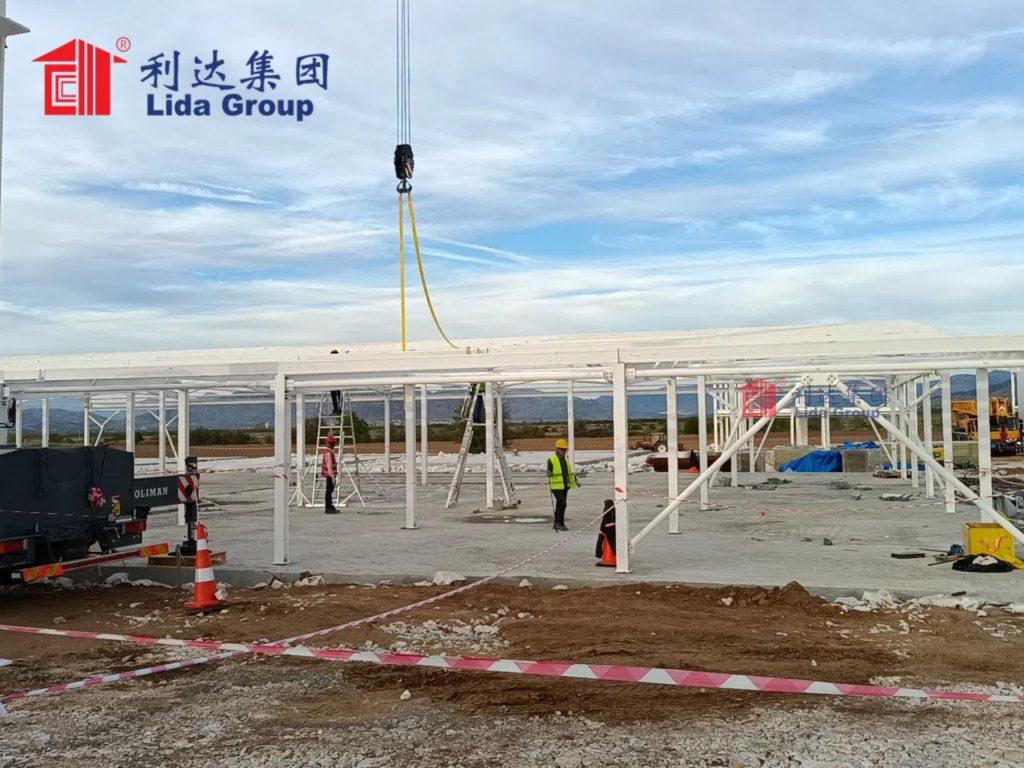
From a cost perspective, metal frame warehouses offer significant advantages throughout the entire lifecycle. In terms of construction costs, prefabricated metal components reduce on-site labor intensity and construction time—completing a 20,000-square-meter warehouse in 2-6 weeks, compared to 2-4 months for concrete structures. The average construction cost per square meter of metal frame warehouses ranges from $100 to $300, 30-50% lower than concrete warehouses ($200-$400) and masonry structures ($250-$450). In the long run, metal structures have a service life of over 50 years, with annual maintenance costs only 15% of those for concrete warehouses. The recyclability of steel further reduces end-of-life disposal costs, aligning with cost-saving and sustainability goals.
Operational flexibility is another key strategic value. Market demand fluctuations and business expansion often require storage facilities to adjust layouts or expand capacity. Metal frame warehouses adopt modular designs, allowing for easy expansion, reconstruction, or internal layout modification without major structural changes. For example, e-commerce enterprises can quickly reconfigure shelf layouts during peak seasons, while manufacturing plants can expand storage areas to accommodate new production lines. This adaptability ensures that storage facilities keep pace with business development, avoiding the waste of fixed assets caused by rigid traditional structures.
2. Core Advantages of High-Quality Metal Frame Warehouses for Storage Optimization
The ability of high-quality metal frame warehouses to optimize storage stems from their inherent structural advantages and advanced design concepts. These advantages are mutually reinforcing, covering spatial utilization, construction efficiency, durability, sustainability, and safety—forming a comprehensive storage optimization solution.
2.1 Spatial Optimization: Maximizing Storage Capacity
Spatial efficiency is the primary advantage of metal frame warehouses in storage optimization. High-strength steel alloys, such as Q390 and Q460, enable structural designs with larger spans and higher load-bearing capacities, breaking the spatial constraints of traditional warehouses. The clear-span design eliminates interior columns, creating unobstructed open spaces that facilitate the deployment of high-density storage systems, such as drive-in shelving, cantilever shelving, and AS/RS.
High ceiling heights are another critical factor in spatial optimization. Metal frame warehouses can easily achieve ceiling heights of 10-20 meters, supporting multi-layer high-rise shelving systems with single-layer load-bearing capacities of up to 5,000 kg. This vertical space development significantly increases storage density—for example, a 10-meter-high metal frame warehouse can achieve a storage capacity 2.8 times that of a traditional 5-meter-high concrete warehouse. In land-scarce regions such as the Yangtze River Delta and Pearl River Delta in China, multi-layer metal frame warehouses have achieved floor area ratios of over 2.15, with some five-story facilities reaching a floor area ratio of 3.2, maximizing land utilization efficiency.
Modular spatial division further enhances flexibility. Metal frame warehouses can be divided into functional zones (e.g., storage area, sorting area, packaging area) using lightweight partition panels, with adjustable zone sizes to meet changing operational needs. For cold chain warehouses, this modular design allows for independent temperature control in different zones, optimizing energy consumption while improving storage versatility.
2.2 Cost Efficiency: Reducing Lifecycle Expenses
High-quality metal frame warehouses achieve cost optimization through efficient construction, low maintenance, and recyclability. The prefabricated production model ensures that over 80% of components are manufactured in factory-controlled environments, reducing on-site material waste to 2-3%—far lower than the 10-15% waste rate of traditional construction. Automated welding robots and precision cutting equipment ensure component accuracy, minimizing rework and construction delays.
Long-term operational costs are significantly reduced due to the durability of metal structures. Steel is resistant to pests, mold, and mildew, eliminating the need for regular anti-corrosion and anti-insect treatments required for concrete and wood structures. The use of galvanized steel and nano-ceramic coatings further extends the service life of components, reducing corrosion rates to 0.003 mm per year and minimizing maintenance costs. For example, a 100,000-ton metal silo has an annual maintenance cost savings of $180,000 compared to a concrete silo, with an investment payback period shortened to 3 years.
The recyclability of steel adds economic value at the end of the warehouse’s lifecycle. Steel has a recycling rate of 92%, the highest among construction materials, and recycled steel maintains the same structural performance as virgin steel. This not only reduces disposal costs but also generates additional revenue from scrap steel, achieving cost optimization throughout the entire lifecycle.
2.3 Durability and Adaptability: Ensuring Stable Operations
Storage facilities require high durability to withstand long-term use and harsh environmental conditions, and metal frame warehouses excel in this regard. High-strength steel structures have excellent load-bearing capacity, seismic resistance, and wind resistance—withstanding seismic intensity up to 8 degrees and wind speeds of 250 km/h. This makes them suitable for diverse geographical environments, from coastal areas with high salt spray to earthquake-prone regions.
The adaptability of metal frame warehouses to different storage needs is another key advantage. For special storage requirements, such as cold chain, hazardous chemicals, and precision components, metal structures can be integrated with specialized materials and systems to meet industry standards. For cold chain warehouses, composite insulation panels with a thermal conductivity of ≤0.025 W/(m·K) are used to maintain stable temperatures of -25℃ to 8℃, while anti-corrosion coatings ensure structural integrity in high-humidity environments. For hazardous chemical storage, fire-resistant steel and explosion-proof designs prevent safety risks, complying with strict industry regulations.
2.4 Sustainability: Aligning with Green Storage Goals
As global enterprises pursue carbon neutrality goals, green storage has become a core competitiveness factor. Metal frame warehouses contribute to sustainability through energy conservation, emission reduction, and circular economy practices. The use of recycled steel reduces carbon emissions by 50% compared to virgin steel production, while prefabricated construction minimizes on-site energy consumption and waste generation—reducing construction-phase carbon emissions by 30%.
Energy-efficient designs further enhance sustainability. Photovoltaic-integrated metal roofs can generate 38.6 kWh of electricity per square meter annually, meeting 42% of the warehouse’s operational energy needs and achieving near-zero energy consumption in some projects. Rainwater harvesting systems and energy-efficient lighting integrated into metal frame warehouses reduce water and electricity consumption, while natural ventilation designs enabled by large-span structures reduce reliance on mechanical ventilation.
At the end of the warehouse’s lifecycle, steel components can be fully recycled and reused, reducing construction waste by 70% compared to traditional structures. This circular economy model not only reduces environmental impact but also aligns with global green building standards, such as LEED and BREEAM, enhancing enterprise brand value.
2.5 Safety: Safeguarding Stored Goods
Storage safety is critical to protecting goods and ensuring operational continuity, and metal frame warehouses provide comprehensive safety guarantees through structural design and intelligent systems. Steel structures have inherent fire resistance, and with the application of intumescent fire-retardant coatings, they can maintain structural integrity for over 2 hours in case of fire. Advanced fire alarm systems, sprinkler systems, and smoke exhaust systems integrated into the design further mitigate fire risks.
Anti-theft and monitoring systems are also easily integrated into metal frame warehouses. Closed-circuit television (CCTV), perimeter infrared alarms, and access control systems can be seamlessly installed on metal structures, while intelligent monitoring platforms enable real-time tracking of goods and personnel. For high-value goods storage, vibration sensors and structural health monitoring systems detect potential risks in real time, ensuring the safety of stored items.
3. Technical Supports for High-Quality Metal Frame Warehouses
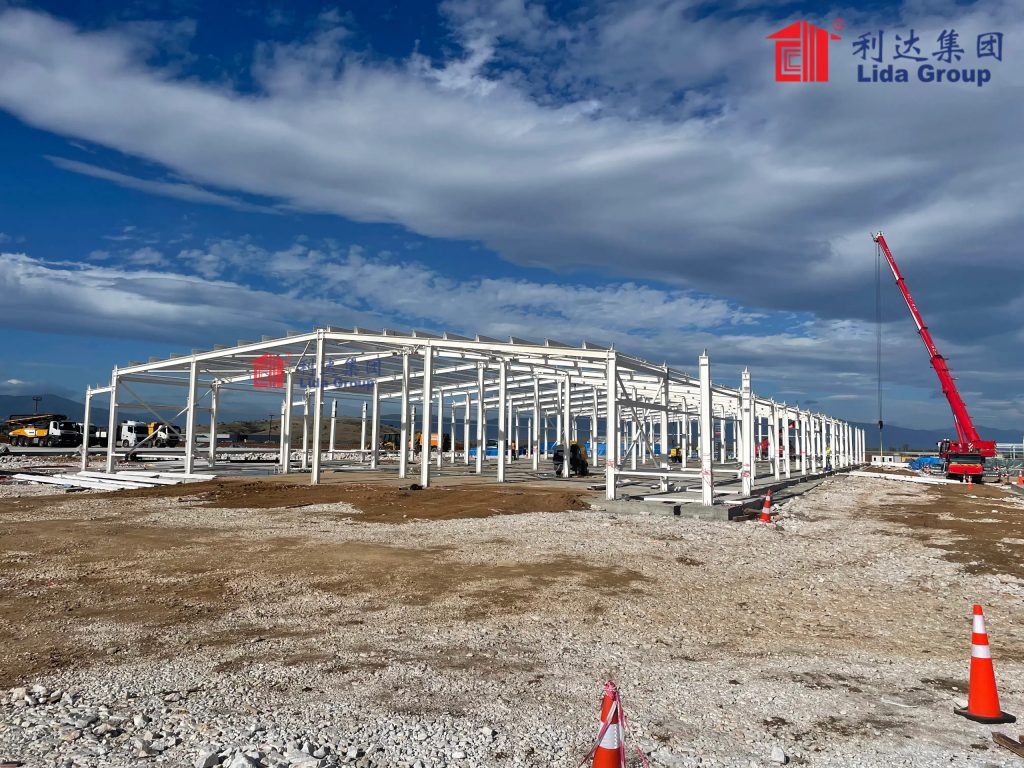
The storage optimization capabilities of high-quality metal frame warehouses are supported by advanced materials, intelligent construction technologies, and digital management systems. These technologies work together to enhance structural performance, construction efficiency, and operational intelligence—laying the foundation for efficient storage.
3.1 Advanced Material Applications
Material innovation is the core of metal frame warehouse performance. High-strength low-alloy steels, such as Q390, Q460, and S355, are widely used in structural components, offering yield strengths 40% higher than traditional Q235 steel while reducing component weight by 30%. This enables larger spans and higher load-bearing capacities without increasing structural weight.
Surface treatment technologies enhance durability and corrosion resistance. Hot-dip galvanization forms a zinc layer on the steel surface, preventing corrosion in humid and corrosive environments, while nano-ceramic coatings reduce corrosion rates to 0.003 mm per year, extending component service life to over 25 years. For cold chain and high-humidity environments, composite insulation panels (EPS, PU, rock wool) with excellent thermal insulation properties are used for walls and roofs, maintaining stable internal temperatures and reducing energy consumption.
New composite materials further expand the application scope of metal frame warehouses. Carbon fiber-reinforced steel composites improve structural rigidity and fatigue resistance, while fire-resistant steel maintains mechanical properties at high temperatures, enhancing safety. These advanced materials enable metal frame warehouses to adapt to increasingly complex storage needs.
3.2 Intelligent Construction and Digital Design
Digital design and intelligent construction technologies optimize the entire process of metal frame warehouse construction, ensuring precision and efficiency. Building Information Modeling (BIM) technology creates 3D models of the warehouse, enabling clash detection, structural optimization, and construction simulation before construction begins. This reduces construction errors to below 0.3%, rework rates by 45%, and construction cycles by 28%—as demonstrated in the Wuhan Linjianggang project, which shortened the construction period by 23 days through BIM application.
Intelligent manufacturing technologies improve component quality and production efficiency. Automated welding robots with laser guidance and real-time quality monitoring achieve a weld qualification rate of over 99%, while CNC cutting equipment ensures component dimensional accuracy within ±0.08 mm. Edge computing and IoT technologies enable real-time monitoring of construction equipment and processes, optimizing resource allocation and improving construction efficiency by 36%.
Digital twin technology creates a virtual replica of the warehouse, integrating design, construction, and operational data. This enables real-time monitoring of structural performance, predictive maintenance, and operational optimization—reducing fault response time to 18 minutes and lowering maintenance costs by 19.7%.
3.3 Intelligent Operational Management Systems
High-quality metal frame warehouses are not just physical storage spaces but also intelligent platforms integrated with digital management systems. Warehouse Management Systems (WMS) integrate with IoT sensors to track goods location, quantity, and status in real time, improving inventory accuracy to over 99% and reducing order processing time by 60%.
Automated storage and retrieval systems (AS/RS) work with high-rise shelving to achieve 24/7 automated operations, reducing labor costs by 80% and improving storage and retrieval efficiency by 300%. IoT sensors embedded in the structure monitor temperature, humidity, vibration, and structural stress, enabling predictive maintenance and ensuring stable operation. For cold chain warehouses, AI algorithms optimize refrigeration system operation based on real-time temperature data, reducing annual energy consumption by 187,000 kWh.
4. Industry-Specific Applications of Metal Frame Warehouses for Storage Optimization
High-quality metal frame warehouses have been widely applied across diverse industries, tailored to specific storage needs and delivering tangible optimization results. These case studies demonstrate the versatility and practical value of metal frame warehouses in different scenarios.
4.1 E-Commerce Logistics: High-Density and Fast-Turnover Storage
The e-commerce industry requires storage facilities with high space density, fast turnover, and flexible expansion to cope with seasonal peak demands. The Huidong E-Commerce Logistics Park in China is a typical example—covering 66,219 square meters, the park features three 10-meter-high single-story metal frame warehouses with a total storage area of 39,598 square meters. The clear-span design eliminates interior columns, enabling the deployment of 15-meter-high AS/RS and increasing space utilization to 82%.
Modular design allows the park to offer both small and large storage units, meeting the needs of small e-commerce enterprises with fast turnover and large enterprises with bulk storage. Bilateral loading docks and optimized delivery channels reduce goods handling time by 40%, while intelligent monitoring systems and WMS ensure real-time inventory tracking. During the Double 11 shopping spree, the warehouses quickly reconfigured shelf layouts and expanded sorting areas, handling a 300% increase in order volume without operational bottlenecks. This project demonstrates how metal frame warehouses support e-commerce logistics with high efficiency and flexibility.
4.2 Cold Chain Logistics: Temperature-Stable and Energy-Efficient Storage
Cold chain warehouses require strict temperature control, energy efficiency, and structural durability to maintain the quality of perishable goods. A 35,000-square-meter cold chain warehouse in Germany, built with a metal frame structure, achieves LEED Platinum certification by integrating advanced insulation and energy-saving technologies. The warehouse uses PU composite insulation panels with a thermal conductivity of ≤0.025 W/(m·K), maintaining temperatures of -20℃ to 0℃ in different zones.
The metal frame structure supports a photovoltaic-integrated roof, generating 38.6 kWh of electricity per square meter annually and meeting 45% of the warehouse’s operational energy needs. Embedded fiber optic sensors monitor thermal bridge effects in real time, while AI algorithms optimize refrigeration system operation, reducing annual energy consumption by 30%. The prefabricated construction method shortened the project cycle to 11 weeks, enabling the warehouse to start operations ahead of the peak cold chain season. This case highlights the advantages of metal frame warehouses in cold chain storage—stable temperature control, energy efficiency, and fast construction.
4.3 Manufacturing: Heavy-Duty and Integrated Storage
Manufacturing enterprises require storage facilities capable of handling heavy components, integrating with production lines, and adapting to process changes. A New energy vehicles battery module production base in the Yangtze River Delta uses a modular metal frame warehouse to store raw materials and finished products. The warehouse features a clear-span design of 40 meters and a load-bearing capacity of 5,000 kg per square meter, supporting the storage of heavy battery modules and production equipment.
BIM modeling and digital twin technology integrate the warehouse with the production line, enabling real-time data sharing between the WMS and the Manufacturing Execution System (MES). This reduces material delivery time to 4.2 minutes, improving production efficiency by 60%. The modular design allows the warehouse to expand by 10,000 square meters in 8 weeks to accommodate new production lines, avoiding production disruptions. The metal structure’s vibration resistance ensures the safety of precision components, while anti-corrosion coatings prevent damage from battery electrolytes. This project demonstrates how metal frame warehouses support manufacturing storage with heavy-duty capacity and integration capabilities.
4.4 Agricultural and Grain Storage: Durable and Sustainable Silos
Grain storage requires facilities with durability, moisture resistance, and low maintenance costs. A 100,000-ton metal silo project in China uses prefabricated steel components, reducing construction time to 3 months—1/3 of the time required for concrete silos. The silo’s metal structure is treated with anti-corrosion and moisture-proof coatings, preventing grain mildew and insect infestation.
The steel silo reduces land occupation by 40% compared to traditional warehouses, while a rainwater harvesting system and natural ventilation design reduce operational costs. The recyclable steel structure ensures environmental sustainability, and the modular design allows for capacity expansion as grain production increases. Annual maintenance costs are reduced by $180,000, with an investment payback period of 3 years. This case shows that metal frame silos offer an optimal solution for agricultural storage with durability, efficiency, and sustainability.
5. Future Trends of Metal Frame Warehouses in Storage Optimization
As technology advances and market demands evolve, high-quality metal frame warehouses will continue to innovate, integrating more intelligent, green, and modular technologies to further enhance storage optimization capabilities. Several key trends will shape the future of metal frame warehouses.
Intelligent integration will deepen, with full-lifecycle digital management becoming mainstream. AI-driven design optimization algorithms will automatically generate optimal structural layouts based on storage needs, while digital twin technology will integrate construction, operation, and maintenance data to enable autonomous decision-making. IoT sensors and 5G communication will realize real-time monitoring of goods, equipment, and structures, creating fully intelligent “self-operating” warehouses.
Green and low-carbon technologies will be further promoted. Hydrogen-based green steel production will reduce carbon emissions in material manufacturing to near zero, while more efficient photovoltaic-integrated roofs and energy storage systems will enable warehouses to achieve energy self-sufficiency. Circular economy practices will be strengthened, with steel components designed for disassembly and reuse, further reducing environmental impact.
Modular and multi-layer designs will become more prevalent. In response to land resource constraints, multi-layer metal frame warehouses with higher floor area ratios will be widely adopted, supported by advanced vertical logistics systems such as high-speed elevators and conveyors. Modular components will enable faster customization and expansion, meeting the diverse needs of small and medium-sized enterprises.
Cross-industry integration will expand the application scope of metal frame warehouses. They will evolve from single storage spaces into integrated hubs combining storage, sorting, packaging, and distribution—supporting the development of smart logistics parks and industrial complexes. Specialized designs for emerging industries, such as new energy and semiconductor storage, will drive technological innovation in metal frame structures.
6. Conclusion: Metal Frame Warehouses—The Core Driver of Modern Storage Optimization
High-quality metal frame warehouses have emerged as the cornerstone of modern storage optimization, redefining the potential of storage space through their inherent advantages in spatial efficiency, cost control, durability, and flexibility. Backed by advanced materials, intelligent construction technologies, and digital management systems, they address the core pain points of traditional storage facilities, delivering tangible value to enterprises across e-commerce, cold chain, manufacturing, and agriculture sectors.
The practical cases demonstrate that metal frame warehouses are not just physical structures but strategic assets that enhance operational efficiency, reduce costs, and support business growth. Their ability to adapt to changing market demands and integrate with emerging technologies ensures long-term competitiveness in the evolving supply chain landscape. As global enterprises pursue higher efficiency, sustainability, and intelligence, metal frame warehouses will play an increasingly critical role in storage optimization.
Looking ahead, with the integration of AI, digital twin, and green steel technologies, metal frame warehouses will evolve into more intelligent, low-carbon, and integrated storage solutions. They will not only continue to maximize storage capacity and reduce costs but also contribute to global carbon neutrality goals and the development of smart supply chains. For enterprises seeking to optimize storage operations and gain a competitive edge, investing in high-quality metal frame warehouses is a strategic choice that delivers long-term value.
In essence, high-quality metal frame warehouses represent a paradigm shift in storage design and operation—moving from static, rigid facilities to dynamic, efficient, and sustainable spaces. They are the core driver of modern storage optimization, empowering enterprises to navigate the complexities of the global supply chain and build a more efficient, resilient, and green future.
Related news
-
Your Trusted Partner for Industrial Steel Structure Buildings
2026-01-27 17:45:49
-
Lida Group Introduces Advanced Steel Structure Building Solutions
2026-01-27 17:54:07
-
Lida Group Achieves Milestone in Metal Frame Warehouse Construction
2026-01-27 17:31:20
contact us
- Tel: +86-532-88966982
- Whatsapp: +86-13793209022
- E-mail: sales@lidajituan.com
