



Optimize Space with a Metal Frame Warehouse/Workshop
2025-Dec-11 15:18:17
By Admin
In the global industrial and logistics landscape, space has become an increasingly scarce and valuable resource. Warehouses and workshops, as the core hubs of production, storage, and distribution, are facing unprecedented pressure to maximize space utilization while balancing operational efficiency, safety, and sustainability. Traditional construction methods, such as reinforced concrete structures, often suffer from inherent limitations: constrained span capabilities, rigid layouts, inefficient vertical space usage, and difficulty adapting to evolving operational needs. In contrast, metal frame structures—characterized by their high strength-to-weight ratio, structural flexibility, and modular design—have emerged as a game-changing solution for space optimization. This article delves into how metal frame warehouses and workshops revolutionize space utilization through structural innovation, technological integration, and intelligent design, supported by global case studies and actionable strategies for businesses seeking to unlock spatial potential.
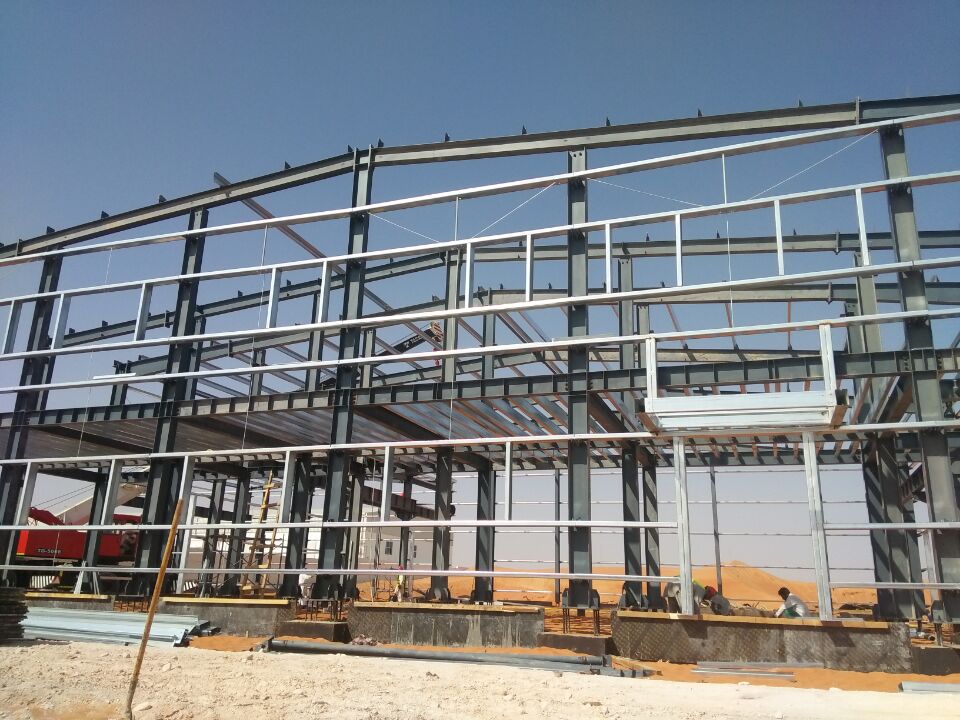
1. The Urgency of Space Optimization in Modern Warehousing and Workshop Operations
The global economy’s rapid expansion, coupled with the boom in e-commerce and supply chain digitization, has intensified the demand for efficient storage and production space. Warehouses and workshops are no longer mere “storage facilities” but critical nodes in the supply chain, requiring seamless integration of storage, handling, processing, and distribution functions. However, three key challenges hinder space efficiency in traditional facilities:
1.1 Structural Constraints of Conventional Buildings
Reinforced concrete warehouses and workshops are limited by their structural design, typically featuring column spans of 6-8 meters and low ceiling heights (often below 8 meters) . These constraints force businesses to adopt dense, inflexible layouts, resulting in wasted aisle space, inefficient vertical storage, and difficulty accommodating large equipment or high-volume inventory. For example, a 10,000-square-meter concrete warehouse can only achieve a storage density of 0.8-1.2 tons per square meter, while the same area with a metal frame structure can reach 1.8-2.5 tons per square meter . Additionally, concrete structures require extensive foundational work and long curing periods, making expansion or reconfiguration costly and time-consuming.
1.2 Evolving Operational Requirements
Modern supply chains demand agility: businesses must quickly adapt to fluctuating inventory levels, new product lines, and advanced automation systems. Traditional buildings lack the flexibility to reconfigure layouts or scale operations without significant renovations. For instance, the adoption of automated storage and retrieval systems (AS/RS), AGV robots, and high-rise shelving requires unobstructed space, precise floor flatness, and sufficient load-bearing capacity—requirements that concrete structures often struggle to meet. A survey by the Material Handling Institute found that 67% of logistics companies cite “inadequate space flexibility” as a major barrier to adopting smart 仓储 technologies .
1.3 Cost Pressures and Sustainability Goals
Land costs have surged globally, with industrial land prices increasing by 15-20% annually in major logistics hubs . Maximizing space utilization has become a direct driver of cost reduction: a 10% increase in storage density can reduce per-unit storage costs by 8-12% . Simultaneously, sustainability regulations (such as LEED and China’s Three-Star Green Building standards) require facilities to minimize carbon emissions, energy consumption, and construction waste. Metal frame structures address these goals through high recyclability, low-carbon construction processes, and energy-efficient designs—factors that conventional concrete buildings cannot match.
Against this backdrop, metal frame warehouses and workshops have gained traction as the optimal solution for space optimization. According to the World Steel Association, the global adoption rate of metal frame structures in industrial and logistics facilities increased from 45% in 2018 to 62% in 2024, with projections to reach 75% by 2030 . This growth is driven by the structure’s unique ability to overcome traditional space constraints while aligning with efficiency and sustainability objectives.

2. Core Advantages of Metal Frame Structures for Space Optimization
Metal frame warehouses and workshops excel at space optimization due to four interconnected structural and design advantages: structural flexibility, modular scalability, vertical space utilization, and compatibility with smart systems. These features work in tandem to maximize usable space, enhance operational efficiency, and future-proof facilities.
2.1 Structural Flexibility: Breaking Free from Span and Layout Limitations
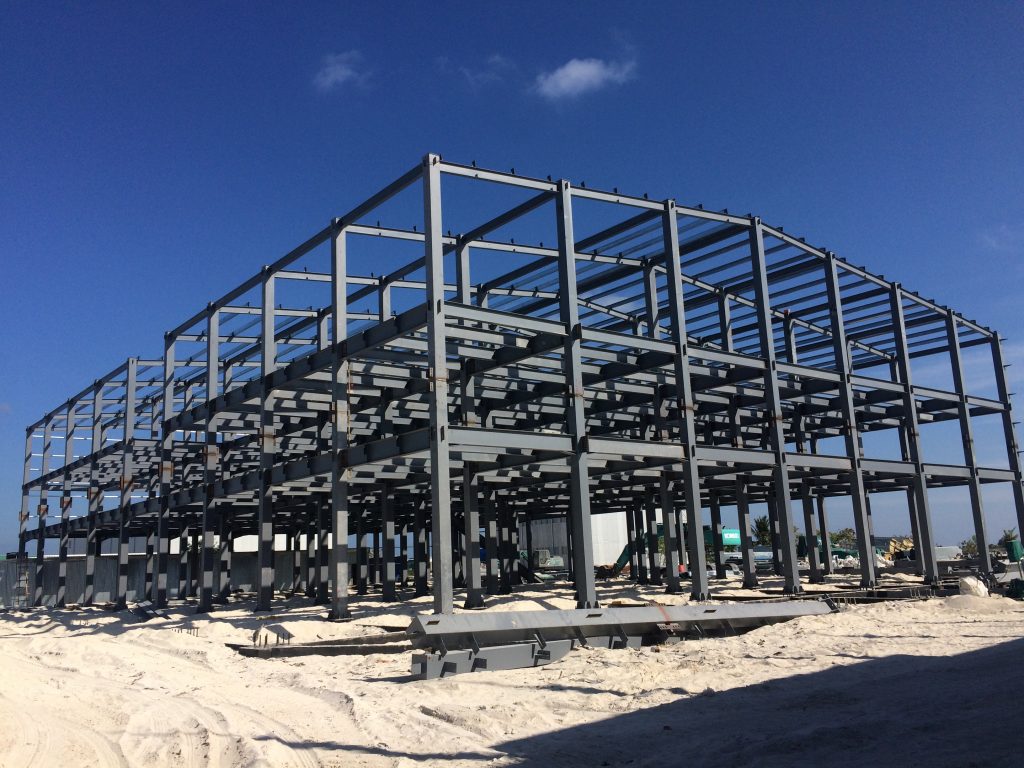
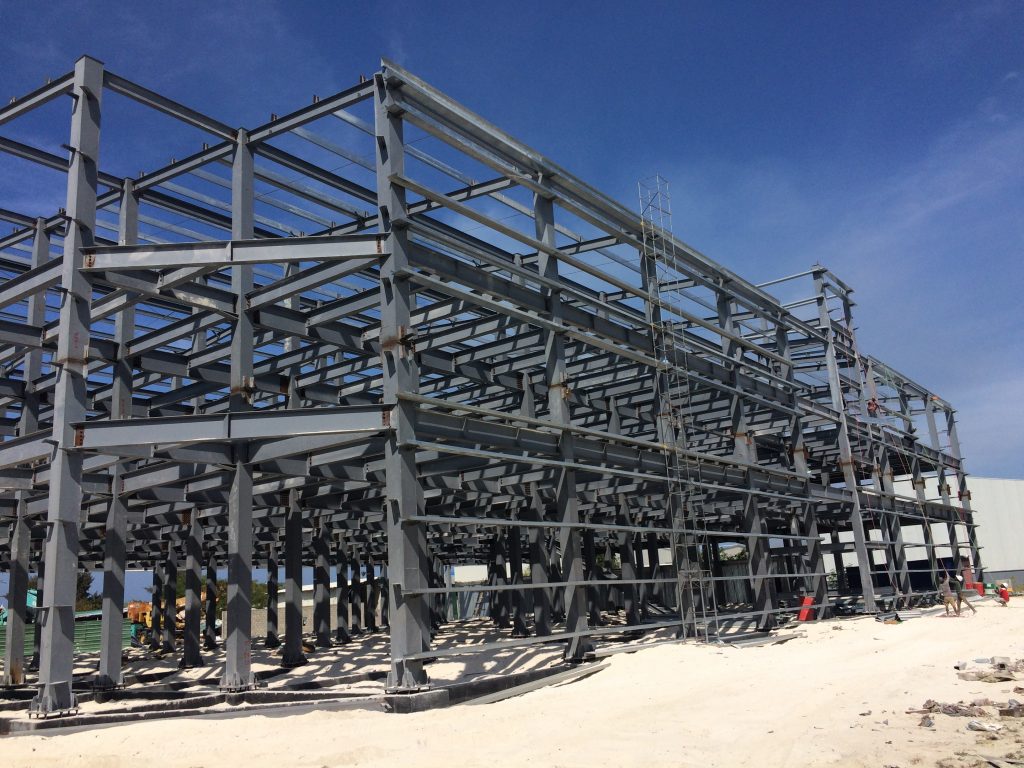
Metal frame structures—including portal steel frames, rigid frames, and steel trusses—offer unparalleled span capabilities, enabling column-free spaces that eliminate obstacles to storage and movement. Unlike concrete structures, which require frequent columns for support, metal frames can achieve spans of 20-40 meters (and even up to 60 meters for specialized projects) without intermediate columns . This flexibility transforms warehouse layouts:
- Unobstructed floor space: Column-free designs allow for wider aisles, larger storage bays, and unimpeded movement of AGVs, forklifts, and heavy equipment. For example, a metal frame warehouse with a 36-meter span can accommodate 50% more pallet positions than a concrete warehouse of the same size by eliminating 8-10 columns per 1,000 square meters .
- Customizable bay sizes: Metal frames support variable bay widths (typically 6-12 meters) and lengths, enabling businesses to tailor layouts to specific storage needs—whether for bulk goods, palletized inventory, or large machinery. In manufacturing workshops, this flexibility allows for reconfigurable production lines without structural modifications.
- Adaptive load-bearing capacity: Metal frames can be engineered to support heavy loads (up to 5 tons per square meter for mezzanine floors) and dynamic loads from automated systems. High-strength steel components (such as Q355 and Q460 grade steel) ensure structural integrity while minimizing component size, further reducing space occupy .
2.2 Modular Design: Scalable Space for Dynamic Needs
Metal frame structures are inherently modular, constructed from prefabricated components that can be easily assembled, disassembled, or expanded. This modularity addresses the challenge of evolving operational needs:
- Rapid expansion: Businesses can extend warehouses or workshops by adding modular bays without disrupting existing operations. For example, the logistics and warehousing project of Quzhou Yuanli Metal Products Co., Ltd. used modular portal frame structures to expand its warehouse capacity by 27,000 square meters in just 4 months. compared to the 8-10 months required for concrete expansion .
- Reconfigurable layouts: Prefabricated steel components (such as beams, columns, and trusses) can be repurposed or rearranged to adapt to new storage systems or production processes. This is particularly valuable for industries with short product lifecycles, such as electronics or fast-moving consumer goods (FMCG).
- Temporary or semi-permanent structures: Modular metal frames can be deployed as temporary warehouses for seasonal inventory surges or construction sites, then relocated or disassembled when no longer needed—maximizing space utilization without permanent capital investment.
2.3 Vertical Space Utilization: Unlocking the Third Dimension
Traditional warehouses often underutilize vertical space due to structural limitations, but metal frames enable multi-level designs and high ceiling heights that drastically increase storage capacity:
- High-rise storage: Metal frame warehouses can achieve ceiling heights of 12-24 meters (compared to 8-10 meters for concrete warehouses), supporting automated high-rise shelving systems that double or triple storage density. The Sichuan Tobacco Smart Logistics Warehousing Project ,for example, features a metal frame structure with a 15-meter ceiling height, enabling the installation of 12-level AS/RS and a space utilization rate of 85%—30% higher than conventional facilities .
- Mezzanine floors: Steel mezzanines (supported by metal frames) create additional usable space for offices, picking areas, or light storage without expanding the building’s footprint. Mezzanines can be designed to support loads of 1-3 tons per square meter and installed with minimal disruption to existing operations. A 10,000-square-meter metal frame warehouse with a mezzanine can add 4,000-6,000 square meters of usable space—an increase of 40-60% .
- Precision flooring for vertical systems: Metal frame structures support high-precision flooring (with flatness errors as low as ±2mm, achieved through laser leveling technology), which is critical for the operation of automated guided vehicles (AS/RS), AGVs, and automated conveyors. The Sichuan Tobacco project used laser leveling machines to ensure floor flatness, enabling seamless integration of AGVs (automated guided vehicles) and reducing operational errors by 90%.
2.4 Compatibility with Smart Warehousing Systems
Metal frame structures are uniquely suited to integrate with modern smart technologies, which further optimize space utilization through automation and data-driven management:
- Lightweight design for rooftop systems: The lightweight nature of metal frames (30-50% lighter than concrete structures) allows for rooftop installations of solar panels, HVAC systems, or additional storage platforms—without compromising structural integrity. The Suzhou Taicang Skechers Logistics Center Phase II Project ,a LEED GOLD-certified facility, features a steel frame structure with a solar-ready roof, generating 1.2MW of renewable energy while maintaining unobstructed interior space .
- Digital integration: Metal frames can be equipped with embedded IoT sensors, cable trays, and conduit systems for smart warehouse technologies such as digital twin platforms, real-time inventory tracking, and environmental monitoring. The Sichuan Tobacco Project’s digital twin system, for example, uses data from sensors integrated into the metal frame to optimize storage layouts and reduce empty space by 15% .
- Flexible utility routing: Metal frames allow for easy installation and reconfiguration of electrical, plumbing, and ventilation systems, supporting the dynamic needs of smart equipment. This eliminates the need for permanent utility trenches (common in concrete structures) that restrict layout changes.
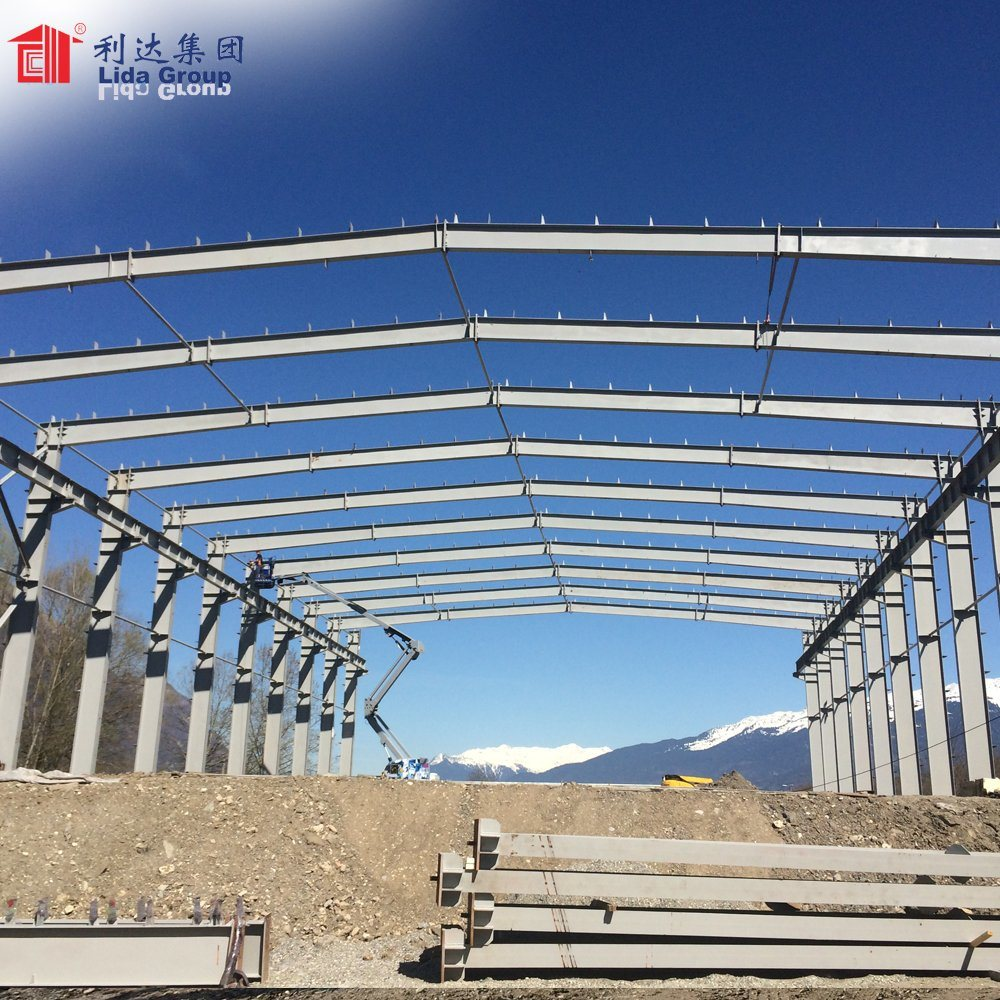
3. Technological Innovations Driving Space Optimization in Metal Frame Facilities
The space optimization potential of metal frame warehouses and workshops is amplified by cutting-edge technologies in design, construction, and operations. These innovations enable precise customization, efficient construction, and intelligent management of space.
3.1 Digital Design and Simulation with BIM
Building Information Modeling (BIM) technology has become a cornerstone of space-optimized metal frame design. BIM creates a 3D digital twin of the facility, enabling engineers to simulate and optimize every aspect of space utilization:
- Span and load optimization: BIM software (such as Autodesk Revit and Tekla Structures) analyzes structural performance to determine the optimal span, column spacing, and component size—minimizing material usage while maximizing usable space. The Suzhou Skechers Logistics Center Phase II Project used BIM to optimize its steel frame design, resolving 200+ design conflicts and reducing steel usage by 12% while maintaining a 12.9-meter span .
- Layout simulation: BIM allows businesses to test different storage layouts, equipment configurations, and workflow patterns before construction, identifying the most space-efficient design. For example, a manufacturing workshop can simulate production line placement, material flow, and storage zones to minimize wasted space and reduce travel distances.
- Multi-disciplinary coordination: BIM integrates structural, mechanical, electrical, and plumbing (MEP) designs, ensuring that utility systems are routed efficiently without occupy valuable floor or vertical space. The Sichuan Tobacco Project used BIM to resolve 90+ MEP collision issues, reducing the need for on-site modifications and preserving 5% of usable space .
3.2 Precision Construction Technologies
Advanced construction methods ensure that metal frame structures are built to the highest precision, enabling seamless integration of space-saving systems and minimizing errors that waste space:
- Modular prefabrication: Steel components are manufactured in factories with CNC cutting machines and robotic welding systems, ensuring precision within ±2mm . This reduces on-site assembly time by 30-50% and eliminates dimensional errors that can compromise space utilization. The Guangxi Pingxiang Project used “factory processing + on-site assembly to construct 17,100 square meters of warehouse space in 8 months, with components fitting together perfectly to maximize interior space .
- Laser leveling technology: For warehouses requiring high-precision flooring (critical for automated systems), Laser leveling machines ensure floor flatness within ±2mm, enabling the installation of AS/RS and AGVs that require precise movement. The Sichuan Tobacco Project’s laser-leveled floors reduced the need for additional shimming or adjustments, preserving vertical space and improving operational efficiency .
- Modular hoisting: segmented hoisting and staggered cross-construction techniques minimize on-site disruption and ensure that structural components are installed in the optimal sequence, reducing the risk of rework that can waste space. The Guangxi Pingxiang Project used this approach to complete the 36-meter span B7 warehouse without compromising space or safety .
3.3 Intelligent Warehousing Integration
Metal frame structures serve as the backbone for smart technologies that optimize space through automation and data analytics:
- Automated Storage and Retrieval Systems (AS/RS): Metal frames’ high load-bearing capacity and vertical space enable AS/RS, which use robotic cranes to store and retrieve inventory in high-rise shelving. AS/RS can increase storage density by 2-3 times compared to manual storage, as seen in the Sichuan Tobacco Project ,where AS/RS enabled the facility to store 60,000 tons of tobacco in a 60,000-square-meter space—30% less area than a conventional warehouse .
- AGV and AMR Integration: Column-free metal frame layouts allow AGVs (Automated Guided Vehicles) and AMRs (Autonomous Mobile Robots) to move freely, optimizing picking routes and reducing aisle width. Narrow-aisle AGVs can operate in aisles as narrow as 1.8 meters (compared to 3-4 meters for manual forklifts), increasing storage density by 20% .
- Digital Twin and IoT Monitoring: Metal frame structures can be equipped with IoT sensors that track inventory levels, equipment movement, and environmental conditions in real time. The digital twin platform in the Sichuan Tobacco Project uses this data to optimize storage allocation, reducing empty space by 15% and improving inventory turnover by 25% .
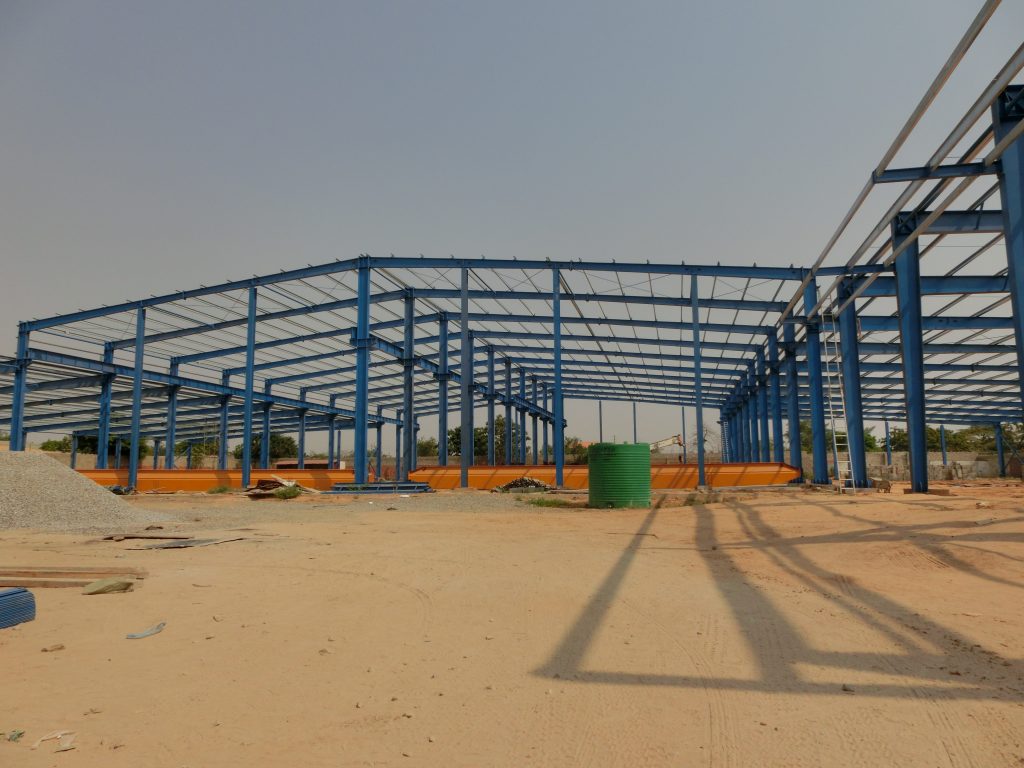
4. Global Case Studies: Space Optimization in Action
Real-world projects demonstrate how metal frame warehouses and workshops deliver tangible space optimization results across diverse industries and environments. These case studies highlight the structural, technological, and operational benefits of metal frame design.
4.1 Suzhou Skechers Logistics Center Phase II (China)
Project Overview: A 270,000-square-meter logistics center consisting of 4 high-standard automated warehouses and 1 concrete cargo corridor, designed to serve as Skechers’ China regional dual headquarters for online and offline logistics .
Space Optimization Challenges: The project required high storage density to accommodate Skechers’ growing inventory, while supporting fully automated operations (AS/RS, AGVs) and meeting LEED GOLD sustainability standards.
Metal Frame Solutions:
- Structural Design: The warehouses feature 4-story steel frame structures with box-section columns and H-beams, achieving a maximum span of 12.9 meters and ceiling height of 15 meters. Column-free bays enable the installation of 10-level AS/RS, increasing storage density by 2.5 times compared to Skechers’ existing concrete warehouses.
- BIM Optimization: BIM technology was used to simulate the steel frame design, resolving heavy connecting plate installation issues and optimizing component placement to maximize interior space. This reduced steel usage by 12% while maintaining structural integrity.
- Green and Smart Integration: The steel frame’s lightweight design allowed for rooftop solar panels (1.2MW capacity) without compromising space, while the column-free layout supported AGV movement and digital twin monitoring. The facility’s space utilization rate reached 82%, compared to the industry average of 65% for concrete logistics centers.
Results: The center can now handle 50 million pairs of shoes annually, with a 40% reduction in storage costs per unit. Construction was completed in 14 months—6 months faster than a concrete equivalent—enabling Skechers to start operations ahead of schedule.
4.2 Guangxi Pingxiang Agricultural Product Processing and Logistics Warehouse (China)
Project Overview: Three steel structure warehouses (B7-B9) totaling 17,100 square meters, including the largest-span steel structure warehouse in Pingxiang City (36 meters) .
Space Optimization Challenges: The project needed to accommodate large agricultural machinery and bulk storage of fruits and vegetables, while operating in a border region with frequent logistics surges.
Metal Frame Solutions:
- Large-Span Design: The B7 warehouse features a 36-meter span portal steel frame structure with no intermediate columns, providing unobstructed space for heavy machinery (such as 10-ton forklifts) and bulk storage. This design increased usable space by 20% compared to a concrete warehouse of the same size.
- Modular Construction: Steel components (622 tons total, including 134 columns and 252 beams) were prefabricated in factories and assembled on-site using segmented hoisting. This reduced on-site construction time by 30% and ensured precise component fitting, maximizing interior space.
- Precision Flooring: Laser Leveling machine was used to achieve floor flatness within ±3mm, enabling the installation of mobile shelving systems that can be reconfigured to accommodate seasonal inventory surges.
Results: The warehouses can handle 500,000 tons of agricultural products annually, with a 35% increase in storage capacity compared to the client’s previous concrete facilities. The modular design allows for future expansion of 5,000 square meters without disrupting operations.
4.3 Sichuan Tobacco Intelligent Logistics Warehouse (China)
Project Overview: A 60,000-square-meter tobacco raw material storage facility with 6 steel structure warehouses, designed to be the largest tobacco aging warehouse in Southwest China .
Space Optimization Challenges: The project required high vertical space utilization to store 60,000 tons of tobacco, while supporting intelligent Maintenance and real-time inventory tracking.
Metal Frame Solutions:
- Vertical Space Utilization: The warehouses feature steel frame structures with 15-meter ceiling heights, supporting 12-level AS/RS that maximize vertical storage. The space utilization rate reached 85%, compared to 55% for the client’s existing concrete warehouses.
- Digital Twin Integration: The steel frame was equipped with IoT sensors to monitor temperature, humidity, and tobacco aging status. A digital twin platform optimizes storage allocation, reducing empty space by 15% and improving inventory turnover by 25%.
- Flexible Layout: The column-free steel frame design allows for reconfigurable storage zones, enabling the facility to adapt to different tobacco types and aging requirements. The use of BIM resolved 90+ MEP collision issues, preserving 5% of usable space.
Results: The facility reduced storage area requirements by 30% compared to conventional designs, saving 18,000 square meters of land. Labor costs were reduced by 75% through automation, and the digital twin system reduced inventory errors by 90%.
4.4 Quzhou Yuanli Metal Products Logistics Warehouse (China)
Project Overview: A 50,000-square-meter logistics and workshop complex with multiple steel frame warehouses and workshops, including Portal frame and multi-story frame structures .
Space Optimization Challenges: The project needed to accommodate diverse storage needs (bulk metal products, small parts, equipment) and flexible production spaces for metal processing.
Metal Frame Solutions:
- Multi-Type Structure Design: The complex uses Portal frame for single-story warehouses (span 12-15 meters, height 12-15 meters) and multi-story steel frames for workshops (up to 5 floors, height 21.15 meters). This mixed design maximizes space for different uses: single-story warehouses for bulk storage, multi-story workshops for production and office space.
- Modular Expansion: The Portal frame warehouses were designed for modular expansion, allowing the client to add 27,125 square meters of storage space in 4 months without disrupting existing operations.
- Load-Bearing Flexibility: Steel frames were engineered to support variable loads (1-5 tons per square meter), enabling the warehouses to store both heavy metal products and light components. The use of high-strength steel reduced column size by 30%, maximizing interior space.
Results: The complex’s overall space utilization rate reached 80%, compared to 60% for the client’s previous concrete facilities. The flexible design allowed the client to reconfigure 30% of the workshop space within 2 weeks to adapt to a new production line, reducing downtime by 50%.
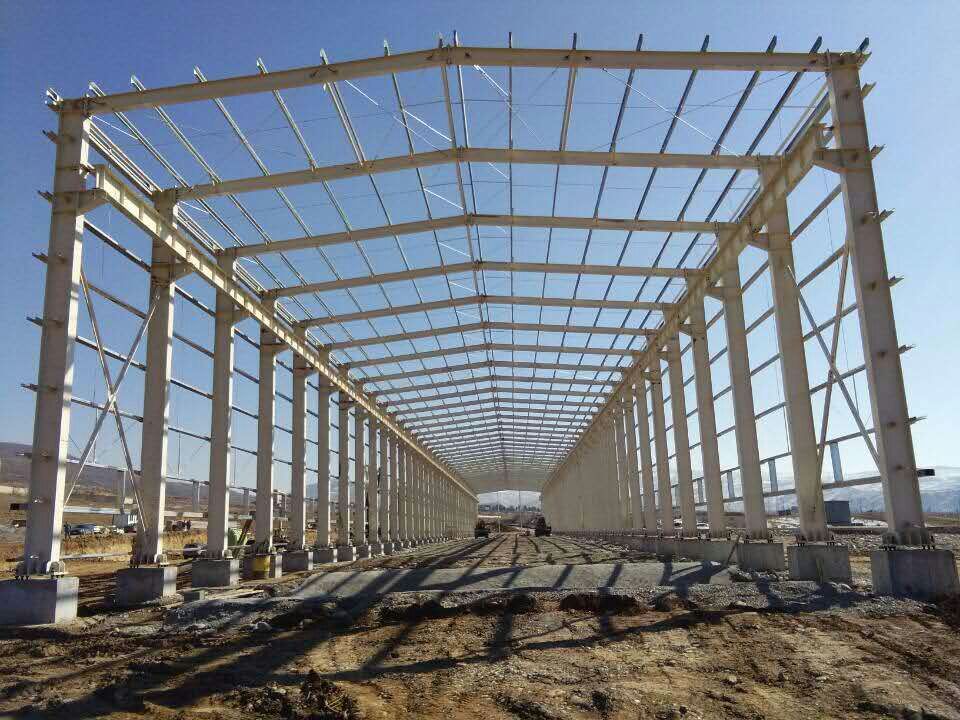
5. Strategic Approaches to Optimizing Space with Metal Frame Warehouses/Workshops
To maximize space utilization with metal frame structures, businesses must adopt a holistic approach that integrates design, technology, and operational strategy. Below are key strategies for successful space optimization:
5.1 Conduct a Comprehensive Space Audit
Before designing a metal frame facility, conduct a detailed audit of current and future space needs:
- Inventory Analysis: Calculate storage density requirements, including pallet dimensions, weight, and turnover rate. For high-turnover inventory, prioritize accessible layouts with narrow aisles; for bulk or low-turnover items, use high-rise storage.
- Equipment Requirements: Identify the size and movement paths of forklifts, AGVs, and production machinery to determine required aisle widths and ceiling heights. For automated systems, ensure the structure can support the weight and precision needs of the equipment.
- Future Growth Projections: Anticipate expansion needs (e.g., 20-30% growth in 5 years) and design the metal frame structure for modular expansion—such as Reserved foundation for additional bays or mezzanines.
5.2 Optimize Structural Design for Space
Work with structural engineers to tailor the metal frame design to space needs:
- Span and Column Spacing: Select the optimal span (20-40 meters for warehouses, 12-24 meters for workshops) to minimize columns while maintaining structural efficiency. For example, a 30-meter span eliminates 6-8 columns per 1,000 square meters, freeing up 10-15% of usable space.
- Vertical Space Utilization: Design for ceiling heights of 12-24 meters to support high-rise shelving or mezzanines. Use lightweight steel components to maximize payload capacity for rooftop systems (solar, HVAC) without compromising vertical space.
- Material Selection: Choose high-strength steel (Q355, Q460) to reduce component size (columns, beams) and free up space. High-strength steel can reduce column cross-section by 20-30% compared to standard steel, while maintaining the same load-bearing capacity.
5.3 Integrate Modular and Flexible Layouts
Design the facility with modularity and flexibility in mind:
- Modular Bays: Divide the warehouse or workshop into modular bays (e.g., 10×30 meters) that can be reconfigured or expanded as needed. Modular steel components allow for quick changes to bay sizes or functions.
- Movable Partitions: Use movable steel partitions to create temporary zones for specific tasks (e.g., picking, assembly) without permanent structural changes. This is ideal for businesses with fluctuating production or storage needs.
- Mezzanine Floors: Install steel mezzanines for office space, light storage, or picking areas, adding 40-60% usable space without expanding the footprint. Mezzanines can be designed as permanent or temporary structures, depending on needs.
5.4 Leverage Smart Technologies for Space Efficiency
Integrate intelligent systems to optimize space through automation and data:
- AS/RS and AGVs: Invest in AS/RS for high-rise storage and AGVs for material handling, reducing aisle width and increasing storage density. AS/RS can increase storage density by 2-3 times compared to manual storage.
- Digital Twin and IoT: Implement a digital twin platform to monitor and optimize space utilization in real time. IoT sensors track inventory levels, equipment movement, and empty space, enabling data-driven decisions to reduce waste.
- Warehouse Management Systems (WMS): Use WMS software to optimize storage allocation, ensuring that inventory is placed in the most space-efficient locations (e.g., fast-moving items in accessible areas, slow-moving items in high-rise storage).
5.5 Prioritize Green and Sustainable Design
Sustainable design choices can indirectly optimize space by reducing the environmental footprint and improving operational efficiency:
- Solar Rooftops: Install solar panels on the metal frame roof to generate renewable energy, reducing reliance on grid power and freeing up ground space for storage or production.
- Natural Lighting and Ventilation: Design the metal frame with skylights and ventilators to reduce the need for artificial lighting and HVAC systems, freeing up space occupied by equipment and reducing energy costs.
- Recyclable Materials: Use steel components with high recyclability (90%+), ensuring that the facility can be disassembled and reused in the future—maximizing the long-term value of the space.
6. Future Trends in Space Optimization with Metal Frame Structures
As technology advances and industry needs evolve, metal frame warehouses and workshops will continue to push the boundaries of space optimization. Key trends to watch include:
6.1 Modular and Prefabricated Construction 2.0
The future will see even more advanced modular metal frame systems, with prefabricated components that can be assembled in days rather than weeks. Off-site manufacturing will increase to 90%+ of component production, reducing on-site construction time by 60% and enabling faster deployment of space-optimized facilities. Modular systems will also become more standardized, allowing businesses to mix and match components to create custom layouts quickly.
6.2 Green and Low-Carbon Integration
Metal frame structures will increasingly integrate green technologies to optimize space and sustainability. This includes:
- Solar Steel Frames: Steel components with integrated solar panels (solar cladding, solar roof tiles) that generate energy while maintaining structural integrity, eliminating the need for separate solar installations that occupy space.
- Carbon-Neutral Construction: The use of recycled steel (which emits 67% less CO2 than virgin steel) and low-carbon manufacturing processes will become standard, aligning with global carbon neutrality goals while optimizing space.
- Green Roofs and Vertical Gardens: Metal frames’ load-bearing capacity will support green roofs and vertical gardens, improving insulation, reducing energy costs, and providing additional usable space (e.g., rooftop gardens for employees).
6.3 Intelligent and Autonomous Optimization
AI and machine learning will play a larger role in space optimization, with systems that:
- Predictive Layout Optimization: AI algorithms will analyze inventory data, production schedules, and equipment movement to automatically adjust storage layouts and workflow paths, maximizing space utilization in real time.
- Autonomous Maintenance: IoT sensors integrated into metal frames will predict structural maintenance needs, reducing downtime and ensuring that the facility continues to operate at peak space efficiency.
- Human-Robot Collaboration: Advanced AMRs and collaborative robots (cobots) will work alongside humans in metal frame facilities, optimizing space by operating in narrower aisles and adapting to dynamic layouts.
6.4 Cross-Industry Integration
Metal frame warehouses and workshops will evolve to serve multiple functions, blurring the lines between storage, production, and distribution. For example:
- Warehouse-Manufacturing Hybrids: Metal frame structures will support “factory-in-a-warehouse” designs, where production lines are integrated with storage systems to reduce material movement and optimize space.
- Logistics and Retail Integration: “Dark stores” (warehouses designed for online order fulfillment) will use metal frame structures to maximize storage density while accommodating quick picking and delivery, with modular layouts that can be reconfigured for seasonal demand.
7. Conclusion
Metal frame warehouses and workshops have emerged as the definitive solution for space optimization in the modern industrial and logistics landscape. By leveraging structural flexibility, modular design, vertical space utilization, and intelligent technology integration, these facilities address the core challenges of traditional construction—constrained spans, rigid layouts, and inefficient space usage—while delivering tangible benefits: increased storage density (up to 2.5 times higher than concrete facilities), faster construction (30-50% reduction in time), lower operational costs (15-30% savings), and greater adaptability to evolving needs.
The global case studies highlighted—from the 270,000-square-meter Suzhou Skechers Logistics Center to the 36-meter span Guangxi Pingxiang Agricultural Warehouse—demonstrate that metal frame structures are not just theoretical solutions but proven performers in diverse industries and environments. By adopting strategic approaches such as comprehensive space audits, optimized structural design, modular layouts, and smart technology integration, businesses can unlock the full potential of their space, gaining a competitive edge in an increasingly space-scarce world.
As the industry evolves, metal frame structures will continue to innovate, with trends such as advanced modular construction, green integration, and AI-driven optimization pushing the boundaries of space efficiency. For businesses seeking to maximize the value of their real estate, reduce costs, and future-proof their operations, metal frame warehouses and workshops are not just a choice—they are a strategic imperative. In a world where space is at a premium, metal frames offer the key to doing more with less, transforming warehouses and workshops from passive storage facilities into dynamic, efficient hubs of productivity.
Related news
-
Discover Our Versatile and Temporary Mobile Building Solutions
2025-12-10 16:50:59
-
Lida Group Delivers Advanced Steel Structure Building Solutions
2025-12-11 14:24:50
-
Lida Group Launches New Easy Install Sandwich Panel Prefab House
2025-12-10 17:34:04
contact us
- Tel: +86-532-88966982
- Whatsapp: +86-13793209022
- E-mail: sales@lidajituan.com
