



Low-Cost Durable Construction Solutions for Prefab Dormitories by Lida Group
2026-Feb-05 14:02:03
By Admin
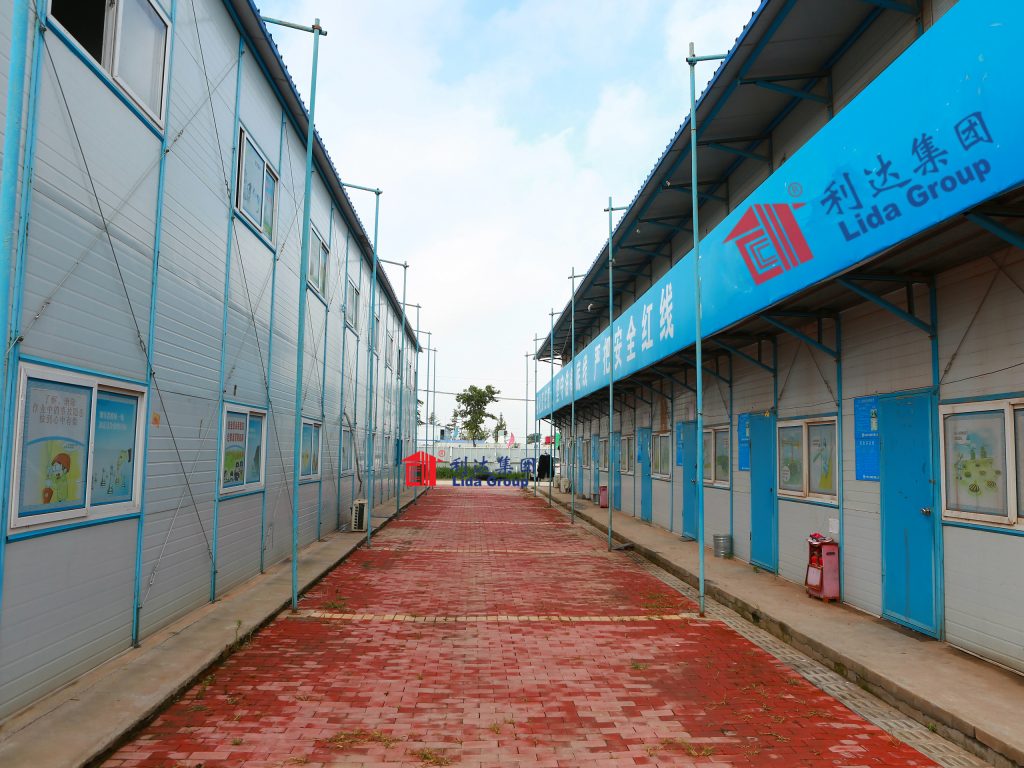
In recent years, the global demand for affordable, durable, and efficient dormitory solutions has surged dramatically. From educational institutions expanding their campus housing to corporations providing employee accommodations, and humanitarian organizations deploying temporary shelters for displaced populations, the need for prefabricated (prefab) dormitories that balance cost-effectiveness with long-term performance has never been more critical. Traditional dormitory construction methods often struggle to meet these demands, plagued by prolonged timelines, excessive material waste, high labor costs, and limited durability—especially in harsh or remote environments. Against this backdrop, Lida Group, a leading manufacturer of prefabricated building solutions with decades of industry experience, has emerged as a trusted provider of low-cost, durable prefab dormitory solutions, redefining efficiency and reliability in modular housing.
This article provides a comprehensive overview of Lida Group’s prefab dormitory construction solutions, focusing on how the company achieves the dual goals of low cost and high durability. We will explore Lida Group’s core capabilities, the innovative materials and technologies employed in its prefab dormitories, the key benefits of its solutions, real-world application cases, a comparison with traditional dormitory construction, and address common questions about prefab dormitory durability and cost. By the end, readers will gain a clear understanding of why Lida Group’s prefab dormitories are becoming the preferred choice for organizations worldwide seeking cost-effective, long-lasting housing solutions.
1. About Lida Group: A Leader in Prefabricated Building Solutions
Lida Group, a renowned enterprise with years of expertise in the prefabricated construction industry, has established itself as a global leader in delivering high-quality, cost-effective modular building solutions. With a focus on innovation, sustainability, and customer-centricity, the company has expanded its product portfolio to cover a wide range of prefabricated structures, including dormitories, residential buildings, offices, warehouses, and emergency shelters. Lida Group’s success is built on three core pillars: advanced manufacturing capabilities, rigorous quality control, and a commitment to optimizing cost without compromising durability.
Headquartered in China, Lida Group operates state-of-the-art manufacturing facilities equipped with automated production lines, enabling the mass production of prefabricated components with consistent quality and precision. The company’s team of engineers and architects specializes in designing modular solutions tailored to diverse climate conditions, cultural preferences, and functional requirements—from tropical regions requiring enhanced ventilation to cold areas demanding superior thermal insulation. Lida Group also adheres to international building standards, including ISO, ASTM, and CE, ensuring its prefab dormitories meet the highest safety and durability criteria worldwide.
What sets Lida Group apart in the prefab dormitory market is its unwavering focus on balancing cost and durability. Unlike many competitors that prioritize either low cost (at the expense of longevity) or durability (at the expense of affordability), Lida Group leverages innovative materials, efficient production processes, and modular design to deliver solutions that are both economical and built to last. This approach has earned the company partnerships with educational institutions, corporations, and humanitarian organizations across Asia, Africa, Europe, and Latin America.
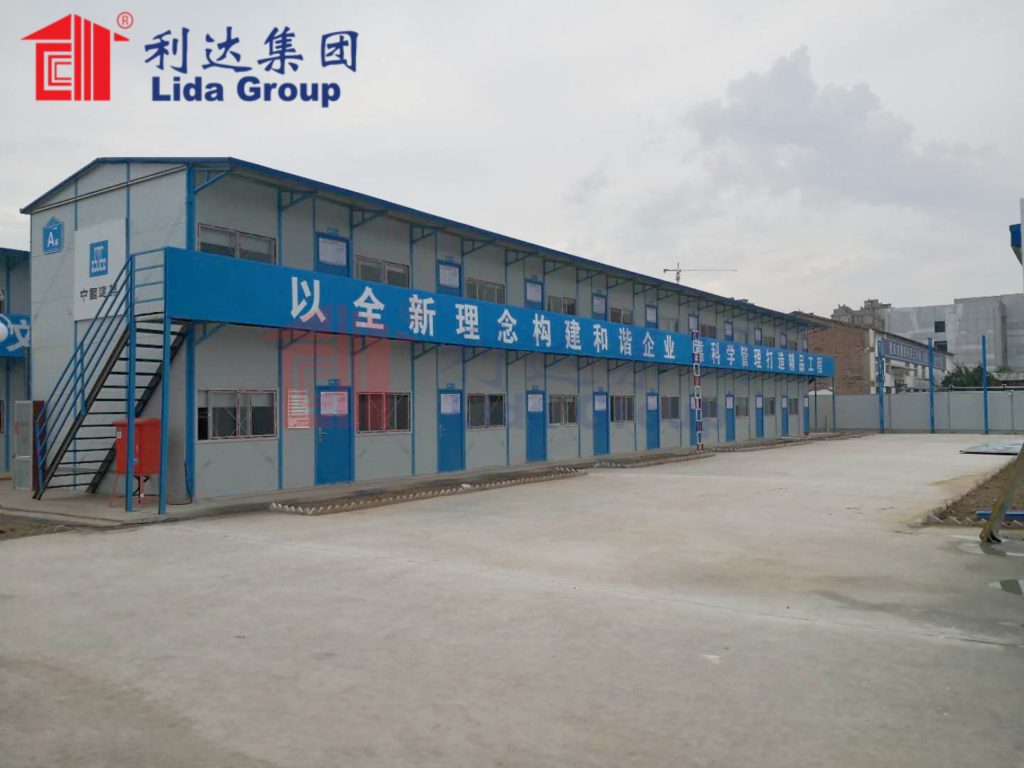
2. Core Low-Cost Durable Construction Solutions for Prefab Dormitories by Lida Group
Lida Group’s prefab dormitory solutions are engineered to address the key pain points of traditional dormitory construction: high costs, long construction timelines, and poor durability. The company’s approach integrates cost-saving strategies into every stage of the construction process—from material selection and component manufacturing to on-site installation—while ensuring the final structure is durable, safe, and comfortable. Below is a detailed breakdown of Lida Group’s core solutions for low-cost, durable prefab dormitories.
2.1 Cost-Optimized Material Selection
Material costs account for a significant portion of total dormitory construction expenses, and Lida Group’s strategic material selection is central to its low-cost solution. The company prioritizes high-performance, cost-effective materials that deliver durability without the premium price tag, focusing on three key material components: sandwich panels (walls, floors, and roofs), prefabricated steel frames, and eco-friendly interior finishes.
For the primary structural components, Lida Group uses high-quality yet affordable sandwich panels, the cornerstone of its prefab dormitories. These panels consist of two outer skins (typically galvanized steel or fiber-reinforced calcium silicon board) and a central core material (EPS, rock wool, or PIR), each selected for its cost-effectiveness and durability. Galvanized steel skins are preferred for their low cost, corrosion resistance, and long lifespan (up to 50 years with proper maintenance), while fiber-reinforced calcium silicon board offers a more traditional aesthetic at a competitive price. The central core material is tailored to the project’s budget and performance needs: EPS (expanded polystyrene) is the most cost-effective option, providing excellent thermal insulation and moisture resistance at a lower cost than other cores; rock wool is used for projects requiring enhanced fire resistance (Class A fire rating) at a moderate price; and PIR (polyisocyanurate) is employed for high-energy-efficiency projects where long-term utility cost savings offset the slightly higher initial cost.
Lida Group’s prefab steel frames are another cost-saving component. Manufactured from lightweight, high-strength galvanized steel, these frames are cheaper to produce and transport than traditional concrete frames, while offering superior durability and structural stability. The steel frames are prefabricated in the factory to precise specifications, reducing on-site waste and labor costs associated with cutting and adjusting materials on-site.
For interior finishes, Lida Group uses eco-friendly, low-cost materials that are easy to install and maintain. This includes prefabricated gypsum board walls, PVC flooring, and energy-efficient lighting fixtures. These materials are not only affordable but also durable, resistant to wear and tear, and easy to clean—critical for dormitories with high occupancy rates. By avoiding expensive, high-maintenance finishes (such as marble or hardwood), Lida Group reduces initial construction costs while ensuring the interior remains functional and attractive for years.
2.2 Efficient Factory Prefabrication and Mass Production
Factory prefabrication is a key driver of Lida Group’s low-cost, durable solution, as it eliminates many of the inefficiencies and waste associated with traditional on-site construction. All components of Lida Group’s prefab dormitories—sandwich panels, steel frames, doors, windows, and interior fixtures—are manufactured in a controlled factory environment, ensuring consistent quality and reducing material waste to less than 2% (compared to 10-15% waste in traditional construction).
Lida Group’s automated production lines enable mass production of prefabricated components, leveraging economies of scale to reduce manufacturing costs. By producing large volumes of standard components (e.g., 1000mm-wide sandwich panels, standard-sized door frames), the company lowers per-unit production costs, passing these savings on to customers. The factory environment also allows for rigorous quality control: every component is inspected for durability, structural integrity, and adherence to design specifications before being shipped to the construction site, ensuring the final dormitory is built to last.
Another cost-saving benefit of factory prefabrication is the reduction in on-site labor costs. Traditional dormitory construction requires a large team of skilled workers (bricklayers, carpenters, concrete finishers) to complete the structure over months, while Lida Group’s prefab dormitories can be installed by a small team of 2-6 workers (no specialized skills required) in days or weeks. This reduces labor costs by up to 50% compared to traditional construction, a significant savings for large-scale dormitory projects.
2.3 Modular Design for Flexibility and Cost Savings
Lida Group’s prefab dormitories feature a modular design, which further enhances cost savings and durability. The dormitories are constructed from standardized, interchangeable modules (typically 3m×6m or 4m×8m), each containing a complete living unit (bedroom, bathroom, or common area). This modular approach offers several cost-saving advantages:
First, modular design allows for flexible configuration, enabling customers to adjust the dormitory size and layout to meet their specific needs without incurring significant additional costs. For example, a school needing 50 dormitory rooms can order 50 standard modules, while a corporation needing 100 rooms can easily scale up the order—no need to redesign the entire structure. This flexibility eliminates the cost of custom design work for each project, reducing initial engineering costs.
Second, modular modules are lightweight and easy to transport, reducing transportation costs. Lida Group’s modules can be stacked and loaded onto standard shipping containers, allowing for efficient transportation to even remote construction sites. This is particularly beneficial for projects in areas with limited infrastructure, where transporting traditional construction materials (bricks, concrete) is expensive and time-consuming.
Third, modular design enhances durability by ensuring a tight, secure fit between components. Each module is designed with a tongue-and-groove connection system, which eliminates gaps and ensures the structure is weathertight, preventing water infiltration and air leakage. This connection system also enhances structural stability, making the dormitory resistant to wind speeds of up to 120km/h and seismic activity of up to magnitude 7.0—critical for durability in harsh climates.
2.4 Energy-Efficient Design for Long-Term Cost Savings
While Lida Group focuses on reducing initial construction costs, the company also prioritizes long-term cost savings through energy-efficient design. Energy costs are a significant ongoing expense for dormitories, and Lida Group’s prefab dormitories are engineered to minimize energy consumption, delivering long-term savings for customers.
The sandwich panels used in Lida Group’s dormitories provide excellent thermal insulation, with thermal conductivity values ranging from 0.022 W/m·K (PIR core) to 0.040 W/m·K (EPS core). This reduces heat transfer between the interior and exterior of the dormitory, minimizing the need for artificial heating and cooling. For example, in cold climates, the thermal insulation of the panels reduces heating costs by up to 50% compared to traditional dormitories; in hot climates, it reduces cooling costs by a similar margin.
Lida Group also integrates energy-efficient features into the dormitory design, including double-glazed windows (for improved insulation and noise reduction), LED lighting fixtures (which use 75% less energy than incandescent bulbs), and natural ventilation systems (reducing the need for mechanical ventilation). These features not only lower long-term utility costs but also enhance the comfort of the dormitory occupants, improving overall satisfaction.
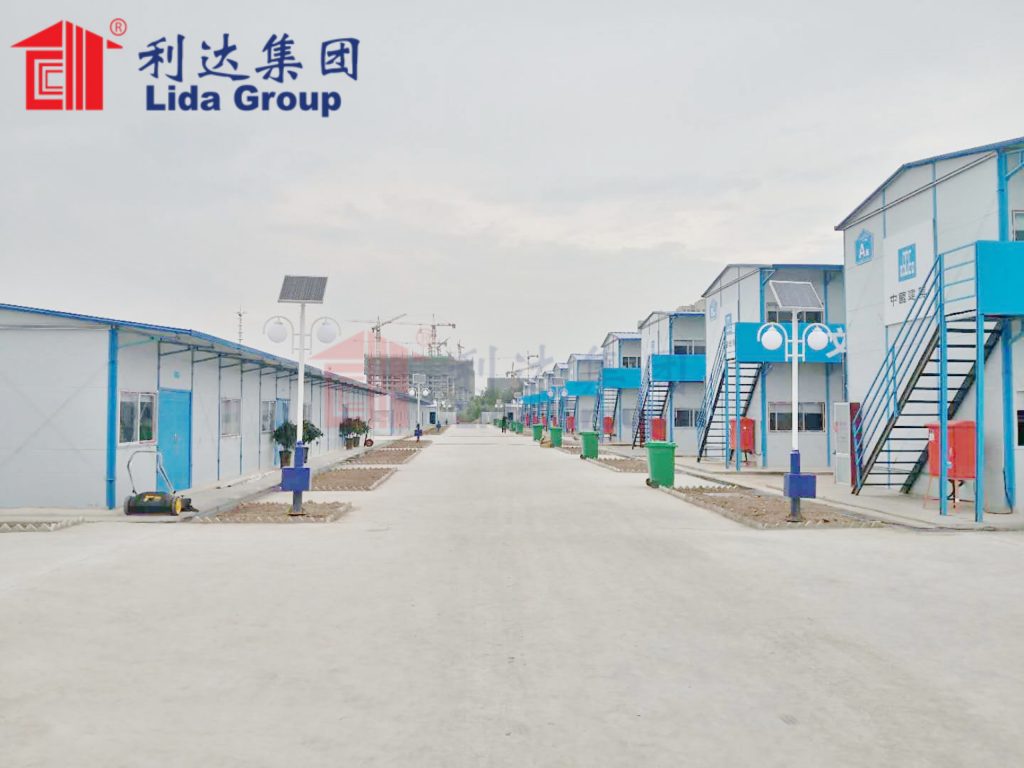
3. Durability Features of Lida Group’s Prefab Dormitories
Low cost does not mean compromised durability for Lida Group’s prefab dormitories. The company’s solutions are engineered to withstand the test of time, with durability features integrated into every component and design element. Below are the key durability features that ensure Lida Group’s prefab dormitories are long-lasting and low-maintenance.
3.1 Corrosion and Weather Resistance
Lida Group’s prefab dormitories are designed to withstand harsh weather conditions—from heavy rain and snow to extreme heat and humidity—thanks to their corrosion-resistant and weathertight design. The galvanized steel skins of the sandwich panels are coated with a layer of zinc, which prevents rust and corrosion even in coastal or high-humidity environments. For projects in particularly corrosive areas (e.g., near saltwater), Lida Group offers an additional PVDF (polyvinylidene fluoride) coating on the steel skins, extending their lifespan by an additional 10-15 years.
The tongue-and-groove connection system of the modular components ensures a tight, weathertight seal, preventing water infiltration and air leakage. Sealants are applied to all joints and gaps, further enhancing weather resistance and reducing the risk of mold, mildew, and structural damage. The roof panels are designed with a slight slope to facilitate rainwater runoff, and gutters and downspouts are included to direct water away from the foundation, preventing water damage over time.
3.2 Fire Resistance
Fire safety is a critical consideration for dormitories, which house large numbers of people, and Lida Group’s prefab dormitories are engineered to meet the highest fire resistance standards. Depending on the core material selected, the sandwich panels achieve Class A or Class B fire ratings: rock wool core panels achieve Class A (non-combustible), withstanding temperatures of up to 1000°C for up to 4 hours without releasing toxic gases; EPS and PIR core panels achieve Class B, offering excellent fire resistance at a lower cost.
Lida Group also integrates additional fire safety features into its dormitories, including fire-resistant doors, smoke detectors, and fire extinguishers. The modular design ensures that fire cannot spread quickly between modules, providing valuable time for occupants to evacuate in the event of a fire. All materials used in the dormitories are non-toxic and do not release harmful fumes when exposed to high temperatures, ensuring the safety of occupants and emergency responders.
3.3 Structural Stability and Load-Bearing Capacity
Lida Group’s prefab dormitories are built to be structurally stable, with a high strength-to-weight ratio that enables them to withstand wind, snow, and seismic loads. The prefabricated steel frames are designed to support the weight of the sandwich panels, interior fixtures, and occupants, with a load-bearing capacity of up to 2.5kN/㎡ (floor panels) and 1.5kN/㎡ (roof panels). This ensures the dormitory can accommodate heavy furniture, equipment, and snow loads without structural damage.
The modular connection system further enhances structural stability, creating a unified, rigid structure that is resistant to bending and compression. Lida Group’s dormitories are tested to meet international seismic standards, withstanding seismic activity of up to magnitude 7.0, making them suitable for use in earthquake-prone regions. The lightweight design of the structure also reduces the load on the foundation, minimizing the risk of foundation damage over time.
3.4 Low-Maintenance Design
Durability also means low maintenance, and Lida Group’s prefab dormitories are designed to require minimal upkeep, reducing long-term maintenance costs for customers. The outer skins of the sandwich panels are smooth and easy to clean, requiring only occasional washing to remove dirt and debris. The galvanized steel and fiber-reinforced calcium silicon board skins are resistant to scratches, dents, and fading, eliminating the need for regular painting or repairs.
The interior finishes—gypsum board walls, PVC flooring, and LED lighting—are also low-maintenance. PVC flooring is resistant to stains, scratches, and moisture, and can be easily cleaned with a damp mop; gypsum board walls can be repainted if needed at a low cost; and LED lighting fixtures have a lifespan of up to 50,000 hours, reducing the need for frequent bulb replacements. Additionally, Lida Group’s modular design allows for easy replacement of individual components (e.g., a damaged wall panel or window) without affecting the rest of the structure, further reducing maintenance costs and downtime.

4. Applications of Lida Group’s Low-Cost Durable Prefab Dormitories
Lida Group’s prefab dormitories are highly versatile, suitable for a wide range of applications across various industries. Their low cost, durability, and quick installation make them ideal for projects where affordability, speed, and longevity are priorities. Below are the key applications of Lida Group’s prefab dormitories, with real-world case studies to demonstrate their effectiveness.
4.1 Educational Institutions (Schools and Universities)
Schools and universities worldwide face growing demand for student dormitories, often with limited budgets and tight construction timelines. Lida Group’s prefab dormitories are an ideal solution, offering low-cost, durable housing that can be installed quickly to accommodate growing student populations.
Case Study: A university in Kenya needed to expand its student dormitory capacity to accommodate 500 additional students. Traditional construction was estimated to cost $1.2 million and take 6 months to complete— exceed the university’s budget and timeline. The university chose Lida Group’s prefab dormitory solution, which included 125 modular units (4 students per unit) with EPS core sandwich panels, galvanized steel frames, and basic interior finishes. Lida Group delivered the prefabricated components within 4 weeks, and a team of 4 workers installed the entire dormitory in just 3 weeks. The total cost was $700,000—42% lower than traditional construction. The dormitory has been in use for 5 years, with minimal maintenance required, and has withstood heavy rain and high temperatures without any damage. The university reported that utility costs for the prefab dormitory are 40% lower than for its traditional dormitories, thanks to the energy-efficient design.
4.2 Corporate Employee Dormitories
Many corporations—especially those in manufacturing, construction, and mining—need to provide dormitory housing for their employees, often in remote areas where traditional housing is scarce or expensive. Lida Group’s prefab dormitories offer a cost-effective, durable solution that can be quickly deployed to support workforce housing needs.
Case Study: A mining company in Australia needed to provide dormitory housing for 200 workers at a remote mining site. The site had harsh weather conditions—extreme heat in summer and cold winds in winter—and the company required a dormitory that was durable, energy-efficient, and low-maintenance. Lida Group designed a prefab dormitory with PIR core sandwich panels (for enhanced thermal insulation), galvanized steel frames with PVDF coating (for corrosion resistance), and air conditioning units. The dormitory included 100 modular units (2 workers per unit), a common dining area, and restroom facilities. Lida Group manufactured and delivered the components within 6 weeks, and the dormitory was installed in 5 weeks. The total cost was $900,000, compared to $1.5 million for traditional construction. The dormitory has been in use for 7 years, with only minor maintenance required, and has withstood extreme temperatures and strong winds. The company reported that the energy-efficient design has reduced cooling and heating costs by 45%, and the durable construction has eliminated the need for costly repairs.
4.3 Construction Site Temporary Dormitories
Construction companies often require temporary dormitories for their workers on long-term projects, and Lida Group’s prefab dormitories are ideal for this application. They are lightweight, easy to transport and install, and durable enough to withstand the harsh conditions of a construction site. Additionally, they can be easily disassembled and relocated once the project is complete, providing long-term value.
Case Study: A construction company in Dubai needed temporary dormitories for 150 workers on a 2-year construction project. The company required a dormitory that could be installed quickly, relocated easily, and withstand the hot, sandy climate. Lida Group provided 75 modular units with EPS core sandwich panels, galvanized steel frames, and dust-resistant finishes. The dormitory was installed in just 2 weeks, and the company was able to relocate 30 units to another construction site after the first project was completed. The total cost was $500,000, and the dormitories have been in use for 3 years, with minimal maintenance required. The company reported that the ability to relocate the units saved them $200,000 in additional housing costs for the second project.
4.4 Humanitarian and Emergency Shelters
In the aftermath of natural disasters (earthquakes, hurricanes, floods) or humanitarian crises, organizations need quick, durable, and low-cost shelter for displaced populations. Lida Group’s prefab dormitories are an ideal solution, as they can be deployed quickly and provide safe, comfortable housing for those in need.
Case Study: After a major earthquake in Nepal, a humanitarian organization needed to provide temporary dormitory housing for 300 displaced families. The organization required shelters that could be installed quickly, withstand aftershocks, and provide protection from the elements. Lida Group donated 50 modular dormitory units (6 people per unit) with rock wool core sandwich panels (Class A fire rating) and galvanized steel frames. The components were transported to Nepal via truck and helicopter, and a team of Lida Group engineers and local workers installed the entire shelter complex in just 1 week. The dormitories provided safe, warm housing for the displaced families for 2 years, until permanent housing was built. The durable construction withstood several aftershocks and heavy rain, and the low-maintenance design required minimal upkeep despite the harsh conditions.
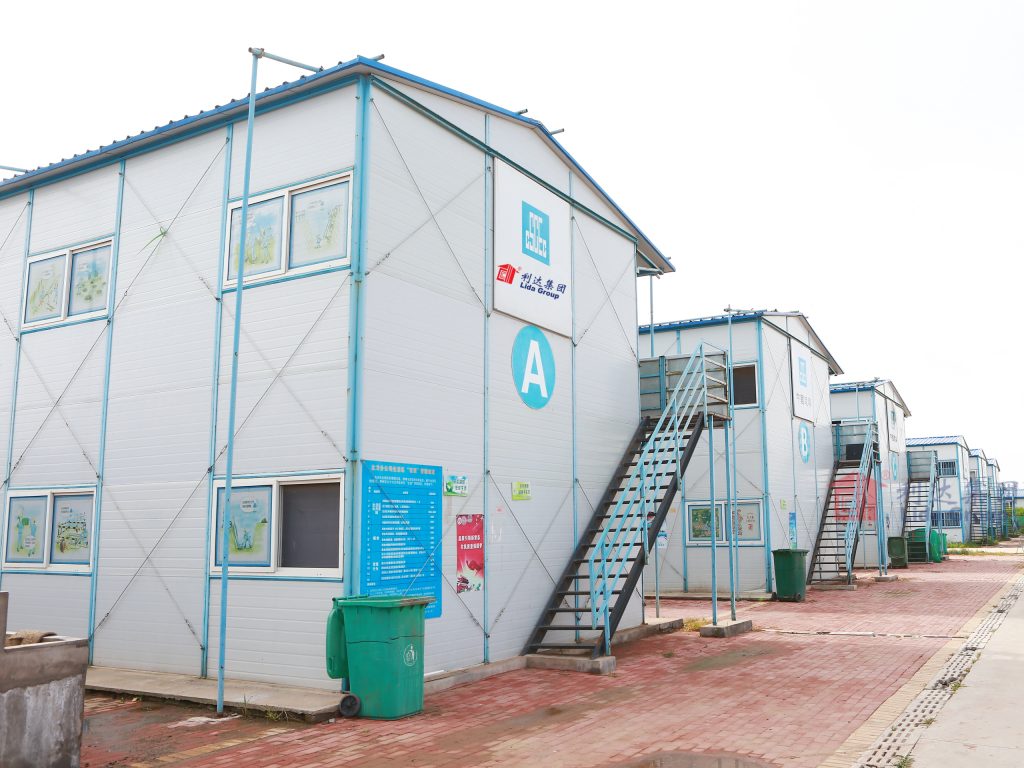
5. Comparison with Traditional Dormitory Construction
To fully appreciate the value of Lida Group’s low-cost, durable prefab dormitories, it is helpful to compare them to traditional dormitory construction methods (brick-and-mortar, concrete, wood framing) across key metrics: cost, construction time, durability, energy efficiency, and sustainability. The table below summarizes the key differences, and a detailed explanation follows.
|
Metric
|
Lida Group Prefab Dormitories
|
Traditional Dormitory Construction
|
|---|---|---|
|
Total Cost (Materials + Labor + Maintenance)
|
30-40% lower
|
Higher (premium for materials and labor)
|
|
Construction Time
|
Days to weeks (up to 90% faster)
|
Months to years
|
|
Durability (Lifespan)
|
20-50 years (low maintenance)
|
30-60 years (high maintenance)
|
|
Energy Efficiency
|
40-50% lower utility costs
|
Higher utility costs (poor insulation)
|
|
Sustainability (Material Waste)
|
Less than 2% waste
|
10-15% waste
|
|
Flexibility
|
Modular (easily expandable/relocatable)
|
Fixed (difficult to modify)
|
As the table shows, Lida Group’s prefab dormitories outperform traditional construction in nearly every key metric. In terms of cost, Lida Group’s solution is 30-40% cheaper, thanks to cost-optimized materials, factory mass production, and reduced labor costs. Construction time is dramatically faster—days to weeks compared to months to years—allowing organizations to start using the dormitory sooner and avoid costly delays. While traditional dormitories have a slightly longer lifespan (30-60 years), they require significant maintenance every 5-10 years (painting, repointing, repairing wood rot), which adds to the total cost over time. Lida Group’s prefab dormitories have a lifespan of 20-50 years with minimal maintenance, making them more cost-effective over their lifetime.
In terms of energy efficiency, Lida Group’s prefab dormitories are far superior, with 40-50% lower utility costs due to their sandwich panel insulation and energy-efficient features. Traditional dormitories often have poor insulation, requiring more energy for heating and cooling. Lida Group’s solution is also more sustainable, with less than 2% material waste compared to 10-15% in traditional construction, and many of the materials (steel, EPS, rock wool) are recyclable.
Finally, Lida Group’s modular design offers unmatched flexibility—dormitories can be easily expanded, modified, or relocated as needs change—while traditional dormitories are fixed structures that are difficult to modify or relocate.
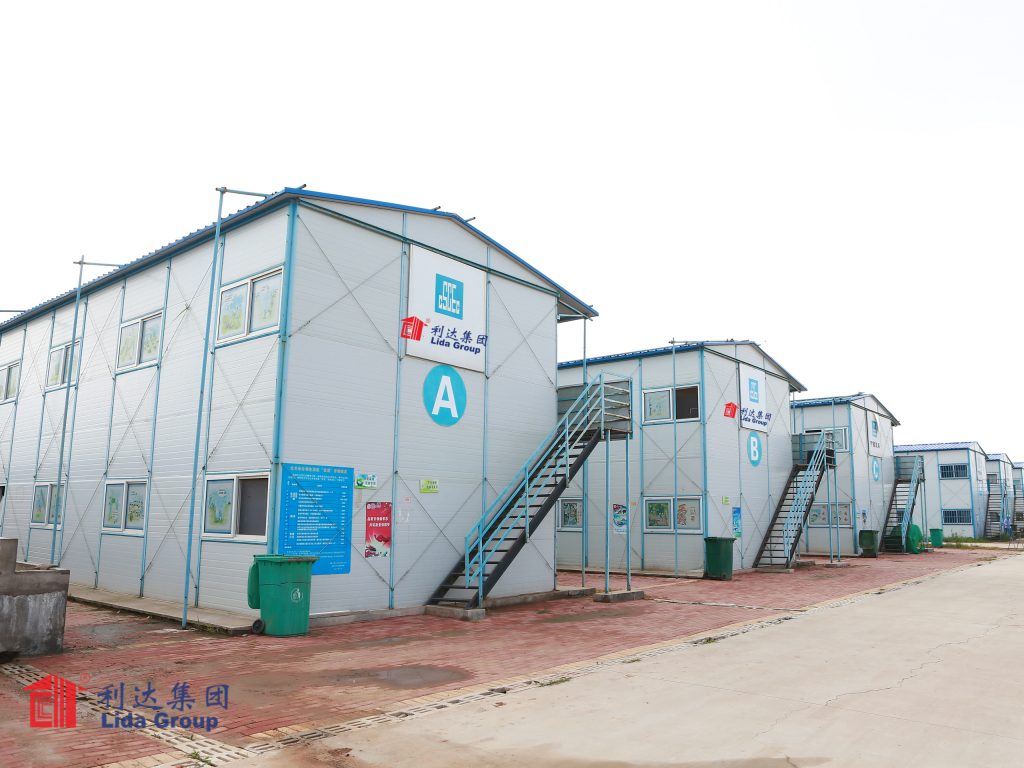
6. Common Questions and Concerns About Lida Group’s Prefab Dormitories
We understand that organizations considering prefab dormitories may have questions or concerns about cost, durability, and functionality. Below are answers to some of the most common questions we receive about Lida Group’s low-cost, durable prefab dormitories.
6.1 Are Lida Group’s prefab dormitories really low-cost? Will I save money in the long run?
Yes, Lida Group’s prefab dormitories are significantly lower in cost than traditional dormitories—30-40% lower in total construction costs. Moreover, you will save money in the long run due to their low maintenance requirements and energy efficiency. The minimal maintenance design eliminates costly repairs and repainting, while the energy-efficient sandwich panels and fixtures reduce utility costs by 40-50% over time. For example, a 500-student prefab dormitory from Lida Group will save approximately $50,000-$70,000 in maintenance and utility costs over 20 years compared to a traditional dormitory.
6.2 Are prefab dormitories durable enough for long-term use? Can they withstand harsh climates?
Absolutely. Lida Group’s prefab dormitories are engineered for long-term use, with a lifespan of 20-50 years depending on the materials used. They are designed to withstand harsh climates—extreme heat, cold, rain, snow, wind, and even seismic activity—thanks to their corrosion-resistant materials, weathertight connection system, and structural stability. The galvanized steel skins and sealants prevent rust and water damage, while the steel frames and sandwich panels provide excellent wind and seismic resistance. Lida Group’s dormitories have been used successfully in tropical, arid, and earthquake-prone regions worldwide, demonstrating their durability in harsh conditions.
6.3 Can Lida Group’s prefab dormitories be customized to meet my specific needs?
Yes, Lida Group offers extensive customization options to meet the unique needs of each project. We can customize the dormitory size, layout, interior finishes, and performance features (e.g., fire resistance, thermal insulation) to match your budget and requirements. For example, we can design dormitories with private bedrooms or shared rooms, add common areas (dining halls, study rooms), or integrate specific interior finishes (e.g., wood-look flooring, painted walls) to match your organization’s aesthetic. Our team of engineers will work closely with you to design a custom solution that meets your exact needs.
6.4 How long does it take to manufacture and install a prefab dormitory from Lida Group?
The timeline depends on the size and complexity of the project, but Lida Group’s prefab dormitories are significantly faster to manufacture and install than traditional dormitories. For a small dormitory (50-100 students), manufacturing takes 2-4 weeks, and installation takes 1-3 weeks. For a large dormitory (500+ students), manufacturing takes 4-8 weeks, and installation takes 3-6 weeks. This is up to 90% faster than traditional construction, which can take 6 months to 1 year for a similar-sized dormitory.
6.5 Are Lida Group’s prefab dormitories safe and compliant with international building standards?
Yes, Lida Group’s prefab dormitories are safe and fully compliant with international building standards, including ISO, ASTM, and CE. All components are tested for structural stability, fire resistance, and safety before being shipped to the construction site. The dormitories meet all relevant safety codes for occupancy, including fire safety, ventilation, and structural integrity. Additionally, Lida Group’s dormitories are designed to be accessible, with options for ramps and wide doorways to accommodate individuals with disabilities.
7. Conclusion
In an era where organizations worldwide are seeking affordable, durable, and efficient dormitory solutions, Lida Group’s low-cost durable prefab dormitories stand out as a revolutionary alternative to traditional construction. By integrating cost-saving strategies—from material selection and factory mass production to modular design—with uncompromising durability features, Lida Group delivers solutions that meet the dual goals of affordability and long-term performance. These dormitories are not only 30-40% cheaper and 90% faster to build than traditional dormitories but also more durable, energy-efficient, and sustainable, making them the preferred choice for educational institutions, corporations, construction companies, and humanitarian organizations.
Lida Group’s prefab dormitories are engineered to withstand harsh climates, require minimal maintenance, and offer flexible customization options, ensuring they adapt to diverse needs and environments. The company’s commitment to quality, innovation, and customer-centricity is evident in every stage of the process—from design and manufacturing to installation and after-sales support. Real-world case studies from around the world demonstrate the effectiveness of Lida Group’s solutions, with customers reporting significant cost savings, reduced maintenance, and improved comfort for occupants.
As the demand for prefab dormitories continues to grow, Lida Group remains at the forefront of the industry, continuously innovating to enhance its low-cost, durable solutions. Whether you need a small student dormitory, a large corporate employee complex, a temporary construction site dormitory, or emergency shelter for displaced populations, Lida Group has the expertise and capabilities to deliver a solution that meets your budget, timeline, and performance needs.
In conclusion, Lida Group’s low-cost durable prefab dormitories represent the future of dormitory construction—affordable, efficient, and built to last. By choosing Lida Group, you are not only saving time and money but also investing in a safe, comfortable, and sustainable housing solution that will deliver long-term value. Contact Lida Group today to learn more about how its prefab dormitory solutions can help you achieve your housing goals.
Related news
-
Discover Our Easy Install Sandwich Panel House for Rapid Building
2026-02-05 11:29:38
-
Lida Group Launches New Prefab Dormitory with Low-Cost Durable Construction
2026-02-05 10:22:54
-
Lida Group Engineers Durable Mobile Dormitories for Schools
2026-01-29 17:52:47
contact us
- Tel: +86-532-88966982
- Whatsapp: +86-13793209022
- E-mail: sales@lidajituan.com
