



Lida Group’s Temporary Container Building Aids Emergency Housing
2025-Nov-21 16:25:37
By Admin
In an increasingly unpredictable world, natural disasters, humanitarian crises, and sudden displacement have become stark realities that demand rapid, reliable, and compassionate responses. When earthquakes, floods, hurricanes, or conflicts strike, the immediate need for safe, functional shelter becomes a matter of life and death. Traditional emergency housing solutions—such as tents or makeshift structures—often fall short, lacking durability, insulation, and basic amenities necessary for long-term survival and dignity. This is where Lida Group, a global leader in modular construction, steps forward with its innovative temporary container buildings, redefining emergency housing through engineering excellence, sustainability, and unwavering commitment to human-centric design.
Lida Group’s temporary container buildings are not mere repurposed shipping containers; they are meticulously engineered, fully customizable, and disaster-resilient structures that address the unique challenges of emergency scenarios. For over two decades, Lida Group has specialized in modular construction, leveraging its expertise to create solutions that balance speed, affordability, and functionality. In emergency housing, this translates to structures that can be deployed within days, withstand extreme conditions, provide essential living comforts, and adapt to evolving needs—from immediate disaster relief to long-term transitional housing. More than just shelters, these container buildings serve as beacons of stability, helping displaced communities rebuild their lives amid chaos.
This article explores the multifaceted role of Lida Group’s temporary container buildings in emergency housing, delving into their design innovations, technical specifications, real-world applications, humanitarian impact, and sustainability practices. By examining how these structures address the critical gaps in traditional emergency response, we highlight why Lida Group has become a trusted partner for governments, NGOs, and humanitarian organizations worldwide.
1. The Urgency of Emergency Housing: Why Traditional Solutions Fall Short
Before delving into Lida Group’s innovations, it is crucial to understand the scale and complexity of the global emergency housing crisis. According to the United Nations High Commissioner for Refugees (UNHCR), over 89 million people worldwide were forcibly displaced by the end of 2021, with natural disasters alone displacing an average of 23.7 million people annually between 2008 and 2020. In such crises, shelter is not just a physical need but a psychological anchor—providing safety, privacy, and a sense of normalcy amid upheaval.
Traditional emergency housing solutions, however, often fail to meet these needs adequately. Tents, the most common form of immediate shelter, are lightweight and portable but suffer from critical limitations: they offer minimal protection against extreme weather (heat, cold, rain, or wind), are prone to damage, lack insulation, and provide little to no privacy. Makeshift structures built from local materials (such as wood, mud, or plastic) are equally problematic, as they are often unstable, unsanitary, and vulnerable to collapse in aftershocks or secondary disasters. Even prefabricated wooden or concrete shelters, while more durable, suffer from long production times, high transportation costs, and inflexibility in configuration.
The gaps in traditional solutions highlight the need for a new approach—one that combines speed, durability, mobility, and functionality. Lida Group’s temporary container buildings fill this void by leveraging the inherent strengths of shipping container architecture (structural integrity, standardization, and mobility) while addressing its limitations through advanced engineering and customization. Unlike generic container conversions, Lida Group’s structures are purpose-built for emergency use, integrating features that prioritize occupant safety, comfort, and dignity.
2. Lida Group’s Emergency Container Buildings: Design and Engineering Innovations
At the core of Lida Group’s success in emergency housing is its unwavering focus on design innovation and engineering excellence. The company’s temporary container buildings are the result of years of research and development, tailored to meet the unique demands of crisis environments. Below are the key design and engineering features that set these structures apart:
2.1 Modular Design: Flexibility for Every Scenario
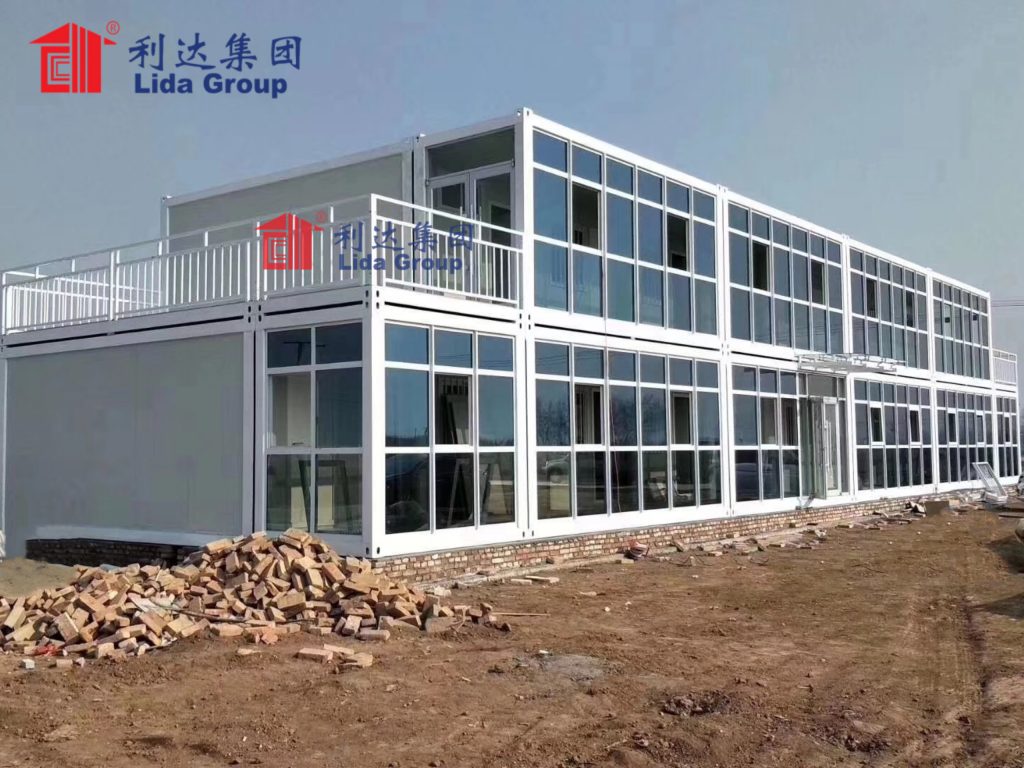
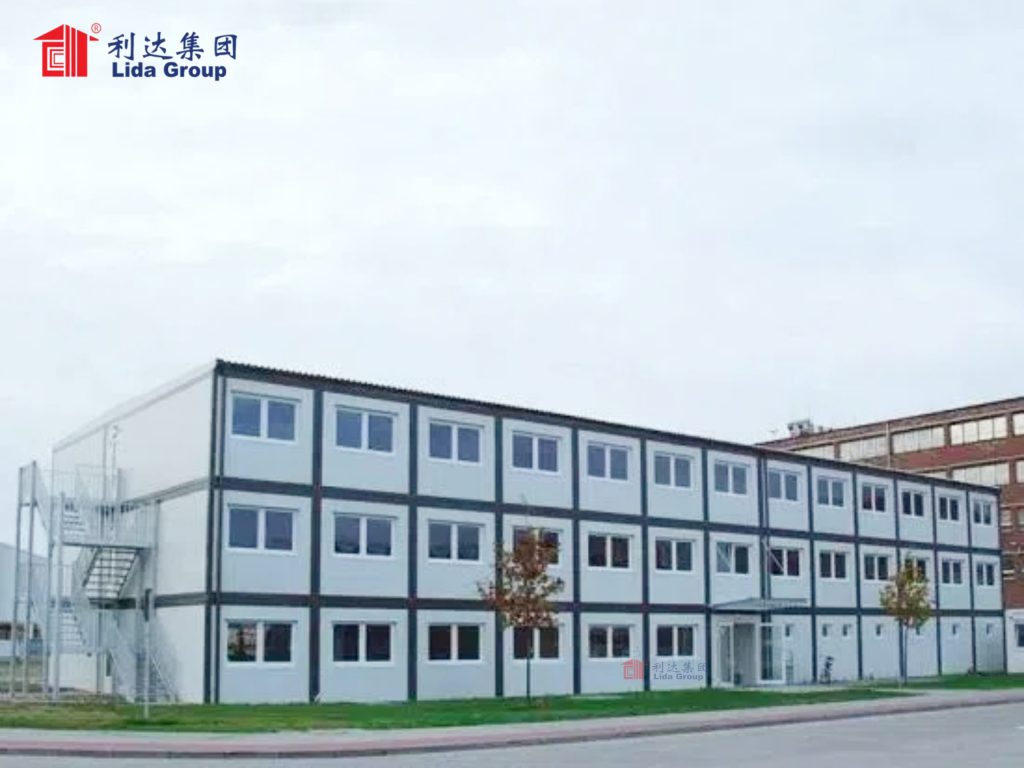
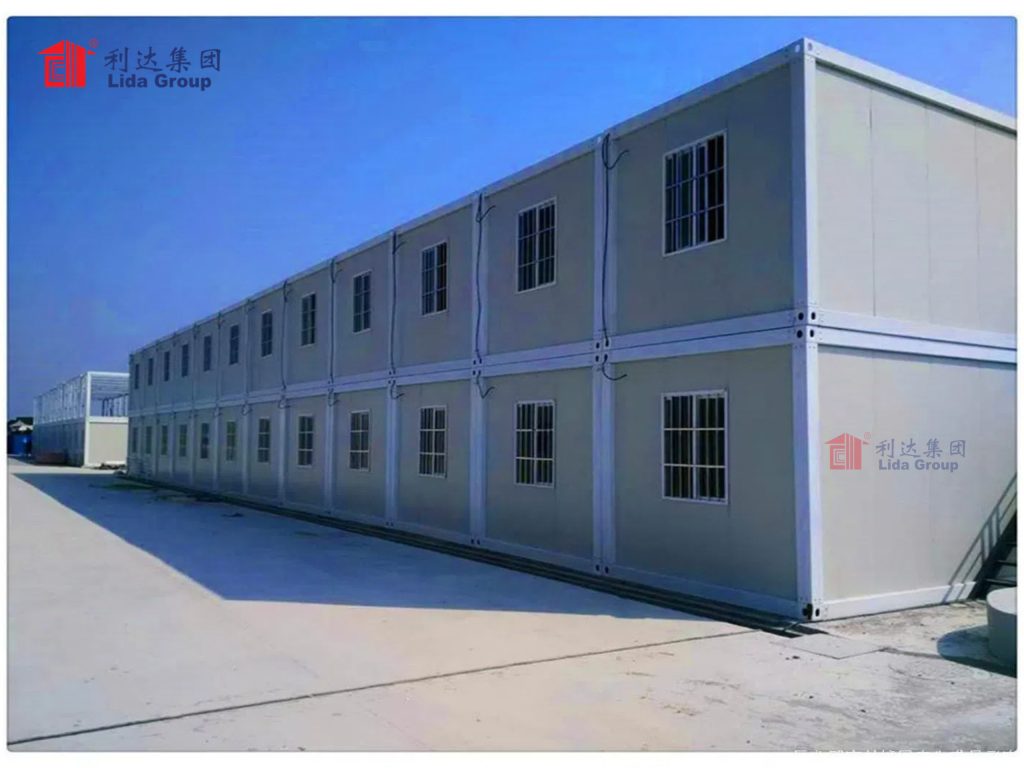
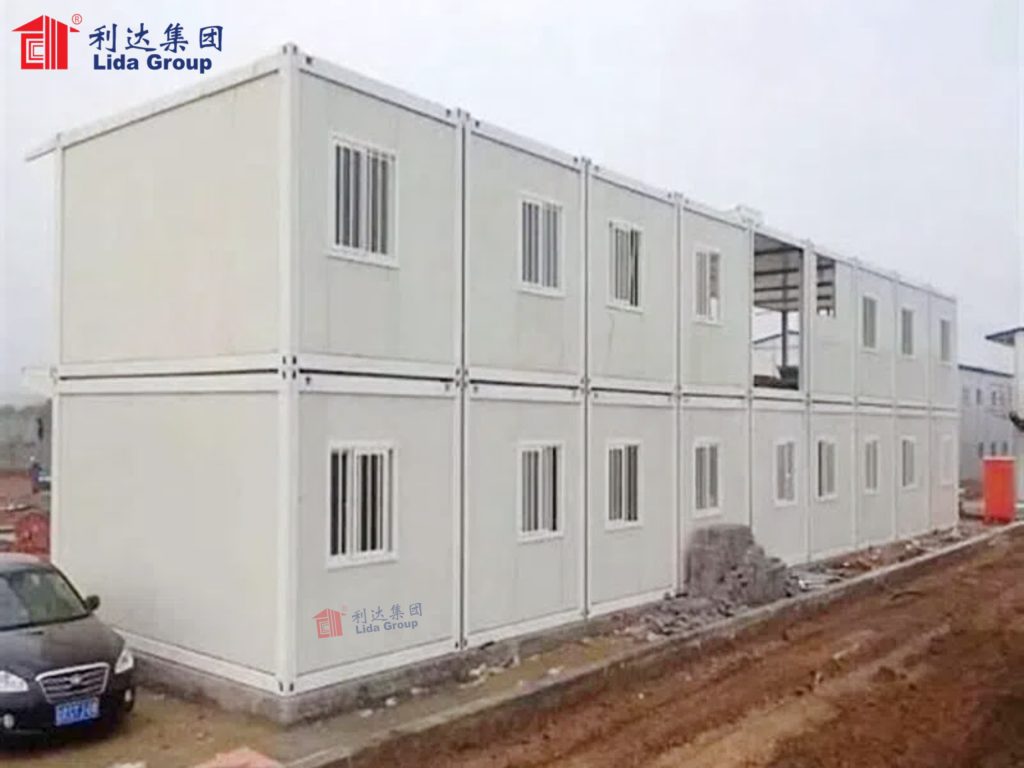
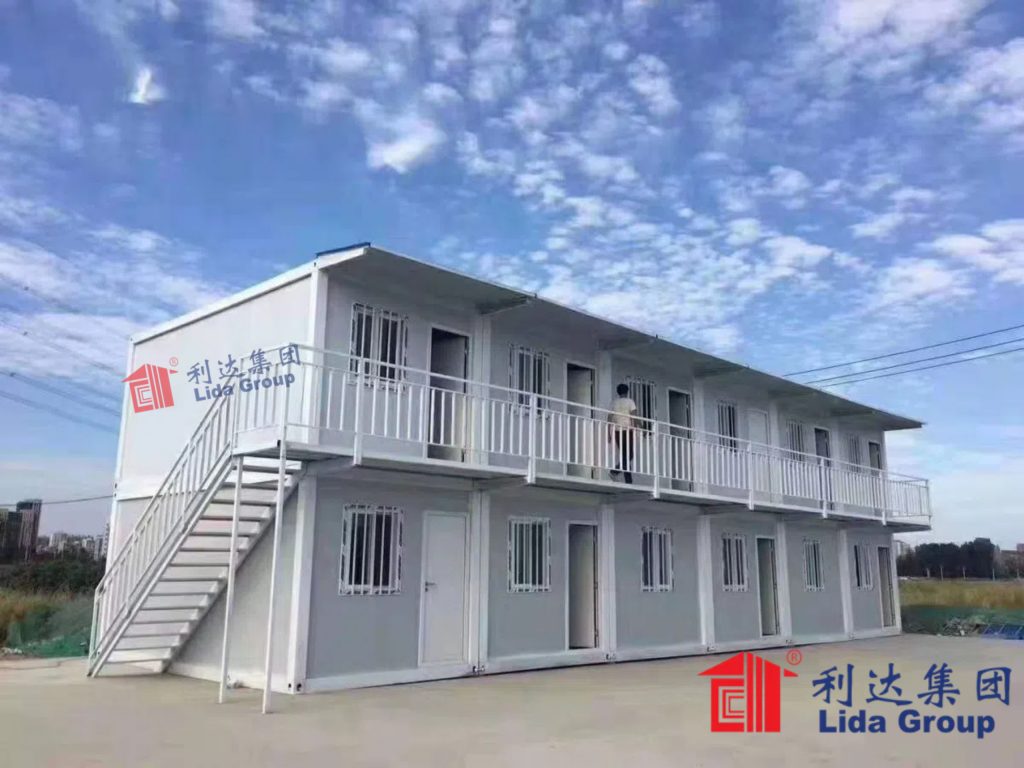
Lida Group’s emergency container buildings are built on a modular framework, using standard 20-foot (6.06m) and 40-foot (12.19m) shipping container units as the base. This modularity offers unparalleled flexibility, allowing structures to be configured to meet diverse needs—from single-unit shelters for small families to large-scale complexes for entire communities. The units can be connected horizontally (to create open-plan spaces or multi-room layouts), stacked vertically (up to 3 stories, maximizing land use in crowded displacement camps), or arranged in clusters (to form neighborhoods with shared facilities).
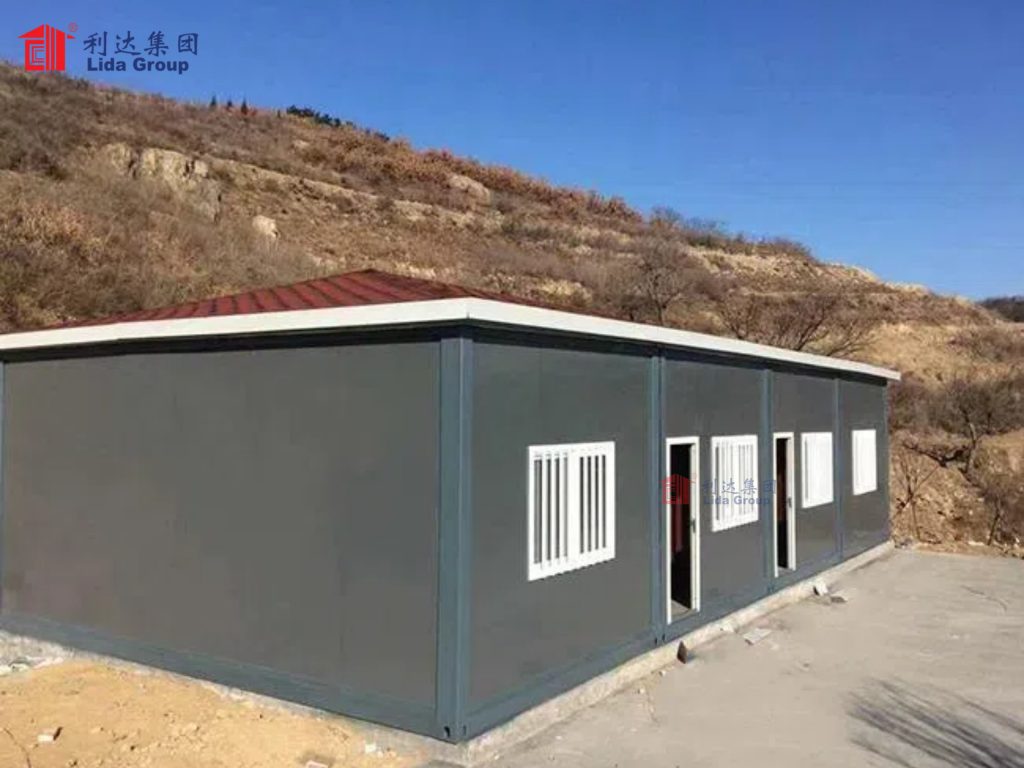
For example, a single 20-foot container (14 square meters) can be converted into a compact family shelter, accommodating 4-6 people with beds, storage, and basic sanitation. Two 40-foot containers connected horizontally (approximately 100 square meters) can serve as a community center, medical clinic, or school classroom, while stacked units can create administrative offices or multi-family housing. This flexibility ensures that Lida Group’s solutions can adapt to the specific needs of each crisis—whether it’s housing for earthquake survivors in a densely populated urban area or a mobile medical unit for flood victims in a remote rural region.
The modular design also enables easy expansion or reconfiguration as needs evolve. For instance, a displacement camp initially set up for 500 people can be quickly expanded to accommodate 1,000 by adding more container units, without disrupting existing facilities. This scalability is critical in emergencies, where the number of displaced persons can grow unexpectedly.
2.2 Structural Durability: Built to Withstand Disasters
In emergency environments, structural integrity is non-negotiable. Lida Group’s temporary container buildings are engineered to withstand the harshest conditions, from earthquakes and hurricanes to heavy rain and extreme temperatures. The base structure—high-grade corten steel shipping containers—are inherently robust, designed to endure the rigors of international shipping (including heavy loads, saltwater corrosion, and rough handling). To enhance their resilience for emergency use, Lida Group implements additional reinforcements:
- Anti-corrosion treatment: All containers undergo hot-dip galvanization and a specialized paint coating (with a thickness of ≥80μm) to protect against rust and deterioration, even in humid or coastal environments.
- Structural reinforcement: Steel beams and columns are added to support vertical stacking and horizontal connections, ensuring the structure can withstand seismic activity (up to magnitude 8.0) and strong winds (up to 120km/h).
- Waterproofing: Sealed joints, waterproof membranes, and elevated foundations prevent water infiltration, a critical feature in flood-prone areas.
- Fire resistance: Interior walls are lined with fire-retardant materials (such as rockwool insulation with a fire rating of ≥1 hour), and each unit is equipped with smoke detectors and fire extinguishers.
These enhancements make Lida Group’s container buildings far more durable than traditional emergency shelters, providing long-term protection for occupants. In post-earthquake scenarios, for example, the steel frame remains intact even when surrounding structures collapse, offering a safe haven for survivors.
2.3 Interior Comfort and Amenities: Restoring Dignity
Emergency housing should not mean sacrificing basic human comforts. Lida Group prioritizes occupant well-being by integrating essential amenities and thoughtful design features that restore dignity and improve quality of life. Each temporary container building is fully fitted with:
- Insulation: High-density rockwool or polyurethane foam insulation (with a thermal conductivity of ≤0.038W/(m·K)) ensures the interior remains cool in summer and warm in winter, reducing the risk of hypothermia or heatstroke.
- Ventilation: Natural ventilation systems (including operable windows and roof vents) and optional air conditioning units improve air circulation, preventing mold growth and ensuring a healthy living environment.
- Sanitation facilities: Depending on the configuration, units can include built-in toilets (composting or flush), showers, and handwashing stations—critical for preventing the spread of disease in crowded camps.
- Lighting and electricity: Pre-installed electrical wiring, LED lights, and power outlets (compatible with both 110V and 220V systems) provide reliable lighting and power for small appliances. For off-grid locations, solar panels (100-300W per unit) and battery storage systems are available, ensuring self-sufficiency.
- Furnishings: Basic furnishings such as beds, mattresses, tables, and storage cabinets are included, eliminating the need for occupants to source these items themselves.
Lida Group also offers customization options to address cultural and regional needs. For example, in conservative communities, units can be designed with separate living spaces for men and women; in cold climates, underfloor heating systems can be added; and in areas with limited water, water-saving fixtures and rainwater harvesting systems can be integrated.
2.4 Rapid Deployment and Easy Transportation
In emergencies, time is of the essence. Lida Group’s temporary container buildings are designed for rapid deployment, with 80% of construction completed in the factory before delivery. This prefabrication process ensures that units are ready to use within days of arriving at the disaster site.
Transportation is another key advantage. Standard container sizes (20ft and 40ft) mean that units can be easily loaded onto trucks, trains, or ships, and transported to even the most remote locations. For example, a 20ft container can be transported by a standard flatbed truck, while 40ft units can be shipped via cargo vessels to international disaster zones. Once on-site, installation is straightforward: units are unloaded using cranes or forklifts, placed on pre-prepared foundations (concrete slabs or gravel pads), and connected to utilities (if available) or equipped with off-grid systems. A single 20ft unit can be fully set up and operational within 4-6 hours, while a 10-unit camp can be ready for occupancy within 3 days—far faster than traditional construction, which can take weeks or months.
3. Technical Specifications: Setting the Standard for Emergency Housing
Lida Group’s temporary container buildings adhere to strict international standards, ensuring quality, safety, and reliability. Below are the key technical specifications that make these structures stand out:
|
Specification
|
Details
|
|
Dimensions
|
20ft unit: 6.06m (L) × 2.44m (W) × 2.59m (H); 40ft unit: 12.19m (L) × 2.44m (W) × 2.59m (H)
|
|
Weight
|
20ft unit: 2.8-3.2 tons; 40ft unit: 4.5-5.0 tons (empty)
|
|
Structural Load Capacity
|
Floor load: ≥2.5kN/㎡; Roof load: ≥1.0kN/㎡; Wind resistance: ≥120km/h; Seismic resistance: ≥Magnitude 8.0
|
|
Insulation
|
Thermal conductivity: ≤0.038W/(m·K); Sound insulation: ≥45dB
|
|
Waterproofing
|
Water pressure resistance: ≥1000Pa; No water infiltration after 24-hour rainfall test
|
|
Fire Resistance
|
Fire rating: ≥1 hour for walls and ceilings; Fire-retardant materials meet ISO 834 standards
|
|
Materials
|
Frame: Q235B corten steel; Exterior cladding: Metal fluorocarbon paint or galvanized steel; Interior finish: Fire-retardant plywood or PVC panels; Insulation: Rockwool or polyurethane foam
|
|
Utilities
|
Electrical: 110V/220V, 50/60Hz; Plumbing: PVC pipes (compatible with municipal or off-grid systems); Sanitation: Composting or flush toilets, low-flow showers
|
|
Off-Grid Options
|
Solar panels (100-300W), battery storage (100-200Ah), rainwater harvesting systems (500-1000L), water purification filters
|
|
Deployment Time
|
Factory production: 2-4 weeks; On-site installation: 4-6 hours per unit (single unit); 3-7 days for 10-unit camp
|
These specifications ensure that Lida Group’s temporary container buildings meet or exceed international standards for emergency housing, including those set by the UNHCR, the International Organization for Migration (IOM), and the International Federation of Red Cross and Red Crescent Societies (IFRC).
4. Real-World Applications: Lida Group’s Impact in Crisis Zones
Lida Group’s temporary container buildings have been deployed in numerous crisis zones worldwide, providing shelter and support to displaced communities. Below are three notable case studies that demonstrate the versatility and effectiveness of these structures:
4.1 Post-Earthquake Housing in Nepal (2015)
In April 2015, a magnitude 7.8 earthquake struck Nepal, killing over 8,800 people and displacing more than 2.8 million. The disaster destroyed over 600,000 homes, leaving survivors without shelter as monsoon season approached. Lida Group partnered with the Nepalese government and international NGOs to deploy 500 temporary container buildings to the hardest-hit regions, including Kathmandu, Gorkha, and Sindhupalchowk.
The units deployed were 20ft container shelters, each accommodating 4-6 people. They were equipped with insulation (critical for Nepal’s cold mountain nights), composting toilets (to address water scarcity), and solar panels (for off-grid power). The modular design allowed for quick setup: a team of 10 workers could install 20 units per day, ensuring that thousands of families had safe shelter before the monsoons hit.
In addition to family shelters, Lida Group provided 50 specialized container units for medical clinics, schools, and administrative offices. These units were customized with examination tables, medical storage, desks, and blackboards, helping to restore essential services in the affected areas. The durability of the containers proved invaluable during aftershocks, with no units sustaining damage even during a magnitude 7.3 aftershock in May 2015.
Five years later, many of these container buildings are still in use—some as permanent homes for families who could not afford to rebuild, others as community centers or schools. The success of the project led the Nepalese government to partner with Lida Group on a long-term transitional housing program, providing container shelters to over 10,000 displaced families.
4.2 Flood Relief in Bangladesh (2022)
Bangladesh is one of the most flood-prone countries in the world, with annual monsoon floods displacing millions of people. In 2022, severe flooding in the Sylhet and Sunamganj districts affected over 7 million people, destroying homes, crops, and infrastructure. Lida Group responded by deploying 300 temporary container buildings to serve as emergency shelters and relief distribution centers.
The containers used in Bangladesh were modified to address the unique challenges of flood zones: they were elevated on steel stilts (to prevent water damage), equipped with waterproof flooring, and fitted with rainwater harvesting systems (to collect clean water during floods). Each unit included a raised platform for sleeping (to avoid waterlogging) and storage shelves (to keep belongings dry). The exterior was painted with anti-mosquito coating, helping to prevent the spread of waterborne diseases such as dengue and malaria.
Lida Group also collaborated with local NGOs to train community members on how to maintain the containers, including cleaning the rainwater filters, operating the solar systems, and repairing minor damages. This capacity-building ensured that the shelters remained functional long after the initial relief effort.
The container shelters proved to be a game-changer in Bangladesh, as they remained intact even when floodwaters reached heights of 1.5 meters. Unlike traditional mud huts, which collapsed or were swept away, the container buildings provided a safe haven for families, protecting them from the elements and reducing the risk of disease. The success of the project led to a long-term partnership between Lida Group and the Bangladesh government, with plans to deploy 2,000 more container shelters in flood-prone regions by 2025.
4.3 Refugee Housing in Jordan (2018-2023)
The Syrian refugee crisis has displaced over 5.6 million people, with over 660,000 seeking refuge in Jordan. The Zaatari and Azraq refugee camps, two of the largest in the world, were struggling with overcrowding and inadequate shelter—many refugees were living in tents that offered little protection from Jordan’s extreme heat (up to 45°C in summer) and cold (below 0°C in winter). Lida Group partnered with the UNHCR to replace 1,000 tents with temporary container buildings in the Azraq camp.
The containers deployed in Jordan were 40ft units, customized to serve as family homes for 6-8 people. They included:
- High-efficiency insulation and reflective roof coating to reduce heat absorption (lowering interior temperatures by 10-15°C compared to tents).
- Solar-powered air conditioning units and fans for cooling.
- Built-in kitchens with gas stoves and storage cabinets.
- Private bathrooms with flush toilets and showers (connected to the camp’s sewage system).
- Exterior shading structures and small gardens (to provide outdoor living space and reduce heat).
The container homes transformed the living conditions in the Azraq camp. Refugees reported improved health (fewer cases of heat exhaustion and respiratory illnesses), increased privacy, and a greater sense of security. The modular design also allowed for the creation of community spaces, including 20 container schools, 10 medical clinics, and 5 community centers—helping to restore a sense of normalcy for displaced families.
By 2023, Lida Group had deployed over 3,000 container buildings in Jordan’s refugee camps, benefiting over 18,000 refugees. The project has been hailed as a model for refugee housing by the UNHCR, which noted that the container buildings are not only more durable and comfortable than tents but also more cost-effective in the long run (with a lifespan of 15-20 years compared to 2-3 years for tents).
5. Sustainability: Lida Group’s Commitment to Eco-Friendly Emergency Housing
In addition to addressing immediate shelter needs, Lida Group is committed to sustainability, ensuring that its emergency container buildings minimize environmental impact and promote long-term resilience. Sustainability is integrated into every stage of the design and production process:
5.1 Recycled Materials and Circular Economy
Lida Group’s temporary container buildings are built using repurposed shipping containers—each unit diverts approximately 2.5 tons of steel from landfills. Shipping containers are made from high-quality corten steel, which is 100% recyclable, making the buildings a sustainable alternative to traditional construction (which relies on virgin materials such as wood, concrete, and brick). By repurposing containers, Lida Group reduces the carbon footprint of emergency housing: manufacturing a new steel beam emits approximately 1.8 tons of CO2, while repurposing a steel container emits just 0.2 tons.
The circular economy approach extends beyond materials: Lida Group’s container buildings are designed for reusability. After their initial use in an emergency, units can be relocated to other crisis zones, repurposed as permanent housing, or recycled into new steel products. For example, container units used in the 2015 Nepal earthquake were later relocated to flood-affected regions in Bangladesh, and some were repurposed as school classrooms in rural areas.
5.2 Energy Efficiency and Renewable Energy
Lida Group’s container buildings are designed to minimize energy consumption, reducing reliance on fossil fuels and lowering operating costs. Key energy-efficient features include:
- High-quality insulation to reduce heating and cooling needs.
- LED lighting (which uses 75% less energy than incandescent bulbs).
- Low-power appliances and fixtures.
- Passive design strategies (such as natural ventilation and solar orientation) to reduce the need for mechanical cooling or heating.
For off-grid locations, Lida Group offers renewable energy solutions, including solar panels, wind turbines, and geothermal heating systems. These systems not only reduce environmental impact but also ensure energy security for occupants, who may not have access to reliable electricity. In the Nepalese earthquake response, for example, solar-powered container units provided consistent power for lighting, charging phones, and operating medical equipment—critical for communication and emergency care.
5.3 Water Conservation
Water scarcity is a common challenge in emergency zones, making water conservation a key sustainability priority. Lida Group’s container buildings incorporate water-saving features such as:
- Low-flow toilets and showers (reducing water usage by 50% compared to standard fixtures).
- Rainwater harvesting systems (which collect and filter rainwater for non-potable use, such as cleaning and irrigation).
- Water purification filters (to treat contaminated water from rivers or wells, providing safe drinking water).
In regions with limited water access, these features can mean the difference between survival and hardship. For example, in the Jordanian refugee camps, rainwater harvesting systems collect up to 500 liters of water per unit per rainfall, reducing the camp’s reliance on imported water.
5.4 Minimal Environmental Impact During Deployment
Lida Group’s prefabrication process minimizes on-site construction activity, reducing noise, dust, and disruption to the local environment. Unlike traditional construction, which requires extensive excavation, concrete pouring, and material transportation, container building installation involves only placing units on pre-prepared foundations and connecting utilities. This reduces soil erosion, protects local ecosystems, and minimizes the carbon footprint of deployment.
6. Partnerships and Global Reach: Lida Group’s Role in Humanitarian Response
Lida Group’s success in emergency housing is built on strong partnerships with governments, NGOs, and humanitarian organizations worldwide. The company works closely with these stakeholders to ensure that its solutions meet the specific needs of each crisis, from rapid deployment to long-term transitional housing.
6.1 Key Partnerships
- United Nations Agencies: Lida Group is a registered supplier to the UNHCR, IOM, and the World Food Programme (WFP), providing container buildings for refugee camps, disaster relief, and food distribution centers.
- Governments: The company partners with national and local governments to implement emergency housing programs, such as the Nepalese transitional housing project and the Bangladeshi flood relief initiative.
- NGOs and Charities: Lida Group collaborates with organizations such as the Red Cross, Oxfam, and Save the Children to deploy container buildings in crisis zones, ensuring that shelters reach the most vulnerable populations.
- Local Communities: Lida Group engages local communities in the design and deployment process, incorporating cultural needs and providing training on maintenance and operation—ensuring that the shelters are sustainable and community-owned.
6.2 Global Reach
Lida Group’s temporary container buildings have been deployed in over 50 countries, including:
- Asia: Nepal, Bangladesh, India, Pakistan, Japan, Philippines, Indonesia.
- Africa: Kenya, Somalia, South Sudan, Ethiopia, Nigeria, Mozambique.
- Middle East: Jordan, Lebanon, Iraq, Yemen.
- Europe: Greece, Turkey, Ukraine.
- Americas: Haiti, Colombia, Guatemala, the United States (for hurricane relief).
The company’s global network of manufacturing facilities (in China, Vietnam, Mexico, and Poland) allows for rapid production and delivery, ensuring that container buildings reach crisis zones within days of a disaster.
7. Challenges and Future Innovations
While Lida Group’s temporary container buildings have proven highly effective, emergency housing remains a complex challenge, with evolving needs and constraints. The company continues to innovate to address these challenges:
7.1 Current Challenges
- Cost: While container buildings are cost-effective in the long run, the initial investment can be higher than tents, making them less accessible for low-income countries.
- Transportation: In extremely remote areas (such as mountainous regions or islands), transporting standard container units can be logistically challenging and expensive.
- Cultural Adaptation: Ensuring that container buildings meet cultural needs (such as privacy, family structure, and religious practices) requires ongoing customization and community engagement.
7.2 Future Innovations
To address these challenges, Lida Group is investing in the following innovations:
- Lightweight and Collapsible Designs: Developing foldable or collapsible container units that are easier to transport to remote areas, reducing transportation costs by 30-40%.
- 3D-Printed Components: Incorporating 3D-printed interior components (such as walls, shelves, and fixtures) to reduce production time and costs, while allowing for greater customization.
- Smart Shelter Technology: Integrating IoT (Internet of Things) devices such as sensors for temperature, humidity, and air quality, as well as solar-powered charging stations and emergency communication systems.
- Biodegradable Materials: Researching biodegradable insulation and cladding materials to further reduce environmental impact, particularly for short-term emergency shelters.
- Affordability Initiatives: Partnering with international financial institutions to provide low-interest loans to governments and NGOs, making container buildings more accessible for low-income countries.
8. Conclusion: Lida Group’s Temporary Container Buildings—A Catalyst for Resilient Emergency Response
In times of crisis, shelter is more than just a roof over one’s head—it is a foundation for survival, dignity, and recovery. Lida Group’s temporary container buildings have redefined emergency housing, offering a solution that is fast, durable, comfortable, sustainable, and adaptable to diverse needs. By leveraging modular design, engineering excellence, and a human-centric approach, Lida Group has become a trusted partner in humanitarian response, providing safe and functional shelter to millions of displaced people worldwide.
The key strengths of Lida Group’s temporary container buildings are clear:
- Rapid Deployment: Units can be manufactured and installed within days, addressing the urgent need for shelter in crises.
- Structural Durability: Built to withstand natural disasters, ensuring long-term protection for occupants.
- Comfort and Dignity: Equipped with essential amenities that restore quality of life, from insulation and sanitation to lighting and privacy.
- Sustainability: Repurposed materials, energy efficiency, and reusability minimize environmental impact, promoting a greener future.
- Versatility: Modular design allows for customization to meet cultural, regional, and functional needs, from family shelters to community centers.
Real-world case studies—from Nepal’s earthquake recovery to Jordan’s refugee camps—demonstrate the transformative impact of these structures. They not only provide immediate shelter but also help communities rebuild, restore essential services, and regain a sense of normalcy amid chaos. As the frequency and intensity of natural disasters and humanitarian crises continue to grow, Lida Group’s temporary container buildings will play an increasingly critical role in global emergency response.
Looking to the future, Lida Group’s commitment to innovation—from lightweight designs to smart technology—will ensure that its solutions remain at the forefront of emergency housing. By continuing to prioritize sustainability, affordability, and community engagement, the company is not just providing shelters but building resilient communities that can withstand crises and thrive in the aftermath.
In a world where displacement has become a tragic reality for millions, Lida Group’s temporary container buildings offer hope—a tangible reminder that even in the darkest times, innovative design and compassionate engineering can make a difference. These structures are more than just buildings; they are symbols of resilience, solidarity, and the unwavering human spirit to rebuild. As Lida Group continues to expand its global reach and innovate its solutions, it is poised to lead the way in creating a more resilient and compassionate world—one container building at a time.
Related news
-
Customizable Steel Structure Building from Lida Group
2025-11-13 15:15:44
-
Lida Group Champions Cost-Effective Prefab Construction Methods
2025-11-13 17:48:58
-
Lida Group's Temporary Container Building Aids Emergency Housing
2025-11-21 16:25:37
contact us
- Tel: +86-532-88966982
- Whatsapp: +86-13793209022
- E-mail: sales@lidajituan.com
