



Lida Group Simplifies Construction with Sandwich Panel Technology
2026-Jan-07 16:10:08
By Admin
The global construction industry is undergoing a profound transformation driven by the need for efficiency, sustainability, and cost-effectiveness. Traditional construction methods, relying on on-site masonry, concrete pouring, and multi-stage processing, are plagued by long timelines, high labor costs, and significant material waste. Against this backdrop, prefabricated construction technologies have emerged as a game-changer, and sandwich panel technology stands out as a core innovation reshaping the sector. Lida Group, a leading manufacturer of prefabricated building solutions with over three decades of experience, has leveraged advanced sandwich panel technology to simplify construction processes across diverse applications, setting new benchmarks for speed, quality, and sustainability in the global market.
Founded in 1993, Lida Group has grown from a regional steel structure manufacturer to a global leader in prefabricated buildings, with a comprehensive product portfolio covering sandwich panel prefab houses, flat pack container houses, steel structure warehouses, and modular villas. Headquartered in Shandong, China, the group boasts a 73,000-square-meter production base, 10 specialized production lines, and a team of 50 engineers and 200 overseas project supervisors, enabling a daily production capacity of 5,000 square meters and monthly supply of 800 sets of prefabricated units. Certified by ISO 9001, CE, SGS, and BV, Lida Group’s products have been exported to more than 96 countries, serving industries ranging from construction and mining to energy and disaster relief. At the heart of its success lies the strategic integration of sandwich panel technology into its prefabricated solutions, addressing the inherent inefficiencies of traditional construction.
Understanding Sandwich Panel Technology: The Core of Lida’s Innovation
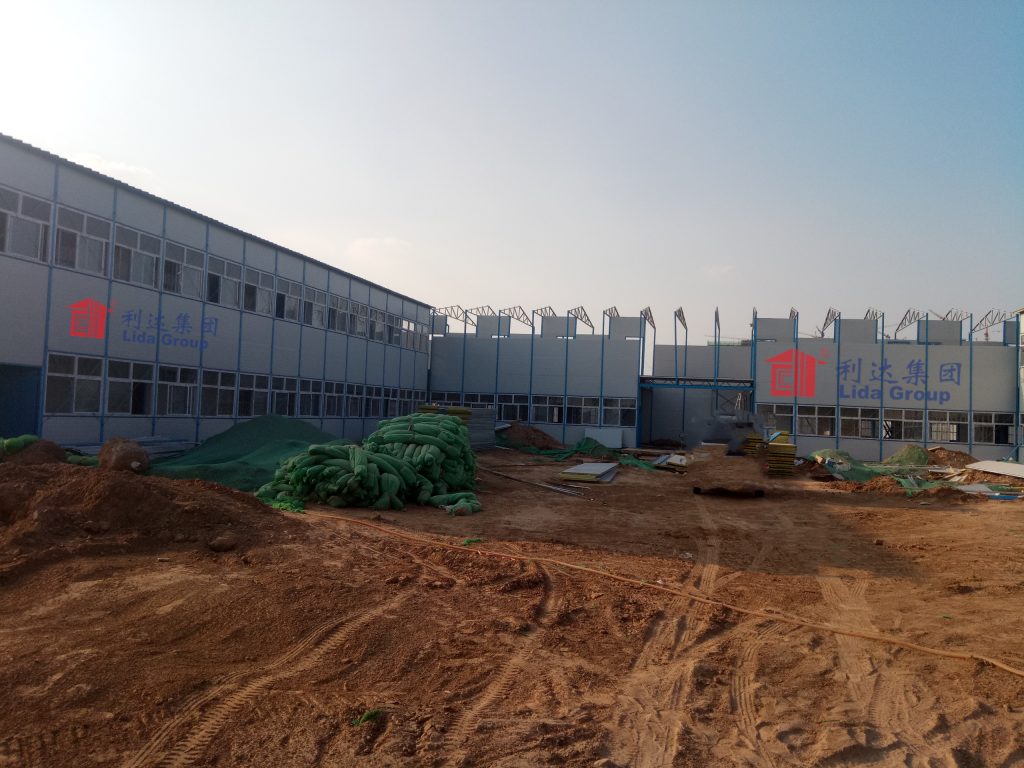
Sandwich panels, also known as composite panels, are three-layer structures consisting of two high-strength outer skins and a lightweight insulating core. This “sandwich” design combines the structural integrity of the outer layers with the thermal, acoustic, and fire-resistant properties of the core, creating a multi-functional building material that eliminates the need for separate structural, insulation, and finishing components. Lida Group has optimized this technology by offering a range of customized sandwich panels tailored to diverse environmental and functional requirements, leveraging different core materials and manufacturing processes to deliver optimal performance.
Core Material Variations and Performance Advantages
Lida Group’s sandwich panels are available with three primary core materials, each engineered for specific applications: expanded polystyrene (EPS), rock wool, and polyurethane (PU). This versatility allows the group to address the unique needs of projects across climates, industries, and regulatory frameworks.
EPS sandwich panels are a cost-effective solution for general-purpose applications such as construction site offices, temporary accommodations, and low-rise warehouses. Lida’s EPS panels feature a closed-cell foam core with a density of 60 kg/m³, offering excellent thermal insulation with a thermal conductivity of 0.028-0.033 W/(m·K). The outer skins are 0.4-0.6 mm galvanized color steel sheets with a PE finishing coat, providing corrosion resistance and a durable, aesthetically pleasing surface. These panels are lightweight, with a weight of 10.2-17.7 kg/㎡, and can be easily installed with basic electric tools, making them ideal for rapid deployment in temporary or semi-permanent structures.
For projects requiring enhanced fire resistance and sound insulation, Lida’s rock wool sandwich panels are the preferred choice. Made from natural basalt fibers, the rock wool core is non-combustible (Grade A fire rating) and offers superior thermal insulation with a thermal conductivity of ≤0.044 W/(m·K). It also provides excellent sound absorption, reducing noise transmission by up to 21.5 decibels, making it suitable for industrial workshops, power plants, and healthcare facilities. The panels feature 0.4-0.6 mm galvanized steel skins and can withstand high temperatures, humidity, and chemical exposure, ensuring a service life of over 20 years. In disaster relief scenarios, such as typhoon-damaged medical facilities, rock wool panels enable the rapid construction of safe, fire-resistant structures that can be operational within 72 hours.
Polyurethane (PU) sandwich panels cater to high-performance applications such as cold storage, refrigerated warehouses, and offshore structures. Lida’s PU panels have a closed-cell foam core with a thermal conductivity as low as 0.022 W/(m·K), delivering exceptional insulation efficiency that reduces energy consumption by up to 40% compared to traditional materials. The core is bonded to 0.45-0.6 mm galvanized steel skins using advanced adhesive technology, creating a structural panel with high compressive strength and water resistance (water absorption ≤5% in 24 hours). These panels are widely used in the food processing, pharmaceutical, and marine industries, where strict temperature control and durability are critical.
All of Lida’s sandwich panels are manufactured in climate-controlled factories using automated production lines, ensuring dimensional accuracy of 99.96% across components. The panels are available in standard widths of 930 mm or 1150 mm and customizable thicknesses from 50 mm to 150 mm, allowing for flexible design adaptation to any project scale.
Manufacturing Excellence: Precision and Efficiency
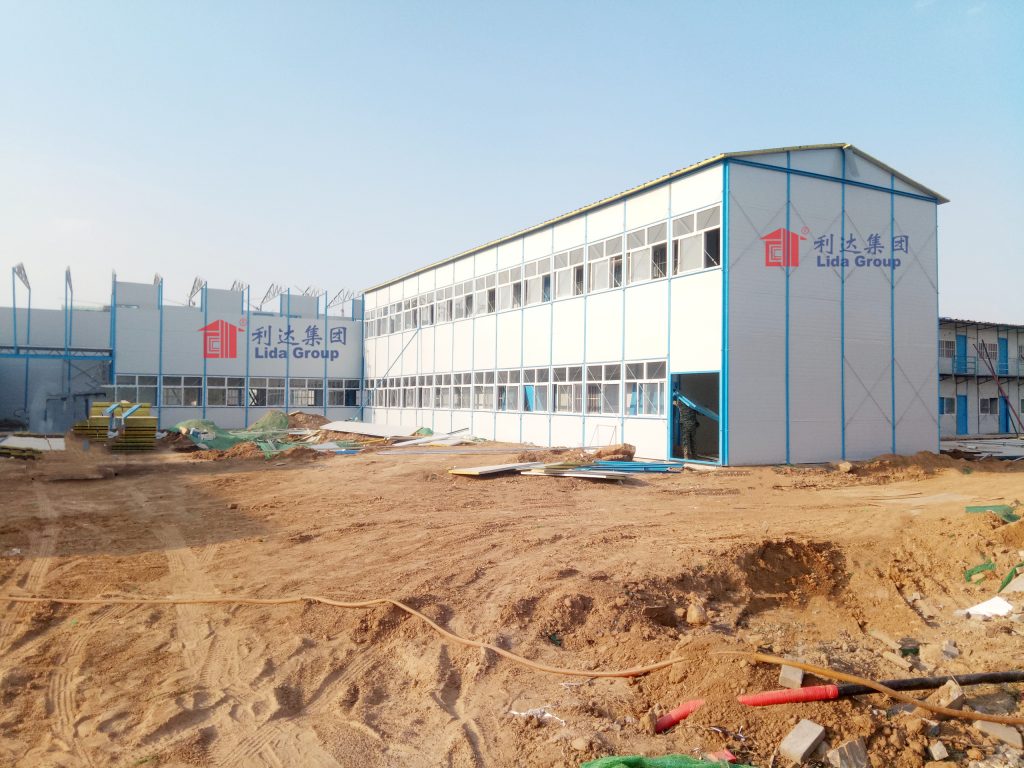
Lida Group’s manufacturing process is a key differentiator in simplifying construction. The group has invested heavily in state-of-the-art production equipment, including robotic welding systems, laser-guided cutting machines, and automated composite lines, to minimize human error and maximize production efficiency. Robotic welding ensures structural connections with a tolerance of just 0.2 mm, while laser cutting enables precise fabrication of complex joints for modular assembly. Climate-controlled painting booths ensure uniform finishes unaffected by humidity, eliminating the need for on-site touch-ups.
The factory-based production model of sandwich panels addresses one of the biggest pain points of traditional construction: on-site waste. By fabricating components in a controlled environment, Lida reduces material waste by up to 30% compared to on-site construction, where cutting, trimming, and rework are common. Additionally, the modular design of sandwich panels allows for precise inventory management, with components manufactured to exact project specifications, further minimizing waste and reducing storage costs.
Simplifying Construction: From Design to Installation
Lida Group’s sandwich panel technology simplifies the entire construction workflow, from initial design to final installation, by integrating digital tools, modular assembly, and intelligent logistics. This holistic approach reduces project timelines, lowers labor requirements, and enhances overall construction safety.
Digital Design and Prototyping
Lida leverages Building Information Modeling (BIM) technology to optimize the design and integration of sandwich panel systems. BIM software creates 3D models of mechanical, electrical, and structural systems, enabling clash detection and resolution in the virtual environment before fabrication begins. This eliminates on-site conflicts between components, which are a major cause of delays in traditional construction. For example, in mining camp designs, Lida’s BIM-driven load path optimization reduced steel tonnage by 22% while maintaining structural integrity, demonstrating how digital design enhances both efficiency and cost-effectiveness.
The digital design process also allows for rapid customization of sandwich panel solutions. Clients can specify dimensions, core materials, colors, and functional features (such as explosion-proof electrical systems or blast-resistant glazing), and Lida’s engineers can quickly adapt the design using parametric modeling. This flexibility is particularly valuable for projects with unique requirements, such as ATEX-certified office complexes for gas processing plants or earthquake-resistant structures in high-seismic zones (up to Grade 8 earthquake resistance).
Modular Installation: Speed and Simplicity
The most significant advantage of Lida’s sandwich panel technology is its simplified installation process. Unlike traditional construction, which requires sequential on-site work (masonry, insulation, finishing), sandwich panels integrate multiple functions into a single component, reducing the number of installation steps by up to 60%. The panels are designed for plug-and-play assembly, with standardized connections (bolts and rivets) that can be installed by ordinary workers using basic electric tools, eliminating the need for specialized skilled labor.
For example, a 1,000-square-meter factory enclosure structure using Lida’s sandwich panels can be completed in just 3-5 days, compared to 2-3 weeks with traditional brick-and-mortar construction. This speed is transformative for time-sensitive projects, such as emergency housing, military camps, or industrial facilities requiring rapid commissioning. In the Arctic, Lida deployed volumetric modular units with sandwich panel walls and roofs to construct a 200-person mining camp in roadless terrain. Using helicopter delivery and foundation-free screw pile systems, the camp was operational in just 19 days, compared to the 6-month timeline required for conventional construction.
Installation of Lida’s sandwich panels is also less affected by weather conditions than traditional construction. While rain, snow, or extreme temperatures can halt on-site masonry or concrete work, sandwich panel assembly can proceed in most weather, further reducing project delays. The lightweight nature of the panels 30-50% lighter than traditional also reduces the need for heavy lifting equipment, lowering equipment rental costs and improving on-site safety.
Intelligent Logistics and Supply Chain Management
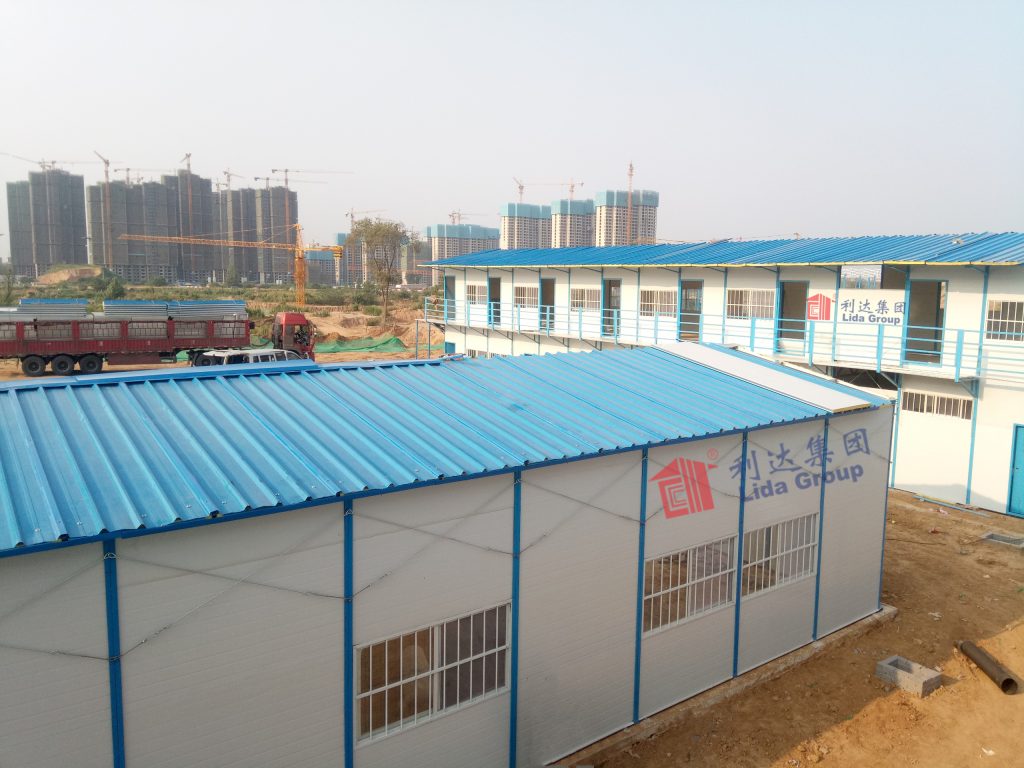
Lida Group optimizes the transportation and delivery of sandwich panel components through intelligent logistics solutions, further simplifying the construction process. The group uses nesting algorithms to maximize container space utilization, reducing transport costs by up to 30% compared to traditional building materials. Components are shipped either flat-packed (to minimize volume) or pre-assembled, depending on project requirements, and delivered just-in-sequence to the construction site, ensuring that materials arrive exactly when needed for installation.
AI-powered route optimization accounts for road restrictions, weather conditions, and customs clearance requirements, ensuring timely delivery even for international projects. For example, in the Mongolia Caterpillar Project, Lida delivered 22,000 square meters of sandwich panel-based container houses, including offices, dormitories, and gymnasiums, with zero delivery delays, enabling the project to meet its tight commissioning schedule. The ability to deliver and install components quickly is particularly critical in disaster response scenarios, where Lida’s sandwich panel solutions have been used to construct emergency medical facilities and temporary housing within days of natural disasters.
Application Case Studies: Transforming Diverse Industries
Lida Group’s sandwich panel technology has simplified construction across a wide range of industries, from mining and energy to infrastructure and commercial buildings. These case studies demonstrate the versatility, efficiency, and performance of the technology in real-world scenarios.
Mining and Resource Sector: Rapid Camp Deployment
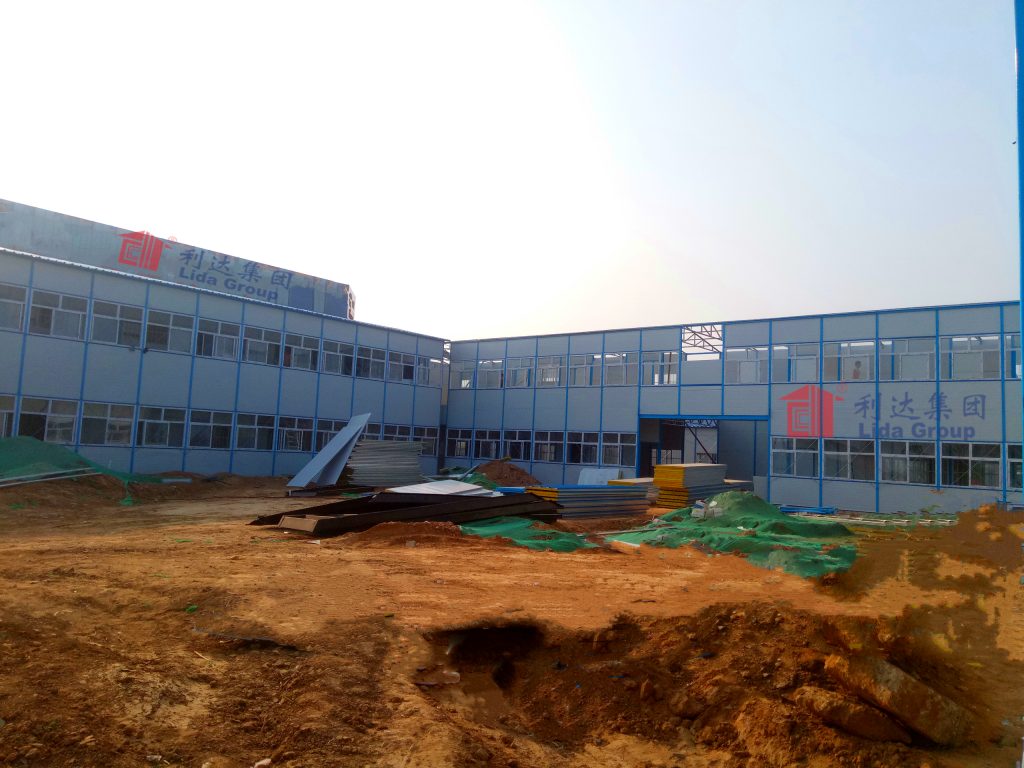
Mining projects often require temporary accommodations and facilities in remote, harsh environments with limited infrastructure. Lida’s sandwich panel solutions address these challenges by enabling rapid, durable construction with minimal on-site resources. In a recent Arctic mining project, the client needed a 200-person camp in a roadless area with extreme cold and high winds. Lida’s solution included flat-pack container houses with 75 mm rock wool sandwich panels for insulation and wind resistance, paired with foundation-free screw pile systems that eliminated the need for on-site concrete pouring.
The panels were shipped flat-packed to a nearby port, then transported by helicopter to the site. Installation was completed by a small team using portable electric tools, with each modular unit assembled in just a few hours. The camp, which included dormitories, a kitchen, and administrative offices, was fully operational in 19 days—less than 10% of the time required for conventional construction. The rock wool core of the panels ensured internal temperatures remained comfortable even in -30°C weather, while the galvanized steel skins resisted corrosion from salt spray and harsh winds. The modular design also allowed the camp to be disassembled and relocated once the mining operation concluded, reducing environmental impact and maximizing asset reuse.
Energy Sector: Specialized Industrial Facilities
The energy sector requires construction solutions that meet strict safety and performance standards, such as explosion resistance, fire protection, and chemical durability. Lida provided ATEX-certified prefabricated office complexes for a gas processing plant, using sandwich panels with polyurethane cores and explosion-proof electrical systems. The PU core’s low thermal conductivity ensured efficient temperature control, while the panels’ blast-resistant glazing and positive pressure ventilation systems met the plant’s safety requirements.
During a force majeure weather event (severe storm), the facility remained fully operational, demonstrating the structural resilience of Lida’s sandwich panel system. The rapid installation of the modular units allowed the plant to begin operations three months ahead of schedule, generating significant early revenue for the client. Additionally, the panels’ corrosion-resistant nano-ceramic coatings protected the structure from hydrogen sulfide and other harsh chemicals present in the gas processing environment, extending the facility’s service life.
Infrastructure and Urban Development: Large-Scale Projects
Lida’s sandwich panel technology has been used in large-scale infrastructure projects, where speed and scalability are critical. The Jiaodong International Airport project required 240,000 square meters of prefabricated structures, including offices, dormitories, and storage facilities. Lida supplied sandwich panel-based activity prefabricated house and container houses, which were installed in phases to align with the airport’s construction timeline.
The use of sandwich panels reduced on-site construction time by 50% compared to traditional methods, allowing the airport to meet its opening deadline. The panels’ lightweight design also reduced the load on the airport’s temporary foundations, minimizing ground preparation work. In another urban infrastructure project, the Qingdao Metro Line 6 project, Lida provided 48 modular container offices (accommodating 70 staff) and 208 dormitory units (housing 600 workers), all constructed with EPS sandwich panels. The rapid installation of these facilities ensured that the metro construction team had adequate accommodations and workspace from the project’s start, avoiding delays caused by on-site housing construction.
Disaster Response: Emergency Infrastructure
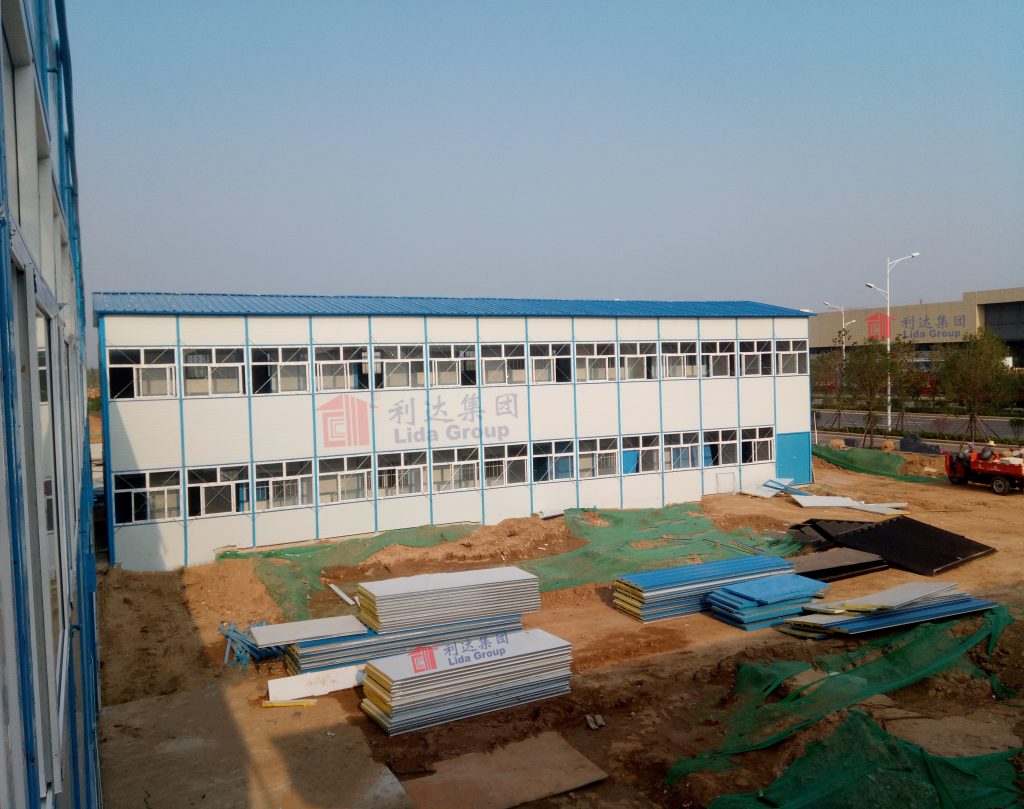
In disaster-stricken areas, the ability to quickly construct safe, functional infrastructure is a matter of life and death. Lida’s sandwich panel technology has been deployed in multiple disaster response scenarios, including typhoon and earthquake relief. After a typhoon destroyed a medical facility in Southeast Asia, Lida delivered prefabricated surgical modules with rock wool sandwich panels, which were operational within 72 hours. The modules included integrated medical equipment connections, sterile finishes, and fire-resistant walls, providing a safe environment for emergency medical care.
The modular nature of the sandwich panel system allowed the facility to be expanded as needed, with additional modules added to accommodate increased patient volume. Once the disaster recovery phase concluded, the modules were disassembled and relocated to another region for future emergency use, demonstrating the technology’s sustainability and cost-effectiveness in humanitarian applications.
Economic and Environmental Benefits: Beyond Simplification
Lida Group’s sandwich panel technology not only simplifies construction but also delivers significant economic and environmental benefits, aligning with global trends toward sustainable and cost-efficient building practices.
Cost Savings Throughout the Project Lifecycle
The use of sandwich panels reduces costs at every stage of the construction project. In the design phase, BIM-driven optimization minimizes material usage, while factory production reduces waste and labor costs. During installation, the speed of modular assembly cuts labor hours by up to 50% compared to traditional construction, and the reduced need for specialized equipment lowers rental expenses. For example, a 2,000-square-meter construction camp using Lida’s sandwich panels costs approximately 20-40% less than a conventional camp, considering labor, material, and equipment savings.
In the operational phase, the superior insulation properties of sandwich panels reduce energy consumption for heating and cooling by 30-40%. For industrial facilities and warehouses, this translates to substantial long-term cost savings. Additionally, Lida’s sandwich panels have a service life of over 20 years, with minimal maintenance requirements, reducing lifecycle costs further. The ability to disassemble and reuse panels (up to 85% recyclability) also adds value, as components can be repurposed for future projects rather than being discarded.
Sustainability and Environmental Stewardship
As the construction industry seeks to reduce its carbon footprint, Lida’s sandwich panel technology offers a sustainable alternative to traditional materials. The factory-based production process generates 41% fewer transport emissions than conventional construction, thanks to optimized logistics and reduced material volume. The core materials used in Lida’s panels are also environmentally friendly: rock wool is made from natural, renewable basalt fibers, while EPS and PU cores can be recycled or repurposed.
The energy efficiency of sandwich panels contributes to lower carbon emissions during the operational phase of buildings. By reducing heating and cooling requirements, Lida’s panels help clients meet global sustainability goals, such as the EU’s REACH Regulations and China’s “double carbon” targets. Additionally, the minimal waste generated during production and installation aligns with circular economy principles, reducing the construction industry’s environmental impact.
Lida Group further demonstrates its commitment to sustainability by adhering to green product development strategies. Its stainless steel and galvanized components are reusable after disassembly, and the group’s production processes comply with strict environmental standards, minimizing air and water pollution. These practices have earned Lida a reputation as a responsible manufacturer in the global prefabricated building market.
Challenges and Future Trends: Advancing Sandwich Panel Technology
While Lida Group has achieved significant success with sandwich panel technology, the industry faces ongoing challenges, including market perception, regulatory variations, and technological competition. Some clients still perceive prefabricated buildings as temporary or low-quality, despite advances in materials and design. Lida addresses this by showcasing its project portfolio and certifications, demonstrating the durability and performance of its sandwich panel solutions in permanent applications.
Regulatory variations across countries also present challenges, as building codes and safety standards differ globally. Lida mitigates this by customizing its sandwich panel solutions to meet local requirements, working closely with clients and local authorities to ensure compliance. The group’s CE, SGS, and ISO certifications facilitate market access in Europe, Southeast Asia, and Africa, where these standards are widely recognized.
Looking ahead, Lida Group is focused on advancing sandwich panel technology through three key trends: lightweighting, intelligentization, and environmental upgrading. The group is exploring the use of aluminum honeycomb cores to further reduce panel weight while maintaining strength, enabling applications in high-rise modular buildings. Intelligent production will involve integrating AI and IoT into manufacturing processes to real-time monitor panel quality and optimize production efficiency. Environmental upgrading will focus on developing PET foam cores and other recyclable materials, further reducing the carbon footprint of sandwich panels.
The growing demand for affordable housing, rapid infrastructure development, and sustainable building practices is expected to drive continued growth in the global sandwich panel market. Lida Group, with its proven track record, technological expertise, and global supply chain, is well-positioned to capitalize on these trends, further simplifying construction and shaping the future of the industry.
Conclusion
Lida Group’s sandwich panel technology represents a paradigm shift in the construction industry, simplifying processes, reducing costs, and enhancing sustainability across diverse applications. By integrating advanced materials, digital design, modular assembly, and intelligent logistics, Lida has eliminated the inefficiencies of traditional construction, delivering projects in a fraction of the time with superior quality and performance.
The group’s diverse range of sandwich panels—engineered with EPS, rock wool, and PU cores—caters to the unique needs of mining, energy, infrastructure, and disaster response projects, demonstrating the technology’s versatility. Case studies from around the world highlight how Lida’s solutions have transformed project timelines, from 19-day mining camps to 72-hour emergency medical facilities, while delivering significant economic and environmental benefits.
As the construction industry continues to evolve, Lida Group remains at the forefront of innovation, advancing sandwich panel technology to meet the growing demand for efficiency and sustainability. By combining manufacturing excellence with customer-centric design, Lida is not only simplifying construction but also building a more sustainable, resilient future for the global built environment. For clients seeking to streamline their construction projects without compromising on quality, safety, or sustainability, Lida Group’s sandwich panel technology offers a proven, future-ready solution.
Related news
-
Sustainable Prefab House Designs from Lida Group
2026-01-06 16:18:41
-
The Future of Rapid Building: Modern Mobile Construction
2026-01-06 17:54:33
-
Revolutionize Your Project with Easy Install Sandwich Panel Building
2026-01-06 14:30:21
contact us
- Tel: +86-532-88966982
- Whatsapp: +86-13793209022
- E-mail: sales@lidajituan.com
