



Lida Group Sets the Standard in Durable Construction
2025-Dec-12 17:44:27
By Admin
In today’s competitive industrial landscape, time is a critical currency. Businesses expanding their operations, launching new production lines, or responding to market demand cannot afford lengthy construction delays. Traditional building methods—with their on-site casting, labor-intensive assembly, and weather-dependent schedules—often leave projects stuck in limbo, costing companies valuable revenue and market opportunities. Enter the pre-engineered metal frame workshop: a game-changing solution designed to fast-track construction without sacrificing structural integrity, functionality, or cost-effectiveness.
Pre-engineered metal frame workshops are not just buildings—they are precision-engineered systems where 90% of components are manufactured off-site in controlled factory environments, then shipped to the project site for rapid assembly. This innovative approach eliminates the inefficiencies of traditional construction, cutting project timelines by 40–60% while delivering structures that meet global standards for strength, durability, and adaptability. Whether you need a small-scale repair workshop, a large-scale manufacturing facility, or a specialized industrial space, pre-engineered metal frames offer the fastest path from concept to operation. This article explores how pre-engineered metal frame workshops accelerate project delivery, the technical and operational advantages that drive speed, real-world success stories, and why they are the smart choice for time-sensitive projects.
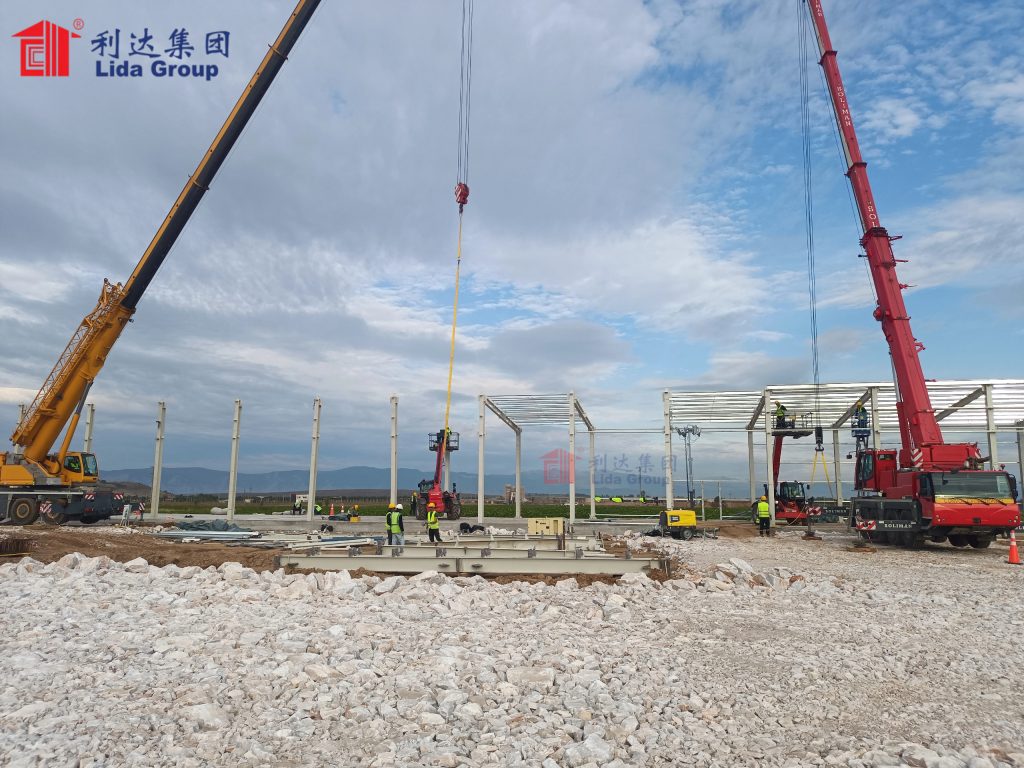
The Fast-Track Advantage: Why Pre-Engineered Metal Frames Outpace Traditional Construction
The core appeal of pre-engineered metal frame workshops lies in their ability to compress project timelines—without cutting corners. To understand this advantage, we must first compare the construction processes of pre-engineered metal frames versus traditional methods (concrete, wood, or masonry) and identify the key inefficiencies that pre-engineered systems eliminate.
1. Timeline Comparison: Pre-Engineered vs. Traditional Construction
Traditional construction follows a linear, on-site intensive process: site preparation → foundation laying → on-site fabrication of structural components → assembly → finishing. Each phase is dependent on the previous one, and delays in any step (e.g., bad weather, material shortages, labor issues) can derail the entire project. For a 2,000-square-meter industrial workshop, traditional concrete construction typically takes 6–9 months from groundbreaking to occupancy . In contrast, a pre-engineered metal frame workshop of the same size can be completed in 2–3 months—with some projects finished in as little as 45 days .
The table below illustrates the timeline breakdown for a 3,000-square-meter workshop, highlighting the dramatic speed difference:
|
Project Phase
|
Pre-Engineered Metal Frame
|
Traditional Concrete Construction
|
Time Savings
|
|
Design & Engineering
|
2–3 weeks
|
4–6 weeks
|
50%
|
|
Component Manufacturing
|
3–4 weeks (parallel to site prep)
|
N/A (on-site fabrication)
|
N/A
|
|
Site Preparation & Foundation
|
3–4 weeks
|
4–5 weeks
|
20%
|
|
Structural Assembly
|
2–3 weeks
|
8–10 weeks
|
70%
|
|
Finishing (Cladding, Electrical, HVAC)
|
2–3 weeks
|
4–6 weeks
|
50%
|
|
Total Project Timeline
|
12–17 weeks
|
24–33 weeks
|
50%
|
This accelerated timeline is not just a convenience—it’s a strategic advantage. For a manufacturing company needing to expand production to meet seasonal demand, a pre-engineered workshop can mean the difference between capitalizing on a $2 million opportunity or missing out due to construction delays. For a startup launching a new product, faster occupancy translates to earlier revenue generation and a shorter path to profitability.
2. Key Drivers of Speed: How Pre-Engineered Systems Cut Construction Time
The speed of pre-engineered metal frame workshops stems from three interconnected innovations: design standardization, factory prefabrication, and modular assembly. Together, these elements eliminate the bottlenecks that plague traditional construction.
a. Design Standardization: Streamlining the Engineering Process
Pre-engineered metal frames are designed using standardized, computer-optimized templates that are customizable to meet specific project requirements. Unlike traditional construction, where every project requires a fully custom design from scratch, pre-engineered systems leverage proven structural configurations (e.g., rigid frames, trusses) that are pre-tested for strength and efficiency. Advanced design software (e.g., Tekla Structures, SAP2000, AutoCAD) allows engineers to modify standard designs quickly—adjusting span lengths, eave heights, load capacities, and door/window placements—without starting from zero .
For example, a client needing a workshop with 30-meter clear spans, 8-meter eave heights, and a 5-ton crane capacity can select a standard rigid frame design, modify the dimensions in the software, and generate engineering drawings in 2–3 weeks. Traditional concrete design for the same requirements would require 4–6 weeks of calculations, as engineers must design every beam, column, and connection from scratch . This standardization also reduces the risk of design errors, as the templates are based on decades of industry experience and compliance with global standards (AISC 360-10, EN 1993, GB 55006-2021).
b. Factory Prefabrication: Off-Site Production Eliminates On-Site Delays
The most significant speed driver is factory prefabrication. 90% of structural components—steel beams, columns, trusses, wall panels, and roof systems—are manufactured in controlled, climate-controlled facilities before being shipped to the site . This off-site production offers three critical advantages:
- Parallel Workflows: Component manufacturing happens simultaneously with site preparation and foundation work, rather than sequentially. While the foundation is being poured, steel frames are being cut, welded, and coated in the factory. This parallel process alone cuts 30–40% of the total project time .
- Weather Independence: Traditional on-site fabrication is vulnerable to rain, snow, extreme temperatures, and other weather conditions, which can delay construction by weeks. Factory production is unaffected by weather, ensuring consistent progress regardless of external conditions.
- Precision and Efficiency: Factory manufacturing uses CNC (Computer Numerical Control) machines, automated welding systems, and laser cutters to produce components with tolerances of ±0.5mm . This precision eliminates the need for on-site adjustments, rework, or cutting—common sources of delay in traditional construction. For example, a steel truss manufactured in a factory fits perfectly with its connecting components on-site, whereas a concrete beam cast on-site may require grinding or shimming to meet specifications.
c. Modular Assembly: Snap-Together Efficiency On-Site
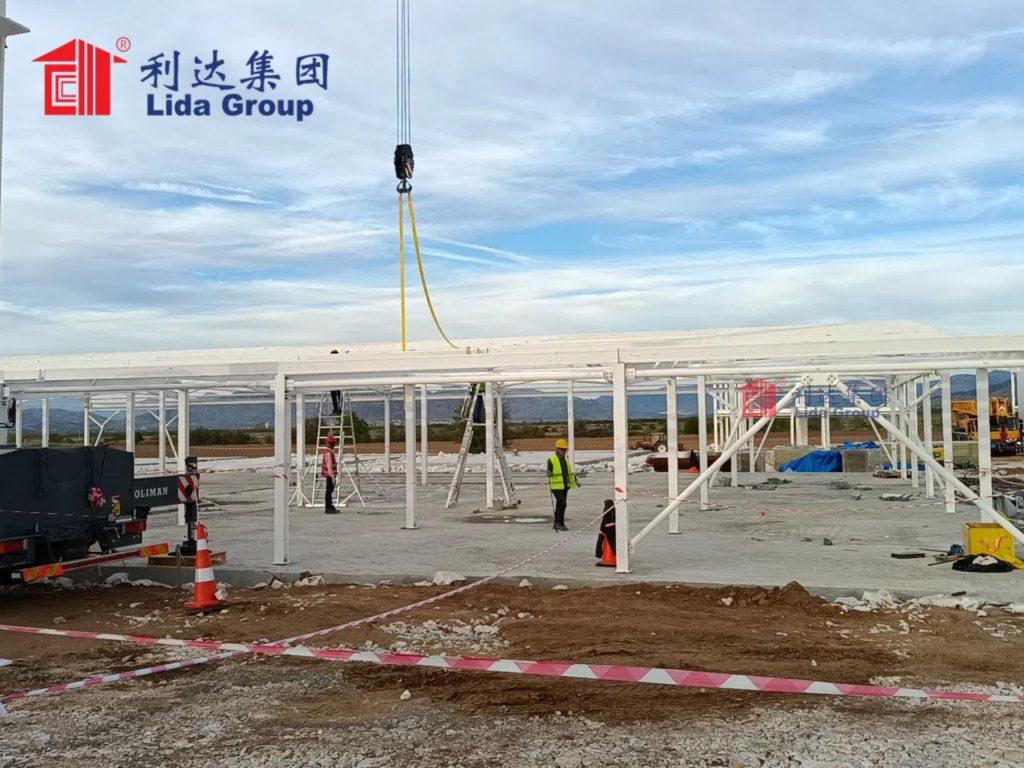
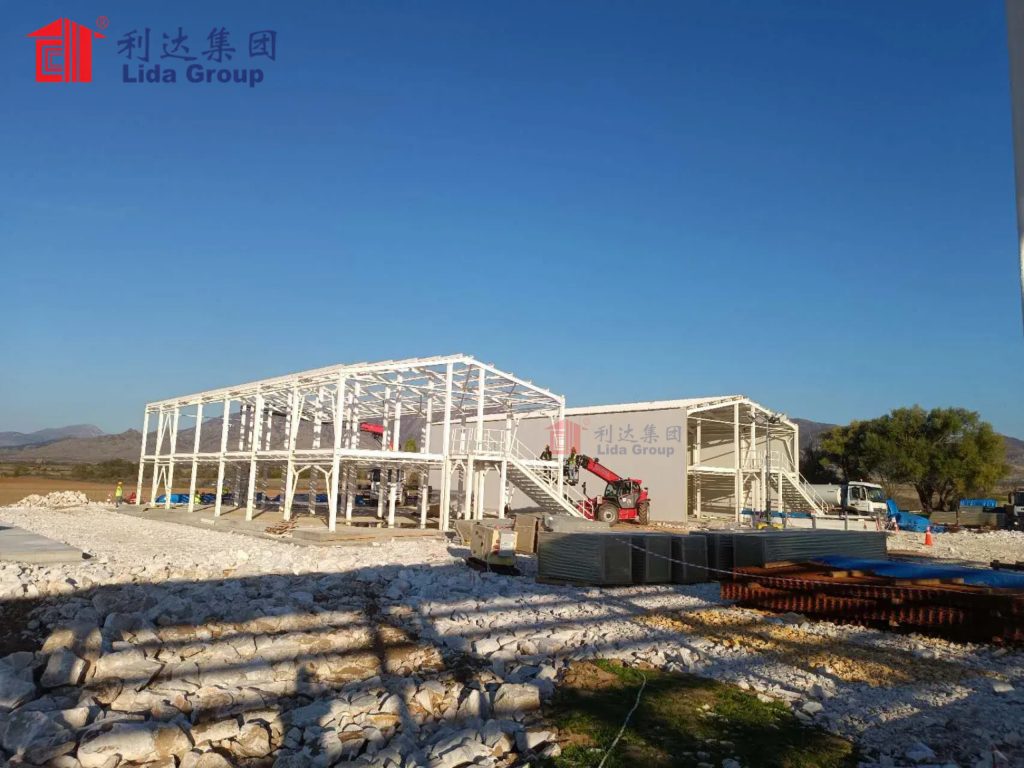
Pre-engineered metal frame components are designed for modular, plug-and-play assembly. All parts are pre-drilled, pre-welded, and labeled for easy identification, allowing on-site crews to assemble the structure quickly with minimal specialized labor. Unlike traditional construction, which requires skilled masons, concrete finishers, and ironworkers to build the structure piece by piece, pre-engineered assembly relies on a smaller team of certified steel erectors who can erect 500–1,000 square meters of structure per week .
The assembly process is straightforward:
- Foundation anchors are installed and leveled.
- Steel columns are bolted to the anchors.
- Beams and trusses are lifted into place and secured with high-strength bolts (Grade 10.9) that require no on-site welding.
- Wall panels and roof systems are attached to the frame, followed by doors, windows, and finishing components.
This modular approach not only speeds up assembly but also reduces the risk of on-site accidents, as there is less need for 高空作业 (high-altitude work) and heavy equipment usage compared to traditional construction. For example, a 4,000-square-meter pre-engineered workshop in 沅江 (Yuanjiang) was assembled by a team of 8 steel erectors in just 3 weeks, with the entire project (from design to occupancy) completed in 12 weeks—60% faster than the projected concrete construction timeline ..
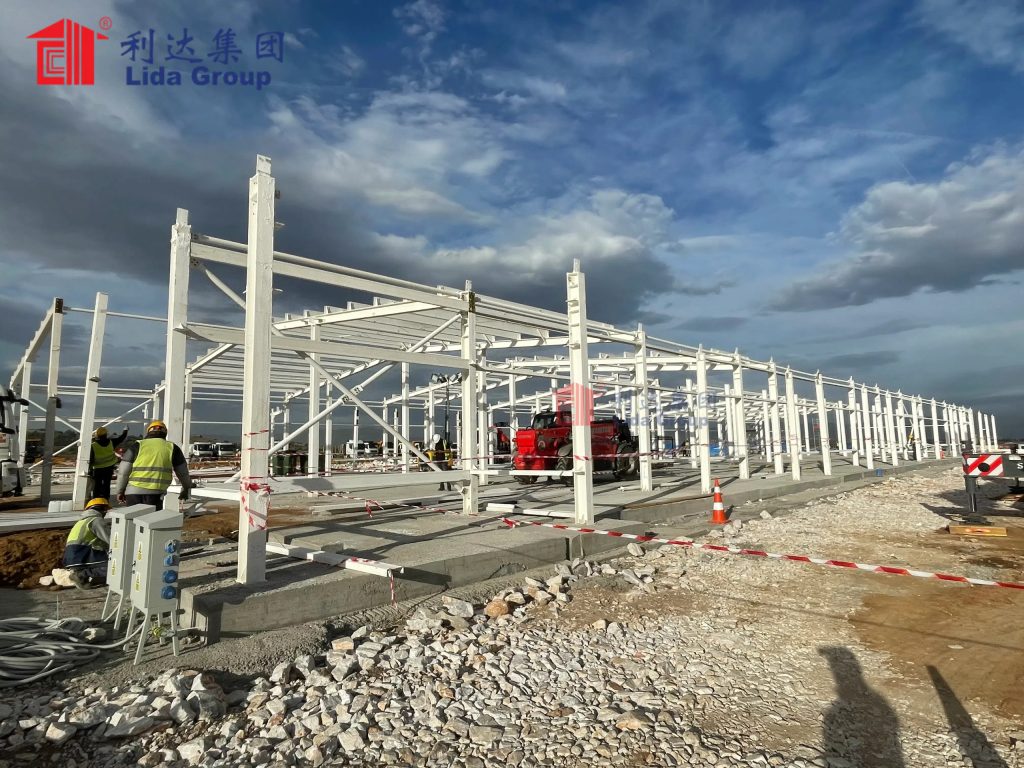
Technical Advantages: Speed Without Compromising Quality or Performance
Critics of fast-track construction often assume that speed comes at the cost of quality, strength, or functionality. However, pre-engineered metal frame workshops are engineered to deliver the same—if not superior—performance compared to traditional structures, while meeting the most stringent industry standards.
1. Structural Strength: Engineered for Durability and Load-Bearing Capacity
Pre-engineered metal frames use high-grade structural steel (Q355B, A572 Gr. 50/65, S355JR) with tensile strengths ranging from 470–630 MPa and yield strengths of 355 MPa or higher . These materials offer exceptional strength-to-weight ratios—20 times stronger than concrete per unit weight—allowing for large clear spans (30–48 meters) without intermediate columns, maximizing usable space for machinery, storage, or production lines .
The structural design of pre-engineered workshops is optimized for load-bearing capacity, including:
- Dead Loads: The weight of the structure itself (frame, cladding, roofing).
- Live Loads: Equipment, inventory, and personnel (typically 5–10 kN/m² for industrial workshops).
- Environmental Loads: Wind speeds up to 180 km/h, snow loads up to 2.5 kN/m², and seismic forces up to 0.3g.
- Dynamic Loads: Impact from machinery, forklifts, or cranes (up to 10 tons).
All designs undergo finite element analysis (FEA) to simulate real-world conditions, ensuring the structure meets safety factors of 1.5 or higher for all load combinations . For example, a pre-engineered workshop designed for a construction equipment manufacturer in China supports 20-ton machinery loads, 40-meter clear spans, and seismic forces of 0.2g—all while being assembled in 90 days .
2. Quality Control: Factory Precision Ensures Consistency
Traditional on-site construction is prone to quality variability due to factors like weather, human error, and material storage conditions. Pre-engineered metal frames, by contrast, benefit from rigorous factory quality control processes that ensure every component meets exact specifications.
Manufacturing facilities are ISO 9001-certified, with inspections at every stage of production:
- Material Testing: Steel is tested for tensile strength, yield strength, and impact resistance before fabrication.
- Dimensional Checks: CNC machines are calibrated regularly to ensure component dimensions meet tolerance requirements (±0.5mm).
- Weld Inspections: Automated and manual welds are inspected using ultrasonic testing (UT) and X-ray imaging to detect defects, complying with AWS D1.1 and EN ISO 9606 standards.
- Coating Verification: Galvanized (85–100μm zinc coating) or fluorocarbon-painted components are tested for adhesion and corrosion resistance.
This quality control ensures that pre-engineered workshops have a design life of 50–100 years, with minimal maintenance required. Unlike concrete structures, which may develop cracks or require waterproofing repairs within 10–15 years, pre-engineered metal frames resist corrosion, rot, and insect infestations, with annual maintenance costs of just 0.1–0.2% of the initial investment .
3. Customization: Speed Does Not Mean One-Size-Fits-All
A common misconception about pre-engineered systems is that they lack flexibility. In reality, pre-engineered metal frame workshops are highly customizable, allowing clients to tailor the structure to their specific operational needs—without sacrificing speed.
Customization options include:
- Span and Height: Clear spans from 10–48 meters, eave heights from 4–15 meters, and ridge heights up to 20 meters.
- Load Capacity: Design for heavy machinery, cranes (up to 50 tons), mezzanines, or high-density storage.
- Cladding and Insulation: Options for insulated sandwich panels (EPS, rock wool, polyurethane), metal siding, or brick veneer, with thermal conductivity as low as 0.032 W/(m·K) for energy efficiency.
- Doors and Windows: Overhead garage doors, roll-up doors, personnel doors, and windows in custom sizes and locations.
- Interior Layout: Open floor plans or partitioned spaces for offices, break rooms, or storage.
- Specialized Features: Ventilation systems, fire suppression, crane rails, and electrical wiring chaseways.
For example, a client in the automotive industry needed a workshop with 36-meter clear spans, 10-meter eave heights, a 15-ton overhead crane, and insulated cladding to maintain a constant temperature for precision assembly. The pre-engineered design was customized to these requirements, with the entire project completed in 10 weeks—faster than a traditional custom concrete structure, which would have taken 6 months .
4. Sustainability: Fast Construction with a Small Environmental Footprint
Pre-engineered metal frame workshops are not just fast and strong—they are also sustainable, aligning with modern businesses’ environmental goals. Steel is 100% recyclable, with a recycling rate of over 90%—far higher than concrete (less than 30%) or wood (limited recyclability) . Pre-engineered systems use 70% recycled steel, which requires 74% less energy to produce than virgin steel, reducing carbon emissions by up to 50% compared to concrete structures .
Additional sustainability benefits include:
- Reduced Material Waste: Factory prefabrication generates just 5–10% material waste, compared to 20–30% for traditional on-site construction.
- Energy Efficiency: Insulated cladding and roof systems reduce heating and cooling costs by 20–30%, with options for solar panel integration on the roof.
- Long Lifespan: The durable steel frame minimizes the need for replacement, reducing the environmental impact of demolition and reconstruction.
For example, a pre-engineered workshop in Europe achieved BREEAM Excellent certification due to its recycled steel content, energy-efficient design, and low carbon footprint—all while being completed in 8 weeks .
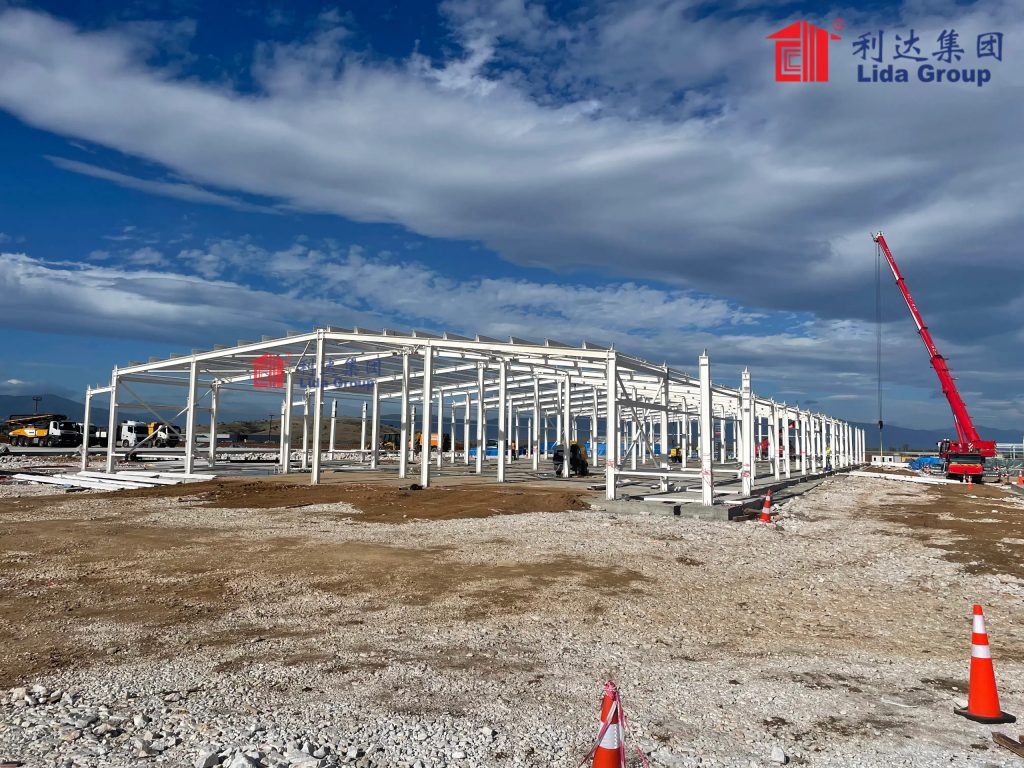
Cost Efficiency: Fast-Track Construction Saves Money at Every Stage
Speed is not just a time advantage—it’s a financial one. Pre-engineered metal frame workshops deliver cost savings throughout the project lifecycle, from design and construction to long-term operation.
1. Reduced Construction Costs
Pre-engineered systems lower upfront construction costs in three key ways:
- Labor Savings: Modular assembly requires 40–60% fewer on-site workers than traditional construction. A 3,000-square-meter pre-engineered workshop typically needs 8–10 steel erectors for assembly, compared to 20–25 workers for concrete construction . This reduces labor costs by 30–40%.
- Material Savings: Standardized design and factory production minimize material waste, cutting material costs by 10–15%. Additionally, the high strength-to-weight ratio of steel reduces the amount of material needed—for example, a steel column supporting a 100-ton load requires 24 times less cross-sectional area than a concrete column, reducing material usage and transportation costs.
- Equipment Savings: Pre-engineered assembly requires smaller, less expensive equipment (e.g., small cranes, forklifts) compared to traditional construction, which needs concrete mixers, formwork, and heavy-duty cranes. This reduces equipment rental costs by 20–30%.
For a 5,000-square-meter workshop, these savings translate to a 15–25% reduction in total construction costs compared to traditional concrete construction .
2. Lower Financing and Opportunity Costs
Lengthy construction timelines mean higher financing costs—interest payments on construction loans, insurance premiums, and property taxes accrue for months before the building is operational. Pre-engineered workshops, with their 2–3 month timeline, cut financing costs by 50–60%. For example, a \(2 million construction loan with a 6% interest rate would accrue \)60,000 in interest over 6 months of traditional construction, compared to \(20,000 over 2 months of pre-engineered construction—a savings of \)40,000 .
Even more significant are opportunity costs—the revenue lost while waiting for the building to be completed. A manufacturing company that can start production 3 months earlier with a pre-engineered workshop may generate an additional $500,000 in revenue, far outweighing any slight difference in upfront construction costs.
3. Minimal Long-Term Maintenance Costs
Pre-engineered metal frame workshops are designed for low maintenance. The galvanized or fluorocarbon-coated steel components resist corrosion, rust, and insect infestations, eliminating the need for frequent repainting or replacement. Most workshops require only annual inspections and minor cleaning, with an average annual maintenance cost of 0.1–0.2% of the initial investment . In contrast, concrete workshops require crack repairs, waterproofing, and repainting every 5–10 years, with annual maintenance costs of 0.5–1.0% of the initial investment .
Over a 50-year design life, a pre-engineered workshop with a \(1 million initial investment would cost just \)50,000–\(100,000 in maintenance, compared to \)250,000–\(500,000 for a concrete workshop—a savings of \)200,000–$400,000 .
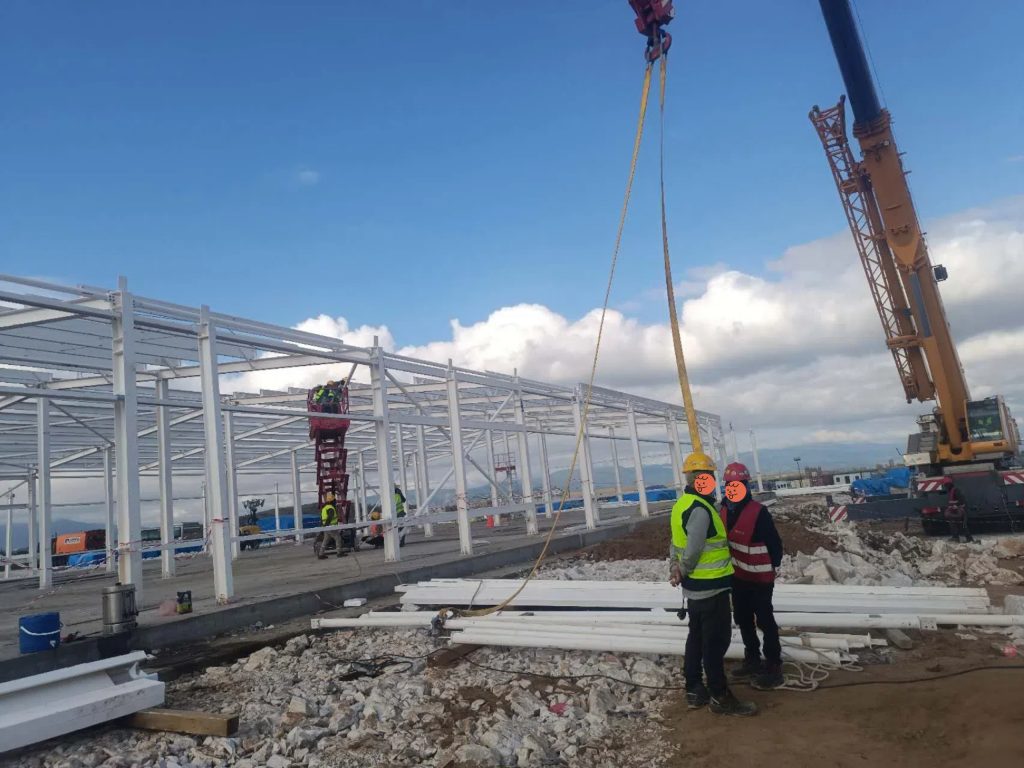
Real-World Case Studies: Fast-Track Success with Pre-Engineered Metal Frame Workshops
To demonstrate the tangible benefits of pre-engineered metal frame workshops, we’ve compiled three case studies from diverse industries, highlighting how fast-track construction delivered on time, on budget, and beyond client expectations.
Case Study 1: Mechanical Repair Workshop for a Logistics Company
Client: A leading logistics firm in the United States specializing in fleet management.
Challenge: The client needed a 2,500-square-meter repair workshop to service their expanding fleet of trucks and trailers. The workshop required 30-meter clear spans to accommodate large vehicles, 8-meter eave heights, and a 10-ton crane for lifting engines and heavy components. The client’s existing workshop was at capacity, and they needed the new facility operational within 3 months to avoid service delays and lost revenue.
Solution: We designed a pre-engineered metal frame workshop using A572 Gr. 50 steel, with a rigid frame system to achieve 30-meter clear spans. The structure included insulated metal wall panels (R-value 21) to maintain a comfortable working temperature, four 5-meter-wide overhead doors for vehicle access, and a crane rail system integrated into the roof trusses. Component manufacturing began immediately after design approval, with parallel site preparation and foundation work.
Result: The workshop was completed in 75 days—45 days for component manufacturing and 30 days for on-site assembly—meeting the client’s 3-month deadline. The structure successfully supports the 10-ton crane and heavy vehicle loads, with no structural issues after 4 years of operation. The client reported a 25% increase in fleet repair capacity, generating an additional $300,000 in annual revenue. The pre-engineered design also allowed for a 1,000-square-meter expansion 2 years later, which was completed in just 2 weeks with minimal disruption to ongoing operations.
Case Study 2: Manufacturing Workshop for a Medical Device Company
Client: A European medical device manufacturer specializing in surgical instruments.
Challenge: The client needed a 3,000-square-meter cleanroom workshop to produce new surgical tools, with strict requirements for temperature control (22±2°C), humidity control (50±5%), and air filtration (ISO 8 standard). The project needed to be completed within 4 months to meet regulatory deadlines for product launch. Traditional concrete construction was estimated to take 8 months, which would have delayed the product launch by 4 months.
Solution: We delivered a pre-engineered metal frame workshop with a customized envelope design to support cleanroom requirements. The structure used insulated sandwich panels with a thermal conductivity of 0.032 W/(m·K) to maintain temperature stability, and the steel frame was engineered to support the weight of HEPA filtration systems and HVAC units. Component manufacturing was completed in 6 weeks, with on-site assembly taking 4 weeks. The cleanroom finishing (including flooring, wall liners, and filtration systems) was completed in 3 weeks, overlapping with the final stages of structural assembly.
Result: The entire project was completed in 13 weeks—1 week ahead of the 4-month deadline—allowing the client to launch their product on schedule. The workshop meets all ISO 8 cleanroom standards, with consistent temperature and humidity control. The pre-engineered design reduced construction costs by 20% compared to traditional concrete, and the energy-efficient envelope has cut monthly utility costs by 18%. The client has since expanded the workshop by 1,500 square meters using the same pre-engineered system, with the expansion completed in 3 weeks.
Case Study 3: Multi-Purpose Industrial Workshop for a Startup
Client: A Chinese startup specializing in 3D printing and rapid prototyping.
Challenge: The client needed a 1,500-square-meter multi-purpose workshop to house 3D printers, assembly stations, and storage, with a flexible layout that could be reconfigured as the business grew. The project had a tight budget of \(300,000 and needed to be completed within 2 months to qualify for a government innovation grant. **Solution**: We designed a cost-effective pre-engineered metal frame workshop using Q355B steel, with a modular rigid frame system that allowed for easy reconfiguration. The structure included a clear span of 24 meters, insulated metal cladding, and movable interior partitions. Component manufacturing was completed in 3 weeks, with on-site assembly taking 2 weeks. The flexible layout included pre-installed electrical and plumbing chase ways to support future modifications. **Result**: The workshop was completed in 5 weeks—well within the 2-month deadline—and came in \)20,000 under budget. The modular design has allowed the client to reconfigure the space twice in 3 years, adding new 3D printing stations and a small office area without structural modifications. The pre-engineered structure has withstood two severe storms with wind speeds of 140 km/h, with no damage. The client successfully secured the government grant, which helped fund their expansion to a second pre-engineered workshop.
Why Choose a Pre-Engineered Metal Frame Workshop for Your Fast-Track Project?
In a market flooded with construction options, pre-engineered metal frame workshops stand out as the optimal choice for time-sensitive projects. Here are the key reasons why businesses across industries trust pre-engineered systems for fast-track success:
1. Unmatched Speed to Occupancy
Pre-engineered workshops deliver the fastest path from concept to operation, with project timelines cut by 40–60% compared to traditional construction. This speed is driven by design standardization, factory prefabrication, and modular assembly—eliminating the bottlenecks that plague on-site construction. Whether you’re responding to market demand, expanding production, or launching a new business, pre-engineered systems ensure you’re up and running when it matters most.
2. Proven Quality and Durability
Pre-engineered metal frames are engineered to meet global standards (AISC 360-10, EN 1993, GB 55006-2021) and undergo rigorous quality control in factory settings. The use of high-grade steel ensures structural strength and durability, with a design life of 50–100 years. Unlike traditional construction, which is prone to on-site errors, pre-engineered systems deliver consistent, reliable performance that meets or exceeds client expectations.
3. Cost Savings at Every Stage
Pre-engineered workshops reduce upfront construction costs by 15–25% through labor, material, and equipment savings. They also cut financing costs by 50–60% and eliminate opportunity costs by accelerating occupancy. Long-term maintenance costs are minimal, with annual expenses 70–80% lower than concrete structures. For businesses looking to maximize return on investment, pre-engineered systems offer unbeatable value.
4. Flexibility and Adaptability
Pre-engineered metal frame workshops are highly customizable, with options for span lengths, heights, load capacities, and finishes. The modular design allows for easy expansion or reconfiguration as business needs change—whether adding square footage, installing new equipment, or repurposing the space. This flexibility ensures the workshop grows with your business, maximizing long-term value.
5. Sustainability and Environmental Responsibility
Pre-engineered systems are inherently sustainable, using recycled steel, minimizing material waste, and reducing carbon emissions. They support energy-efficient design and can be integrated with green technologies like solar panels and rainwater harvesting systems. For businesses committed to sustainability, pre-engineered workshops offer a fast-track path to environmentally friendly operations.
6. Comprehensive Support Throughout the Project Lifecycle
Reputable pre-engineered metal frame providers offer end-to-end support, from initial consultation and design to manufacturing, assembly, and post-completion maintenance. This includes:
- Custom design tailored to your specific needs.
- Factory quality control and component testing.
- On-site assembly supervision by certified professionals.
- Training for your team on operation and maintenance.
- Warranty coverage (5-year warranty on materials and workmanship, 20-year warranty on structural framing).
This comprehensive support ensures a seamless, stress-free experience, with no surprises or delays.
Conclusion
In a world where time is money and market opportunities wait for no one, pre-engineered metal frame workshops are the ultimate fast-track solution for industrial construction. They deliver unmatched speed to occupancy—cutting project timelines by 40–60%—without compromising on quality, strength, or functionality. By leveraging design standardization, factory prefabrication, and modular assembly, pre-engineered systems eliminate the inefficiencies of traditional construction, allowing businesses to start operations sooner, generate revenue faster, and gain a competitive edge.
Beyond speed, pre-engineered metal frame workshops offer a host of additional benefits: structural strength that meets global standards, cost savings at every stage of the project lifecycle, flexibility to adapt to changing business needs, and sustainability that aligns with modern environmental goals. Real-world case studies from logistics, manufacturing, and startup industries demonstrate that pre-engineered systems consistently deliver on time, on budget, and beyond client expectations.
Whether you need a small repair workshop, a large-scale manufacturing facility, or a specialized cleanroom, pre-engineered metal frames offer the fastest, most reliable path to success. They are not just buildings—they are strategic investments that accelerate growth, minimize risk, and maximize return on investment.
In a market where delays can mean missed opportunities, pre-engineered metal frame workshops stand as a testament to the power of innovation in construction. When you choose a pre-engineered system, you’re not just building a workshop—you’re fast-tracking your project, your business, and your future. Contact a trusted pre-engineered metal frame provider today to learn more about how you can turn your construction vision into reality in record time.
Related news
-
Engineered for Strength: Our Steel Structure Buildings
2025-12-12 16:43:13
-
Fast-Track Your Project with a Pre-Engineered Metal Frame Workshop
2025-12-12 17:25:25
-
Why Choose Lida Group for Durable, Cost-Effective Building?
2025-12-12 14:51:02
contact us
- Tel: +86-532-88966982
- Whatsapp: +86-13793209022
- E-mail: sales@lidajituan.com
