



Lida Group Sets New Standard in Steel Structure Construction
2026-Jan-09 15:31:25
By Admin
The global construction industry is undergoing a paradigm shift toward structural efficiency, sustainability, and precision engineering. As urbanization accelerates and large-scale infrastructure projects proliferate, steel structure construction has emerged as the backbone of modern building practices, offering unparalleled strength-to-weight ratios, spanning capabilities, and recyclability. Yet, traditional steel structure construction often grapples with fragmented workflows, imprecise on-site fabrication, prolonged timelines, and inconsistent quality control—challenges that hinder its full potential. Lida Group, a trailblazer in prefabricated and steel structure solutions with over three decades of expertise, has redefined the industry landscape by integrating digital innovation, automated manufacturing, and holistic project management into its steel structure offerings. By setting rigorous benchmarks for quality, efficiency, and sustainability, Lida Group has not only addressed industry pain points but also established a new standard for excellence in global steel structure construction. This article delves into Lida’s core capabilities, technological innovations, landmark projects, and the transformative impact of its solutions on the construction sector.
Founded in 1993, Lida Group has evolved from a regional steel structure manufacturer to a global integrated service provider, encompassing consulting, planning, design, production, construction, and post-sales support. Headquartered in Shandong, China, the group operates a 73,000-square-meter state-of-the-art production base equipped with 10 specialized automated lines for steel structure fabrication, boasting an annual steel processing capacity of 50,000 tons and a daily output of 3,000 square meters of prefabricated steel components. Backed by certifications including ISO 9001, CE, SGS, BV, and China’s Steel Structure Engineering Professional Contract Grade II Qualification, Lida’s steel structures adhere to stringent international standards, from fire resistance (Grade A) and seismic performance (up to Grade 8) to corrosion resistance in harsh environments. As a designated supplier for the United Nations integrated camps and a long-term partner of global giants such as China State Construction, China Railway Group, Saudi Binladin Group, and Technip France, Lida has delivered over 1,000 steel structure projects across 96 countries, spanning industrial plants, bridges, high-rise buildings, stadiums, and emergency facilities. What distinguishes Lida is its unwavering commitment to integrating innovation into every phase of steel structure construction, turning conventional building processes into streamlined, high-performance workflows.
Core Competencies: The Foundation of Lida’s Industry Leadership
Lida Group’s ability to set new standards in steel structure construction stems from four core competencies: advanced digital design, precision automated manufacturing, innovative installation technologies, and comprehensive quality control systems. These capabilities work in synergy to eliminate inefficiencies, enhance structural performance, and ensure project consistency—hallmarks of Lida’s approach to steel structure engineering.
Digital Design & BIM-Driven Optimization
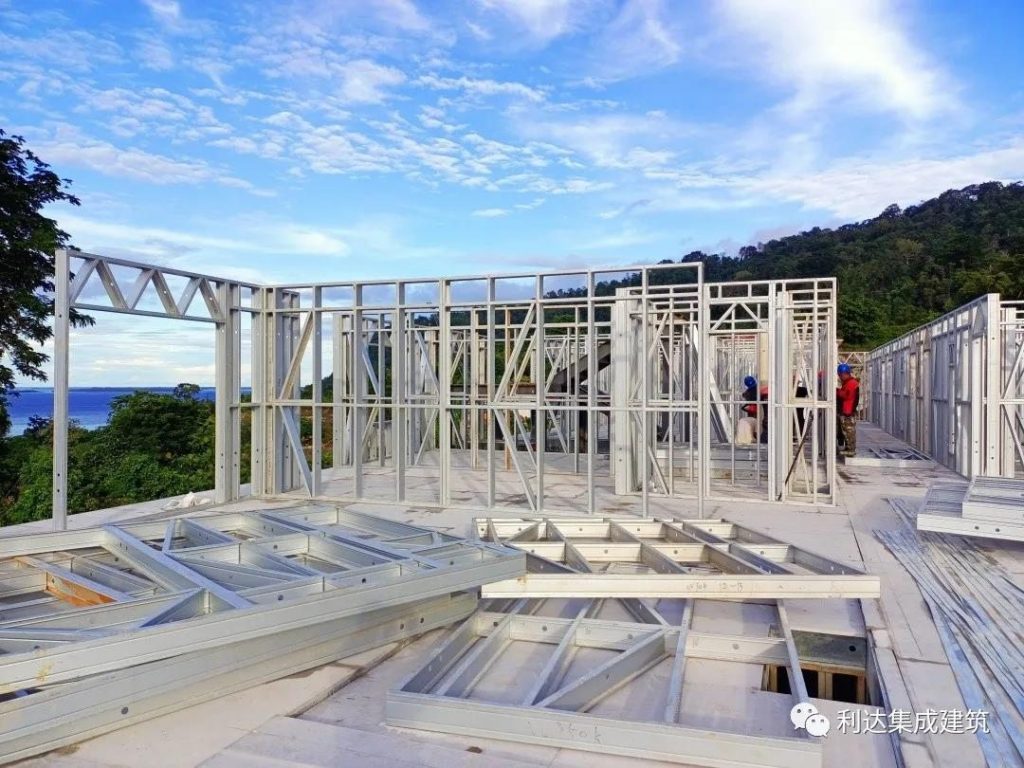
At the forefront of Lida’s steel structure innovation is the integration of Building Information Modeling (BIM) technology into the full project lifecycle, from conceptual design to maintenance. Unlike traditional 2D design methods that often lead to on-site clashes and rework, Lida’s BIM-driven approach creates a parametric 3D model that digitalizes every steel component, including beams, columns, joints, and connections. This virtual model enables real-time collaboration among architects, structural engineers, fabricators, and installers, ensuring design intent is accurately translated into physical construction.
Lida’s engineering team leverages BIM for structural optimization, particularly in large-span and high-rise steel projects. For example, in bridge and stadium structures, the software simulates load-bearing capacity, wind resistance, and seismic response, allowing engineers to refine component dimensions and material specifications—reducing steel consumption by up to 15% while maintaining structural integrity. In the design of industrial steel plants, BIM facilitates the integration of mechanical, electrical, and plumbing (MEP) systems with steel frames, eliminating spatial conflicts before fabrication begins. This proactive clash detection reduces on-site modifications by 70%, a critical advantage in projects with tight timelines.
To further enhance design precision, Lida has integrated digital twin technology with BIM, creating a real-time digital replica of the steel structure during construction. This twin updates dynamically with data from on-site sensors, enabling engineers to monitor component alignment, welding quality, and structural stability remotely. For high-rise steel projects, this technology ensures verticality errors are controlled within 2 millimeters per floor—setting a new benchmark for precision in steel structure erection.
Precision Automated Manufacturing for Steel Components
Lida Group’s manufacturing facilities represent the pinnacle of automated steel structure fabrication, minimizing human error and maximizing production efficiency. The group’s production lines feature robotic welding arms, laser cutting machines, CNC bending equipment, and automated shot blasting systems—all integrated into a digital workflow linked to the BIM model. This seamless connection ensures that every steel component is fabricated to exact design specifications, with dimensional accuracy exceeding 99.9%.
Robotic welding is a cornerstone of Lida’s manufacturing process, delivering consistent, high-strength joints that outperform manual welding. Equipped with real-time quality monitoring systems, the robots adjust welding parameters (current, voltage, speed) dynamically to ensure uniform penetration and minimal deformation—critical for load-bearing components in bridges and high-rises. Lida’s robotic welding lines achieve a welding合格率 (first-pass yield rate) of 99.2%, compared to the industry average of 85%, significantly reducing rework and material waste.
Steel surface treatment is another area where Lida excels, ensuring long-term durability in harsh environments. The group employs an automated hot-dip galvanizing process that applies a uniform zinc coating (85-100 microns thick) to steel components, providing corrosion resistance for up to 50 years in coastal or industrial settings. For projects in extreme conditions—such as desert regions or chemical plants—Lida adds a secondary nano-ceramic coating, enhancing corrosion resistance by 30% and extending service life to over 60 years. This commitment to durability has made Lida’s steel structures the preferred choice for projects in challenging climates, from Saudi Arabia’s sandstorm-prone deserts to Indonesia’s humid rainforests.
Lida’s manufacturing process is also optimized for sustainability. By integrating AI-powered material nesting algorithms, the group minimizes steel waste, achieving a material utilization rate of 92%—far above the industry average of 75%. Scrap steel generated during fabrication is fully recycled, aligning with global circular economy goals and China’s “double carbon” targets. The production base also uses solar-powered lighting and energy-efficient machinery, reducing carbon emissions by 41% compared to traditional steel fabrication facilities.
Innovative Installation Technologies for Efficient Erection
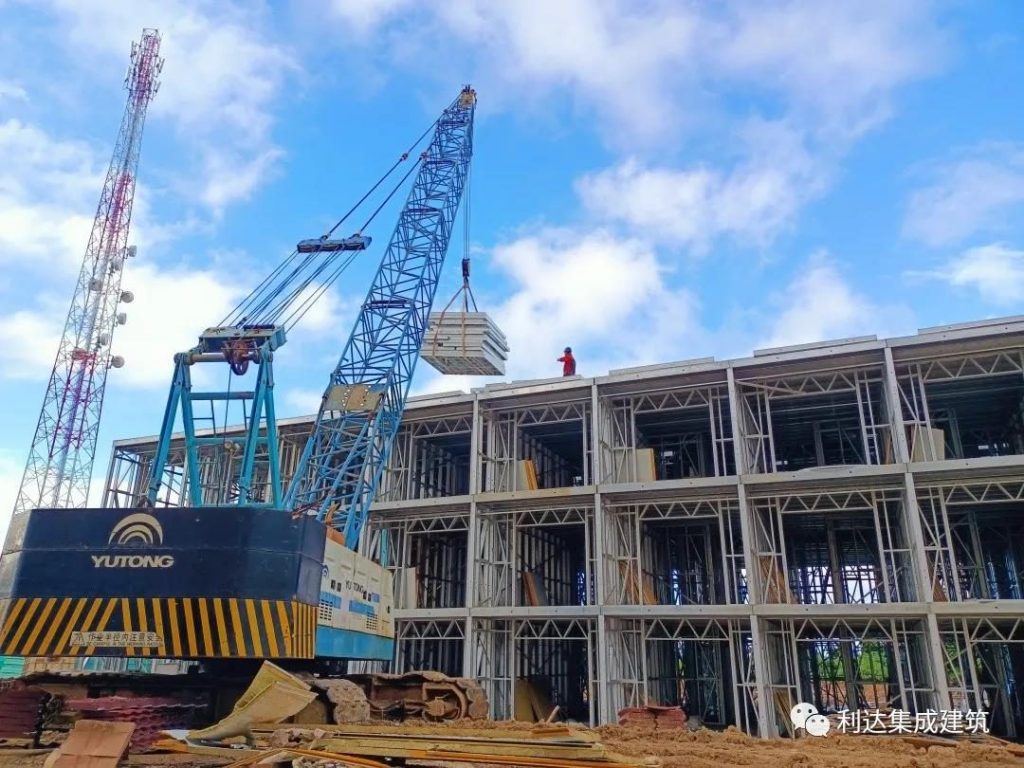
Lida Group has redefined steel structure installation by developing modular, low-impact erection methods that accelerate project delivery while ensuring safety. Traditional steel installation relies on heavy cranes and extensive scaffolding, which are costly, time-consuming, and prone to safety risks. Lida’s approach, by contrast, emphasizes prefabrication, modular assembly, and advanced lifting systems—reducing on-site construction time by 40-60%.
For high-rise steel structures, Lida employs a hydraulic jacking system that lifts pre-assembled steel modules vertically with precision. This system eliminates the need for large cranes, reduces on-site noise and disruption, and allows for 24-hour installation. During the construction of a 30-story office building in Qingdao, Lida’s hydraulic jacking system installed 4 steel modules per day, completing the entire steel frame in 8 weeks—half the time required for conventional crane-based methods. The system also features real-time load monitoring, preventing overloading and ensuring structural safety during erection.
For large-span structures such as stadiums and bridges, Lida uses a segmental pre-assembly and incremental launching method. Steel components are pre-assembled into large segments (up to 50 tons each) in a nearby factory, then transported to the site and launched into position using hydraulic pushers. This method minimizes on-site welding, reduces weather-related delays, and ensures precise alignment of segments. In the construction of a 180-meter-span steel bridge for Qingdao Jiaodong International Airport, Lida used this technique to complete the bridge’s steel structure in 60 days, with a final alignment error of less than 1 millimeter—setting a new standard for large-span bridge construction.
Lida’s installation process is further streamlined by its “one-stop” service model, which integrates design, fabrication, delivery, and erection. The group provides on-site technical supervision and training for local teams, reducing reliance on specialized personnel and lowering project costs. For overseas projects, Lida offers remote video guidance, enabling on-site teams to resolve installation challenges in real time—reducing secondary service visits by 75% and ensuring project timelines are met.
Comprehensive Quality Control & Compliance
Quality control is embedded in every phase of Lida’s steel structure projects, from raw material sourcing to final acceptance. The group sources high-grade steel (Q355, Q460, and Q690) from certified suppliers, conducting rigorous testing for tensile strength, yield strength, and chemical composition before fabrication. Every steel component undergoes non-destructive testing (NDT)—including ultrasonic testing, X-ray inspection, and magnetic particle testing—to detect hidden defects in welds and materials. Lida’s NDT team is certified by the American Society for Nondestructive Testing (ASNT), ensuring compliance with global standards.
Lida’s quality control system also adheres to strict international regulations, including China’s GB 50017-2017 (Code for Design of Steel Structures), Europe’s EN 1090, and the US AISC 360-10. For projects in explosive environments—such as oil and gas facilities—Lida’s steel structures are ATEX-certified, featuring spark-proof joints and anti-static coatings. The group’s commitment to compliance has earned it approval from global regulatory bodies, enabling seamless execution of cross-border projects.
Landmark Projects: Showcasing Lida’s Steel Structure Excellence
Lida Group’s steel structure solutions have been tested and proven in diverse, high-profile projects worldwide, spanning industrial, infrastructure, commercial, and humanitarian sectors. These projects demonstrate Lida’s ability to overcome complex challenges, deliver superior performance, and set new industry standards.
Weijiao High-End Manufacturing Park: Industrial Steel Structure Innovation
The Weijiao High-End Manufacturing Park in Changle County, Weifang, is a flagship industrial project that leverages Lida’s steel structure expertise to support high-tech manufacturing. Covering 30,000 square meters, the park consists of 18 steel structure factories, designed to accommodate heavy machinery, 5G基站 (5G base stations), and precision manufacturing equipment. The client, Weijiao Group, required a solution that would enable rapid construction, support heavy loads (up to 50 kN/㎡), and ensure long-term durability in an industrial environment.
Lida’s solution featured prefabricated steel frames with Q460 high-strength steel components, optimized via BIM to reduce steel consumption by 12%. The factories’ steel roofs employed a space frame structure with a span of 36 meters, eliminating the need for internal columns and maximizing usable floor space. Lida’s automated manufacturing process ensured components were fabricated to exact specifications, while the hydraulic jacking system accelerated on-site erection. The entire steel structure was completed in 90 days—40% faster than traditional construction methods.
To enhance durability, all steel components were hot-dip galvanized and coated with a nano-ceramic layer, protecting against corrosion from industrial emissions. The structure also incorporated energy-efficient insulation panels integrated with the steel frame, reducing heating and cooling costs by 35%. The project has since become a model for industrial steel structure construction, attracting high-tech enterprises and contributing to local economic development.
Qingdao Jiaodong International Airport Viaduct: Infrastructure Durability
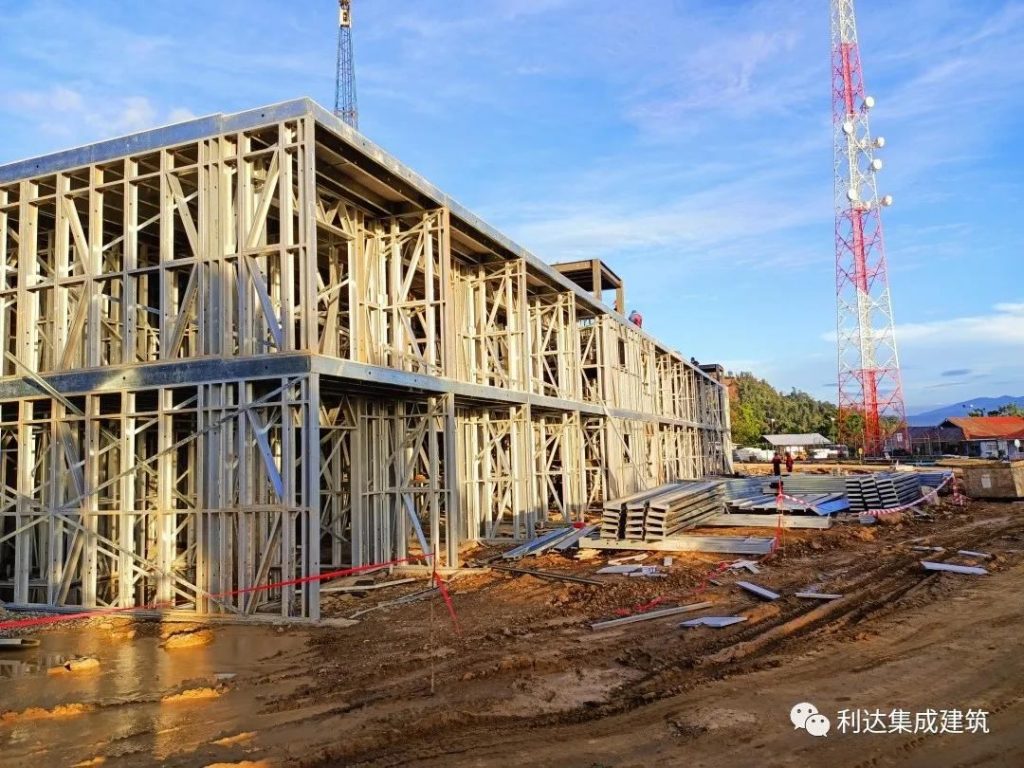
Qingdao Jiaodong International Airport, a key transportation hub in East China, required a steel structure viaduct to connect the airport terminal to surrounding highways. The viaduct spans 2.8 kilometers, with a main span of 180 meters, and needed to withstand heavy traffic loads (up to 120 tons per lane) and coastal corrosion. Lida was selected as the steel structure contractor, tasked with delivering a solution that balanced strength, durability, and aesthetic appeal.
Lida’s engineering team used BIM and digital twin technology to optimize the viaduct’s steel structure, simulating wind resistance (Grade 12) and seismic performance (Grade 8). The viaduct’s steel girders were fabricated using Q690 ultra-high-strength steel, reducing component weight by 20% while maintaining load-bearing capacity. Lida employed the segmental incremental launching method to install the girders, minimizing disruption to airport operations and ensuring precise alignment. Each segment was pre-assembled in a nearby factory, then launched into position using hydraulic pushers, with real-time monitoring via the digital twin model.
The steel components were treated with hot-dip galvanizing and a marine-grade anti-corrosion coating, ensuring durability in the coastal environment. The viaduct’s steel structure was completed in 60 days, ahead of schedule, and has since withstood multiple severe storms with no structural damage. It stands as a testament to Lida’s ability to deliver high-performance steel structures for critical infrastructure projects.
Saudi KINGS SAUD University Campus: Cross-Border Complexity
The KINGS SAUD University Campus expansion project in Riyadh, Saudi Arabia, required a range of steel structure buildings, including lecture halls, laboratories, and administrative offices. The project presented unique challenges: compliance with Saudi building codes, resistance to desert sandstorms and extreme temperatures (up to 45°C), and tight delivery timelines to support the university’s enrollment expansion.
Lida customized its steel structure solutions to meet local requirements, using hot-dip galvanized steel with a sand-proof coating to resist abrasion from sandstorms. The lecture halls featured large-span steel trusses (42 meters) to create column-free spaces, optimized via BIM to reduce material usage. Lida’s automated manufacturing process ensured components were fabricated to Saudi standards, while the group’s intelligent logistics team optimized shipping routes, reducing delivery time by 5 days and customs clearance delays by 30%.
On-site installation employed Lida’s hydraulic jacking system, enabling rapid erection despite extreme heat. The steel structures were integrated with thermal insulation panels to maintain internal temperatures between 22-26°C, reducing energy consumption by 40%. The project was completed in 12 months, 3 months ahead of schedule, and has since become a benchmark for steel structure construction in the Middle East.
UN Peacekeeping Camp in South Sudan: Humanitarian Resilience
In response to the humanitarian crisis in South Sudan, the United Nations required a durable, rapidly deployable steel structure camp to house 500 peacekeeping troops. The camp needed to withstand high temperatures (up to 40°C), heavy rainfall, and potential conflict-related damage, while being operational within 90 days.
Lida delivered a modular steel structure solution, featuring prefabricated steel frames, walls, and roofs. The steel components were lightweight (30% lighter than traditional steel structures) for easy transportation via air and land, while hot-dip galvanizing ensured corrosion resistance in the humid environment. The camp’s buildings were designed with bolted connections, enabling 2-3 workers to assemble a module in 4 hours—reducing on-site labor requirements by 60%.
The steel structure camp included barracks, medical facilities, and command centers, all with Grade A fire-resistant steel components. Lida’s remote technical team provided guidance to local installers, ensuring the camp was fully operational in 75 days—meeting the UN’s tight deadline. The camp has since withstood multiple heavy rains and remains a critical hub for peacekeeping operations, demonstrating Lida’s ability to deliver resilient steel structures for humanitarian applications.
Economic & Environmental Impact: Redefining Industry Value
Lida Group’s steel structure solutions deliver tangible economic and environmental benefits, aligning with global trends toward sustainable, cost-effective construction. By setting new standards for efficiency and sustainability, Lida is driving broader change in the steel structure construction industry.

Economic Benefits Across the Project Lifecycle
Lida’s steel structure solutions reduce costs at every stage of the project lifecycle. In the design phase, BIM optimization minimizes material usage, cutting steel costs by 10-15%. During fabrication, automated processes reduce labor costs by 30% and rework costs by 70%. On-site installation, accelerated by modular methods, shortens project timelines by 40-60%, enabling clients to generate revenue earlier. For example, the Weijiao Manufacturing Park project saved the client 25% on total construction costs compared to traditional concrete structures, with a payback period of just 3 years.
Lida’s steel structures also offer long-term economic value, with a service life of 50-60 years—twice that of traditional concrete structures. The modular design allows for easy expansion or relocation, reducing the need for new construction. A European client reported saving 30% on facility costs by relocating Lida’s steel structure factory to a new site, rather than building from scratch.
Environmental Sustainability: Toward a Low-Carbon Future
Steel is one of the most recyclable materials, with a recycling rate of 98%—far higher than concrete (5%) or wood (30%). Lida leverages this advantage, using 30% recycled steel in its components and recycling 100% of scrap generated during fabrication. This reduces carbon emissions associated with raw material extraction by 45%, aligning with global carbon reduction goals.
Lida’s energy-efficient steel structures further reduce environmental impact. The high thermal insulation of integrated sandwich panels cuts heating and cooling energy consumption by 30-40%, lowering operational carbon emissions. The group’s production base also uses renewable energy and water-saving technologies, reducing water consumption by 25% and energy consumption by 41% compared to industry averages. By 2030, Lida aims to increase the use of recycled steel to 50% and achieve carbon neutrality in its production facilities.
Challenges & Future Trends: Leading the Next Era of Steel Structure Construction
While Lida Group has established itself as a leader in steel structure construction, the industry faces ongoing challenges, including market perception, regulatory fragmentation, and technological competition. Some clients still view steel structures as costly or unsuitable for residential projects, despite their long-term value. Lida addresses this by showcasing its residential steel structure projects, such as lightweight steel villas, which offer faster construction, better seismic performance, and lower operational costs than traditional housing.
Regulatory fragmentation across countries remains a barrier, with varying building codes and safety standards creating complexity for cross-border projects. Lida mitigates this by maintaining a team of compliance experts who customize solutions to local requirements and collaborate with regulatory bodies to ensure adherence. The group’s international certifications facilitate market access, but ongoing adaptation to new standards is essential.
Looking ahead, Lida Group is focusing on three key trends to advance steel structure construction: intelligentization, lightweighting, and green innovation. The group is integrating AI and IoT into its steel structures, enabling remote monitoring of structural health, welding quality, and corrosion status—reducing maintenance costs by 20% and extending service life. Lightweighting efforts involve developing high-strength aluminum-steel composites, reducing component weight by 30% while maintaining strength, expanding applications to high-rise and long-span projects.
Green innovation will focus on developing low-carbon steel fabrication processes, such as hydrogen-based welding, and increasing the use of bio-based coatings for corrosion resistance. Lida is also partnering with universities and research institutions to develop self-healing steel structures, which can repair minor cracks automatically—setting a new standard for structural resilience.
The global steel structure construction market, valued at $850 billion in 2025 with a CAGR of 7.1%, is poised for significant growth, driven by demand for sustainable infrastructure and urbanization. Lida Group, with its proven track record, technological expertise, and global footprint, is well-positioned to lead this growth, further raising the bar for excellence in steel structure construction.
Conclusion
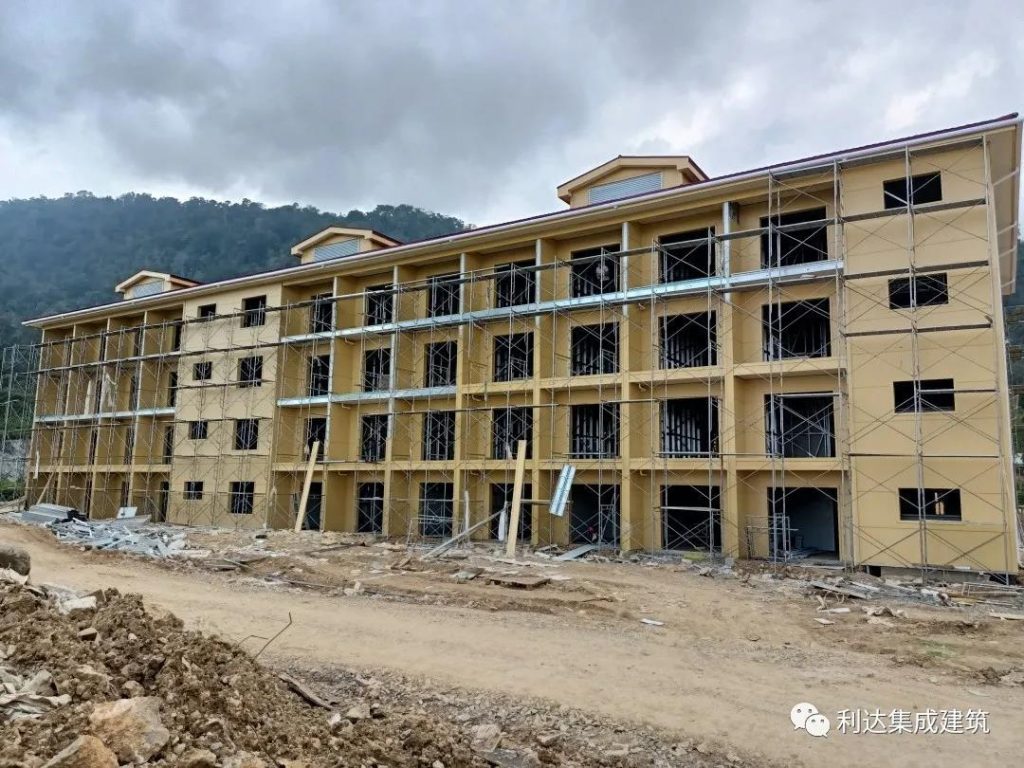
Lida Group has redefined the standards of steel structure construction by merging precision engineering, digital innovation, and sustainable practices into a holistic solution. From advanced BIM-driven design and automated fabrication to innovative installation technologies and rigorous quality control, Lida has eliminated the inefficiencies of traditional steel construction, delivering projects that are faster, safer, more durable, and more sustainable.
The group’s landmark projects—from industrial parks and airports to cross-border universities and humanitarian camps—demonstrate the versatility and performance of its steel structure solutions, proving that Lida’s approach is not just innovative but practical and scalable. By delivering tangible economic and environmental benefits, Lida has positioned steel structures as a cornerstone of modern construction, challenging outdated perceptions and driving industry-wide change.
As the global construction industry continues to prioritize sustainability, efficiency, and resilience, Lida Group remains at the forefront of innovation, advancing steel structure technology to meet evolving client needs. By combining technical excellence with a customer-centric approach, Lida is not just building structures— it is shaping a more sustainable, resilient, and efficient future for the global built environment. For clients seeking to elevate their projects to new standards of excellence, Lida Group’s steel structure solutions offer a proven, future-ready path forward.
Related news
-
Streamline Your Build with Lida Group's Mobile Construction Methods
2026-01-09 14:06:27
-
Engineered for Strength: Our Steel Structure Buildings
2025-12-12 16:43:13
-
Flexible and Durable Prefab House for Modern Needs
2026-01-07 17:51:02
contact us
- Tel: +86-532-88966982
- Whatsapp: +86-13793209022
- E-mail: sales@lidajituan.com
