



**Introduction**
For decades, construction site labor accommodation has existed in a paradoxical state. It is simultaneously one of the most critical elements of project success and one of the most neglected. Workers who spend months away from their families, enduring harsh conditions and demanding schedules, have historically been housed in facilities that prioritize minimal cost over human dignity. Crowded dormitories, inadequate sanitation, poor thermal insulation, and limited amenities have been accepted as unavoidable compromises of remote project execution.
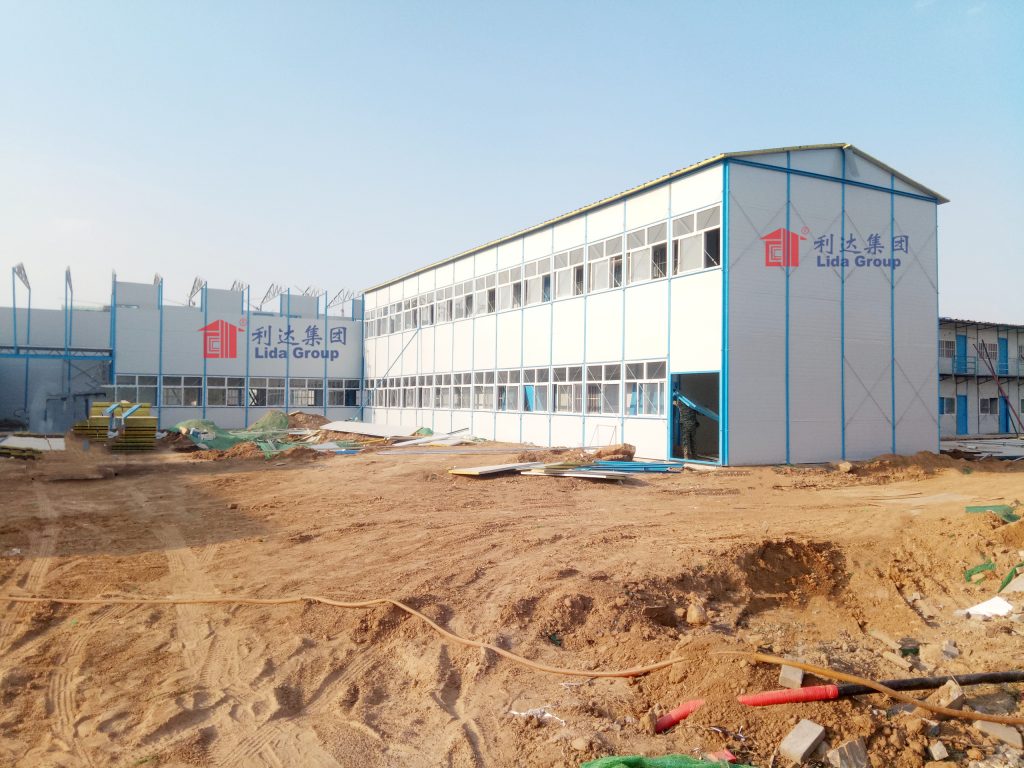
Lida Group, a China-based integrated building engineering enterprise with over three decades of experience, has fundamentally challenged this paradigm. Through a combination of advanced engineering, human-centered design, and comprehensive service capabilities, the company has established a new standard for construction site labor accommodation—one that proves comfortable, dignified workforce housing is not only possible but achievable at scale, on demanding timelines, and across the world’s most challenging environments.
Since its founding in 1993, Lida Group has grown into one of the world’s leading providers of prefabricated and modular building solutions, with a presence spanning 152 countries and over 5,000 completed projects . The company’s portfolio includes partnerships with global construction leaders including China State Construction, Saudi Aramco, Salini Italy, and designation as an integrated camp supplier for the United Nations . This extensive experience has provided Lida Group with unique insights into the specific challenges of construction site workforce housing—insights that have been systematically incorporated into a new standard of accommodation that prioritizes worker welfare, operational efficiency, and environmental responsibility.
This article explores how Lida Group has established this new standard for construction site labor accommodation. We will examine the engineering innovations that ensure structural integrity and thermal comfort, the design features that promote worker well-being, the comprehensive amenities that transform camps into communities, the rapid deployment capabilities that meet demanding project schedules, the sustainability features that align with modern environmental standards, and the real-world projects that validate this transformative approach.
**Chapter 1: The Legacy of Inadequate Workforce Housing**
Understanding the significance of Lida Group’s new standard requires appreciation of the historical inadequacies of construction site accommodation.
**1.1 The Cost of Compromise**
For generations, construction site workforce housing has been treated as a necessary expense to be minimized. The consequences of this approach have been well documented: high worker turnover, increased safety incidents, reduced productivity, and difficulty recruiting skilled labor. Studies have consistently demonstrated that poor accommodation conditions correlate with higher absenteeism, lower morale, and increased conflict among workers.
In the mining and construction sectors, where skilled labor is increasingly scarce, companies that provide quality accommodation gain significant competitive advantage. Workers have choices about where to work, and comfortable living conditions are consistently ranked among the top factors influencing employment decisions.
**1.2 The Physical Reality**
Traditional construction site camps have often featured:
– Overcrowded dormitories with 6-8 workers per room
– Shared sanitation facilities with inadequate capacity
– Poorly insulated structures vulnerable to extreme temperatures
– Limited or no recreational facilities
– Inadequate ventilation leading to poor indoor air quality
– Substandard food preparation and dining facilities
These conditions do not merely affect comfort; they impact health, safety, and the ability to rest and recover between demanding work shifts.
**1.3 The Paradigm Shift**
Recognition of the strategic importance of workforce housing has grown in recent years. Project owners and contractors increasingly understand that investment in quality accommodation yields measurable returns through reduced turnover, improved safety performance, and enhanced productivity. This recognition has created demand for a new standard—one that Lida Group has positioned itself to meet.
**Chapter 2: Engineering the New Standard**
The foundation of Lida Group’s new standard is advanced engineering that ensures structural integrity, thermal comfort, and durability across diverse environments.
**2.1 High-Strength Steel Framework**
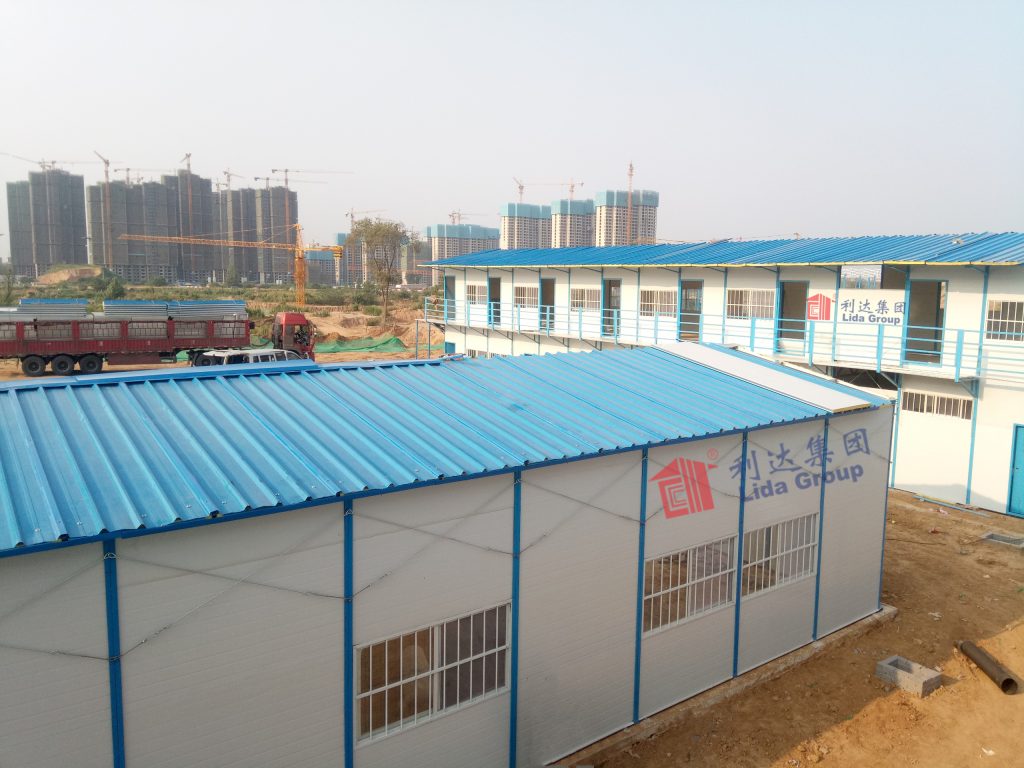
Every accommodation unit is constructed with high-strength galvanized steel frames using Q235B grade steel—a material renowned for its tensile strength and durability . The structural design parameters meet rigorous international standards:
– **Floor live load:** 2.0 KN/m², sufficient for standard residential occupancy
– **Roof live load:** 0.5 KN/m², accommodating snow accumulation and maintenance access
– **Wind load resistance:** 0.6 KN/m², equivalent to 120-150 mph wind speeds, suitable for cyclone-prone regions
– **Earthquake resistance:** Grade 8 on the seismic intensity scale
– **Stacking capacity:** Up to three stories
The steel frames are treated with a dual-layer anti-corrosion coating system—epoxy primer with 20-40 μm thickness and polyurethane finishing coat with 40-50 μm thickness—achieving total film thickness exceeding 80 μm . Galvanized components feature a zinc layer exceeding 10 μm, providing sacrificial protection that prevents rust formation even when coatings are scratched .
**2.2 Advanced Sandwich Panel Insulation**
Thermal comfort is achieved through sophisticated sandwich panel construction:
– **Wall panels:** 75mm fiberglass sandwich insulation with density ≥50kg/m³, achieving Grade A fire-proof classification (non-flammable). The exterior features corrugated 0.4mm aluminum-zinc color steel sheet; the interior finish is flat 0.4mm aluminum-zinc color steel .
– **Roof systems:** 100mm fiberglass insulation with aluminum foil, providing enhanced thermal protection where heat gain and loss are greatest .
– **Thermal performance:** Thermal conductivity coefficient of K=0.442 W/(m·K) delivers superior insulation. Field testing has demonstrated that with outdoor temperatures at 0°C, indoor temperatures can be maintained above 17°C without excessive heating; with outdoor temperatures at 30°C, indoor temperatures remain around 21°C .
For extreme environments, Lida offers enhanced solutions. In the Eastern Europe modular camp housing project, where temperatures range from -45°C to 50°C, sandwich panels with thicknesses from 75mm to 150mm (EPS and rock wool) ensured thermal stability .
**2.3 Acoustic Insulation**
Construction sites are inherently noisy environments. Lida’s units incorporate acoustic insulation that significantly reduces noise transmission. The combination of steel mass, fiberglass insulation, and air gaps creates a sound barrier that protects occupants from external noise, enabling restful sleep even when construction activities continue nearby .
**2.4 Double-Glazed Windows**
Each unit features double-glazed PVC sliding windows with 5mm glass panes, mosquito screens, and security bars . The double-glazing provides thermal insulation while allowing natural light to enter, and contributes to acoustic insulation, further enhancing the quiet interior environment.
**Chapter 3: Human-Centered Design—Comfort and Dignity**
The new standard established by Lida Group places worker well-being at the center of the design process.
**3.1 Private Living Spaces**
Lida’s standard 20-foot unit (approximately 16 square meters) provides a complete private living space that includes:
– Comfortable sleeping arrangements with quality mattresses
– Adequate storage for personal belongings
– Climate control systems for year-round comfort
– Windows for natural light and ventilation
– Private bathroom with shower, toilet, and sink
For projects requiring higher density, two-person units with bunk beds are available. For supervisory staff, larger units or expandable container homes with additional living space can be specified .
**3.2 Superior Sanitation**
Private bathrooms in each unit ensure hygiene and privacy. For communal areas, dedicated sanitation modules provide additional capacity . In the Saudi Ministry of Interior Medical Building project, where Lida provided accommodation for 6,048 workers, single buildings measuring 40.89 meters by 10.7 meters were equipped with independent bathrooms and ventilation systems, ensuring comfort in high-temperature desert environments .
**3.3 Quality Dining Facilities**
Proper nutrition is essential for worker health and performance. Lida’s camp solutions include commercial-grade dining modules equipped with industrial kitchens, walk-in refrigeration, and dining areas designed for efficient service. For the Harbin Engineering University Qingdao project, Lida provided a complete living complex including dining facilities capable of serving hundreds of workers .
**3.4 Recreation and Well-Being**
A comfortable camp provides opportunities for relaxation and social connection. Lida’s solutions incorporate:
– **Recreation rooms:** Spaces equipped with televisions, gaming consoles, and comfortable seating
– **Fitness facilities:** Gym equipment for physical exercise
– **Outdoor areas:** Gathering spaces where weather permits
– **Laundry services:** On-site facilities for clothing and linen care
These amenities support mental health and reduce the isolation that can affect workers in remote locations.
**3.5 Medical Facilities**
Access to healthcare is essential for remote construction sites. Lida provides fully equipped medical modules with examination rooms, treatment areas, and telemedicine capabilities . In the Eastern Europe project, integrated medical facilities handled on-site health issues, reducing the need for transportation to distant hospitals.
**Chapter 4: Rapid Deployment—Meeting Project Schedules**
The new standard includes the ability to deploy comfortable accommodation rapidly, ensuring workers have quality housing from the earliest stages of a project.
**4.1 Factory Prefabrication**
All components are manufactured in Lida’s state-of-the-art factory facilities, where:
– CNC cutting achieves tolerances of 0.5mm or better
– Automated coating applies uniform corrosion protection
– Quality control inspections occur at every production stage
– Climate-controlled environment eliminates weather delays
**4.2 Accelerated Assembly**
On-site assembly is streamlined for speed:
– **Screw pile foundations** install through rock without concrete curing, supporting structures in 90 minutes rather than weeks
– **Laser-guided alignment** positions units within ±3mm accuracy
– **Color-coded utility connections** slash commissioning time
– **Bolt-together connections** eliminate welding certification delays, allowing local laborers to assemble complex facilities with basic tools
For the Eastern Europe project, six workers assembled each unit in 8 hours, and bolt-connected steel frames reduced on-site welding while cutting labor costs by 40% . A 200-bed camp can be deployed in 19 days—including medical clinics and recreation facilities—where traditional methods would require 11 months .
**4.3 Scalability**
The modular design allows camps to expand as workforce needs grow. Additional units can be added without disrupting existing operations, and camps can be reconfigured as project phases evolve .
**Chapter 5: Real-World Validation—Projects That Set the Standard**
The new standard established by Lida Group is validated through successful deployment across diverse global projects.
**5.1 Eastern Europe Modular Camp Housing Project**
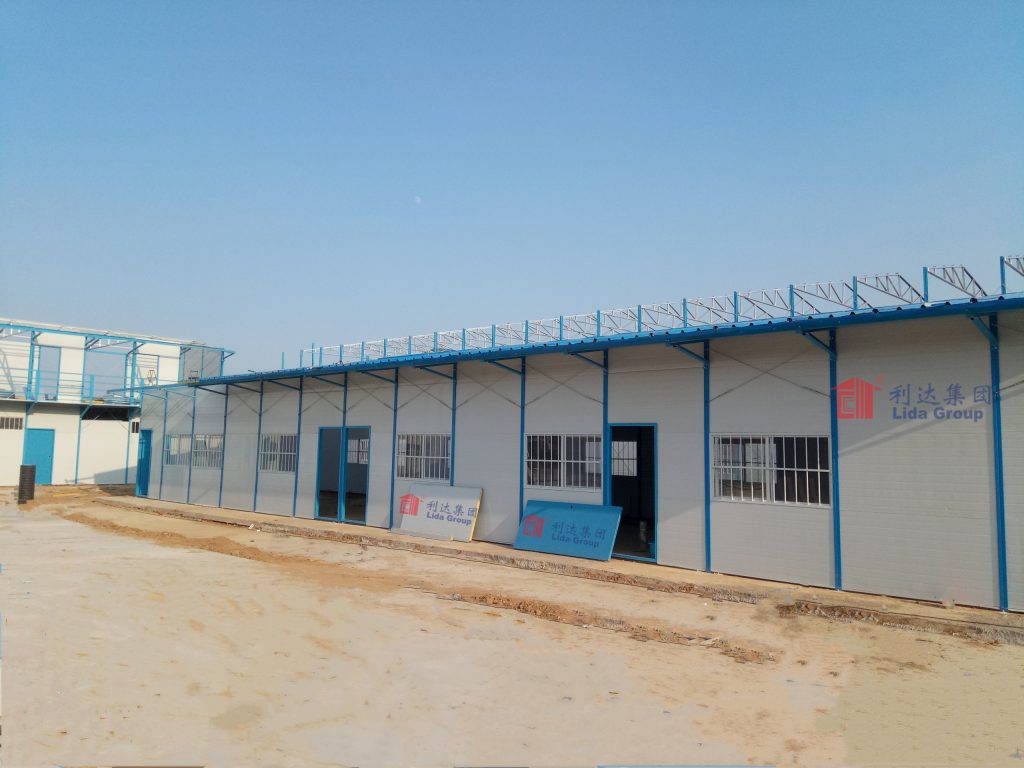
In a remote mountainous region of Eastern Europe, Lida Group completed a modular steel camp housing project that set new benchmarks for comfort in extreme conditions . The project faced significant challenges: winter temperatures dropping to -20°C, snowstorms, tight timelines, and strict environmental regulations.
The solution utilized steel frame structures with 8-grade earthquake resistance and wind resistance of 1.5 kN/m². Container units used EPS and rock wool sandwich panels with thicknesses from 75-150mm, supporting thermal performance in temperatures ranging from -45°C to 50°C . Prefabricated modules were manufactured in 25 days and shipped in 40-foot containers.
Client feedback highlighted the exceptional thermal performance: “The modular design allowed us to scale the camp seasonally, and the thermal performance exceeded expectations” . The project achieved 30% faster completion compared to traditional construction methods.
**5.2 Saudi Arabia Ministry of Interior Medical Building Project**
In the harsh desert environment of Saudi Arabia, where summer temperatures regularly exceed 45°C, Lida Group provided accommodation for 6,048 workers using double-layer prefabricated buildings . Each building measured 40.89 meters by 10.7 meters and was equipped with independent bathrooms and ventilation systems.
The modules featured reflective coatings that reduced indoor temperatures by 8-10°C compared to traditional structures. RO reverse osmosis water purification systems ensured reliable water supply even in the desert environment. The client rated the project as having “delivery speed exceeding the industry average by 30%” .
**5.3 Harbin Engineering University Qingdao Project—China**
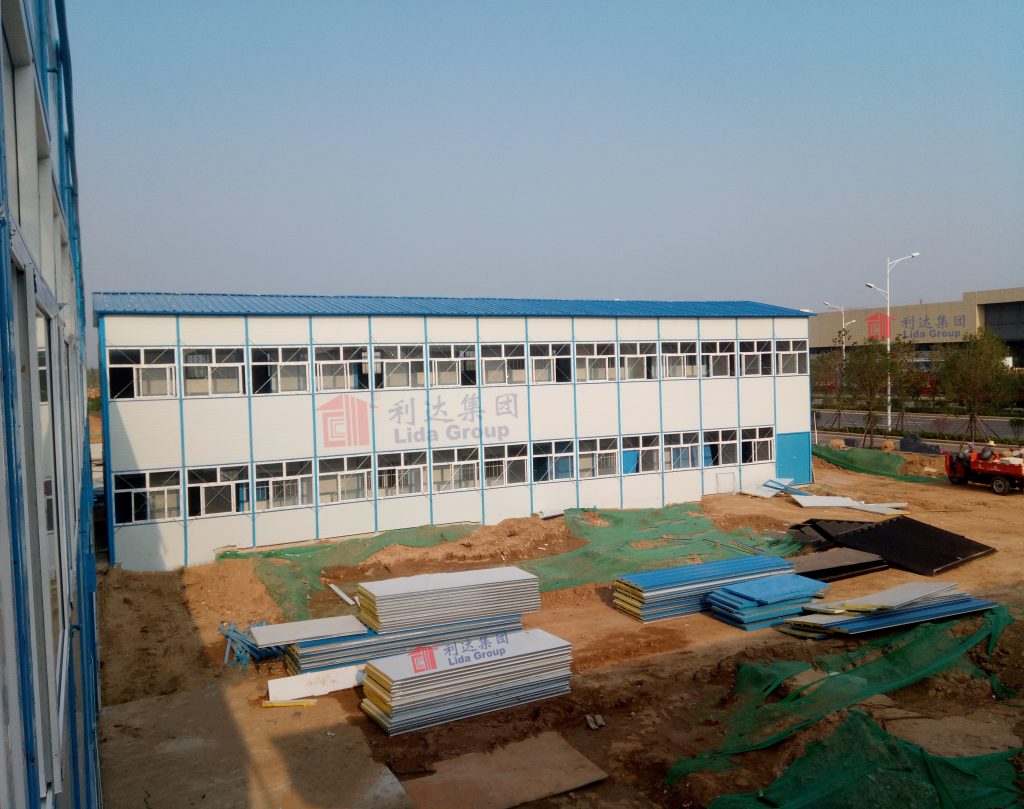
In a large-scale university construction project, Lida Group provided temporary workforce accommodation for China State Construction . The project utilized 106 container units and 8,000 square meters of prefabricated buildings to create a complete living complex including office areas, dormitory buildings, and dining facilities.
The entire 15,000-square-meter camp was erected in just 7 days, supporting efficient execution of the 299,800-square-meter main construction project. The indoor environment met 100% of required standards, and the satisfaction rate among occupants reached 92% .
**5.4 Zambian Copperbelt Mining Camp**
In Zambia’s Copperbelt mining region, Lida Group’s container apartments transformed worker housing conditions . The installation delivered measurable improvements: worker turnover decreased by 41% and illness-related downtime dropped by 63%. Positive-pressure ventilation systems excluded copper dust particulates that cause respiratory issues, while HEPA filtration contributed to a 37% reduction in respiratory incidents.
**5.5 West Africa Market Complex**
In equatorial West Africa, Lida Group completed a 30,000-square-meter market complex that included workforce accommodation . The region experiences persistent rainfall, high humidity, and temperatures consistently above 30°C.
The project incorporated sustainable features including solar-integrated roofing producing up to 1.2 MW daily, rainwater harvesting, and greywater recycling. The project was completed three months ahead of schedule, and the container structures have operated reliably with no water intrusion or mold issues.
**Chapter 6: Sustainability—Building Responsibly**
The new standard for construction site labor accommodation includes comprehensive sustainability features that reduce environmental impact.
**6.1 Energy Efficiency**
The high insulation values of Lida’s units reduce heating and cooling energy consumption by 30-50% compared to conventional construction . For remote sites reliant on diesel generators, these savings represent significant fuel reduction and associated emissions.
**6.2 Material Efficiency**
Factory prefabrication achieves material utilization rates exceeding 95%, compared to 70-80% for traditional site-built construction. Scrap steel, insulation offcuts, and packaging materials are recycled at the factory rather than sent to landfills.
**6.3 Water Conservation**
Rainwater harvesting systems incorporated into structural designs reduce water trucking by 65% . Greywater recycling systems cut freshwater demand by 55%, ensuring reliable water supply even in remote locations.
**6.4 Reusability and Circular Economy**
Units designed for disassembly and relocation can be reused across multiple project sites. When a decommissioned camp complex was disassembled and redeployed at a new location, 85% material reuse was achieved .
**Chapter 7: Safety as a Foundation of Comfort**
The new standard recognizes that true comfort includes the peace of mind that comes from knowing one is safe.
**7.1 Fire Safety**
All Lida units utilize non-combustible materials. The fiberglass insulation achieves Grade A fire-proof classification (non-flammable) . Electrical systems are protected with explosion-proof boxes and CE-certified components.
**7.2 Structural Safety**
The steel frames are engineered to withstand earthquakes up to magnitude 8 and winds up to 150 mph, providing security even in areas prone to natural disasters.
**7.3 Health Protection**
For dust-prone environments such as mining and construction sites, positive-pressure ventilation systems maintain slight positive air pressure inside units, preventing dust infiltration. HEPA filtration removes particulates, protecting respiratory health .
**Chapter 8: Comprehensive Service—The Lida Difference**
The new standard is supported by Lida Group’s comprehensive turnkey service capabilities.
**8.1 End-to-End Support**
Lida provides complete project management from initial consultation through final handover:
– **Needs assessment:** Understanding client requirements and site conditions
– **Custom design:** Tailored solutions for specific applications
– **Factory production:** Quality-controlled manufacturing
– **Global transportation:** Logistics management to remote locations
– **On-site installation:** Professional assembly with supervisor guidance
– **After-sales support:** Maintenance and technical assistance
**8.2 Installation Supervision**
Lida has been providing on-site installation supervision since 2004, with experienced supervisors traveling to project sites to guide local crews through the assembly process . This ensures that camps are assembled correctly, guaranteeing comfort and safety features function as designed.
**8.3 Global Presence**
With overseas branch offices in Saudi Arabia, Qatar, Indonesia, Chile, and other strategic locations, Lida provides responsive local support to clients worldwide .
**Chapter 9: The Future of Construction Site Accommodation**
As Lida Group continues to innovate, the standard for construction site labor accommodation will continue to rise.
**9.1 Smart Camp Technology**
Future camps will incorporate IoT sensors and building management systems that monitor air quality, detect maintenance issues before failures occur, and optimize energy consumption . Smart access control and real-time occupancy tracking will further enhance security and efficiency.
**9.2 Enhanced Comfort Features**
Innovations such as phase-change materials that stabilize interior temperatures without energy consumption, circadian lighting systems that regulate sleep cycles, and advanced acoustic treatments will further enhance the living experience.
**9.3 Hydrogen Compatibility**
As energy transitions advance, Lida is developing hydrogen-compatible camp designs incorporating leak detection networks and explosion-ventilated mechanical rooms, ensuring camps remain safe and comfortable regardless of energy source.
**Conclusion**
Lida Group has established a new standard for construction site labor accommodation—one that proves comfortable, dignified workforce housing is not only possible but achievable at scale across the world’s most challenging environments. Through advanced engineering, human-centered design, rapid deployment capabilities, and comprehensive service, the company has demonstrated that investment in workforce housing yields measurable returns in worker satisfaction, retention, safety, and productivity.
The technical foundations of this new standard are robust. High-strength galvanized steel frames provide structural integrity rated for magnitude 8 earthquakes and 150 mph winds. Advanced sandwich panel insulation with 75mm fiberglass walls and 100mm roof insulation achieves thermal performance that maintains interior comfort across climate conditions ranging from -45°C to 50°C. Double-glazed windows, acoustic insulation, and private bathroom facilities in each unit ensure that workers have the privacy and amenities they need to rest and recharge.
Human-centered design transforms temporary housing into genuine living environments. Private living spaces with quality bedding, adequate storage, and climate control provide personal sanctuary. Commercial-grade dining facilities, recreation rooms, fitness areas, and medical clinics create communities rather than mere shelters. These features support the mental health and social connections essential for workers spending extended periods away from home.
Real-world validation across continents confirms the effectiveness of this approach. In Eastern Europe, camps delivered 30% faster completion while maintaining interior warmth during -20°C winters. In Saudi Arabia, reflective coatings reduced indoor temperatures by 8-10°C in desert heat exceeding 45°C. In Zambia, improved housing conditions reduced worker turnover by 41% and respiratory incidents by 37%. In China, a 15,000-square-meter camp erected in 7 days achieved 92% occupant satisfaction.
Sustainability is woven into the new standard. Energy efficiency reduces operational costs and emissions. Material efficiency minimizes waste. Water conservation ensures reliable supply in remote locations. Reusability and recyclability align with circular economy principles. These features make Lida’s approach not only a practical choice but an environmentally responsible one.
For construction project managers, site supervisors, and organizational leaders, the message is clear: the standard for workforce accommodation has been raised. Lida Group’s modular container solutions deliver the durability to withstand harsh site conditions, the thermal performance to maintain comfort in extreme climates, the amenities to support worker well-being, and the rapid deployment capabilities to meet demanding project schedules. They transform workforce accommodation from a project constraint into a strategic asset—enabling construction firms to attract and retain skilled labor, maintain productivity, and complete projects on schedule while ensuring that the workers who build our world have a safe, comfortable, dignified place to call home. This is the new standard. Lida Group has set it, and the industry is taking notice.
Related news
-
Scalable Prefab Easy Assembly Building Meets Demanding Project Schedules
2026-03-26 17:01:25
-
Lida Group Delivers Comfortable Construction Site Labor Accommodation
2026-03-26 16:39:14
-
Sustainable Eco-Friendly Sandwich Panel House for Remote Construction Sites
2026-03-26 16:54:06
contact us
- Tel: +86-532-88966982
- Whatsapp: +86-13793209022
- E-mail: sales@lidajituan.com
