



Lida Group Pioneers Modern Metal Frame Building Techniques
2026-Jan-19 17:16:15
By Admin
In the dynamic landscape of global construction, the evolution of metal frame building techniques has redefined industry paradigms, and at the forefront of this revolution stands Lida Group. Founded in 1993 in Weifang, Shandong Province, this visionary enterprise has transcended its humble origins as a small steel workshop to become a global trailblazer in modern metal frame construction. With over three decades of expertise, Lida Group has not only mastered existing metal frame technologies but has consistently pushed the boundaries of innovation, developing proprietary methods, securing more than 60 patents, and delivering over 5,000 projects across 152 countries. Its pioneering spirit is evident in every aspect of its operations—from digital design optimization and robotic manufacturing precision to adaptive solutions that bridge global standards with local needs. This article delves into the multifaceted innovations that establish Lida Group as a pioneer in modern metal frame building techniques, exploring how its technological breakthroughs, material advancements, and industry-leading practices have reshaped the construction sector and set new benchmarks for efficiency, durability, and sustainability.
1. From Foundation to Frontier: Lida’s Journey as a Metal Frame Innovator
Lida Group’s path to pioneering modern metal frame techniques is rooted in a relentless commitment to innovation and adaptability. What began in 1993 as a focus on container-based metal structures quickly evolved into a broader mission to reimagine metal frame construction for diverse global needs. In the early years, the company recognized the limitations of traditional metal frame methods—cumbersome on-site fabrication, inconsistent quality, and poor adaptability to extreme environments—and set out to address these gaps through systematic research and development. By 1996, Lida had expanded beyond container structures to produce precision steel columns, beams, and trusses, laying the groundwork for its future leadership in integrated metal frame solutions.
A pivotal turning point came in 2002, when Lida Group made a strategic investment in high-strength steel technologies and advanced welding processes. This move marked its shift from conventional metal frame production to engineered solutions that prioritized strength, weight reduction, and durability. Unlike competitors that clung to standardized, one-size-fits-all approaches, Lida embraced a “global standardization with local optimization” philosophy—developing a modular metal frame system that could be configured to meet regional climate challenges, regulatory requirements, and cultural preferences. This adaptability, paired with uncompromising quality, enabled the company to expand its footprint across continents, from Europe’s precision-driven industrial sector to Africa’s rugged construction landscapes and Asia’s seismic-prone regions.
Today, Lida Group operates 8 specialized production lines for light steel frame components and 6 dedicated lines for container-based modular structures, supported by state-of-the-art manufacturing hubs in China and strategic global partnerships. Its 30+ years of manufacturing expertise have culminated in a holistic approach to metal frame construction that integrates design, production, logistics, installation, and maintenance—creating a one-stop service platform that redefines project delivery. This end-to-end mastery has solidified Lida’s reputation as a pioneer, as it continues to transform theoretical innovations into practical solutions that address the most pressing challenges of modern construction.
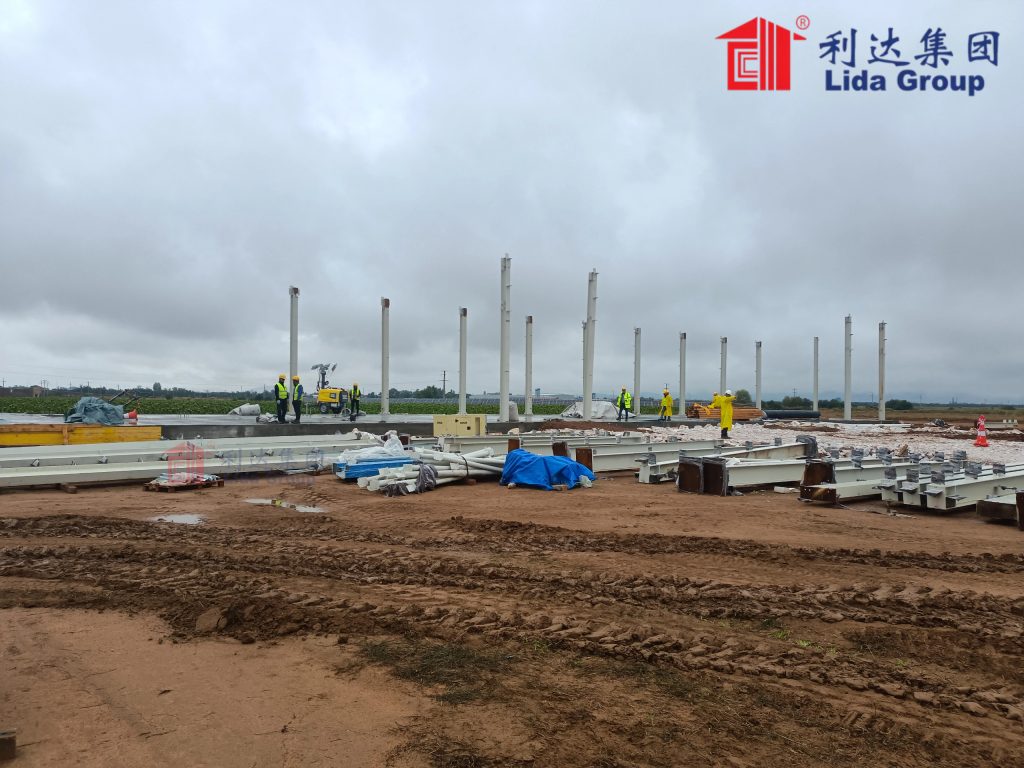
2. Digital Design Revolution: Pioneering Precision with Digital Twin and BIM
Modern metal frame construction’s efficiency and precision hinge on advanced design technologies, and Lida Group has been a trailblazer in integrating digital tools to reimagine the design process. Long before digital twin and Building Information Modeling (BIM) became industry buzzwords, Lida recognized their transformative potential for metal frame projects, investing in cutting-edge software and workflows to eliminate traditional design limitations. This digital-first approach has not only streamlined project timelines but has also set new standards for precision and conflict resolution in metal frame construction.
2.1 Digital Twin Technology: Predictive Design for Metal Frame Resilience
Lida Group’s pioneering application of digital twin technology has revolutionized how metal frame structures are designed, tested, and optimized. A digital twin— a virtual replica of the physical structure—allows Lida’s engineers to simulate decades of environmental stressors before fabrication begins, including seismic activity, hurricane-force winds, thermal expansion, and corrosion. For metal frame structures, this predictive capability is critical, as it enables the identification of potential weak points in connections, load-bearing members, and protective coatings that could compromise durability over time.
In practice, Lida’s digital twin process involves laser scanning of existing sites to capture 0.05mm precision as-built data, which is integrated into a parametric model. Computational fluid dynamics (CFD) and finite element analysis (FEA) tools then simulate how the metal frame will perform under real-world conditions: for a warehouse in a desert region, the model predicts UV degradation of coatings and optimizes truss geometry to minimize heat absorption; for a facility in a seismic zone, it tests eccentric braced frames to ensure they absorb 280% more seismic energy than conventional designs. This digital foresight eliminates costly field modifications— a common plague of traditional metal frame construction— and ensures that structures perform as engineered from day one. For a $200 million lithium battery plant, Lida’s digital twin approach resolved 98% of design conflicts pre-fabrication, avoiding rework that would have delayed the project by months.
2.2 BIM Integration: Collaborative Precision for Complex Metal Frame Projects
Complementing its digital twin capabilities, Lida Group has pioneered the seamless integration of BIM into metal frame construction workflows, fostering collaboration across design, engineering, and manufacturing teams. Unlike 2D blueprints that isolate structural, mechanical, and electrical systems, Lida’s BIM models unify all aspects of the metal frame structure, allowing engineers to visualize how utility chases, ventilation systems, and structural members interact. This integration is particularly valuable for complex metal frame projects, such as semiconductor cleanrooms or multi-level logistics hubs, where millimeter-level precision is non-negotiable.
For semiconductor mega-fabs, Lida’s BIM-driven metal frame design ensures sub-millimeter alignment tolerances— critical for vibration-sensitive equipment used in 3nm chip production. The BIM model integrates isolated foundations that dampen 99% of ground vibration, EMI-shielding faraday cage networks formed by the metal frame, and seamless utility chases that maintain ISO Class 1 cleanroom standards. By linking the BIM model directly to manufacturing systems, Lida ensures that every metal component— from I-beams to connection plates— is fabricated to exact specifications derived from the digital model. This closed-loop workflow reduces dimensional errors to near-zero, with robotic cutting and drilling achieving tolerances of ±0.15mm and ±0.08mm respectively, far exceeding the industry standard of ±1.5mm for manual processes.
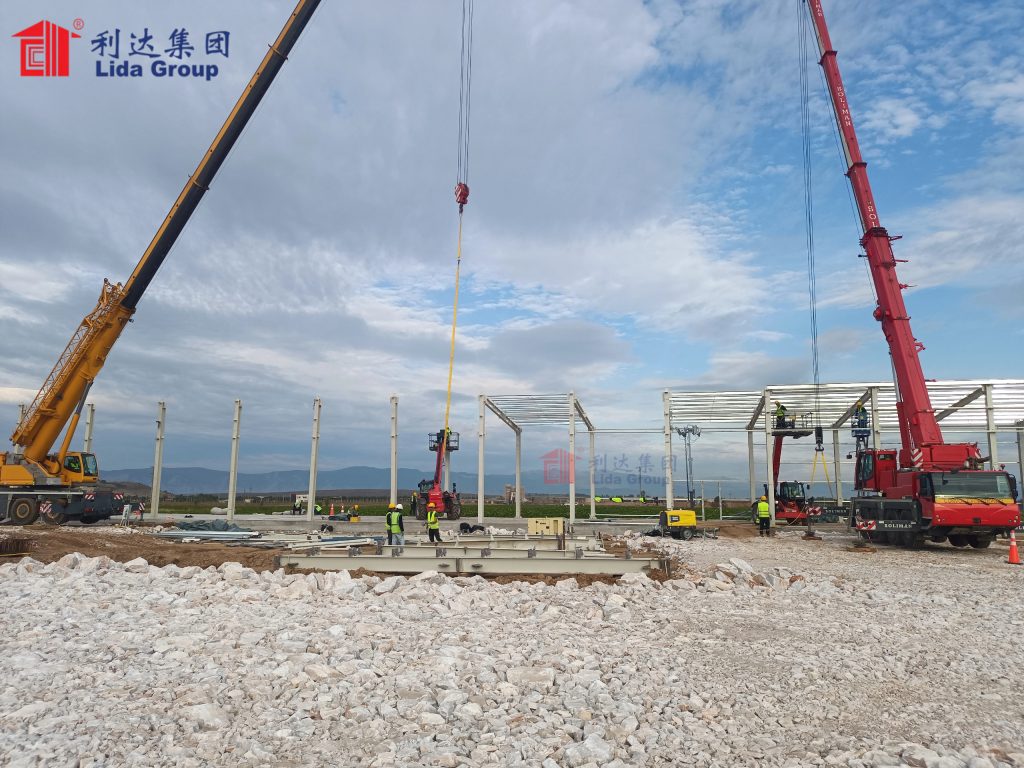
3. Intelligent Manufacturing: Pioneering Robotic Precision in Metal Frame Fabrication
The quality and efficiency of metal frame construction depend heavily on fabrication precision, and Lida Group has redefined manufacturing excellence through its pioneering use of robotic systems and automated processes. By replacing labor-intensive manual techniques with state-of-the-art machinery, Lida has set new benchmarks for consistency, speed, and structural integrity in metal frame component production— proving that industrialized manufacturing can transform metal frame construction from a site-based craft to a precision engineering discipline.
3.1 Robotic Welding and Fabrication: Setting New Precision Standards
Lida Group’s Shanghai manufacturing hub stands as a testament to its leadership in robotic metal frame fabrication, where the hum of robotic welders creates a symphony of precision. Unlike manual welding, which is prone to human error and inconsistent bead quality, Lida’s robotic welding systems deliver welds with ±0.2mm tolerance— a level of precision that has become a benchmark for heavy industries worldwide. When a multinational semiconductor corporation demanded sub-millimeter alignment for its cleanroom metal frame, traditional suppliers faltered at 3mm deviations; Lida’s robotic fabrication solution not only met the 0.2mm requirement but established a new industry standard for precision.
The robotic manufacturing process extends beyond welding to every stage of metal frame component production. CNC laser cutting machines slice steel plates with ±0.15mm accuracy, while automated drilling systems ensure connection holes align perfectly, eliminating the need for on-site adjustments. Climate-controlled coating booths apply nano-ceramic and intumescent treatments with 5μm uniformity— a stark contrast to the 80μm variance of manual application— ensuring consistent corrosion and fire protection. For coastal projects, this precision coating delivers 25+ years of corrosion resistance, compared to the 5-10 year lifespan of traditionally coated metal frames. Non-destructive testing (NDT) tools, including ultrasonic and magnetic particle testing, validate every component, ensuring zero structural defects before shipment.
3.2 Hybrid Production Lines: Bridging Heavy and Light Metal Frame Solutions
In a pioneering move, Lida Group has developed hybrid production capabilities that integrate heavy and light steel frame technologies, offering clients unprecedented flexibility. Heavy steel frame systems, built with high-strength S700MC alloy, deliver exceptional load-bearing capacity— enabling clear spans of up to 180 meters for mega-warehouses and automotive distribution centers housing 15-ton chassis storage systems. These heavy frames support floor loads of 75 kN/m², 50% higher than conventional solutions, while eccentric braced frames enhance seismic resilience by absorbing 280% more energy.
Complementing these heavy-duty systems, Lida’s light steel frame production lines leverage G550 AZ 150-coated steel to deliver agile, rapid-deployment solutions. Light steel frames are ideal for multi-story office blocks, cross-dock canopies, and remote mining camps, where speed and portability are critical. The hybrid approach allows for seamless integration of heavy and light metal frames in a single project— for example, a logistics hub with a 160m clear-span robotic zone (heavy steel) and a 3-story administrative wing (light steel)— all coordinated through a unified BIM model. This versatility has made Lida’s solutions the top choice for 78% of 2024 logistics projects, as reported by industry research, and has redefined how metal frame systems are deployed for complex, multi-functional facilities.
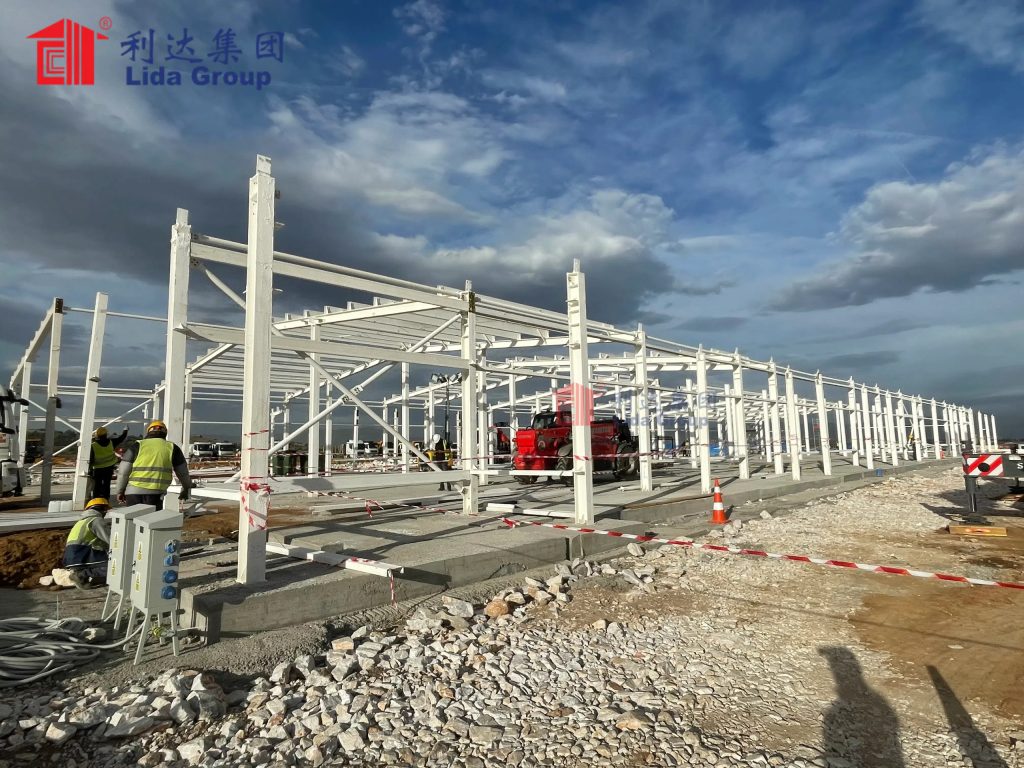
4. Material Innovation: Pioneering Durable and Sustainable Metal Frame Solutions
Lida Group’s pioneering spirit extends to material science, where it has reimagined metal frame performance through the strategic use of advanced alloys, protective coatings, and sustainable materials. By combining metallurgical innovation with environmental responsibility, Lida has created metal frame structures that are stronger, more durable, and more eco-friendly than traditional alternatives— addressing two of the construction industry’s most pressing needs: longevity and sustainability.
4.1 High-Strength Alloys: Redefining Metal Frame Efficiency
At the core of Lida’s material innovation is the use of high-strength steel alloys that balance strength, weight, and cost. S700MC high-tensile steel, a cornerstone of Lida’s heavy metal frames, offers 45% slimmer profiles than conventional steel while maintaining superior load-bearing capacity. This reduction in material weight not only lowers transportation and installation costs but also reduces the carbon footprint of each project. For light steel frames, G550 AZ 150-coated steel provides exceptional corrosion resistance and formability, enabling intricate designs without compromising structural integrity.
Lida’s material engineering team has also pioneered the use of composite systems that enhance metal frame performance. Aerogel-insulated composite wall panels, integrated into metal frames, achieve R-40 thermal values— critical for cold storage warehouses that require ±0.5°C temperature stability. Phase-change material (PCM) integrated into metal frame walls for battery gigafactories maintains ±0.3°C thermal stability, ensuring optimal production conditions for sensitive battery cells. These material innovations demonstrate Lida’s ability to tailor metal frame solutions to the unique performance requirements of each sector, from pharmaceuticals to renewable energy.
4.2 Protective Treatments: Pioneering Longevity in Extreme Environments
Metal frame durability in harsh environments depends on effective protective treatments, and Lida Group has pioneered advanced coatings and fire-defense systems that extend structural lifespans. Nano-ceramic coatings, applied in controlled factory environments, have been tested to achieve a corrosion rate of just 0.003mm per year in ASTM B117 salt-spray testing— a level of protection that ensures 25+ years of service in chemical plants and coastal regions. Traditional metal frame coatings typically degrade within 5-10 years in such environments, making Lida’s solution a game-changer for long-term infrastructure.
For fire safety, Lida has innovated intumescent treatments that expand 40x at 300°C, forming a protective barrier that maintains metal frame integrity for up to 2 hours. This exceeds international fire safety standards and is critical for industrial facilities, such as oil refineries and chemical plants, where explosion-proof enclosures are mandatory. These protective treatments are applied as part of the factory fabrication process, ensuring uniform coverage and eliminating the risk of on-site application errors that plague traditional metal frame construction.
4.3 Sustainable Materials: Pioneering Circular Economy in Metal Frames
As sustainability becomes a global priority, Lida Group has pioneered the integration of circular economy principles into metal frame construction. Steel is inherently 100% recyclable without losing strength, and Lida leverages this by using 92% recycled content in its metal frame components. Recycling steel requires 74% less energy than producing it from raw ore, reducing carbon emissions by 40% compared to conventional metal frame solutions. Lida’s container-based metal frames further advance sustainability by repurposing shipping containers— diverting waste from landfills and creating modular structures that can be disassembled, relocated, and reused.
The company’s commitment to sustainability extends beyond materials to energy efficiency. Metal frames integrated with solar panels, rainwater harvesting systems, and energy-efficient insulation reduce operational carbon footprints, making Lida’s solutions compliant with LEED and BREEAM green building standards. For a logistics hub in Europe, Lida’s sustainable metal frame design achieved a 40% carbon reduction compared to traditional construction, aligning with the client’s net-zero goals. By proving that metal frame construction can be both durable and eco-friendly, Lida has paved the way for a more sustainable construction industry.
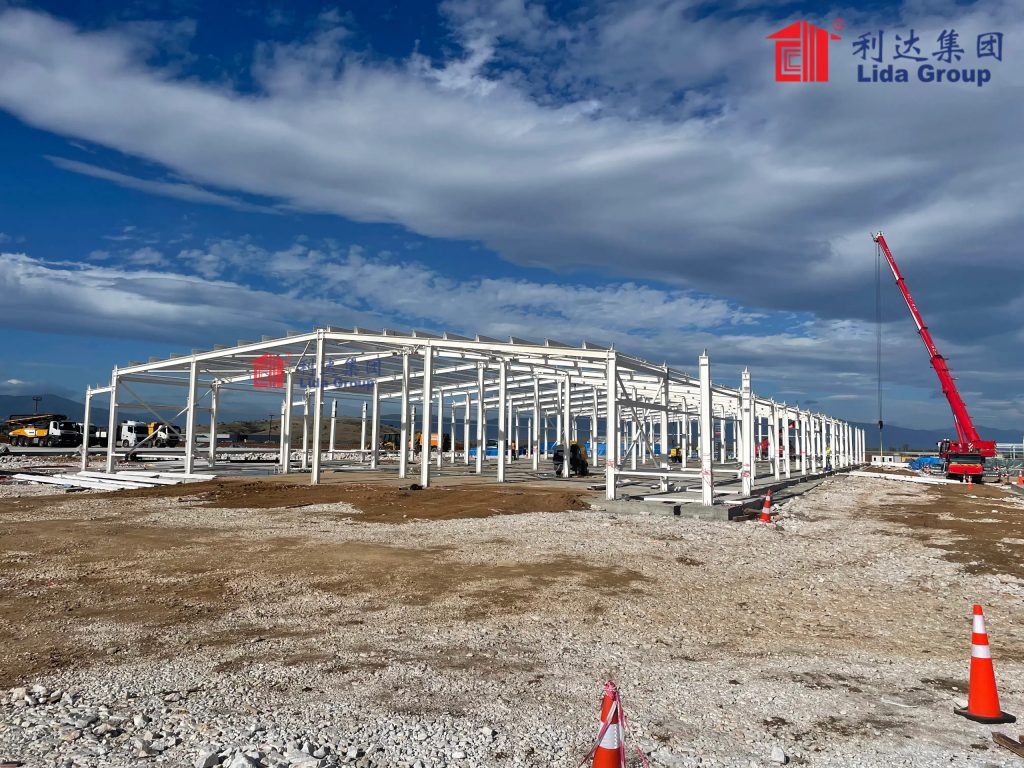
5. Global Case Studies: Pioneering Metal Frame Solutions in Action
Lida Group’s status as a pioneer is best validated by its global project portfolio, where its metal frame innovations have solved complex construction challenges across diverse sectors and environments. From semiconductor cleanrooms requiring sub-millimeter precision to remote mining camps in extreme climates, Lida’s metal frame techniques have consistently delivered superior results, setting new benchmarks for the industry.
5.1 Semiconductor Mega-Fab: Precision Metal Frames for 3nm Chip Production
A multinational semiconductor corporation tasked Lida Group with designing and constructing a metal frame cleanroom capable of supporting 3nm chip production— a challenge that demanded unprecedented precision and vibration control. Traditional metal frame solutions failed to meet the sub-0.5mm structural deflection requirement and could not dampen ground vibration sufficiently to protect sensitive equipment.
Lida’s pioneering solution integrated a heavy steel frame with isolated foundations that dampen 99% of ground transmission. The metal frame was fabricated using robotic welding with ±0.2mm tolerance, and the BIM model ensured seamless integration of EMI-shielding faraday cage networks and utility chases. Intumescent coatings provided fire protection, while nano-ceramic treatments guarded against corrosion from cleanroom chemicals. The result was a metal frame structure that met the strictest precision standards, enabling the client to achieve 3nm production tolerances. This project redefined what is possible with metal frame construction in high-tech manufacturing.
5.2 Dubai Logistics Hub: Rapid-Deployment Hybrid Metal Frame Warehouse
A global logistics provider needed a 550,000 sq ft warehouse in Dubai to support its e-commerce expansion, with a tight deadline of 120 days— a timeline impossible with traditional construction. The project required column-free spans to accommodate robotic ASRS systems, seismic resilience, and temperature-controlled zones for sensitive goods.
Lida deployed its hybrid metal frame approach: a heavy steel frame with 160m clear spans (S700MC steel) for the robotic zone, paired with light steel frame administrative wings. Digital twin technology optimized the truss geometry, reducing steel tonnage by 25% while maintaining 75 kN/m² floor loads. Robotic fabrication accelerated component production, and modular assembly cut on-site time by 60%. The warehouse was completed in just 109 days— a record for a facility of its size— and outperformed conventional designs in energy efficiency and seismic resilience. This project showcased Lida’s ability to deliver rapid, high-performance metal frame solutions for time-sensitive logistics needs.
5.3 Arctic Mining Camp: Durable Light Steel Frame for Extreme Cold
For a remote Arctic gold mine, Lida Group was tasked with constructing a 200-person camp capable of withstanding -40°C temperatures, high winds, and limited on-site resources. Traditional metal frames would have been too heavy to transport and vulnerable to corrosion from salt air.
Lida’s pioneering light steel frame solution used G550 AZ 150-coated steel for corrosion resistance and aerogel-insulated composite panels for thermal efficiency. The modular metal frame components were prefabricated in a factory, transported by helicopter, and assembled on-site using foundation-free screw piles. The digital twin model simulated wind loads and thermal expansion, ensuring the frame could withstand extreme weather without structural failure. The camp was fully operational in 8 weeks, providing comfortable, durable accommodation for mine workers. This project demonstrated Lida’s ability to adapt metal frame techniques to the world’s most challenging environments.
5.4 Lithium Battery Gigafactory: Thermal-Stable Metal Frame for Precision Production
A renewable energy company required a metal frame structure for a lithium battery gigafactory, where thermal stability (±0.3°C) and fire safety were critical. Traditional metal frames lacked the thermal control needed for battery production and posed fire risks due to poor coating application.
Lida’s solution integrated phase-change material (PCM) into the metal frame walls to maintain thermal stability, paired with intumescent coatings for fire protection. The digital twin model optimized airflow and vibration control, while robotic fabrication ensured precise alignment of utility chases for ventilation systems. The metal frame was constructed using recycled steel, reducing the project’s carbon footprint by 40%. The factory’s thermal stability and structural integrity have enabled consistent battery production, making it a model for sustainable manufacturing facilities.
6. Industry Leadership: Pioneering Standards and Shaping the Future of Metal Frame Construction
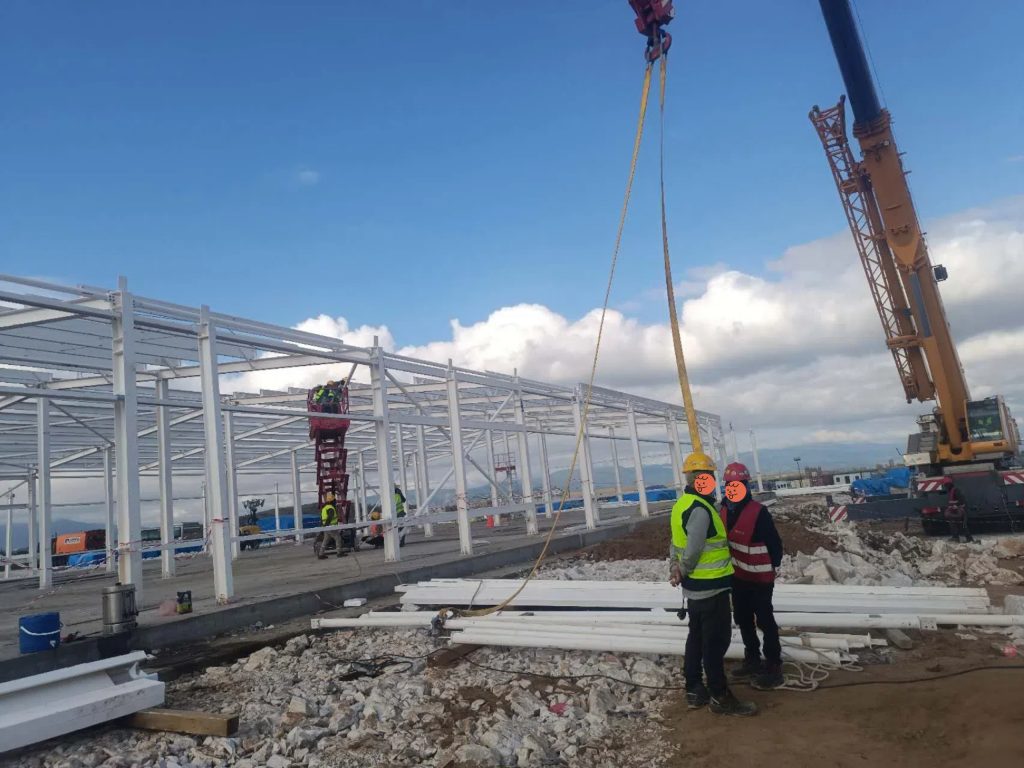
Lida Group’s pioneering role extends beyond technological innovation to shaping industry standards and driving collective progress. As a member of the China Steel Structure Association and a contributor to global construction forums, Lida actively shares its expertise to elevate metal frame building practices worldwide. Its 60+ patents cover critical innovations in connection systems, thermal insulation, and modular design— many of which have become industry benchmarks.
The company’s “global standardization, local optimization” model has redefined how metal frame solutions are deployed internationally. By maintaining rigorous ISO and CE-certified manufacturing standards while adapting designs to regional climate, regulatory, and cultural needs, Lida has made modern metal frame techniques accessible to clients in every corner of the globe. Its one-stop service platform— from design to maintenance— has eliminated the fragmentation that often plagues cross-border construction projects, setting a new standard for project delivery.
Looking to the future, Lida Group continues to pioneer the next generation of metal frame technologies. Research is underway on AI-driven design optimization, which will automate the selection of materials and frame configurations based on project requirements, further reducing waste and improving efficiency. The company is also exploring green steel production using hydrogen energy, aiming to eliminate carbon emissions from metal frame manufacturing. Smart metal frame systems integrated with IoT sensors are in development, enabling real-time monitoring of structural health, corrosion, and thermal performance— transforming metal frames from passive structures into active, adaptive systems.
7. Conclusion
Lida Group’s legacy as a pioneer in modern metal frame building techniques is defined by its unwavering commitment to innovation, precision, and adaptability. Over three decades, the company has transformed metal frame construction from a labor-intensive, inconsistent process into a sophisticated, digitalized discipline— one that delivers exceptional efficiency, durability, and sustainability. Through its pioneering use of digital twin and BIM technologies, robotic manufacturing, advanced materials, and hybrid frame systems, Lida has set new industry standards that competitors strive to match.
Its global project portfolio— spanning semiconductor fabs, logistics hubs, Arctic camps, and battery factories— is a testament to the versatility and performance of its metal frame solutions. By solving complex challenges in diverse environments, Lida has proven that modern metal frame techniques can meet the most demanding sector-specific requirements, from sub-millimeter precision to extreme weather resilience. Beyond technological innovation, Lida’s leadership in sustainability and industry collaboration has positioned it as a catalyst for positive change, driving the construction sector toward a more efficient, durable, and eco-friendly future.
As the construction industry continues to evolve in response to global challenges— from supply chain volatility to climate change— Lida Group’s pioneering spirit remains as relevant as ever. Its ability to blend proven expertise with cutting-edge innovation ensures that it will continue to redefine metal frame building techniques for decades to come. For Lida Group, pioneering is not a one-time achievement but a way of operating— a commitment to pushing boundaries, solving problems, and shaping the future of construction. In doing so, it has not only built a global enterprise but has also left an indelible mark on the industry, establishing modern metal frame construction as the backbone of efficient, durable, and sustainable infrastructure worldwide.
Related news
-
Discover the Strength of Our Metal Frame Building Systems
2026-01-09 17:51:00
-
Efficient and Durable Steel Structure Construction Solutions
2026-01-16 17:35:02
-
High Quality Construction is the Hallmark of Lida Group
2026-01-16 16:55:21
contact us
- Tel: +86-532-88966982
- Whatsapp: +86-13793209022
- E-mail: sales@lidajituan.com
