



Lida Group Launches New Easy Install Sandwich Panel Prefab House
2025-Dec-10 17:34:04
By Admin
Introduction: Pioneering Accessible Prefabrication for Global Markets
In an era where construction industries worldwide grapple with labor shortages, cost overruns, and sustainability pressures, prefabricated buildings have emerged as a transformative solution. Among the leaders driving this revolution is Lida Group—an established steel structure prefabricated building enterprise founded in 1993, with a global footprint spanning subsidiaries in the United States, Indonesia, Zambia, Saudi Arabia, and over 15 other countries. Building on its three-decade legacy of ISO 9001, ISO 14001, and CE (EN1090) certified manufacturing, Lida Group has unveiled its highly anticipated easy-install sandwich panel prefab house: a game-changing product designed to eliminate installation barriers, cut project timelines, and deliver superior performance across residential, commercial, and emergency applications.
The global prefabricated building market is projected to reach $357.3 billion by 2030, growing at a CAGR of 6.8%—a surge fueled by demand for rapid, cost-effective, and sustainable construction solutions. Lida Group’s new offering addresses a critical pain point in this sector: complex installation processes that require skilled labor and heavy machinery, limiting accessibility for small businesses, remote communities, and emergency response teams. By integrating innovative sandwich panel technology, intuitive assembly systems, and modular design, the new prefab house reduces on-site installation time by up to 70% compared to traditional prefabricated structures—without compromising on durability, safety, or comfort.
This article explores the technical breakthroughs, core features, versatile applications, and market advantages of Lida Group’s easy-install sandwich panel prefab house. From its advanced material composition and tool-free assembly mechanisms to real-world deployment cases and compliance with international standards, we delve into how this product is reshaping the future of accessible, efficient construction.
Company Overview: Lida Group’s Legacy of Innovation in Prefabrication
Before delving into the new product, it is essential to contextualize Lida Group’s position as a trusted leader in the prefabricated building industry. Founded in 1993, the group has evolved into a full-service provider encompassing consulting, design, production, construction, marketing, and after-sales support. Its portfolio includes large-scale integrated camps, steel structure projects, light steel villas, container homes, and activity board houses—catering to diverse sectors ranging from infrastructure and energy to healthcare and disaster relief.
Lida Group’s commitment to quality is underscored by its rigorous certification systerm. The company holds Grade II qualifications in steel structure engineering contracting and building curtain wall engineering, alongside ISO 45001 occupational health and safety certification. Its production facilities have passed factory audits by global testing giants including SGS, TUV, INTERTEK, and BV—ensuring compliance with stringent international standards for materials, manufacturing, and performance. With overseas offices strategically located across Asia, Africa, the Middle East, and the Americas, Lida Group has established a proven track record of delivering tailored prefabricated solutions to meet regional climate, regulatory, and cultural needs.
The launch of the easy-install sandwich panel prefab house represents the culmination of Lida Group’s decades of R&D. By leveraging customer feedback from over 50 countries and emerging trends in modular construction, the company has developed a product that balances simplicity, performance, and affordability—filling a gap in the market for accessible prefabrication that does not sacrifice quality.
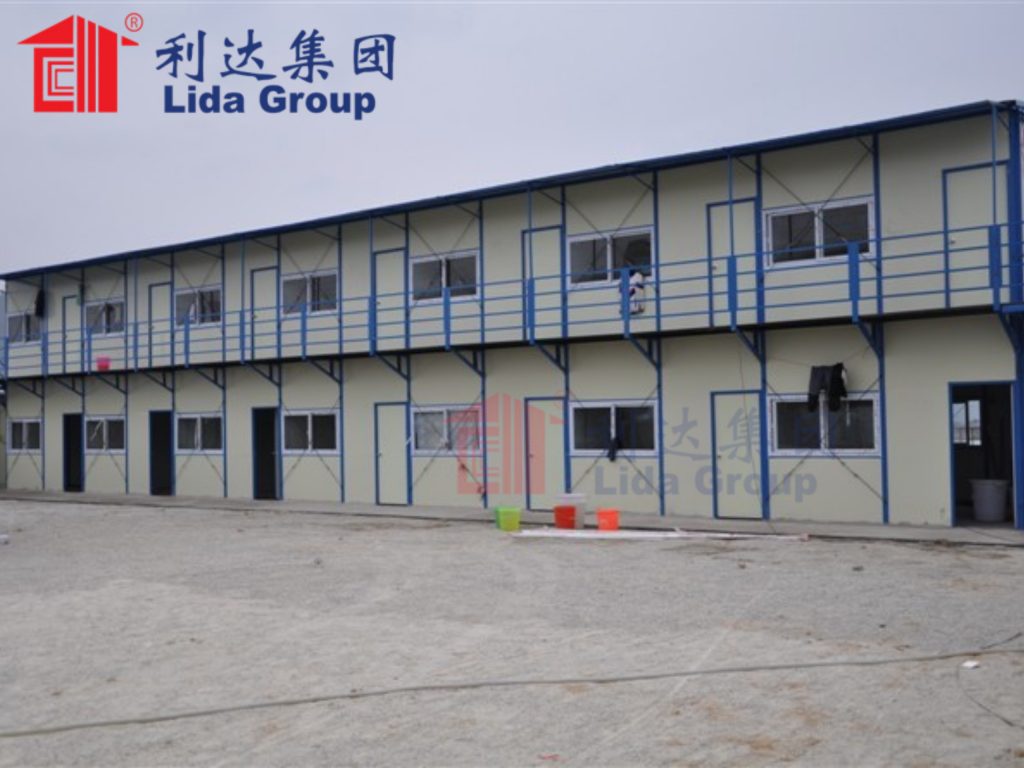
Core Technology: The Engineering Behind Easy Installation & Superior Performance
At the heart of Lida Group’s new prefab house lies a synergy of three key innovations: advanced sandwich panel materials, a tool-free modular assembly system, and optimized structural design. Together, these technologies enable unprecedented installation efficiency while delivering industry-leading durability, insulation, and safety.
1. Sandwich Panel Innovation: Materials That Combine Performance & Ease of Handling
The new prefab house features Lida Group’s proprietary sandwich panels—engineered to be lightweight yet robust, with core materials selected for specific performance attributes. Unlike conventional prefabricated panels that require heavy lifting equipment and specialized cutting tools, Lida’s panels are designed for manual handling and quick assembly, without compromising on structural integrity or thermal efficiency.
Core Material Options & Their Advantages
Lida Group offers three core material options for its sandwich panels, each tailored to different climate conditions and application requirements:
- Polyurethane (PU) Foam Core: The flagship option for thermal efficiency, PU foam boasts a thermal conductivity as low as 0.022 W/(m·K)—30% higher than traditional rock wool insulation. This closed-cell foam core provides exceptional waterproofing (water absorption rate ≤2%) and fire resistance (Class B1, non-combustible), making it ideal for residential and commercial applications in extreme temperatures. The PU foam core is bonded to galvanized steel face sheets (0.6mm thickness) using high-strength adhesive, ensuring a shear strength of ≥0.25 N/mm²—exceeding industry standards for panel integrity.
- PET Foam Core: A sustainable alternative, PET (polyethylene terephthalate) foam is 100% recyclable and offers superior dimensional stability (+/- 0.5% thermal expansion) compared to PVC foam. With a density range of 80-120 kg/m³, PET foam core panels are 15% lighter than PU foam panels, further enhancing installation ease. This core material excels in sound insulation (airborne sound reduction index ≥45 dB) and is resistant to mold, mildew, and chemical corrosion—making it suitable for coastal areas, humid climates, and temporary structures like construction camps.
- PVC Foam Core: Designed for high-strength applications, PVC foam core panels feature a cross-linked vinyl polymer core with a density of 120-180 kg/m³. This core material delivers exceptional impact resistance (Izod impact strength ≥25 kJ/m²) and fatigue resistance, making it ideal for industrial facilities, warehouses, and disaster relief shelters that require durability in harsh conditions. PVC foam core panels also offer excellent flame retardancy (Class B-s1, d0) and low smoke emission, complying with strict fire safety standards in Europe and North America.
All sandwich panels are factory-precut to standardized dimensions (ranging from 2.4m×0.6m to 6m×1.2m) with precision tongue-and-groove edges—eliminating on-site cutting and reducing waste by 90% compared to traditional construction. The panels’ lightweight design (12-18 kg/m²) allows a single worker to carry and position them, eliminating the need for cranes or heavy lifting equipment.
2. Tool-Free Modular Assembly System: Revolutionizing On-Site Efficiency
The defining feature of Lida Group’s new prefab house is its patent-pending tool-free assembly system, which reduces installation time from days to hours. Unlike conventional prefabricated buildings that require welding, drilling, or specialized tools, this system relies on interlocking components and quick-connect fasteners—enabling assembly by unskilled labor with minimal training.
Key Components of the Assembly System
- Interlocking Steel Frames: The structural skeleton consists of galvanized steel frames (Q355B grade) with prefabricated slots and locking mechanisms. Each frame module (standard sizes: 3m×6m, 4m×6m, 5m×8m) weighs less than 150 kg and can be connected to adjacent modules using spring-loaded locking pins—no bolts or welding required. The frames are engineered to self-align during assembly, ensuring structural accuracy and reducing installation errors.
- Quick-Connect Panel Joints: Sandwich panels attach to the steel frames via a proprietary snap-fit system. Each panel features integrated locking clips along its edges that engage with corresponding receivers on the frame—securing the panel in place with a simple push-and-lock motion. The joints are sealed with factory-applied butyl rubber gaskets, providing airtight and waterproof protection without the need for on-site caulking or sealing.
- Prefabricated Utility Chases: All electrical wiring, plumbing lines, and HVAC ducts are pre-installed in concealed channels within the sandwich panels and steel frames. This eliminates the need for on-site routing and connection, as utility components are pre-wired with plug-and-play connectors. For example, electrical outlets and light fixtures are factory-mounted in the panels, with cables terminated in waterproof junction boxes that simply plug into the main power supply.
Installation Process & Timeframes
The assembly process of Lida’s easy-install prefab house follows three simple steps, with clear instructions and color-coded components to guide workers:
- Foundation Preparation: The house requires a minimal foundation—either a concrete slab, gravel pad, or adjustable steel piers (included with the product). For small to medium-sized units (30-60㎡), foundation preparation can be completed in 4-6 hours by two workers.
- Frame Assembly: Workers connect the steel frame modules using the spring-loaded locking pins. A 30㎡ house (3m×10m) requires 6 frame modules, which can be assembled in 2-3 hours by a team of four. The frames’ self-aligning design ensures that all corners are square and all connections are secure—eliminating the need for level checks or adjustments.
- Panel Installation: Sandwich panels are snapped into place on the steel frames, starting with the walls and followed by the roof. Each panel takes 1-2 minutes to install, with a 30㎡ house requiring 24-30 panels—total installation time: 4-6 hours. The roof panels feature integrated drainage channels and weatherstripping, ensuring waterproofing immediately upon installation.
In total, a 30㎡ one-bedroom prefab house can be fully assembled by four unskilled workers in 8-12 hours—compared to 2-3 days for conventional prefabricated houses and 2-3 weeks for traditional brick-and-mortar structures. For larger units (100㎡+), the assembly time scales linearly: a 100㎡ office or residential building can be installed in 24-36 hours by a team of six.
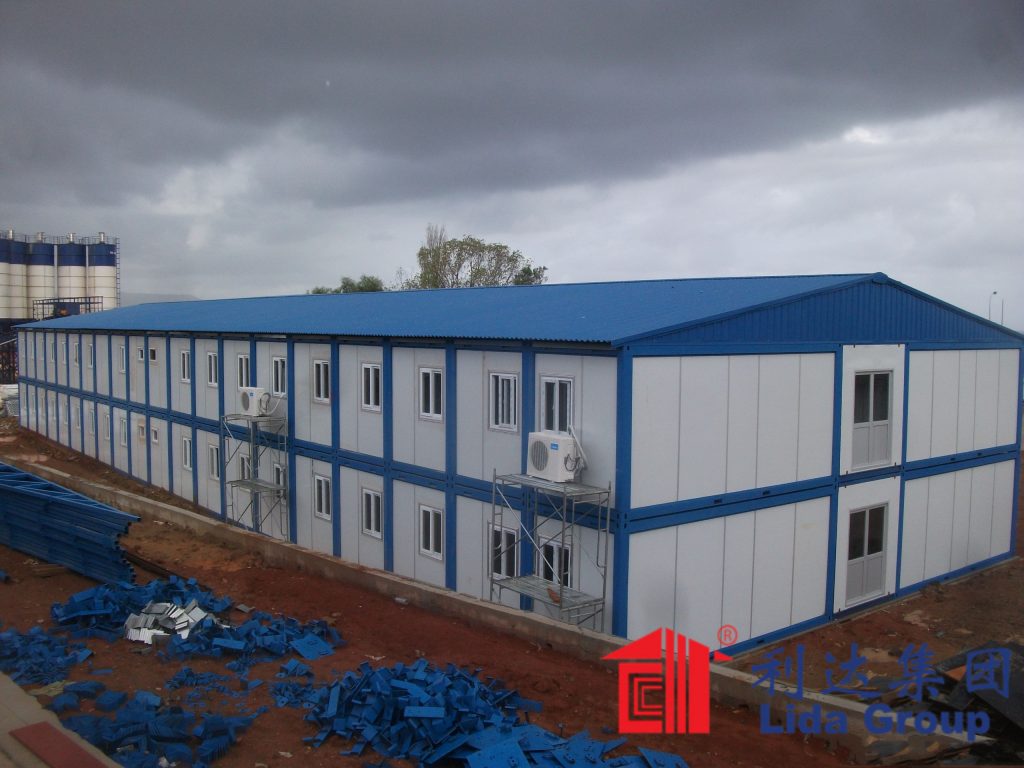
3. Structural Design: Balancing Lightweight Construction & Durability
Despite its lightweight and easy-install design, Lida’s new prefab house meets or exceeds international structural standards for safety and durability. The steel frame and sandwich panel system are engineered to withstand extreme weather conditions, seismic activity, and heavy loads—making it suitable for permanent, semi-permanent, and temporary applications.
Structural Performance Metrics
- Wind Resistance: The house is rated to withstand wind speeds up to 120 km/h (10 on the Beaufort scale) when anchored to a standard foundation. For hurricane-prone regions, optional wind reinforcement kits increase resistance to 150 km/h.
- Seismic Resistance: The modular frame design and flexible panel connections allow the structure to absorb seismic energy, achieving a seismic resistance rating of up to 8 degrees (Chinese standard GB 50011) and Zone 4 (U.S. standard FEMA 361).
- Snow Load Capacity: The roof structure supports a snow load of 0.75 kN/㎡ (equivalent to 75 kg/m²)—sufficient for heavy snowfall in temperate and cold regions.
- Design Lifespan: Depending on the core material and application, the prefab house has a design lifespan of 20-30 years for temporary use and 30-50 years for permanent residential or commercial use. The galvanized steel frames (zinc coating thickness ≥120 g/㎡) and corrosion-resistant panel finishes ensure long-term durability even in coastal or industrial environments.
Flexibility & Customization
The modular design of Lida’s prefab house enables unlimited customization in size, layout, and functionality. Clients can combine standard modules to create structures ranging from 15㎡ micro-homes to 500㎡+ commercial buildings, with options for:
- Multi-story construction (up to 3 stories) using stacked modules and reinforced floor panels.
- Custom floor plans (bedrooms, bathrooms, kitchens, offices, storage spaces) with prefabricated interior partitions.
- Aesthetic customization (exterior cladding colors, window sizes, roof styles) to match local architectural preferences.
- Optional features (solar panels, rainwater collection systems, HVAC units, smart home integration) that can be pre-installed at the factory.
Versatile Applications: Meeting Diverse Global Needs
Lida Group’s easy-install sandwich panel prefab house is engineered to adapt to a wide range of applications across residential, commercial, industrial, and emergency sectors. Its portability, quick installation, and durability make it a versatile solution for markets in developed and developing countries alike.
1. Residential Housing: Addressing Global Affordability & Accessibility
The global housing crisis—characterized by rising costs, labor shortages, and urbanization—has created an urgent need for affordable, quick-to-build homes. Lida’s prefab house addresses this need by offering a cost-effective alternative to traditional construction, with prices 30-50% lower than brick-and-mortar homes of equivalent size.
Key Residential Applications
- Affordable Housing Projects: Governments and non-profit organizations can use the prefab house to rapidly deploy low-cost housing for low-income families, refugees, and displaced persons. For example, a 40㎡ two-bedroom house costs approximately \(15,000-\)20,000 (including materials and shipping)—a fraction of the cost of conventional housing.
- Secondary Dwellings & Granny Flats: Homeowners can add extra living space for family members, guests, or rental income without the hassle of lengthy construction. The easy-install design means minimal disruption to existing properties, with installation completed in a single day.
- Remote & Off-Grid Living: The lightweight and portable nature of the prefab house makes it ideal for remote locations, such as mountain cabins, beach houses, or rural homesteads. Optional solar panels and rainwater collection systems enable off-grid functionality, while the insulated sandwich panels ensure comfort in extreme climates.
Case Study: Residential Deployment in the United States
In 2024, a Colombian-American homeowner in California purchased two 40㎡ prefab houses from Lida Group to use as rental properties. The houses were shipped from Lida’s U.S. subsidiary in Texas and assembled by a team of four local workers in 10 hours—without the need for permits or heavy machinery. Each house features three bedrooms, one bathroom, a kitchen, and a living area, with PET foam core panels for sound insulation and energy efficiency.
Tenants reported high satisfaction with the houses, noting their comfort, durability, and low utility costs. “Even during heatwaves, the house stays cool without running the AC all day,” said one tenant. “And during rainstorms, there’s no leaking or drafts—something I didn’t expect from a prefab home.” The homeowner has since expanded her rental portfolio with three more Lida prefab houses, citing the quick installation and low maintenance costs as key advantages.
2. Commercial & Institutional Applications: Efficiency for Businesses & Organizations
Businesses, schools, and healthcare facilities benefit from the prefab house’s quick deployment and low operational costs, enabling them to expand or establish facilities without disrupting operations.
Key Commercial Applications
- Temporary Offices & Retail Spaces: Construction companies, event organizers, and small businesses can use the prefab house as temporary offices, pop-up shops, or exhibition booths. The modular design allows for easy relocation, while the professional finish (including interior drywall, flooring, and fixtures) ensures a polished appearance.
- Schools & Classrooms: In regions with overcrowded schools or limited infrastructure, the prefab house serves as a quick, cost-effective solution for temporary or permanent classrooms. Each 60㎡ classroom can accommodate 30 students, with soundproof panels, natural lighting (window area ≥1/6 of wall space), and integrated HVAC systems to support learning.
- Healthcare Facilities: Rural clinics, mobile hospitals, and vaccination centers benefit from the prefab house’s sterile, easy-to-clean interior and quick deployment. The panels’ non-porous surfaces and airtight joints prevent contamination, while the modular design allows for customization of examination rooms, pharmacies, and waiting areas.
Case Study: Healthcare Clinic in Zambia
In 2025, Lida Group partnered with a non-governmental organization to deploy 10 prefab clinics in rural Zambia, where access to healthcare is limited. Each 50㎡ clinic features two examination rooms, a pharmacy, and a waiting area, with PU foam core panels for thermal insulation (critical in Zambia’s hot, dry climate) and PVC foam core panels for durability.
The clinics were shipped in flat-pack containers to Lusaka, then transported to remote villages by truck. Local workers—trained by Lida’s technical team in a one-day workshop—assembled each clinic in 12 hours. The clinics have since provided primary healthcare services to over 5,000 residents, with staff reporting that the prefab structures are easier to maintain and more comfortable than traditional mud-brick clinics. “The insulation keeps the clinic cool during the day, which makes it easier for patients to wait,” said a local nurse. “And the quick installation meant we could start treating patients within a week of receiving the materials.”
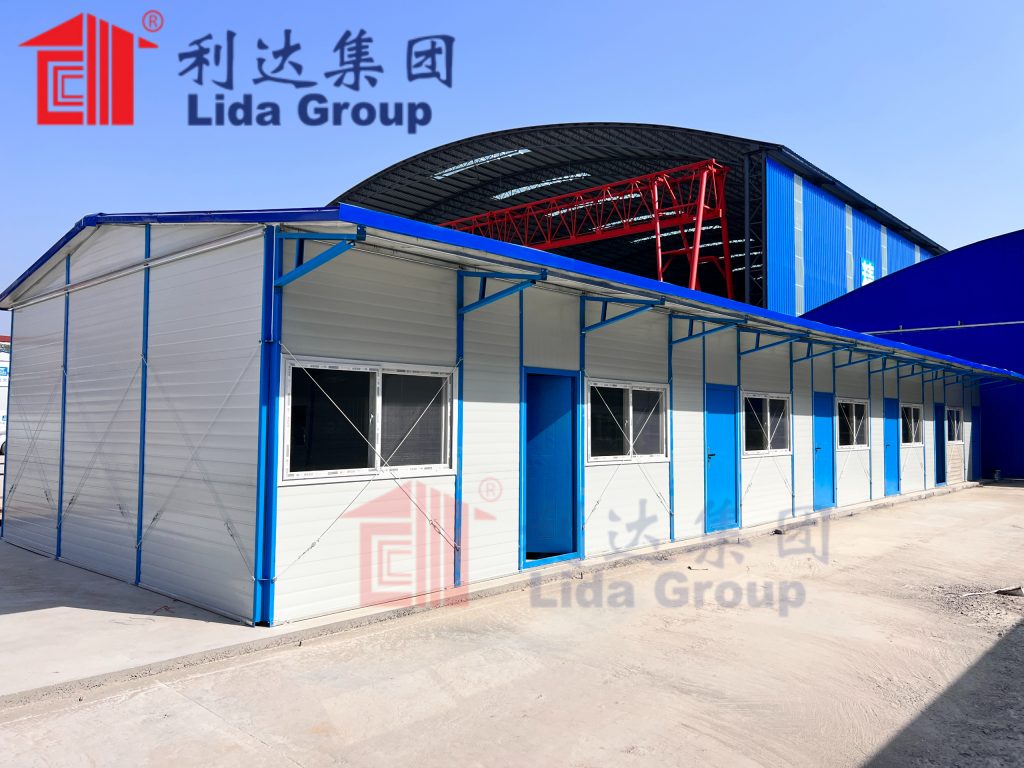
3. Emergency Response & Disaster Relief: Rapid Shelter When Every Hour Counts
In the aftermath of natural disasters or humanitarian crises, rapid access to safe shelter is critical. Lida’s easy-install prefab house is designed for emergency deployment, with features that prioritize speed, safety, and functionality.
Key Emergency Applications
- Disaster Relief Shelters: The prefab house can be transported via truck, ship, or aircraft and assembled within hours, providing immediate shelter for displaced persons. Each 20㎡ shelter accommodates 4-6 people, with fire-resistant panels, ventilation systems, and waterproof roofing.
- Field Hospitals & Command Centers: During crises such as earthquakes, floods, or pandemics, the prefab house serves as temporary hospitals, medical supply storage, or emergency command centers. The modular design allows for quick expansion, with additional modules added as needed.
- Post-Disaster Reconstruction: Unlike temporary tents, Lida’s prefab house is durable enough for long-term use, making it suitable for post-disaster reconstruction. The structure can be disassembled and relocated as communities recover, reducing waste and maximizing resource efficiency.
Case Study: Earthquake Relief in Turkey
Following the 2023 Turkey-Syria earthquake, Lida Group donated 50 prefab houses to disaster relief efforts. The houses were shipped from Lida’s factory in China to Izmir, then transported to affected regions by the Turkish Red Crescent. A team of 10 Lida technicians trained local volunteers to assemble the houses, with each 20㎡ shelter completed in 6 hours.
The houses provided shelter for over 250 displaced families, with features including insulation to protect against cold winters, fire extinguishers, and emergency lighting. “These houses are a lifesaver,” said a Red Crescent coordinator. “Unlike tents, they’re warm, dry, and secure—giving families a sense of stability during a terrible time. And the fact that we could assemble them so quickly meant we could help more people faster.”
4. Industrial & Construction Camps: Durable Accommodation for Remote Workforces
Industries such as mining, oil and gas, and infrastructure construction require durable, temporary accommodation for workers in remote locations. Lida’s prefab house is designed to withstand harsh industrial environments while providing comfortable living conditions.
Key Industrial Applications
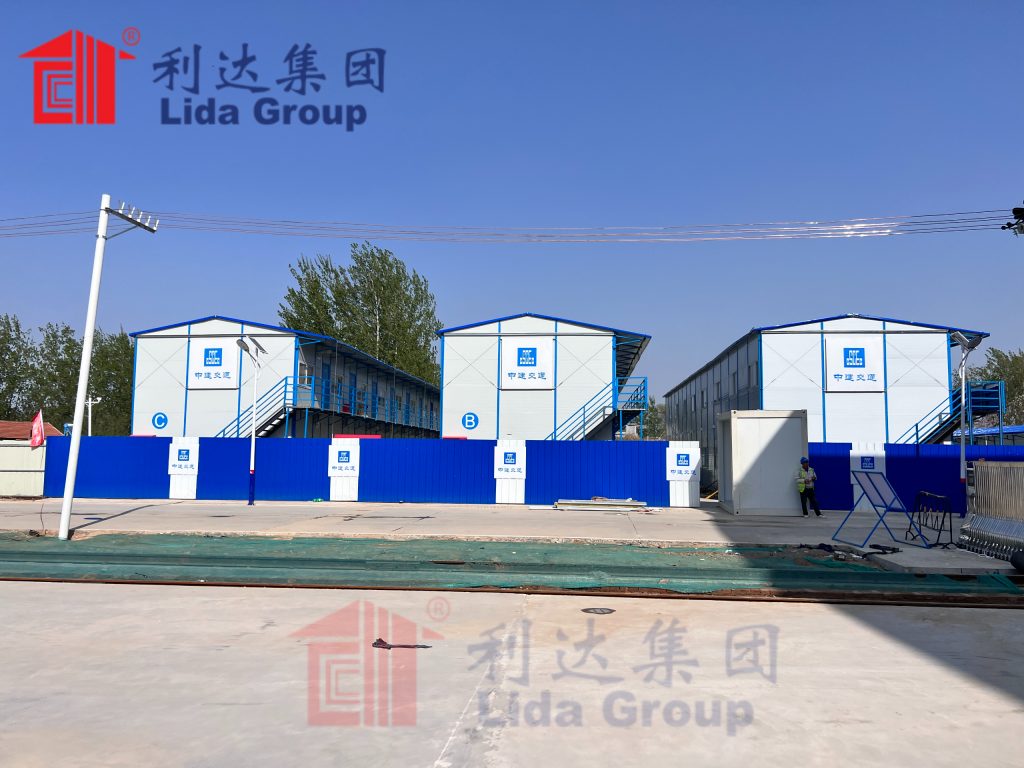
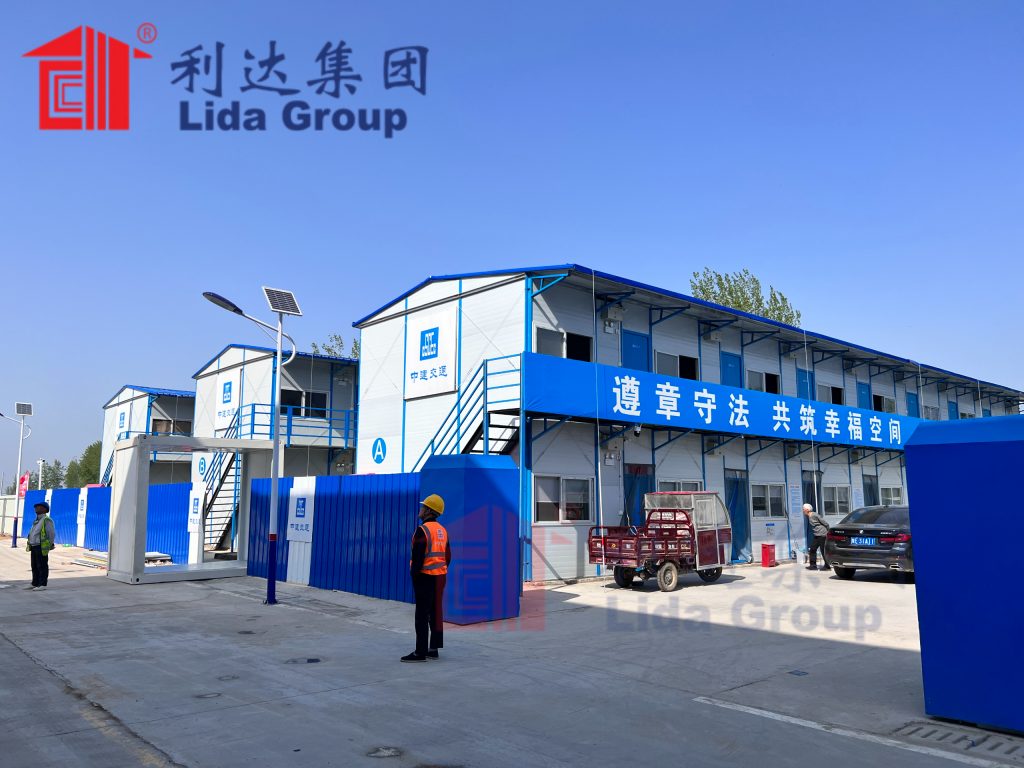
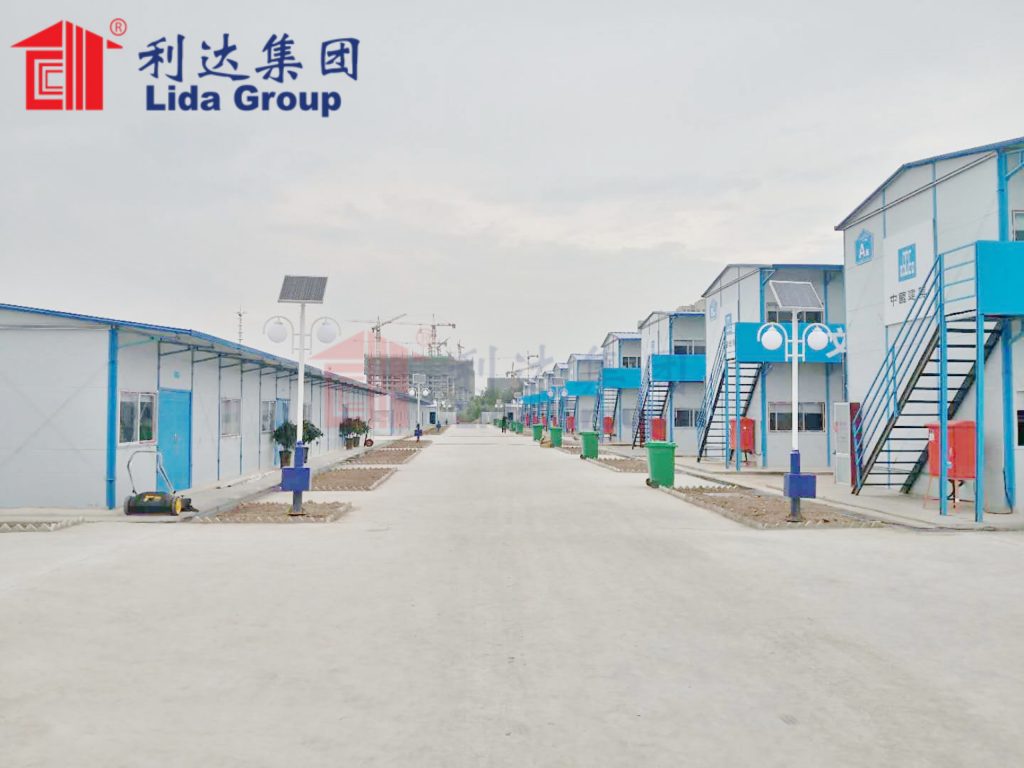
- Worker Camps: Large-scale projects (e.g., highways, dams, mines) can use the prefab house to create self-contained worker camps, including dormitories, canteens, offices, and recreation rooms. The modular design allows for easy expansion as the workforce grows, while the corrosion-resistant materials withstand exposure to dust, chemicals, and extreme temperatures.
- On-Site Warehouses & Workshops: The prefab house’s high-strength PVC foam core panels make it suitable for temporary warehouses, tool storage, and workshops. The structures can support heavy equipment and materials, with a floor load capacity of 5 kN/㎡.
Case Study: Construction Camp in Saudi Arabia
In 2025, Lida Group supplied 200 prefab houses to a construction company building a new highway in Saudi Arabia. The houses were used to create a worker camp for 800 employees, including dormitories (4 people per 20㎡ unit), a canteen (200㎡), offices (150㎡), and a medical clinic (50㎡).
The camp was assembled by a team of 20 local workers (trained by Lida’s technical staff) in 10 days—significantly faster than the 3-4 weeks required for traditional camp construction. The houses feature PVC foam core panels for heat resistance (critical in Saudi Arabia’s desert climate, where temperatures exceed 45°C) and galvanized steel frames to withstand sandstorms. The construction company reported saving $500,000 in accommodation costs compared to traditional methods, with workers noting improved comfort and safety compared to previous camps.
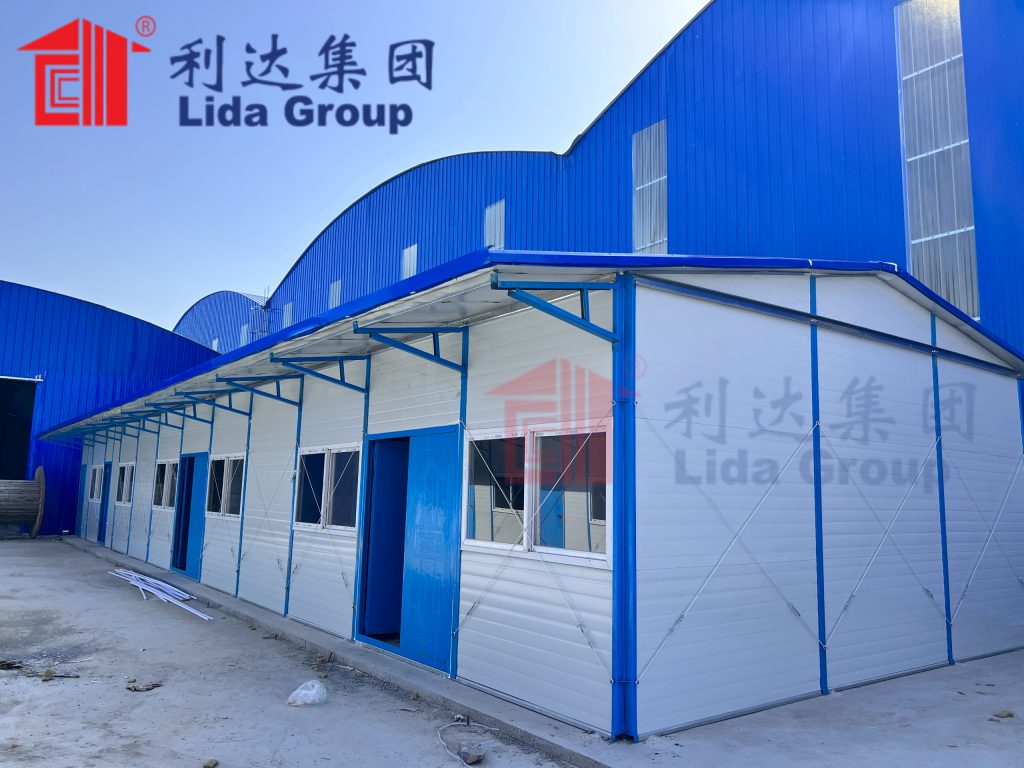
Core Advantages: Why Lida’s Easy-Install Prefab House Stands Out
Lida Group’s new prefab house offers a compelling set of advantages over conventional construction and competing prefabricated products—centered on installation efficiency, cost savings, sustainability, and reliability.
1. Unmatched Installation Efficiency
The most significant advantage of Lida’s prefab house is its ease and speed of installation. Key benefits include:
- Tool-Free Assembly: No welding, drilling, or specialized tools required—reducing reliance on skilled labor and lowering training costs.
- Rapid Deployment: 30㎡ house installed in 8-12 hours; 100㎡ house installed in 24-36 hours—70% faster than conventional prefabricated buildings.
- Minimal Site Disruption: No heavy machinery, concrete pouring, or lengthy construction periods—ideal for urban areas, residential neighborhoods, and sensitive environments.
- Flat-Pack Shipping: Modules are shipped flat-pack, reducing transportation costs by 40% compared to fully assembled structures. A 40ft container can carry up to 120㎡ of prefab house components (equivalent to four 30㎡ houses).
2. Significant Cost Savings
Lida’s prefab house delivers cost savings across the entire project lifecycle:
- Lower Material Costs: Factory mass production reduces material waste by 90% compared to traditional construction, while standardized components leverage economies of scale. A 50㎡ prefab house costs \(18,000-\)25,000, compared to \(30,000-\)45,000 for a conventional brick-and-mortar house.
- Reduced Labor Costs: Unskilled labor can assemble the house, eliminating the need for expensive carpenters, electricians, and plumbers. Labor costs are 60-70% lower than traditional construction.
- Lower Operational Costs: Superior insulation (thermal conductivity ≤0.022 W/(m·K)) reduces heating and cooling costs by 30-40% annually. The prefab house’s airtight design and energy-efficient windows (double-glazed, low-E glass) further enhance energy savings.
- Minimal Maintenance: Corrosion-resistant materials, factory-applied finishes, and modular components reduce maintenance costs by 50% over the structure’s lifespan. Damaged panels or components can be easily replaced without disrupting the entire structure.
3. Environmental Sustainability
In line with global efforts to reduce carbon emissions and promote green construction, Lida’s prefab house prioritizes sustainability:
- Reduced Carbon Footprint: Factory production minimizes construction-related emissions by 60% compared to traditional building methods. The use of lightweight materials reduces transportation emissions by 40%.
- Sustainable Materials: All core materials (PU, PET, PVC foam) are non-toxic and low-VOC (volatile organic compound), complying with EPA and EU standards for indoor air quality. PET foam core panels are 100% recyclable, while steel frames have a recycling rate of 95%.
- Energy Efficiency: The prefab house meets LEED Silver certification standards, with optional solar panels and rainwater collection systems enabling net-zero energy consumption.
- Waste Reduction: Factory-precut components reduce on-site waste by 90% compared to traditional construction. At the end of the structure’s lifespan, over 90% of components can be recycled or repurposed.
4. Safety & Reliability
Lida’s prefab house adheres to strict international safety standards, ensuring peace of mind for users:
- Structural Safety: Complies with ISO 4054 (steel structures), GB 50017 (Chinese steel structure design code), and AISC 360 (U.S. steel construction standards). All structures undergo third-party testing by SGS and TUV to verify load-bearing capacity, wind resistance, and seismic performance.
- Fire Safety: Sandwich panels meet EN 13501-1 (European fire classification) and NFPA 285 (U.S. fire test standard). Non-combustible core materials and fire-rated doors/windows provide a fire resistance rating of ≥1 hour.
- Health & Safety: Low-VOC materials and adequate ventilation ensure indoor air quality meets WHO standards (formaldehyde emission ≤0.05 mg/m³). The structure is resistant to mold, mildew, and pest infestation, promoting a healthy living environment.
- Weather Resistance: Waterproof roofing (SBS membrane with 15-year service life), airtight panel joints, and corrosion-resistant materials ensure the structure withstands rain, snow, wind, and extreme temperatures.
Technical Standards & Compliance
Lida Group’s commitment to quality is reflected in its adherence to a comprehensive set of international and local standards. The new easy-install sandwich panel prefab house complies with the following key certifications:
Structural Standards
- ISO 9001:2015 (Quality Management System)
- ISO 14001:2015 (Environmental Management System)
- ISO 45001:2018 (Occupational Health and Safety Management System)
- GB 50017-2017 (Chinese Code for Design of Steel Structures)
- AISC 360-10 (American Institute of Steel Construction)
- EN 1090-1 (European Standard for Structural Steelwork)
Fire Safety Standards
- EN 13501-1 (European Classification of Construction Products for Fire Performance)
- NFPA 285 (Standard Fire Test for Evaluation of Fire Propagation Characteristics of Exterior Non-Load-Bearing Wall Assemblies Containing Combustible Components)
- GB 50016-2014 (Chinese Code for Fire Protection Design of Buildings)
- ASTM E84 (Standard Test Method for Surface Burning Characteristics of Building Materials)
Environmental & Health Standards
- LEED Silver Certification (Leadership in Energy and Environmental Design)
- BREEAM Very Good Certification (Building Research Establishment Environmental Assessment Method)
- EPA TSCA Title VI (Toxic Substances Control Act)
- GB/T 18883-2002 (Chinese Standard for Indoor Air Quality)
Quality Control & Testing
All prefab house components undergo rigorous quality control checks at every stage of production:
- Raw material inspection (steel, foam core, adhesive) by SGS and TUV.
- Factory production control (FPC) in accordance with EN 1090-2.
- Structural performance testing (load-bearing capacity, wind resistance, seismic resistance) by third-party laboratories.
- Weather resistance testing (waterproofing, corrosion resistance, thermal insulation) in simulated environmental chambers.
Lida Group provides a 10-year warranty on structural components and a 5-year warranty on sandwich panels and finishes—backed by its global after-sales service network. The company also offers technical training, maintenance support, and spare parts supply to ensure long-term performance.
Market Impact & Future Outlook
Lida Group’s new easy-install sandwich panel prefab house is poised to make a significant impact on the global prefabricated building market. By addressing key pain points—complex installation, high costs, and limited accessibility—the product opens up new opportunities for adoption in residential, commercial, industrial, and emergency sectors.
Market Positioning & Target Customers
The product targets three primary customer segments:
- Governments & NGOs: For affordable housing, disaster relief, and infrastructure development projects.
- Businesses & Contractors: For temporary offices, worker camps, retail spaces, and construction facilities.
- Individual Homeowners: For secondary dwellings, remote cabins, and affordable primary homes.
Lida Group’s global distribution network—with subsidiaries and offices in over 15 countries—enables it to reach customers in North America, Europe, Asia, Africa, and the Middle East. The company has already secured orders from customers in the United States, Saudi Arabia, Zambia, and Colombia, with plans to expand into Southeast Asia and South America in 2026.
Future Innovations & Developments
Lida Group is committed to continuous innovation, with three key areas of focus for future product development:
- Smart Home Integration: Adding IoT sensors for remote monitoring of temperature, humidity, energy consumption, and structural health. Smart locks, lighting, and HVAC systems will enable users to control their homes via mobile apps.
- Advanced Materials: Researching self-healing foam cores and phase-change insulation materials to further enhance durability and energy efficiency. The company is also exploring 3D-printed sandwich panel components to reduce production time and enable more complex designs.
- Expanded Product Line: Developing larger modular units (up to 150㎡ per module) and specialized designs for healthcare facilities, schools, and industrial warehouses. The company also plans to launch a “tiny home” series targeting the growing minimalist living trend.
Industry Impact
Lida Group’s easy-install prefab house is expected to accelerate the adoption of prefabricated construction worldwide. By making prefabrication accessible to unskilled labor and small businesses, the product has the potential to:
- Reduce global construction-related carbon emissions by 5% by 2030.
- Address the affordable housing shortage by providing 1 million+ homes annually.
- Create jobs in developing countries by training local workers in modular assembly.
- Improve disaster response times by enabling faster shelter deployment.
Conclusion
Lida Group’s new easy-install sandwich panel prefab house represents a milestone in accessible, efficient, and sustainable construction. By combining advanced sandwich panel technology, a tool-free assembly system, and modular design, the product eliminates the barriers that have long limited the adoption of prefabricated buildings—complex installation, high costs, and reliance on skilled labor.
The product’s core strengths—rapid installation (8-12 hours for a 30㎡ house), significant cost savings (30-50% lower than traditional construction), superior performance (wind resistance up to 120 km/h, thermal conductivity ≤0.022 W/(m·K)), and versatility (residential, commercial, emergency, industrial applications)—make it a game-changer for global markets. Backed by Lida Group’s three-decade legacy of quality, international certifications, and global after-sales support, the prefab house delivers reliable, long-term value for customers across sectors.
As the world faces growing challenges of urbanization, climate change, and housing shortages, Lida Group’s easy-install prefab house offers a practical, sustainable solution. It is more than just a building—it is a catalyst for progress, enabling communities, businesses, and individuals to build better, faster, and more affordably. Whether used as a home for a low-income family, a clinic in a remote village, a worker camp in a desert, or a shelter for disaster victims, this innovative product is redefining what is possible in modern construction.
With its global reach, commitment to innovation, and focus on customer needs, Lida Group is well-positioned to lead the next phase of the prefabricated building revolution. The launch of the easy-install sandwich panel prefab house is not just a product release—it is a statement of intent: to make high-quality, sustainable construction accessible to everyone, everywhere.
Related news
-
Discover Our Versatile and Temporary Mobile Building Solutions
2025-12-10 16:50:59
-
Lida Group Redefines Easy Install Sandwich Panel Construction
2025-12-10 14:06:54
-
Fast-Track Your Project with a Prefab House from Lida Group
2025-12-10 09:57:51
contact us
- Tel: +86-532-88966982
- Whatsapp: +86-13793209022
- E-mail: sales@lidajituan.com
