



Lida Group Introduces Flat Packed Container House for Rapid Global Workforce Housing
2026-May-27 16:58:39
By Admin
Introduction
Global infrastructure development, mining operations, remote engineering projects, and emergency construction initiatives generate massive demand for temporary and medium-term workforce housing. For decades, the construction industry has been plagued by inefficient workforce accommodation solutions that fail to match fast-paced project schedules. Traditional on-site brick-and-mortar dormitories require months of construction, heavy labor input, and large upfront investment, causing project delays and unnecessary capital waste. Conventional prefabricated houses and fully assembled container units also expose obvious limitations: bulky finished containers incur exorbitant logistics costs, while simple temporary sheds lack structural durability, living comfort, and environmental adaptability. These outdated housing solutions cannot meet the standardized, rapid, and large-scale housing needs of global mobile workforces, becoming a key bottleneck restricting the efficient progress of global engineering projects.
As a leading global manufacturer of modular prefabricated buildings, Lida Groupofficially launches high-performance flat packed container houses tailored for global workforce housing scenarios. Breaking the limitations of traditional temporary housing, Lida’s flat packed container house adopts a collapsible modular flat-pack design, integrated corrosion-resistant steel structure, and standardized prefabricated manufacturing technology. It perfectly combines ultra-fast on-site assembly, low logistics costs, long-term structural durability, and flexible scalable deployment, providing a brand-new rapid housing solution for construction teams, mining staff, road and bridge engineering personnel, and emergency disaster relief workers worldwide. This article systematically analyzes the pain points of traditional global workforce housing, the core design innovations of Lida’s flat packed container houses, rapid deployment advantages, durable structural performance, global environmental adaptability, full-lifecycle economic value, and diversified practical application scenarios, fully demonstrating how Lida Group empowers efficient and standardized workforce housing construction for global projects.
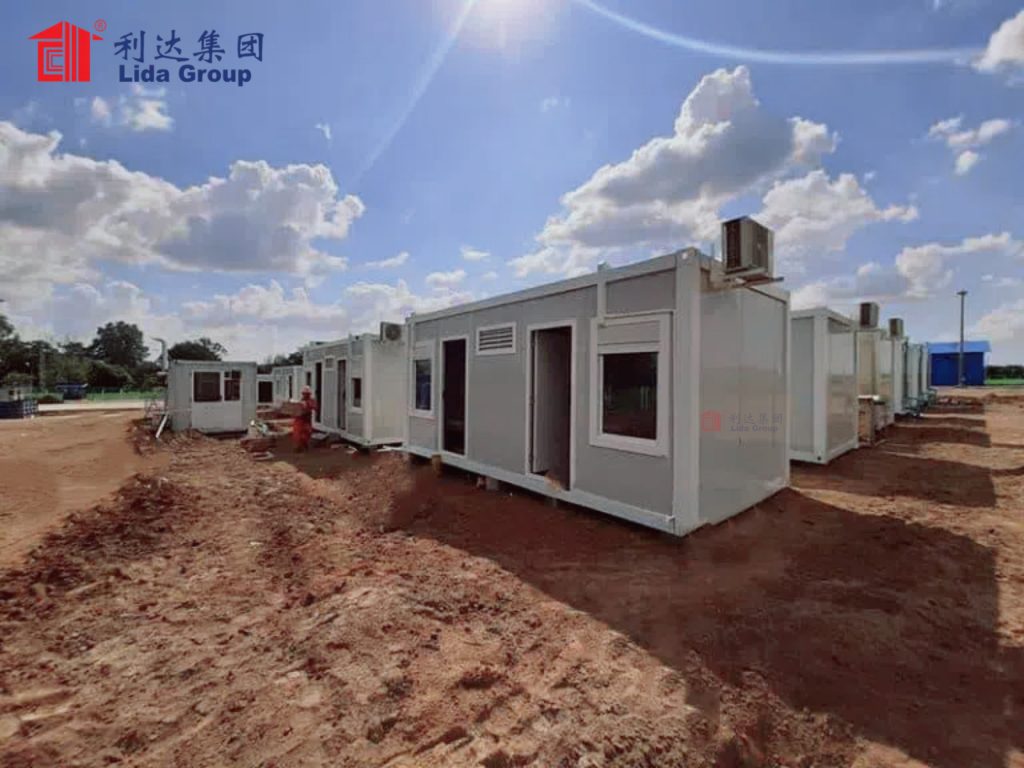
1. Pain Points of Traditional Global Workforce Housing Solutions
Global workforce housing is mainly characterized by mobility, timeliness, large-scale demand, and complex and diverse construction environments. Traditional housing models have prominent drawbacks in deployment speed, transportation flexibility, structural durability, and comprehensive cost, which can no longer adapt to the rapid development rhythm of modern global engineering projects.
1.1 Slow Construction Progress Restricts Project Launch
Traditional fixed buildings such as brick-concrete dormitories and on-site welded temporary houses rely on extensive on-site construction procedures, including foundation pouring, component welding, wall masonry, and interior decoration. The whole construction cycle often lasts 3 to 6 months, consuming a great deal of time and delaying the overall project launch schedule. For time-sensitive engineering projects and emergency construction tasks, slow housing deployment leads to delayed staff settlement, insufficient manpower input, and reduced project progress efficiency. Even traditional pre-assembled container houses require large-scale mechanical equipment for hoisting and positioning, with complex on-site coordination procedures, failing to achieve rapid housing supply in a short time.
1.2 Bulky Structure Causes High Logistics and Transportation Costs
Most finished container houses on the market are integrated and non-collapsible. Their fixed overall volume greatly limits transportation efficiency. A single standard shipping container can only load a small number of finished housing units, resulting in high unit freight costs, especially for remote construction sites in mountainous, desert, and coastal areas with inconvenient transportation. Long-distance transportation of bulky finished units also faces risks of surface collision damage and structural deformation, bringing additional maintenance costs and quality hidden dangers. The high logistics cost of traditional container housing greatly increases the overall investment of workforce housing, reducing project economic benefits.
1.3 Poor Durability and Unstable Living Conditions
To control costs, most traditional temporary workforce houses adopt inferior thin steel plates and simple anti-rust paint treatment. The steel structure is prone to corrosion, rust deformation, and component loosening after short-term outdoor use. The simple thermal insulation and sealing design leads to poor indoor comfort, with problems such as high temperature in summer, cold leakage in winter, and rainwater leakage in rainy seasons. In harsh environments such as strong coastal salt spray, high-altitude strong winds, and industrial pollution, traditional temporary houses have extremely short service life and poor structural stability, unable to provide safe, stable, and comfortable long-term accommodation for workers. Frequent maintenance and replacement also bring continuous hidden cost consumption.
1.4 Inflexible Structure Fails Scalable Deployment
Traditional temporary housing has poor structural flexibility and cannot be freely combined, disassembled, and expanded according to project team size changes. Fixed-size finished containers and integral welded houses cannot realize flexible spatial combination, making it difficult to quickly expand dormitory areas, office areas, and supporting functional areas. When the project is completed, most temporary houses cannot be disassembled and transferred, resulting in serious resource waste and low asset utilization, unable to adapt to the mobile and scalable characteristics of global workforce housing needs.
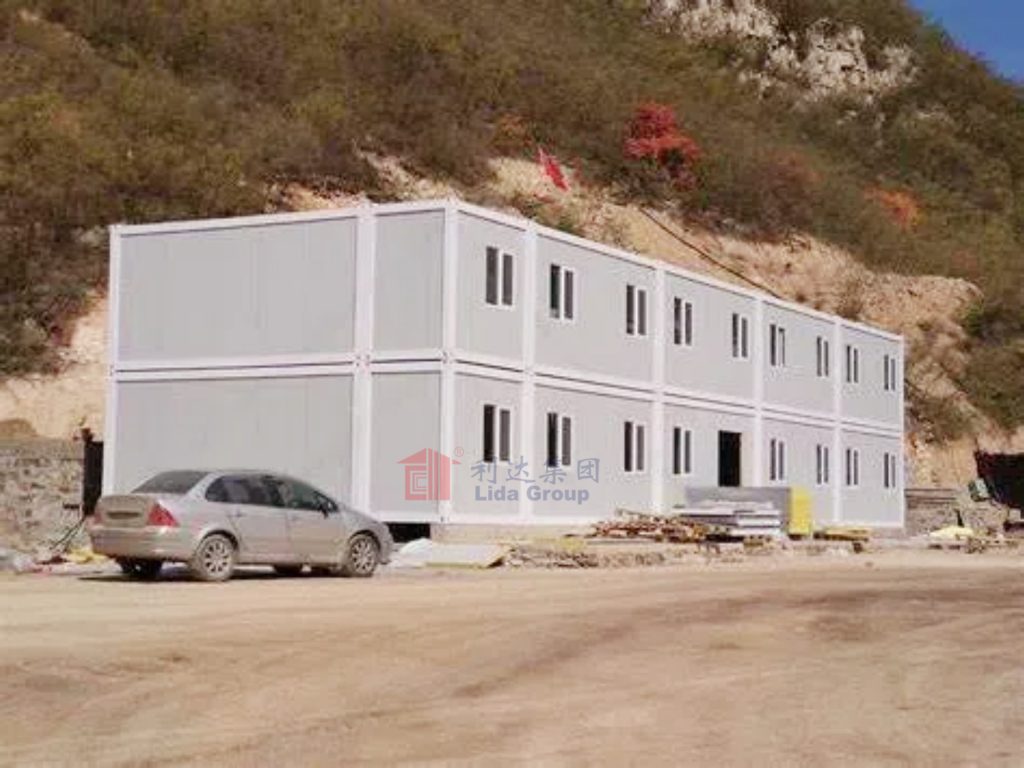
2. Core Innovative Design of Lida Group’s Flat Packed Container House
Targeting the multiple pain points of traditional workforce housing, Lida Group has independently developed a new generation of flat packed container houses through structural innovation, process upgrading, and standardized design. The product adopts a flat collapsible modular architecture, integrated industrial anti-corrosion steel structure, and full factory prefabrication mode, realizing qualitative breakthroughs in deployment speed, transportation efficiency, structural durability, and flexible scalability, fully adapting to global diversified workforce housing scenarios.
2.1 Flat Collapsible Modular Structural Design
The core innovation of Lida’s flat packed container house lies in the optimized flat folding structure design. Different from the fixed integral structure of traditional container houses, all frame components, wall panels, and roof accessories of Lida’s products can be disassembled and folded into a flat compact state. After folding, the unit thickness is greatly reduced, and multiple housing units can be stacked and loaded in a single standard shipping container, increasing transportation capacity by more than 300% compared with traditional finished containers. This flat-pack design completely solves the logistics bottleneck of bulky finished units, greatly reducing long-distance ocean freight, land transportation, and remote distribution costs. Meanwhile, the standardized modular interface design ensures high compatibility of all components, supporting free assembly and combination of single and multiple units.
2.2 Industrial Corrosion-Resistant Steel Structure Framework
To ensure long-term durability in global complex environments, Lida Group adopts high-strength galvanized steel and zinc-aluminum-magnesium alloy steel as the main frame materials for flat packed container houses. All load-bearing steel components undergo standardized industrial hot-dip galvanizing anti-corrosion treatment, forming a dense metallurgical protective layer on the steel surface. This process effectively isolates the erosion of oxygen, moisture, salt spray, and industrial corrosive gases, avoiding structural rust and aging. Matching with high-quality weather-resistant composite wall panels and waterproof sealing systems, the whole house has excellent wind resistance, seismic resistance, water resistance, and anti-aging performance. It can maintain stable structural integrity in harsh environments such as coastal humid areas, desert high-temperature areas, and plateau cold areas, with a service life far exceeding traditional temporary housing.
2.3 Full Factory Prefabrication and Standardized Configuration
Lida’s flat packed container houses realize 100% factory prefabrication of all core components. Steel frame cutting and welding, anti-corrosion treatment, wall panel assembly, interior basic decoration, and circuit pre-embedding are all completed in standardized intelligent production workshops. All products implement unified industry specifications and quality inspection standards, eliminating quality instability caused by on-site manual operation. The factory prefabricated mode reserves complete assembly interfaces and functional configurations on each module. After arriving at the site, workers only need to carry out simple splicing, fixing, and sealing work without complex construction equipment and professional technical operations, laying a solid foundation for ultra-fast on-site deployment.
2.4 Humanized Functional and Flexible Combination Design
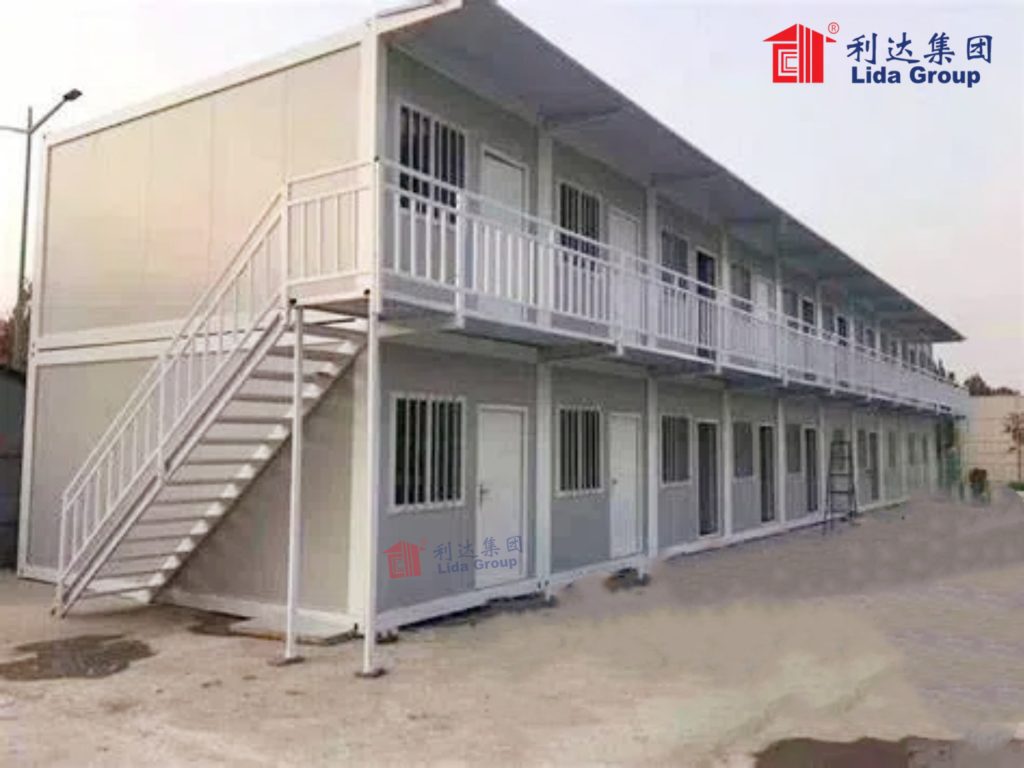
Focusing on the actual accommodation needs of the workforce, Lida Group optimizes the internal functional design of flat packed container houses. The product has a reasonable internal space layout, supporting the configuration of beds, windows, ventilation systems, lighting circuits, and waterproof floors, meeting basic daily living and rest needs. Meanwhile, the modular combination design supports free splicing of multiple units, which can be flexibly expanded into staff dormitory clusters, on-site offices, meeting rooms, canteens, and storage rooms according to project scale. The flexible spatial combination mode realizes integrated matching of accommodation and office functions, fully adapting to the diversified functional needs of global engineering camp construction.
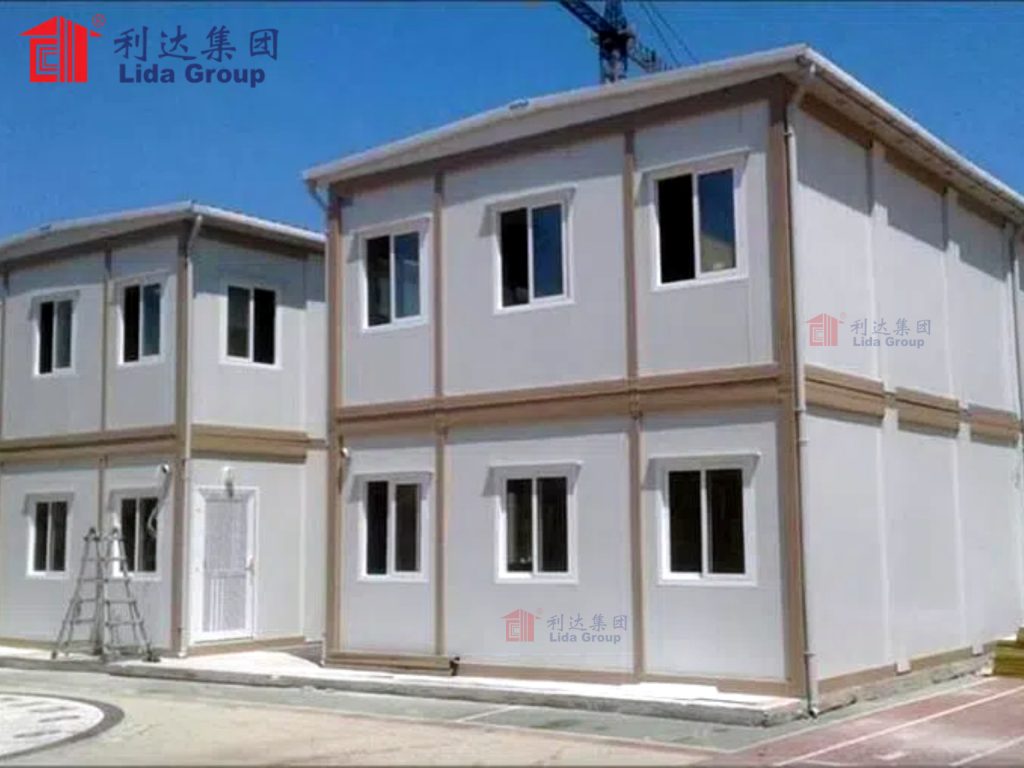
3. Ultra-Rapid Deployment Advantage for Global Workforce Housing
The biggest competitive advantage of Lida Group’s flat packed container houses is efficient and rapid deployment, which completely subverts the slow construction rhythm of traditional workforce housing and can quickly complete large-scale staff settlement in a short time, effectively guaranteeing the efficient progress of global engineering projects.
3.1 Ultra-Fast On-Site Assembly Improves Settlement Efficiency
Benefiting from the flat-pack modular prefabricated design, Lida’s container houses have extremely low on-site assembly difficulty. A team of 3 to 4 ordinary workers can complete the assembly and commissioning of a single standard housing unit within 30 to 60 minutes without large hoisting equipment, professional welding technicians, and complex wet construction procedures. Compared with traditional temporary houses that take weeks or months to complete, the assembly efficiency is increased by more than 90%. For large-scale engineering camps with hundreds of staff accommodation needs, Lida’s flat packed container house groups can be fully deployed and put into use within 3 to 5 days, realizing rapid centralized settlement of the workforce and effectively solving the housing shortage problem of urgent projects.
3.2 Efficient Logistics Adapt to Global Remote Deployment
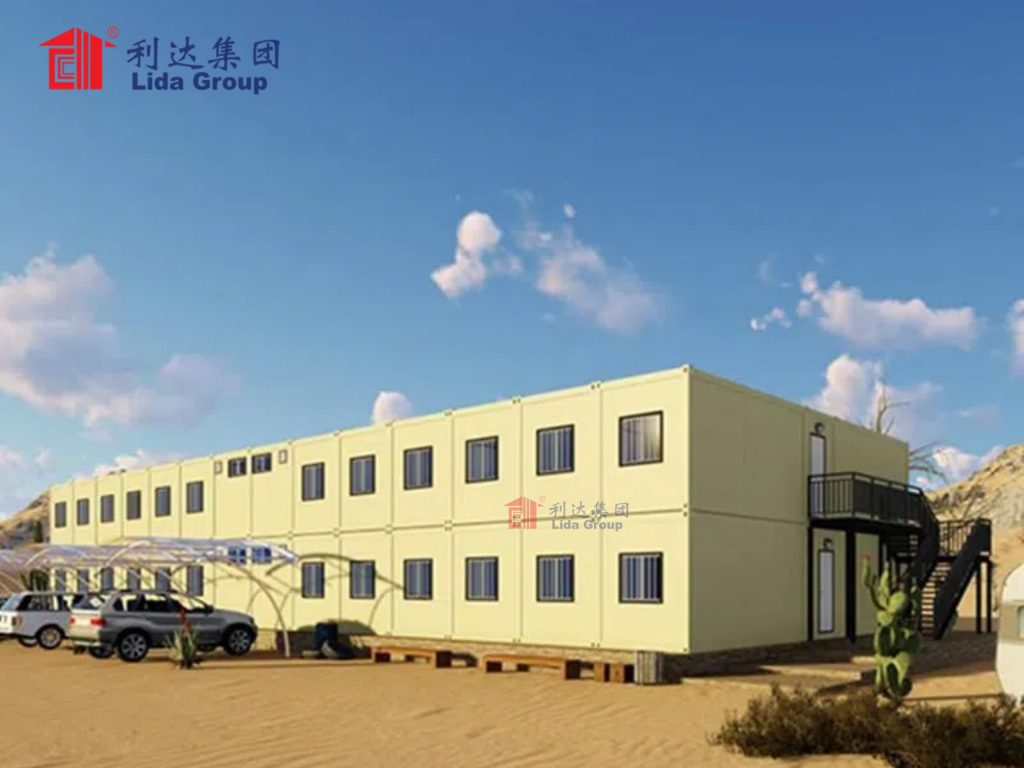
The flat folded and stacked packaging form greatly reduces the transportation volume of a single unit. A single 40-foot shipping container can load dozens of flat packed housing units, which greatly reduces international ocean freight and land transportation costs. At the same time, the compact folded structure avoids collision and structural damage during long-distance transportation, reducing product damage rates and secondary maintenance costs. Whether it is urban suburban engineering projects, remote mountain road construction, desert mining camps, or coastal port projects, Lida’s flat packed container houses can be efficiently transported and deployed, realizing seamless coverage of global complex regional scenarios.
3.3 Rapid Disassembly and Transfer Support Mobile Projects
Global engineering projects are usually mobile and phased. Lida’s flat packed container house adopts a fully detachable bolt assembly structure, which can be quickly disassembled, folded, and packaged after the project is completed. The disassembled components occupy a small space and are easy to transport and store, supporting cross-project and cross-regional repeated deployment. This rapid disassembly and transfer capability enables workforce housing to move synchronously with project construction, realizing flexible mobile housing supply and completely solving the resource waste problem of disposable traditional temporary housing.
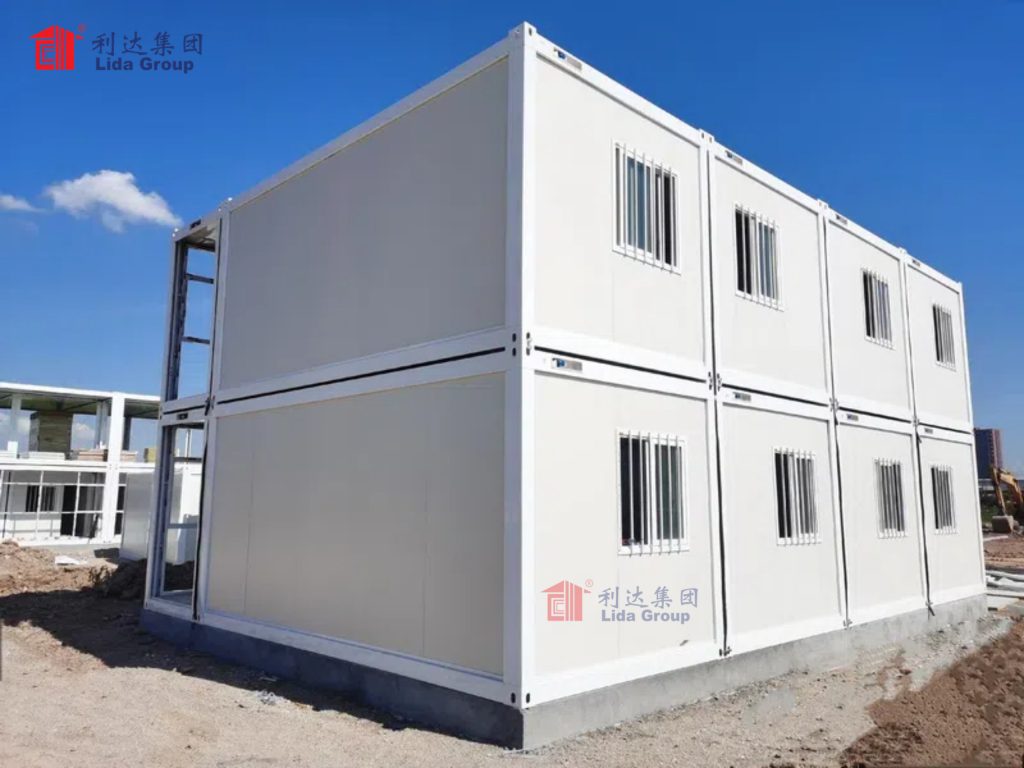
4. Durable and Comfortable Performance for Long-Term Workforce Accommodation
While realizing rapid deployment, Lida Group’s flat packed container houses fully guarantee structural safety, environmental adaptability, and living comfort, able to support long-term stable workforce accommodation in global diversified climatic environments.
4.1 Superior Structural Safety and Weather Resistance
Lida’s flat packed container houses pass strict structural mechanical simulation tests and meet international wind resistance, seismic resistance, and snow load safety standards. The high-strength corrosion-resistant steel frame has strong structural rigidity and stability, not easy to deform and loosen under extreme weather such as strong winds, heavy snow, and storms. The fully sealed waterproof structure and high-quality weather-resistant panels effectively resist rainwater erosion, ultraviolet aging, and temperature difference deformation. Whether in high-temperature tropical regions, cold temperate zones, or dry desert climates, the product can maintain stable structural performance without water leakage, rust deformation, and aging damage, ensuring safe and reliable long-term use.
4.2 Optimized Thermal Insulation and Comfortable Living Environment
Aiming at the discomfort problems of traditional temporary housing such as hot summer and cold winter, Lida Group optimizes the thermal insulation structure of wall panels and roofs. High-density thermal insulation materials are filled inside the composite panels, which effectively isolate external temperature changes, reduce indoor and outdoor heat exchange, and improve indoor constant temperature performance. At the same time, the product is equipped with standardized ventilation windows, lighting systems, and waterproof and moisture-proof floors, ensuring dry indoor environment, smooth air circulation, and sufficient lighting. The humanized design greatly improves staff living comfort, helps stabilize workforce emotions, and improves team work efficiency.
4.3 Long Service Life and Stable Operational Performance
Thanks to industrial-grade anti-corrosion steel structure and high-quality auxiliary materials, Lida’s flat packed container houses have excellent long-term durability. In conventional atmospheric environments, the stable service life can reach more than 20 years, and even in harsh coastal and industrial polluted environments, it can be used stably for more than 15 years. Compared with traditional temporary houses that need to be replaced in 2 to 3 years, the service life is increased by more than 6 times. The ultra-low aging and corrosion rate ensure that the housing performance does not decay significantly during long-term use, reducing frequent maintenance and replacement troubles.
5. Full-Lifecycle Economic Benefits for Global Project Investment
Lida Group’s flat packed container houses have significant comprehensive cost advantages in the full lifecycle of workforce housing construction, operation, and transfer, providing high-cost-performance housing solutions for global engineering projects and effectively reducing overall project investment.
5.3 Low Logistics and Construction Labor Costs
The flat stacked packaging mode greatly reduces unit transportation costs, and the overall logistics expense is saved by more than 60% compared with traditional finished container houses. The ultra-simple on-site assembly process does not require professional construction teams and large mechanical equipment, reducing on-site labor input and equipment rental costs. The whole housing deployment process saves a great deal of human and material resources, and the comprehensive construction cost is far lower than traditional brick-concrete houses and integrated container houses.
5.2 Ultra-Low Long-Term Maintenance Consumption
The industrial anti-corrosion structure and high-quality weather-resistant materials avoid frequent rust removal, repainting, and component replacement. The annual maintenance cost of Lida’s flat packed container houses is less than 3% of the initial investment, far lower than the 12%–15% maintenance ratio of traditional temporary housing. The stable structural performance and sealed design reduce failures such as water leakage and deformation, greatly lowering long-term operational maintenance pressure and hidden cost consumption.
5.3 Reusable Asset Value Improves Return on Investment
Lida’s flat packed container houses support repeated disassembly, transportation, and reassembly, with reusable times exceeding eight cycles. For enterprises with multi-site global project layout, the housing can be recycled and deployed across projects, turning one-time housing investment into sustainable reusable assets. This cyclic usage mode completely eliminates repeated construction costs of traditional disposable housing, greatly improves asset utilization rate, and significantly optimizes the full-lifecycle investment return of workforce housing.
6. Diversified Global Application Scenarios
With the dual core advantages of rapid deployment and durable cost-effectiveness, Lida Group’s flat packed container houses have been widely promoted and applied in global diversified workforce housing scenarios, covering engineering construction, resource development, emergency relief, and public supporting facilities. In infrastructure construction projects such as global roads, railways, and bridges, the product provides rapid centralized dormitories and office spaces for construction teams, adapting to temporary mobile construction needs. In mining, oil field, and remote resource development projects, it solves the housing problem of staff in remote and harsh environments with excellent environmental adaptability and logistics advantages. In emergency disaster relief and public emergency construction, ultra-fast assembly efficiency realizes rapid settlement of affected personnel and rescue workers, improving emergency response efficiency. In factory expansion, rural construction, and temporary commercial supporting projects, flexible combination and scalable deployment meet diversified short-term and medium-term housing needs.
7. Conclusion
Global workforce housing has always been an important supporting link in modern engineering construction and public infrastructure development. Traditional housing solutions have long restricted project progress and increased comprehensive investment due to slow deployment, high logistics costs, poor durability, and non-reusable defects. In the context of increasingly frequent global cross-regional engineering cooperation and mobile project construction, efficient, flexible, and economical temporary housing has become an urgent market demand.
By launching innovative flat packed container houses, Lida Group completely breaks the development dilemma of traditional workforce housing. The flat collapsible modular design realizes ultra-low-cost logistics and ultra-fast on-site assembly, greatly shortening workforce settlement cycles; the industrial corrosion-resistant steel structure ensures long-term structural safety and environmental adaptability, adapting to global complex climatic and regional conditions; the detachable reusable mode and low-maintenance performance optimize full-lifecycle economic benefits, creating high-cost-performance housing value for global users. As a mature and efficient global workforce housing solution, Lida Group’s flat packed container house provides reliable rapid housing support for global engineering construction, remote resource development, and emergency public projects, leading the standardized, efficient, and sustainable upgrading of the global modular temporary housing industry.
Related news
-
Lida Group Offers Low Cost Metal House Using Corrosion-Resistant Steel Structure Building
2026-05-27 16:36:07
-
Lida Group Combines Steel Structure Building with Corrosion-Resistant Construction for Affordable Homes
2026-05-27 14:58:14
-
Corrosion-Resistant Steel Construction Delivers Durable Low Cost Metal House by Lida Group
2026-05-27 15:12:19
contact us
- Tel: +86-532-88966982
- Whatsapp: +86-13793209022
- E-mail: sales@lidajituan.com
