



Lida Group Introduces Eco-Friendly Prefab Worker Dormitory with Sandwich Panels
2026-Feb-14 16:25:05
By Admin
In an era marked by global emphasis on sustainability, carbon neutrality, and efficient construction, the construction industry is undergoing a profound transformation. As infrastructure projects expand worldwide, the demand for safe, comfortable, and environmentally responsible worker accommodation has become increasingly urgent. Traditional worker dormitories, often characterized by lengthy construction cycles, high resource consumption, poor energy efficiency, and limited reusability, can no longer meet the dual needs of project efficiency and ecological protection. Addressing this critical gap, Lida Group, a leading enterprise specializing in prefabricated construction, modular buildings, and infrastructure supporting solutions, has officially launched its innovative eco-friendly prefab worker dormitory integrated with high-performance sandwich panels. This groundbreaking product not only redefines the standards of worker accommodation but also sets a new benchmark for green and efficient construction in the global market, aligning perfectly with the world’s pursuit of low-carbon development and sustainable infrastructure.
With over a decade of experience Deep cultivation the field of prefabricated construction and infrastructure supporting, Lida Group has established a solid reputation as a reliable provider of modular solutions, serving thousands of infrastructure projects at home and abroad. Headquartered in Qingdao, China, the group has built a comprehensive industrial chain covering planning, R&D, production, transportation, installation, maintenance, and recycling, with strict quality control systems and advanced production technologies. Lida Group’s core competitiveness lies in its ability to combine technological innovation with practical needs, developing products that address industry pain points while adhering to environmental standards. Over the years, the group has successfully delivered integrated camps and prefabricated buildings for diverse scenarios, including new energy projects (photovoltaic and wind power), transportation infrastructure (railways and highways), overseas construction sites, and emergency resettlement, earning widespread recognition from clients for its efficiency, quality, and sustainability. The launch of the eco-friendly prefab worker dormitory with sandwich panels is another milestone in Lida Group’s commitment to promoting green construction and improving worker living conditions.
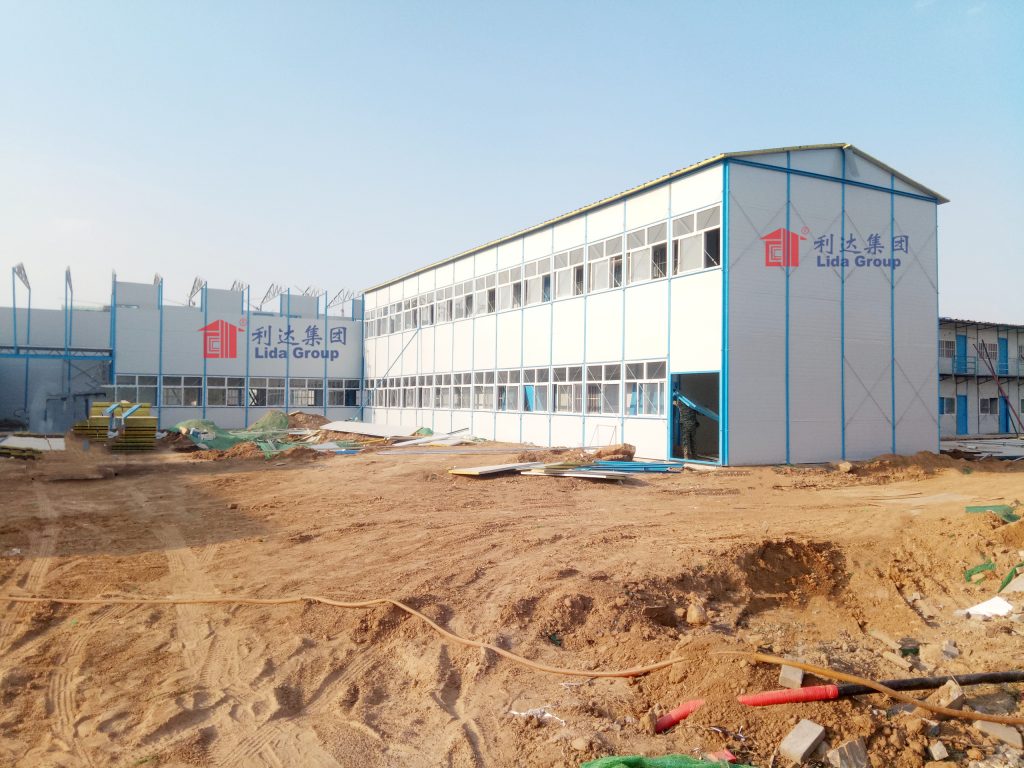
Before delving into the details of this innovative dormitory, it is essential to understand the industry context and the challenges that traditional worker dormitories pose. In most large-scale construction projects, worker accommodation is often treated as a temporary facility, leading to the adoption of simple, low-cost, and environmentally unfriendly construction methods. Traditional brick-and-concrete dormitories require on-site casting, which not only takes 2 months or more to complete but also generates a large amount of construction waste, consumes excessive water and energy, and causes noise and dust pollution. Moreover, these dormitories lack effective thermal insulation and moisture resistance, resulting in poor indoor comfort—overheating in summer, cold in winter, and high humidity that easily breeds mold, posing risks to workers’ health. Additionally, traditional dormitories are mostly non-reusable; once the project is completed, they are often demolished, leading to a waste of resources and further environmental damage. In the context of global carbon peaking and carbon neutrality goals, as well as the increasing emphasis on workers’ well-being, there is an urgent need for a new type of worker dormitory that is efficient, eco-friendly, comfortable, and reusable.
Lida Group’s eco-friendly prefab worker dormitory with sandwich panels is specifically designed to address these challenges, integrating advanced prefabrication technology, high-performance sandwich panels, and humanized design concepts. The core of this product lies in the application of high-quality sandwich panels, which serve as the main围护 structure and play a crucial role in achieving energy conservation, environmental protection, and comfort. Unlike traditional building materials, sandwich panels consist of two outer layers (usually high-strength concrete or steel plates) and a middle insulation layer (such as rigid foam or rock wool), connected by a reliable bonding system. This unique structure endows the panels with excellent thermal insulation, moisture resistance, fire resistance, and structural strength, making them an ideal choice for prefabricated worker dormitories. Lida Group has optimized the composition and structure of the sandwich panels based on years of R&D experience and practical project feedback, ensuring that they meet the highest international standards for environmental protection and performance.
The eco-friendly prefab worker dormitory boasts a series of distinctive features that set it apart from traditional dormitories and even other prefabricated products on the market. First and foremost is its high efficiency in construction. Adopting a “factory prefabrication + on-site assembly” model, all components of the dormitory—including walls, floors, roofs, doors, and windows—are precisely produced in Lida Group’s standardized factories using numerical control equipment, with a component error of no more than 2mm. This not only ensures consistent quality but also greatly shortens the construction cycle. A dormitory capable of accommodating 800 workers can be delivered and installed in just 15 to 20 days, which is more than 70% shorter than the construction period of traditional brick-and-concrete dormitories. This rapid construction speed is particularly crucial for infrastructure projects that require quick deployment of workers, helping to save project time and costs significantly. For example, in a wind power project in Inner Mongolia, China, Lida Group’s prefab dormitory replaced the traditional board house that took over 2 months to build; the new dormitory was completed in 15 days, ensuring that workers could move in on time and the project could proceed smoothly even in harsh sandstorm conditions.
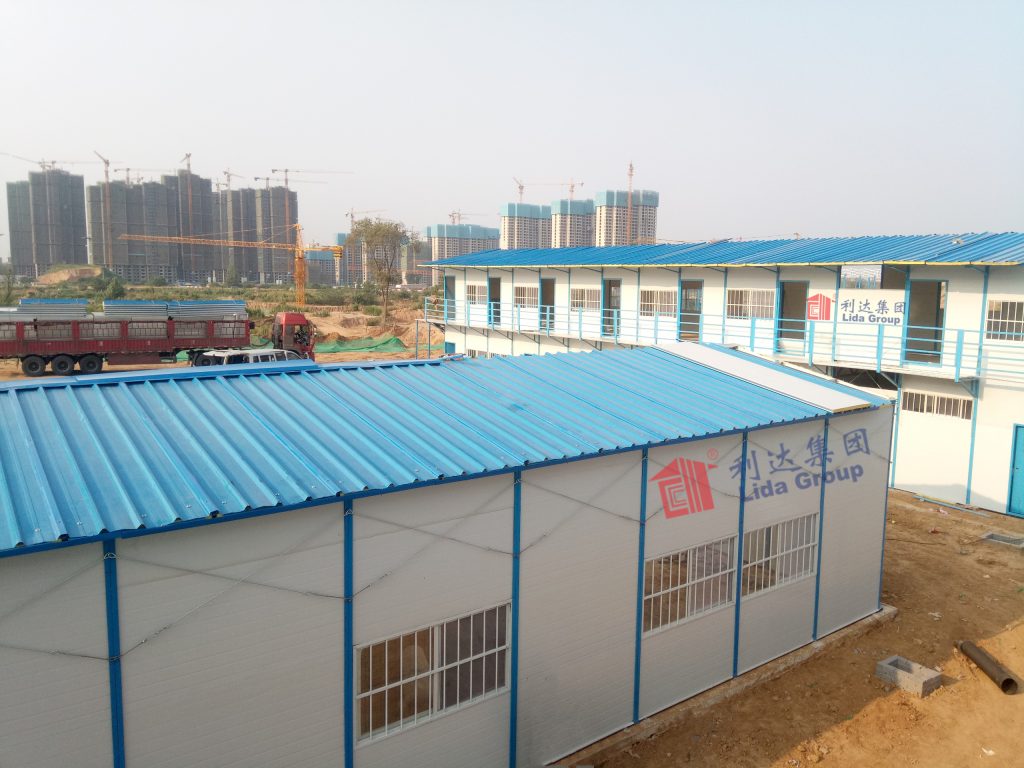
Second, the product embodies strong environmental friendliness and sustainability, aligning with global low-carbon development trends. The key to its eco-friendliness lies in the high-performance sandwich panels and the prefabrication model. The sandwich panels used in the dormitory have excellent thermal insulation performance, measured by the U-value (overall heat transfer coefficient), which is a core indicator of thermal insulation capacity—the lower the U-value, the better the insulation effect. In line with national and international standards, Lida Group’s sandwich panels have a U-value that meets the requirements of different climate zones: ≤0.35 W/(m²·K) for severe cold regions, ≤0.45 W/(m²·K) for cold regions, ≤0.70 W/(m²·K) for hot-summer and cold-winter regions, and ≤1.00 W/(m²·K) for hot-summer and warm-winter regions. In regions with high cooling demand such as Dubai, where the government requires a maximum U-value of ≤0.57 W/(m²·K), the sandwich panels also perform exceptionally well. This excellent thermal insulation performance can significantly reduce the energy consumption of heating and cooling systems in the dormitory. As pointed out by Ismo Kallio, Vice President of Sales for Lida Group in the Americas, “Depending on the technology adopted, cooling costs can be more than twice as high as heating costs in some scenarios.” By reducing reliance on high-energy-consuming air conditioning and heating systems, the dormitory effectively lowers carbon emissions and energy costs.
In addition to energy conservation, the dormitory also achieves environmental protection through material selection and reusability. The sandwich panels are made of environmentally friendly, non-toxic, and recyclable materials; the concrete outer layers are made of high-strength, low-carbon concrete, and the middle insulation layer is made of non-toxic, fire-resistant materials that do not release harmful substances. Compared with traditional wooden materials and gypsum boards, the cement-based sandwich panels have better mold resistance, effectively preventing mold growth caused by high humidity and improving indoor air quality. Jyri Nieminen, Chief Sustainability Officer and Senior Consultant at Sweco Finland, who conducted research on hospital design in Kerala, India, noted that “in hot and humid climates, sandwich panels can form a complete enclosure structure with good airtightness and excellent mold resistance.” This feature is particularly important for worker dormitories located in humid regions, as it ensures a healthy living environment for workers.
Furthermore, the modular design of the dormitory enables high reusability. Unlike traditional dormitories that are demolished after the project is completed, Lida Group’s prefab dormitory can be easily disassembled, transported, and reassembled at new construction sites. The modules have a recycling rate of over 95%, significantly reducing resource waste. A typical example is the port camp project in Pakistan, where Lida Group’s prefab dormitory modules were renovated and reused in a light rail project after the port project was completed, saving 60% of the cost compared to building new dormitories. This reusability not only reduces the environmental impact but also lowers the long-term costs for construction companies, achieving a win-win situation for economy and ecology. Additionally, the prefabrication model minimizes on-site construction waste, as all components are produced in factories with precise material control; any waste generated during production can be recycled and reused, further reducing environmental pollution. This aligns with China’s “Zero-Waste City” construction goals and international sustainable development standards.
Third, the dormitory prioritizes workers’ comfort and safety, breaking the stereotype of “simple temporary housing” for construction workers. Lida Group has incorporated humanized design concepts into every detail of the dormitory, ensuring that workers can enjoy a comfortable and safe living environment after a hard day’s work. The dormitory is available in various specifications and layouts to meet the needs of different project scales and worker numbers. A typical single dormitory module has a size of 3.9m × 6.9m (including wall thickness), with a single room area of 26.91㎡ and a floor height of 3.2m, providing ample living space for workers. Each dormitory room is equipped with essential facilities, including beds, wardrobes, desks, chairs, and lighting, ensuring that workers have a comfortable place to rest and study. Moreover, the dormitory is equipped with a complete set of supporting facilities, including independent bathrooms, public toilets, laundry rooms, and dining areas, enhancing workers’ quality of life.
The independent bathrooms are equipped with toilets, washbasins, mirrors, and towel racks, with waterproof floors and walls to prevent moisture accumulation. The dormitory also features a centralized water supply and drainage system, with pipes made of corrosion-resistant and high-temperature-resistant materials that meet national standards. After installation, the water supply and drainage pipes undergo pressure tests and water flow tests to ensure smooth drainage and no leakage. For regions with cold climates, the dormitory is equipped with floor heating systems; the floor heating pipes are made of high-quality materials that meet relevant standards, and undergo water pressure tests after installation to ensure safe and stable operation. In addition, the dormitory is equipped with a complete power distribution system, including transformers, distribution cabinets, and sockets, all of which have 3C certification and meet national safety standards. The electrical wiring is laid in pipes to avoid safety hazards, and insulation resistance and grounding resistance tests are conducted after installation to ensure electrical safety. The dormitory also has a weak current system, including network, telephone, and cable TV, enabling workers to stay connected with their families and the outside world.
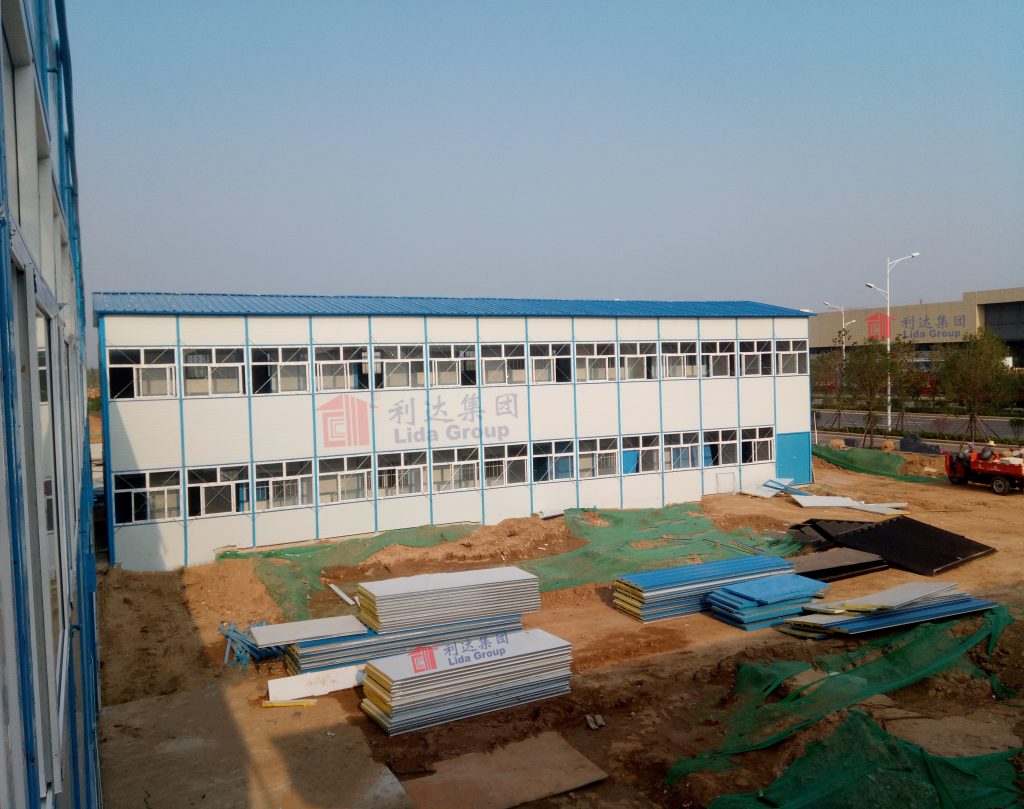
Safety is another top priority in the design of the dormitory. The main structure adopts Q355-grade light steel frames, which have high strength and good seismic performance, meeting the requirements of grade 8 seismic resistance and 6-degree seismic fortification intensity. The sandwich panels have excellent fire resistance, reaching grade 2 fire protection standards, effectively preventing the spread of fire and ensuring workers’ safety in case of fire. The dormitory is also equipped with a complete lightning protection and grounding system, including lightning rods and lightning strips, which meet relevant national standards to prevent lightning damage to the building and electrical equipment. The windows are made of broken-bridge aluminum alloy, which is not only energy-saving and sound-insulating but also impact-resistant, ensuring the safety of workers’ living environment. In addition, the corridors of the dormitory are no less than 2 meters wide, ensuring smooth evacuation in case of emergencies.
Fourth, the dormitory has strong adaptability to different scenarios and climates, making it suitable for various infrastructure projects around the world. Lida Group provides customized solutions based on the specific needs of each project, including project scale, number of workers, climate, and terrain. For high-altitude projects such as the Sichuan-Tibet Railway, the dormitory is equipped with thickened insulation modules and oxygen supply reserves, ensuring that the indoor temperature can reach 18℃ even at an altitude of 4500 meters in Qinghai. For coastal projects, the dormitory uses hot-dip galvanized components and anti-corrosion sandwich panels to resist corrosion from high humidity and salt spray. For overseas projects in Southeast Asia with hot and humid climates, the dormitory is optimized for moisture resistance and ventilation, using high water vapor diffusion resistance insulation materials to reduce indoor humidity and prevent mold growth. For emergency resettlement scenarios, the dormitory can be equipped with folding modules, which can be unfolded in 2 hours to provide quick accommodation for disaster victims and rescuers. This strong adaptability enables the dormitory to be used in diverse regions and scenarios, expanding its application scope and market potential.
To ensure the quality and performance of the eco-friendly prefab worker dormitory, Lida Group has established a strict three-level quality control system throughout the entire process from production to delivery. In the factory production stage, the group uses advanced numerical control equipment to process components, with strict quality inspections for each component, including concrete strength tests, steel bar detection, and sandwich panel performance tests. Only components that pass all inspections can be delivered. During transportation, the components are packaged with windproof and moisture-proof materials to prevent damage during transportation. In the on-site installation stage, the installation team consists of certified professionals who strictly follow the installation specifications and conduct double inspections with the project party for each process to ensure that the installation quality meets the standards. After the dormitory is completed, a comprehensive acceptance is conducted, including structural safety, water supply and drainage, power supply, and fire protection, to ensure that the dormitory is safe, reliable, and meets the design requirements.
In addition to quality control, Lida Group also provides a full-cycle service for the dormitory, including pre-project planning, on-site survey, customized design, production and delivery, on-site installation, post-installation maintenance, and module recycling. The group has a professional technical team that provides free on-site surveys before the project, formulates detailed customized plans based on the actual situation of the project, and provides 3D layout drawings and detailed quotes, making the functional division and material specifications clear at a glance. During the construction period, the group synchronizes the delivery progress with the project progress and regularly sends dormitory usage reports to the project party. During the warranty period, the group provides 24-hour response maintenance services, with on-site maintenance within 48 hours for remote areas. After the project is completed, the group provides module recycling and renovation services, helping clients reuse resources and reduce costs. This full-cycle service ensures that clients have no worries during the entire use of the dormitory, enhancing customer satisfaction and loyalty.
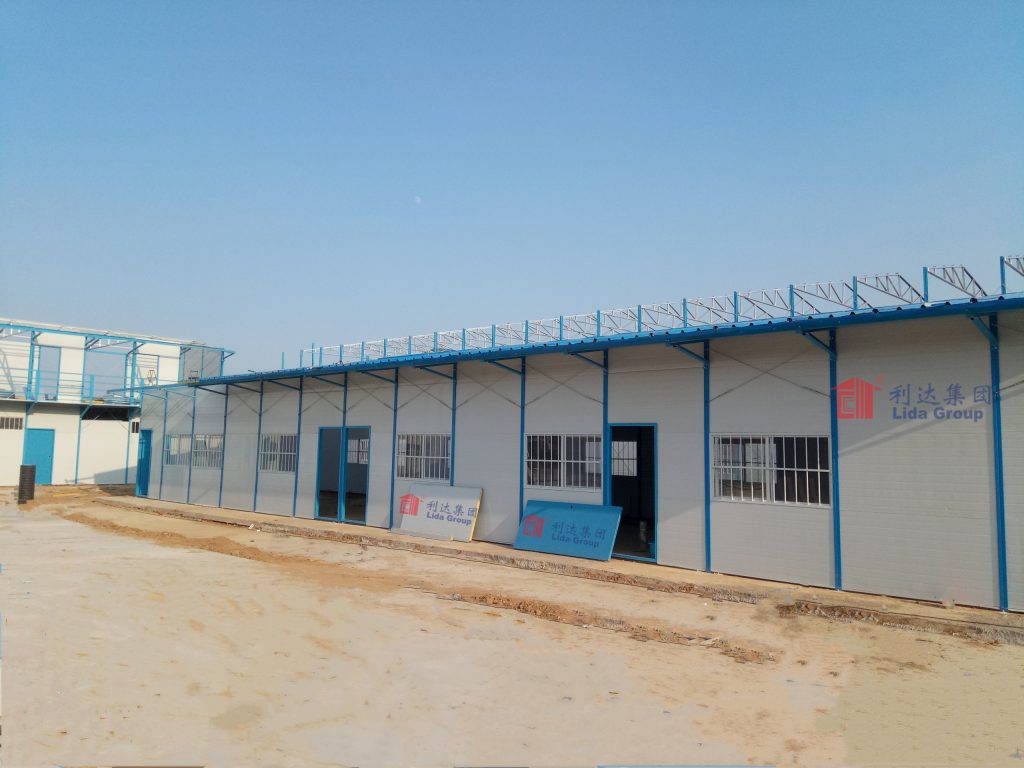
Since its launch, Lida Group’s eco-friendly prefab worker dormitory with sandwich panels has been widely applied in various infrastructure projects at home and abroad, achieving remarkable economic, social, and environmental benefits. In China, the dormitory has been used in major projects such as the Sichuan-Tibet Railway, Inner Mongolia wind power projects, and coastal port construction projects, helping to shorten the construction cycle, reduce costs, and improve worker living conditions. For example, in the Inner Mongolia wind power project, the dormitory solved the problem of slow construction and poor living conditions of traditional board houses, ensuring that workers could work efficiently in harsh environments. In overseas markets, the dormitory has been exported to Pakistan, India, Dubai, and other countries and regions, adapting to local climate and environmental conditions and winning recognition from overseas clients. In the port camp project in Pakistan, the dormitory’s reusability helped the client save a lot of costs, while its eco-friendly features aligned with the local government’s environmental protection requirements. In Dubai, the dormitory’s excellent thermal insulation performance effectively reduced cooling energy consumption, meeting the local green building standards.
The launch of this innovative product also has a profound impact on the global construction industry. Firstly, it promotes the transformation and upgrading of worker accommodation, setting a new standard for eco-friendly, efficient, and comfortable worker dormitories. By demonstrating the advantages of prefabricated technology and sandwich panels, Lida Group encourages more construction companies to adopt green and efficient construction methods, reducing the environmental impact of the construction industry. Secondly, it supports the realization of global carbon peaking and carbon neutrality goals. As an important part of the construction industry, worker dormitories account for a certain proportion of energy consumption and carbon emissions. Lida Group’s eco-friendly prefab dormitory, with its energy-saving and recyclable features, helps to reduce carbon emissions in the construction industry, contributing to global environmental protection. Thirdly, it improves the well-being of construction workers, attracting more people to engage in the construction industry and promoting the healthy development of the industry. In many countries, construction workers often face poor living conditions, which affects their work efficiency and quality of life. Lida Group’s dormitory addresses this issue by providing a comfortable and safe living environment, reflecting the group’s social responsibility.
Looking to the future, Lida Group will continue to focus on technological innovation and sustainable development, continuously optimizing and upgrading its eco-friendly prefab worker dormitory with sandwich panels. The group will increase investment in R&D to improve the performance of sandwich panels, develop more energy-saving and environmentally friendly materials, and enhance the modular design of the dormitory to meet the changing needs of the market. Lida Group will also expand its global market layout, strengthen cooperation with international partners, and promote its green prefabricated products to more countries and regions, contributing to the global development of green and sustainable construction. With the continuous advancement of global urbanization and the increasing emphasis on environmental protection, the demand for eco-friendly prefab worker dormitories will continue to grow. Lida Group is well-positioned to seize this opportunity, leveraging its technological advantages, quality control capabilities, and full-cycle services to become a global leader in the prefabricated worker accommodation market.
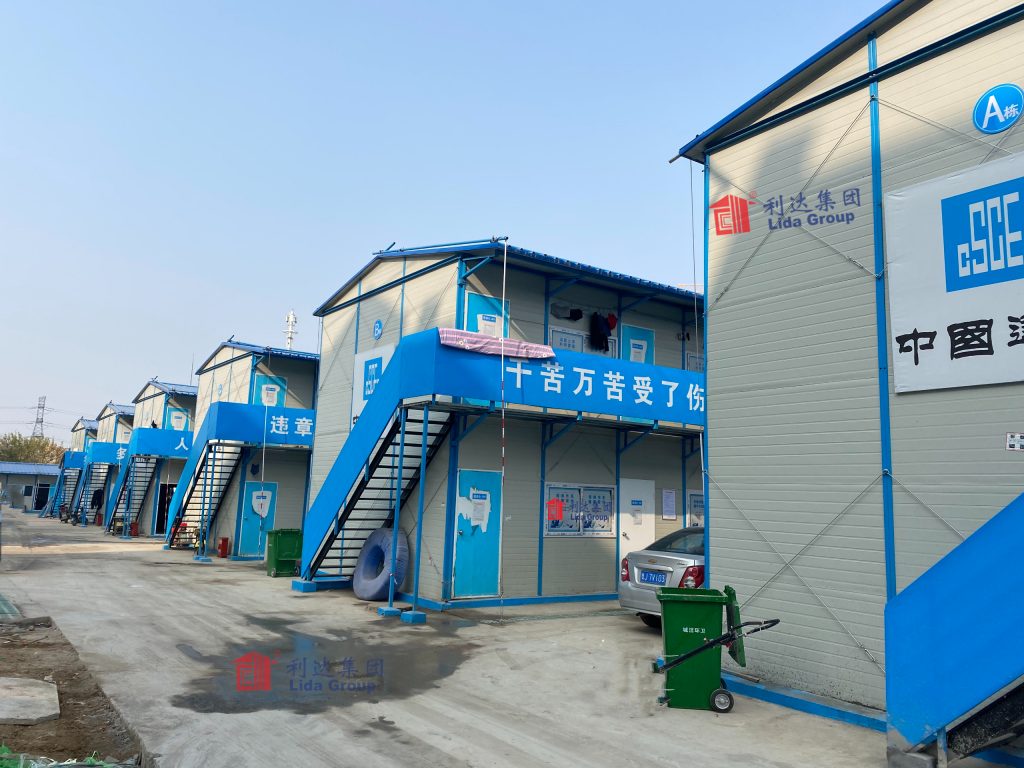
In response to the urgent needs of the global construction industry for efficient, eco-friendly, comfortable, and reusable worker accommodation, Lida Group, a leading enterprise in prefabricated construction, has launched its innovative eco-friendly prefab worker dormitory integrated with high-performance sandwich panels. This product, built on the group’s over a decade of experience in infrastructure supporting and prefabricated technology, addresses the inherent shortcomings of traditional worker dormitories, including lengthy construction cycles, high resource consumption, poor comfort, and low reusability, setting a new benchmark for green and efficient worker accommodation.
The core advantages of Lida Group’s eco-friendly prefab worker dormitory lie in four key aspects. Firstly, its “factory prefabrication + on-site assembly” model ensures rapid construction, with the construction cycle shortened by more than 70% compared to traditional dormitories, significantly saving project time and costs. Secondly, the high-performance sandwich panels, with their unique structure of outer concrete layers and middle insulation layers, provide excellent thermal insulation, moisture resistance, and fire resistance, enabling energy conservation, environmental protection, and a healthy living environment. The dormitory’s U-value meets international standards, reducing heating and cooling energy consumption and carbon emissions, while the recyclable materials and high reusability (over 95%) minimize resource waste and environmental pollution. Thirdly, the humanized design and complete supporting facilities, including independent bathrooms, floor heating, power distribution, and weak current systems, ensure workers’ comfort and safety, improving their quality of life and work efficiency. Fourthly, the dormitory has strong adaptability to diverse climates and scenarios, with customized solutions for high-altitude, coastal, overseas, and emergency projects, expanding its application scope.
Supported by Lida Group’s strict three-level quality control system and full-cycle service (planning, production, installation, maintenance, recycling), the dormitory has been widely applied in major infrastructure projects at home and abroad, achieving remarkable economic, social, and environmental benefits. It not only helps construction companies reduce costs and improve efficiency but also contributes to global carbon peaking and carbon neutrality goals, while enhancing workers’ well-being.
In conclusion, Lida Group’s eco-friendly prefab worker dormitory with sandwich panels is a pioneering product that combines technological innovation, environmental protection, and humanization. It not only reflects Lida Group’s commitment to sustainable development and social responsibility but also drives the transformation and upgrading of the global construction industry. As the world continues to pursue green and efficient development, this product will have broad market prospects, and Lida Group will continue to innovate and expand, making greater contributions to the global development of green and sustainable infrastructure.
Related news
-
Innovative Design for Durable Modular Container Living Spaces
2026-02-14 16:11:21
-
Lida Group's Easy Install Container House Saves Time and Labor
2026-02-14 14:56:21
-
Scalable Prefabricated Container Worker Camp for Large Projects
2026-02-14 14:10:01
contact us
- Tel: +86-532-88966982
- Whatsapp: +86-13793209022
- E-mail: sales@lidajituan.com
