



Lida Group Introduces Advanced Steel Structure Building Solutions
2026-Jan-27 17:54:07
By Admin
Against the backdrop of global construction industry transformation, where intelligent manufacturing, green low-carbon development, and efficient construction have become core trends, Lida Group has always stood at the forefront of technological innovation. With over three decades of experience in steel structure engineering, the group has launched a suite of advanced steel structure building solutions that integrate AI-driven design, intelligent production, eco-friendly materials, and precision installation. These solutions are not just upgrades to traditional construction methods but a comprehensive reconstruction of the steel structure building value chain, addressing industry pain points such as low efficiency, high resource consumption, and poor customization capabilities. By leveraging cutting-edge technologies and deep industry insights, Lida Group’s advanced solutions are redefining the standards of steel structure construction, empowering sectors including industrial manufacturing, logistics warehousing, renewable energy, and public buildings. This article delves into the core components, technological breakthroughs, practical applications, and industry impacts of Lida Group’s advanced steel structure building solutions, illustrating how they are shaping the future of the construction industry.
1. The Strategic Background: Why Advanced Steel Structure Solutions Matter
The global steel structure building market is undergoing a profound transition, driven by stringent environmental regulations, rising labor costs, and increasing demand for high-performance buildings. According to industry data, the market size is projected to grow at a CAGR of 5.8% from 2025 to 2030, reaching $420 billion by the end of the decade. However, the industry still faces inherent challenges: traditional steel structure construction relies heavily on manual operations, leading to inconsistent quality; design and production are fragmented, causing project delays; and the carbon footprint of construction processes fails to meet global net-zero targets. These pain points call for integrated, technologically advanced solutions that can balance efficiency, quality, and sustainability.
For Lida Group, the launch of advanced steel structure building solutions is a strategic response to both market demands and industry trends. With its evolution from a regional steel workshop to a global leader operating in 130+ countries, the group has accumulated rich experience in addressing diverse construction scenarios—from harsh mining environments to high-standard industrial parks. By integrating years of technical expertise with emerging technologies such as AI, digital twin, and green materials, Lida’s solutions aim to achieve three core goals: optimizing the entire construction lifecycle, reducing environmental impact, and enhancing building performance. This strategic focus has positioned Lida Group as a pioneer in the global steel structure industry, setting a benchmark for advanced construction practices.
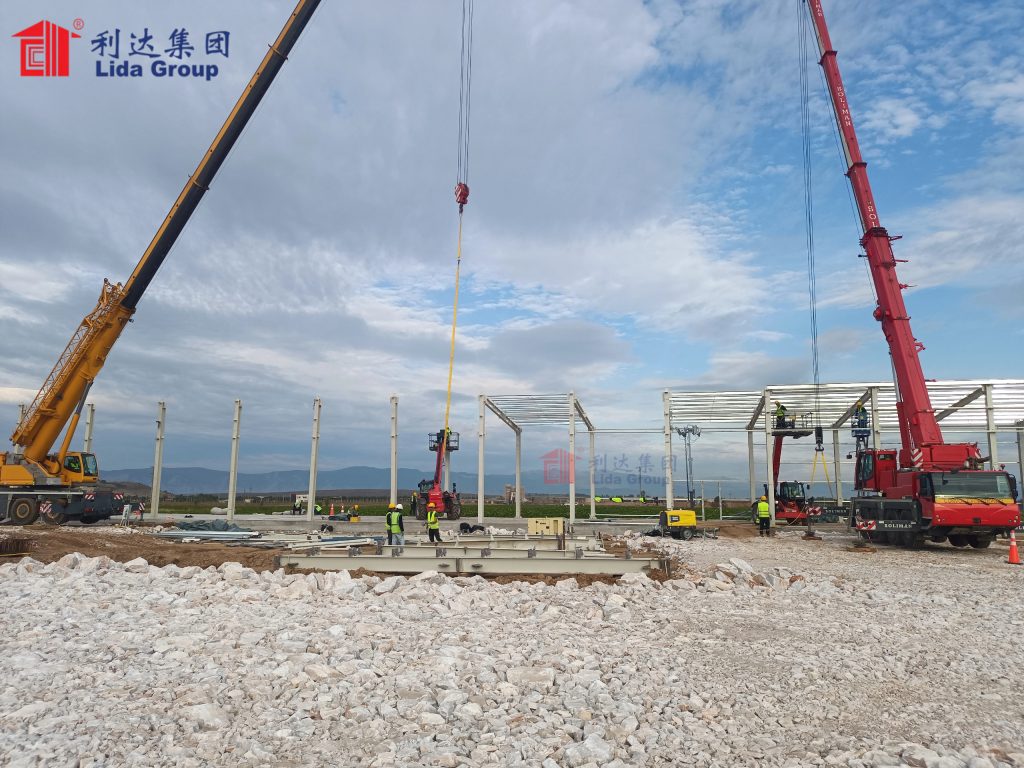
2. Core Components of Lida’s Advanced Steel Structure Building Solutions
Lida Group’s advanced steel structure building solutions are a holistic system covering intelligent design, precision manufacturing, eco-friendly material application, and smart installation. Each component is interconnected to form a closed-loop service, ensuring seamless integration from concept to completion. What distinguishes these solutions is their emphasis on customization, efficiency, and sustainability—tailoring to the unique needs of different industries while driving industry-wide technological progress.
2.1 AI-Driven Intelligent Design Solution
The foundation of Lida’s advanced solutions lies in its AI-powered intelligent design system, which revolutionizes the traditional design paradigm dominated by manual modeling and experience-dependent decisions. Drawing on industry-leading design concepts and self-developed algorithms, Lida’s system constructs a three-layer collaborative architecture—global structure optimization, local node refinement, and multi-objective evaluation—similar to the advanced PSS-GAN system’s logic but tailored for steel structure building scenarios.
At the global structure layer, the system adopts a hybrid algorithm of Monte Carlo Tree Search (MCTS) and Feedforward Neural Network (FNN) to convert load conditions, geometric constraints, and regulatory parameters into parametric inputs. This enables automatic generation of 3D structural frameworks that balance strength, stiffness, and cost-efficiency. The MCTS algorithm explores optimal connection paths, while the FNN rapidly evaluates structural performance, resolving long-standing issues in traditional topology optimization such as low search efficiency and difficulty in embedding physical constraints. For example, in the design of a high-rise steel structure factory, the system reduces design cycles by 60% compared to manual methods while improving material utilization by 12%.
At the local node layer, a dedicated AI model addresses the complexity of steel structure joints—critical for structural stability. By identifying high-stress nodes through finite element analysis, the system extracts key parameters and uses multi-scale residual learning to generate high-precision 3D node models, including detailed bolts and welds. These models seamlessly integrate with the global structure, ensuring mechanical consistency and reducing on-site modification rates by 90%. The multi-objective evaluation layer, powered by Graph Neural Networks (GNN), assesses designs across five dimensions: innovation, cost, strength, constructability, and sustainability, with evaluation efficiency dozens of times higher than traditional finite element analysis.
Complementing the AI design system is Lida’s advanced Building Information Modeling (BIM) and digital twin integration. BIM technology enables cross-professional collaboration, facilitating clash detection between steel structures and MEP (mechanical, electrical, plumbing) systems before construction. Digital twin technology creates a virtual replica of the building, allowing real-time monitoring of structural performance during installation and operation, laying the foundation for predictive maintenance.
2.2 Full-Process Prefabricated Intelligent Manufacturing Solution
Lida Group’s intelligent manufacturing solution is a game-changer in steel structure production, achieving 92% factory-controlled component fabrication—far exceeding the industry average of 65%. The solution integrates robotic automation, precision equipment, and digital management to ensure consistent quality, high efficiency, and low waste.
At the core of the manufacturing process is Lida’s AI-enhanced smart production line, developed in collaboration with academic institutions and technology partners. The line features robotic welding cells with tolerances as tight as 0.15-0.20 mm, automated plasma cutters, and CNC brake presses that process high-strength steel alloys (Q235, Q345B, S235, S355, and SS400) with unparalleled precision. Building on the group’s experience in AI-driven grinding technology for industrial components, the production line incorporates intelligent visual positioning and robot systems to automate parts sorting, welding, grinding, and detection—reducing manual labor by 87% compared to traditional lines.
Key performance improvements are reflected in a set of impressive data: traditional production lines require 300 meters of space, while Lida’s intelligent line only needs 70 meters, saving 76% of space; production cycles are shortened from 7 days to 1 day, and daily production capacity is increased from 5,500 tons to 8,400 tons. Strict quality control is integrated into every step—from raw material testing to final coating. In-house laboratories conduct tensile strength tests for steel, corrosion resistance tests for coatings, and dimensional accuracy checks, ensuring each component meets international standards such as CE, TUV, and BV.
Digital management systems further enhance production efficiency. Real-time data collection from equipment enables dynamic scheduling and process optimization, while traceability systems record the entire production history of each component—from raw material batch to fabrication date—providing full transparency for quality assurance.
2.3 Green Low-Carbon Steel Structure Solution
Aligning with global “double carbon” goals and the trend of green building, Lida Group’s advanced solutions prioritize eco-friendly practices throughout the building lifecycle. The green solution integrates recycled materials, energy-efficient designs, and low-carbon construction methods, achieving significant reductions in carbon emissions, energy consumption, and waste.
Material sustainability is a key focus. Lida uses up to 92% recycled steel in its structures, which maintains the same structural integrity as virgin steel while reducing carbon emissions by 50%. For surface treatment, the group adopts environmentally friendly galvanization and high-performance painting processes, replacing traditional toxic coatings. Nano-ceramic coatings, a core technology in the solution, reduce corrosion rates to 0.003 mm per year (per ASTM B117 testing), extending the building’s service life to 25+ years and reducing maintenance-related carbon footprints.
Energy efficiency is optimized through innovative cladding and insulation solutions. Lida offers a range of eco-friendly cladding materials, including EPS, PU, fiberglass, and rock wool sandwich panels, as well as aerogel-insulated panels with R-40 thermal resistance. These materials reduce heating and cooling costs by 30% for industrial and commercial buildings. Solar-ready roofing designs enable easy integration of photovoltaic systems, while natural ventilation optimization—enabled by steel’s large-span capacity—reduces reliance on mechanical ventilation.
The prefabricated nature of Lida’s solutions further reduces environmental impact. Factory-controlled production minimizes material waste to just 2-3%, compared to 10-15% for on-site concrete construction. Excess steel from fabrication is immediately recycled, closing the loop in the production process. These green practices have been validated by LEED Platinum certification for Lida’s cold storage warehouse project in Germany, setting a benchmark for sustainable steel structure construction.
2.4 Smart Installation and Lifecycle Management Solution
Lida’s advanced solutions extend beyond design and manufacturing to include smart installation and full-lifecycle management, ensuring the long-term performance and adaptability of steel structures.
The smart installation system eliminates the need for on-site welding through a bolt-together connection design, reducing labor requirements by 80% and minimizing safety risks. Laser-guided alignment tools position columns and beams with a tolerance of ±2 mm, while augmented reality (AR) guides assist teams in complex assembly tasks—accelerating on-site work by 30-40%. For large-scale or complex projects, a zonal hydraulic lifting system with coordinated control ensures synchronized installation, maintaining errors within 20 millimeters. Fiber Bragg grating sensors installed at key nodes monitor structural stress and deformation in real time, providing “smart nerves” for the building during construction.
Post-construction, Lida’s lifecycle management solution leverages IoT technology to enable predictive maintenance. IoT sensors embedded in the structure monitor stress, corrosion, temperature, and vibration, feeding data into a digital twin model. This model predicts maintenance needs with 94% accuracy, reducing unplanned downtime by 40% and extending the building’s lifespan to over 30 years. The group also provides 24/7 multilingual support, on-site training, and modular upgrade solutions—allowing structures to be extended or reconfigured without major disruption to operations.
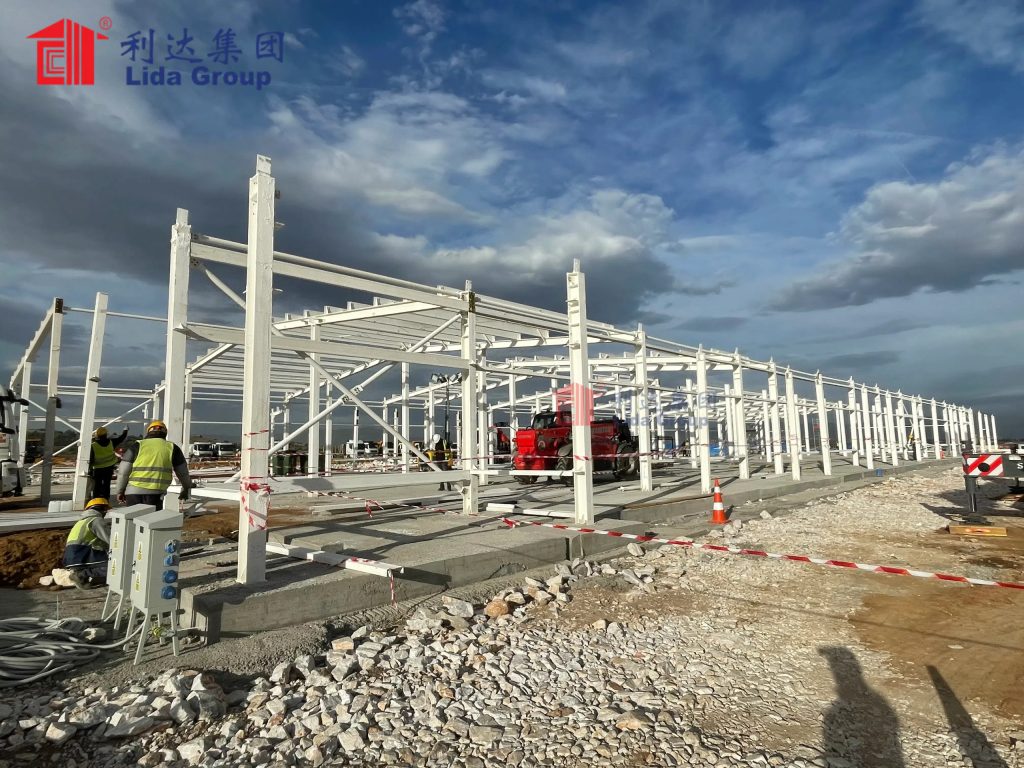
3. Industry-Specific Applications: Advanced Solutions in Action
Lida Group’s advanced steel structure building solutions have been successfully applied across diverse industries, demonstrating their versatility and performance in addressing unique sector-specific challenges. These case studies highlight how the solutions deliver tangible value—from improving efficiency to enhancing sustainability and durability.
3.1 Industrial Manufacturing: AI-Enhanced Smart Production Workshop
Client: A leading military and civilian shipbuilding enterprise required a 40,000-square-meter steel structure workshop equipped with intelligent production lines, demanding high precision, fast construction, and minimal operational disruption.
Solution: Lida deployed its AI-driven design and intelligent manufacturing solutions for the project. The AI design system optimized the steel frame layout to accommodate heavy-duty equipment, while the intelligent production line fabricated 92% of components in the factory—including precision steel beams and joints. The smart installation team used laser alignment tools and AR guides to complete assembly in 12 weeks, 40% faster than traditional methods. IoT sensors were integrated into the structure to monitor vibration from production equipment, ensuring structural stability.
Result: The workshop achieved an 87% reduction in manual labor, with production cycles shortened from 7 days to 1 day. The structure’s vibration resistance and precision met military-grade standards, and the client expanded the partnership with Lida for three additional facilities. This project was recognized as a benchmark for intelligent industrial steel structure construction.
3.2 Mining Industry: Corrosion-Resistant Warehouse in Harsh Environments
Client: Rio Tinto needed a 25,000-square-meter steel structure warehouse in a remote Australian mining region, facing extreme temperatures (-5°C to 45°C), high salt spray levels, and heavy equipment storage requirements.
Solution: Lida’s green low-carbon and durable material solutions were central to the project. The frame was fabricated using galvanized Q345B steel with nano-ceramic coatings, ensuring corrosion resistance in the harsh environment. PU sandwich panels with superior thermal insulation were used for cladding, protecting equipment from temperature fluctuations. Prefabricated components were shipped in flat-pack kits to the remote site, and smart installation techniques reduced on-site labor needs by 80%.
Result: The warehouse was completed 37 days ahead of schedule, with zero corrosion issues in the first five years of operation. Its service life is expected to exceed 25 years, reducing maintenance costs by 40% compared to traditional structures. The project demonstrated Lida’s ability to tailor advanced solutions to extreme environmental conditions.
3.3 Renewable Energy: Solar Farm Support Structure
Client: A global renewable energy firm required 12,000+ steel support structures for a 100 MW solar farm in Australia, demanding durability, wind resistance, and minimal environmental impact.
Solution: Lida’s green solution was deployed, using 92% recycled S355 steel for the support structures—reducing carbon emissions by 50%. The AI design system optimized the structure’s shape for wind resistance (up to 250 km/h) and solar panel alignment, maximizing energy efficiency. Prefabricated production minimized on-site waste to 2%, and smart installation enabled rapid deployment across the remote site.
Result: The solar farm was commissioned on time, with the steel structures performing flawlessly during extreme weather events. The project achieved a 30% reduction in operational energy use and was certified as a sustainable renewable energy infrastructure project. Lida was named the client’s “Preferred Partner for Global Solar Projects.”
3.4 Cold Storage Logistics: LEED-Certified Sustainable Warehouse
Client: A European logistics company needed a 35,000-square-meter cold storage warehouse maintaining temperatures of -20°C to 0°C, with strict energy efficiency and carbon footprint requirements.
Solution: Lida integrated its green low-carbon solution with energy-efficient design. The frame used 92% recycled steel, and aerogel-insulated sandwich panels (R-40 thermal resistance) were installed to minimize heat transfer. Energy-efficient HVAC systems and solar panels on the roof reduced operational energy use by 30%. Rainwater harvesting systems further enhanced sustainability.
Result: The warehouse achieved LEED Platinum certification, the highest global sustainability standard. It reduced annual carbon emissions by 50% compared to traditional cold storage facilities, while operational costs were lowered by 25%. The project became a benchmark for sustainable cold storage steel structure buildings in Europe.
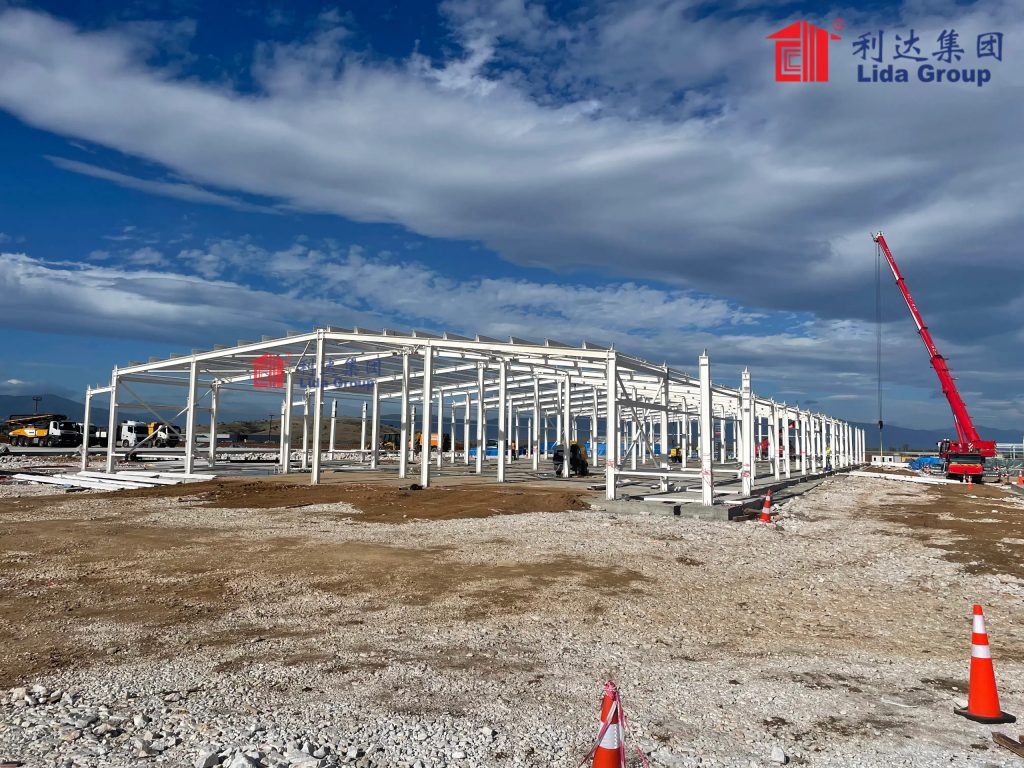
4. Industry Impact and Market Leadership
Lida Group’s advanced steel structure building solutions have had a profound impact on the global construction industry, driving technological upgrading and setting new standards for efficiency, sustainability, and quality. By demonstrating the potential of integrated intelligent and green solutions, Lida has inspired competitors to adopt similar practices, accelerating the industry’s transition toward digitalization and low-carbon development.
The solutions have also redefined customer expectations. Clients now demand integrated lifecycle services rather than fragmented construction processes, and Lida’s turnkey model—covering design, manufacturing, installation, and maintenance—has become a benchmark for customer-centricity. The group’s 98% customer satisfaction rate and 65%+ client retention rate are testaments to the value of its advanced solutions.
In terms of market expansion, the solutions have enabled Lida to penetrate emerging markets in Africa and Latin America, where demand for high-performance, sustainable infrastructure is growing rapidly. The group’s ability to tailor solutions to local regulatory requirements and environmental conditions has solidified its position as a global leader, with partnerships with giants such as Sinopec, PetroChina, and Saudi Binladin Group.
5. Future Outlook: Continuously Evolving Advanced Solutions
Lida Group is committed to continuous innovation, aiming to further enhance its advanced steel structure building solutions to meet evolving industry needs. The group plans to invest 5% of its annual revenue in R&D, focusing on three key directions:
First, deepening AI and digital twin integration. Lida will develop a full-lifecycle digital twin platform that connects design, manufacturing, installation, operation, and maintenance, enabling real-time data-driven optimization. AI algorithms will be enhanced to support autonomous design and predictive maintenance, further reducing human intervention.
Second, advancing green material technology. The group will explore hydrogen-based green steel production and self-healing corrosion coatings, aiming to achieve near-zero carbon emissions in material production. It will also expand the application of composite materials, combining steel with carbon fiber to enhance strength-to-weight ratios.
Third, expanding customization for emerging sectors. Lida will develop tailored solutions for high-growth industries such as electric vehicle battery gigafactories, semiconductor cleanrooms, and urban renewal projects, addressing unique requirements such as vibration control, ultra-high precision, and modularity.
Additionally, Lida plans to increase its production capacity to 1,500 tons per month by 2028, enabling it to handle larger-scale projects and reach 10,000 global projects by 2035. The group will also strengthen global collaboration with academic institutions and industry partners to co-create innovative solutions, driving the entire steel structure industry forward.
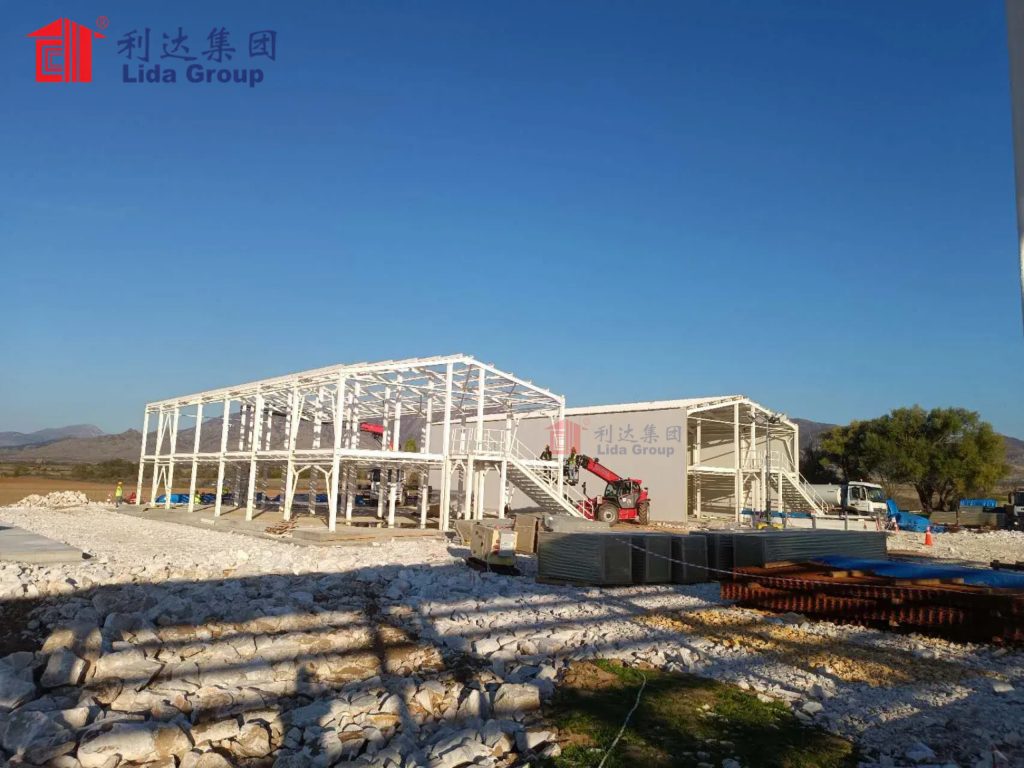
6. Conclusion: Leading the Future of Steel Structure Construction
Lida Group’s advanced steel structure building solutions represent a paradigm shift in the construction industry, integrating AI, intelligent manufacturing, green materials, and smart management to deliver efficient, sustainable, and high-performance buildings. These solutions are not just technical upgrades but a reflection of Lida’s strategic vision—to build a future where construction is intelligent, low-carbon, and customer-centric.
From AI-driven design that optimizes every structural detail to green materials that reduce environmental impact, from smart installation that accelerates construction to lifecycle management that ensures long-term performance, Lida’s solutions address the core challenges of modern construction. The successful application of these solutions across industries—from shipbuilding and mining to renewable energy and logistics—demonstrates their versatility and tangible value.
As the global construction industry continues to pursue digital transformation and net-zero goals, Lida Group is well-positioned to maintain its leadership. By continuing to innovate, invest in R&D, and tailor solutions to emerging needs, the group will not only expand its global footprint but also shape the future of steel structure construction. Lida Group’s advanced solutions are more than a product offering—they are a commitment to building a better, more sustainable world through cutting-edge steel structure technology.
In essence, Lida Group’s advanced steel structure building solutions embody the power of innovation and sustainability. They serve as an inspiration for the industry, proving that technological progress can drive efficiency, quality, and environmental responsibility hand in hand. As Lida Group continues to evolve its solutions, it will undoubtedly remain at the forefront of the global steel structure industry, leading the way toward a smarter, greener future.
Related news
-
Lida Group Achieves Milestone in Metal Frame Warehouse Construction
2026-01-27 17:31:20
-
Your Trusted Partner for Industrial Steel Structure Buildings
2026-01-27 17:45:49
-
Building the Future with Robust Steel Structure Technology
2026-01-27 17:20:04
contact us
- Tel: +86-532-88966982
- Whatsapp: +86-13793209022
- E-mail: sales@lidajituan.com
