



Lida Group Excels in Complex Steel Structure Construction
2026-Feb-26 17:27:58
By Admin
In the global construction industry, complex steel structure construction has emerged as a core pillar of modern engineering, driving the development of large-scale, high-rise, and unconventional architectural projects. With the continuous advancement of urbanization, industrialization, and infrastructure modernization, the demand for complex steel structures—characterized by high precision, large span, heavy load, and diverse shapes—has been growing exponentially. Unlike traditional concrete structures, complex steel structures offer unparalleled advantages such as high strength-to-weight ratio, excellent seismic performance, flexible design, and rapid construction, making them ideal for iconic buildings, industrial facilities, transportation hubs, and large-scale public projects. As a global leader in prefabricated steel structure solutions, Lida Group has established an unshakable position in the field of complex steel structure construction, relying on advanced technology, mature experience, strict quality control, and innovative design capabilities. This article comprehensively explores Lida Group’s outstanding performance in complex steel structure construction, including its core competitiveness, key technologies, typical global projects, quality management system, and profound impact on the global construction industry, demonstrating how Lida Group sets benchmarks for excellence in complex steel structure engineering.
Complex steel structure construction refers to the design, manufacturing, and installation of steel structures with high technical difficulty, including large-span spatial structures, high-rise steel frames, heavy-duty industrial steel structures, special-shaped steel structures, and steel-concrete composite structures. These projects require rigorous technical planning, precision manufacturing, and professional installation, as they often involve complex structural systems, harsh construction environments, and strict safety and quality standards. In recent years, with the rise of super high-rise buildings, large-scale stadiums, airports, bridges, and industrial parks around the world, complex steel structure construction has become a key indicator of a country’s construction technology level. Lida Group, with decades of experience in steel structure engineering, has continuously broken through technical bottlenecks, accumulated rich project experience, and successfully delivered a large number of complex steel structure projects worldwide, winning wide recognition from customers and the industry.
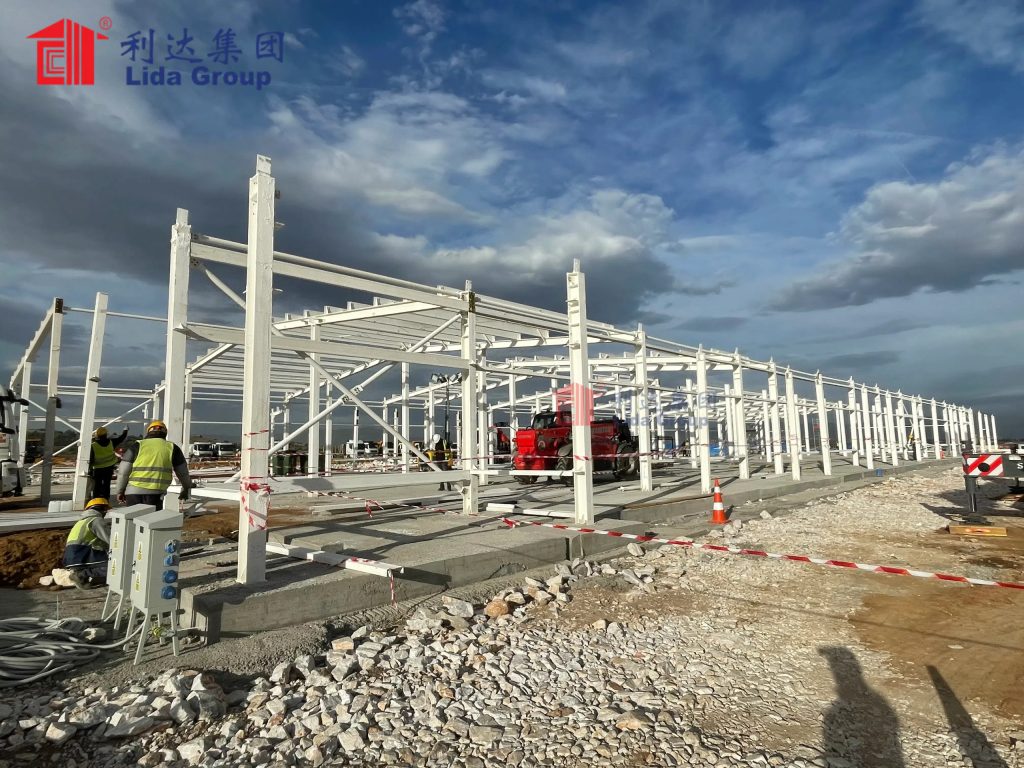
1. The Global Landscape of Complex Steel Structure Construction: Demand and Challenges
The global complex steel structure construction industry is undergoing rapid development, driven by urbanization, infrastructure investment, and technological innovation. However, while the market demand is booming, the industry also faces a series of challenges, including technical complexity, strict quality requirements, and harsh construction conditions. Understanding the global landscape of complex steel structure construction is crucial to recognizing Lida Group’s outstanding advantages and market value.
1.1 Booming Market Demand for Complex Steel Structures
In recent years, the global demand for complex steel structure construction has been growing steadily, driven by several key factors. First, urbanization has accelerated worldwide, especially in emerging economies such as China, India, and Southeast Asian countries. The construction of high-rise buildings, urban complexes, and public facilities (such as stadiums, theaters, and museums) requires large-span, high-strength steel structures to meet the needs of space utilization and architectural aesthetics. For example, super high-rise skyscrapers, which have become symbols of modern cities, rely heavily on complex steel frame structures to ensure stability and safety at extreme heights.
Second, the development of industrialization has promoted the demand for heavy-duty industrial steel structures. Large-scale factories, power plants, chemical plants, and logistics centers require steel structures with high load-bearing capacity, corrosion resistance, and durability to accommodate large-scale equipment and harsh production environments. For example, in the renewable energy sector, wind power towers and solar support structures—key components of wind and solar power projects—are typical complex steel structures that require high precision and reliability.
Third, the construction of transportation infrastructure, such as airports, high-speed rail stations, bridges, and tunnels, has also driven the demand for complex steel structures. These projects often require large-span spatial structures (such as airport terminals and railway station roofs) and high-strength bridge steel structures, which can only be achieved through complex steel structure design and construction. For example, long-span cable-stayed bridges and suspension bridges use steel main girders and towers, which are core components of complex steel structure engineering.
Fourth, the pursuit of architectural innovation and sustainability has also promoted the development of complex steel structures. Modern architects are increasingly using special-shaped steel structures to create unique and iconic buildings, which require sophisticated design and construction technologies. In addition, steel is a 100% recyclable material, and complex steel structures are in line with the global trend of green and low-carbon construction, further boosting market demand.
1.2 Key Challenges in Complex Steel Structure Construction
Despite the booming market demand, complex steel structure construction faces significant challenges that test the technical strength and project management capabilities of construction enterprises. First, the technical complexity of complex steel structures is extremely high. Unlike simple steel structures, complex steel structures often involve multi-dimensional spatial design, complex node connections, and high-precision manufacturing requirements. For example, special-shaped steel structures with irregular curves and angles require precise 3D modeling and simulation to ensure structural stability and safety.
Second, the manufacturing and installation of complex steel structures require high precision. Steel components of complex structures often have large sizes, heavy weights, and strict dimensional tolerances. A slight error in manufacturing or installation can lead to serious safety hazards and project delays. For example, the installation of large-span spatial trusses requires precise positioning and alignment, and any deviation may affect the overall structural performance.
Third, complex steel structure projects often face harsh construction environments. Many projects are located in urban central areas, high-altitude regions, or harsh climate zones (such as cold, high-temperature, or high-humidity areas), which bring great difficulties to construction. For example, high-altitude construction of super high-rise steel structures requires strict safety protection measures and adaptation to low oxygen and strong wind conditions.
Fourth, the quality and safety requirements for complex steel structure construction are extremely strict. Complex steel structures are often used in key projects that are closely related to public safety, such as stadiums, airports, and bridges. Any quality problem may lead to catastrophic consequences. Therefore, construction enterprises must establish a strict quality management system to ensure that every link of design, manufacturing, and installation meets the highest standards.
Faced with these challenges, only a handful of enterprises in the global market have the capability to undertake large-scale complex steel structure projects. Lida Group is one of the few enterprises that can meet the high requirements of complex steel structure construction, relying on its advanced technology, mature experience, and strict quality control.
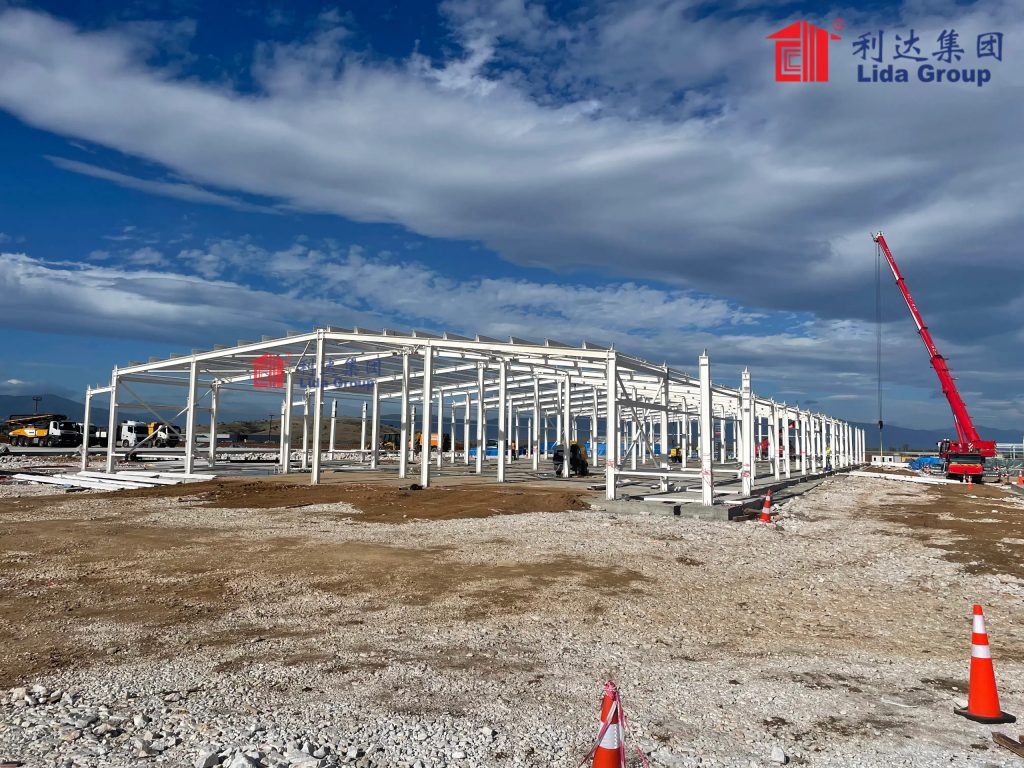
2. Lida Group’s Core Competitiveness in Complex Steel Structure Construction
Lida Group has been deeply engaged in the steel structure industry for decades, and has gradually formed a unique core competitiveness in complex steel structure construction. This competitiveness is reflected in advanced design capabilities, precision manufacturing technology, professional installation services, strict quality control, and customized solutions, enabling Lida Group to stand out in the global market and become a trusted partner for complex steel structure projects.
2.1 Advanced Design Capabilities: Integration of Innovation and Practicality
The design of complex steel structures is the foundation of project success, and Lida Group has a professional design team with rich experience and strong innovation capabilities. The team is composed of senior engineers, structural designers, and technical experts who are proficient in international design standards (such as AISC, Eurocode, GB, and JIS) and advanced design software. Lida Group adopts a design concept that integrates innovation and practicality, ensuring that the design scheme not only meets the functional and aesthetic requirements of the project but also has high safety, reliability, and cost-effectiveness.
To meet the design needs of complex steel structures, Lida Group adopts advanced design technologies, including Building Information Modeling (BIM), digital twin, and finite element analysis (FEA). BIM technology allows the design team to build a 3D digital model of the steel structure, which can simulate the structural layout, node connections, load-bearing capacity, and construction process in detail. This helps to identify potential design problems in advance and optimize the design scheme, improving the rationality and科学性 of the design.
Digital twin technology further enhances the design level of complex steel structures by creating a virtual replica of the project that is connected to the physical project in real time. This allows the design team to simulate the operation of the steel structure under different environmental conditions (such as strong winds, earthquakes, and high temperatures) and optimize the design to improve structural performance and durability. Finite element analysis (FEA) is used to simulate the stress and deformation of complex steel structures under various loads, ensuring that the structure can withstand extreme conditions and meet safety standards.
In addition, Lida Group’s design team has rich experience in handling complex design scenarios, such as large-span spatial structures, special-shaped steel structures, and high-rise steel frames. The team has successfully designed a variety of iconic complex steel structure projects, including super high-rise buildings, large stadiums, and industrial plants, demonstrating strong design capabilities and innovation.
2.2 Precision Manufacturing Technology: Ensuring Quality of Steel Components
The quality of steel components is crucial to the safety and stability of complex steel structure projects. Lida Group has established multiple modern production bases around the world, equipped with advanced automated production equipment and strict quality control systems, ensuring that steel components are manufactured with high precision and high quality.
Lida Group’s production bases are equipped with a full set of automated production equipment, including CNC cutting machines, robotic welding machines, shot blasting machines, precision testing equipment, and automated assembly lines. These equipment ensure that steel components are manufactured with high precision, with a dimensional tolerance of less than 0.2mm, which meets the strict requirements of complex steel structure projects. For example, CNC cutting machines can achieve high-precision cutting of steel plates and profiles, ensuring that the size and shape of components are accurate; robotic welding machines ensure stable welding quality and high welding efficiency, reducing the impact of human factors on welding quality.
In addition, Lida Group strictly selects high-quality steel materials for complex steel structure projects, including high-strength steel (Q355B, Q460, S355JR), weather-resistant steel, and corrosion-resistant steel. These materials have excellent mechanical properties, corrosion resistance, and durability, ensuring that the steel structure can withstand harsh environments and long-term use. Lida Group also adopts advanced anti-corrosion treatment technologies, such as hot-dip galvanization and anti-corrosion paint spraying, to further enhance the service life of steel components.
Lida Group implements a strict quality control system throughout the manufacturing process, from raw material inspection to finished product inspection. All raw materials are inspected strictly before entering the production line, and unqualified raw materials are firmly rejected. During the production process, each link (cutting, welding, anti-corrosion treatment) is monitored in real time, ensuring that the quality of components meets the design requirements. After production, all finished components are inspected strictly according to international standards, and only qualified components are allowed to leave the factory.
2.3 Professional Installation Services: Ensuring Efficient and Safe Construction
The installation of complex steel structures is a key link in the project, requiring professional technology, rich experience, and strict safety management. Lida Group has a professional installation team composed of senior installers, technical supervisors, and safety officers, who have rich experience in installing complex steel structures in various environments.
Lida Group adopts scientific installation strategies for complex steel structure projects, including pre-installation simulation, modular installation, and high-precision positioning. Pre-installation simulation uses BIM technology to simulate the installation process, identifying potential installation problems in advance and formulating corresponding solutions. Modular installation involves pre-assembling steel components into modules in the factory, then transporting them to the construction site for overall installation, which significantly improves installation efficiency and reduces on-site construction time. High-precision positioning uses advanced positioning equipment (such as total stations and laser trackers) to ensure that the installation position of steel components is accurate, meeting the strict requirements of complex steel structures.
In addition, Lida Group attaches great importance to construction safety, establishing a strict safety management system to ensure the safety of the installation process. The installation team undergoes strict safety training before construction, and safety protection measures (such as safety nets, climbing equipment, and anti-fall devices) are fully equipped on the construction site. Regular safety inspections are carried out during construction to eliminate potential safety hazards in a timely manner. For high-altitude, large-span, and other high-risk installation projects, Lida Group also formulates special safety plans and emergency response measures to ensure the safety of construction personnel and the project.
2.4 Strict Quality Management System: Ensuring Project Excellence
Quality is the life of complex steel structure projects, and Lida Group has established a comprehensive quality management system that covers the entire project cycle, from design, manufacturing, and installation to after-sales service. The system is in line with international standards such as ISO 9001, CE EN 1090, and SGS, ensuring that every link of the project meets the highest quality standards.
In the design phase, Lida Group conducts strict design review to ensure that the design scheme meets the functional, safety, and quality requirements of the project. The design review team is composed of senior engineers and technical experts who conduct a comprehensive review of the design drawings, calculation reports, and technical specifications, identifying and correcting potential design problems.
In the manufacturing phase, as mentioned earlier, Lida Group implements strict quality control, from raw material inspection to finished product inspection, ensuring that steel components are of high quality. The company also establishes a quality traceability system, which records the production process, inspection results, and other information of each component, enabling full traceability of product quality.
In the installation phase, Lida Group conducts strict quality inspection of the installation process, including the positioning accuracy of components, the quality of node connections, and the safety of the structure. After the installation is completed, a comprehensive acceptance is carried out according to international standards and project requirements, ensuring that the project meets the design and quality standards.
In the after-sales service phase, Lida Group provides professional maintenance and technical support services, regularly inspecting the steel structure and solving any quality problems in a timely manner. This ensures the long-term stability and safety of the complex steel structure project, winning the trust of customers.
2.5 Customized Solutions: Meeting Diverse Project Needs
Complex steel structure projects have diverse characteristics, with different functional requirements, design standards, and construction environments. Lida Group adheres to a customer-centric concept, providing customized solutions for each project to meet the unique needs of customers.
Before undertaking a complex steel structure project, Lida Group’s professional team conducts in-depth investigations of the project’s functional requirements, design standards, local climate conditions, and construction environment, and then formulates a customized design, manufacturing, and installation plan. For example, for projects in cold regions, Lida Group optimizes the steel structure design to enhance thermal insulation and anti-freezing performance; for projects in coastal areas, the company adopts corrosion-resistant steel materials and advanced anti-corrosion technologies to resist salt spray corrosion; for special-shaped architectural projects, Lida Group uses advanced 3D modeling and simulation technologies to ensure the accuracy and safety of the design and installation.
This customized service capability enables Lida Group to meet the diverse needs of complex steel structure projects in different industries and regions, making it a trusted partner for customers around the world.
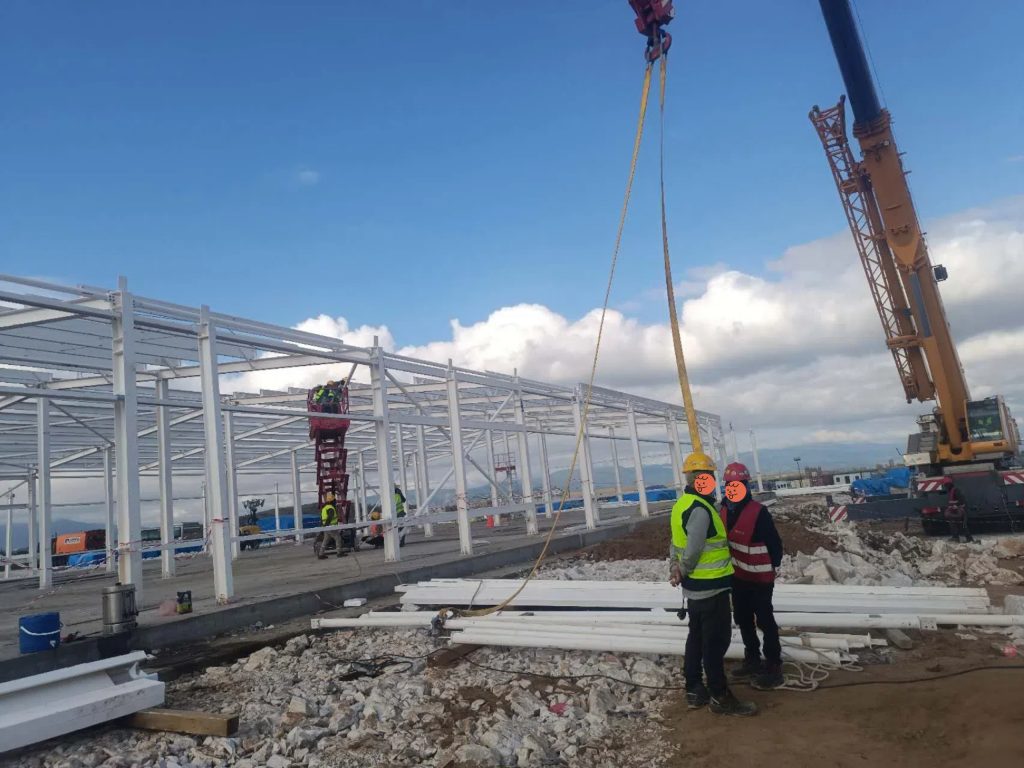
3. Key Technologies of Lida Group in Complex Steel Structure Construction
Lida Group’s outstanding performance in complex steel structure construction is supported by a series of advanced key technologies. These technologies cover design, manufacturing, installation, and anti-corrosion, forming a complete technical system that ensures the high quality, high efficiency, and high safety of complex steel structure projects.
3.1 BIM-Based Integrated Design and Construction Technology
Building Information Modeling (BIM) technology is the core technology of Lida Group in complex steel structure design and construction. Lida Group integrates BIM technology into the entire project cycle, realizing integrated design, simulation, and management.
In the design phase, BIM technology is used to build a 3D digital model of the complex steel structure, which can accurately display the structural layout, node connections, and component details. The design team can use the model to conduct collision detection, identifying potential conflicts between steel components and other building systems (such as electrical, plumbing, and ventilation), and optimizing the design scheme in a timely manner. This reduces design errors and rework, improving design efficiency and quality.
In the manufacturing phase, the BIM model is used to generate detailed manufacturing drawings and component lists, guiding the automated production of steel components. The model can also be used to simulate the manufacturing process, optimizing the cutting, welding, and assembly processes, improving manufacturing efficiency and precision.
In the installation phase, the BIM model is used to simulate the installation process, determining the installation sequence, positioning points, and lifting plan. The model can also be connected to on-site positioning equipment, enabling real-time comparison between the actual installation position and the design position, ensuring high-precision installation.
In addition, BIM technology enables effective collaboration between the design, manufacturing, and installation teams, realizing information sharing and real-time communication, which improves project management efficiency and reduces project risks.
3.2 High-Precision Manufacturing Technology for Complex Components
Complex steel structure projects often involve special-shaped, large-size, and heavy-weight components, which require high-precision manufacturing technology. Lida Group has developed a series of high-precision manufacturing technologies to meet the manufacturing needs of complex components.
First, CNC precision cutting technology. Lida Group uses advanced CNC plasma cutting machines and laser cutting machines, which can achieve high-precision cutting of steel plates and profiles with a cutting accuracy of ±0.1mm. This ensures that the size and shape of complex components are accurate, meeting the strict design requirements.
Second, robotic welding technology. For complex components with high welding requirements, Lida Group uses robotic welding machines, which have the advantages of stable welding quality, high welding efficiency, and strong adaptability. The robotic welding system can automatically adjust the welding parameters according to the shape and size of the component, ensuring uniform welding seams and high welding strength.
Third, 3D printing technology for complex nodes. For special-shaped nodes that are difficult to manufacture using traditional methods, Lida Group uses 3D printing technology to produce high-precision nodes. This technology can realize the rapid manufacturing of complex-shaped nodes, improving manufacturing efficiency and reducing manufacturing costs.
Fourth, precision assembly technology. Lida Group uses advanced assembly equipment and positioning tools to ensure the precision of component assembly. The assembly process is monitored in real time using precision testing equipment, ensuring that the assembly accuracy meets the design requirements.
3.3 Large-Span Spatial Structure Installation Technology
Large-span spatial structures (such as trusses, grids, and cable structures) are important types of complex steel structures, and their installation requires advanced installation technology. Lida Group has rich experience in the installation of large-span spatial structures, mastering a variety of advanced installation technologies, including integral lifting, sliding installation, and cantilever assembly.
Integral lifting technology is suitable for large-span spatial structures with relatively small weight. The technology involves lifting the entire spatial structure to the design position using large lifting equipment (such as cranes and hydraulic jacks), which is efficient and safe. Lida Group has successfully used this technology in the installation of large stadium roofs and airport terminals.
Sliding installation technology is suitable for large-span spatial structures with large weight and large span. The technology involves sliding the spatial structure along the guide rail to the design position, which reduces the requirements for lifting equipment and is suitable for construction in narrow spaces. Lida Group has used this technology in the installation of large industrial plant roofs and bridge steel structures.
Cantilever assembly technology is suitable for large-span spatial structures that cannot be lifted or slid as a whole. The technology involves assembling the structure from one end to the other, using cantilever supports to ensure the stability of the structure during assembly. Lida Group has rich experience in this technology, successfully applying it to the installation of large-span cable-stayed bridge steel girders and spatial trusses.
3.4 Advanced Anti-Corrosion Technology for Steel Structures
Corrosion is a major factor affecting the service life of steel structures, especially for complex steel structures used in harsh environments (such as coastal areas, chemical plants, and high-humidity regions). Lida Group adopts advanced anti-corrosion technologies to ensure the durability of complex steel structures.
First, hot-dip galvanization technology. This technology forms a dense zinc layer on the surface of steel components, which can effectively isolate the steel from the external environment, preventing corrosion caused by rain, humidity, salt spray, and chemical substances. The zinc layer has a thickness of more than 80μm, ensuring long-term anti-corrosion performance.
Second, anti-corrosion paint spraying technology. Lida Group uses high-quality anti-corrosion paint, including epoxy paint, polyurethane paint, and fluorocarbon paint, which have excellent anti-corrosion performance and weather resistance. The paint is applied using a “two primers and two topcoats” system, which further enhances the anti-corrosion performance of the steel structure.
Third, weather-resistant steel technology. For complex steel structures used in outdoor environments, Lida Group uses weather-resistant steel, which has excellent corrosion resistance and can form a dense oxide film on the surface to prevent further corrosion. This technology reduces the need for regular anti-corrosion maintenance, saving maintenance costs.
Fourth, cathodic protection technology. For steel structures in marine environments or other highly corrosive environments, Lida Group adopts cathodic protection technology (such as sacrificial anode cathodic protection and impressed current cathodic protection), which can effectively prevent corrosion of steel components, extending the service life of the steel structure.
3.5 Seismic and Wind Resistance Reinforcement Technology
Complex steel structures are often used in key projects, and their seismic and wind resistance performance is crucial to the safety of the project. Lida Group has developed a series of seismic and wind resistance reinforcement technologies to improve the seismic and wind resistance performance of complex steel structures.
In terms of seismic reinforcement, Lida Group adopts advanced seismic design concepts, including ductile design and energy dissipation design. The steel structure is designed with ductile nodes and energy dissipation devices (such as dampers), which can absorb and dissipate seismic energy during an earthquake, reducing the damage to the structure. In addition, Lida Group uses high-strength steel materials and optimized structural design to improve the seismic performance of the structure.
In terms of wind resistance reinforcement, Lida Group conducts detailed wind tunnel tests and wind load calculations for complex steel structures, especially large-span spatial structures. The structure is designed to resist strong winds, with optimized shape and structural layout to reduce wind resistance. In addition, Lida Group uses wind-resistant devices (such as wind barriers and vibration dampers) to reduce the impact of wind on the structure, ensuring the stability of the structure under strong wind conditions.
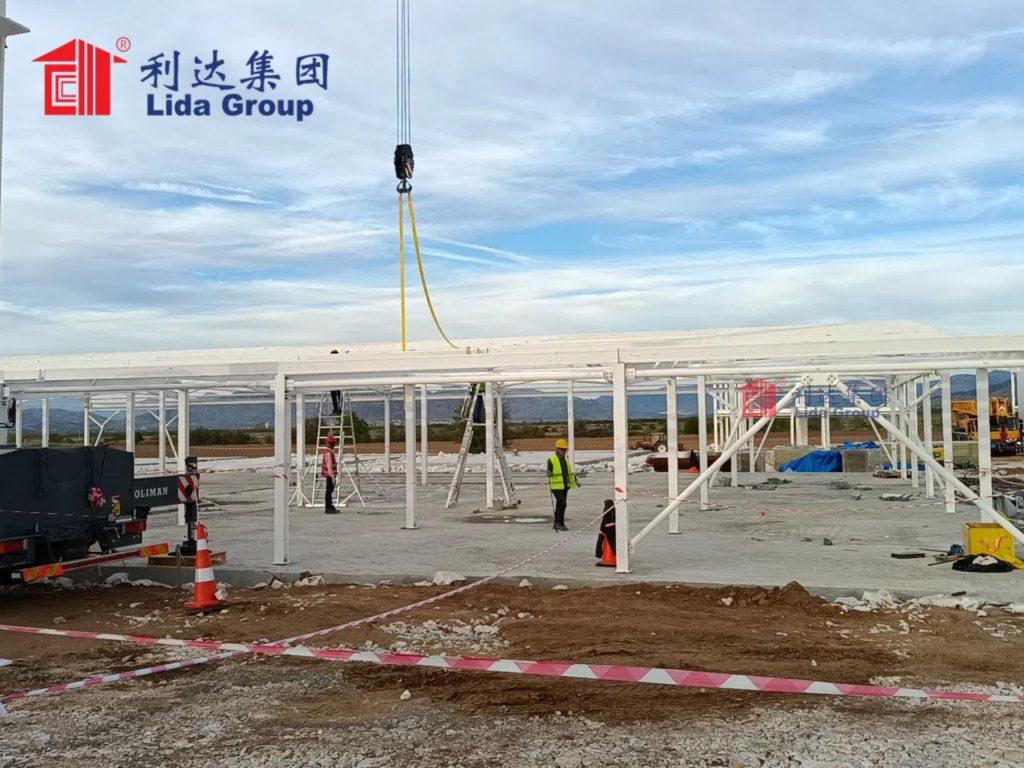
4. Typical Global Projects of Lida Group in Complex Steel Structure Construction
Over the years, Lida Group has undertaken a large number of complex steel structure projects around the world, covering various fields such as architecture, industry, transportation, and energy. These projects have not only verified Lida Group’s strong technical strength and project management capabilities but also become iconic projects in the local area, winning wide recognition from customers and the industry. The following are several typical global projects that showcase Lida Group’s excellence in complex steel structure construction.
4.1 Super High-Rise Office Building Steel Structure Project in the Middle East
A large real estate developer in Dubai (United Arab Emirates) needed to build a 65-story super high-rise office building, with a total height of 320 meters. The building required a complex steel frame-core tube structure to ensure stability and safety at extreme heights. The project had strict requirements for construction precision, seismic performance, and construction efficiency. After comparing multiple solutions, the developer chose Lida Group as the general contractor for the steel structure project.
For this project, Lida Group designed a complex steel frame-core tube structure, using high-strength steel (Q460 and S355JR) for the main frame and core tube. The steel structure had a total weight of 12,000 tons, with complex node connections and high-precision manufacturing requirements. Lida Group used BIM technology to build a 3D digital model of the steel structure, conducting collision detection and optimization of the design scheme. The finite element analysis (FEA) was used to simulate the stress and deformation of the structure under seismic and wind loads, ensuring the safety and stability of the structure.
In the manufacturing phase, Lida Group used advanced CNC cutting machines and robotic welding machines to produce steel components with high precision. The components were treated with hot-dip galvanization and anti-corrosion paint to enhance anti-corrosion performance. In the installation phase, Lida Group adopted modular installation and high-precision positioning technology, using large cranes to lift steel components to high altitudes. The installation team strictly followed the safety management system, ensuring the safety of the construction process.
The project had a construction cycle of 24 months, which was 20% faster than the planned cycle. After completion, the building passed the strict acceptance of the local authorities, with seismic resistance level of 8 degrees and wind resistance level of 12 levels. The building has become an iconic super high-rise building in Dubai, demonstrating Lida Group’s strong capability in super high-rise steel structure construction.
4.2 Large-Span Stadium Steel Structure Project in Europe
A local government in Germany needed to build a large-scale stadium with a seating capacity of 50,000 people, which required a large-span spatial steel structure roof. The roof had a span of 120 meters, with a complex curved shape, requiring high precision in design and installation. Lida Group won the bid for the steel structure project with its advanced design scheme and rich project experience.
For this project, Lida Group designed a large-span spatial truss structure for the roof, using high-strength steel trusses to ensure the stability and load-bearing capacity of the roof. The roof had a complex curved shape, which required precise 3D modeling and simulation. Lida Group used BIM technology and digital twin technology to simulate the design and installation process, optimizing the truss layout and node connections. The finite element analysis was used to simulate the stress of the roof under snow load and wind load, ensuring the safety of the structure.
In the manufacturing phase, Lida Group produced the steel trusses using advanced CNC cutting and robotic welding technology, ensuring the precision of the trusses. The trusses were treated with anti-corrosion paint to adapt to the local climate conditions. In the installation phase, Lida Group adopted integral lifting technology, using large hydraulic jacks to lift the entire roof truss to the design position. The installation process was monitored in real time using laser trackers, ensuring the positioning accuracy of the roof.
The project was completed in 18 months, meeting the requirements of the local government. The stadium has become a landmark building in the region, hosting a variety of large-scale sports events and cultural activities. The project has been highly recognized by the local government and the public, demonstrating Lida Group’s strong capability in large-span spatial steel structure construction.
4.3 Heavy-Duty Industrial Plant Steel Structure Project in Southeast Asia
A large petrochemical enterprise in Indonesia needed to build a heavy-duty industrial plant, which required a complex steel structure with high load-bearing capacity and corrosion resistance. The plant was used for the production of petrochemical products, with harsh production environments (high temperature, high pressure, and corrosive gases). The steel structure needed to withstand heavy equipment loads and resist corrosion from chemical substances. Lida Group provided a customized steel structure solution for the project.
For this project, Lida Group designed a heavy-duty steel frame structure, using corrosion-resistant steel (S355JR) for the main frame and components. The steel structure had a load-bearing capacity of up to 20 tons per square meter, which could accommodate large-scale petrochemical equipment. The structure was designed with enhanced anti-corrosion measures, including hot-dip galvanization and anti-corrosion paint spraying, to resist corrosion from chemical substances.
In the manufacturing phase, Lida Group strictly controlled the quality of steel components, using advanced testing equipment to detect the mechanical properties and anti-corrosion performance of components. The components were manufactured with high precision to ensure the stability of the structure. In the installation phase, Lida Group adopted modular installation technology, pre-assembling the steel frame into modules in the factory, then transporting them to the construction site for installation. The installation team took strict safety protection measures to adapt to the harsh construction environment.
The project was completed in 12 months, and the plant was put into use on schedule. The steel structure has been in stable operation for many years, withstanding the harsh production environment and heavy equipment loads. The enterprise’s production efficiency has been significantly improved, and the project has become a model for heavy-duty industrial steel structure projects in Southeast Asia.
4.4 Long-Span Bridge Steel Structure Project in Africa
A local government in Nigeria needed to build a long-span cable-stayed bridge across a major river, with a main span of 280 meters. The bridge required a complex steel structure, including steel main girders, steel towers, and cable systems. The project had strict requirements for seismic performance, wind resistance, and durability. Lida Group won the bid for the steel structure project with its advanced technology and rich experience in bridge construction.
For this project, Lida Group designed a cable-stayed bridge steel structure, using high-strength steel for the main girders and towers. The steel main girders had a box-shaped cross-section, which provided high load-bearing capacity and stability. The steel towers were designed as H-shaped structures, with a height of 80 meters, ensuring the stability of the cable system. Lida Group used BIM technology to simulate the design and installation of the bridge steel structure, optimizing the layout of the main girders and towers. The finite element analysis was used to simulate the stress of the bridge under various loads (such as vehicle load, wind load, and seismic load), ensuring the safety of the bridge.
In the manufacturing phase, Lida Group produced the steel main girders and towers using advanced CNC cutting and robotic welding technology, ensuring the precision and quality of the components. The components were treated with anti-corrosion paint to resist corrosion from the river environment. In the installation phase, Lida Group adopted cantilever assembly technology to install the steel main girders, using large cranes to lift the girders to the design position. The cable system was installed with high precision to ensure the balance and stability of the bridge.
The project was completed in 30 months, and the bridge was opened to traffic on schedule. The bridge has significantly improved the local transportation conditions, promoting economic development in the region. The project has been highly recognized by the local government and the public, demonstrating Lida Group’s strong capability in bridge steel structure construction.
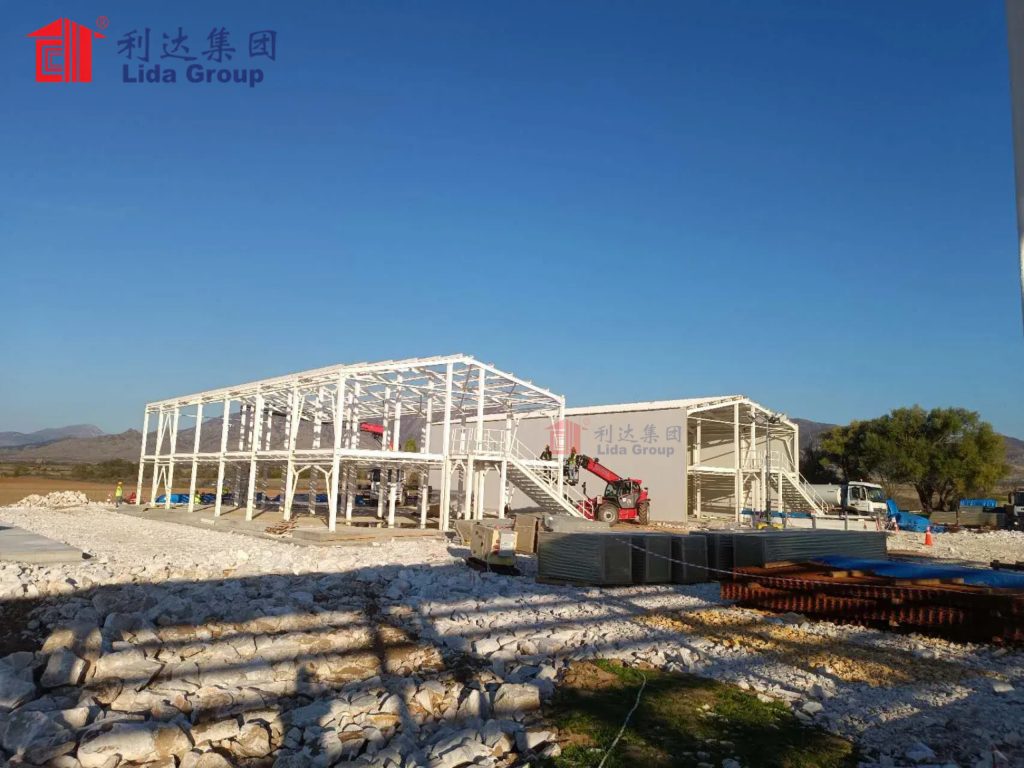
5. The Impact of Lida Group’s Complex Steel Structure Construction on the Global Industry
Lida Group’s outstanding performance in complex steel structure construction has not only brought significant economic benefits to the company but also had a profound impact on the global construction industry, promoting the development and progress of complex steel structure technology and setting benchmarks for the industry.
5.1 Promoting the Innovation and Development of Complex Steel Structure Technology
Lida Group has always attached great importance to technological innovation, investing a lot of resources in the research and development of complex steel structure technologies. The company’s continuous breakthroughs in BIM technology, precision manufacturing technology, large-span installation technology, and anti-corrosion technology have promoted the innovation and development of the global complex steel structure industry. Many of Lida Group’s technological achievements have been widely adopted by other enterprises in the industry, improving the overall technical level of the industry.
In addition, Lida Group actively participates in the formulation of international and national standards for complex steel structure construction, contributing its technical experience and expertise to the standardization and normalization of the industry. This helps to improve the quality and safety level of complex steel structure projects worldwide.
5.2 Promoting the Transformation and Upgrading of the Construction Industry
Complex steel structure construction is an important symbol of the modernization of the construction industry. Lida Group’s development in complex steel structure construction has promoted the transformation and upgrading of the global construction industry, from traditional concrete construction to modern steel structure construction. Steel structure construction has the advantages of energy saving, environmental protection, and rapid construction, which is in line with the global trend of green and low-carbon construction.
Lida Group’s prefabricated steel structure technology has also promoted the industrialization of the construction industry. The prefabrication of steel components in the factory and assembly on-site reduces on-site construction time and labor costs, improving construction efficiency and quality. This industrialized construction mode has been widely promoted in the global construction industry, promoting the transformation and upgrading of the industry.
5.3 Supporting the Construction of Global Infrastructure
Complex steel structure construction is an important part of global infrastructure construction. Lida Group’s participation in a large number of complex steel structure projects around the world, including super high-rise buildings, stadiums, bridges, and industrial plants, has supported the construction of global infrastructure. These projects have improved local transportation conditions, promoted industrial development, and enhanced the quality of life of local residents.
In particular, in emerging economies and “Belt and Road” countries and regions, Lida Group’s complex steel structure projects have played an important role in promoting local infrastructure construction and economic development. For example, the long-span bridge project in Nigeria and the heavy-duty industrial plant project in Indonesia have significantly improved local infrastructure conditions and promoted economic growth.
5.4 Setting Benchmarks for Quality and Safety in the Industry
Lida Group’s strict quality management system and outstanding project performance have set benchmarks for quality and safety in the global complex steel structure industry. The company’s adherence to high standards of design, manufacturing, and installation has ensured the quality and safety of complex steel structure projects, winning the trust of customers and the industry. Many enterprises in the industry have learned from Lida Group’s quality management experience, improving their own quality management levels.
In addition, Lida Group’s emphasis on construction safety has also set an example for the industry. The company’s strict safety management system and comprehensive safety protection measures have ensured the safety of construction personnel and projects, reducing safety accidents in complex steel structure construction.
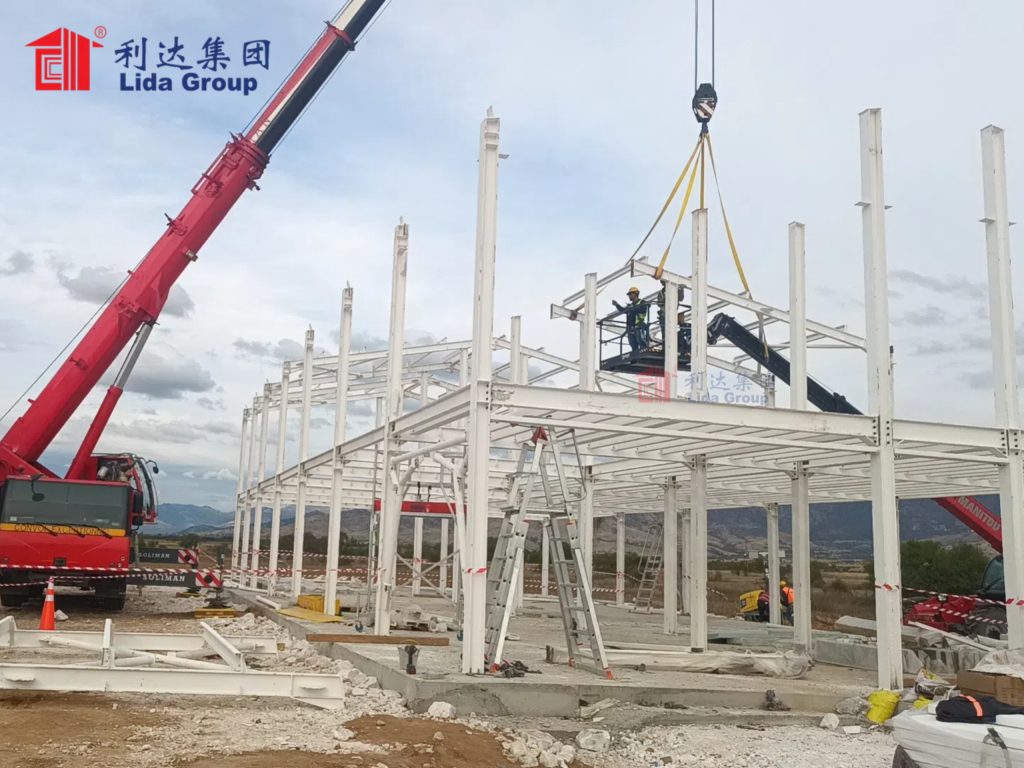
6. Conclusion
In the global construction industry, complex steel structure construction has become an important driving force for the development of modern engineering, and Lida Group has established an outstanding position in this field with its advanced technology, mature experience, strict quality control, and innovative capabilities. This article has comprehensively explored Lida Group’s excellence in complex steel structure construction, including its core competitiveness, key technologies, typical global projects, and industry impact, demonstrating that Lida Group is a global leader in complex steel structure construction.
Lida Group’s core competitiveness in complex steel structure construction is reflected in its advanced design capabilities, precision manufacturing technology, professional installation services, strict quality management system, and customized solutions. These advantages enable Lida Group to meet the high requirements of complex steel structure projects in different industries and regions, successfully delivering a large number of high-quality projects worldwide.
The key technologies of Lida Group in complex steel structure construction, including BIM-based integrated design and construction technology, high-precision manufacturing technology for complex components, large-span spatial structure installation technology, advanced anti-corrosion technology, and seismic and wind resistance reinforcement technology, form a complete technical system that ensures the high quality, high efficiency, and high safety of complex steel structure projects. These technologies not only improve the technical level of Lida Group but also promote the innovation and development of the global complex steel structure industry.
The typical global projects, including the super high-rise office building in the Middle East, the large-span stadium in Europe, the heavy-duty industrial plant in Southeast Asia, and the long-span bridge in Africa, have verified Lida Group’s strong technical strength and project management capabilities. These projects have not only brought significant economic benefits to customers but also become iconic projects in the local area, promoting local infrastructure construction and economic development.
Lida Group’s complex steel structure construction has had a profound impact on the global construction industry: promoting the innovation and development of complex steel structure technology, promoting the transformation and upgrading of the construction industry, supporting the construction of global infrastructure, and setting benchmarks for quality and safety in the industry. As the global demand for complex steel structure construction continues to grow, Lida Group will continue to adhere to the concept of “customer-centric, quality-first”, deepen technological innovation, optimize product solutions, and provide better services for global customers.
In the future, Lida Group will focus on three key development directions: first, strengthening the research and development of intelligent technologies (such as IoT, big data, and artificial intelligence) in complex steel structure construction, promoting the intelligentization of design, manufacturing, and installation, and improving project efficiency and precision; second, developing more environmentally friendly and energy-saving complex steel structure solutions, using new materials and new processes to reduce the carbon footprint of projects and contribute to global green development; third, expanding the global market, especially focusing on emerging economies and “Belt and Road” countries and regions, bringing Lida’s high-quality complex steel structure solutions to more parts of the world. With these efforts, Lida Group will continue to lead the development of the global complex steel structure industry, making greater contributions to the modernization of the global construction industry.
Related news
-
Spacious and Efficient Large Span Farm House by Lida Group
2026-02-26 17:19:17
-
Maximize Storage with Our Custom Metal Frame Warehouse
2026-02-26 17:09:15
-
Lida Group Delivers Durable Steel Structure Construction Projects
2026-02-26 17:00:30
contact us
- Tel: +86-532-88966982
- Whatsapp: +86-13793209022
- E-mail: sales@lidajituan.com
