



Lida Group Delivers Turnkey Prefabricated Container Worker Camp
2026-Feb-14 13:48:00
By Admin
In the global landscape of industrialization and infrastructure expansion, remote workforce accommodation has evolved from a supporting element to a critical determinant of project success. Industries including mining, renewable energy, oil and gas, construction, and infrastructure development increasingly rely on deploying large teams of workers to remote, often harsh and uninhabited regions—where traditional construction methods for worker housing are impractical, time-consuming, and cost-prohibitive. These remote workforces require more than just basic shelter; they need comprehensive, self-sustaining living complexes that offer safety, comfort, functionality, and durability, while aligning with project timelines and budget constraints. Addressing this pressing industry need, Lida Group—an industry pioneer with over three decades of expertise in modular and prefabricated construction—stands out as a trusted global provider of turnkey prefabricated container worker camps. Unlike fragmented housing solutions that require organizations to coordinate multiple vendors for design, production, installation, and maintenance, Lida Group’s turnkey service delivers end-to-end solutions, from initial consultation and custom design to on-site installation, commissioning, and long-term after-sales support. These prefabricated container worker camps combine the ruggedness of container construction, the flexibility of modular design, and the convenience of one-stop service, redefining efficiency, comfort, and cost-effectiveness for remote workforce accommodation worldwide.
As industrial projects continue to expand into remote and harsh regions—from the deserts of the Middle East to the mountains of Central Asia and the remote mining sites of Africa—the demand for reliable, efficient, and comprehensive worker housing solutions has never been higher. Organizations operating in these regions face numerous challenges: tight project timelines, limited on-site labor and infrastructure, extreme environmental conditions, and the need to maintain worker morale and productivity. Traditional construction methods for worker camps are often unfeasible, requiring months of on-site work, large teams of skilled laborers, and heavy machinery—all of which are scarce and expensive in remote areas. Prefabricated container solutions have emerged as a viable alternative, but many providers only offer partial services, leaving organizations to manage the complex coordination of design, production, transportation, and installation on their own. This fragmentation leads to delays, cost overruns, and subpar results that fail to meet the unique needs of remote workforces. Lida Group’s turnkey prefabricated container worker camps solve this problem by offering a fully integrated solution, where the company manages every stage of the process, ensuring seamless delivery, consistent quality, and optimal performance—allowing organizations to focus on their core operations while Lida takes care of their workforce housing needs.
1. Company Overview: Lida Group’s Expertise in Turnkey Prefabricated Solutions
Founded in 1993 and headquartered in Qingdao, China, Lida Group has established itself as a global leader in modular and prefabricated construction, with a specific focus on delivering turnkey solutions for remote workforce housing. With over 30 years of industry experience, the company has completed more than 5,000 projects in 152 countries, serving clients across the mining, oil and gas, renewable energy, construction, and government sectors. Lida Group’s core mission is to deliver durable, efficient, and user-centric housing solutions that thrive in remote and harsh environments—solutions that not only meet the practical needs of organizations but also prioritize the comfort, safety, and well-being of the workers who call these camps home.
At the heart of Lida Group’s success in turnkey prefabricated container worker camps is its advanced manufacturing capability, unwavering commitment to quality, and end-to-end service expertise. The company operates 6 specialized modular production lines and 8 steel structure manufacturing facilities, equipped with cutting-edge automation technology, including robotic welding systems, CNC precision cutting machines, and intelligent quality control tools. This automation ensures consistent quality, rapid production, and a prefabrication rate of over 95% for its container worker camps—meaning nearly all components (container units, walls, roofs, floors, internal fixtures, and communal facilities) are manufactured and pre-assembled in the factory, minimizing on-site work and reducing deployment time in remote locations where labor and equipment are scarce.
Lida Group’s team of over 200 experienced engineers, architects, and industry specialists focuses exclusively on designing and delivering turnkey prefabricated container solutions tailored to remote environments. These experts understand the unique challenges of remote worker camps: extreme temperatures, high winds, seismic activity, limited access to utilities, and the need for low-maintenance, durable structures that can accommodate large teams of workers. Drawing on decades of project experience in remote regions, Lida Group has refined its turnkey service and container camp designs to address these challenges head-on, ensuring that each camp is built to withstand the harshest conditions while providing a comfortable, functional living and working environment.
Unlike many competitors that only offer prefabricated container units without comprehensive service, Lida Group’s turnkey approach covers every stage of the project lifecycle: initial consultation and needs assessment, custom design, factory production, quality inspection, global transportation, on-site installation and commissioning, and long-term after-sales support. This integrated approach ensures that clients receive a seamless, hassle-free experience, with a single point of contact throughout the project. Lida Group’s proven track record in delivering turnkey projects has earned it a reputation for reliability, efficiency, and customer-centricity, making it the trusted choice for organizations worldwide seeking high-quality remote workforce housing solutions.
2. Market Background: The Urgent Need for Turnkey Prefabricated Container Worker Camps
The global demand for remote workforce housing is growing at an unprecedented rate, driven by the expansion of industrial and infrastructure projects in remote regions worldwide. According to industry reports, the global modular workforce housing market is projected to grow at a CAGR of 8.7% from 2026 to 2030, fueled by increasing investments in renewable energy (solar, wind, hydro), mining, oil and gas exploration, and infrastructure development in remote areas. Within this market, turnkey prefabricated container worker camps are emerging as the preferred solution, as organizations seek to streamline their housing procurement process, reduce costs, and ensure timely delivery.
One of the primary drivers of demand for turnkey prefabricated container worker camps is the global shift toward renewable energy development. As countries around the world strive to reduce carbon emissions and transition to clean energy sources, large-scale solar and wind farms are being built in remote, uninhabited regions—where there is ample space and access to natural resources but no existing housing infrastructure. These projects require hundreds of workers to be deployed for months or even years, creating an urgent need for durable, temporary-to-permanent housing that can be quickly deployed and easily relocated once the project is complete. Traditional construction methods are impractical in these regions, as they require skilled labor, heavy machinery, and long construction timelines—all of which are scarce or unavailable. Turnkey prefabricated container camps solve this problem by offering a quick, efficient, and cost-effective housing solution that can be delivered and installed in weeks, not months.
The mining and oil and gas industries have long relied on remote workforces, and their demand for turnkey worker camps continues to grow. Mining sites, in particular, are often located in extremely harsh environments—deserts, mountains, or arctic regions—where temperatures can range from -30℃ to 40℃, and where high winds, dust storms, and seismic activity are common. Traditional housing solutions, such as temporary tents or poorly constructed barracks, are often flimsy, uncomfortable, and short-lived, requiring frequent repairs or replacement—adding significant costs to project budgets. Remote mining and oil and gas companies need housing that can withstand these harsh conditions, require minimal maintenance, and accommodate large teams of workers in communal living spaces. Turnkey prefabricated container camps offer these benefits, with the added advantage of seamless delivery and installation, reducing the burden on organizations.
Infrastructure development projects—such as highways, railways, and bridges—in remote regions also drive demand for turnkey prefabricated container worker camps. These projects often span large areas, with workers deployed to multiple remote locations along the project route. Organizations need housing that can be quickly deployed to each location, easily relocated as the project progresses, and durable enough to withstand the wear and tear of frequent movement and harsh environmental conditions. Turnkey solutions allow organizations to avoid the complexity of coordinating multiple vendors for each location, ensuring consistent quality and timely delivery across all project sites.
Despite this growing demand, the market has been plagued by solutions that fail to meet the needs of organizations and remote workforces. Many providers offer prefabricated container units but lack the expertise to deliver turnkey services, leaving organizations to manage the complex coordination of design, production, transportation, and installation. This fragmentation leads to delays, cost overruns, and subpar quality, as different vendors may have conflicting standards or approaches. Additionally, many container camps on the market are designed for urban or suburban use, lacking the durability and functionality required for remote environments. These units often use low-quality materials, are not engineered to withstand extreme weather or heavy communal use, and require complex maintenance—making them impractical and costly for remote projects.
Another critical challenge is the need for flexibility. Remote workforce sizes often fluctuate throughout a project’s lifecycle—growing during peak construction phases and shrinking during maintenance or completion phases. Organizations need housing solutions that can be easily expanded or reduced to match these fluctuations, without incurring significant additional costs. Many existing housing solutions are permanent or difficult to modify, forcing organizations to either over-invest in housing or face shortages during peak periods. Turnkey prefabricated container camps, with their modular design, offer the flexibility to adjust the camp size quickly and efficiently, ensuring that organizations only pay for the housing they need, when they need it.
Finally, worker morale and retention are key concerns for organizations with remote workforces. Remote workers often spend months away from their families, living in isolated environments. Providing them with safe, comfortable, and functional housing is critical to boosting morale, reducing turnover, and ensuring productivity. Poorly designed or low-quality housing can lead to low morale, high absenteeism, and increased turnover—adding significant costs to organizations in terms of recruitment, training, and project delays. Turnkey prefabricated container camps, with their comprehensive communal facilities and user-centric design, address this challenge by providing workers with a comfortable, dignified living environment that feels like a “home away from home.”
3. Turnkey Service Overview: Seamless Delivery from Concept to Completion
Lida Group’s turnkey prefabricated container worker camps are defined by their seamless, end-to-end service, which covers every stage of the project lifecycle. The company’s turnkey approach is designed to minimize client effort, reduce project timelines, and ensure consistent quality—allowing organizations to focus on their core operations while Lida takes care of all aspects of their workforce housing needs. Below is a detailed overview of Lida Group’s turnkey service process:
3.1 Initial Consultation and Needs Assessment
The turnkey process begins with a comprehensive consultation between Lida Group’s experts and the client. During this phase, Lida’s team works closely with the client to understand their specific needs, including: workforce size (current and projected), project timeline, location conditions (extreme temperatures, wind speeds, seismic activity, access to utilities), budget constraints, and specific requirements for communal facilities (kitchens, bathrooms, laundry rooms, offices, medical rooms, recreation areas). Lida’s experts also conduct a detailed analysis of the project site, including terrain, transportation access, and local regulations, to ensure that the container camp design is tailored to the unique conditions of the location.
This needs assessment is critical to delivering a solution that meets the client’s practical needs and aligns with their project goals. Lida’s team provides expert advice on the optimal camp design, size, and configuration, as well as recommendations for specialized modifications (such as enhanced insulation for cold regions, solar power systems for off-grid locations, or corrosion-resistant materials for coastal or offshore sites). By the end of this phase, Lida Group delivers a detailed needs assessment report and initial design proposal, outlining the camp’s layout, features, timeline, and cost.
3.2 Custom Design and Engineering
Based on the needs assessment, Lida Group’s team of engineers and architects develops a custom design for the turnkey prefabricated container worker camp. The design process focuses on three core principles: functionality, durability, and user comfort. Lida’s experts use advanced 3D modeling software to create a detailed design that includes: the layout of container units (dormitories, communal facilities, offices), internal fixtures and fittings, utility systems (electrical, plumbing, heating, cooling), and external features (walkways, lighting, security systems).
The design is fully customizable to meet the client’s specific requirements. For example, a mining company may require a camp with large dormitory units, industrial-grade communal facilities, and off-grid utility systems, while a renewable energy company may need a smaller, more flexible camp that can be easily relocated. Lida’s team also ensures that the design complies with international standards and local regulations, including safety, fire, and environmental standards. The client is invited to review and provide feedback on the design, with Lida making adjustments as needed to ensure complete satisfaction before moving to the production phase.
3.3 Factory Production and Quality Inspection
Once the design is finalized, Lida Group begins production of the container camp components at its state-of-the-art manufacturing facilities. All components—including container units, steel frames, sandwich panels, internal fixtures, and communal facilities—are prefabricated in the factory, with a prefabrication rate of over 95%. This factory-controlled production ensures consistent quality, as each component is manufactured to strict standards using high-quality materials and advanced automation technology.
Lida Group’s quality control process is rigorous, with multiple inspections conducted throughout the production phase. Each component is inspected for strength, durability, and compliance with the design specifications. The steel frames are inspected for corrosion resistance, the sandwich panels for insulation performance, and the internal fixtures for functionality and durability. Additionally, the entire camp is pre-assembled in the factory to test for fit and functionality, ensuring that all components work together seamlessly before being disassembled for transportation. This pre-assembly step reduces the risk of on-site delays and ensures that the camp can be quickly installed once it arrives at the project site.
3.4 Global Transportation and Logistics
Lida Group has extensive experience in global transportation and logistics, ensuring that the prefabricated container camp components are delivered safely and on time to even the most remote locations. The company works with trusted logistics partners to arrange transportation via truck, ship, or helicopter (for extremely remote locations), depending on the project site’s access. The container units and components are carefully packed and secured to prevent damage during transportation, with specialized packaging used for fragile items such as electrical fixtures and communal appliances.
Lida Group also handles all customs clearance and documentation, ensuring that the components comply with the import regulations of the destination country. The company’s logistics team monitors the shipment in real time, providing the client with regular updates on the delivery status. This end-to-end logistics service ensures that the camp components arrive at the project site on schedule, minimizing delays and keeping the project on track.
3.5 On-Site Installation and Commissioning
Upon delivery of the camp components to the project site, Lida Group’s professional installation team takes over to assemble and commission the camp. The installation process is quick and efficient, thanks to the prefabricated design and standardized connection systems. Lida’s installation team consists of experienced technicians who are trained to work in remote and harsh environments, with all necessary tools and equipment provided by the company.
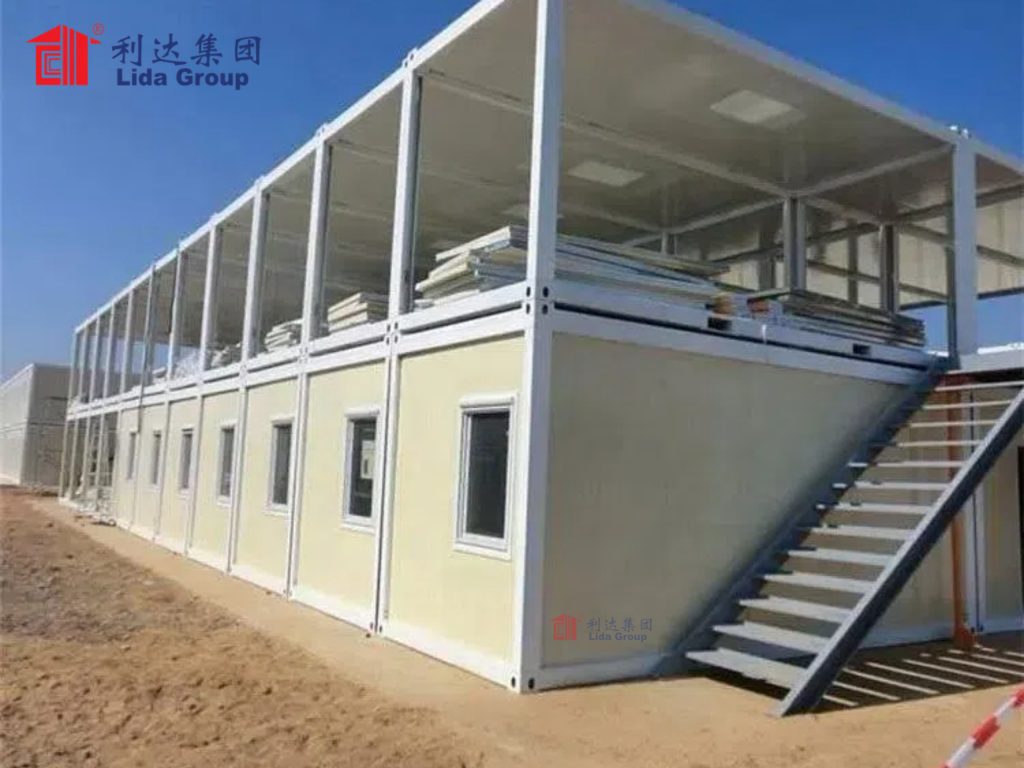
The installation process includes: site preparation (leveling, foundation work), assembly of container units (stacking and connecting), installation of internal fixtures and fittings, connection of utility systems (electrical, plumbing, heating, cooling), and testing of all systems to ensure they are functioning properly. For a small camp (accommodating 50-100 workers), installation can be completed in 1-2 weeks; for a large camp (accommodating 200+ workers), installation typically takes 3-4 weeks. Once installation is complete, Lida’s team conducts a final commissioning inspection, ensuring that the camp meets all design specifications and safety standards. The client is invited to participate in this inspection, with Lida addressing any issues or concerns before handing over the camp.
3.6 After-Sales Support and Maintenance
Lida Group’s turnkey service does not end with the delivery and installation of the camp. The company provides comprehensive after-sales support to ensure that the camp remains operational and in optimal condition throughout its service life. This support includes: detailed maintenance guidelines (tailored to the camp’s design and location), a comprehensive spare parts supply service (ensuring that replacement parts are available quickly, even in remote locations), 24/7 technical support (via phone, email, or video call), and optional on-site maintenance services (for clients who require additional support).
Lida Group also offers a 5-year warranty on all camp components, covering defects in materials and workmanship. This warranty provides clients with peace of mind, knowing that any issues will be resolved quickly and at no additional cost. Additionally, Lida’s team conducts regular follow-up visits to check on the camp’s performance and address any maintenance or operational needs, ensuring that the camp continues to meet the client’s needs for years to come.
4. Product Overview: Key Features of Lida Group’s Turnkey Prefabricated Container Worker Camps
Lida Group’s turnkey prefabricated container worker camps are built around three core principles: exceptional durability, flexible modular design, and user-centric functionality. Every feature of these camps is engineered to withstand the harsh conditions of remote locations, adapt to changing workforce needs, and provide remote workers with a safe, comfortable, and functional living environment. Below is a detailed overview of the key features that make these camps the ideal choice for remote workforce housing:
4.1 Rugged, Durable Construction: Built to Withstand Remote Environments
The defining feature of Lida Group’s prefabricated container worker camps is their exceptional durability—engineered to withstand the harshest remote environments and heavy communal use for 15-20 years with proper maintenance. Every component of the camps is selected for its strength, weather resistance, and long-term reliability, ensuring that the camps can thrive in even the most challenging conditions.
The core structure of the container units is made from high-strength galvanized steel (Q235B grade), with a frame thickness of 2.5mm-3.5mm—significantly thicker than standard container units—providing exceptional strength and resistance to wear, corrosion, and damage. The steel frame is treated with a dual-layer anti-corrosion coating: a galvanized layer (80μm-100μm) to prevent rust and a fluorocarbon paint finish (20μm-30μm) to protect against moisture, UV radiation, and chemical exposure (critical for mining and oil and gas sites). This dual-layer coating ensures that the frame remains intact and corrosion-free, even in humid, salty, or dusty remote environments.
The walls, roof, and floor of the container units are constructed using high-quality steel sandwich panels, filled with high-density rock wool insulation (density ≥120kg/m³) for optimal thermal insulation, sound insulation, and fire resistance. The panels have a total thickness of 100mm-150mm, with an outer steel sheet thickness of 0.8mm-1.0mm—providing exceptional durability and impact resistance. The roof panels are also equipped with a heavy-duty waterproof coating (IP67 rating), ensuring that the camp remains dry and leak-free even in heavy rain, snow, or hail. The floor panels are reinforced with a 20mm thick high-density composite board, covered with a non-slip, wear-resistant vinyl or linoleum surface—able to withstand heavy foot traffic, furniture, and equipment without damage.
Doors and windows are specifically selected for remote use, prioritizing durability, security, and weather resistance. Heavy-duty steel security doors (1.2mm thick) with anti-theft locks and weatherstripping provide protection against break-ins, dust, and moisture. Aluminum alloy windows with double-layer tempered glass (6mm+12A+6mm) offer exceptional thermal insulation (U-value ≤2.8W/(㎡·K)), sound insulation (≥45dB), and impact resistance—able to withstand high winds, hail, and flying debris. The windows are also equipped with adjustable screens to keep out insects and dust, and optional shutters for additional protection in extreme weather.
The camps are engineered to withstand extreme environmental conditions, including: seismic activity up to 7 magnitudes (compliant with GB50011-2010 and ISO 14001), high winds up to 13 levels (wind speed 134-149 km/h), extreme temperatures ranging from -35℃ to 45℃, and heavy snow loads (up to 1.5kN/㎡). They are also fire-resistant (B1 grade fire rating) with a fire resistance limit of 2 hours, ensuring the safety of occupants in the event of a fire—critical for remote locations where emergency services may be hours away.
4.2 Flexible Modular Design: Adaptable to Changing Workforce Needs
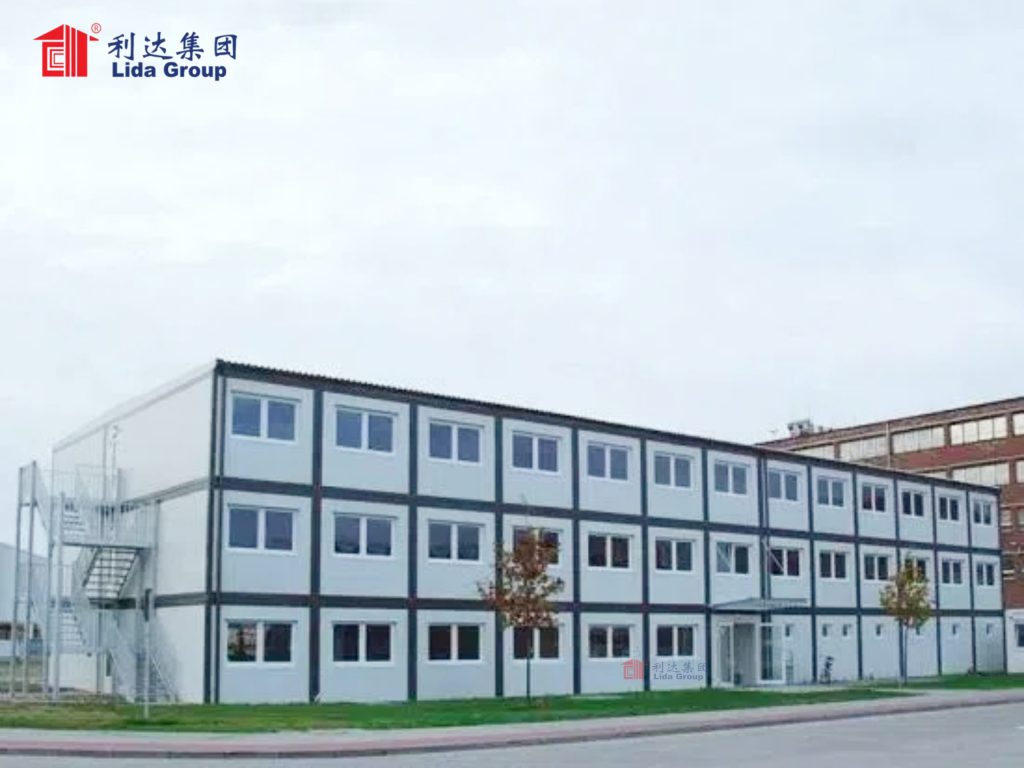
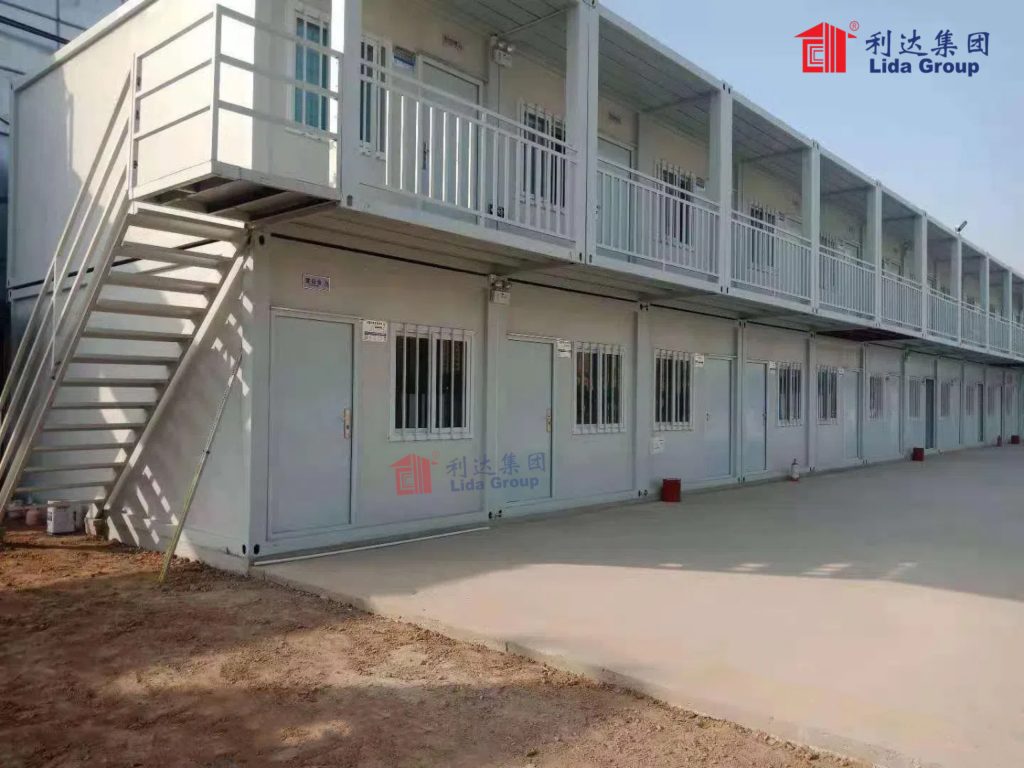
Lida Group’s turnkey prefabricated container worker camps feature a flexible modular design that allows organizations to adapt their housing to changing workforce sizes and project requirements—without incurring significant additional costs or delays. The camps are built using standard 20-foot and 40-foot container units, with standardized connection interfaces that allow for easy expansion, relocation, and customization.
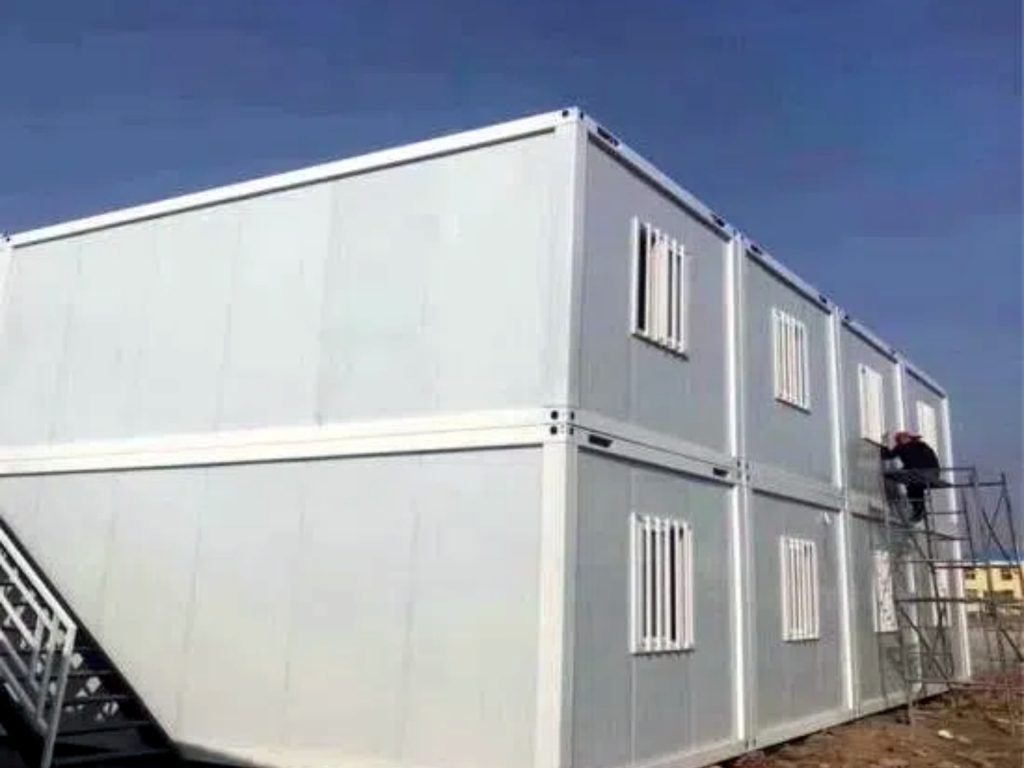
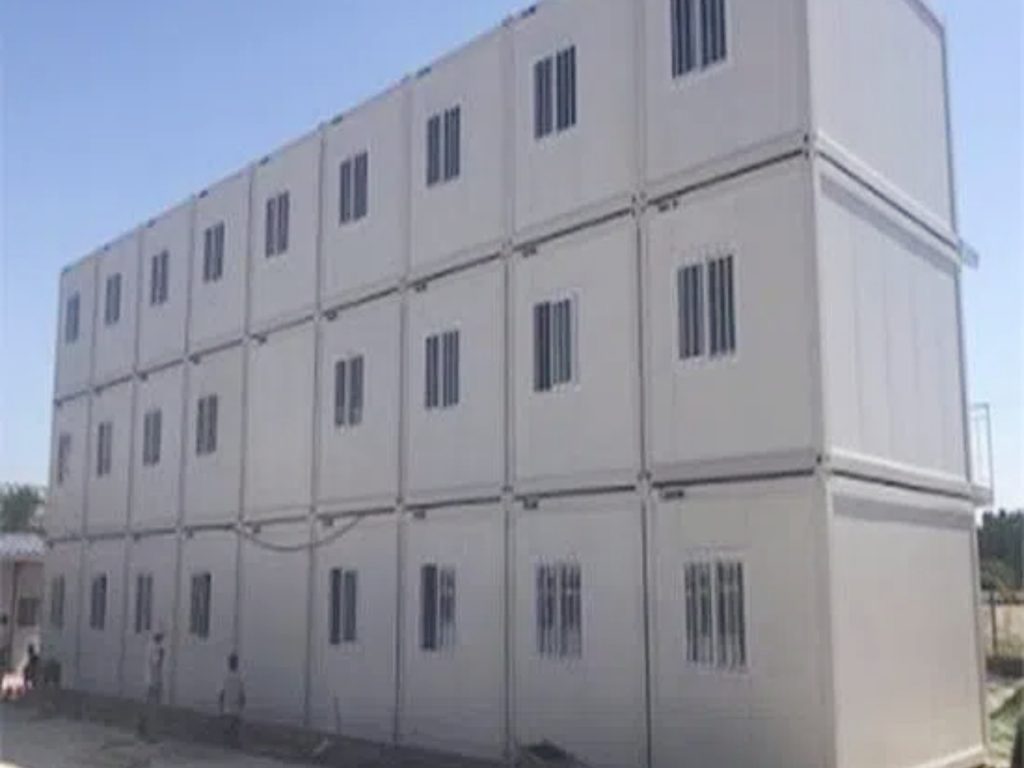
The container units can be used standalone or combined (stacked vertically up to 3 levels or connected horizontally) to create camp complexes of any size. For example, a single 20-foot unit can accommodate 4-6 workers (with bunk beds and storage); two 20-foot units connected horizontally can accommodate 8-12 workers; and stacking units vertically can create multi-level dormitories, maximizing space in remote locations where land may be limited. This flexibility allows organizations to start with a small camp and expand it as their workforce grows, or reduce it as the project progresses—ensuring that they only pay for the housing they need, when they need it.
The modular design also allows for easy relocation. Unlike traditional housing, which is permanent and cannot be moved, Lida Group’s container camps can be easily disassembled, transported to a new remote location, and reassembled—making them ideal for projects that require workers to move between multiple sites (such as infrastructure development or mobile mining operations). The units are designed to be transported via truck, ship, or helicopter, with minimal preparation required. Once at the new site, the units can be reassembled in days—significantly reducing deployment time compared to traditional construction.
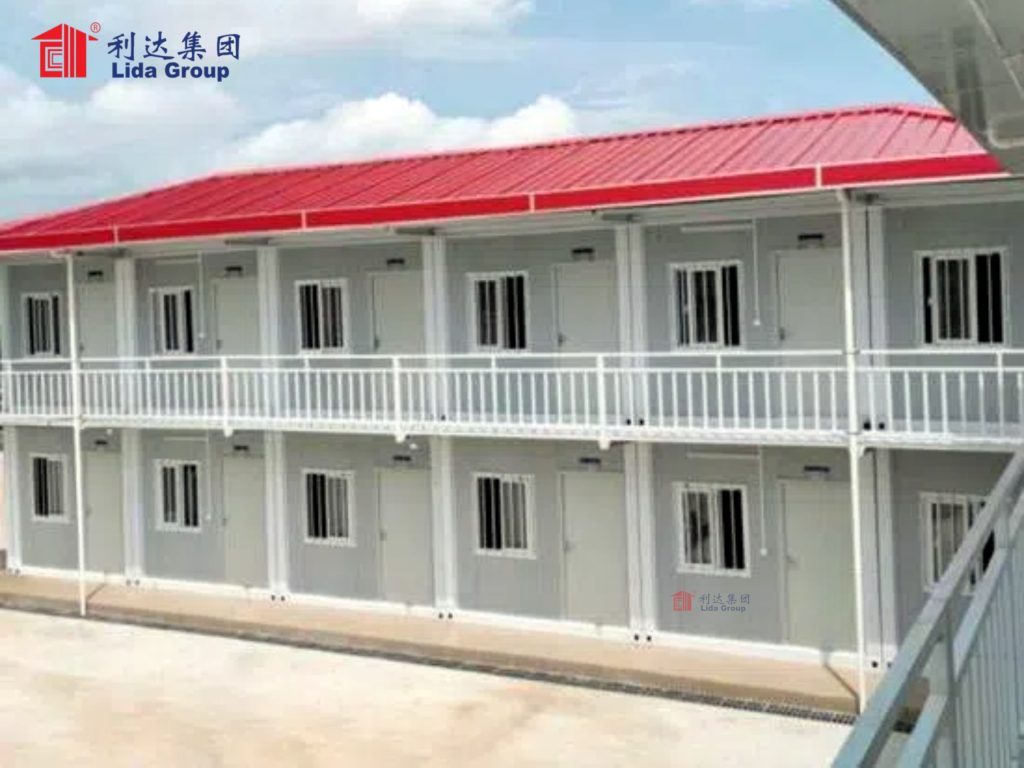
Customization options are available to meet the specific needs of different industries and remote locations. Lida Group offers a range of pre-designed floor plans for container units, including: single-occupancy rooms (for supervisors or long-term workers), double-occupancy rooms, and multi-occupancy rooms (4-6 workers with bunk beds). Each floor plan is optimized for space efficiency and comfort, with built-in storage solutions (wardrobes, drawers, shelves) to maximize living space. Communal facilities can also be customized, including kitchens, bathrooms, laundry rooms, recreation areas, offices, and medical rooms—ensuring that the camp meets the unique needs of the workforce.
4.3 Comprehensive Communal Facilities: Boosting Morale and Retention
Lida Group recognizes that remote workers deserve safe, comfortable, and functional living spaces—spaces that feel like a “home away from home” and help boost morale, reduce turnover, and improve productivity. The turnkey container camps are designed with this in mind, featuring comprehensive communal facilities that meet the physical, social, and emotional needs of remote workers.
Communal kitchens are equipped with large refrigerators, freezers, stoves, ovens, microwaves, and sinks—allowing workers to prepare their own meals. The kitchens are designed for heavy communal use, with durable fixtures and appliances that can withstand frequent use by large groups of workers. Dining areas feature tables and chairs, creating a space for workers to eat together and socialize.
Communal bathrooms are spacious and clean, with multiple showers, toilets, and sinks—reducing wait times and ensuring privacy. The bathrooms are equipped with hot water systems (electric, diesel, or solar-powered) and ventilation systems to maintain air quality and prevent mold or mildew. Laundry rooms are equipped with washing machines, dryers, and ironing facilities—allowing workers to keep their clothing clean and fresh, even in remote locations.
Optional recreation areas can be added to the camp, including lounge areas with sofas, TVs, and bookshelves; outdoor patios or decks with seating; and fitness areas with basic exercise equipment. These spaces provide workers with opportunities to relax, socialize, and stay active—critical for maintaining mental and physical health in isolated remote environments. Additionally, many camps include office spaces and medical rooms, providing workers with access to essential services and support.
4.4 Low-Maintenance Operation: Reducing Costs in Remote Locations
In remote locations, maintenance can be costly and time-consuming—parts and skilled technicians are often scarce, and travel to the site can be expensive. Lida Group’s turnkey prefabricated container worker camps are designed for low-maintenance operation, reducing the need for frequent repairs and minimizing operational costs for organizations.
The rugged construction and high-quality materials ensure that the camps require minimal maintenance over their service life. The galvanized steel frame with dual-layer anti-corrosion coating is resistant to rust and damage, requiring only occasional cleaning to maintain its appearance. The steel sandwich panels are easy to clean and resistant to stains, scratches, and impact—requiring no painting or refinishing. The heavy-duty doors and windows are designed for long-term use, with durable hinges and locks that require minimal lubrication and adjustment.
Internal fixtures and fittings are selected for their durability and low-maintenance requirements. Plumbing systems use corrosion-resistant pipes and low-flow fixtures that are less prone to leaks and clogs. Electrical systems are designed to be reliable and easy to maintain, with accessible circuit breakers and wiring that can be easily inspected and repaired if needed. Communal appliances (such as washing machines and stoves) are heavy-duty and designed for frequent use, with simple controls and easy-to-replace parts.
4.5 Cost-Effective Solution: Maximizing Value for Organizations
Lida Group’s turnkey prefabricated container worker camps are designed to be a cost-effective housing solution for remote workforces, offering significant savings compared to traditional construction and other modular housing options. The key to their affordability lies in their rapid deployment, low maintenance requirements, reusability, and efficient manufacturing methods.
Deployment costs are significantly lower than traditional construction. Traditional worker camps in remote locations require skilled labor, heavy machinery, and long construction timelines—all of which are scarce and expensive. Lida Group’s container camps are prefabricated in the factory, with over 95% of the work completed before delivery. On-site installation requires only a small team (2-4 people) with no specialized skills, using basic tools—reducing labor costs by 50-70% compared to traditional construction. Additionally, the rapid deployment time (a small camp can be installed in 1-2 weeks, a large camp in 3-4 weeks) reduces project delays and ensures that workers can be housed quickly, minimizing downtime and maximizing productivity.
Maintenance costs are also significantly lower. The durable construction and low-maintenance design reduce the need for frequent repairs and replacements, saving organizations money on parts, labor, and downtime. Over the 15-20 year service life of the camps, maintenance costs are 30-40% lower than other modular housing options and 60-70% lower than traditional construction.
Reusability adds to their cost-effectiveness. Unlike traditional worker camps, which are permanent and cannot be reused, Lida Group’s container camps can be easily disassembled, transported to a new location, and reassembled—allowing organizations to reuse them for multiple projects. This reusability reduces waste and lowers the cost of future housing needs, making the camps a long-term investment that provides value for years to come.
4.6 Environmental Sustainability: Durable Housing with a Small Footprint
Sustainability is integrated into every aspect of Lida Group’s turnkey prefabricated container worker camps, aligning with global efforts to reduce carbon emissions and promote green living. The company recognizes that remote workforce housing should not only be durable and functional but also environmentally responsible—minimizing its impact on the fragile ecosystems of remote regions.
The use of prefabricated construction significantly reduces waste compared to traditional construction. Factory-controlled production ensures that materials are used efficiently, with minimal cutting and waste, and any excess materials are recycled or reused. This reduces construction waste by 70-80% compared to traditional methods—critical for remote regions where waste disposal is often difficult and expensive.
The steel frames of the container units are made from recycled steel (where possible), reducing the carbon footprint associated with raw material production. Steel is one of the most recyclable materials in the world, and the frames can be fully recycled at the end of the camp’s service life—minimizing landfill waste and reducing the need for new steel production. The high-density rock wool insulation is also eco-friendly, made from natural materials (basalt rock) that are non-toxic, fire-resistant, and recyclable.
Energy-efficient features reduce energy consumption and carbon emissions. The advanced insulation system, energy-efficient LED lighting, and optional solar-powered heating and cooling systems reduce energy consumption by 35-45% compared to traditional worker camps. This not only saves organizations money on energy costs but also reduces their carbon footprint—critical for companies looking to meet their sustainability goals.
5. Technical Specifications and Performance Standards
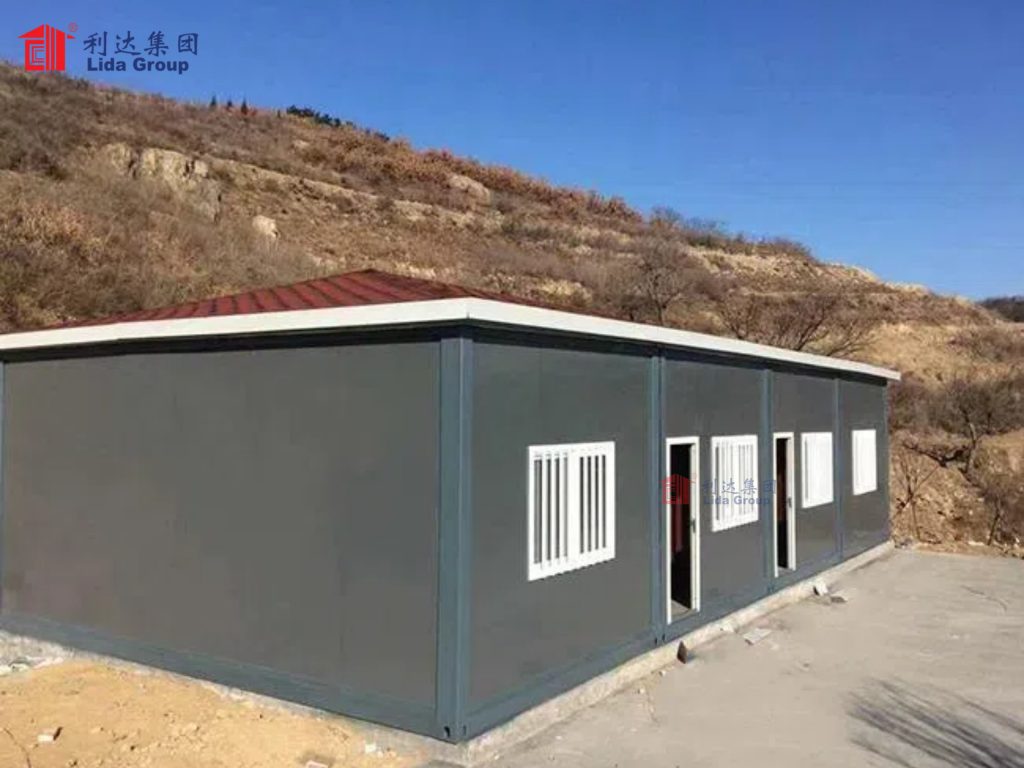
Lida Group’s turnkey prefabricated container worker camps meet the highest international technical standards and performance requirements, ensuring exceptional durability, functionality, and safety. Below is a detailed overview of the technical specifications and performance standards of the series:
5.1 Structural Specifications
-
Frame Material: High-strength galvanized steel (Q235B grade), frame thickness of 2.5mm-3.5mm
-
Anti-corrosion Treatment: Galvanized layer (80μm-100μm) + fluorocarbon paint finish (20μm-30μm)
-
Container Dimensions: Standard 20-foot (6055mm × 2438mm × 2896mm), 40-foot (12192mm × 2438mm × 2896mm); custom sizes available
-
Weight: 20-foot unit: 2.5-3.0 tons; 40-foot unit: 4.5-5.0 tons
-
Stacking Capacity: Up to 3 levels (with simple concrete foundation support)
-
Connection System: Standardized bolt-together design (no welding required); high-strength steel bolts (M16-M20) for easy assembly
-
Flooring: 20mm thick high-density composite board + non-slip, wear-resistant vinyl/linoleum surface; load-bearing capacity ≥2.5kN/㎡
-
Walls: 100mm-150mm thick steel sandwich panels (0.8mm-1.0mm outer steel sheet) with high-density rock wool insulation (density ≥120kg/m³, thermal conductivity ≤0.04W/(㎡·K))
-
Roof: 100mm-150mm thick steel sandwich panels with high-density rock wool insulation + waterproof coating (IP67 rating); optional solar panel mounting brackets
-
Doors: Heavy-duty steel security doors (1.2mm thick) with anti-theft locks, weatherstripping, and fire resistance; door size: 900mm × 2100mm
-
Windows: Aluminum alloy windows with double-layer tempered glass (6mm+12A+6mm); sound insulation ≥45dB, thermal insulation U-value ≤2.8W/(㎡·K); optional shutters and insect screens
5.2 Performance Standards
-
Prefabrication Rate: ≥95% (all core components prefabricated in factory)
-
Installation Time: Small camp (50-100 workers): 1-2 weeks; Large camp (200+ workers): 3-4 weeks; Single 20-foot unit: 6-8 hours (2-4 people)
-
Service Life: 15-20 years (with proper maintenance); Reusable for at least 10 relocations
-
Seismic Resistance: Up to 7 magnitudes (compliant with GB50011-2010 and ISO 14001)
-
Wind Resistance: Up to 13 levels (wind speed 134-149 km/h)
-
Temperature Resistance: Operational range of -35℃ to 45℃
-
Snow Load Capacity: Up to 1.5kN/㎡
-
Fire Resistance: B1 grade fire rating; 2-hour fire resistance limit
-
Sound Insulation: ≥45dB (between rooms); ≥55dB (exterior to interior)
-
Waterproof Performance: No water leakage in heavy rain (250mm/24h); IP67 rating for roof and walls
-
Energy Efficiency: 35-45% reduction in energy consumption compared to traditional worker camps
-
Water Efficiency: 30-35% reduction in water consumption with low-flow fixtures
-
Environmental Compliance: ISO 14001 certified; materials are non-toxic, recyclable, and eco-friendly
-
Safety Compliance: ISO 9001 certified, CE certified; all electrical components meet IEC standards
5.3 Internal and Utility Specifications
-
Occupancy Capacity: 20-foot unit: 4-6 workers (multi-occupancy); 40-foot unit: 8-12 workers (multi-occupancy) or 2-4 workers (single/double-occupancy); Camp size: Customizable (50-500+ workers)
-
Electrical System: 110V/220V power supply (customizable); energy-efficient LED lighting; power outlets (including USB ports); circuit breakers and grounding protection; optional solar power system (5-10kW per unit) and backup generator (3-5kW per unit)
-
Heating and Cooling: Optional split-type air conditioners, electric heaters, diesel heaters, or floor heating (for cold regions); solar-powered cooling systems (for hot regions); energy-efficient models with low power consumption
-
Plumbing System: PVC/stainless steel pipes for water supply and drainage; hot water system (electric, diesel, or solar-powered); low-flow toilets, showers, and sinks; stainless steel sinks in kitchens and bathrooms
-
Ventilation: Natural ventilation (windows + roof vents) + mechanical ventilation (exhaust fans); optional air filtration systems for dusty environments
-
Internal Finishes: Smooth, easy-to-clean wall panels; non-slip flooring; built-in storage solutions; blackout curtains
-
Communal Facilities (Standard/Optional): Kitchen (refrigerator, freezer, stove, oven, microwave, sink); dining area (tables, chairs); bathroom (multiple showers, toilets, sinks); laundry room (washing machines, dryers, ironing facilities); recreation area (sofas, TV, bookshelves); fitness area (basic exercise equipment); office space; medical room; security room
6. Application Scenarios: Ideal for Every Remote Workforce
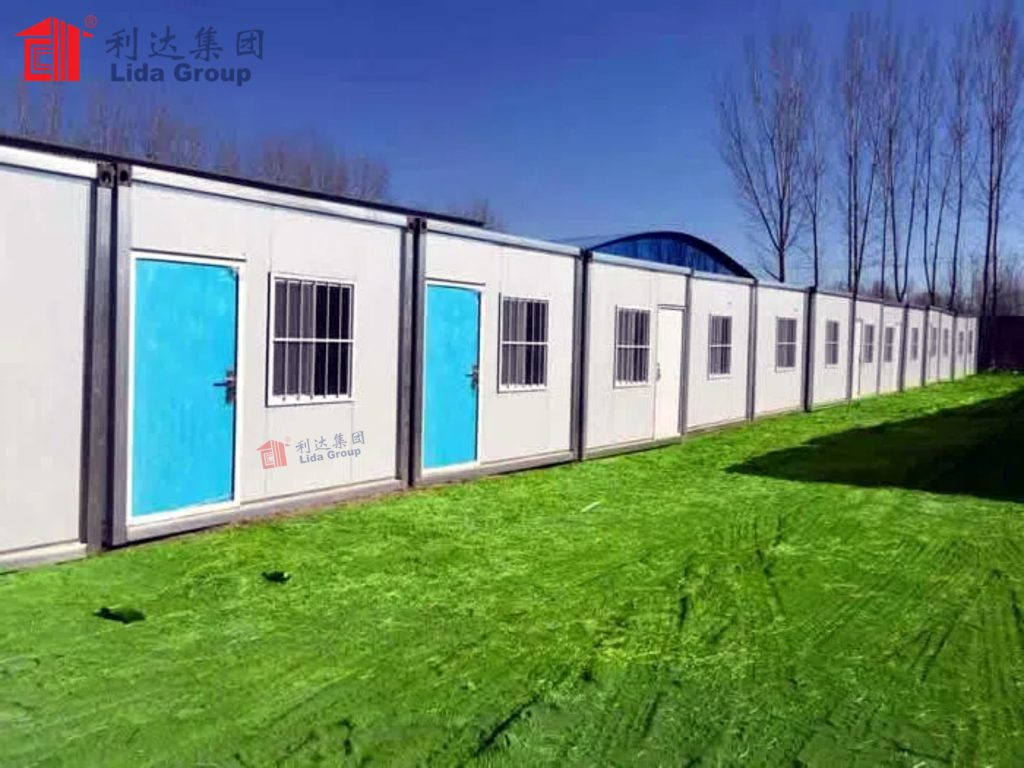
Lida Group’s turnkey prefabricated container worker camps are designed to be versatile, making them suitable for a wide range of remote workforce housing applications across various industries. Their durability, flexibility, comprehensive facilities, and turnkey service make them an ideal solution for any organization that deploys workers to remote locations. Below are the key application scenarios, with real-world case studies demonstrating the effectiveness of Lida’s solutions:
6.1 Mining Industry: Durable Camps for Harsh Mining Sites
The mining industry is one of the largest users of remote workforce housing, with mining sites often located in extremely harsh environments—deserts, mountains, or arctic regions—where traditional housing is impractical. Lida Group’s turnkey prefabricated container worker camps are specifically engineered to withstand the unique challenges of mining sites: dust storms, extreme temperatures, high winds, and seismic activity. They are also designed to accommodate large teams of miners, with communal facilities that meet the needs of shift workers.
Case Study: A large mining company operating a remote gold mine in the Australian Outback needed a turnkey worker camp for 200 miners. The company chose Lida Group’s solution, which included a full turnkey service from design to delivery. Lida’s team designed a camp with 17 40-foot container units (accommodating 8-12 miners each), 3 communal kitchens, 4 communal bathrooms, 2 laundry rooms, a recreation area, and an office space. The camp was equipped with enhanced insulation to withstand temperatures up to 45℃, solar-powered air conditioning, and dust-resistant windows and doors. Lida managed the entire process: design, production, transportation via truck to the remote mine site, installation, and commissioning—delivering the camp in just 3 weeks. The camp has been in use for 5 years, requiring minimal maintenance, and has significantly improved worker morale and retention—reducing turnover by 30% compared to the company’s previous housing solution. When the gold mine project was completed, the company reused the camp for a new mining site in Western Australia, saving thousands of dollars in new housing costs.
6.2 Renewable Energy Industry: Rapid Camps for Remote Energy Projects
The renewable energy industry—particularly solar and wind farms—relies heavily on remote workforces, with large-scale projects often located in uninhabited regions with no existing housing infrastructure. These projects require housing that can be quickly deployed, easily expanded, and durable enough to withstand the elements. Lida Group’s turnkey container camps are ideal for this application, as they can be delivered and installed in weeks, not months.
Case Study: A renewable energy company building a large wind farm in the mountains of Northern Spain needed a turnkey worker camp for 150 construction workers for a 2-year project. The company chose Lida Group’s solution, which included a camp with 12 40-foot container units, 2 communal kitchens, 3 communal bathrooms, 1 laundry room, and a small office space. The camp was equipped with enhanced insulation to withstand temperatures as low as -15℃, floor heating, and wind-resistant windows and doors (to withstand winds up to 13 levels). Lida managed the entire turnkey process, including transportation via ship and truck, and installation in just 1 week. The camp’s modular design allowed the company to expand the complex by 3 units when the workforce grew to 180 workers—with minimal effort and cost. At the end of the project, the camp was disassembled and relocated to a new wind farm project in France, demonstrating its reusability and cost-effectiveness. The company reported that the turnkey service saved them 40% in housing costs compared to traditional construction.
6.3 Construction Industry: Mobile Camps for Remote Infrastructure Projects
Infrastructure development projects—such as highways, railways, and bridges—in remote regions require housing that can be quickly deployed to multiple locations along the project route. Lida Group’s turnkey prefabricated container worker camps are ideal for this application, as they can be easily transported and reassembled at different sites.
Case Study: A construction company building a remote highway in Central Asia needed a turnkey worker camp for 100 workers, who would be moving between 5 different locations along the highway route over a 3-year period. The company chose Lida Group’s solution, which included 5 small turnkey camps (20 workers each) that could be easily transported by truck. Each camp included 2 40-foot container units, 1 communal kitchen, 1 communal bathroom, and 1 laundry room. The camps were equipped with off-grid solar power systems and water purification systems, as the remote locations had no access to utilities. Lida managed the design, production, transportation, and installation of each camp, ensuring consistent quality across all locations. The company moved the camps between locations as the highway construction progressed, saving time and money compared to building temporary housing at each site. The turnkey service allowed the construction company to focus on building the highway, while Lida took care of all housing-related needs.
6.4 Oil and Gas Industry: Safe Camps for Offshore and Remote Sites
The oil and gas industry operates in some of the most remote and harsh environments in the world—offshore platforms, desert oil fields, and arctic exploration sites. Workers in these environments require safe, durable housing that can withstand saltwater corrosion, high winds, and extreme temperatures. Lida Group’s turnkey container camps are engineered to meet these challenges, with specialized modifications for offshore and coastal use.
Case Study: An oil and gas company operating an offshore platform in the North Sea needed a turnkey worker camp for 50 workers. The company chose Lida Group’s solution, which included a camp with 4 40-foot container units (accommodating 12-13 workers each), 1 communal kitchen, 1 communal bathroom, and 1 laundry room. The camp was designed to withstand saltwater corrosion, high winds (up to 13 levels), and extreme temperatures (from -10℃ to 30℃). Lida managed the entire turnkey process, including transportation by ship to the offshore platform and installation in just 3 days. The camp’s corrosion-resistant design ensured that it remained in excellent condition despite exposure to saltwater, requiring minimal maintenance over its 10-year service life. The company reported that the turnkey service saved them 35% in deployment time compared to their previous housing solution, allowing them to start production faster.
6.5 Government and Humanitarian Projects: Temporary-to-Permanent Camps
Lida Group’s turnkey prefabricated container worker camps are also suitable for government and humanitarian projects, providing temporary-to-permanent housing for remote communities, disaster relief workers, or military personnel. These camps can be quickly deployed to remote regions, providing safe, comfortable housing for those in need.
Case Study: A government agency in a remote region of Africa needed a turnkey worker camp for 80 teachers and healthcare workers, who were deployed to underserved communities. The agency chose Lida Group’s solution, which included a camp with 7 40-foot container units, 2 communal kitchens, 2 communal bathrooms, and 1 laundry room. The camp was equipped with off-grid solar power systems, water purification systems, and enhanced insulation to withstand extreme temperatures. Lida managed the entire turnkey process, delivering and installing the camp in 10 days. The camp provided the teachers and healthcare workers with a safe, comfortable place to live, allowing them to focus on their work and improve the lives of the local community. The camp was designed to be easily converted to permanent housing for the local community once the teachers and healthcare workers were no longer needed, demonstrating its versatility and long-term value.
7. Competitive Advantages: Why Choose Lida Group’s Turnkey Prefabricated Container Worker Camps?
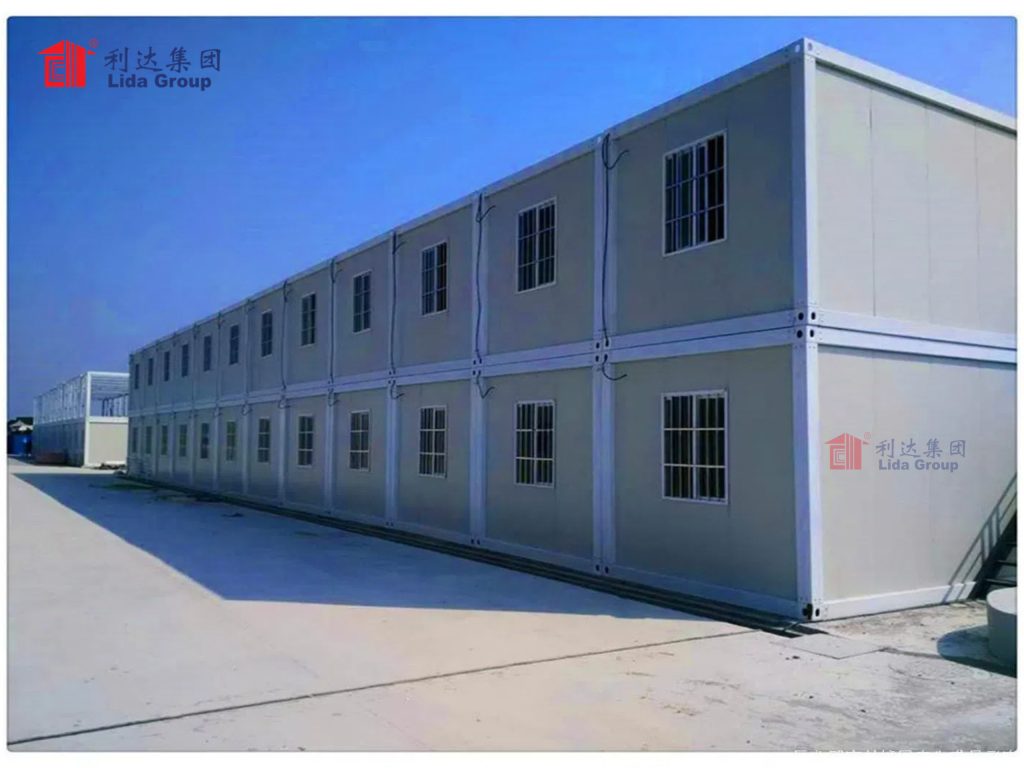
The global modular workforce housing market is highly competitive, with numerous manufacturers offering products that claim to be “durable” and “suitable for remote use.” However, Lida Group’s turnkey prefabricated container worker camps stand out from the competition due to their unique combination of exceptional durability, flexible modular design, comprehensive communal facilities, cost-effectiveness, and end-to-end turnkey service. Below are the key competitive advantages that make them the ideal choice for remote workforce housing:
7.1 End-to-End Turnkey Service: Hassle-Free Delivery
Unlike many competitors that only offer prefabricated container units without comprehensive service, Lida Group provides a full turnkey service that covers every stage of the project lifecycle—from initial consultation and design to installation and after-sales support. This integrated approach eliminates the need for clients to coordinate multiple vendors, reducing the risk of delays, cost overruns, and miscommunication. With a single point of contact throughout the project, clients can enjoy a hassle-free experience, knowing that Lida Group is managing every detail.
7.2 Unmatched Durability: Built for Remote Environments
Unlike many competitors’ products, which are designed for urban or suburban use and lack the durability required for remote environments, Lida Group’s container camps are specifically engineered to withstand the harshest conditions. The use of high-strength galvanized steel frames (thicker than standard units), dual-layer anti-corrosion coating, and high-density rock wool insulation ensures that the camps can withstand extreme temperatures, high winds, seismic activity, and heavy communal use for 15-20 years. Many competitors use low-quality materials (thin steel frames, low-density insulation) that fail to withstand remote conditions, requiring frequent repairs or replacement—adding significant costs to organizations.
7.3 Superior Flexibility: Adaptable to Changing Needs
Lida Group’s container camps offer greater flexibility than most competitors’ products. The standardized bolt-together design allows for easy expansion, relocation, and customization—enabling organizations to adapt their housing to changing workforce sizes and project requirements. Competitors often offer modular units that are difficult to expand or relocate, forcing organizations to over-invest in housing or face shortages during peak periods. Additionally, Lida Group offers a wide range of customization options (floor plans, communal facilities, environmental modifications) that competitors do not, ensuring that the camp meets the unique needs of each organization.

7.4 User-Centric Design: Prioritizing Worker Comfort and Morale
Many competitors focus solely on durability and overlook worker comfort—resulting in cramped, uncomfortable living spaces that damage morale and increase turnover. In contrast, Lida Group places worker comfort and well-being at the center of its design process, recognizing that a comfortable workforce is a productive workforce. Every detail of the container camps is designed with the end user in mind: spacious dormitories with built-in storage, well-ventilated communal areas, hot water systems for all seasons, and optional recreation spaces that foster social interaction. Lida’s team also prioritizes privacy, with thoughtful floor plans that minimize overcrowding and provide workers with personal space—even in multi-occupancy units. This user-centric design not only boosts worker morale and retention but also improves productivity, as workers are able to rest comfortably and feel valued by their organization.
7.5 Global Logistics and Deployment Capability: Reaching the Most Remote Locations
One of Lida Group’s most significant competitive advantages is its extensive global logistics and deployment capability, which allows the company to deliver turnkey container camps to even the most remote and hard-to-reach locations worldwide. Many competitors lack the experience or resources to handle the complex logistics of transporting prefabricated components to remote regions, leading to delays, damage, and increased costs. Lida Group, however, has built a global network of logistics partners and has decades of experience in navigating the unique challenges of remote transportation—from desert roads to mountain passes and offshore platforms.
The company’s logistics team specializes in customizing transportation solutions based on the project site’s access: truck transportation for landlocked regions, ship transportation for coastal or offshore sites, and helicopter transportation for extremely remote locations with no road access. Lida also handles all customs clearance, documentation, and import regulations, ensuring that components arrive on time and without complications. This global reach means that Lida Group can deliver turnkey camps to clients in any country, regardless of location, making it the preferred choice for multinational organizations with projects in remote regions.
7.6 Strict Quality Control and Certifications: Ensuring Reliability and Compliance
Lida Group’s unwavering commitment to quality is another key competitive advantage. Unlike many competitors that cut corners to reduce costs, Lida maintains strict quality control standards throughout the entire production and installation process, ensuring that every camp meets the highest international standards for durability, safety, and functionality. The company’s manufacturing facilities are ISO 9001 certified, and all camp components comply with global safety and environmental standards, including CE, ISO 14001, and local building codes.
Lida’s rigorous quality control process includes multiple inspections: raw material inspection to ensure high-quality steel and insulation, in-process inspection during production to monitor component quality, pre-assembly inspection to test fit and functionality, and final inspection before delivery to ensure compliance with design specifications. This attention to detail ensures that every camp is reliable, durable, and free from defects—reducing the risk of downtime and maintenance costs for clients. Additionally, Lida’s 5-year warranty on all components provides clients with peace of mind, knowing that any issues will be resolved quickly and at no additional cost.
7.7 Cost Transparency and Affordability: Maximizing Client Value
Lida Group is committed to cost transparency, ensuring that clients know exactly what they are paying for throughout the project lifecycle. Unlike many competitors that hide fees or add unexpected costs during production or installation, Lida provides a detailed, all-inclusive quote during the initial consultation phase—covering design, production, transportation, installation, and after-sales support. This transparency eliminates the risk of cost overruns, allowing clients to budget effectively for their workforce housing needs.
Furthermore, Lida’s efficient manufacturing processes, global supply chain, and economies of scale allow the company to offer turnkey container camps at a more affordable price than many competitors—without compromising on quality. The company’s focus on reusability and low maintenance also ensures that clients save money over the long term, making Lida’s solutions a cost-effective investment for organizations of all sizes.
8. Conclusion
In an era of global industrial expansion and remote infrastructure development, the need for reliable, efficient, and comprehensive remote workforce housing has never been more critical. Traditional construction methods are impractical for remote regions, and fragmented modular solutions often lead to delays, cost overruns, and subpar results—leaving organizations struggling to balance project timelines, budget constraints, and worker well-being. Lida Group’s turnkey prefabricated container worker camps address these challenges head-on, offering a fully integrated solution that redefines remote workforce accommodation through exceptional durability, flexible design, user-centric functionality, and end-to-end service.
With over 30 years of industry experience, advanced manufacturing capabilities, and a global network of logistics and service partners, Lida Group has established itself as a trusted leader in turnkey remote housing solutions. The company’s container camps are engineered to withstand the harshest remote environments—from extreme temperatures and high winds to seismic activity and corrosion—ensuring a service life of 15-20 years with minimal maintenance. Their modular design allows for easy expansion, relocation, and customization, adapting to changing workforce sizes and project requirements without incurring significant additional costs. Comprehensive communal facilities prioritize worker comfort and morale, reducing turnover and improving productivity, while low-maintenance operation and reusability maximize cost-effectiveness for clients.
Lida Group’s end-to-end turnkey service sets it apart from the competition, covering every stage of the project lifecycle from initial consultation and custom design to on-site installation, commissioning, and long-term after-sales support. This integrated approach eliminates the need for clients to coordinate multiple vendors, ensuring a seamless, hassle-free experience with consistent quality and timely delivery. The company’s global logistics capability allows it to reach even the most remote locations, while strict quality control standards and international certifications ensure that every camp meets the highest standards of reliability, safety, and compliance.
From mining and renewable energy to construction, oil and gas, and government humanitarian projects, Lida Group’s turnkey prefabricated container worker camps have proven to be a versatile, effective solution for organizations worldwide. Real-world case studies demonstrate the company’s ability to deliver tailored solutions that meet the unique needs of each client, saving time, reducing costs, and improving worker satisfaction.
As the global demand for remote workforce housing continues to grow, Lida Group remains committed to innovation, quality, and customer-centricity—constantly refining its designs and services to meet the evolving needs of the industry. The company’s turnkey prefabricated container worker camps are more than just housing solutions; they are a strategic investment that helps organizations streamline operations, reduce costs, and ensure the success of their remote projects. For organizations seeking a reliable, efficient, and cost-effective way to house their remote workforce, Lida Group stands as the trusted partner, delivering turnkey solutions that combine durability, comfort, and convenience—anywhere in the world.
Related news
-
Simplify Housing with Our Easy Install Container House
2026-02-14 13:29:50
-
Durable Modular Dormitories Ideal for Remote Workforce Housing
2026-02-14 13:38:16
-
Efficient Prefabricated Container Worker Camp Solutions Now Available
2026-02-14 13:10:31
contact us
- Tel: +86-532-88966982
- Whatsapp: +86-13793209022
- E-mail: sales@lidajituan.com
