



In an era defined by rapid urbanization, environmental consciousness, and a global housing affordability crisis, the construction industry is undergoing a profound transformation. Traditional building methods, often characterized by lengthy timelines, significant waste, and escalating costs, are increasingly being challenged by innovative alternatives. At the forefront of this revolution stands Lida Group, a pioneering company that has masterfully harnessed the potential of shipping containers to deliver a compelling solution: budget-friendly, cost-effective, and remarkably versatile container houses. This article delves deep into the philosophy, methodology, and market impact of Lida Group, exploring how they have redefined what it means to build a home in the 21st century.
The Genesis of a Global Housing Challenge
Before examining Lida Group’s specific offering, it is crucial to understand the context that makes their solution so relevant. Across the globe, from bustling metropolises to remote rural communities, the demand for affordable, quality housing far outstrips supply. In developed nations, skyrocketing property prices have pushed homeownership out of reach for many middle- and lower-income families. In developing regions, the need for basic, safe, and sanitary shelter remains a critical humanitarian and developmental issue. Simultaneously, the construction sector is one of the world’s largest contributors to carbon emissions and landfill waste, prompting a global push towards more sustainable practices.
This confluence of economic, social, and environmental pressures has created a fertile ground for innovation. The market is actively seeking building solutions that are not only cheaper but also faster to deploy, more resilient, and less damaging to the planet. It is within this complex landscape that the concept of repurposing shipping containers for human habitation emerged as a powerful idea, and Lida Group has positioned itself as its most adept and professional executor.
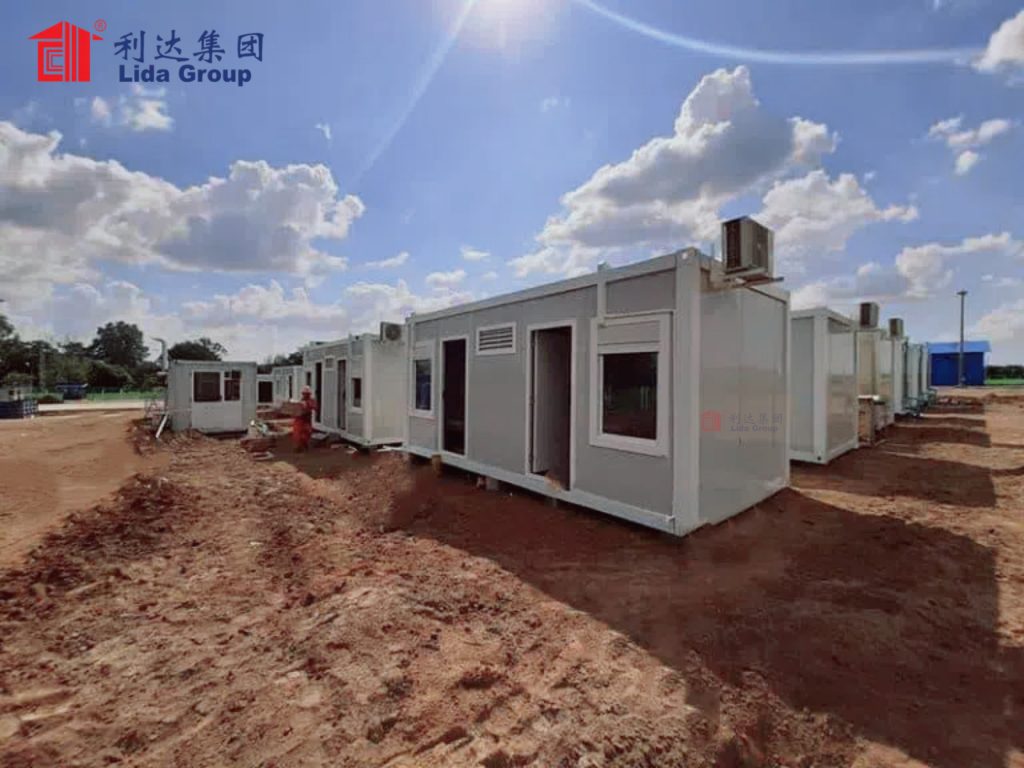
From Steel Box to Smart Home: The Evolution of the Container House
The humble shipping container, a standardized steel box designed for the efficient global transport of goods, was never intended to be a home. Its origins lie in the post-World War II boom in international trade, where its robust, stackable, and weatherproof design became the backbone of the modern logistics industry. However, as these containers reach the end of their maritime service life—typically after 10-15 years of harsh ocean voyages—they present both a disposal challenge and a unique opportunity.
Initially, the use of containers for architecture was a niche, often DIY-driven movement, championed by artists, adventurers, and off-grid enthusiasts. These early projects were celebrated for their raw aesthetic and rebellious spirit but were frequently hampered by poor insulation, inadequate structural modifications, and a lack of professional oversight, leading to issues with comfort, safety, and long-term durability.
Lida Group recognized the immense potential of this raw material but understood that to bring container housing into the mainstream, it needed to be professionalized. They moved beyond the realm of the hobbyist and established a vertically integrated operation that treats the container not as a mere found object, but as a high-quality, pre-engineered structural module. Their approach is one of sophisticated adaptation, where the inherent strengths of the container are preserved and enhanced through advanced engineering, meticulous craftsmanship, and a deep understanding of modern living requirements.
The Lida Group Advantage: A Holistic Approach to Value
What truly sets Lida Group apart is not just that they build houses from containers, but how they do it. Their model is built on a holistic understanding of “cost-effectiveness,” which extends far beyond the initial purchase price. For Lida, true value is delivered through a combination of factors that create a superior product at a competitive total cost of ownership.
1. Unbeatable Material Economics and Supply Chain Mastery
At the heart of Lida Group’s cost advantage is its mastery of the global container supply chain. The company has established direct relationships with major shipping lines and container depots worldwide. This allows them to source used containers—known in the industry as “one-trip” or “C-grade” containers—at highly competitive prices. A “one-trip” container has typically made a single journey from Asia to Europe or North America, carrying new goods. It is essentially new, having been exposed to minimal wear and tear, yet its price is a fraction of a brand-new container because shipping companies prefer to buy new for their primary fleets.
By bypassing intermediaries and leveraging their scale, Lida Group secures a consistent supply of high-quality, structurally sound base units. This direct procurement strategy is the first and most fundamental layer of their cost savings, which they pass directly on to their clients. The steel structure of a shipping container is incredibly strong, designed to bear the weight of several other containers stacked on top of it at sea. This inherent strength translates into a robust building frame that requires far less additional structural support than a conventional wood-frame house, further reducing material and labor costs.
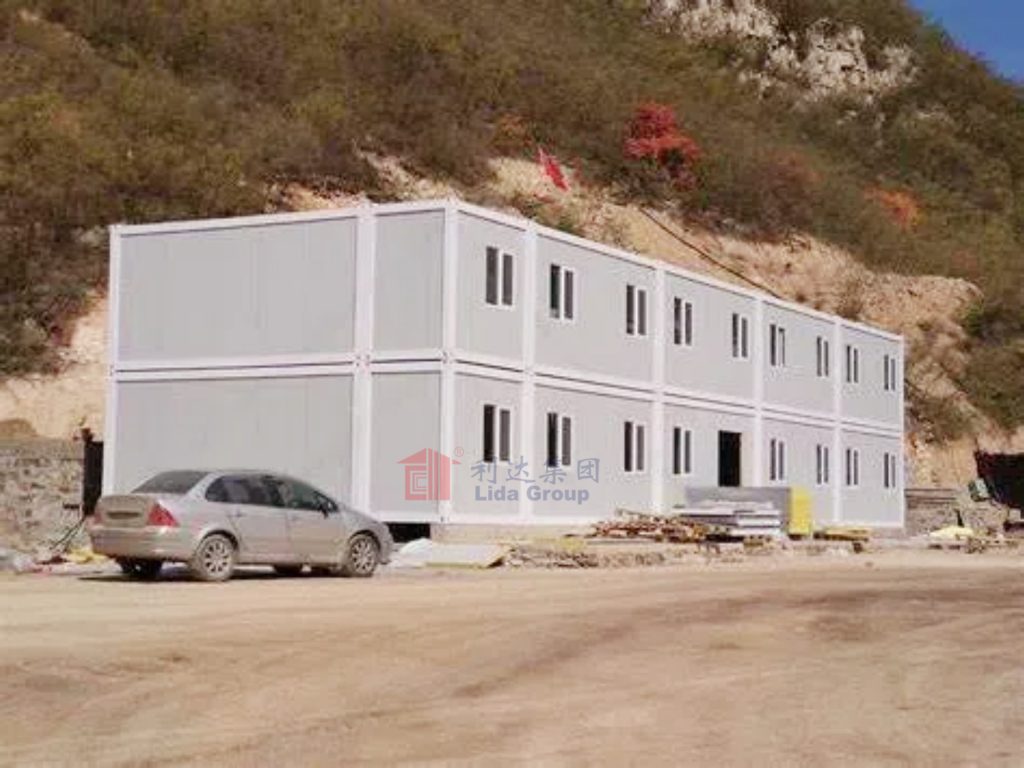
2. Factory-Based Precision Manufacturing: Speed, Quality, and Efficiency
One of the most significant differentiators in Lida Group’s process is its commitment to factory-based construction. Unlike traditional on-site building, which is subject to weather delays, logistical bottlenecks, and variable labor quality, Lida Group’s container homes are largely assembled in a controlled factory environment.
The process begins with the thorough inspection and preparation of the container. Any dents are repaired, the original marine-grade paint is stripped or treated, and the floor—a plywood surface treated with toxic pesticides to prevent the spread of insects during international shipping—is completely removed and replaced with a new, safe, and insulated subfloor.
Inside the climate-controlled factory, skilled technicians and engineers then perform all the critical work: cutting precise openings for doors and windows (a process that requires careful reinforcement to maintain structural integrity), installing high-performance insulation in the walls, roof, and floor, and running all electrical, plumbing, and HVAC conduits. The interior is then finished to the client’s exact specifications, from drywall and premium fixtures to custom cabinetry and flooring.
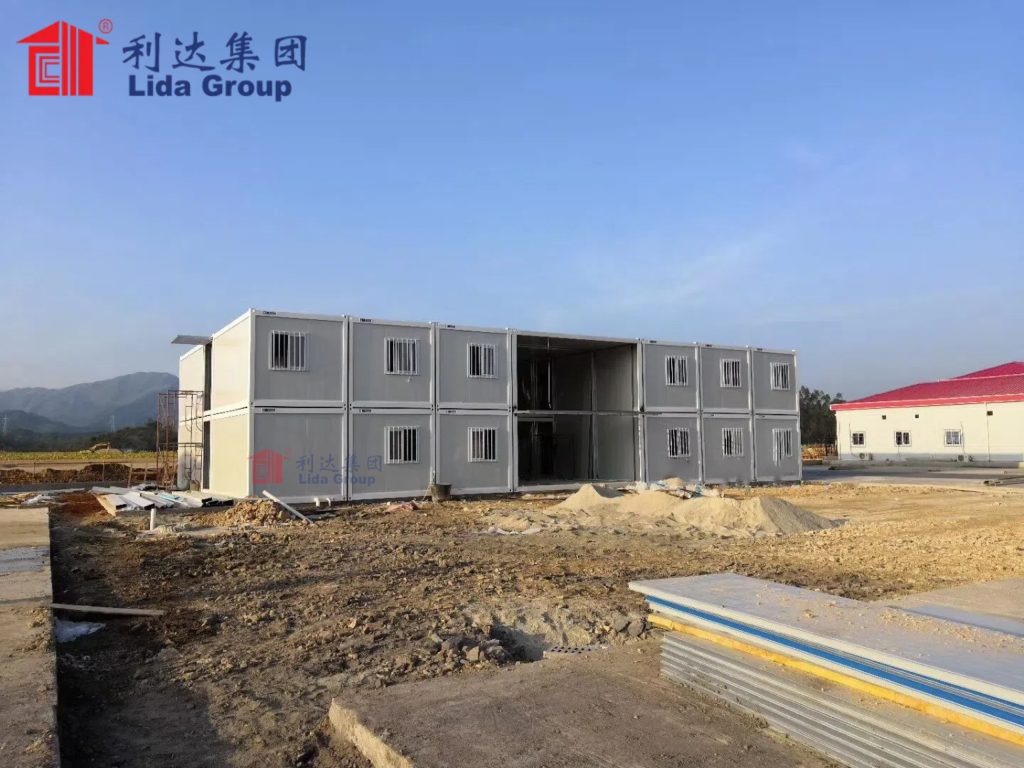
This factory setting offers several key advantages. First, it drastically reduces the construction timeline. While a traditional home might take 6-12 months to build, a Lida Group container home can be completed in the factory in a matter of weeks. Second, it ensures a consistent, high level of quality control. Every step of the process is monitored, and materials are stored properly, free from rain or sun damage. Third, it minimizes on-site disruption and labor costs. Once the modules are complete, they are transported to the site and craned into place, with final connections and utility hookups taking just a few days. This speed-to-market is a massive financial benefit for clients, whether they are looking to move into their new home quickly or to start generating rental income from a commercial project.
3. Engineered for Sustainability: Building a Greener Future
Lida Group’s cost-effectiveness is intrinsically linked to its sustainability credentials. By giving a second life to a steel box that would otherwise be scrapped or left to rust, they are practicing large-scale upcycling. Each standard 40-foot container reused saves approximately 3,500 kg of steel from needing to be newly produced, which in turn saves around 7,000 kWh of energy and prevents 7,000 kg of CO2 emissions. This is a direct and quantifiable environmental benefit.
Furthermore, the factory-based construction process generates significantly less waste than a traditional build. Materials are cut to precise specifications using computer-aided design (CAD) software, minimizing off-cuts and scrap. Any waste that is generated is easily managed and recycled within the factory, unlike a sprawling construction site where waste management is often an afterthought.
Lida Group also integrates sustainable technologies into their designs as standard or optional features. Their homes are typically equipped with high R-value insulation systems that far exceed local building code requirements, creating a highly energy-efficient thermal envelope. This translates directly into lower heating and cooling bills for the homeowner over the life of the house. Options for solar panel integration, rainwater harvesting systems, and greywater recycling are readily available, allowing clients to create a home that is not only affordable to build but also affordable to run and kind to the planet.
4. Uncompromising on Design, Safety, and Comfort
A common misconception about container homes is that they are dark, cramped, and uncomfortable. Lida Group has decisively shattered this myth through intelligent and flexible design. Their team of architects and designers specializes in maximizing the potential of the container’s rectangular form. Through strategic placement of windows, skylights, and even full-glass walls, they flood the interiors with natural light. Clever space planning creates open-concept living areas that feel spacious and airy, while multi-container configurations can be used to build homes of any size, from cozy studios to expansive family residences.
Crucially, Lida Group does not compromise on safety or regulatory compliance. Their homes are engineered to meet or exceed all relevant local and international building codes for structural integrity, fire safety, and energy efficiency. The structural modifications they make are calculated and reinforced by qualified engineers. The electrical and plumbing systems are installed by certified professionals using the same high-quality components found in any conventional luxury home. The result is a dwelling that is not just a novel concept, but a safe, legal, and comfortable permanent residence.
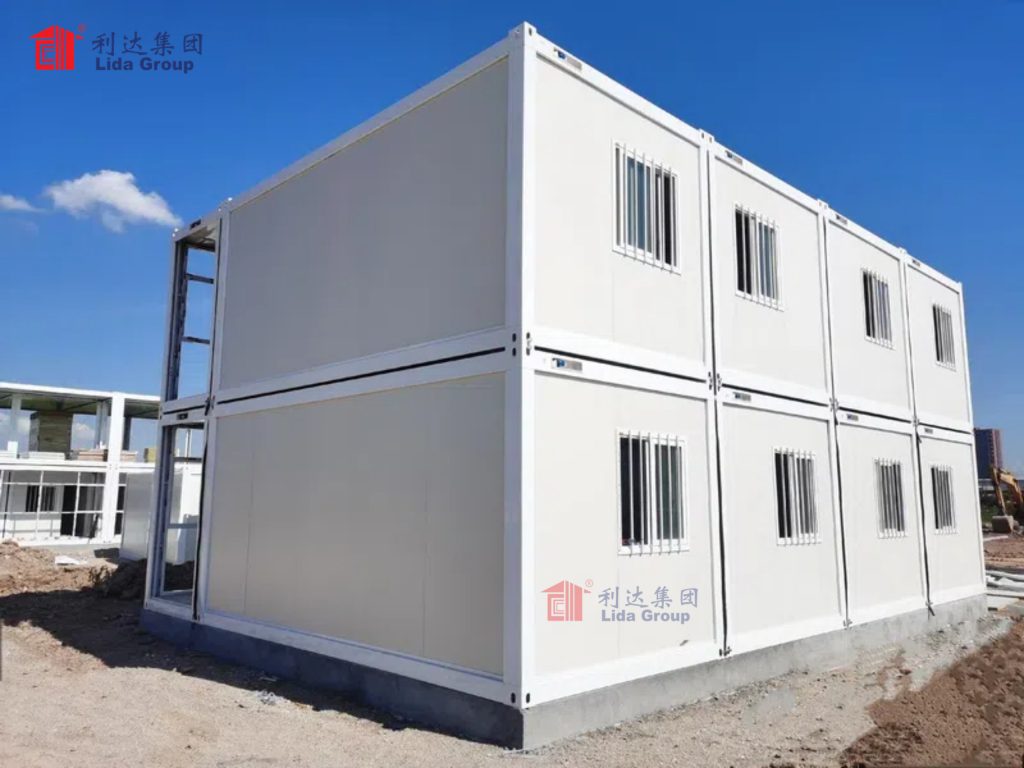
A Portfolio of Possibilities: Applications Beyond the Single-Family Home
While the single-family residence is a flagship product, Lida Group’s container-based system is remarkably adaptable, serving a wide array of markets and needs, each benefiting from the core principles of affordability, speed, and quality.
Luxury Residential Retreats: Far from being purely utilitarian, Lida Group has demonstrated that container architecture can be luxurious. Their portfolio includes stunning vacation homes and permanent residences that feature high-end finishes, panoramic glazing, rooftop decks, and seamless indoor-outdoor living. For the discerning buyer who values unique design, sustainability, and a fast build time, a Lida home offers a compelling alternative to a traditional custom build, often at a lower total cost.
Affordable and Social Housing: This is perhaps the most socially impactful application. Governments and non-profit organizations around the world are partnering with Lida Group to address housing shortages. Their ability to mass-produce high-quality, dignified housing units in a factory and deploy them rapidly to a site makes them an ideal partner for disaster relief, refugee resettlement, and urban infill projects. These homes provide a safe, private, and modern living environment, restoring a sense of normalcy and stability to vulnerable populations.
Commercial and Hospitality Ventures: The hospitality industry has embraced the container concept for its novelty and efficiency. Lida Group has built boutique hotels, trendy cafes, pop-up retail stores, and office complexes. A hotel developer can have a fully furnished, branded room module ready to go in weeks, not months, dramatically improving their return on investment. Similarly, entrepreneurs can launch a business from a stylish, functional, and mobile container unit with a fraction of the capital required for a traditional brick-and-mortar store.
Modular and Expandable Living: The modular nature of containers offers a unique advantage for future-proofing. A young couple might start with a single-container studio. As their family grows, they can simply order another module from Lida Group, have it craned onto their property, and connected to their existing home. This “grow-as-you-go” model provides incredible flexibility and financial prudence, allowing homeowners to invest in their property incrementally without the massive upfront cost of building a large house they don’t yet need.
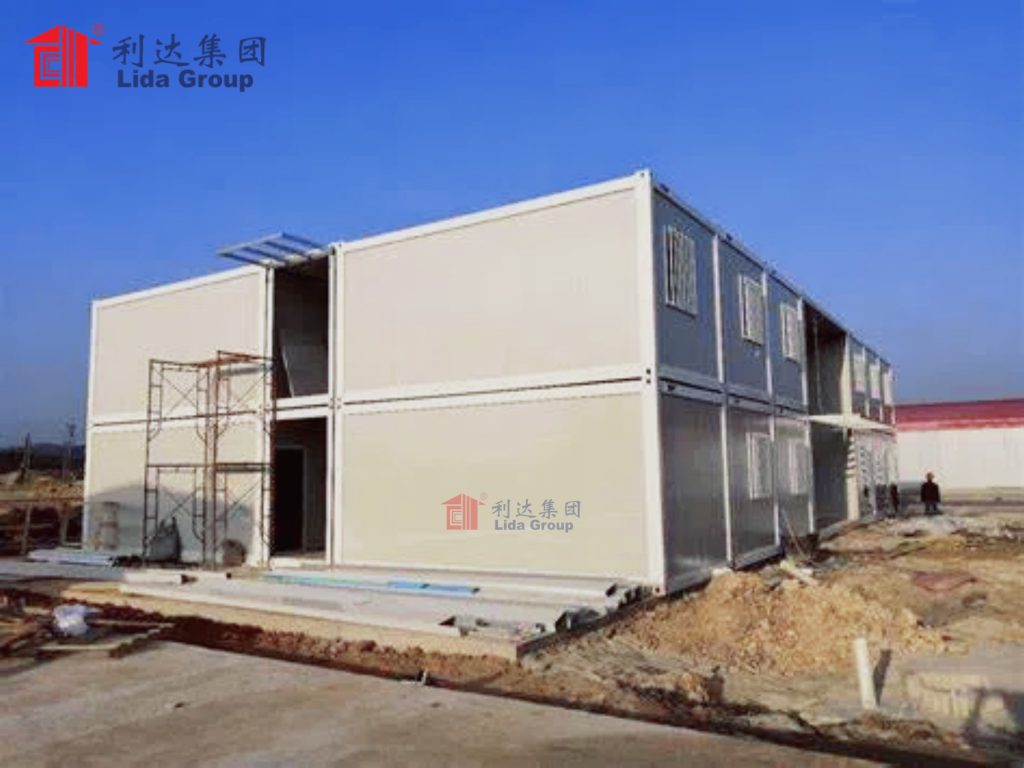
Demystifying the Cost Structure: A Transparent Value Proposition
To fully appreciate Lida Group’s “budget-friendly” claim, it is essential to break down the cost structure and compare it fairly with traditional construction.
A typical turnkey Lida Group container home can start from as low as $30,000 for a basic, well-finished single-container unit and scale up to $200,000 or more for a large, multi-container luxury residence. On a per-square-foot basis, this often translates to a cost that is 20-40% lower than a comparable traditionally built home of similar quality.
This savings comes from multiple sources:
- Material Savings: The primary structural shell (the container) is acquired at a very low cost.
- Labor Savings: Up to 80% of the construction is done off-site in an efficient factory, requiring far fewer on-site man-hours.
- Time Savings: A shorter build time means lower financing costs for the buyer and the ability to occupy or monetize the property much sooner.
- Foundation Savings: Due to their concentrated load points, container homes often require simpler, less expensive foundation systems than a full concrete slab.
Critically, Lida Group’s pricing is transparent and fixed. Clients receive a detailed quote based on their chosen design and specifications, with minimal risk of the cost overruns that plague so many traditional construction projects. This financial predictability is a major source of peace of mind for their customers.
Addressing Common Concerns: Myths vs. Reality
Despite their many advantages, container homes still face skepticism rooted in outdated perceptions. Lida Group proactively addresses these concerns through their professional approach.
-
Myth: They are too hot in summer and too cold in winter.
Reality: This was a problem with early, poorly insulated DIY builds. Lida Group uses state-of-the-art insulation systems, including spray foam, rigid panels, and reflective barriers, creating a thermal envelope that is often superior to a standard stick-built home. Their homes are designed for four-season comfort. -
Myth: Cutting into the container ruins its structural integrity.
Reality: Lida Group’s engineers meticulously calculate every modification. When a large opening is cut, they add structural reinforcements like steel I-beams above windows and doors to redistribute the load, ensuring the home remains as strong, if not stronger, than before. -
Myth: They are just glorified sheds, not real houses.
Reality: A Lida Group home is a fully permitted, code-compliant, permanent residence. It has the same (or better) amenities, finishes, and lifespan as any other quality home. The only difference is its origin story and its remarkable efficiency. -
Myth: Financing and insurance are impossible.
Reality: As the industry has matured and companies like Lida Group have established a track record of quality and compliance, banks and insurers have become far more receptive. Many lenders now offer standard mortgages for container homes, and insurance is readily available from major providers.
The Future of Living: Lida Group’s Vision
Lida Group is not content to rest on its laurels. The company is continuously investing in research and development to push the boundaries of what is possible with modular, container-based construction. Their vision for the future includes even greater levels of automation in their factories, the integration of smart home technology as a standard feature, and the development of new composite materials that are lighter, stronger, and more insulative than steel.
They see their model as a key part of the solution to some of humanity’s biggest challenges: providing dignified housing for a growing global population, mitigating the environmental impact of the construction industry, and creating resilient communities that can adapt to a changing world. Their success demonstrates that affordability, quality, sustainability, and beautiful design are not mutually exclusive goals, but can be achieved in a single, cohesive package.
Conclusion: Redefining Value in the Built Environment
In conclusion, Lida Group’s delivery of budget-friendly, cost-effective container houses represents far more than a clever reuse of a surplus industrial product. It is a comprehensive reimagining of the entire construction process, from supply chain logistics to final occupancy. By leveraging the inherent strengths of the shipping container—their structural integrity, global availability, and standardized dimensions—and combining them with the precision of factory manufacturing, advanced engineering, and thoughtful design, Lida Group has created a product that delivers exceptional value on every front.
Their homes are not a compromise; they are a conscious choice for a smarter, faster, and more responsible way to build. They offer a viable path to homeownership for those priced out of the traditional market, a powerful tool for social good in the form of rapid-deployment housing, and an exciting canvas for innovative commercial ventures. In a world that desperately needs to build more with less, Lida Group has proven that the answer may have been sitting in ports and rail yards all along, waiting for a visionary company to unlock its true potential. They have not just built houses; they have built a new paradigm for the future of living—one that is accessible, sustainable, and undeniably smart.
Related news
-
Discover Affordable Living with Cost-Effective Container House
2026-01-29 17:17:18
-
Maximize Value with Our Cost-Effective Container House Design
2026-01-29 17:05:17
-
Rapid Deployment of Durable Mobile Dormitories by Lida Group
2026-01-29 16:37:25
contact us
- Tel: +86-532-88966982
- Whatsapp: +86-13793209022
- E-mail: sales@lidajituan.com
