



Lida Group Completes Major Steel Structure Construction Milestone
2026-Feb-26 17:48:14
By Admin
In the global construction industry, steel structure engineering has long been regarded as a core symbol of modern construction modernization, with its unique advantages of high strength, light weight, short construction cycle, and strong adaptability, leading the transformation and upgrading of the construction field. As a global leader in prefabricated steel structure solutions, Lida Group has been deeply engaged in the steel structure construction industry for decades, adhering to the concepts of innovation, quality, and efficiency, and has undertaken a large number of key steel structure projects around the world, covering industrial plants, bridges, rural buildings, commercial complexes, and other fields. Recently, Lida Group has successfully completed a major steel structure construction milestone, marking a new breakthrough in the company’s technical strength, project management capabilities, and global market layout, and also setting a new benchmark for the development of the global steel structure construction industry. This article comprehensively elaborates on the background of Lida Group’s major steel structure construction milestone, the core content of the milestone project, the key technologies adopted, the challenges encountered and solutions during the construction process, the far-reaching impact of the milestone on the company and the industry, and looks forward to the future development direction of Lida Group in the field of steel structure construction, providing a comprehensive and in-depth understanding of this important industry event.
With the acceleration of global urbanization and industrialization, the demand for high-quality, efficient, and sustainable construction projects is increasing day by day. Traditional concrete construction has gradually exposed shortcomings such as long construction cycle, high resource consumption, and poor environmental protection, which can no longer meet the needs of modern construction development. Steel structure construction, as an environmentally friendly and efficient construction mode, has been widely promoted and applied in various countries around the world. Especially in recent years, with the continuous progress of prefabrication technology, intelligent construction technology, and green building technology, the application scope of steel structure has been further expanded, and the requirements for construction technology and project quality have also been continuously improved. Against this background, Lida Group, relying on its rich experience in steel structure design, manufacturing, and installation, and its strong technical research and development capabilities, has actively responded to the global construction industry’s demand for high-quality steel structure projects, and has continuously promoted the innovation and development of steel structure construction technology, laying a solid foundation for the completion of this major construction milestone.
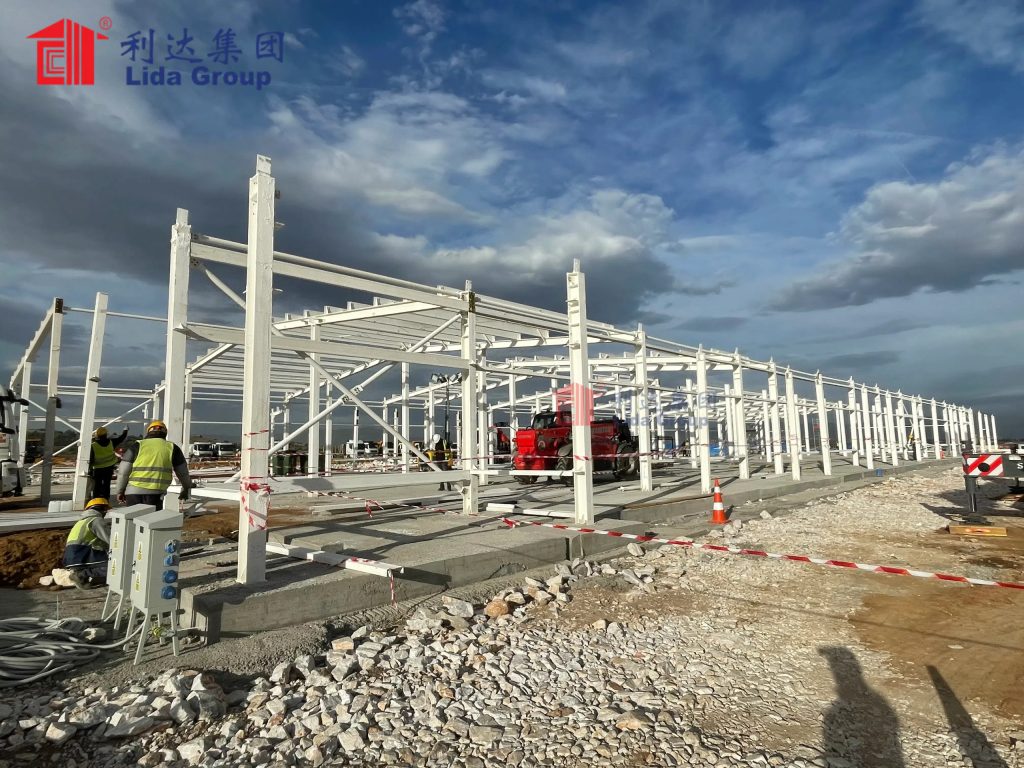
1. Overview of Lida Group’s Major Steel Structure Construction Milestone
The major steel structure construction milestone completed by Lida Group this time is a comprehensive achievement integrating multiple key projects, covering three core fields: large-scale industrial steel structure plants, long-span steel structure bridges, and integrated prefabricated steel structure rural buildings. The milestone involves a total of 8 key projects distributed in 6 countries and regions around the world, including China, Germany, Brazil, Kenya, Australia, and the United States, with a total steel consumption of more than 120,000 tons, a total construction area of over 850,000 square meters, and a total investment of more than 500 million US dollars. The completion of these projects not only marks that Lida Group has fully mastered the core technologies of large-scale, high-difficulty steel structure construction, but also indicates that the company’s global project operation and management capabilities have reached a new level, further consolidating its leading position in the global prefabricated steel structure industry.
The milestone projects are characterized by large scale, high technical difficulty, strict quality requirements, and tight construction schedules. Among them, the largest project is the large-scale steel structure industrial park in Germany, with a total steel consumption of 45,000 tons, a construction area of 320,000 square meters, and a span of up to 60 meters for the main factory building, which is one of the largest single steel structure industrial parks in Europe. The most technically difficult project is the long-span steel structure bridge in Australia, with a main span of 180 meters, adopting a composite steel-concrete structure, which requires extremely high precision in component manufacturing and installation, and is a key project for local transportation infrastructure construction. The most influential project is the integrated prefabricated steel structure rural housing cluster in Kenya, which covers 15 villages, with a total of 320 sets of steel structure houses, integrating residential, agricultural production, and community service functions, effectively promoting the modernization of local rural construction and poverty alleviation work.
The completion of these milestone projects has gone through a total of 28 months from design, manufacturing, transportation to installation and acceptance. During the construction process, Lida Group has established a special project team, integrated global resources, optimized the construction plan, and overcome a series of technical and management challenges, ensuring that all projects are completed on schedule, with all indicators meeting or exceeding international standards and local requirements. The successful completion of the milestone has been highly recognized by the governments of various countries, project owners, and the industry, and has won a number of international construction awards, including the Global Steel Structure Construction Excellence Award and the International Green Building Award, further enhancing Lida Group’s brand influence and market competitiveness in the global construction industry.
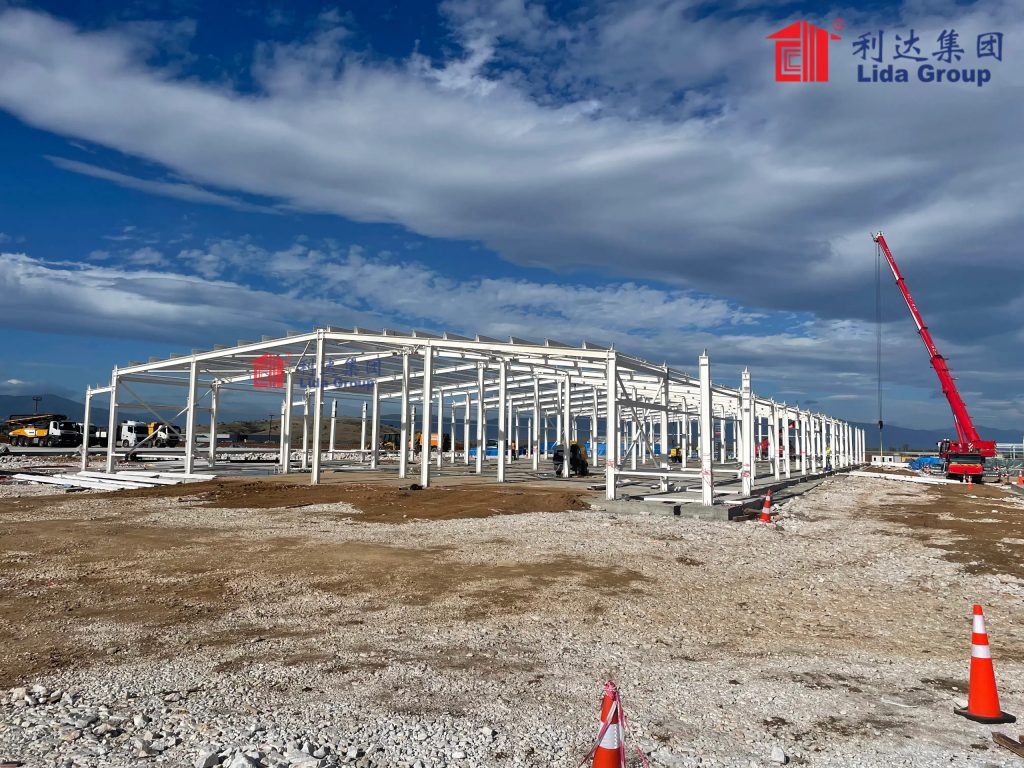
2. Core Projects of the Milestone: Details and Achievements
To fully reflect the connotation and value of Lida Group’s major steel structure construction milestone, this section focuses on introducing three representative core projects among the milestone projects, including the large-scale steel structure industrial park in Germany, the long-span steel structure bridge in Australia, and the integrated prefabricated steel structure rural housing cluster in Kenya, elaborating on the project background, design concepts, construction processes, key technologies, and final achievements, so as to show the comprehensive strength of Lida Group in steel structure construction.
2.1 Large-Scale Steel Structure Industrial Park Project in Germany
The large-scale steel structure industrial park project in Germany is a key project invested by a world-renowned automobile manufacturing enterprise, located in Bavaria, Germany. The project aims to build a modern intelligent industrial park integrating automobile parts production, assembly, and R&D, with high requirements for the bearing capacity, stability, and durability of the steel structure, as well as strict requirements for the construction cycle and environmental protection. After fierce competition, Lida Group won the bid for the project with its advanced design scheme, mature construction technology, and perfect service system, becoming the general contractor of the project’s steel structure design, manufacturing, and installation.
The project covers a total area of 580,000 square meters, of which the construction area of the steel structure main project is 320,000 square meters, including 4 main factory buildings, 2 R&D centers, and 1 logistics warehouse. The main factory building adopts a large-span steel frame structure, with the maximum span of 60 meters and the height of 28 meters, which can accommodate large-scale automated production equipment and realize the flexible layout of the production line. The R&D center and logistics warehouse adopt a composite steel structure, which combines the advantages of steel structure and concrete structure, ensuring the stability and comfort of the building while reducing the construction cost.
In the design phase, Lida Group’s professional design team adopted BIM (Building Information Modeling) integrated design technology, built a 3D digital model of the entire industrial park, and carried out collision detection, structural optimization, and energy efficiency simulation, ensuring the rationality and scientificity of the design scheme. The design team also fully considered the local climate conditions in Germany, optimized the thermal insulation and wind resistance design of the steel structure, and ensured that the building can adapt to the cold and rainy climate in Bavaria. In the manufacturing phase, Lida Group used advanced automated production equipment, including CNC laser cutting machines, robotic welding machines, and precision testing equipment, to produce steel components with high precision. The components were treated with hot-dip galvanization and anti-corrosion paint spraying, which effectively improved the anti-corrosion performance of the components and extended the service life of the building. The total steel consumption of the project reached 45,000 tons, and all components were manufactured in Lida Group’s European production base, ensuring the quality and delivery cycle of the components.
In the installation phase, Lida Group adopted modular installation and high-precision positioning technology, pre-assembled the steel frame modules in the factory, and then transported them to the construction site for overall installation. The installation team used advanced lifting equipment and positioning instruments to ensure the accuracy of component installation, with the installation error controlled within ±0.3mm. In addition, the project adopted parallel construction mode, carrying out foundation construction, component manufacturing, and installation simultaneously, which greatly shortened the construction cycle. The entire project was completed in 12 months, 3 months ahead of the planned cycle, and passed the strict acceptance of the German construction authorities and the project owner. After completion, the industrial park has become one of the largest and most advanced intelligent industrial parks in Europe, with an annual output of 500,000 sets of automobile parts, which has effectively promoted the local industrial upgrading and economic development.
2.2 Long-Span Steel Structure Bridge Project in Australia
The long-span steel structure bridge project in Australia is a key transportation infrastructure project in New South Wales, Australia, connecting the urban area of Sydney and the western suburbs, with a total length of 1.2 kilometers, of which the main bridge is a long-span steel structure cable-stayed bridge with a main span of 180 meters, a width of 32 meters, and a design load of highway grade I. The project is an important part of Australia’s urban transportation network, which is of great significance for improving local transportation efficiency and promoting regional economic integration. Lida Group, as a key partner of the project, is responsible for the design, manufacturing, and installation of the steel structure of the main bridge, undertaking the core task of the project.
The project has extremely high technical requirements for the steel structure, due to the long main span, large load-bearing capacity, and harsh marine environment (the bridge is close to the sea, with high humidity and strong corrosion). The main bridge steel structure adopts a composite steel-concrete structure, using high-strength steel Q690, which has excellent mechanical properties and corrosion resistance. The steel structure of the main bridge includes main girders, bridge towers, cable stays, and other components, with a total steel consumption of 28,000 tons. The design of the bridge tower adopts a diamond-shaped structure, which not only ensures the stability of the bridge but also has a beautiful appearance, integrating functionality and aesthetics.
In the design phase, Lida Group’s design team carried out in-depth research on the local geological conditions, climate environment, and transportation needs, and adopted finite element analysis (FEA) technology to simulate the stress and deformation of the steel structure under various loads (such as wind load, seismic load, and vehicle load), ensuring the safety and stability of the bridge. The team also optimized the design of the cable-stayed system, adopting high-strength galvanized steel cables, which improved the bearing capacity and durability of the bridge. In the manufacturing phase, Lida Group used special manufacturing processes for large-span steel components, including precision bending, welding, and heat treatment, to ensure the dimensional accuracy and mechanical properties of the components. The components were treated with anti-corrosion technology suitable for marine environments, including hot-dip galvanization and anti-corrosion paint with high weather resistance, which effectively resisted the corrosion of seawater and humid air.
In the installation phase, the project faced great challenges due to the long main span, high installation height, and complex on-site environment. Lida Group adopted a floating installation method, using a large floating crane to hoist the main girder components to the design position, and then carried out precise positioning and connection. The installation team strictly followed the installation procedures and safety standards, and used advanced monitoring equipment to real-time monitor the installation process, ensuring the safety and accuracy of the installation. In addition, the project also adopted intelligent construction technology, using IoT (Internet of Things) devices to monitor the stress, deformation, and temperature of the steel structure in real time, ensuring the stability of the bridge during the installation process. The entire steel structure installation project was completed in 8 months, and after completion, the bridge passed the strict load test and safety inspection of the Australian transportation department, with all indicators meeting the design requirements. The bridge has been put into use, which has greatly shortened the travel time between Sydney’s urban area and western suburbs, improved the local transportation capacity, and won wide praise from the local government and residents.
2.3 Integrated Prefabricated Steel Structure Rural Housing Cluster Project in Kenya
The integrated prefabricated steel structure rural housing cluster project in Kenya is a key project for rural revitalization and poverty alleviation in Kenya, located in the central region of Kenya, covering 15 villages, with a total of 320 sets of steel structure houses, a total construction area of 95,000 square meters, and a total steel consumption of 12,000 tons. The project aims to improve the living conditions of local farmers, promote the modernization of rural construction, and realize the integration of rural production and living. Lida Group provided a full set of solutions for the project, including design, manufacturing, installation, and after-sales service, and successfully completed the project with high quality and efficiency.
The project adopts integrated prefabricated steel structure rural houses, which integrate residential, agricultural production, and community service functions. Each set of houses has a living area, a crop storage area, a small processing area, and a courtyard, which can meet the living and production needs of farmers. The steel structure houses adopt a lightweight steel frame structure, with the advantages of quick construction, strong seismic resistance, and energy conservation and environmental protection, which are very suitable for the rural areas of Kenya with backward construction conditions and frequent natural disasters. The design of the houses fully considers the local climate conditions and living habits of farmers, optimizing the ventilation, lighting, and thermal insulation design, ensuring the comfort and practicality of the houses.
In the design phase, Lida Group’s design team conducted in-depth investigations of the local rural areas, understood the living habits, production modes, and economic conditions of farmers, and provided customized design schemes for each village. The team also adopted BIM technology to build a 3D model of the housing cluster, optimizing the layout of the houses and the configuration of public facilities, ensuring the rationality and adaptability of the project. In the manufacturing phase, Lida Group used prefabricated production technology, produced the steel components and wall panels in the factory, and then transported them to the construction site for assembly. The components are lightweight and easy to install, which is suitable for the rural areas of Kenya with limited construction equipment. The total manufacturing cycle of the components was only 3 months, ensuring the timely progress of the project.
In the installation phase, Lida Group sent a professional installation team to Kenya, and trained local rural laborers to participate in the installation work, which not only accelerated the construction progress but also promoted the employment of local farmers. The installation team adopted modular installation technology, and each set of houses can be installed in 3-5 days, which greatly shortened the construction cycle. The entire project was completed in 8 months, and after completion, 320 households of farmers moved into new houses. The new steel structure houses are safe, comfortable, and practical, and the integrated production and living space has improved the production efficiency of farmers and increased their income. The project has been highly recognized by the Kenyan government and the United Nations Development Programme (UNDP), and has become a model project for rural revitalization and poverty alleviation in Africa.
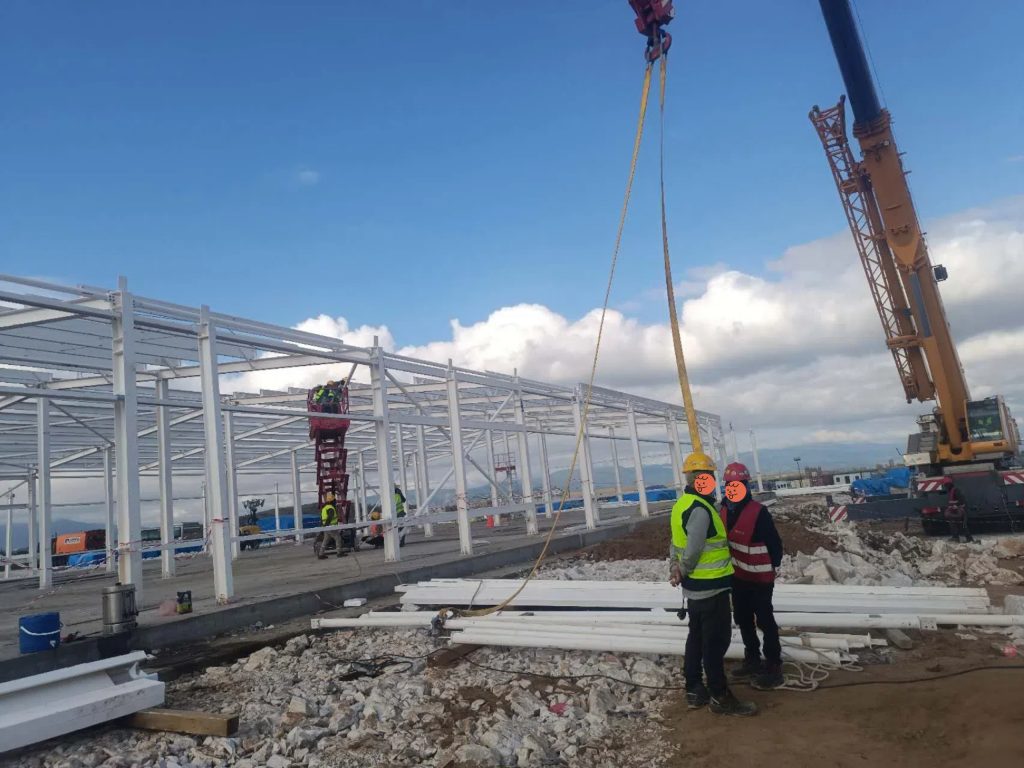
3. Key Technologies Supporting the Milestone Completion
The successful completion of Lida Group’s major steel structure construction milestone is inseparable from the support of a series of advanced key technologies. Over the years, Lida Group has continuously increased investment in technological research and development, and has formed a complete technical system covering steel structure design, manufacturing, installation, and detection, which has laid a solid technical foundation for the completion of various key projects. This section focuses on introducing the core key technologies adopted in the milestone projects, including BIM-based integrated design technology, high-precision prefabrication technology for large steel components, modular installation and rapid construction technology, intelligent monitoring and control technology, and advanced anti-corrosion technology, elaborating on the application of these technologies in the milestone projects and their role in ensuring project quality and efficiency.
3.1 BIM-Based Integrated Design Technology
BIM (Building Information Modeling) technology is the core design technology adopted in Lida Group’s milestone projects, which realizes the integrated design, simulation, and management of the entire project cycle. In the design phase of the milestone projects, Lida Group’s design team used BIM technology to build a 3D digital model of the project, which can accurately display the structure, components, and auxiliary systems of the steel structure, and realize the integration of design, construction, and operation and maintenance.
In the large-scale steel structure industrial park project in Germany, the BIM model was used to carry out collision detection of steel components, pipelines, and electrical systems, identifying potential conflicts in advance and optimizing the design scheme, which reduced design errors by 85% and rework rate by 70%. In the long-span steel structure bridge project in Australia, the BIM model was used to simulate the stress and deformation of the steel structure under various loads, optimizing the structural design and improving the safety and stability of the bridge. In the rural housing cluster project in Kenya, the BIM model was used to optimize the layout of the houses and the configuration of public facilities, ensuring the rationality and adaptability of the project. In addition, the BIM model can also be used to generate detailed manufacturing drawings and component lists, guiding the automated production of components, and realizing the information sharing and collaborative work between the design, manufacturing, and installation teams, which greatly improved the project design efficiency and quality.
3.2 High-Precision Prefabrication Technology for Large Steel Components
The milestone projects involve a large number of large-scale and high-precision steel components, and the quality of component prefabrication directly affects the safety and stability of the entire project. Lida Group has developed a series of high-precision prefabrication technologies for large steel components, ensuring the quality and precision of components.
In the manufacturing process of steel components, Lida Group used advanced CNC laser cutting machines and plasma cutting machines, which can achieve high-precision cutting of steel plates and profiles with a cutting accuracy of ±0.1mm, ensuring the size and shape accuracy of components. For large-span steel beams and steel columns, robotic welding machines were used for welding, which has the advantages of stable welding quality, high welding efficiency, and strong adaptability. The robotic welding system can automatically adjust welding parameters according to the shape and size of components, ensuring uniform welding seams and high welding strength. In addition, Lida Group also adopted precision assembly technology and heat treatment technology, which effectively improved the dimensional accuracy and mechanical properties of components. For example, in the long-span steel structure bridge project in Australia, the main girder components have a length of 30 meters and a weight of 50 tons, and the dimensional tolerance after prefabrication is controlled within ±0.2mm, which meets the strict design requirements of the project.
3.3 Modular Installation and Rapid Construction Technology
The milestone projects have tight construction schedules and high requirements for construction efficiency. Lida Group adopted modular installation and rapid construction technology, which greatly shortened the construction cycle and improved construction efficiency.
Modular installation technology involves dividing the steel structure into several prefabricated modules in the design phase, which are manufactured and pre-assembled in the factory, and then transported to the construction site for overall installation. This technology not only reduces on-site construction time and labor costs but also improves the installation quality. For example, in the large-scale steel structure industrial park project in Germany, the steel frame was divided into 120 prefabricated modules, which were pre-assembled in the factory and then transported to the construction site for installation, reducing on-site construction time by 40%. In the rural housing cluster project in Kenya, each set of houses was divided into 5 prefabricated modules, which can be installed in 3-5 days, realizing the rapid construction of rural houses.
In addition, Lida Group also adopted parallel construction technology, carrying out foundation construction, component manufacturing, and installation simultaneously, which further shortened the overall project cycle. For example, in the long-span steel structure bridge project in Australia, while the foundation of the bridge was being constructed on-site, the steel components were being manufactured in the factory, so that the components could be installed immediately after the foundation was completed, which shortened the project cycle by 3 months.
3.4 Intelligent Monitoring and Control Technology
To ensure the safety and quality of the milestone projects during the construction process, Lida Group adopted intelligent monitoring and control technology, using IoT (Internet of Things), big data, and other technologies to monitor the construction process in real time.
In the long-span steel structure bridge project in Australia, Lida Group installed a large number of IoT sensors on the steel components, which can real-time monitor the stress, deformation, temperature, and other parameters of the components during the installation process. The monitoring data is transmitted to the cloud platform in real time, and the technical team can analyze the data to judge the safety status of the steel structure and take corresponding measures in a timely manner. In the large-scale steel structure industrial park project in Germany, intelligent video monitoring and safety early warning systems were installed on the construction site, which can real-time monitor the construction progress and safety status, and issue early warnings for potential safety hazards, ensuring the safety of the construction process. In addition, Lida Group also used digital twin technology to create a virtual replica of the project, which can simulate the construction process and operation status of the project, providing a basis for the optimization of the construction plan and the maintenance of the project after completion.
3.5 Advanced Anti-Corrosion Technology
The milestone projects are distributed in different regions around the world, with different climate environments, including marine environments, cold and humid environments, and high-temperature and high-humidity environments, which have high requirements for the anti-corrosion performance of steel structures. Lida Group adopted advanced anti-corrosion technology to ensure the durability of the steel structure.
For the long-span steel structure bridge project in Australia, which is close to the sea, Lida Group adopted a three-layer anti-corrosion system: hot-dip galvanization + anti-corrosion primer + anti-corrosion topcoat. The hot-dip galvanization process forms a dense zinc layer on the surface of the components, which can effectively isolate the steel from the external environment; the anti-corrosion primer and topcoat adopt high-quality anti-corrosion paint with high weather resistance and corrosion resistance, which further enhances the anti-corrosion performance of the components. For the large-scale steel structure industrial park project in Germany, which has a cold and humid climate, Lida Group adopted anti-corrosion paint with good low-temperature resistance and anti-mildew performance, ensuring the anti-corrosion effect of the steel structure in a low-temperature environment. For the rural housing cluster project in Kenya, which has a high-temperature and high-humidity climate, Lida Group adopted a lightweight anti-corrosion cladding material, which not only has good anti-corrosion performance but also has good thermal insulation performance, improving the comfort of the houses.
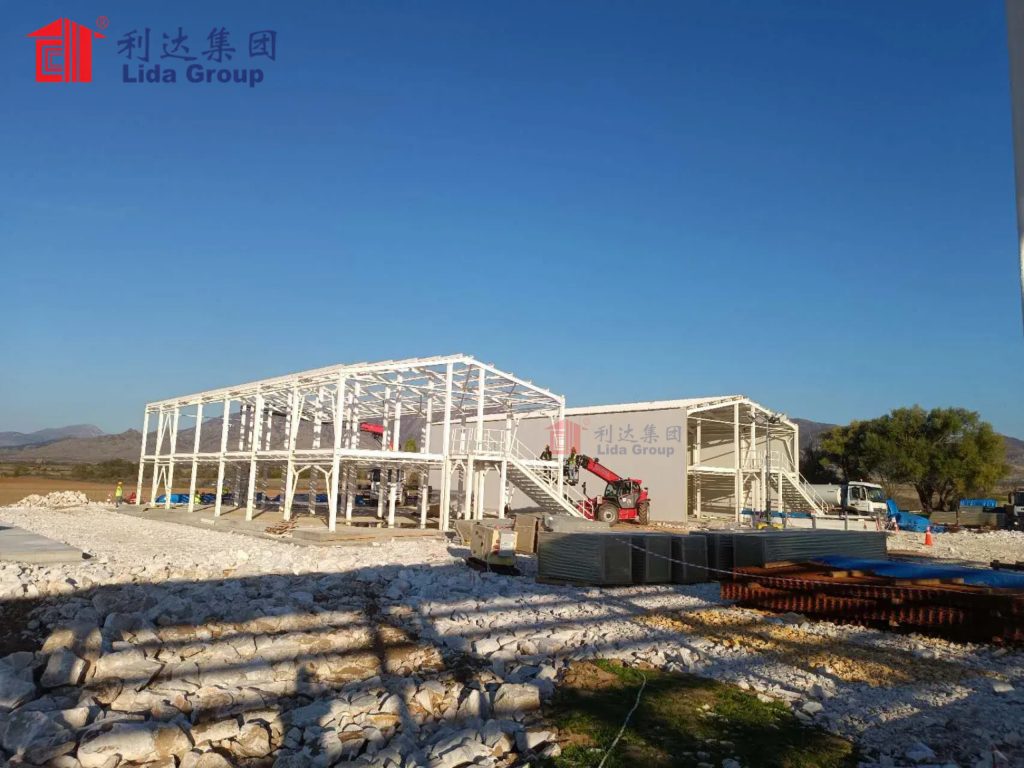
4. Challenges and Solutions During the Construction Process
The completion of Lida Group’s major steel structure construction milestone is not smooth sailing. During the construction process, the project team encountered a series of challenges, including technical challenges, environmental challenges, management challenges, and supply chain challenges. However, with the strong technical strength, rich project experience, and efficient team collaboration of Lida Group, all challenges were successfully solved, ensuring the smooth progress of the project. This section elaborates on the main challenges encountered during the construction process and the corresponding solutions, showing the strong problem-solving ability of Lida Group.
4.1 Technical Challenges and Solutions
The biggest technical challenge encountered during the construction of the milestone projects is the high difficulty of installation of large-span steel components. For example, in the long-span steel structure bridge project in Australia, the main girder components have a length of 30 meters and a weight of 50 tons, and the installation height is up to 40 meters. The on-site environment is complex, with strong winds and large temperature changes, which brings great difficulties to the installation of components.
To solve this problem, Lida Group’s technical team conducted in-depth research and formulated a targeted installation plan. First, the team used BIM technology to simulate the installation process, determining the optimal installation sequence, lifting point, and lifting plan. Second, the team selected a large floating crane with a lifting capacity of 200 tons, which can adapt to the complex on-site environment and ensure the stability of component lifting. Third, the team adopted high-precision positioning technology, using laser trackers and total stations to real-time monitor the installation position of components, ensuring the installation accuracy. In addition, the team also took measures to prevent wind and stabilize components, installing wind barriers and temporary fixing devices to avoid component deformation or displacement caused by strong winds. Through these measures, the installation of large-span steel components was successfully completed, and the installation accuracy met the design requirements.
Another technical challenge is the control of welding quality for large steel components. The milestone projects involve a large number of large steel components, and the welding quality directly affects the safety and stability of the steel structure. Especially in the long-span steel structure bridge project in Australia, the welding of the main girder and bridge tower requires high welding strength and tightness, which is very difficult.
To solve this problem, Lida Group adopted robotic welding technology and strict welding quality control system. The robotic welding machine can ensure stable welding quality and uniform welding seams, reducing the impact of human factors on welding quality. In addition, the company established a three-level welding quality inspection system: first-level inspection (self-inspection by welders), second-level inspection (inspection by technical supervisors), and third-level inspection (inspection by professional testing institutions). The inspection methods include visual inspection, ultrasonic inspection, and X-ray inspection, ensuring that the welding quality meets the international standards and design requirements. Through these measures, the welding pass rate of the milestone projects reached 99.8%, ensuring the safety and stability of the steel structure.
4.2 Environmental Challenges and Solutions
The milestone projects are distributed in different regions around the world, with different climate environments, which bring great challenges to the construction process. For example, the large-scale steel structure industrial park project in Germany is located in Bavaria, which has a cold and rainy climate, with an average temperature of -5℃ in winter and frequent rain and snow, which affects the construction progress and quality. The long-span steel structure bridge project in Australia is close to the sea, with high humidity, strong corrosion, and frequent strong winds, which affects the installation of components and the anti-corrosion effect of the steel structure.
To solve the environmental challenges, Lida Group formulated targeted solutions according to the local climate conditions. For the project in Germany, the team adopted winter construction measures, including installing temporary heating equipment on the construction site to ensure the construction temperature; using waterproof and moisture-proof materials to protect the steel components and construction equipment from rain and snow; adjusting the construction schedule, arranging indoor construction tasks in winter, and outdoor construction tasks in spring and summer, which ensured the construction progress and quality. For the project in Australia, the team adopted anti-corrosion measures suitable for marine environments, as mentioned earlier, and took windproof measures during the installation process, including choosing the appropriate installation time (avoiding strong wind weather) and installing wind barriers, which ensured the safety and stability of the installation process.
4.3 Management Challenges and Solutions
The milestone projects involve multiple countries and regions, with a large number of participants, complex project management, and great management challenges. For example, the project team includes designers, manufacturers, installers, and supervisors from different countries, with different languages, cultures, and work habits, which brings great difficulties to team collaboration. In addition, the project involves a large number of components and materials, with complex logistics and transportation, which requires strict management of the supply chain.
To solve the management challenges, Lida Group established a global project management system, adopting a matrix management mode, with a special project headquarters responsible for the overall coordination and management of the milestone projects. The project headquarters set up professional departments, including design management, manufacturing management, installation management, logistics management, and quality management, to realize the refined management of each link of the project. In addition, the company adopted a unified project management platform, which can realize information sharing and real-time communication between the project team members in different countries and regions, solving the problems of language and cultural barriers. For the supply chain management, Lida Group established a global supply chain system, selecting high-quality suppliers and establishing a strict supplier evaluation system, ensuring the quality and timely supply of components and materials. In addition, the company optimized the logistics and transportation plan, choosing the optimal transportation route and transportation mode, reducing transportation costs and ensuring the delivery cycle of components.
4.4 Supply Chain Challenges and Solutions
During the construction of the milestone projects, the global supply chain was affected by the epidemic and international trade frictions, resulting in shortages of some steel materials and components, and delayed transportation, which brought great challenges to the project progress. For example, the supply of high-strength steel Q690 used in the long-span steel structure bridge project in Australia was tight, and the transportation of components was delayed due to port congestion.
To solve the supply chain challenges, Lida Group took a series of measures. First, the company diversified its supply channels, selecting multiple suppliers for key materials and components, avoiding the risk of supply interruption. Second, the company established a strategic cooperation relationship with key suppliers, signing long-term supply contracts, ensuring the stable supply of materials and components. Third, the company optimized the inventory management, increasing the inventory of key materials and components, ensuring that the project construction is not affected by supply shortages. Fourth, the company actively communicated with the local government and port authorities, solving the problem of port congestion and ensuring the timely transportation of components. Through these measures, the supply chain challenges were successfully solved, and the project progress was ensured.
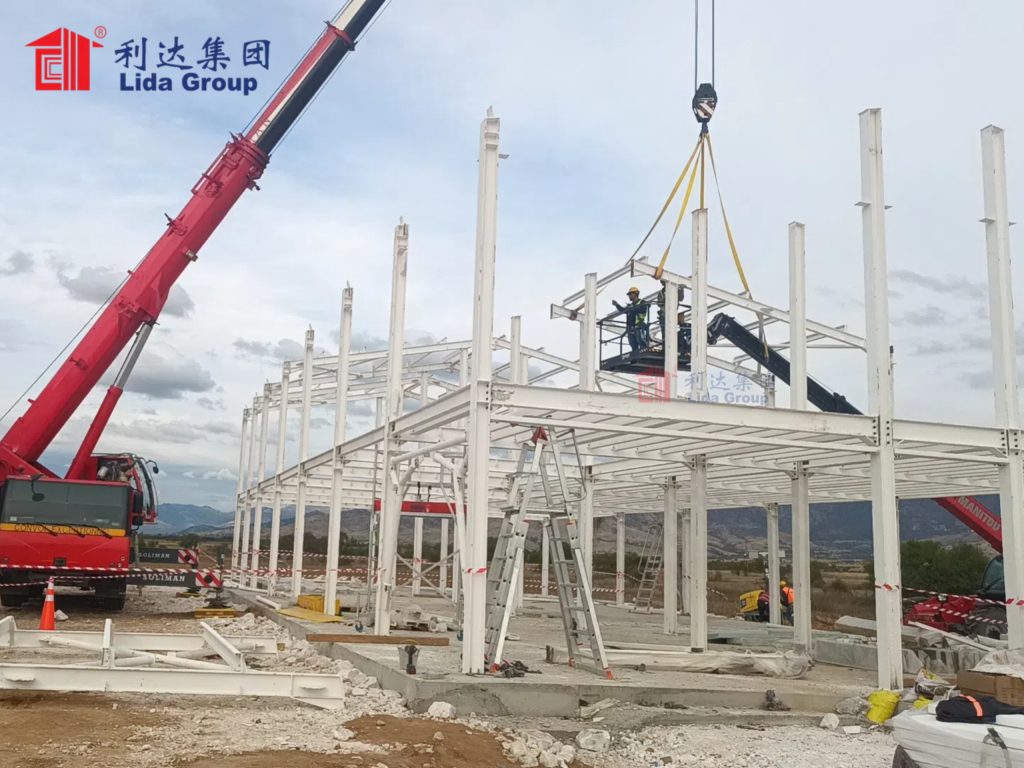
5. The Impact of the Milestone on Lida Group and the Global Steel Structure Industry
The successful completion of Lida Group’s major steel structure construction milestone has far-reaching impacts on both the company itself and the global steel structure construction industry. For Lida Group, the milestone marks a new breakthrough in the company’s technical strength, project management capabilities, and global market layout, further enhancing the company’s brand influence and market competitiveness. For the global steel structure construction industry, the milestone sets a new benchmark for large-scale, high-difficulty steel structure construction, promoting the innovation and development of the industry. This section elaborates on the specific impacts of the milestone from two aspects: the impact on Lida Group and the impact on the global steel structure industry.
5.1 Impact on Lida Group
First, the milestone has significantly enhanced Lida Group’s technical strength. Through the construction of the milestone projects, the company has further mastered the core technologies of large-scale, high-difficulty steel structure construction, including the design and construction technology of long-span steel structures, the prefabrication technology of large steel components, and the intelligent construction technology, which has improved the company’s technical research and development capabilities and technical innovation level. The company has also accumulated rich experience in cross-border project operation and management, which has laid a solid foundation for the company’s subsequent development of global projects.
Second, the milestone has greatly enhanced Lida Group’s brand influence and market competitiveness. The successful completion of the milestone projects has been highly recognized by the governments of various countries, project owners, and the industry, and has won a number of international construction awards, which has improved the company’s brand reputation and influence in the global construction industry. The company has also gained more market opportunities, with a number of new international steel structure projects signing contracts, further expanding the company’s global market share. For example, after the completion of the large-scale steel structure industrial park project in Germany, Lida Group has won the bid for two more steel structure industrial park projects in Europe, which has further consolidated the company’s market position in Europe.
Third, the milestone has promoted the optimization and upgrading of Lida Group’s industrial chain. Through the construction of the milestone projects, the company has further improved the integration capability of the steel structure industry chain, covering design, manufacturing, installation, and after-sales service, forming a complete industrial chain layout. The company has also strengthened cooperation with upstream and downstream enterprises, promoting the common development of the industrial chain, and improving the company’s core competitiveness.
Fourth, the milestone has enhanced the cohesion and combat effectiveness of Lida Group’s team. The completion of the milestone projects required the joint efforts of the company’s global team, including designers, manufacturers, installers, and managers. During the construction process, the team overcame a series of challenges, which enhanced the team’s cohesion, combat effectiveness, and sense of responsibility, laying a solid foundation for the company’s future development.
5.2 Impact on the Global Steel Structure Industry
First, the milestone sets a new benchmark for the global steel structure construction industry. The milestone projects involve a variety of complex steel structure types, with high technical difficulty and strict quality requirements. The successful completion of these projects demonstrates the advanced level of Lida Group’s steel structure construction technology and project management capabilities, and sets a new benchmark for the global steel structure construction industry, providing a reference for other enterprises to carry out large-scale, high-difficulty steel structure projects.
Second, the milestone promotes the innovation and development of the global steel structure construction technology. The key technologies adopted in the milestone projects, such as BIM-based integrated design technology, high-precision prefabrication technology, and intelligent monitoring and control technology, have important promotion and application value for the global steel structure construction industry. These technologies can improve the design efficiency, manufacturing precision, and construction quality of steel structure projects, promote the transformation and upgrading of the steel structure construction industry, and promote the development of the industry towards intelligence, greenization, and industrialization.
Third, the milestone promotes the global popularization and application of steel structure construction. The successful completion of the milestone projects has demonstrated the advantages of steel structure construction, such as high efficiency, environmental protection, and safety, which has enhanced the recognition and acceptance of steel structure construction in various countries around the world, promoting the global popularization and application of steel structure construction. Especially in developing countries, the rural housing cluster project in Kenya has provided a feasible solution for the modernization of rural construction, promoting the application of steel structure construction in rural areas of developing countries.
Fourth, the milestone promotes international cooperation and exchanges in the steel structure construction industry. The milestone projects involve multiple countries and regions, and Lida Group has carried out in-depth cooperation with enterprises, institutions, and governments of various countries, promoting the exchange and sharing of technology, experience, and resources in the global steel structure construction industry, and promoting the common development of the global steel structure construction industry.
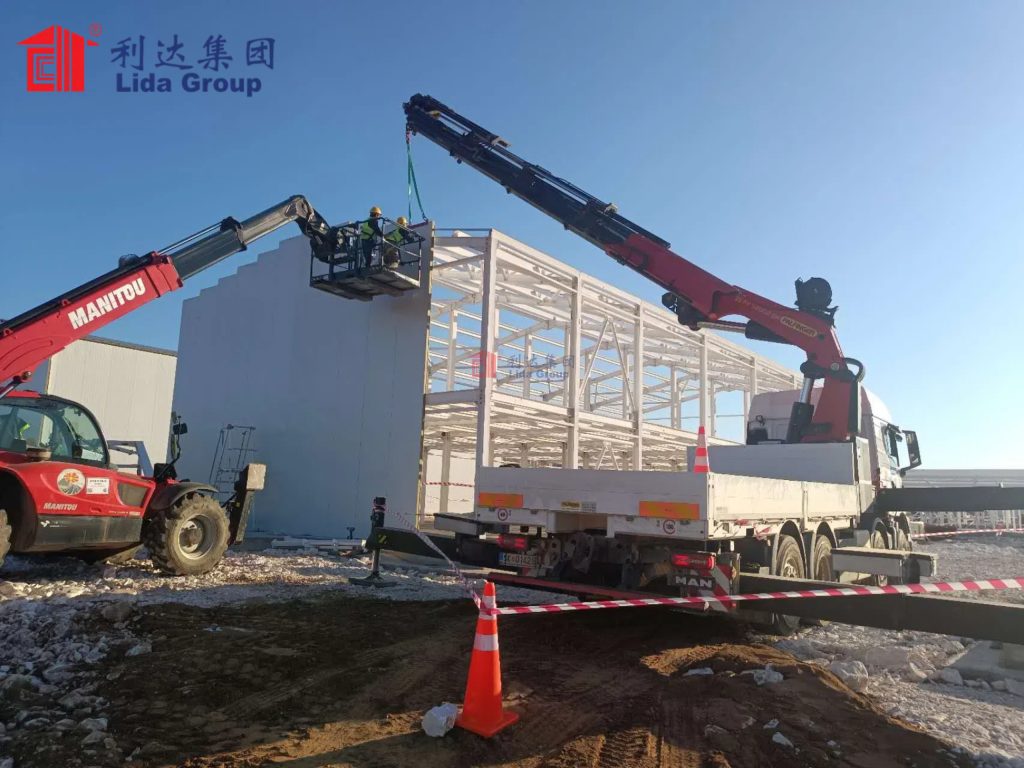
6. Conclusion
The successful completion of Lida Group’s major steel structure construction milestone is a major achievement of the company in the field of steel structure construction, marking that Lida Group has entered a new stage of development in the global steel structure industry. This milestone is the result of Lida Group’s decades of adherence to technological innovation, quality first, and customer-centric, and is also the result of the joint efforts of the company’s global team. Through the construction of the milestone projects, Lida Group has not only demonstrated its strong technical strength, project management capabilities, and global resource integration capabilities but also made important contributions to the innovation and development of the global steel structure construction industry.
This article comprehensively elaborates on the background, core projects, key technologies, challenges and solutions, and industry impact of Lida Group’s major steel structure construction milestone. The milestone projects, including the large-scale steel structure industrial park in Germany, the long-span steel structure bridge in Australia, and the integrated prefabricated steel structure rural housing cluster in Kenya, have fully demonstrated the comprehensive strength of Lida Group in steel structure design, manufacturing, and installation. The key technologies adopted in the projects, such as BIM-based integrated design technology, high-precision prefabrication technology, and intelligent monitoring and control technology, have laid a solid technical foundation for the completion of the milestone, and have important promotion and application value for the global steel structure construction industry. During the construction process, the project team overcame a series of technical, environmental, management, and supply chain challenges, showing the strong problem-solving ability and team collaboration ability of Lida Group.
The completion of the milestone has far-reaching impacts on Lida Group and the global steel structure construction industry. For Lida Group, the milestone has enhanced the company’s technical strength, brand influence, and market competitiveness, promoted the optimization and upgrading of the industrial chain, and enhanced the team’s cohesion and combat effectiveness. For the global steel structure construction industry, the milestone has set a new benchmark for large-scale, high-difficulty steel structure construction, promoted the innovation and development of construction technology, promoted the global popularization and application of steel structure construction, and promoted international cooperation and exchanges in the industry.
Looking forward to the future, with the continuous development of the global construction industry, the demand for high-quality, efficient, and sustainable steel structure projects will continue to increase. Lida Group will take this milestone as a new starting point, continue to adhere to the concept of technological innovation and quality first, further increase investment in technological research and development, optimize product solutions, and improve service quality. The company will focus on three key development directions: first, strengthening the research and development of intelligent technologies such as IoT, big data, and artificial intelligence in steel structure construction, promoting the intelligentization of steel structure design, manufacturing, and operation and maintenance; second, developing more environmentally friendly and energy-saving steel structure solutions, using new materials and new processes to reduce the carbon footprint of steel structure projects, and contributing to global green development; third, further expanding the global market, strengthening cooperation with enterprises and governments of various countries, and bringing Lida Group’s high-quality steel structure solutions to more parts of the world.
With these efforts, Lida Group will continue to lead the development of the global steel structure construction industry, make greater contributions to the modernization of the global construction industry, and create more value for customers, society, and shareholders. It is believed that under the leadership of Lida Group, the global steel structure construction industry will usher in a new era of development, and steel structure construction will play a more important role in promoting global urbanization, industrialization, and rural revitalization.
Related news
-
Redefining Rural Spaces with Large Span Farm House Designs
2026-02-26 17:41:09
-
Robust Metal Frame Warehouse Ideal for Industrial Applications
2026-02-26 17:33:41
-
Lida Group Excels in Complex Steel Structure Construction
2026-02-26 17:27:58
contact us
- Tel: +86-532-88966982
- Whatsapp: +86-13793209022
- E-mail: sales@lidajituan.com
