



**Introduction**
In the global construction industry, the successful delivery of large-scale infrastructure projects depends on far more than engineering expertise and material resources. Behind every skyscraper, highway, tunnel, and power plant lies a critical but often overlooked element: the workforce that builds them. Providing safe, comfortable, and efficient accommodation for construction workers has long been a challenge that project managers must navigate—one that can determine whether a project finishes on schedule or falls victim to delays, labor turnover, and logistical complications.
Lida Group, a world-leading provider of modular construction and container-based building solutions with over three decades of experience, has announced the successful completion of a major construction site labor accommodation project that sets new benchmarks for rapid deployment, worker comfort, and operational efficiency. The project, which represents the latest in a long line of successful workforce housing initiatives undertaken by the company, demonstrates the transformative potential of prefabricated modular construction in addressing the unique challenges of construction site accommodation.
Since its founding in 1993, Lida Group has established itself as one of China’s largest integrated building engineering enterprises, with operations spanning 152 countries and over 5,000 completed projects to its name . The company’s expertise in prefabricated camp housing solutions has made it a trusted partner for leading construction firms including China State Construction, Saudi Aramco, Salini Italy, and the American CAT Group, as well as a designated integrated camp supplier for the United Nations . This latest completed project adds to an impressive portfolio that demonstrates the company’s capability to deliver workforce accommodation that meets the highest standards of quality, safety, and sustainability.
This article provides a comprehensive overview of Lida Group’s recently completed major construction site labor accommodation project, examining the technical specifications that enabled rapid deployment, the engineering innovations that ensure durability and comfort, the logistical strategies that overcame remote site challenges, the comprehensive amenities that support worker welfare, and the sustainability features that align with modern environmental standards. The article also places this project within the broader context of Lida Group’s extensive experience in workforce housing across diverse industries and geographies.
**Chapter 1: Project Overview—A Milestone Achievement**
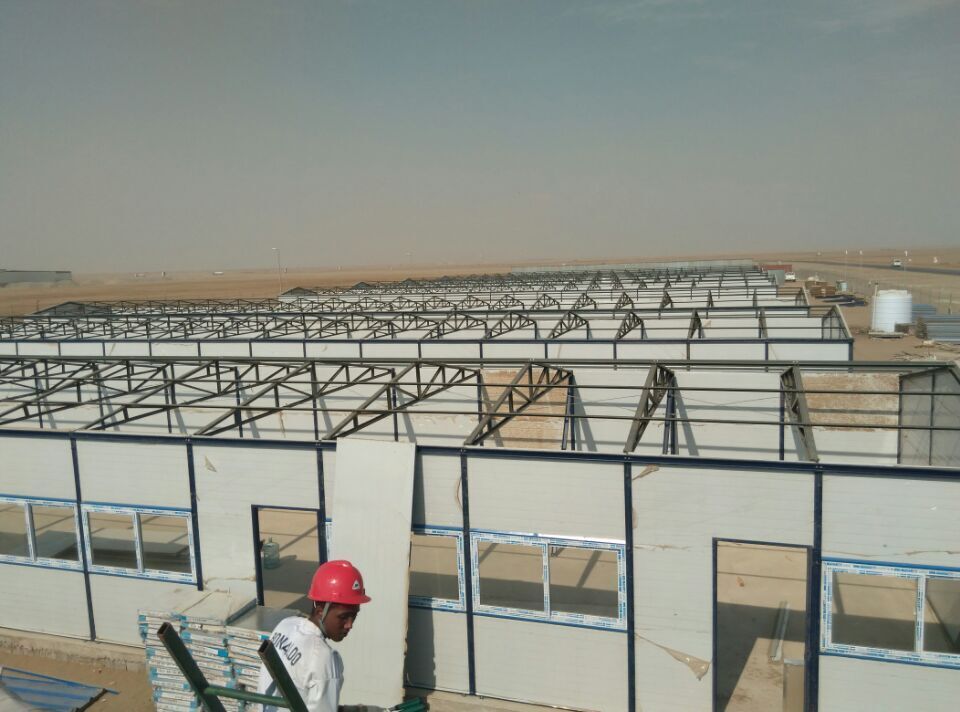
The recently completed major construction site labor accommodation project represents a significant achievement in modular workforce housing. While Lida Group undertakes numerous projects globally each year, this particular initiative stands out for its scale, complexity, and the speed with which it was delivered.
**1.1 Project Scale and Scope**
The completed project encompasses a comprehensive workforce accommodation complex designed to house hundreds of construction workers supporting a major infrastructure development. While specific client details are protected under confidentiality agreements, the project’s specifications demonstrate Lida Group’s capability to deliver turnkey solutions that include:
– Multiple accommodation buildings configured for single and double occupancy
– Central dining facilities capable of serving hundreds of meals daily
– Sanitation modules with industrial-grade fixtures and ventilation systems
– Recreation and common areas for off-hour relaxation and social interaction
– Administrative offices for project management staff
– Medical clinic facilities for on-site healthcare services
The entire complex was designed, manufactured, and installed within a compressed timeline that traditional construction methods could not match. By leveraging factory prefabrication and modular assembly techniques, Lida Group delivered a fully operational workforce camp in a fraction of the time required for conventional construction .
**1.2 Project Context and Significance**
Construction site labor accommodation projects face unique challenges that distinguish them from other workforce housing applications. Unlike mining or oil and gas camps that often operate from fixed locations for years, construction camps must often be established rapidly to meet project commencement deadlines, accommodate fluctuating workforce sizes, and potentially relocate as construction progresses along linear infrastructure such as highways, railways, or pipelines .
The completed project demonstrates Lida Group’s ability to address these challenges through engineered solutions. By utilizing modular container housing systems with standardized dimensions and connection points, the camp can be expanded or reconfigured as workforce needs evolve. The steel-frame construction ensures durability across the project’s duration, while the modular design enables future relocation or repurposing when the construction project concludes.
**1.3 Client Partnership and Collaboration**
The successful completion of this major project was made possible through close collaboration between Lida Group’s engineering team and the client’s project management staff. From initial consultation through final handover, the partnership focused on understanding specific requirements and developing tailored solutions.
As documented in Lida Group’s project portfolio, the company provides comprehensive support throughout the project lifecycle, including proposal drawings, shop drawings, 3D renderings, material photos, and project images . This collaborative approach ensures that the final accommodation meets client expectations for functionality, comfort, and aesthetics while adhering to budget and timeline constraints.
**Chapter 2: Engineering Excellence—The Foundation of Success**
The successful completion of this major construction site labor accommodation project rests on Lida Group’s engineering expertise, developed over three decades of modular construction experience.
**2.1 Structural Integrity and Durability**
The accommodation units utilized in this project feature high-strength galvanized steel frames constructed from Q235B grade steel—a material renowned for its high tensile strength and durability . The structural design parameters meet rigorous international standards:
– Floor live load capacity of 2.0 KN/m², sufficient for residential and commercial occupancy
– Roof live load capacity of 0.5 KN/m², accommodating snow accumulation and maintenance access
– Wind load resistance of 0.6 KN/m², equivalent to 120-150 mph wind speeds
– Earthquake resistance rated at Grade 8 on the seismic intensity scale
– Stacking capacity of up to three stories
The steel frames are treated with a dual-layer anti-corrosion coating system, including an epoxy primer with 20-40 μm thickness and a polyurethane finishing coat with 40-50 μm thickness, achieving total film thickness exceeding 80 μm . Galvanized components feature a zinc layer exceeding 10 μm (≥80g/m²), providing sacrificial protection that prevents rust formation even when coatings are scratched. This corrosion protection is essential for construction site environments where exposure to dust, moisture, and industrial conditions is unavoidable.
**2.2 Advanced Insulation and Thermal Performance**
Construction site accommodation must maintain comfortable interior conditions regardless of external weather. The completed project utilized sandwich panel construction with advanced insulation systems:
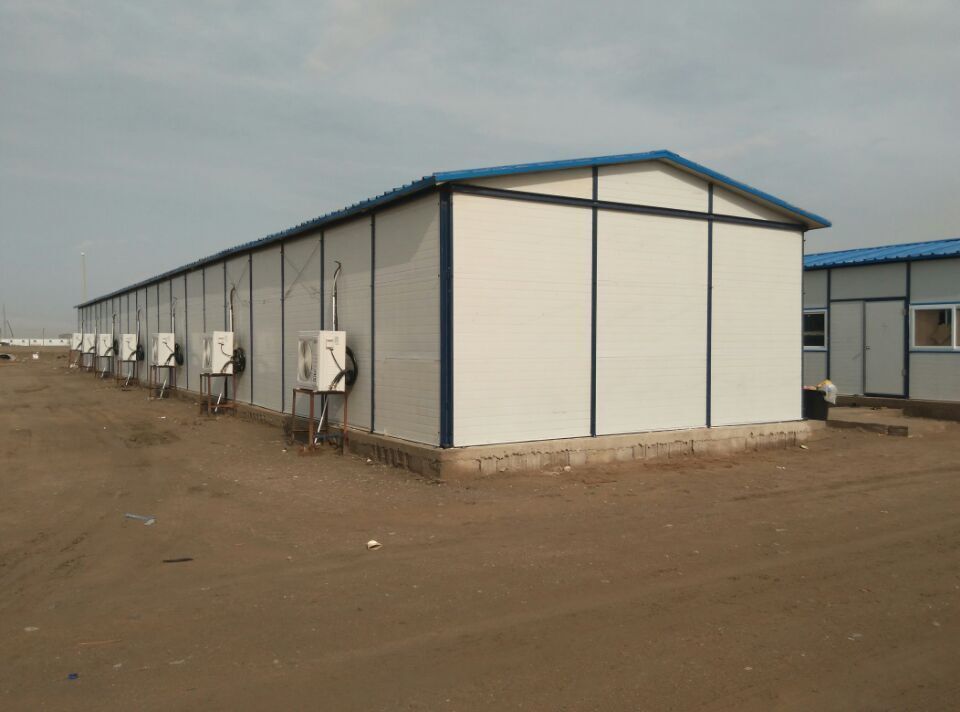
– Wall panels with 75mm fiberglass sandwich insulation (density ≥50kg/m³), achieving Grade A fire-proof classification (non-flammable)
– Roof systems with 100mm fiberglass insulation with aluminum foil, providing enhanced thermal protection where heat gain and loss are greatest
– Double-glazed PVC sliding windows with 5mm glass panes, mosquito screens, and security bars
The thermal conductivity coefficient for the wall assembly is K=0.442 W/(m·K), delivering superior insulation that maintains interior temperatures across extreme climate conditions . Field testing has demonstrated that with outdoor temperatures at 0°C, indoor temperatures can be maintained above 17°C without excessive heating; with outdoor temperatures at 30°C, indoor temperatures remain around 21°C.
**2.3 Integrated Utility Systems**
All accommodation units were pre-wired and pre-plumbed at Lida Group’s factory facilities, eliminating the need for extensive on-site work. The electrical system includes:
– Rated power of 5.0 KW, with capacity for up to three units in series
– Main power cable 6 mm², AC cable 4 mm², socket cable 2.5 mm², lighting cable 1.5 mm²
– Five sockets per unit (one 16A for AC, four 10A for general use)
– Dual LED tube lights (2×15W)
For enhanced safety in construction site environments, industrial sockets can be fixed in explosion-proof boxes at the top beam of the short side, with main power plugs for power connection between containers .
**Chapter 3: Rapid Deployment—Accelerating Project Timelines**
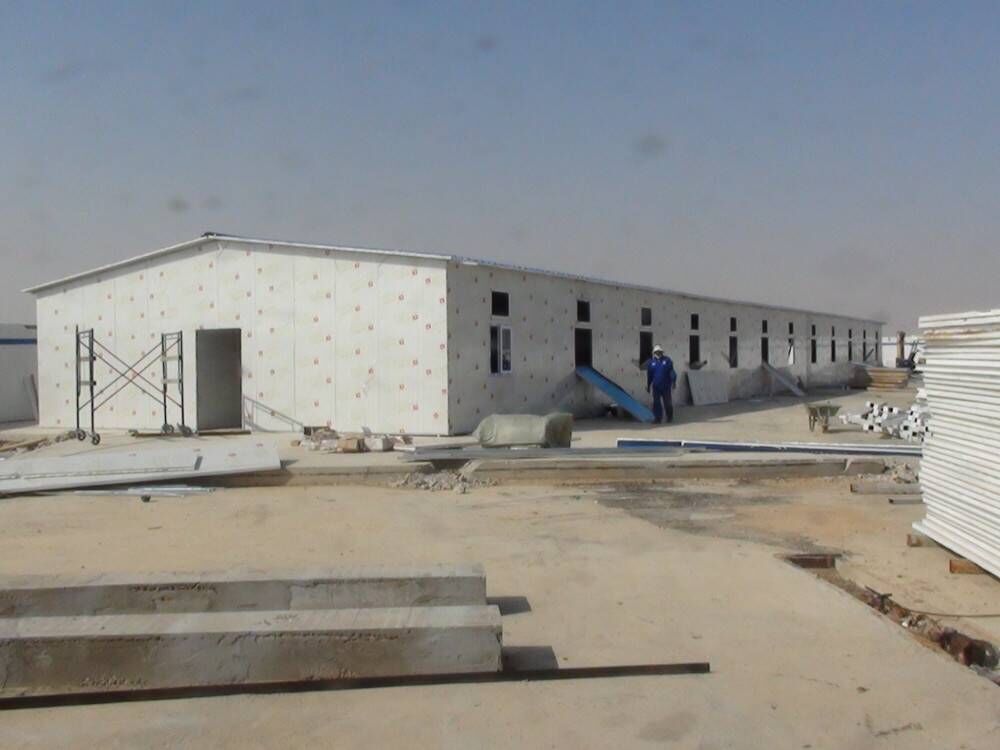
One of the defining features of Lida Group’s approach is the speed with which workforce accommodation can be deployed. The recently completed major project demonstrates this capability in practice.
**3.1 Factory Prefabrication**
Prior to site delivery, all accommodation components were manufactured in Lida Group’s state-of-the-art factory facilities. The factory-controlled environment offers significant advantages over on-site construction:
– CNC machines cut components to tolerances of 0.5mm or better
– Robotic welding ensures consistent, strong joints
– Automated coating systems apply uniform corrosion protection
– Quality control inspections occur at every stage of production
This manufacturing discipline produces components with 98% interchangeability, allowing any unit to slot into any position across projects . The controlled environment eliminates weather delays and quality variations that plague site-built alternatives, compressing production timelines significantly.
**3.2 Logistics and Transportation**
For the completed project, Lida Group managed all aspects of transportation from factory to site. The company’s logistics expertise includes:
– Terrain intelligence algorithms for route planning
– Nesting software maximizing shipping container space utilization
– GPS-tracked convoys for real-time shipment monitoring
– Weather-adaptive scheduling to avoid delays
The flat-pack design of many container house systems enables efficient shipping—a single 40-foot container can carry components for three to five complete units . This approach reduces shipping volume by up to 70% compared to fully assembled units, lowering freight costs and simplifying logistics for remote projects.
**3.3 On-Site Assembly**
Once components arrived on site, assembly proceeded rapidly through engineered simplicity:
– Screw pile foundations installed through rock without concrete curing, supporting structures in 90 minutes rather than weeks
– Laser-guided alignment systems positioning units within ±3mm accuracy
– Color-coded utility quick-connects slashing commissioning time
– Bolt-together connections eliminating welding certification delays, allowing local laborers to assemble complex facilities with basic tools
The assembly process for a typical unit requires six workers and can be completed in 8 hours . For the completed major project, the entire camp was operational within a timeline that would be impossible with traditional construction methods.
**Chapter 4: Worker Welfare—Designing for Comfort and Safety**
The successful completion of a major construction site labor accommodation project requires attention to more than structural engineering. Worker welfare has become a critical consideration for project managers seeking to attract and retain skilled labor.
**4.1 Living Quarters**
Each accommodation unit in the completed project is designed to provide comfortable living space. Standard 20-foot units (approximately 16 square meters) include:
– Comfortable beds with quality mattresses
– Adequate storage for personal belongings
– Climate control systems for year-round comfort
– Windows for natural light and ventilation
For projects requiring higher density, two-person units with bunk beds are available. For supervisory staff, larger units or expandable container homes with additional living space can be specified.
**4.2 Sanitation and Hygiene**
Proper sanitation is essential for workforce health and morale. The completed project includes:
– Private bathrooms with shower, toilet, and sink in each unit
– Dedicated sanitation modules for communal areas where needed
– Industrial-grade fixtures designed for high-use environments
– Ventilation systems preventing moisture accumulation
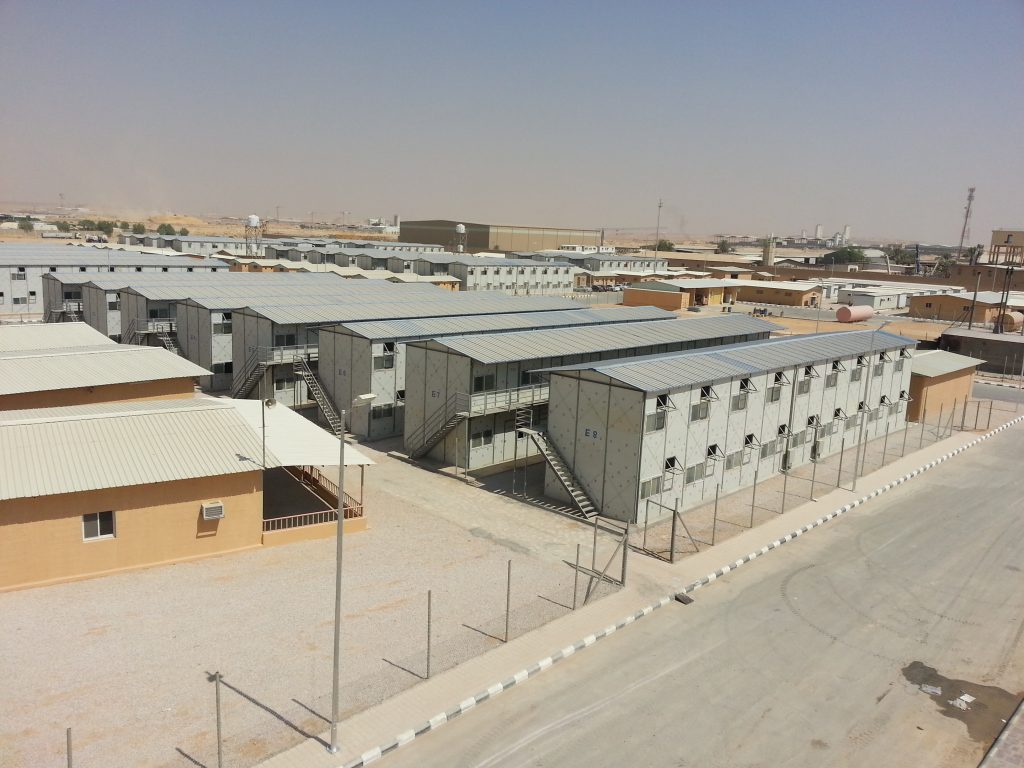
In projects such as the Saudi Ministry of Interior Medical Building project, where Lida Group provided accommodation for 6,048 workers, single buildings measuring 40.89m by 10.7m were equipped with independent bathrooms and ventilation systems, ensuring comfort in high-temperature desert environments .
**4.3 Dining and Recreation**
The completed project includes central dining facilities capable of serving meals efficiently to the entire workforce. Commercial-grade kitchens ensure food safety and quality. Recreation areas provide spaces for workers to relax during off-hours, including:
– Television and entertainment areas
– Game rooms with pool tables or table tennis
– Outdoor gathering spaces where conditions permit
– Gym facilities for physical fitness
Research has shown that quality dining and recreation facilities significantly impact worker satisfaction and retention in remote work environments.
**4.4 Medical Facilities**
Construction sites are inherently hazardous environments, and access to medical care is essential. The completed project includes dedicated medical clinic facilities equipped for:
– Basic healthcare services
– Emergency response and first aid
– Routine checkups and health monitoring
– Telemedicine capabilities for specialist consultation
For projects in particularly remote locations, Lida Group can provide fully equipped medical modules with examination rooms, treatment areas, and isolation wards.

**Chapter 5: Case Studies—Lida Group’s Proven Track Record**
The recently completed major construction site labor accommodation project is one of many successful workforce housing initiatives delivered by Lida Group. The company’s portfolio includes projects across diverse industries and geographies.
**5.1 Harbin Engineering University Qingdao Project—China**
In a large-scale university construction project, Lida Group provided temporary workforce accommodation for China State Construction. The project utilized 106 container units and 8,000 square meters of prefabricated buildings to create a complete living complex including office areas, dormitory buildings, and dining facilities . The entire 15,000-square-meter camp was erected in just 7 days, supporting efficient execution of the 299,800-square-meter main construction project. This project demonstrates Lida Group’s ability to deliver large-scale workforce accommodation on compressed timelines.
**5.2 Eastern Europe Modular Camp Housing Project**
In a remote mountainous region of Eastern Europe, Lida Group completed a modular steel camp housing project combining prefabricated container houses and steel structure buildings . The project faced significant challenges: winter temperatures dropping to -20°C, snowstorms, tight timelines, and strict environmental regulations.
The solution utilized steel frame structures with 8-grade earthquake resistance and wind resistance of 1.5 kN/m². Container units used EPS and rock wool sandwich panels with thicknesses from 75-150mm, supporting thermal performance in temperatures ranging from -45°C to 50°C . Prefabricated modules were manufactured in 25 days and shipped in 40-foot containers. Six workers assembled each unit in 8 hours, and bolt-connected steel frames reduced on-site welding while cutting labor costs by 40%. The project achieved 30% faster completion compared to traditional construction methods and received high praise from the client for its thermal performance.
**5.3 Saudi Arabia Ministry of Interior Medical Building Project**
In a major Saudi Arabian construction project, Lida Group provided accommodation for 6,048 workers using double-layer prefabricated buildings . Each building measured 40.89 meters by 10.7 meters and was equipped with independent bathrooms and ventilation systems. The camp successfully supported construction activities in the harsh desert environment, with workers reporting high satisfaction with living conditions.
**5.4 Tanzania Hydropower Station Camp Project**
In Tanzania, Lida Group was responsible for constructing workforce accommodation for a major hydropower station project, covering a total area of 7,800 square meters . The project utilized Lida Group’s extensive experience in steel structure camp construction, with specialized personnel dispatched to Tanzania to supervise installation. The project was completed within 3 months and received high recognition from the client.
**5.5 Trans-Anatolian Pipeline Project—Turkey**
For a major pipeline construction project in Turkey, Lida Group provided mobile camp container complexes that advanced alongside the construction crews . As the pipeline progressed 23 kilometers monthly, the camp housing leapfrogged ahead—maintaining productivity while reducing crew transfer time from 3 hours to 20 minutes daily. The integrated medical unit handled altitude sickness cases on-site, while circadian-optimized sleeping modules reduced fatigue-related errors by 37%. This project demonstrates the mobility advantages of modular container accommodation for linear infrastructure projects.
**5.6 Qingdao Huangdao Container Hospital Station—Emergency Response**
During the pandemic, Lida Group partnered with the China Construction Eighth Engineering Bureau to deliver the Qingdao Huangdao Container Hospital Station—a 36,000-square-meter facility including 1,000 isolation container rooms and support facilities . The entire facility was delivered in just 12 days from start to completion. The project included 726 prefab houses, 574 isolation container rooms, over 620 integrated sanitary facilities, more than 3,000 square meters of concrete work, and the installation of 636 air conditioners and 632 televisions. This achievement demonstrated Lida Group’s ability to mobilize resources at scale for emergency response.
**Chapter 6: Sustainability—Building Responsibly**
The completed construction site labor accommodation project reflects Lida Group’s commitment to environmental responsibility.
**6.1 Material Efficiency**
Factory prefabrication achieves material utilization rates exceeding 95%, compared to 70-80% for traditional site-built construction. Scrap steel, insulation offcuts, and packaging materials are recycled at the factory rather than sent to landfills. The use of steel—one of the most recycled materials on Earth—further reduces environmental impact.
**6.2 Energy Efficiency**
The high insulation values of Lida Group’s container houses reduce heating and cooling energy consumption by 30-50% compared to conventional construction. For off-grid applications, solar integration can enable net-zero energy operation. The completed project incorporated solar-ready roofs with pre-engineered attachment points and concealed conduits, allowing easy installation of photovoltaic arrays.
**6.3 Water Conservation**
The project incorporated water conservation features including low-flow fixtures and provisions for rainwater harvesting. Greywater recycling systems can reduce freshwater demand by up to 55% .
**6.4 Reusability and Circular Economy**
The modular design enables units to be disassembled, relocated, and reassembled multiple times without damage. Documentation indicates that these units can be assembled and disassembled more than six times without loss of structural integrity . When a decommissioned camp complex was disassembled and redeployed at a new location, 85% material reuse was achieved—demonstrating environmental stewardship impossible with conventional construction .
**Chapter 7: Certifications and Quality Assurance**
The successful completion of major projects is supported by Lida Group’s comprehensive quality assurance systems.
**7.1 International Certifications**
Lida Group holds multiple certifications that attest to quality and reliability:
– ISO9001: Quality management systems
– ISO14001: Environmental management
– ISO45001: Occupational health and safety
– CE (EN1090): Compliance with European Union standards for structural steel components
**7.2 Third-Party Inspections**
The company has successfully passed inspections by SGS, BV, and TUV—three of the world’s most respected inspection organizations—confirming that manufacturing processes, materials, and finished products meet international standards .
**7.3 Construction Qualifications**
Within China, Lida Group holds a Second Class Qualification for Steel Structure Professional Construction Contracting and a General Contracting Qualification of Construction Engineering, enabling the company to serve as a prime contractor for complex projects .
**Chapter 8: The Future of Construction Site Workforce Housing**
As the construction industry continues to evolve, several trends will shape the future of workforce accommodation.
**8.1 Smart Camp Technology**
Future camps will incorporate Internet of Things (IoT) sensors and building management systems that transform camps into intelligent environments. IoT sensors embedded within structural members can monitor air quality and corrosion rates, transmitting data to predictive maintenance algorithms .
**8.2 Enhanced Mobility Systems**
As construction projects become increasingly mobile, camps will evolve to match their pace. Self-transporting units with integrated wheel systems and rapid deployment mechanisms will further reduce assembly times.
**8.3 Advanced Materials**
Research into new materials promises further improvements in performance. Phase-change materials integrated into walls can passively regulate temperature, absorbing heat during the day and releasing it at night. Bio-based insulation materials such as hempcrete offer lower embodied carbon.
**8.4 Integration with Renewable Energy**
As construction projects increasingly prioritize sustainability, camps will become energy self-sufficient through solar-integrated roofing, battery storage, and microgrid control systems.
**Conclusion**
Lida Group’s successful completion of a major construction site labor accommodation project represents a significant achievement in modular workforce housing. The project demonstrates that prefabricated container-based systems can deliver the speed, durability, comfort, and sustainability that modern construction projects demand.
The engineering foundations of this success are evident in every aspect of the project. High-strength galvanized steel frames with dual-layer corrosion protection deliver structural integrity rated for magnitude 7 earthquakes, level 12 winds, and service lives exceeding 20 years. Advanced insulation systems with 75mm fiberglass walls and 100mm roof insulation achieve thermal performance that reduces heating and cooling energy consumption by 30-50% while maintaining interior comfort across extreme climate conditions. Prefabricated utility integration eliminates extensive on-site work, while modular design enables future relocation and reconfiguration.
The project’s rapid deployment timeline demonstrates the efficiency of factory prefabrication and modular assembly. With a prefabrication rate exceeding 90%, the camp was delivered in a fraction of the time required for traditional construction. Screw pile foundations, laser-guided alignment, and bolt-together connections enabled assembly by local laborers with basic tools, reducing labor costs and eliminating the need for specialized trades.
Worker welfare was prioritized throughout the design process. Private bathrooms, climate control, adequate storage, and quality furnishings create comfortable living environments. Central dining facilities, recreation areas, and medical clinics support workforce health and morale. These amenities contribute to worker satisfaction and retention—critical factors in construction projects facing skilled labor shortages.
Sustainability is woven into the project’s design. Material utilization exceeding 95% reduces waste compared to traditional construction. Energy efficiency lowers operational carbon emissions. Water conservation features reduce consumption. Reusability and recyclability align with circular economy principles. These features make the project not only a practical success but also an environmentally responsible one.
The project adds to Lida Group’s extensive portfolio of successful workforce housing initiatives across 152 countries. From the Harbin Engineering University project delivered in 7 days to the Eastern Europe camp achieving 30% faster completion, from the Saudi Arabian project housing 6,048 workers to the Trans-Anatolian Pipeline camp advancing with construction crews, Lida Group has demonstrated its capability to deliver workforce accommodation that meets diverse client requirements across challenging environments.
For construction project managers, operations directors, and organizational leaders facing workforce accommodation challenges, the message is clear: Lida Group’s modular container housing solutions offer a proven alternative to traditional methods. They deliver the speed to meet aggressive project timelines, the durability to withstand harsh site conditions, the flexibility to adapt to changing workforce needs, and the comfort to support worker welfare and retention. They transform workforce accommodation from a project constraint into a strategic asset.
As the global construction industry continues to expand into remote regions, tackle larger projects, and face tighter timelines, the demand for efficient, reliable workforce housing will only intensify. Lida Group, with its three decades of experience, comprehensive manufacturing infrastructure, global logistics network, and commitment to innovation, stands ready to meet that demand. The successful completion of this major construction site labor accommodation project is a testament to what is possible when engineering excellence, manufacturing precision, and customer-focused service converge in service of creating better living environments for the workforce that builds our world.
Related news
-
Eco-Friendly Sandwich Panel House Redefines Sustainable Workforce Housing
2026-03-26 13:46:32
-
Innovative Prefab Easy Assembly Building Saves Time and Resources
2026-03-26 15:25:33
-
Lida Group Launches New Construction Site Labor Accommodation Solutions
2026-03-26 09:51:19
contact us
- Tel: +86-532-88966982
- Whatsapp: +86-13793209022
- E-mail: sales@lidajituan.com
