



Lida Group Completes Durable Steel Structure Warehouse with Eco-Friendly Metal House Design
2026-Jun-30 09:16:01
By Admin
1. Introduction: Merging Industrial Durability and Green Residential Innovation
The global construction industry is undergoing a profound structural transformation, shifting from traditional resource-intensive construction modes to integrated development models that balance industrial durability, operational efficiency, and ecological sustainability. For decades, industrial warehousing and residential auxiliary construction have long relied on conventional concrete and wooden buildings, which struggle to adapt to the evolving demands of modern industrial production, logistics storage, and low-carbon green development. Traditional warehouses suffer from insufficient structural durability, frequent aging damage, high maintenance costs, and inflexible space layout, while conventional residential buildings are plagued by high carbon emissions, serious resource waste, and poor recyclability. These widespread drawbacks have become major bottlenecks restricting the high-quality and sustainable development of the construction industry.
As a world-leading manufacturer and solution provider of prefabricated steel structure buildings, Lida Group has long focused on technological innovation and scenario-based customization of modular construction products. Recently, the enterprise has successfully completed a new integrated construction project, combining ultra-durable industrial steel structure warehouses and eco-friendly metal house residences. This project perfectly integrates industrial-grade structural durability and modern green ecological design, breaking the long-standing industry dilemma that industrial buildings prioritize practicality over environmental protection and residential buildings emphasize comfort over structural stability. By adopting high-strength steel materials, optimized modular structures, and full-life-cycle low-carbon design, Lida Group delivers dual high-quality solutions for industrial storage infrastructure and green living spaces.
Different from single-functional building products in the market, Lida Group’s new integrated construction achievement realizes organic coordination between industrial production and residential supporting facilities. The steel structure warehouse focuses on long-term durability, large-span space utilization, all-weather environmental adaptability, and low-maintenance operation, fully meeting the high-load and long-cycle operational needs of modern industrial storage and logistics turnover. The supporting eco-friendly metal house adheres to the concepts of cyclic reuse, energy conservation and emission reduction, and humanized comfort, abandoning the high-pollution and high-consumption defects of traditional residential buildings. This article systematically analyzes the limitations of traditional building modes, core technical advantages of Lida’s steel warehouse and eco-metal house, practical project application values, and industrial upgrading significance, comprehensively demonstrating how Lida Group empowers the integrated and green development of modern construction with durable and eco-friendly innovative design.
2. Inherent Defects of Traditional Industrial and Residential Building Systems
Traditional concrete and wooden buildings can no longer meet the dual development requirements of modern construction for long-term durability and green environmental protection. Their inherent structural defects, high energy consumption, poor recyclability, and single functional design not only increase the operational cost of construction projects but also hinder the industry’s low-carbon transformation and high-quality upgrading, creating a huge market demand for Lida Group’s innovative steel structure building solutions.
2.1 Insufficient Structural Durability Restricts Long-Term Industrial Operation
Most traditional industrial warehouses adopt reinforced concrete structures with low ductility and poor crack resistance. Under long-term industrial mechanical vibration, heavy goods extrusion, and seasonal temperature alternation, concrete walls, floors, and load-bearing components are prone to cracking, peeling, and hollowing, which seriously affect structural stability and storage safety. In complex environments such as coastal salt spray, high humidity, and desert strong wind, concrete structures are easily corroded, leading to internal steel bar rust and accelerated structural aging, with an actual effective service life of only 20 to 30 years. Wooden warehouses and temporary storage buildings have worse durability, being susceptible to termite erosion, mildew rot, fire damage, and wind and rain aging, making them unable to support long-term high-intensity industrial storage operations.
In the later operational stage, traditional buildings require frequent anti-corrosion repair, crack reinforcement, thermal insulation renovation, and structural maintenance. Continuous manpower, material resources, and capital investment greatly increase the full-life-cycle operational cost of industrial infrastructure. The short service life and high maintenance pressure make traditional warehouses unable to meet the decades-long stable operation needs of modern industrial and logistics enterprises.
2.2 High Carbon Emissions and Resource Waste Contradict Green Development
Traditional construction is a typical high-carbon and resource-wasting industry. The production of cement, sand, and stone required for concrete buildings consumes massive natural resources and emits large amounts of carbon dioxide. After service expiration, waste concrete is difficult to recycle, with a recycling rate lower than 10%, generating tons of construction waste and causing land occupation and environmental pollution. Traditional wooden residential and auxiliary buildings rely on deforestation, destroying ecological balance, while waste wood has low reuse value, forming a one-time resource consumption model that cannot realize cyclic utilization.
In daily operation, traditional buildings lack efficient thermal insulation and energy-saving structures. Severe heat loss in winter and heat accumulation in summer lead to long-term high-load operation of air conditioning and heating equipment, further increasing building energy consumption and carbon emissions. This extensive construction and operation mode completely deviates from the global dual-carbon strategic goals and green building development trends, becoming a key obstacle to the sustainable development of the construction industry.
2.3 Low Construction Efficiency and Inflexible Space Layout Limit Project Iteration
Traditional concrete warehouse construction involves complex processes such as foundation pouring, concrete curing, and wall masonry, with a long construction cycle and vulnerable to seasonal rain, snow, and high-temperature weather interference. The fixed integral structural layout results in poor space flexibility, and internal functional partitions and building scales cannot be adjusted freely. When enterprises need to expand storage capacity, upgrade functional areas, or adjust production layouts, traditional buildings can only be demolished and reconstructed, resulting in serious resource waste and project delay. Although wooden buildings have slightly faster construction speed, their insufficient structural strength makes it impossible to realize large-span open space design, greatly limiting the operational efficiency of modern automated storage and logistics projects.
2.4 Disjointed Industrial and Residential Design Reduces Comprehensive Operational Efficiency
Traditional construction modes adopt separated design for industrial warehouses and residential supporting buildings, with serious functional disconnection. Industrial warehouses only focus on basic storage and production functions, ignoring safety protection and ecological adaptation; residential buildings only meet basic shelter needs, lacking matching energy-saving design and supporting facilities. The mismatched construction standards and disjointed spatial layout lead to low overall operational efficiency of industrial parks and construction bases, unable to form an integrated operation system of industrial production and residential support, which restricts the refined management and high-quality development of construction projects.

3. Lida Group’s Durable Steel Structure Warehouse: Industrial-Grade Long-Lasting Infrastructure
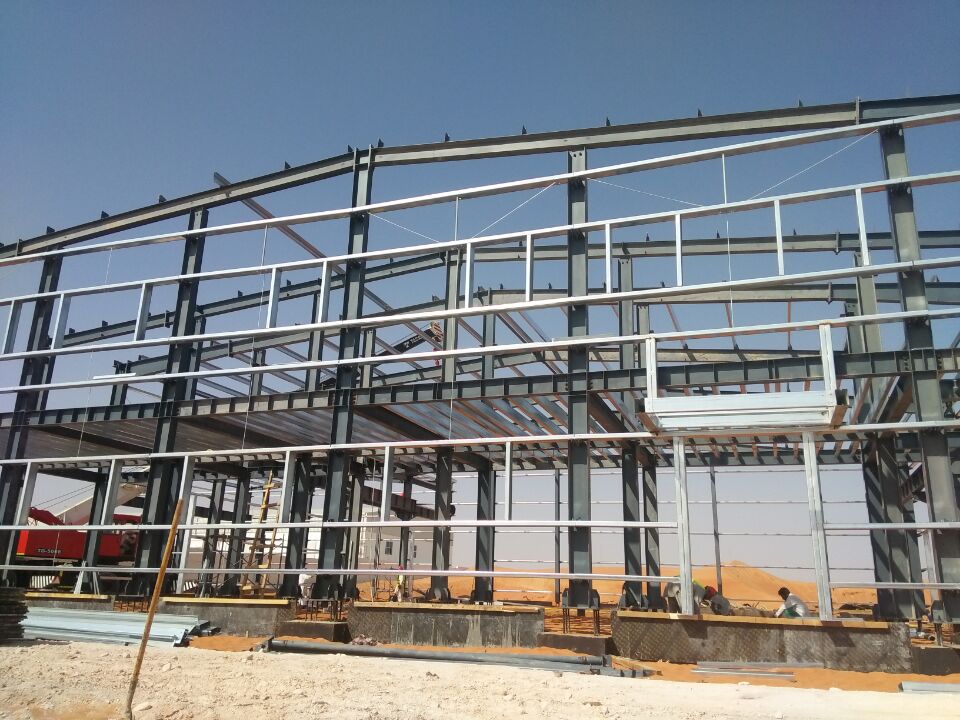
Targeting the durability and operational pain points of traditional industrial warehouses, Lida Group adopts high-strength industrial steel and optimized integrated structural design to complete the construction of a new generation of durable steel structure warehouses. Focusing on ultra-long service life, all-weather environmental adaptability, large-span flexible space, and low-maintenance operation, this warehouse provides stable, efficient, and long-lasting infrastructure support for modern industrial storage, logistics turnover, factory production, and material reserve scenarios.
3.1 High-Strength Anti-Corrosion Steel Materials Ensure Ultra-Long Service Life
Lida Group’s new steel structure warehouse adopts national standard high-strength hot-rolled steel and hot-dip galvanized composite steel components as the main load-bearing framework. Compared with ordinary steel and concrete materials, this optimized steel material has higher structural rigidity, better ductility, and stronger compression and impact resistance. It can effectively resist strong wind pressure, heavy snow loads, geological slight vibration, and long-term industrial equipment vibration, without deformation, cracking, rot, or pest erosion. Through multi-layer anti-corrosion coating and high-standard hot-dip galvanizing treatment, the steel frame achieves excellent salt spray resistance, ultraviolet aging resistance, and wind-sand erosion resistance. The overall stable service life can reach more than 50 years, far exceeding the service limit of traditional concrete and wooden warehouses, realizing long-term stable operation of industrial infrastructure.
3.2 Large-Span Open Space Improves Industrial Operational Flexibility
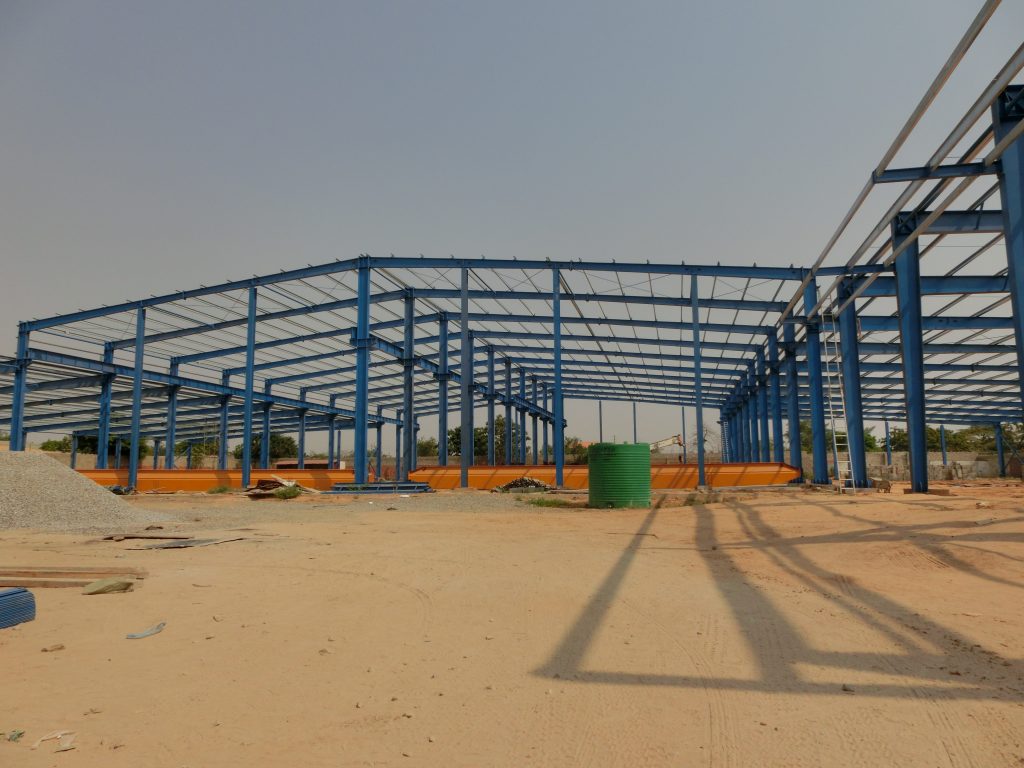
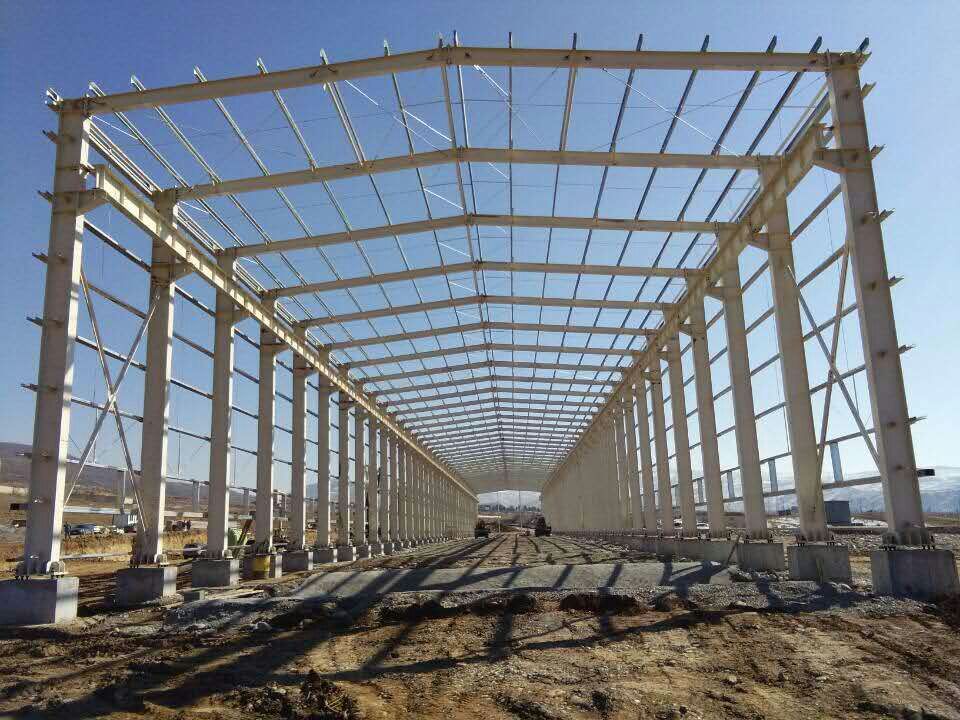
Breaking the dense column layout limitation of traditional warehouses, Lida’s steel structure warehouse adopts an optimized large-span unsupported structural system, realizing a single span of more than 30 meters without intermediate load-bearing columns. The fully open internal space completely liberates warehouse layout restrictions, allowing enterprises to freely plan intelligent storage areas, goods sorting areas, loading and unloading platforms, and auxiliary office areas according to operational needs. It is fully compatible with modern automated storage equipment, intelligent forklift operation, and large-volume goods stacking, greatly improving space utilization and industrial operational efficiency. Meanwhile, the flexible modular splicing design supports later horizontal expansion, storey increase, and functional transformation, avoiding demolition and reconstruction losses and realizing long-term iterative upgrading of warehouse space.
3.3 All-Weather Environmental Adaptability Realizes Stable Operation in Complex Scenarios
Lida Group carries out targeted environmental adaptation optimization for complex industrial scenarios. The warehouse roof and wall panels adopt high-density multi-functional sandwich panels, integrating waterproof, dustproof, heat insulation, cold preservation, and anti-corrosion functions. The fully closed sealing structure effectively prevents rainwater leakage, dust accumulation, and humid air erosion, protecting stored industrial materials and equipment from environmental damage. The overall structure is equipped with standardized lightning protection systems, fire-retardant coatings, and seismic reinforcement structures, fully meeting international industrial fire protection and safety production standards. The warehouse can operate stably and efficiently in high-temperature deserts, severe cold plateaus, coastal humid areas, and windy Gobi environments, realizing all-weather and all-scenario stable industrial operation.
3.4 Prefabricated Construction and Low Maintenance Reduce Full-Life Costs
The steel structure warehouse adopts full factory prefabricated production and on-site bolted assembly mode. All steel frames, wall panels, and roof components are precisely processed and pre-assembled in standardized factories, with no on-site cutting, welding, and concrete pouring operations. This efficient construction mode increases construction efficiency by 50% compared with traditional concrete warehouses, greatly shortening project delivery cycles and accelerating enterprise capital return. In the later operation stage, the anti-aging and anti-corrosion steel components maintain stable performance, requiring only daily simple inspection and routine maintenance without frequent renovation and reinforcement. The low-maintenance operation mode effectively reduces long-term operational costs and significantly improves the full-life-cycle economic benefits of industrial buildings.
4. Supporting Eco-Friendly Metal House Design: Green and Humanized Living Space
Matching the durable industrial warehouse, Lida Group supports the project with customized eco-friendly metal house design, taking low-carbon environmental protection, cyclic reuse, energy-saving optimization, and humanized comfort as the core concepts. This innovative residential design completely subverts the high-consumption and high-pollution defects of traditional residential buildings, creating a green, safe, comfortable, and sustainable living supporting space for industrial park employees and construction personnel, realizing the organic unity of industrial functional matching and ecological green development.
4.1 Full Recyclable Steel Structure Builds Closed-Loop Ecological System
The core green advantage of Lida’s eco-friendly metal house is the full-life-cycle recyclable steel building system. Different from non-recyclable concrete and low-value reusable wood, all steel frames and metal components of the metal house can be 100% disassembled, recovered, and remachined after the end of service life, with a component reuse rate of over 90%. This closed-loop cyclic utilization mode completely eliminates construction waste generation, reduces the exploitation and use of virgin building materials, and lowers resource consumption and ecological damage. It effectively solves the problem of serious waste in the demolition and reconstruction of traditional residential buildings, fully conforming to the global circular economy and low-carbon development strategic layout.
4.2 Whole-Life Low-Carbon Construction Reduces Ecological Burden
Lida Group realizes comprehensive low-carbon emission control throughout the whole process of metal house design, production, construction, and operation. Factory centralized prefabrication avoids traditional on-site wet operations, eliminating construction dust, sewage, and noise pollution. The lightweight steel structure reduces foundation bearing requirements, greatly cutting foundation construction material consumption and carbon emissions. In daily operation, the high-efficiency thermal insulation sandwich panel structure effectively isolates external extreme high and low temperatures, reducing the energy consumption of air conditioning and heating equipment by more than 30%. Compared with traditional residential buildings, Lida’s eco-friendly metal house reduces comprehensive life-cycle carbon emissions by nearly 40%, with prominent ecological and environmental protection value, and can effectively help projects obtain green building certification and policy support.
4.3 Energy-Saving Thermal Insulation and Humanized Comfort Optimization
While adhering to green environmental protection, the eco-friendly metal house fully guarantees high-standard living comfort. The wall and roof adopt high-density rock wool and glass wool thermal insulation core materials, which have excellent heat insulation and cold resistance performance, maintaining a constant and comfortable indoor temperature in extreme summer heat and winter cold. The multi-layer sealing and sound insulation design effectively isolates external industrial operation noise, wind noise, and sandstorm interference, creating a quiet and clean indoor living environment. The scientific ergonomic spatial layout, large-size anti-glare lighting windows, and cross-ventilation system ensure sufficient natural light and fresh indoor air, making up for the cramped, dark, and stuffy defects of traditional temporary metal buildings, realizing the perfect integration of green environmental protection and high-quality humanized living experience.
4.4 Lightweight Flexible Design Matches Industrial Supporting Scenarios
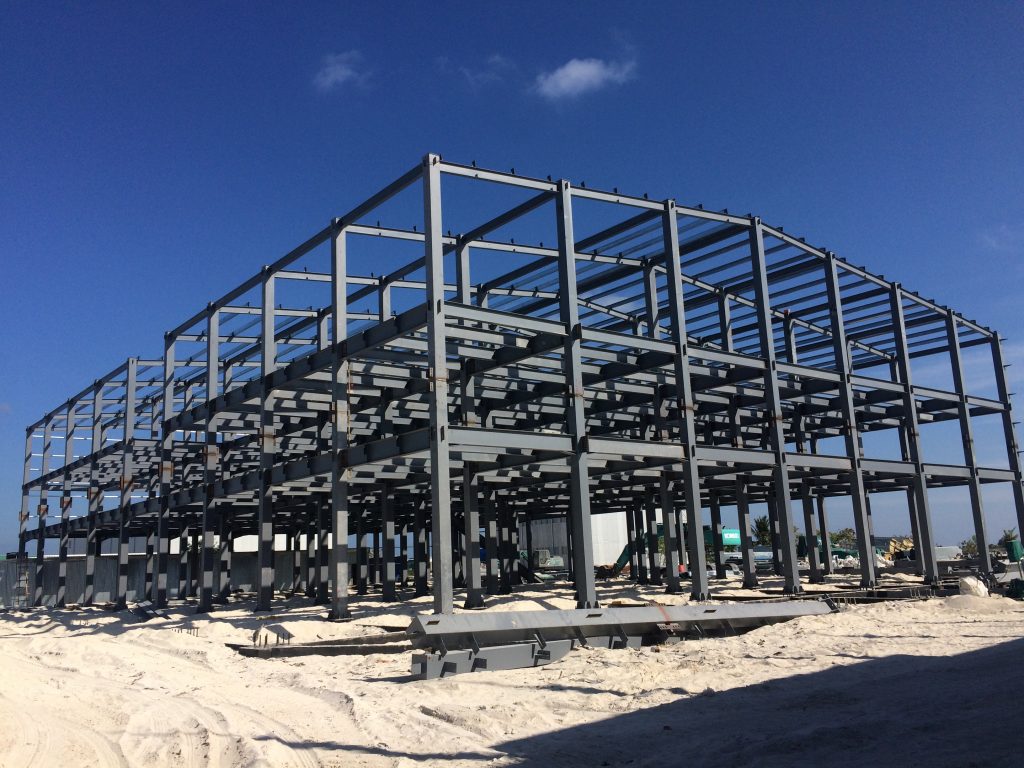
The eco-friendly metal house has an overall lightweight structure with low foundation requirements and strong terrain adaptability, which can be perfectly matched with the spatial layout of steel structure warehouse parks. The modular splicing design supports flexible adjustment of building area, storey height, and functional layout, meeting the diversified needs of employee dormitories, office auxiliary rooms, leisure rest areas, and on-site temporary residences. The rapid assembly and disassembly characteristics enable flexible mobile deployment, and the zero-damage construction mode protects the original ecological environment of the industrial park, realizing true green construction and forming a complete integrated supporting system with industrial warehouses.
5. Integrated Synergistic Advantages of Warehouse and Metal House Combination
The integrated construction of Lida Group’s durable steel structure warehouse and eco-friendly metal house forms a unique industrial-civilian dual-functional system, realizing complementary functional advantages and dual improvement of economic and ecological benefits, leading the new trend of integrated green and durable construction in modern industrial parks.
5.1 Functional Complementation Realizes Integrated Park Operation
The durable steel structure warehouse undertakes the core industrial functions of storage, production, and logistics turnover, ensuring the long-term stable operation of industrial infrastructure. The supporting eco-friendly metal house undertakes residential living, office processing, and daily leisure supporting functions, solving the accommodation and office needs of on-site employees. The two form a perfect functional supporting system, realizing the integrated operation of industrial production and residential life, avoiding the functional disconnection and spatial fragmentation of traditional park construction, and greatly improving the overall operational efficiency and standardized management level of industrial projects.
5.2 Dual Balance of Long-Term Economic Benefit and Ecological Value
In terms of economic benefits, the ultra-long service life, low maintenance costs, and reusable value of steel structure buildings effectively reduce the full-life-cycle investment of industrial park projects. Efficient prefabricated construction shortens the project cycle, accelerates enterprise capital turnover, and reduces labor and equipment investment costs. In terms of ecological benefits, recyclable steel materials, low-carbon construction processes, and energy-saving operation modes greatly reduce resource consumption and carbon emissions, helping enterprises meet green production standards and enhance brand ecological competitiveness. The dual advantages of economy and environmental protection make Lida’s integrated building solution far more competitive than traditional building modes.
5.3 Standardized Production Ensures Overall Stable Quality
Both the steel structure warehouse and eco-friendly metal house adopt Lida Group’s unified industrial standardized production system. Strict material selection, precision processing, and multi-channel quality inspection eliminate manual operation errors of traditional on-site construction. All building components have high matching accuracy and stable structural performance, ensuring that the safety, durability, and environmental protection indicators of the entire park building reach international advanced standards. The standardized product system also facilitates later unified maintenance, component replacement, and project iterative upgrading, realizing long-term sustainable and stable operation of industrial parks.
6. Market Application Prospect and Industrial Upgrading Significance
With the continuous advancement of global green building policies and the accelerated upgrading of industrial construction standards, high-durability, low-carbon, and recyclable steel structure integrated buildings have become the inevitable development trend of the construction industry. Traditional high-consumption, short-life, and disjointed building modes are gradually phased out by the market, and integrated steel structure solutions that balance industrial practicality and green environmental protection are leading the transformation and upgrading of the industry.
Lida Group’s integrated construction project of durable steel warehouse and eco-friendly metal house accurately captures market pain points and industry development trends. This solution can be widely applied to industrial parks, logistics bases, manufacturing factories, energy storage bases, and engineering construction camps, providing one-stop high-quality construction services for various industrial projects. It not only solves the problems of insufficient durability and high operational cost of traditional industrial infrastructure but also makes up for the ecological defects of traditional supporting residential buildings, realizing the green, efficient, and sustainable development of industrial construction.
Industrially, Lida Group’s innovative integrated design breaks the long-standing separation of industrial durability and residential environmental protection in the construction industry, promotes the transformation of the industry from extensive resource consumption to intensive green development, and provides a replicable and promotable innovative model for the low-carbon upgrading and high-quality development of the global construction industry.
7. Conclusion
Lida Group’s successful completion of the integrated project of durable steel structure warehouse and eco-friendly metal house marks a new breakthrough in the integrated development of industrial durability and green environmental protection in the modern construction industry. Aiming at the dual bottlenecks of insufficient durability of traditional industrial buildings and poor ecological performance of residential supporting buildings, Lida Group relies on steel material innovation, structural optimization, and low-carbon design iteration to create a dual-functional building system that integrates industrial stable operation and green humanized living.
The newly built steel structure warehouse achieves ultra-long service life, all-weather environmental adaptability, large-span flexible space, and low-maintenance operation through high-strength anti-corrosion steel materials and optimized industrial structural design, providing solid and durable infrastructure support for modern industrial storage and logistics operation. The matching eco-friendly metal house realizes full-life-cycle cyclic reuse and low-carbon energy-saving operation, while ensuring comfortable and safe living experience, solving the functional and ecological defects of traditional industrial supporting residences.
The integrated design of warehouse and metal house realizes functional complementation, economic and ecological dual benefits, and standardized high-quality construction, completely changing the backward mode of separated construction and disjointed functions in traditional industrial parks. With the continuous deepening of global low-carbon development and industrial standardized upgrading, durable and eco-friendly integrated steel structure buildings will become the mainstream choice for modern industrial construction. In the future, Lida Group will continue to deepen technological research and development and scenario-based customization, continuously optimize the performance of integrated steel structure buildings, and empower the efficient, green, and sustainable high-quality development of the global construction and industrial manufacturing industries.
Related news
-
New Steel Structure Building from Lida Group Creates Durable Warehouse and Green Metal Home
2026-06-30 09:06:49
-
Lida Group Launches Steel Structure Building for Durable Warehouse and Eco-Friendly Metal House
2026-06-30 09:00:23
-
Easy Assembly Sandwich Panel House Revolutionizes Oil Gas Field Worker Accommodation
2026-06-30 08:52:00
contact us
- Tel: +86-532-88966982
- Whatsapp: +86-13793209022
- E-mail: sales@lidajituan.com
