



Lida Group Champions Cost-Effective Prefab Construction
2025-Nov-27 11:39:07
By Admin
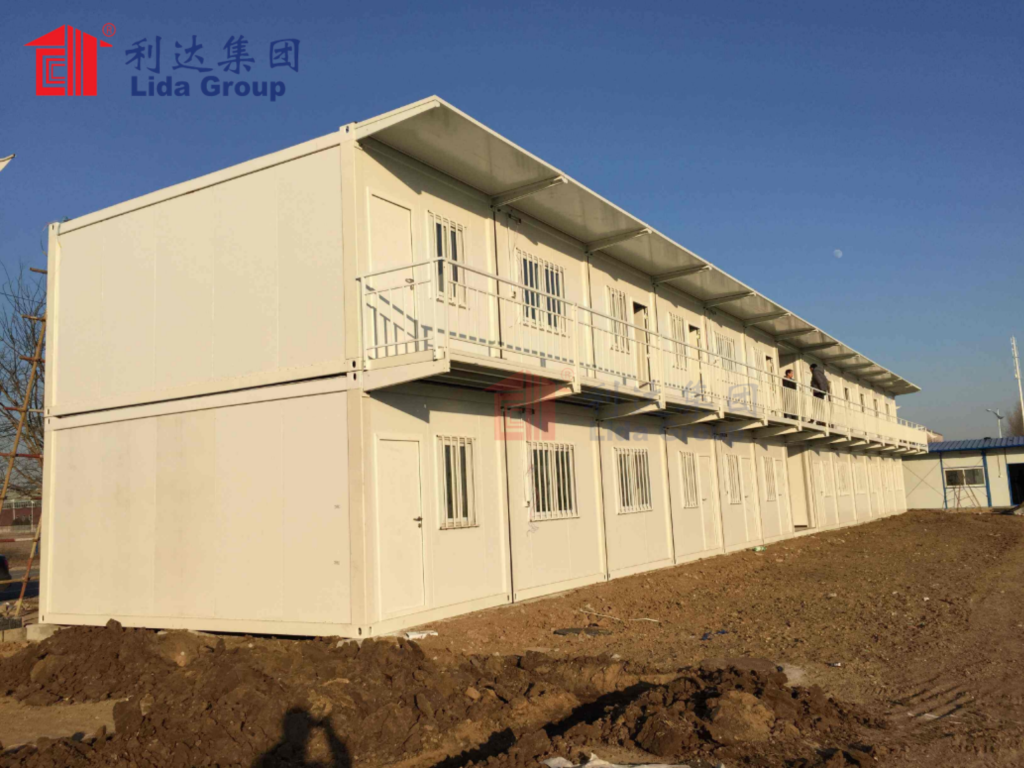
In the global construction industry, where cost overruns, prolonged timelines, and resource waste have long plagued projects of all scales, prefabricated (prefab) construction has emerged as a transformative solution. At the forefront of this revolution stands Lida Group, a Chinese high-tech enterprise with over three decades of expertise in modular building systems. By integrating innovative production processes, standardized design, and efficient supply chain management, Lida Group has redefined what it means to deliver cost-effective prefab construction—proving that affordability need not come at the expense of quality, durability, or sustainability.
As the global demand for affordable housing, rapid infrastructure development, and sustainable building practices continues to surge, Lida Group’s cost-centric approach has positioned it as a trusted partner for governments, NGOs, and private enterprises worldwide. The company’s prefab solutions offer average cost savings of 30-40% compared to traditional on-site construction, without sacrificing structural integrity or functional versatility. This comprehensive analysis explores how Lida Group achieves these cost efficiencies, through its production strategies, technological innovations, project case studies, and the broader impact of its approach on the global prefab construction market.
1. The Case for Cost-Effective Prefab: Industry Challenges and Market Drivers
The construction industry is grappling with a perfect storm of cost pressures: rising raw material prices, labor shortages, and increasing regulatory demands for sustainability. Traditional on-site construction exacerbates these challenges, with its reliance on manual labor, fragmented supply chains, and susceptibility to weather delays. According to the World Economic Forum, traditional construction projects typically exceed budgets by 20% and timelines by 10%, while generating 30% of global construction waste. In contrast, prefab construction—where building components are manufactured in controlled factory environments and assembled on-site—addresses these inefficiencies, offering inherent cost advantages that have driven its rapid adoption.
The global prefab construction market is projected to reach \(1.5 trillion by 2025, with a compound annual growth rate (CAGR) of 22%, fueled by the demand for cost-effective, time-efficient building solutions. Within this market, affordable housing is a key driver: an estimated 1.6 billion people worldwide lack adequate housing, and prefab construction has emerged as a viable solution to bridge this gap. In China alone, the prefab housing market is valued at \)450 billion, with container-based prefab homes accounting for 45% of this segment—equivalent to $202.5 billion in value.
Lida Group’s focus on cost-effectiveness aligns with these market dynamics. The company recognizes that for prefab construction to become mainstream, it must offer clear financial benefits while meeting high standards of quality and performance. This philosophy has guided Lida’s approach to every aspect of its business, from production and design to supply chain management and on-site installation. By prioritizing cost efficiency without compromising on safety, durability, or sustainability, Lida Group has carved out a unique position in the global market, catering to clients who seek value-driven building solutions.
2. Lida Group’s Cost-Efficiency Strategy: Foundations of Affordability
Lida Group’s ability to deliver cost-effective prefab construction is built on four core pillars: Large-scale production, standardized design, supply chain optimization, and lean on-site assembly. These pillars work in tandem to reduce costs at every stage of the building lifecycle, from manufacturing to maintenance.
2.1 Large-Scale Production: Economies of Scale
At the heart of Lida’s cost strategy is its Large-scale production capacity. The company operates two state-of-the-art manufacturing facilities in Weifang and Guangzhou, covering a combined area of 35,000 square meters. These facilities are equipped with 7 automatic composite panel production lines, 15 purlin production lines, and 8 dedicated container modular housing lines, enabling an annual steel processing capacity of 50,000 tons and a monthly output of 800 prefab container units. This high-volume production allows Lida to leverage economies of scale, reducing the cost per unit through bulk purchasing of raw materials, optimized production schedules, and reduced labor costs per unit.
For example, Lida’s bulk purchasing of high-strength Q235 steel—used in the structural frames of its prefab containers—enables the company to negotiate lower prices with suppliers, resulting in a 15-20% reduction in material costs compared to small-scale manufacturers. Additionally, the use of automated production lines reduces reliance on manual labor: the company’s composite panel production lines require only 2-3 operators per line, compared to 5-6 operators for semi-automated lines used by competitors. This automation not only improves production efficiency but also reduces the risk of human error, minimizing waste and rework costs.
Lida’s production scalability also allows it to adapt to fluctuating market demands, ensuring that it can meet large orders without incurring additional production costs. For instance, during the post-earthquake reconstruction in Sichuan, China, Lida was able to ramp up production to deliver 1,200 prefab container homes in just three months—meeting the urgent demand for temporary shelter while maintaining its cost advantage.
2.2 Standardized Design: Reducing Complexity and Waste
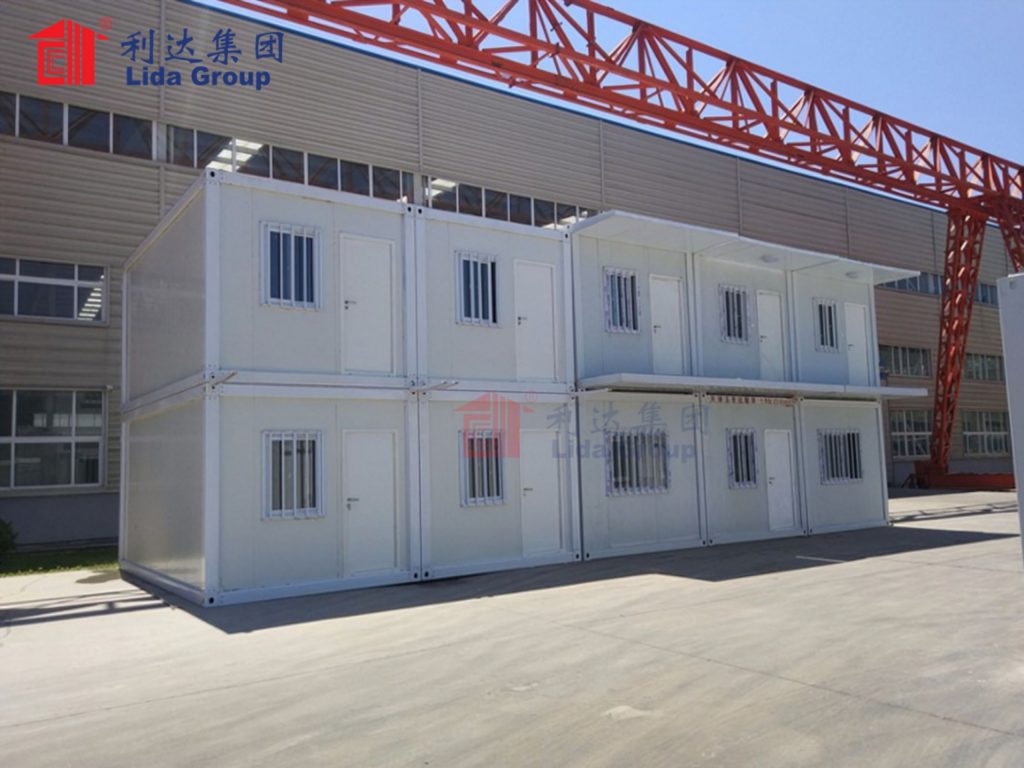
Standardization is another key component of Lida’s cost-efficiency strategy. Unlike traditional construction, which often involves custom designs and on-site modifications, Lida’s prefab solutions are built around standardized modules that can be easily combined, expanded, or reconfigured. The company offers two primary container configurations—20ft (6055mm × 2435mm × 2896mm) and 40ft (12192mm × 2435mm × 2896mm)—which are compatible with global shipping standards, reducing transportation costs and ensuring compatibility across projects.
This standardization extends to internal components as well: Lida’s prefab containers use standardized doors (steel), windows (UPVC or aluminum), insulation materials (fiberglass sandwich panels), and flooring systems (PVC or fiber cement board). By limiting the number of custom components, Lida reduces design complexity, shortens production lead times, and minimizes waste. For example, the use of standardized fiberglass sandwich panels—available in fixed thicknesses (75mm and 100mm)—eliminates the need for custom cutting and fitting, reducing material waste by 8-10% compared to custom-designed prefab solutions.
Standardization also simplifies on-site assembly, as workers are trained to handle a consistent set of components. This reduces installation time and labor costs: a 20ft Lida prefab container can be assembled on-site in 4-6 hours by a team of 2-3 workers, compared to 1-2 days for custom prefab units. The Orenda Tribe Reception & Exhibition Center in Shanghai, which used 10 standardized Lida containers, was assembled in just 30 days—50% faster than a comparable traditional building—and required 40% fewer labor hours.
2.3 Supply Chain Optimization: Controlling Costs from Source to Site
Lida Group’s supply chain management is a critical factor in its cost competitiveness. The company has established long-term partnerships with over 50 raw material suppliers, including steel manufacturers, insulation providers, and hardware suppliers, ensuring stable pricing and quality. By centralizing its purchasing through a global procurement team, Lida is able to negotiate volume discounts and favorable payment terms, reducing upfront costs.
Localization is another key supply chain strategy. Lida sources 85% of its raw materials from domestic suppliers in China, reducing transportation costs and lead times. For international projects, the company partners with local suppliers in target markets—such as steel manufacturers in Africa and Europe—to further reduce shipping costs and comply with local regulations. This localization strategy not only lowers costs but also minimizes the company’s carbon footprint, aligning with its sustainability goals.
Lida also employs just-in-time (JIT) inventory management to reduce storage costs and waste. The company’s manufacturing facilities are equipped with advanced inventory tracking systems that monitor raw material levels and production schedules, ensuring that materials are delivered exactly when needed. This eliminates the need for large storage facilities and reduces the risk of material obsolescence, saving an estimated 5-7% of total production costs.
2.4 Lean On-Site Assembly: Minimizing Time and Labor Costs
The final pillar of Lida’s cost strategy is its lean on-site assembly process. Unlike traditional construction, which involves lengthy on-site fabrication and wet work (such as concrete pouring), Lida’s prefab containers are delivered either fully assembled or as flat-packed kits that require minimal on-site work. This reduces the time spent on-site, lowers labor costs, and minimizes the risk of delays due to weather or labor shortages.
Lida’s flat-pack delivery option is particularly cost-effective for large-scale projects. Flat-packed units are shipped in standard 40ft HQ containers, with all components neatly packed to minimize storage space. This reduces shipping costs by up to 60% compared to fully assembled units, as a single 40ft HQ container can carry 4-5 flat-packed 20ft prefab units, whereas it can only carry 1 fully assembled unit. For example, a mining company in Africa that ordered 50 Lida prefab containers saved $120,000 in shipping costs by choosing the flat-pack option.
On-site assembly is further streamlined through the use of standardized tools and detailed installation guides. Lida provides on-site technical supervision and video tutorials to ensure that assembly is completed efficiently and correctly. The company’s use of advanced construction technologies, such as BIM (Building Information Modeling), also enhances on-site efficiency. BIM allows for precise planning of the assembly process, reducing the risk of errors and rework. In the Rizhao Rongjun Rehabilitation Building Complex in China, Lida used BIM technology to coordinate the assembly of 60 prefab units, resulting in a 16% increase in construction efficiency and a 3.2% reduction in material waste.
3. Technological Innovations: Driving Cost Efficiencies Without Compromising Quality
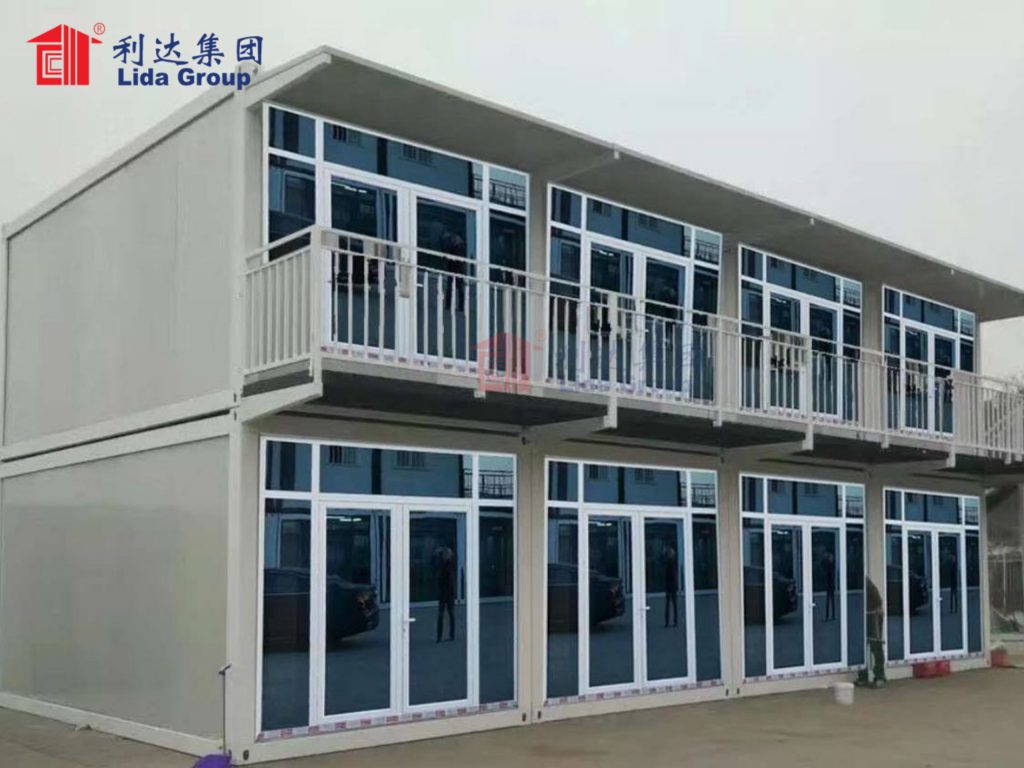
Lida Group’s cost-effective prefab solutions are supported by a range of technological innovations that enhance efficiency, reduce waste, and improve performance—all while keeping costs low. These innovations span material science, structural engineering, and construction technology, ensuring that Lida’s products offer the best possible value for money.
3.1 Advanced Material Technology: Balancing Cost and Performance
Lida’s use of advanced materials is a key factor in its cost advantage. The company’s prefab containers are constructed from high-strength Q235 steel, which offers excellent durability and load-bearing capacity at a lower cost than higher-grade steels. The steel is galvanized with a thickness of ≥40g/m² and coated with epoxy primer and polyurethane topcoat, ensuring resistance to corrosion and extending the service life of the containers to 20+ years. This reduces long-term maintenance costs, as the containers require minimal upkeep compared to traditional buildings.
Another material innovation is Lida’s use of high-performance thin composite panels. Unlike traditional concrete panels, which are heavy and expensive to transport, Lida’s 15mm-thick composite panels are lightweight yet strong, reducing transportation costs and improving on-site handling. These panels are produced using automated lines that require no custom molds, reducing production lead times and mold amortization costs. The panels also offer excellent thermal insulation, reducing energy costs for heating and cooling by up to 20% compared to traditional building materials.
Lida also prioritizes the use of recycled and sustainable materials to reduce costs and environmental impact. The company’s prefab containers use recycled steel for 30% of their structural components, reducing raw material costs by 8-10%. The fiberglass insulation used in the containers is free of volatile organic compounds (VOCs) and is 100% recyclable, aligning with global sustainability standards while keeping material costs low.
3.2 Structural Engineering Innovations: Optimizing Design for Cost and Strength
Lida’s structural engineering innovations further enhance cost efficiency. The company’s prefab containers feature a modular structural frame that is both strong and lightweight, reducing material usage without compromising durability. The frame is designed to withstand 8-grade earthquakes and 4-grade fire resistance (up to 3 hours of fire exposure), meeting international safety standards while using 15% less steel than comparable prefab containers.
One key structural innovation is Lida’s use of optimized corner pillars and roof frames. The corner pillars, which measure 210mm × 150mm × 30mm, are designed to distribute weight evenly, reducing the need for additional support structures. The roof frame, made from cold-formed steel with a thickness of 2.5mm, is lightweight yet strong enough to withstand wind loads of 0.6kN/m² and live loads of 0.5kN/m². These design optimizations reduce material costs while ensuring structural integrity.
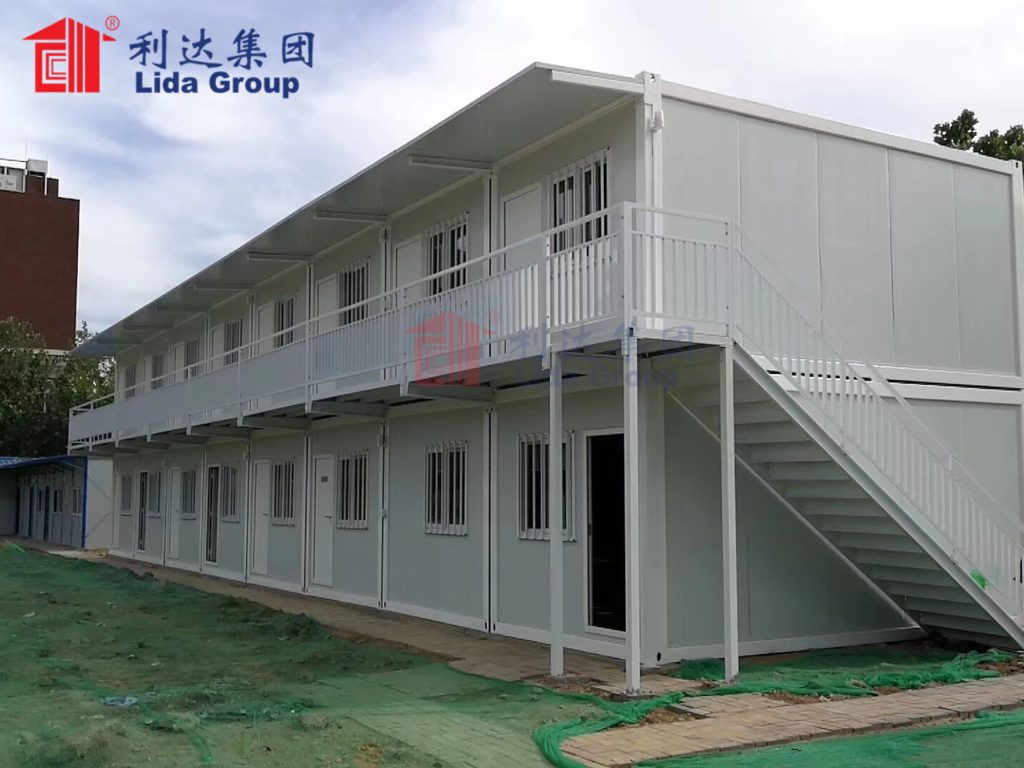
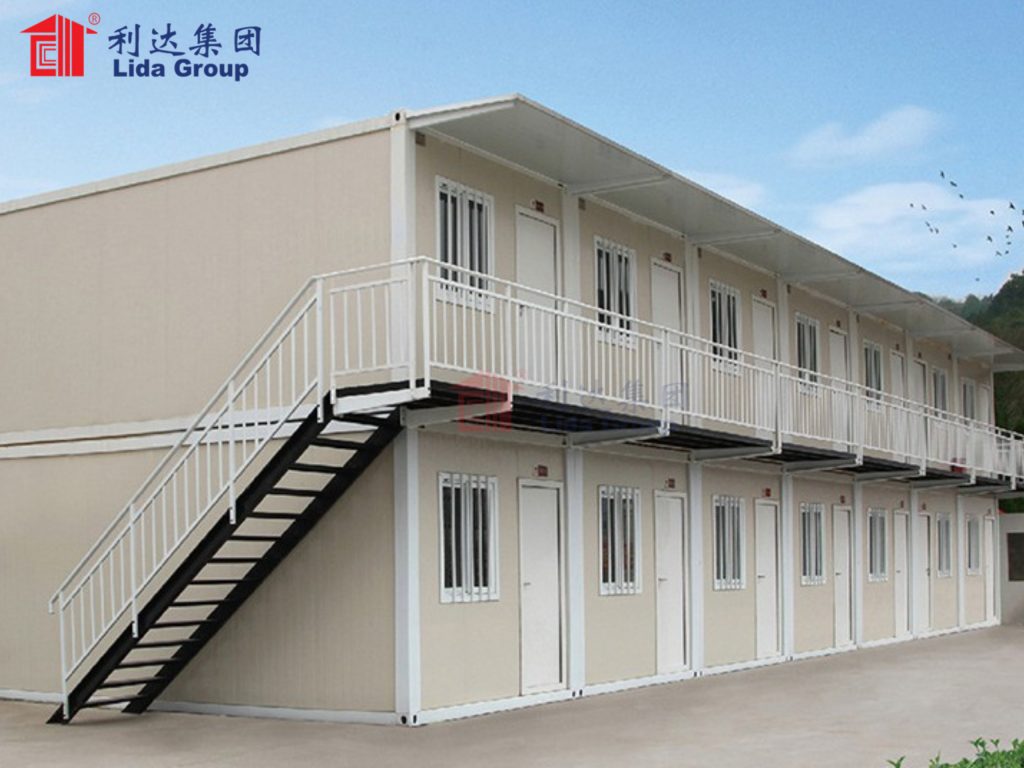
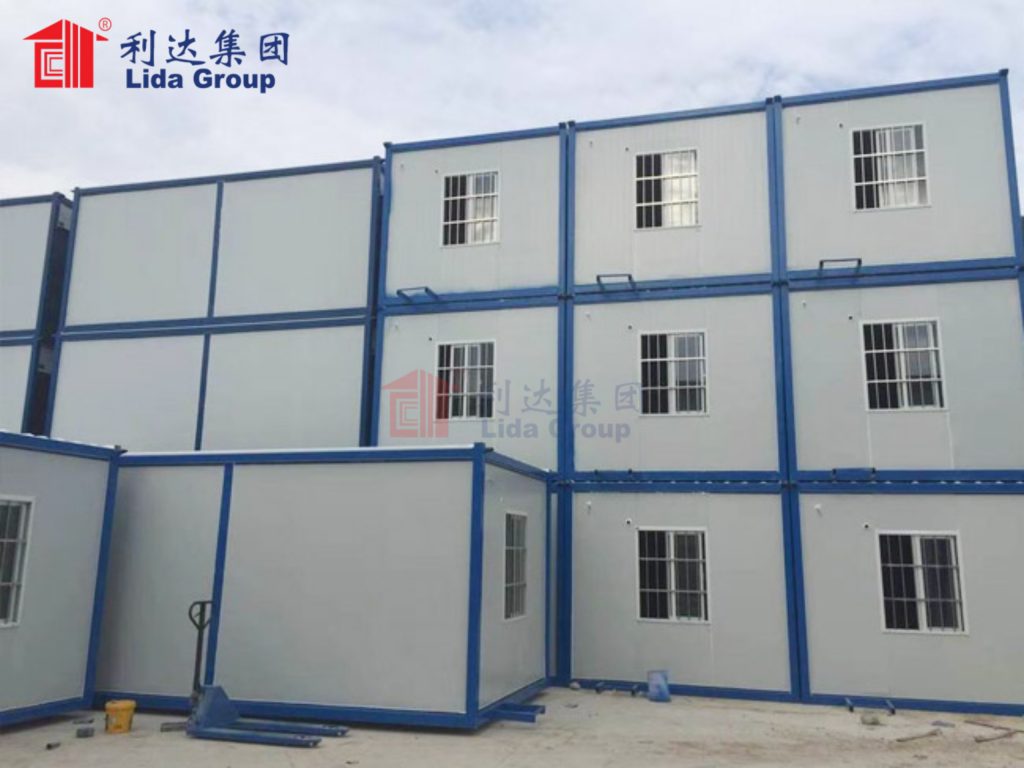
Lida also offers stackable prefab containers that can be stacked up to three stories high without additional structural reinforcement. This allows clients to maximize space utilization without incurring the cost of building additional floors, making Lida’s solutions ideal for dense urban areas and large-scale projects such as worker camps and residential complexes.
3.3 Construction Technology: Automating Processes to Reduce Costs
Automation is a key technological driver of Lida’s cost efficiency. The company’s manufacturing facilities are equipped with advanced automated production lines that handle everything from steel cutting and welding to panel assembly and finishing. For example, the company’s steel truss production line uses robotic welding technology to assemble steel trusses with precision and speed, reducing labor costs by 30% and improving production efficiency by 40% compared to manual welding.
Lida also uses automated quality control systems to ensure that all components meet strict quality standards. These systems include laser measurement tools that check the dimensions of each component to within 0.1mm, and non-destructive testing equipment that detects structural defects. By catching defects early in the production process, Lida reduces the risk of rework and warranty claims, saving an estimated 3-5% of total production costs.
In addition to manufacturing automation, Lida leverages digital technology to streamline the design and sales process. The company offers a 3D design tool that allows clients to customize their prefab containers online, selecting from a range of configurations, finishes, and features. This tool reduces the time spent on design iterations and ensures that clients get exactly what they need, minimizing the risk of costly changes during production.
4. Case Studies: Cost-Effective Prefab in Action
Lida Group’s cost-effective prefab solutions have been deployed in a wide range of projects worldwide, from emergency shelters and worker camps to residential complexes and public buildings. The following case studies highlight how Lida’s approach delivers tangible cost savings while meeting the unique needs of each project.
4.1 Emergency Shelter Project in South Sudan (2024)
In 2024, Lida Group was contracted by the United Nations High Commissioner for Refugees (UNHCR) to deliver 500 prefab container homes for refugees displaced by conflict in South Sudan. The project required rapid deployment, low cost, and durability in harsh environmental conditions.
Lida’s solution: 20ft flat-packed prefab containers with basic living facilities (sleeping area, bathroom, and cooking nook). The containers were manufactured in Lida’s Weifang facility and shipped to South Sudan via the Port of Mombasa, Kenya. Key cost-saving measures included:
- Flat-pack delivery: Reduced shipping costs by 60% compared to fully assembled units, saving $300,000 in total shipping costs.
- Standardized design: Eliminated the need for custom design, reducing design costs by 100% and production lead time by 25%.
- Local assembly: Lida trained local workers to assemble the containers, reducing labor costs by 40% compared to importing skilled labor.
The project was completed in just 3 months, with each container costing $3,500—30% less than comparable emergency shelters provided by other suppliers. The containers have withstood extreme temperatures (ranging from 5°C to 40°C) and heavy rainfall, demonstrating that cost-effective prefab solutions can also be durable and reliable.
4.2 Worker Camp for a Mining Company in Australia (2023)
A large mining company in Western Australia needed to house 1,000 workers at a remote mining site. The company required a cost-effective, fast-to-build solution that could withstand the harsh Australian outback climate.
Lida’s solution: 40ft prefab containers configured as dormitories (4 workers per container), with shared kitchens, bathrooms, and recreational facilities. The containers were equipped with advanced insulation to handle temperatures up to 45°C, and solar panels to reduce energy costs. Key cost-saving measures included:
- Modular design: The camp was built using 250 standardized containers, reducing design and production costs by 20%.
- Bulk purchasing: Lida’s bulk purchasing of solar panels and insulation materials reduced material costs by 15%.
- Fast assembly: The entire camp was assembled in 6 weeks, compared to 6 months for a traditional worker camp, saving the mining company $2 million in operational costs (due to earlier project startup).
The total cost of the camp was $1.75 million, which is 35% less than the cost of a traditional worker camp. The mining company also reported a 20% reduction in energy costs due to the containers’ insulation and solar panels, resulting in long-term savings.
4.3 Affordable Housing Project in Guangzhou, China (2022)
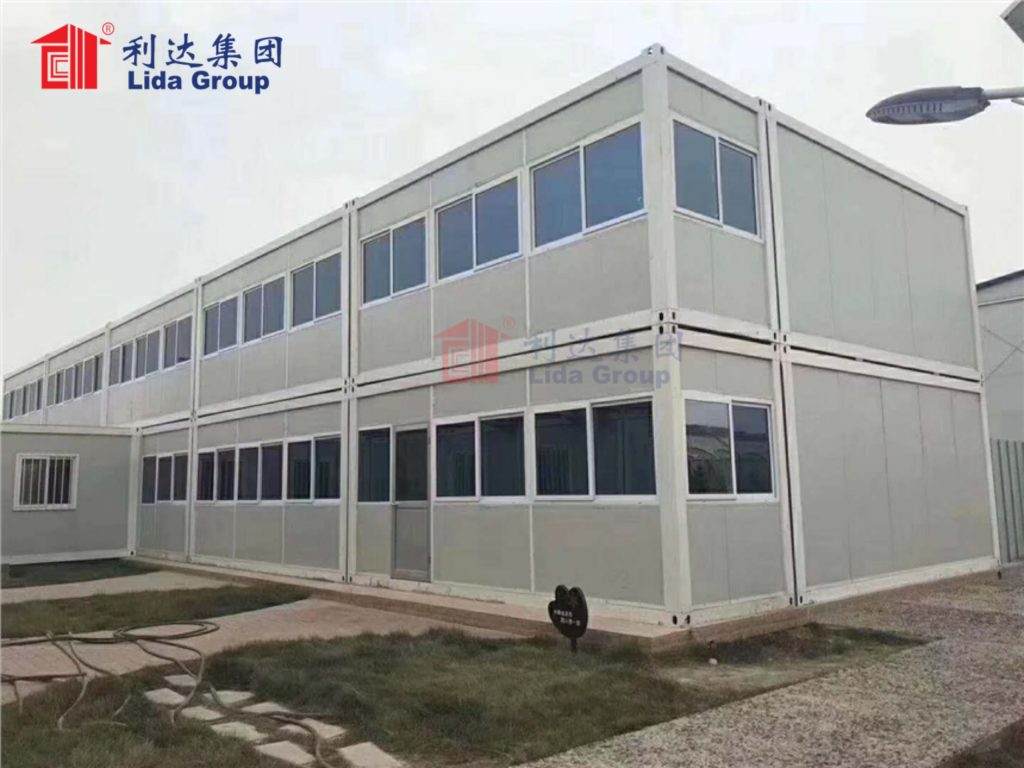
To address the city’s housing shortage, the Guangzhou Municipal Government partnered with Lida Group to build a 10-story residential complex with 120 affordable housing units. The project required low cost, high quality, and compliance with China’s strict building codes.
Lida’s solution: 40ft prefab containers stacked three stories high, with each unit featuring 1-2 bedrooms, a living room, kitchen, and bathroom. The containers were finished with exterior cladding to blend in with the surrounding neighborhood, and equipped with energy-efficient windows and insulation. Key cost-saving measures included:
- Prefabrication: 90% of the building components were manufactured off-site, reducing on-site labor costs by 40% and construction waste by 30%.
- Standardized production: Lida’s high-volume production of standardized components reduced material costs by 15% compared to traditional construction.
- Fast construction: The complex was completed in 4 months, compared to 12 months for a traditional concrete building, saving the government $1.2 million in financing costs.
The total cost of the project was \(2.4 million, with each unit costing \)20,000—30% less than the average cost of affordable housing in Guangzhou. The complex has since become a model for affordable housing projects in China, demonstrating that prefab construction can deliver high-quality, cost-effective housing at scale.
5. Market Impact: Lida’s Cost-Effective Approach Reshaping the Prefab Industry
Lida Group’s focus on cost-effective prefab construction is having a significant impact on the global prefab industry, driving competition, increasing adoption, and setting new standards for value. By proving that prefab can be both affordable and high-quality, Lida is helping to mainstream prefab construction, particularly in emerging markets where cost is a critical factor.
5.1 Driving Adoption in Emerging Markets
Lida’s cost-effective solutions have made prefab construction accessible to clients in emerging markets such as Africa, Southeast Asia, and Latin America, where traditional construction costs are often prohibitive. In these markets, Lida’s prefab containers are used for a wide range of applications, including schools, hospitals, and residential housing. For example, in Kenya, Lida has delivered over 1,000 prefab classrooms to rural areas, providing affordable education facilities that would have been impossible to build with traditional methods.
By expanding into emerging markets, Lida is not only growing its business but also contributing to economic development. The company’s local assembly and training programs create jobs, and its affordable building solutions help to address critical infrastructure gaps. This has earned Lida a reputation as a socially responsible company, further enhancing its market position.
5.2 Raising the Bar for Cost and Quality
Lida’s success has forced competitors to improve their cost-efficiency to remain competitive. Traditional prefab manufacturers, which often focused on high-end markets, are now developing more affordable product lines, while new entrants are adopting Lida’s large-scale production and standardization strategies. This increased competition is driving down prices across the industry, making prefab construction more accessible to a wider range of clients.
At the same time, Lida’s commitment to quality has raised the bar for the industry. The company’s ISO 9001 certification, CE accreditation, and rigorous quality control processes ensure that its cost-effective solutions meet international safety and performance standards. This has helped to dispel the myth that affordable prefab is low-quality, encouraging more clients to choose prefab over traditional construction.
5.3 Supporting Sustainable Development Goals
Lida’s cost-effective prefab solutions align with several United Nations Sustainable Development Goals (SDGs), including SDG 11 (Sustainable Cities and Communities) and SDG 13 (Climate Action). By reducing construction waste, energy consumption, and carbon emissions, Lida’s solutions help clients meet their sustainability targets without incurring additional costs.
For example, Lida’s prefab containers generate 70% less construction waste than traditional buildings, and their energy-efficient design reduces carbon emissions by up to 30% over their lifecycle. This makes Lida’s solutions attractive to governments and organizations that are committed to sustainability but have limited budgets.
6. Future Outlook: Innovations to Enhance Cost-Efficiency
Lida Group is continuously investing in research and development to further enhance the cost-efficiency of its prefab solutions. The company’s future plans focus on three key areas: material innovation, process automation, and market expansion.
6.1 Material Innovation: Developing Low-Cost, High-Performance Materials
Lida is researching new materials that offer better performance at lower costs. One area of focus is recycled plastic composites, which could replace some steel components in prefab containers, reducing material costs and environmental impact. The company is also exploring the use of 3D-printed components for custom parts, which would eliminate the need for expensive molds and reduce lead times.
6.2 Process Automation: Further Reducing Labor Costs
Lida plans to increase the level of automation in its manufacturing facilities, with the goal of reducing labor costs by a further 20% over the next five years. This will include the adoption of artificial intelligence (AI) and machine learning to optimize production schedules, predict maintenance needs, and improve quality control.
6.3 Market Expansion: Targeting New Sectors and Regions
Lida aims to expand its presence in new sectors such as healthcare and education, where cost-effective, fast-to-build facilities are in high demand. The company also plans to enter new markets in North America and Europe, where there is growing demand for affordable, sustainable housing. To support this expansion, Lida will establish local production facilities in key markets, reducing shipping costs and lead times.
7. Conclusion
Lida Group’s leadership in cost-effective prefab construction represents a paradigm shift in the global construction industry. By integrating large-scale production, standardized design, supply chain optimization, and lean construction, the company has proven that prefab construction can deliver significant cost savings—30-40% compared to traditional methods—without compromising on quality, durability, or sustainability.
Lida’s success is built on a deep understanding of market needs: clients want building solutions that are affordable, fast to deliver, and reliable. The company’s technological innovations, from advanced materials to automated production lines, further enhance its cost advantage, ensuring that it remains at the forefront of the prefab industry.
Through its diverse range of projects—from emergency shelters in South Sudan to affordable housing in China—Lida has demonstrated the versatility of its cost-effective prefab solutions. These projects not only deliver tangible cost savings but also contribute to social and environmental goals, making Lida a leader in responsible construction.
Looking ahead, Lida Group’s commitment to innovation and cost-efficiency will continue to drive its growth and shape the future of the prefab industry. As the global demand for affordable, sustainable building solutions continues to rise, Lida is well-positioned to capitalize on this trend, expanding its global footprint and delivering value to clients worldwide.
In a construction industry that is often plagued by cost overruns and inefficiencies, Lida Group stands as a beacon of hope—proving that affordability and quality can go hand in hand. By championing cost-effective prefab construction, Lida is not only building a successful business but also helping to create a more sustainable, equitable future for all.
Related news
-
Customizable Steel Structure Building Designs from Lida Group
2025-11-27 10:39:25
-
Lida Group Unveils New Prefab Mobile Container House Series
2025-11-27 11:00:23
-
Experience Modern Free Design in Container Building
2025-11-27 11:22:22
contact us
- Tel: +86-532-88966982
- Whatsapp: +86-13793209022
- E-mail: sales@lidajituan.com
