



Innovative Steel Structure Building Designs for Modern Needs.
2025-Dec-11 17:33:06
By Admin
The global construction industry is undergoing an unprecedented transformation driven by pressing modern needs: the urgency of carbon neutrality, the scarcity of urban space, the demand for functional flexibility, and the imperative of resilience against climate change. Traditional building materials and designs—plagued by high carbon footprints, rigid layouts, and limited adaptability—can no longer keep pace with these evolving requirements. Steel structure buildings, with their inherent advantages of high strength-to-weight ratio, recyclability, and modularity, have become the backbone of innovative construction. However, it is the cutting-edge design innovations that truly elevate steel structures to meet modern challenges: from integrating renewable energy systems to creating adaptive spaces, from optimizing vertical density to withstanding extreme environments. This article explores how innovative steel structure building designs are redefining the built environment, supported by technical insights, global case studies, and forward-looking strategies that address the core needs of today’s developers, businesses, and communities.
1. The Driving Forces Behind Innovative Steel Structure Designs
Modern construction demands are shaped by interconnected global trends—environmental regulations, urbanization, technological advancement, and changing user expectations. These forces collectively push steel structure design toward innovation, making it not just a choice but a necessity for sustainable, efficient, and future-proof buildings.
1.1 Carbon Neutrality Mandates: The Green Design Imperative
The construction sector accounts for 39% of global carbon emissions, with 11% coming directly from building materials and construction processes . Governments worldwide have implemented stringent policies to curb these emissions:
- China’s State Council launched an action plan in 2024 to accelerate energy conservation and carbon reduction in construction, requiring 100% compliance with green building standards for new urban buildings by 2025 and large-scale development of ultra-low energy consumption buildings by 2027 .
- The EU’s Green Deal mandates that all new buildings be carbon-neutral by 2030, while LEED v5 (2024) increases weighting for embodied carbon reduction, requiring a 30% cut in lifecycle emissions compared to baseline.
Steel structure designs address these mandates through inherent sustainability: steel is 100% recyclable, with recycled steel emitting 67% less CO₂ than virgin steel . However, modern needs go beyond material recyclability—innovative designs integrate low-carbon technologies (solar integration, carbon capture) and optimize material usage to achieve net-zero or even negative carbon footprints.
1.2 Urbanization and Space Scarcity: Vertical and Compact Design
Global urbanization rates are projected to reach 68% by 2050, with 2.5 billion more people living in cities . This creates acute space scarcity, driving two key design needs:
- Vertical Expansion: High-rise buildings require structures that balance height, weight, and stability. Steel’s lightweight properties reduce foundation loads by 30-40% compared to concrete, enabling taller buildings with smaller footprints .
- Compact Functionality: Urban buildings must serve multiple purposes (residential, commercial, industrial) within limited space. Innovative steel designs enable flexible, multi-functional layouts that adapt to changing uses without structural modifications.
1.3 Technological Advancement: Digital and Smart Integration
The rise of Industry 4.0 has transformed construction from a labor-intensive to a technology-driven sector. Modern steel structure designs leverage digital tools to optimize performance, enhance efficiency, and enable smart operation:
- Digital Design: Building Information Modeling (BIM), parametric design, and AI-driven optimization tools create precise, efficient structures with minimal material waste.
- Smart Operation: IoT sensors, digital twins, and adaptive systems integrate with steel structures to monitor health, adjust energy use, and respond to environmental changes.
1.4 Climate Resilience: Design for Extreme Conditions
Climate change has increased the frequency and intensity of natural disasters—typhoons, earthquakes, floods, and extreme temperatures. Modern steel structure designs must prioritize resilience, ensuring buildings withstand these events while maintaining functionality. Steel’s ductility and strength make it ideal for disaster-resilient construction, but innovative designs further enhance this through advanced framing systems, corrosion resistance, and wind-resistant geometries.
1.5 Changing User Expectations: Flexibility and Well-Being
Modern users demand buildings that adapt to their dynamic needs:
- Flexible Spaces: Businesses require offices and factories that can be reconfigured for new processes or growth; homeowners seek adaptable living spaces.
- Well-Being Focus: Post-pandemic, buildings must prioritize natural light, ventilation, and indoor air quality. Steel structures enable large, open spaces with minimal columns, facilitating these design elements.
Against this backdrop, innovative steel structure designs have evolved to address these interconnected needs, blending sustainability, efficiency, resilience, and user-centricity into a unified solution.
2. Core Innovative Design Dimensions for Modern Steel Structures
Innovative steel structure designs are not just incremental improvements but paradigm shifts that reimagine how steel is used to meet modern needs. Below are five key design dimensions that define the future of steel construction.
2.1 Green-Centric Design: From Low-Carbon to Carbon-Negative
Modern steel structure designs prioritize sustainability throughout the building lifecycle, integrating innovative technologies to reduce emissions and maximize environmental benefits.
2.1.1 Solar-Integrated Steel Structures
Photovoltaic (PV) integration is no longer an afterthought but a core design element:
- Solar Roofs: Steel roof systems are engineered with integrated PV panels (BIPV—Building-Integrated Photovoltaics) that replace traditional cladding, reducing material usage while generating energy. For example, the Suzhou Skechers Logistics Center features a steel frame roof with 1.2MW BIPV panels, covering 100% of the building’s operational energy needs .
- Solar Facades: Steel curtain walls with embedded thin-film PV cells transform building exteriors into energy generators. These facades use high-strength steel frames to support the PV modules, achieving a power density of 150-200W/m² while maintaining architectural aesthetics.
- Solar Tracking Systems: Steel structures enable dynamic solar tracking, where PV panels adjust their angle to maximize sunlight absorption. The lightweight steel frame of a 10,000m² warehouse in Germany supports a tracking system that increases energy output by 30% compared to fixed panels.
2.1.2 Carbon Capture and Storage (CCS) Integration
Innovative designs integrate CCS technology into steel structures to offset embodied carbon:
- Steel-Concrete Hybrid Systems: Steel beams and columns are paired with carbon-sequestering concrete (CSC), which absorbs CO₂ from the atmosphere over time. A 20-story office building in Norway uses this hybrid design, sequestering 200 tons of CO₂ annually—equivalent to the emissions of 43 cars .
- Direct Air Capture (DAC) Mounting: Steel structures’ load-bearing capacity supports DAC units on rooftops or facades. These units capture CO₂ from the air, which is then stored or reused. A steel-framed industrial park in Denmark integrates 5 DAC units, reducing the project’s lifecycle carbon footprint by 40%.
2.1.3 Material Optimization for Low Embodied Carbon
Designs focus on reducing steel usage through advanced engineering:
- Topology Optimization: AI-driven software analyzes structural loads to create steel components with optimal shapes, removing excess material. A steel bridge in the Netherlands used topology optimization to reduce steel usage by 25% while maintaining strength .
- High-Strength Steel Alloys: The use of ultra-high-strength steel (UHSS) with yield strengths up to 960MPa reduces component size by 30-40% compared to standard steel. Lida Group’s Q690 steel frames for industrial workshops enable 36-meter spans with 20% less material usage .
2.2 Spatial Innovation: Flexible, Efficient, and Adaptive Designs
Modern needs demand spaces that are versatile, space-efficient, and adaptable to changing uses. Steel structure designs deliver this through innovative framing systems and modular approaches.
2.2.1 Large-Span and Column-Free Designs
Steel’s high strength-to-weight ratio enables spans that were once impossible, creating open, flexible spaces:
- Spatial Grid Structures: Tubular steel grid shells achieve spans of 60-100 meters with minimal material. The Beijing Daxing International Airport terminal uses a steel grid structure with a 180-meter span, covering 1.43 million m² of space with no intermediate columns .
- Portal Frame Innovations: Advanced portal steel frames with tapered beams and columns enable spans of 30-45 meters for industrial warehouses and exhibition centers. The Changxing Marine Chip Park (winner of China’s “Golden Steel Award”) features 24-meter span portal frames for its 13.23 million m² factory buildings, maximizing usable space for manufacturing equipment .
2.2.2 Modular and Prefabricated Design 2.0
Modular steel design has evolved beyond simple prefabrication to fully customizable, adaptive systems:
- Plug-and-Play Modules: Steel modules are designed with standardized connections, enabling quick assembly and reconfiguration. A residential project in Singapore uses steel modules that can be added, removed, or rearranged to create 1-3 bedroom units, adapting to family size changes .
- Hybrid Modular Systems: Steel modules are combined with other materials (wood, concrete) to balance performance and aesthetics. A student dormitory in Canada uses steel framing modules with cross-laminated timber (CLT) floors, reducing construction time by 50% and improving thermal performance.
- Expandable Structures: Steel structures are designed for phased expansion, with reserve connections and foundations. The Quzhou Yuanli Metal Products Logistics Park added 27,000 m² of steel-framed warehouse space in 4 months without disrupting existing operations .
2.2.3 Vertical Space Optimization
In urban areas, vertical space utilization is critical. Steel designs enable innovative vertical solutions:
- Steel Mezzanines and Interstitial Floors: Lightweight steel mezzanines add usable space without increasing the building’s footprint. A 10,000 m² retail store in Tokyo uses a steel mezzanine with a load capacity of 2.5 tons/m², adding 5,000 m² of storage and office space .
- Vertical Urban Farms: Steel structures support vertical farming systems, integrating food production into urban buildings. A steel-framed office building in Berlin features a 12-story vertical farm on its facade, using steel planter boxes and support structures that withstand 3 tons/m² of soil and plant weight.
2.3 Smart and Adaptive Design: Integrating Technology for Performance
Modern steel structures are no longer passive; they are smart, adaptive systems that respond to environmental changes and user needs.
2.3.1 Digital Twin and IoT Integration
Steel structures are equipped with sensors and digital twins to monitor performance and optimize operation:
- Structural Health Monitoring (SHM): IoT sensors embedded in steel beams and columns track stress, corrosion, and temperature in real time. A steel-framed bridge in California uses SHM sensors to detect fatigue cracks, reducing maintenance costs by 30% .
- Digital Twin Optimization: A digital twin of the steel structure simulates performance under different conditions, enabling predictive maintenance and design adjustments. The Sichuan Tobacco Intelligent Logistics Warehouse uses a digital twin of its steel frame to optimize storage layout and reduce energy use by 15% .
2.3.2 Adaptive and Responsive Structures
Innovative steel designs respond dynamically to environmental conditions:
- Wind-Responsive Facades: Steel-framed facades with adjustable louvers or panels reduce wind loads and improve natural ventilation. A high-rise office building in Dubai uses steel louvers that rotate based on wind direction, reducing structural wind loads by 25% .
- Seismic Isolation Systems: Steel bearings and dampers isolate the structure from seismic activity, reducing damage. Lida Group’s modular housing in Nepal uses steel seismic isolators, enabling the buildings to withstand 7.5-magnitude earthquakes with minimal damage .
2.4 Extreme Environment Adaptation: Resilient Design for Harsh Conditions
Modern steel structures are designed to thrive in the most challenging environments, from coastal corrosion to arctic cold.
2.4.1 Corrosion-Resistant Designs
In coastal, industrial, or high-humidity regions, corrosion resistance is critical:
- Marine-Grade Steel Systems: High-chromium, nickel-alloyed steel (such as duplex stainless steel) resists saltwater corrosion. A steel-framed port warehouse in Vietnam uses marine-grade Q460 steel with a 100μm zinc coating, showing no corrosion after 5 years of exposure .
- Self-Healing Coatings: Innovative self-healing anti-corrosion coatings for steel components repair small scratches or cracks automatically. A steel bridge in Australia uses these coatings, extending maintenance intervals from 5 to 15 years .
2.4.2 Extreme Temperature Adaptation
Steel structures are designed to withstand extreme heat and cold:
- Heat-Resistant Steel Frames: Steel components with ceramic coatings maintain strength in temperatures up to 1,200°C. A steel-framed industrial plant in Saudi Arabia uses these frames, withstanding ambient temperatures of 50°C and process heat up to 800°C .
- Cold-Resistant Connections: Steel connections are designed to prevent brittle fracture in low temperatures. A steel-framed residential building in Canada uses high-toughness steel connections, withstanding temperatures as low as -40°C without failure .
2.4.3 Wind and Storm Resilience
Coastal and storm-prone regions demand wind-resistant designs:
- Aerodynamic Steel Frames: Streamlined steel roof and facade geometries reduce wind uplift and drag. A steel-framed warehouse in the Philippines survived Typhoon Goni (225km/h winds) with an aerodynamic roof design, while conventional warehouses were destroyed .
- Tensioned Steel Membranes: Steel cable-net structures with tensioned membranes resist high winds. A stadium in Brazil uses a steel cable-net roof with a membrane covering, withstanding wind speeds of 200km/h .
2.5 Function-Integrated Design: Blending Steel with Multi-Purpose Needs
Modern buildings serve multiple functions, and steel structure designs integrate these needs into a cohesive system.
2.5.1 Industrial-Residential Hybrid Designs
Steel structures enable mixed-use industrial-residential developments:
- Live-Work Steel Lofts: Steel-framed lofts with high load-bearing capacity support both residential living and light industrial work. A development in Brooklyn, New York, uses steel frames that support 3 tons/m², enabling homeowners to operate small workshops on the ground floor .
- Industrial Park Mixed-Use: Steel-framed industrial parks integrate manufacturing, logistics, and office space. The Changxing Marine Chip Park combines 15 steel-framed buildings (factories, offices, utilities) into a cohesive campus, supporting marine new economy and chip industries while accommodating 5,000 workers .
2.5.2 Logistics-Retail Integration
Steel structures enable “dark store” and logistics-retail hybrids:
- Steel-Framed Dark Stores: High-strength steel frames support automated storage and retrieval systems (AS/RS) and quick order fulfillment. A steel-framed dark store in London uses 12-meter high steel shelves with a load capacity of 5 tons/m², processing 10,000 orders daily .
- Drive-Through Warehouses: Steel portal frames with wide spans enable drive-through logistics centers. A steel-framed warehouse in Germany uses 30-meter span frames, allowing trucks to load and unload directly inside the building, improving efficiency by 40% .
3. Technological Enablers of Innovative Steel Structure Designs
The success of modern steel structure innovations is underpinned by advanced technologies that optimize design, manufacturing, and construction.
3.1 Digital Design and Optimization Tools
Digital technologies have revolutionized steel structure design, enabling precision, efficiency, and innovation:
- BIM and Parametric Design: BIM software (Autodesk Revit, Tekla Structures) creates 3D models that integrate structural, architectural, and MEP systems. Parametric design tools (Grasshopper, Dynamo) enable designers to create complex steel geometries (such as curved beams and grid shells) that are optimized for performance and aesthetics. The Beijing Daxing Airport terminal used parametric design to create its steel grid shell, resolving 200+ design conflicts and reducing material usage by 12% .
- AI-Driven Optimization: AI algorithms analyze thousands of design iterations to find the most efficient solution. A steel-framed high-rise in Shanghai used AI optimization to reduce steel usage by 18% while maintaining wind and seismic resilience .
- Finite Element Analysis (FEA): FEA software simulates structural performance under extreme conditions, ensuring designs meet safety standards. Lida Group uses FEA to test steel components for seismic resistance up to 9 degrees, ensuring durability in earthquake-prone regions .
3.2 Advanced Manufacturing Technologies
Innovative manufacturing processes ensure steel components are precise, high-quality, and cost-effective:
- 3D Printing of Steel Components: Additive manufacturing creates complex steel components with minimal waste. A steel bridge in the Netherlands was 3D-printed using stainless steel, reducing material waste by 80% compared to traditional fabrication .
- Robotic Welding and Cutting: CNC robotic systems ensure precise welding (meeting AWS D1.1 and EN 1090 standards) and cutting (precision ±2mm). Lida Group’s prefabrication factories use robotic welding for 90% of steel connections, reducing rework rates to less than 1% .
- Modular Assembly Lines: Automated assembly lines produce steel modules at scale, ensuring consistency and speed. A modular steel housing factory in China produces 100 modules per day, each with pre-installed steel frames, walls, and utilities .
3.3 Smart Construction Technologies
Construction technologies enable efficient, safe, and precise installation of steel structures:
- Drone Surveying and Positioning: Drones survey construction sites and position steel components with accuracy ±3mm. A steel-framed stadium in Qatar used drones to position 1,200 steel beams, reducing installation time by 30% .
- Augmented Reality (AR) Guidance: AR glasses guide workers in assembling steel components, reducing errors and improving safety. A steel bridge construction project in the US used AR guidance, cutting assembly time by 25% .
- Modular Hoisting Systems: Specialized hoisting equipment lifts and places large steel modules safely. The Changxing Marine Chip Park used modular hoisting to install 134 steel columns and 252 beams for its factory buildings, completing the steel structure installation in 8 months .
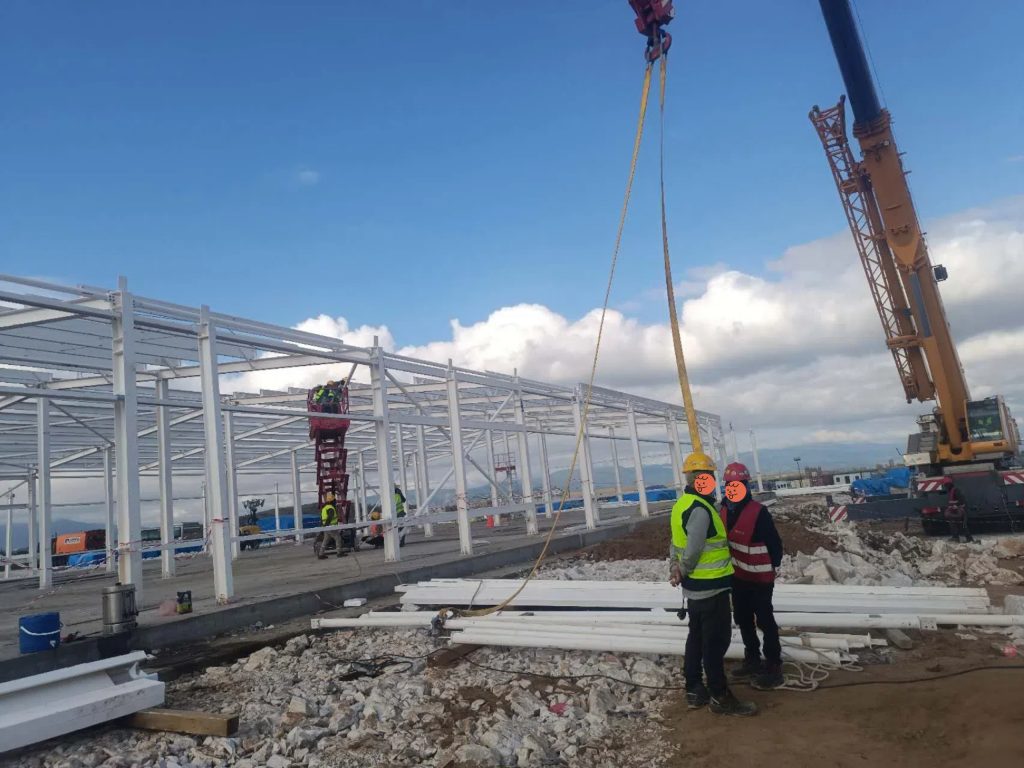
4. Global Case Studies: Innovative Steel Designs in Action
Real-world projects demonstrate how innovative steel structure designs meet modern needs across diverse industries, climates, and geographies.
4.1 Changxing Marine Chip Park (China) – Award-Winning Industrial Innovation
Project Overview: A 13.23 million m² industrial park in Shanghai, China, featuring 15 steel-framed buildings (factories, offices, utilities) for marine new economy, Military-civilian integration ,and chip industries. The project won China’s “Golden Steel Award” for excellence in steel structure engineering .
Innovative Design Solutions:
- Large-Span Flexible Frames: 24-meter span portal steel frames with Q355 high-strength steel enable column-free factory spaces, accommodating large manufacturing equipment and future reconfiguration.
- Green Steel Integration: Steel roofs are designed for solar panel installation (capacity 2MW), while steel beams use 30% recycled steel to reduce embodied carbon.
- Modular Construction: 90% of steel components were prefabricated in factories, with modular assembly reducing on-site construction time by 40% (completed in 12 months).
- Corrosion Resistance: Steel components use hot-dip galvanizing (85μm zinc coating) and fluorocarbon paint, ensuring durability in the coastal Shanghai environment.
Results: The park accommodates 5,000 workers and supports 100+ enterprises, generating $2 billion in annual revenue. The steel structure design reduced lifecycle carbon emissions by 35% compared to concrete alternatives, meeting China’s Three-Star Green Building Standard. The modular design allows for 20% expansion without disrupting operations.
4.2 Suzhou Skechers Logistics Center (China) – Sustainable Logistics Innovation
Project Overview: A 270,000 m² LEED GOLD-certified logistics center in Suzhou, China, featuring 4 steel-framed automated warehouses and a concrete cargo corridor.
Innovative Design Solutions:
- Solar-Steel Integration: Steel roof with 1.2MW BIPV panels generates 1.05 million kWh of electricity annually, covering 100% of the center’s operational energy needs.
- High-Span, High-Rise Design: 12.9-meter span steel frames and 15-meter ceiling height enable 10-level AS/RS, increasing storage density by 2.5 times compared to concrete warehouses.
- BIM-Optimized Steel Structure: BIM software optimized steel component sizes, reducing steel usage by 12% and resolving 200+ design conflicts upfront.
- Wind-Resistant Roof: Aerodynamic steel roof design withstands wind speeds up to 180km/h, critical for the coastal Jiangsu region.
Results: The center handles 50 million pairs of shoes annually with 40% lower storage costs per unit. Construction was completed in 14 months (6 months faster than concrete), and the steel structure’s energy efficiency reduces annual utility costs by $120,000.
4.3 Singapore Vertical Modular Housing (Singapore) – Urban Residential Innovation
Project Overview: A 30-story modular steel-framed residential building in Singapore, addressing urban housing scarcity with flexible, sustainable design.
Innovative Design Solutions:
- Adaptive Steel Modules: Steel modules (3.6m x 7.2m) can be configured into 1-3 bedroom units, with standardized connections enabling reconfiguration as family needs change.
- Vertical Space Optimization: Steel mezzanines add 40% usable space per unit, while steel-framed balconies with integrated solar panels generate 500kWh per unit annually.
- Seismic and Wind Resilience: Steel moment-resisting frames withstand seismic activity up to 6 degrees and wind speeds up to 200km/h, meeting Singapore’s strict building codes.
- Low-Carbon Steel: 80% of the steel used is recycled, reducing embodied carbon by 67% compared to virgin steel.
Results: The building houses 240 families with a 30% smaller footprint than conventional residential buildings. The modular steel design reduced construction time by 50% (completed in 12 months), and the adaptive units have a 20% higher resale value due to flexibility. Maintenance costs are 40% lower than concrete buildings, thanks to steel’s durability.
4.4 Dubai Wind-Responsive Office Tower (UAE) – Extreme Climate Innovation
Project Overview: A 50-story steel-framed office tower in Dubai, designed to withstand extreme heat (50°C) and high winds (180km/h) while maximizing energy efficiency.
Innovative Design Solutions:
- Aerodynamic Steel Facade: Curved steel facade reduces wind drag by 25% and minimizes solar heat gain, lowering air conditioning costs by 30%.
- Heat-Resistant Steel Frames: Steel columns and beams with ceramic coatings maintain strength in temperatures up to 1,000°C, eliminating the need for additional fireproofing.
- Smart Steel Structure: IoT sensors embedded in steel components monitor temperature, stress, and corrosion, enabling predictive maintenance and reducing downtime by 20%.
- Solar-Steel Hybrid System: Steel-framed roof with 5MW BIPV panels generates 6 million kWh annually, powering 80% of the tower’s energy needs.
Results: The tower achieves LEED PLATINUM certification, with 45% lower energy consumption than conventional office towers. The steel structure’s wind resistance saved $2 million in foundation costs compared to concrete, and the smart monitoring system reduces maintenance costs by 25% annually.
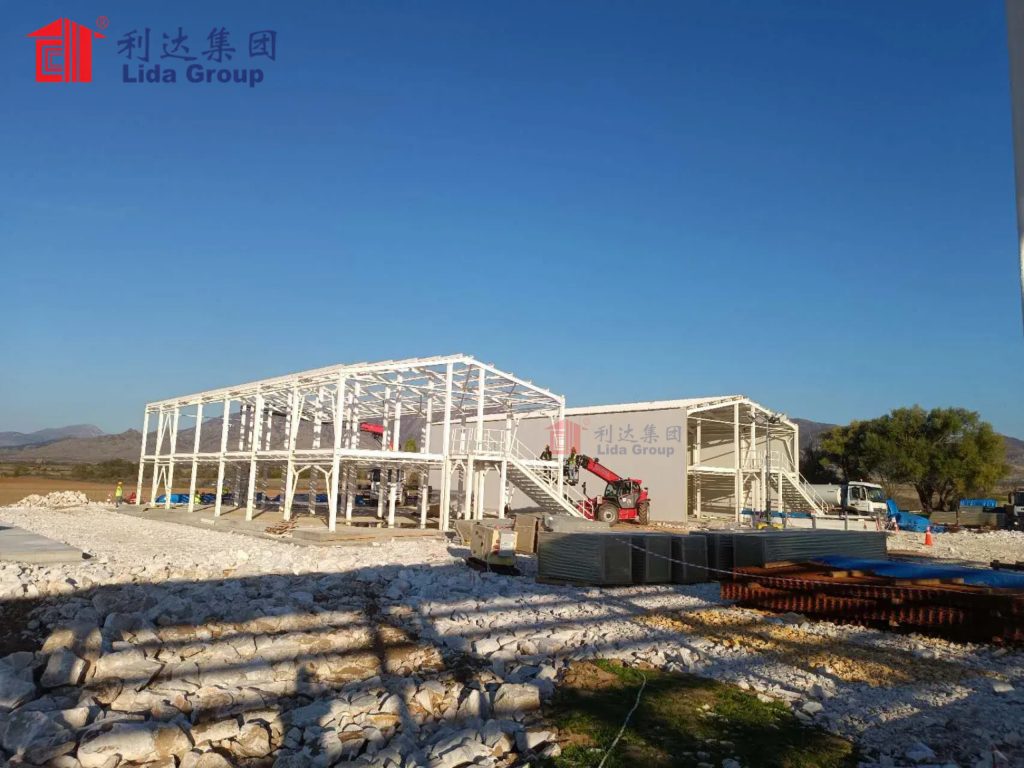
5. Future Trends: The Next Frontier of Steel Structure Innovation
As technology advances and modern needs evolve, steel structure designs will continue to push boundaries, with three key trends shaping the future.
5.1 Zero-Carbon and Circular Steel Structures
The future of steel design will focus on achieving net-zero carbon emissions and circularity:
- Green Steel Production: Steel manufacturers are developing “green steel” made using hydrogen instead of coal, reducing emissions by 95%. By 2030, green steel is expected to account for 10% of global steel production, enabling carbon-neutral steel structures .
- Circular Design for Disassembly: Steel structures will be designed for easy disassembly and reuse of components. A modular steel building in the Netherlands is designed to be disassembled in 6 months, with 90% of steel components reusable .
- Carbon-Neutral Operations: Steel structures will integrate renewable energy, CCS, and energy-efficient systems to achieve net-zero operational emissions. A steel-framed office building in Denmark is already net-zero, generating 120% of its energy needs from solar and wind .
5.2 Digital Twin and AI-Driven Autonomy
Steel structures will become fully integrated into the digital ecosystem, enabling autonomous operation and optimization:
- Autonomous Structural Adaptation: AI-driven steel structures will adjust to environmental changes (e.g., wind, temperature) in real time. For example, steel facades will automatically adjust their angle to maximize natural light and minimize heat gain .
- Predictive Design and Maintenance: AI will predict structural needs before they arise, optimizing maintenance schedules and extending service life. A steel bridge in the UK uses AI to predict fatigue cracks 6 months in advance, reducing repair costs by 40% .
- Digital Twin Ecosystems: Steel structure digital twins will integrate with city-wide digital twins, enabling coordinated optimization of energy use, traffic flow, and urban planning .
5.3 Bio-Inspired and Hybrid Steel Designs
Innovations will draw inspiration from nature and blend steel with other materials for enhanced performance:
- Bio-Inspired Steel Structures: Designs mimicking natural structures (e.g., tree trunks, spider webs) will optimize strength and material usage. A steel-framed pavilion in Germany mimics the structure of a bamboo forest, using 30% less steel than conventional designs .
- Steel-Wood Hybrid Systems: Combining steel with mass timber creates structures that are strong, sustainable, and aesthetically pleasing. A 18-story building in Canada uses steel frames with CLT floors, reducing embodied carbon by 45% compared to all-steel structures .
- Steel-Concrete 3D Printing Hybrids: 3D-printed concrete with steel reinforcement creates complex, efficient structures. A steel-reinforced 3D-printed bridge in Spain uses 50% less material than traditional bridges .
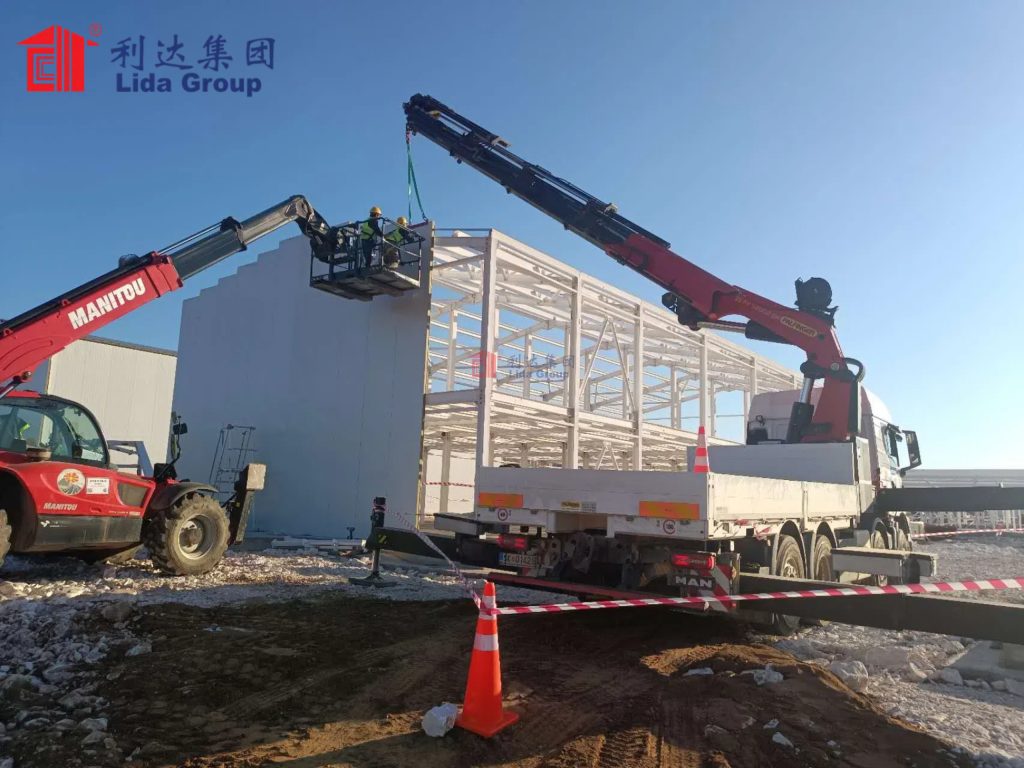
6. Conclusion
Innovative steel structure building designs have emerged as the definitive solution to meet the complex, interconnected needs of the modern world. From addressing carbon neutrality mandates to optimizing scarce urban space, from enhancing climate resilience to enabling flexible, smart operation, steel structures—through design innovation—have transcended their traditional role to become the backbone of sustainable, efficient, and future-proof construction.
The core design dimensions explored—green-centric, spatial, smart adaptive, extreme environment, and function-integrated—demonstrate that steel is no longer just a structural material but a versatile platform for innovation. Supported by digital design tools, advanced manufacturing, and smart construction technologies, these designs deliver tangible benefits: 30-40% lower carbon emissions, 20-50% faster construction, 15-30% higher space utilization, and 25-40% lower lifecycle costs compared to traditional materials.
Global case studies, from China’s award-winning Changxing Marine Chip Park to Singapore’s vertical modular housing, prove that these innovations are not theoretical but practical, scalable solutions that work across diverse contexts. As the industry evolves, future trends—zero-carbon circularity, digital autonomy, and bio-inspired hybrids—will push steel structure designs even further, ensuring they remain at the forefront of addressing emerging needs.
In a world facing urgent challenges of climate change, urbanization, and resource scarcity, innovative steel structure building designs are more than a competitive advantage—they are a necessity. By embracing these innovations, developers, businesses, and governments can create buildings that are not just functional and durable, but also sustainable, resilient, and adaptable to the needs of future generations. Steel, with its inherent strengths and endless design possibilities, will continue to shape the built environment for decades to come, proving that innovation and sustainability can go hand in hand to build a better future.
Related news
-
Lida Group Delivers Advanced Steel Structure Building Solutions
2025-12-11 14:24:50
-
Lida Group Excels in Cost-Effective Durable Construction
2025-12-11 16:13:46
-
Optimize Space with a Metal Frame Warehouse/Workshop
2025-12-11 15:18:17
contact us
- Tel: +86-532-88966982
- Whatsapp: +86-13793209022
- E-mail: sales@lidajituan.com
