



**Introduction**
In an era defined by rapid urbanization, pressing infrastructure needs, and growing environmental awareness, the construction industry stands at a critical crossroads. Traditional building methods, while time-tested, are increasingly inadequate for the demands of the modern world. Extended construction timelines, escalating labor costs, material waste, supply chain disruptions, and significant environmental impacts have become the norm rather than the exception. The industry’s ability to deliver quality buildings efficiently and sustainably is being tested as never before.
Responding to these challenges, a new generation of building technology has emerged: the innovative prefab easy assembly building. Engineered for speed, designed for resource efficiency, and manufactured with precision, these systems represent a fundamental departure from conventional construction. They are not merely incremental improvements but a complete reimagining of how buildings are conceived, fabricated, and assembled. By shifting the majority of construction work from chaotic job sites to controlled factory environments, these systems deliver buildings in a fraction of the traditional time while using significantly fewer resources.
This article explores the comprehensive capabilities of innovative prefab easy assembly buildings. We will examine the engineering principles that enable rapid assembly, the manufacturing processes that minimize resource consumption, the logistical advantages that reduce transportation impacts, the real-world applications that validate performance, the sustainability benefits that align with environmental imperatives, and the economic advantages that make these systems increasingly attractive to developers, project managers, and homeowners. By the conclusion, it will be evident that the innovative prefab easy assembly building represents a transformative solution—one that delivers the speed, efficiency, and sustainability that the construction industry urgently needs.
**Chapter 1: The Crisis in Traditional Construction**
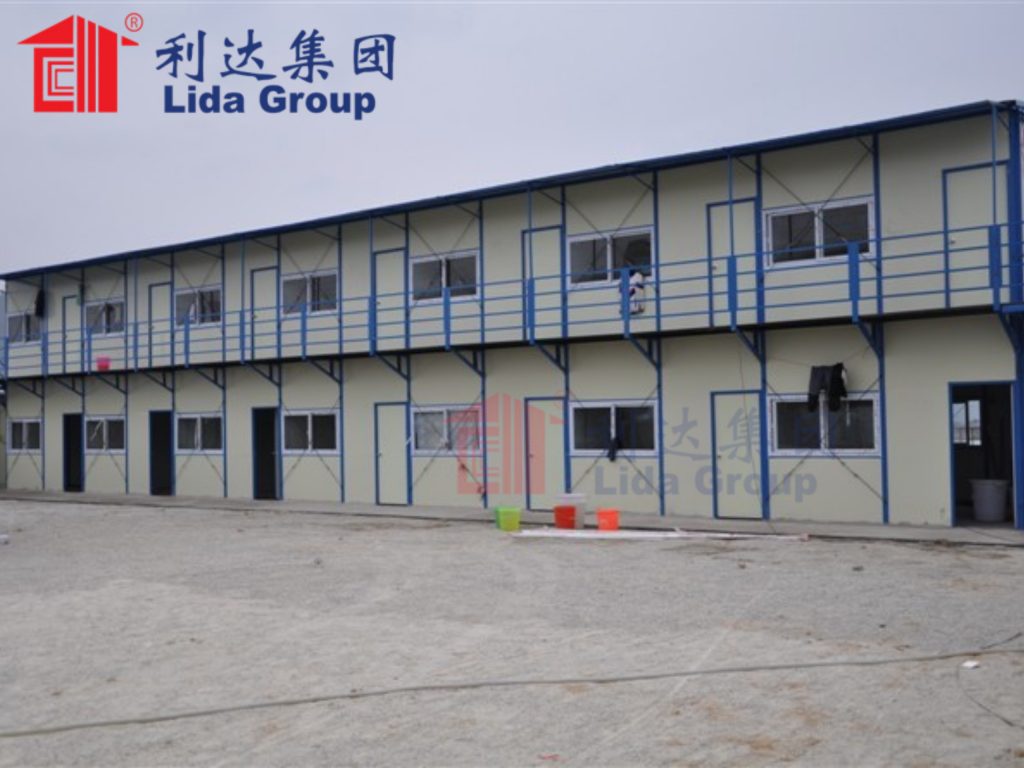
To understand the value of innovative prefab easy assembly buildings, one must first appreciate the inefficiencies that plague conventional construction. The traditional building process, largely unchanged for generations, is inherently inefficient.
**1.1 Extended Timelines**
Traditional construction follows a linear, sequential process. Site preparation must be completed before foundation work begins. Foundations must cure before framing starts. Framing must be completed before roofing, electrical, plumbing, and insulation can proceed. Each trade depends on the completion of the previous one, creating a critical path that is vulnerable to delays at every stage.
Weather is a constant source of disruption. Rain can halt excavation and foundation work. Wind can make framing unsafe. Cold temperatures can prevent concrete curing and finishing work. In many regions, construction seasons are limited to specific months, extending project timelines by months or even years. A typical single-family home constructed through traditional methods requires 6 to 12 months from groundbreaking to occupancy. Large commercial projects or workforce camps can require 12 to 24 months or more.
**1.2 Escalating Costs**
Cost overruns are endemic to traditional construction. According to industry studies, more than 70% of construction projects exceed their budgets. The causes are numerous: material price fluctuations, labor shortages, weather delays, design changes, and unforeseen site conditions. Each delay adds labor costs, equipment rental expenses, and construction loan interest.
The labor component is particularly problematic. The construction industry globally faces a persistent shortage of skilled workers. Carpenters, electricians, plumbers, and masons are in high demand, and their availability often dictates project schedules. Labor costs have risen faster than inflation for decades, and shortages drive these costs even higher.
**1.3 Material Waste**
Traditional construction is notoriously wasteful. On-site cutting and fitting generate significant scrap. Wood framing produces offcuts that often cannot be reused. Drywall installation generates dust and waste. Concrete formwork is frequently used once and discarded. Industry estimates suggest that 20-30% of materials delivered to construction sites end up as waste. This waste represents not only financial loss but also unnecessary environmental impact—materials that required energy to extract, manufacture, and transport are sent to landfills.
**1.4 Quality Variability**
The quality of traditional construction depends heavily on the skill and diligence of on-site workers. Conditions vary by day, by worker, and by site. Weather affects the performance of materials and the quality of finishes. The result is significant variability in final quality, even within the same project. This variability leads to ongoing maintenance costs and shortened building lifespans.
**Chapter 2: The Prefab Easy Assembly Paradigm**
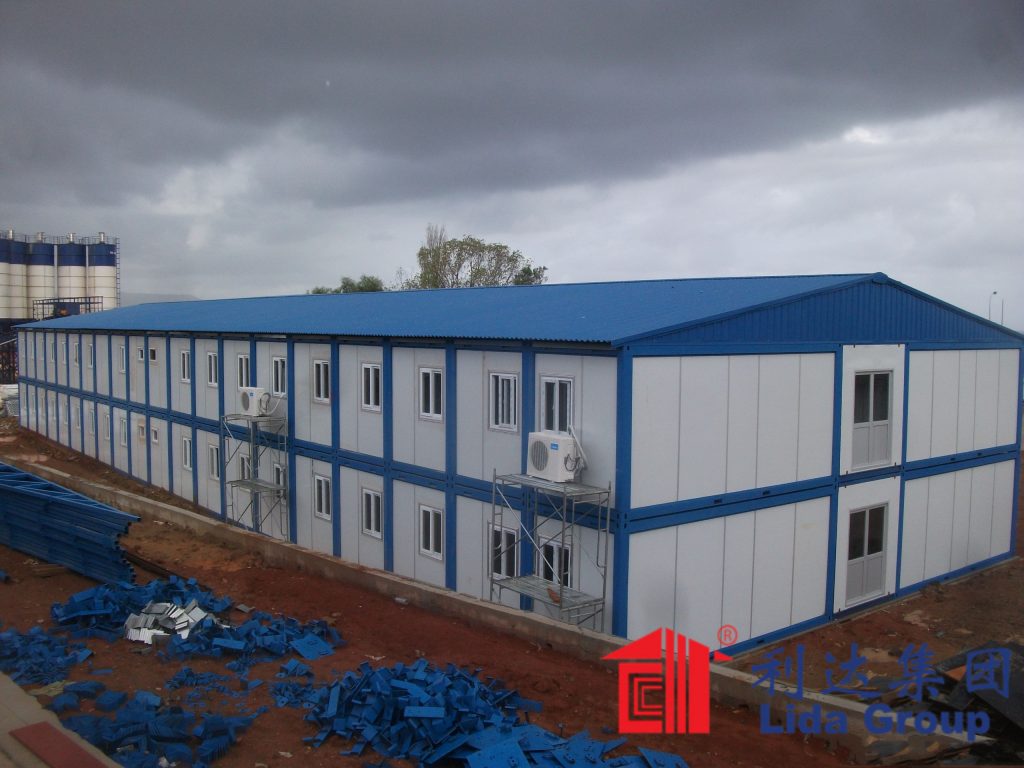
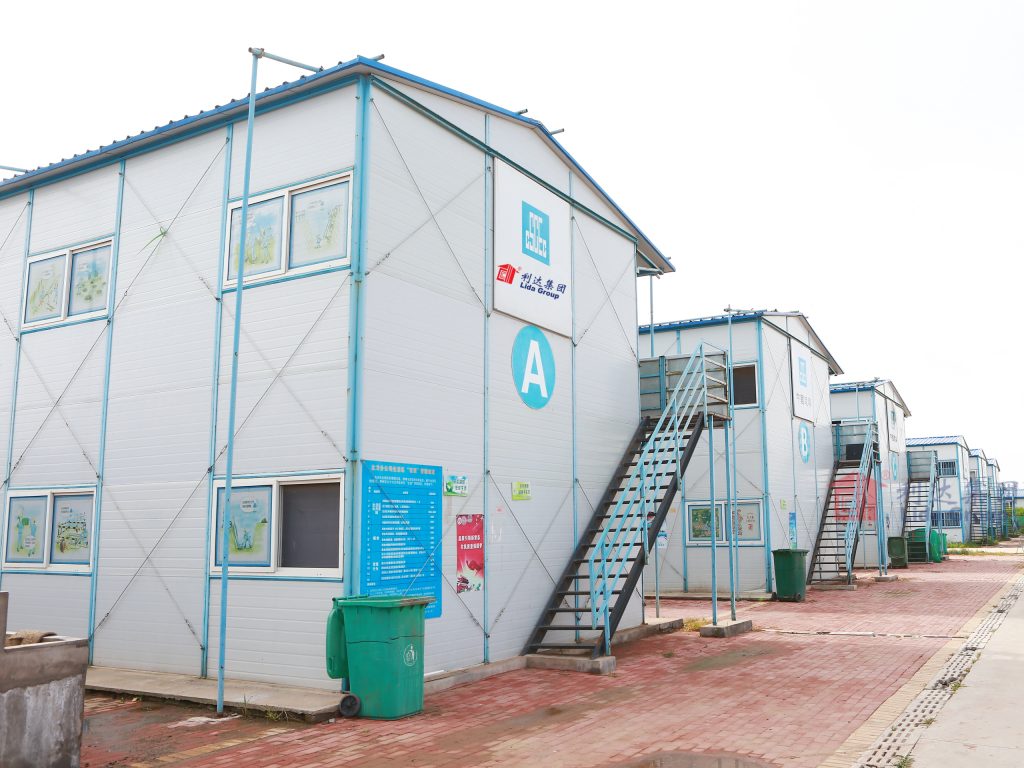
Innovative prefab easy assembly buildings represent a fundamental paradigm shift. Instead of constructing buildings on-site piece by piece, these systems are manufactured in controlled factory environments and assembled rapidly on location.
**2.1 Core Principles**
The prefab easy assembly approach is built on several core principles:
– **Factory Fabrication:** Building components—walls, floors, roofs, structural elements—are manufactured in controlled factory environments using precision equipment. This eliminates weather delays, ensures consistent quality, and enables parallel processing.
– **Modular Design:** Components are designed to standardized dimensions and connection systems, enabling predictable assembly and easy expansion. Standardization simplifies logistics, reduces manufacturing costs, and ensures compatibility between components.
– **Simplified Assembly:** Connection systems are engineered for rapid installation with basic tools and minimal skilled labor. Bolted connections replace welding and complex joinery. Color-coded components and detailed instructions enable intuitive assembly.
– **Integrated Systems:** Electrical wiring, plumbing, insulation, and finishes are installed at the factory rather than on-site. This eliminates the sequential dependency of trades and ensures that all systems are properly integrated.
**2.2 The Flat-Pack Advantage**
One of the most significant innovations in prefab easy assembly buildings is the flat-pack design. Instead of shipping fully assembled volumetric modules, these systems ship as compact bundles of panels, columns, and components. A single 40-foot shipping container can carry components for 200-300 square meters of wall and roof area—equivalent to a small house or several workforce housing units.
The flat-pack approach delivers multiple benefits:
– **Transportation efficiency:** Reduces shipping volume by 70% compared to volumetric modules
– **Lower freight costs:** Fewer shipments and lower fuel consumption
– **Simplified handling:** Components are lightweight and can be moved with small equipment
– **Reduced customs duties:** Many jurisdictions calculate duties based on container count
**2.3 Precision Manufacturing**
Factory fabrication enables precision that is impossible in field construction. Computer Numerical Control (CNC) machines cut components to tolerances of 0.5mm or better. Automated welding ensures consistent, strong joints. Quality control inspections occur at every stage of production. This precision translates directly into final quality—walls are perfectly square, connections align precisely, and building envelopes are airtight.
**2.4 The Easy Assembly Process**
The assembly process for prefab easy assembly buildings is designed for speed and simplicity. A typical workflow proceeds as follows:
1. **Site Preparation:** Foundation installation—concrete piers, screw piles, or slab—completed concurrently with factory fabrication
2. **Delivery:** Flat-packed components arrive on site, staged in assembly sequence
3. **Floor Assembly:** Steel floor cassettes placed and bolted together (1-2 days)
4. **Wall Erection:** Pre-insulated, pre-wired wall panels lifted into place and bolted (2-3 days)
5. **Roof Installation:** Roof panels or trusses placed and secured (1-2 days)
6. **Utility Connections:** Pre-installed electrical and plumbing systems connected to mains (1 day)
7. **Finishing:** Trim, final paint, and fixture installation (1-2 days)
8. **Inspection and Occupancy:** Final quality checks (1 day)
A complete single-family home can be assembled in 5-10 days. A 100-unit workforce camp can be operational in 4-6 weeks. These timelines represent reductions of 70-80% compared to traditional construction.
**Chapter 3: Engineering for Speed and Durability**
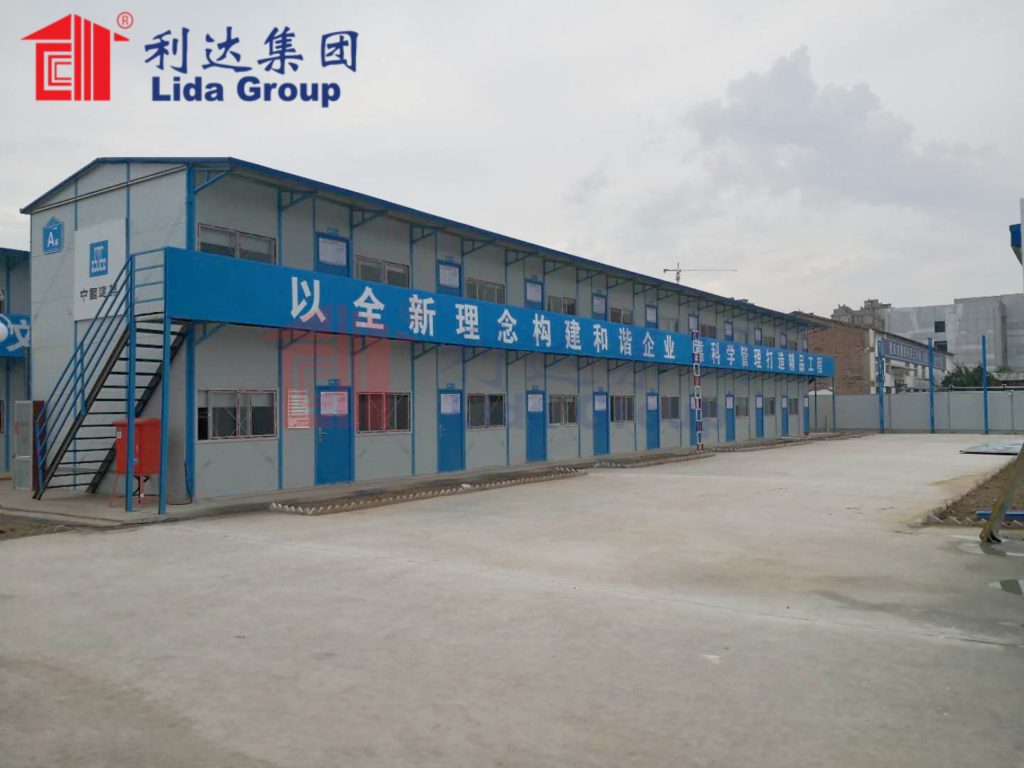
The speed of assembly does not come at the expense of structural integrity. Prefab easy assembly buildings are engineered to meet or exceed building codes applicable to permanent structures.
**3.1 High-Strength Steel Frames**
The structural framework utilizes cold-rolled galvanized steel—a material with exceptional strength-to-weight ratio. Q235B grade steel, the standard for these systems, offers tensile strength exceeding 400 MPa while remaining lightweight. The structural design parameters meet rigorous standards:
– **Floor live load:** 2.0-2.5 KN/m², suitable for residential and commercial occupancy
– **Roof live load:** 0.5-1.0 KN/m², accommodating snow accumulation and maintenance access
– **Wind load resistance:** 0.6-1.2 KN/m², equivalent to 120-180 mph wind speeds
– **Earthquake resistance:** Grade 8-9 on seismic intensity scale
– **Stacking capacity:** Up to three stories
**3.2 Bolted Connection Systems**
Unlike traditional steel construction that relies on welding, prefab easy assembly buildings use high-strength bolted connections. Bolted connections offer several advantages:
– **Inspectability:** Connections can be visually inspected for proper installation
– **Repairability:** Damaged components can be replaced without cutting or welding
– **Flexibility:** Bolted connections allow for slight movement during seismic events
– **Disassembly:** Buildings can be disassembled and relocated multiple times
Bolts are typically grade 8.8 or higher, with corrosion-resistant coatings ensuring long-term performance.
**3.3 Advanced Insulation Systems**
The building envelope is critical for energy efficiency and occupant comfort. Prefab easy assembly buildings incorporate sandwich panel construction with advanced insulation cores:
– **Wall panels:** 75-100mm insulation core (EPS, polyurethane, or mineral wool) with steel facings
– **Roof panels:** 100-150mm insulation core for enhanced thermal protection
– **Thermal conductivity:** 0.022-0.038 W/(m·K) depending on core material
– **U-values:** 0.25-0.35 W/(m²·K) for walls; 0.20-0.30 W/(m²·K) for roofs
These values represent 50-60% better thermal performance than conventional construction, directly translating into energy savings.
**3.4 Corrosion Protection**
Steel components are protected by multi-layer coating systems:
– **Galvanization:** Hot-dip galvanized steel provides sacrificial corrosion protection
– **Primer coating:** Epoxy primer with 20-40 μm thickness
– **Finishing coat:** Polyurethane or polyester coating with 40-50 μm thickness
– **Total protection:** Exceeding 80 μm of coating thickness
These protection systems enable service lives of 25-50 years, even in coastal or industrial environments.
**Chapter 4: Resource Efficiency Across the Building Lifecycle**
The resource efficiency of prefab easy assembly buildings extends from manufacturing through operation to end-of-life.
**4.1 Material Efficiency**
Factory fabrication achieves material utilization rates exceeding 95%. CNC cutting ensures that components are cut to exact specifications with minimal waste. Offcuts are captured and recycled. In contrast, traditional construction typically achieves 70-80% material utilization, with the remaining 20-30% becoming waste.
For a typical 200-square-meter building, the material savings amount to 10-15 tons of materials that would otherwise be wasted. Over thousands of buildings, these savings multiply into significant resource conservation.
**4.2 Water Conservation**
Traditional construction consumes large volumes of water for concrete mixing, curing, dust control, and cleanup. Prefab easy assembly buildings require minimal on-site water use:
– **No concrete mixing:** Steel frames eliminate the need for concrete beyond foundations
– **No curing:** No water required for concrete curing
– **Minimal cleanup:** Factory fabrication eliminates on-site debris
Water consumption for construction is reduced by 70-80% compared to traditional methods.
**4.3 Energy Efficiency in Manufacturing**
While manufacturing requires energy, the controlled factory environment enables efficiencies that on-site construction cannot match:
– **Concentrated operations:** Energy use is concentrated in efficient facilities
– **Waste heat recovery:** Manufacturing processes can capture and reuse heat
– **Renewable integration:** Factories can incorporate solar, wind, or biomass energy
– **Economies of scale:** Larger-scale operations achieve higher efficiency
Lifecycle assessments consistently show that prefab easy assembly buildings have lower embodied energy than traditional construction, even when accounting for manufacturing.
**4.4 Operational Energy Savings**
The superior thermal performance of prefab easy assembly buildings delivers operational energy savings that compound over the building’s life:
– **Heating energy:** 50-65% reduction compared to traditional construction
– **Cooling energy:** 35-50% reduction in hot climates
– **Overall HVAC energy:** 45-55% reduction across mixed climates
For a 200-square-meter home, these savings amount to 8,000-12,000 kWh annually—equivalent to the energy consumption of an average household for several months.
**4.5 End-of-Life Recovery**
Unlike traditional buildings that are demolished and landfilled at end of life, prefab easy assembly buildings are designed for material recovery:
– **Steel frames:** 100% recyclable; steel is the world’s most recycled material
– **Insulation cores:** EPS and mineral wool can be recycled or repurposed
– **Aluminum components:** Window frames and trim are readily recyclable
– **Disassembly:** Bolted connections enable clean separation of materials
This end-of-life recoverability ensures that materials retain value and do not become waste.
**Chapter 5: Time Savings—The Competitive Advantage**
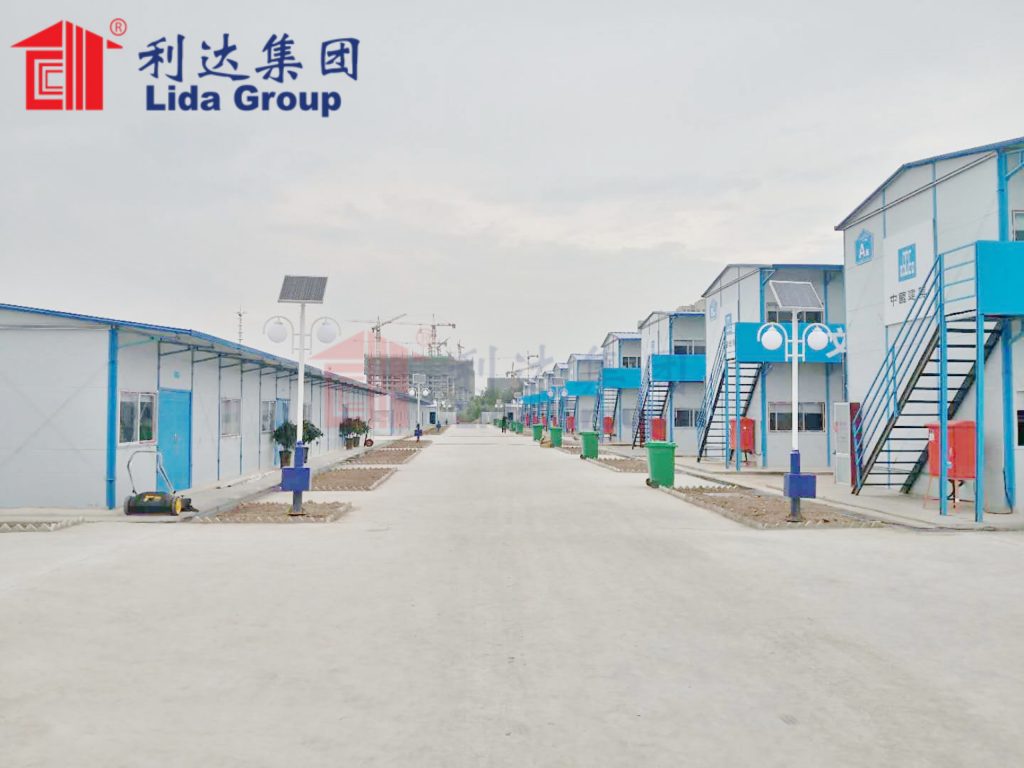
The most immediate and visible benefit of prefab easy assembly buildings is the dramatic reduction in construction time.
**5.1 Parallel Processing**
The time savings begin with parallel processing. While site preparation occurs on location, building components are being manufactured in the factory. These parallel work streams eliminate the sequential dependency of traditional construction. By the time the foundation is ready, the building components are already fabricated and awaiting shipment.
**5.2 Elimination of Weather Delays**
Factory fabrication is unaffected by weather. Rain, snow, extreme temperatures, and high winds do not halt production. This consistency ensures that the project timeline is not subject to seasonal constraints. On-site assembly, while still requiring reasonable weather for safety, is completed so quickly that the exposure window is minimal.
**5.3 Simplified Assembly**
The assembly process is designed for efficiency. Bolted connections eliminate the need for welding or complex joinery. Pre-installed utilities eliminate the need for on-site electrical and plumbing rough-in. Pre-finished surfaces eliminate the need for on-site painting or drywall finishing. The result is a streamlined process that requires fewer labor hours and less coordination between trades.
**5.4 Comparative Timeline Analysis**
The time savings are best understood through direct comparison:
| Project Type | Traditional Construction | Prefab Easy Assembly | Time Savings |
|————–|————————–|———————|————–|
| Single-Family Home | 6-12 months | 2-6 weeks | 80-90% |
| Workforce Camp (100 units) | 12-18 months | 4-6 weeks | 85-90% |
| Commercial Office (500 m²) | 8-12 months | 3-4 weeks | 85-90% |
| School/Educational Facility | 10-14 months | 4-6 weeks | 85-90% |
**5.5 Financial Impact of Time Savings**
Reduced construction time delivers significant financial benefits:
– **Reduced financing costs:** Shorter construction periods mean less interest accrual on construction loans
– **Earlier revenue generation:** Commercial buildings generate revenue sooner; workforce camps enable earlier project commencement
– **Reduced overhead:** Shorter projects require less site management, security, and temporary facilities
– **Faster capital recovery:** Investors realize returns more quickly
For a $5 million commercial project, reducing construction time from 12 months to 2 months can save $150,000-$250,000 in financing costs and generate months of additional revenue.
**Chapter 6: Economic Advantages—Beyond Initial Cost**
The economic benefits of prefab easy assembly buildings extend far beyond the initial purchase price.
**6.1 Predictable Costs**
Traditional construction is notorious for cost overruns driven by weather delays, labor shortages, material price fluctuations, and unforeseen site conditions. Prefab easy assembly buildings offer cost predictability that traditional methods cannot match:
– **Fixed-price contracts:** Manufacturers provide firm pricing for materials, shipping, and installation
– **No weather delays:** Factory fabrication eliminates weather-related schedule extensions and associated costs
– **Minimal change orders:** Standardized design reduces the scope for changes that drive cost increases
This predictability is particularly valuable for budget-constrained projects and organizations that require accurate financial planning.
**6.2 Reduced Labor Costs**
The simplified assembly process requires fewer skilled trades and less total labor hours. A traditional building may require carpenters, electricians, plumbers, drywall installers, painters, and various subcontractors, each working sequentially. The prefab easy assembly system consolidates much of this work into the factory, where a single manufacturing team integrates electrical, plumbing, insulation, and finishes.
On-site labor requirements are minimal. A crew of four to six general laborers, supervised by a single skilled foreman, can complete the assembly. In regions facing construction labor shortages, this reduced requirement is particularly valuable.
**6.3 Lower Operating Costs**
The energy efficiency of prefab easy assembly buildings translates directly into lower operating costs. For a 200-square-meter home, annual energy savings of 8,000-12,000 kWh represent $1,000-$2,000 per year at typical electricity rates. Over a 25-year building life, these savings amount to $25,000-$50,000—more than covering any initial cost premium.
**6.4 Reduced Maintenance Costs**
Steel construction requires minimal ongoing maintenance. There is no painting of exterior wood, no termite treatments, no rot repair. The durable finishes and corrosion-resistant coatings ensure that the building maintains its appearance and performance with minimal intervention.
**6.5 Asset Value and Relocation**
Unlike site-built structures that have minimal residual value after a project concludes, prefab easy assembly buildings retain significant asset value. They can be:
– **Relocated:** Moved to new sites as needs change
– **Reconfigured:** Adapted for different applications
– **Sold:** Marketed to other users
– **Repurposed:** Converted to alternative uses
This retained value transforms the building from a sunk cost into a recoverable investment.

**Chapter 7: Real-World Applications and Case Studies**
The capabilities of innovative prefab easy assembly buildings are validated through successful deployment across diverse projects worldwide.
**7.1 European Mountain Housing Project**
In a remote mountainous region of Eastern Europe, a developer needed to deliver workforce housing for a hydroelectric project. The site faced severe winter conditions, with temperatures dropping to -25°C and heavy snowfall. Traditional construction would have required months, delaying the project by a full season.
The developer utilized prefab easy assembly buildings with 100mm sandwich panel walls and 150mm roof insulation. Components were manufactured in 25 days, shipped flat-packed, and assembled by a six-person crew in 8 hours per unit. The entire 50-unit camp was operational in 21 days. Energy monitoring confirmed heating consumption 55% lower than comparable traditional buildings, saving an estimated 80,000 liters of diesel annually.
**7.2 West African Market Complex**
In equatorial West Africa, a 30,000-square-meter market complex incorporating workforce accommodation was completed using prefab easy assembly technology. The region experiences persistent rainfall, high humidity, and temperatures consistently above 30°C.
The project incorporated sustainable features including solar-integrated roofing producing up to 1.2 MW daily, rainwater harvesting, and greywater recycling. Embodied emissions were measured at 35% below industry standards. The project was completed three months ahead of schedule—a timeline impossible with traditional construction in the region.
**7.3 Australian Mining Camp Expansion**
A major iron ore mining operation in Western Australia required an additional 200 accommodation units to support a production expansion. The site was located 1,200 kilometers from the nearest major city, with limited local construction resources.
Using flat-pack prefab easy assembly buildings, the supplier delivered all materials within four weeks of order confirmation. A 12-person assembly crew completed the installation in 21 days, with the first units occupied within 10 days. The camp included sleeping quarters, dining facilities, a gym, and a recreation building. The rapid deployment enabled the mining operation to accelerate production by three months, generating millions in additional revenue.
**7.4 North American Affordable Housing**
A developer in the southeastern United States utilized 25 prefab easy assembly homes to create an affordable housing community. The homes, ranging from 800 to 1,500 square feet, featured modern designs with gabled roofs, covered porches, and landscaped yards.
The developer completed the entire community in 14 weeks, with individual homes averaging 10 days of on-site assembly. The finished homes sold for 25% less than comparable traditional construction in the same market, making homeownership accessible to first-time buyers. The reduced timeline also enabled the developer to turn capital faster, improving overall project economics.
**7.5 Emergency Response Housing**
Following a devastating hurricane in the Caribbean, a humanitarian organization needed to establish housing for recovery workers within weeks. Traditional construction was impossible due to damaged infrastructure and overwhelmed local contractors.
The organization deployed 100 prefab easy assembly units that shipped within 10 days and arrived via roll-on/roll-off vessel. Local workers, with guidance from supplier-provided supervisors, assembled the units on screw-pile foundations, completing the camp in 18 days. The units were designed for future relocation, enabling them to be moved to subsequent recovery sites as needs evolved.
**Chapter 8: Sustainability—Building for the Future**
The resource efficiency of prefab easy assembly buildings aligns with growing environmental imperatives and sustainability commitments.
**8.1 Reduced Carbon Footprint**
Lifecycle assessments comparing prefab easy assembly buildings to traditional construction reveal significant carbon advantages:
| Lifecycle Stage | Traditional Construction | Prefab Easy Assembly | Reduction |
|—————–|————————–|———————|———-|
| Materials | 100% | 60-70% | 30-40% |
| Manufacturing | 100% | 50-60% | 40-50% |
| Transport | 100% | 30-40% | 60-70% |
| Construction | 100% | 20-30% | 70-80% |
| Operation (25 years) | 100% | 40-50% | 50-60% |
| **Total Lifecycle** | **100%** | **45-55%** | **45-55%** |
**8.2 Circular Economy Alignment**
Prefab easy assembly buildings are designed for circular economy principles:
– **Reusability:** Buildings can be disassembled and relocated multiple times
– **Recyclability:** Steel and aluminum components are 100% recyclable
– **Material efficiency:** Manufacturing processes minimize waste
– **Extended service life:** Durable construction enables long service life
**8.3 Renewable Energy Integration**
The building envelope is designed for easy integration with renewable energy systems:
– **Solar-ready:** Roof structures accommodate photovoltaic panel mounting
– **Pre-wired:** Conduits for solar wiring are integrated
– **Battery ready:** Spaces for energy storage systems are designed in
**8.4 Water Stewardship**
Prefab easy assembly buildings can incorporate comprehensive water conservation:
– **Low-flow fixtures:** Reducing consumption by 30-50%
– **Rainwater harvesting:** Collection systems integrated into roof design
– **Greywater recycling:** Treatment systems for non-potable reuse
**Chapter 9: Overcoming Challenges and Looking Forward**
While the advantages of prefab easy assembly buildings are substantial, successful implementation requires addressing certain challenges.
**9.1 Permitting and Regulatory Acceptance**
Building codes and zoning regulations in some jurisdictions have not fully adapted to prefab and modular construction. Strategies for successful permitting include:
– Engaging local building departments early in the planning process
– Working with manufacturers that provide engineered drawings and certification documentation
– Presenting systems as pre-engineered metal buildings—a well-established classification
**9.2 Transportation Logistics**
While flat-pack design reduces shipping volume, transportation to remote sites still requires careful planning. Experienced manufacturers manage logistics including customs clearance, inland transport, and final site delivery.
**9.3 Skilled Assembly Supervision**
While assembly is designed to be simple, quality depends on proper execution. Suppliers providing on-site supervisors ensure that assembly meets specifications and local building codes.
**9.4 The Future of Prefab Easy Assembly**
Several trends will shape the future of prefab easy assembly buildings:
– **Smart integration:** IoT sensors and building management systems for optimized performance
– **Advanced materials:** Phase-change materials, bio-based insulation, self-healing coatings
– **Net-zero energy:** Combined efficiency and solar to achieve zero operational energy
– **Circular business models:** Leasing arrangements where manufacturers retain ownership and responsibility for end-of-life recovery
**Conclusion**
The innovative prefab easy assembly building represents a fundamental advancement in construction technology—one that delivers what the industry has long sought: superior speed, resource efficiency, and predictable quality. Through factory fabrication, precision manufacturing, and simplified assembly, these systems transform the building process from a months-long endeavor into a weeks-long execution.
The time savings are dramatic and transformative. Where traditional construction measures timelines in months, prefab easy assembly measures in weeks. A single-family home delivered in 5-10 days rather than 6-12 months. A 100-unit workforce camp operational in 4-6 weeks rather than 12-18 months. A commercial building completed in 3-4 weeks rather than 8-12 months. These compressed timelines deliver direct financial benefits through reduced financing costs, earlier revenue generation, and faster capital recovery.
The resource efficiency is equally compelling. Material utilization exceeding 95% eliminates the 20-30% waste typical of traditional construction. Water consumption reduced by 70-80%. Operational energy consumption reduced by 45-55%. Total lifecycle carbon footprint reduced by 45-55% compared to traditional methods. These efficiencies translate directly into environmental responsibility—a critical consideration in an era of climate urgency.
The economic advantages extend beyond the initial cost. Predictable pricing eliminates the uncertainty of cost overruns. Reduced labor costs reflect the simplified assembly process. Lower operating costs compound over the building’s life. Retained asset value enables relocation and reuse rather than demolition and loss. For developers, project managers, and organizations, these economic benefits improve project viability and return on investment.
Real-world validation across continents confirms the performance of these systems. From European mountain projects achieving 55% heating energy reduction to West African market complexes with 35% lower embodied emissions, from Australian mining camps enabling three months of accelerated production to North American affordable housing delivered at 25% lower cost, prefab easy assembly buildings have demonstrated their effectiveness across diverse environments and applications.
The sustainability benefits position these systems as solutions for the future. Reduced carbon footprints align with corporate and governmental climate commitments. Circular economy design enables reuse and recycling rather than demolition and waste. Renewable energy integration supports the transition to clean energy. Water conservation addresses growing water scarcity concerns.
For homeowners, developers, project managers, and organizational leaders facing the challenges of modern construction, the message is clear: the innovative prefab easy assembly building offers a transformative alternative to traditional methods. It delivers the speed to meet aggressive timelines, the resource efficiency to reduce costs and environmental impact, and the quality to ensure long-term satisfaction. It is not merely an alternative but a superior approach—one that redefines what is possible in building construction.
As the global community confronts the urgent challenges of housing shortages, infrastructure needs, and climate change, the prefab easy assembly building stands as a proven solution. It demonstrates that speed and efficiency need not compromise quality, that resource conservation and economic performance can be complementary goals, and that the buildings of the future can be delivered faster, better, and more responsibly than ever before.
Related news
-
Eco-Friendly Sandwich Panel House Redefines Sustainable Workforce Housing
2026-03-26 13:46:32
-
Lida Group Launches New Construction Site Labor Accommodation Solutions
2026-03-26 09:51:19
-
Lida Group Expands Range of Modular Modern Container Accommodation
2026-03-25 17:48:11
contact us
- Tel: +86-532-88966982
- Whatsapp: +86-13793209022
- E-mail: sales@lidajituan.com
