



Innovative Modern Mobile Container Dormitory by Lida Group
2026-Jan-22 17:56:20
By Admin
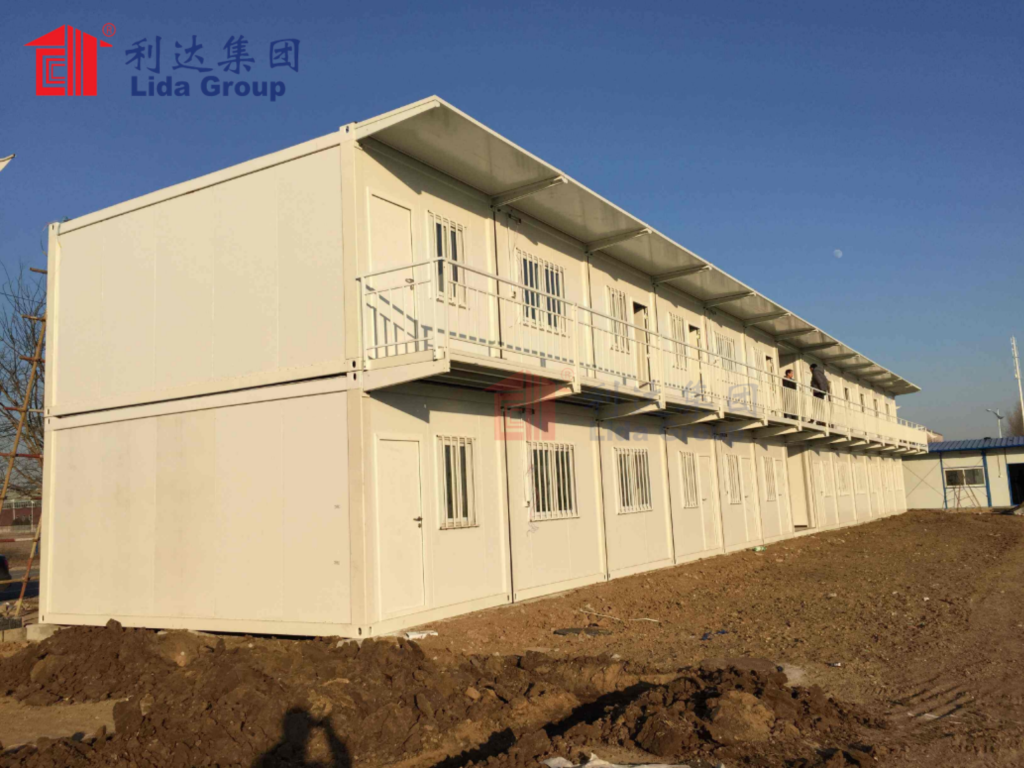
In the era of rapid urbanization, dynamic infrastructure development, and evolving institutional needs, mobile container dormitories have transcended their traditional “temporary shelter” identity. Lida Group, a global leader in modular construction with over three decades of expertise, has redefined this segment through groundbreaking innovations in design, technology, and functionality. By integrating modular flexibility, smart systems, sustainable materials, and scenario-specific customization, Lida Group’s modern mobile container dormitories deliver unprecedented value to clients across 150 countries—from construction enterprises and educational institutions to governments and humanitarian organizations. These dormitories are not just portable and cost-effective; they embody a new paradigm of living spaces that balance comfort, durability, intelligence, and environmental responsibility. This article explores the multi-dimensional innovations of Lida Group’s mobile container dormitories, analyzes the technical breakthroughs supporting these advancements, showcases real-world application cases, and evaluates their impact on the global modular construction market, demonstrating why Lida Group stands at the forefront of reimagining mobile living solutions.
1. Market Context: The Rising Demand for Innovative Mobile Dormitory Solutions
The global mobile container dormitory market is experiencing exponential growth, driven by a confluence of industry trends and evolving client expectations. Industry data reveals that the global residential container market reached 914.96 billion yuan in 2025 and is projected to surge beyond 1751 billion yuan by 2032, boasting a compound annual growth rate (CAGR) of 9.72% . In China alone, the container house market scaled to 128.6 billion yuan in 2024 and is expected to grow to 150.2 billion yuan in 2025, a year-on-year increase of 16.8% . This growth is not merely quantitative but reflects a critical shift: clients are no longer satisfied with basic, one-size-fits-all mobile dormitories—they demand innovative solutions that adapt to diverse scenarios, enhance user experience, and align with sustainability goals.
1.1 Industry Drivers for Innovation
Three core drivers are fueling the demand for innovative mobile container dormitories. First, dynamic spatial needs: Construction projects require dormitories that can be rapidly deployed, relocated, and scaled; universities and camps need flexible spaces that adapt to fluctuating occupancy; and disaster relief efforts demand portable shelters that can be quickly converted for multiple uses. Traditional fixed buildings and low-end container dormitories fail to meet these dynamic requirements, creating a gap for innovative solutions. Second, sustainability mandates: Governments worldwide are tightening environmental regulations, with China’s 14th Five-Year Plan mandating that prefabricated buildings account for over 30% of new constructions by 2025 and allocating 38.7 billion yuan in 2024 to support green modular housing . Clients increasingly prioritize low-carbon, resource-efficient solutions that reduce environmental impact. Third, technological integration: The rise of smart construction and IoT technologies has raised expectations for intelligent living spaces, even in mobile settings—demanding features such as remote monitoring, energy optimization, and automated management.
1.2 Lida Group’s Innovation Edge in the Market
Against this backdrop, Lida Group has established a distinct competitive edge by addressing industry pain points through holistic innovation. Unlike competitors that focus on incremental improvements, Lida Group has reengineered the entire value chain of mobile container dormitories—from design and production to deployment and lifecycle management. By merging modular versatility with smart technology and sustainable practices, the company has transformed mobile dormitories from temporary accommodations into high-performance, adaptable living spaces that deliver long-term value. This innovative approach has made Lida Group a trusted partner for high-profile projects worldwide, including Saudi Arabia’s NEOM Future City, China’s rural revitalization initiatives, and humanitarian relief efforts in Africa.
2. Core Innovations of Lida Group’s Modern Mobile Container Dormitories
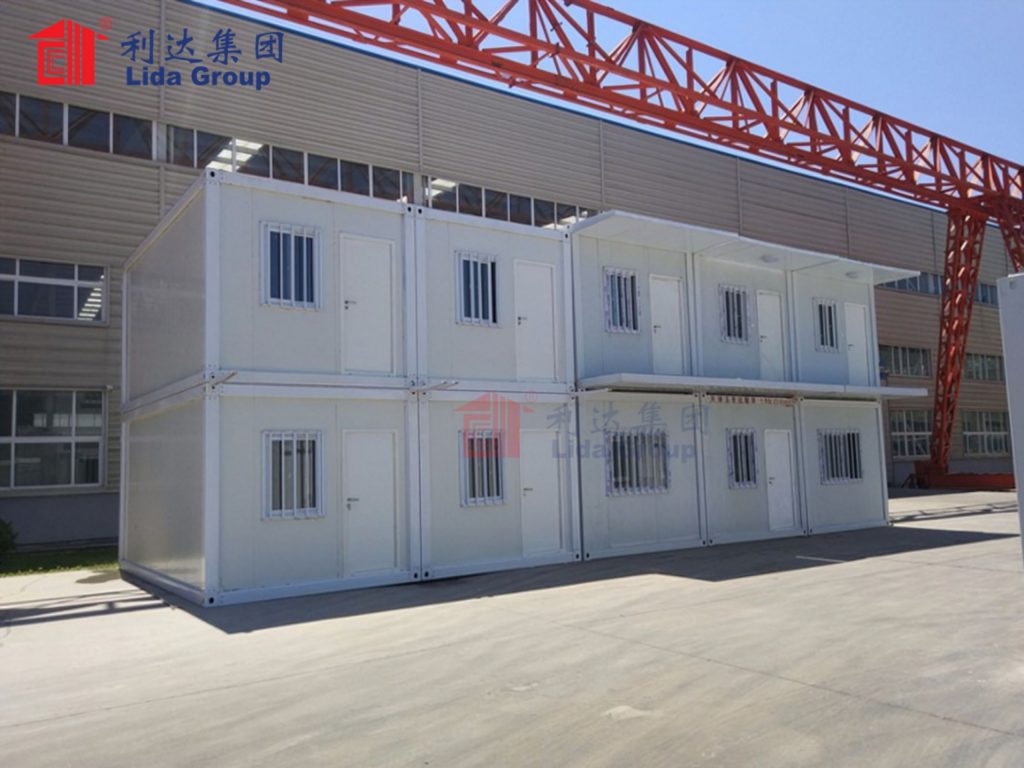
Lida Group’s mobile container dormitories are defined by three interconnected innovation pillars: modular design flexibility, smart technology integration, and sustainable material & process innovation. These pillars work synergistically to create dormitories that are adaptable, intelligent, eco-friendly, and user-centric.
2.1 Modular Design Innovation: Reimagining Spatial Flexibility
At the heart of Lida Group’s innovation is its advanced modular design system, which leverages a “Lego-style” free-combination framework to enable three-dimensional (X/Y/Z axis) expansion and dynamic adaptation . This design transcends the limitations of traditional container structures, allowing dormitories to be customized for diverse scenarios and scaled on demand.
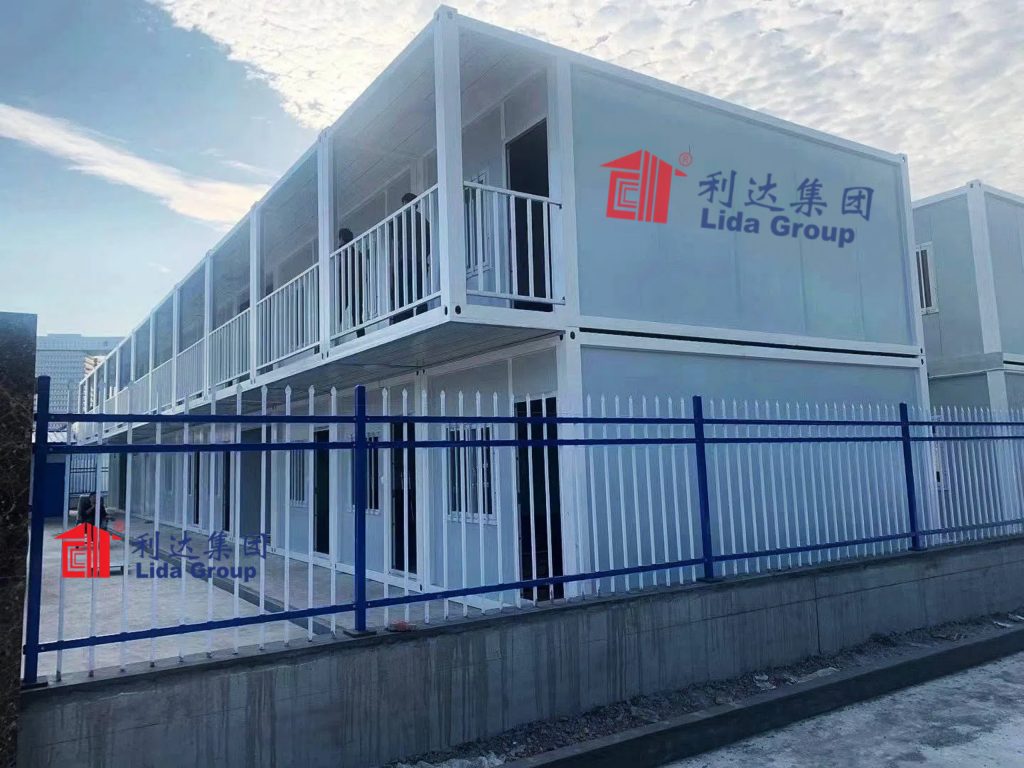
The modular system is built on standardized 20ft, 40ft, and custom-sized units that feature universal connection interfaces, enabling seamless horizontal and vertical assembly. Horizontal combination allows for the creation of shared spaces such as corridors, lounges, bathrooms, and dining areas, while vertical stacking (up to 3 levels, compliant with EN 12079 seismic and wind resistance standards) optimizes land use in space-constrained environments like urban construction sites and university campuses. A standout feature is the rapid expansion capability: a 10-unit dormitory complex can be scaled to accommodate 50% more occupants within 48 hours by adding modular units, eliminating the need for costly and time-consuming reconstruction.
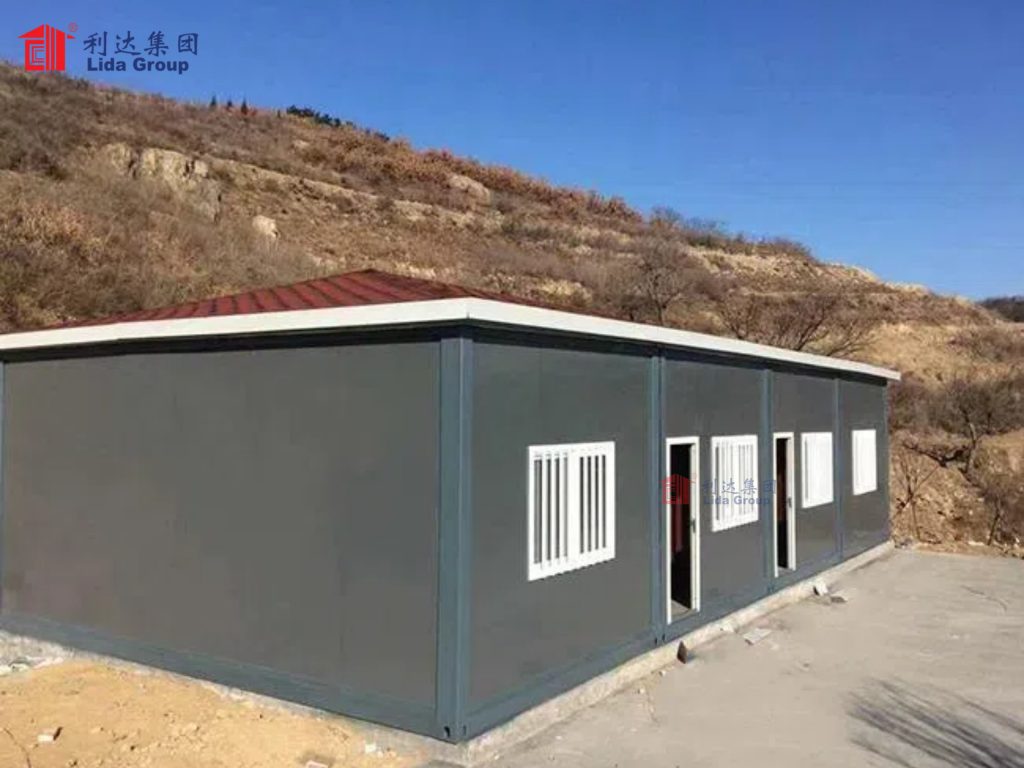
Lida Group further innovates with foldable and expandable modular designs for ultra-mobile scenarios. The LD-CH-016 folding container dormitory uses hydraulic rod technology to compress into a compact size for transportation—10 folded units fit into a single 40ft shipping container, reducing logistics costs by 50% . When deployed, each unit expands from 18㎡ to 22㎡ in just 15-20 minutes, with no specialized tools required. This design is ideal for emergency relief and temporary projects, enabling rapid deployment in remote or disaster-stricken areas.
Customization is another key design innovation. Through BIM (Building Information Modeling) 3D visualization technology, Lida Group offers end-to-end customizability—from exterior aesthetics to internal layout . Clients can integrate brand logos, cultural elements, or functional features tailored to their needs: construction camp dormitories can include safety training zones; student dormitories can add soundproof study areas; and rural dormitories can incorporate local architectural styles. For example, Yunnan’s cultural tourism project dormitories blend container modules with traditional Bai ethnic group decorations and outdoor courtyards, creating a unique fusion of modern mobility and cultural heritage.
2.2 Smart Technology Integration: Intelligent Living & Management
Lida Group has pioneered the integration of smart technologies into mobile container dormitories, transforming them into intelligent living spaces that enhance comfort, safety, and operational efficiency. The company’s smart dormitory system integrates IoT (Internet of Things) sensors, AI-powered management, and digital twin technology to enable end-to-end intelligent control.
IoT sensor networks form the backbone of the smart system, monitoring key metrics in real time. Sensors track structural integrity (detecting vibrations and deformation), environmental conditions (temperature, humidity, air quality), and energy usage, transmitting data to a centralized cloud platform. This enables proactive maintenance—for example, identifying potential structural issues before they escalate, or adjusting ventilation systems to improve air quality. For construction camp dormitories in extreme climates, sensors trigger automated insulation adjustments and heating/cooling systems to maintain optimal living conditions, even in temperatures ranging from -45℃ to 50℃.
AI-powered energy management is a standout innovation, reducing operational costs by 20-30% . The system optimizes lighting, heating, and ventilation based on occupancy and environmental data—dimming lights in unoccupied rooms, adjusting temperature based on outdoor conditions, and prioritizing renewable energy sources. Optional solar panels (6.6kW capacity per unit) and rainwater harvesting systems further enhance energy and water self-sufficiency, making the dormitories suitable for off-grid locations.
Digital twin technology takes smart management to the next level. Lida Group creates virtual replicas of each dormitory complex, enabling real-time simulation and remote monitoring . Clients can visualize the entire lifecycle of the dormitories—from production and deployment to maintenance and relocation—on a digital platform. This technology optimizes assembly schedules, identifies potential design conflicts, and enables remote troubleshooting, reducing on-site errors and operational downtime. For international projects, the digital twin system allows Lida’s team to provide remote technical support, ensuring seamless operation across geographies.
Safety-focused smart features further elevate the innovation quotient. Dormitories are equipped with intelligent security systems, including biometric access control, smoke detectors, and AR (Augmented Reality) fire simulation training modules . The China Railway Sixth Bureau’s construction camp dormitories integrate a VR (Virtual Reality) safety experience zone, allowing workers to conduct hazard training within the dormitory complex. In emergency situations, the smart system triggers automated alarms, illuminates escape routes, and transmits real-time data to emergency responders, enhancing occupant safety.
2.3 Sustainable Innovation: Eco-Friendly Materials & Processes
Lida Group embeds sustainability into every aspect of its mobile container dormitories, leveraging innovative materials and processes to reduce carbon emissions and environmental impact—without compromising durability or cost-effectiveness.
Material innovation is central to Lida’s sustainability strategy. The company uses recycled Q235 galvanized steel (65% of frame materials) for structural components, reducing carbon emissions by 65% compared to virgin steel . The steel frames undergo rigorous corrosion resistance testing (40 g/m² zinc coating) and have a service life of over 20 years, ensuring durability while minimizing resource consumption. Insulation materials include 75mm rock wool (for high-performance projects) and 50mm fiberglass (for cost-sensitive applications), both of which are recyclable, fire-resistant, and offer exceptional thermal conductivity (0.038 W/(m·K) for fiberglass), reducing energy waste.
Lida Group is also exploring next-generation eco-friendly materials, including recycled ocean plastic insulation and carbon-negative steel frames, to further enhance sustainability . Interiors use low-VOC (Volatile Organic Compound) paints and renewable materials such as bamboo flooring, improving indoor air quality and reducing environmental harm. Shanghai’s zero-carbon exhibition hall dormitory exemplifies this approach, combining recycled steel, bamboo-wood composite panels, and photovoltaic films to achieve energy self-sufficiency with annual power generation of 8,000 kWh.
Process innovation complements material advancements. Lida’s six smart factories use automated production lines with robotic welding (precision tolerance ±0.5mm) and digital quality control, reducing material waste to just 3%—a significant improvement over the 15-20% waste generated by traditional construction . The factory-integrated prefabrication process shifts 90% of construction work to controlled environments, eliminating weather-related delays and on-site waste. Additionally, the modular design enables reusability: dormitories can be disassembled, relocated, and repurposed across multiple projects, reducing demolition waste and extending their lifecycle value.
3. Technical Breakthroughs Supporting Lida’s Innovative Dormitories
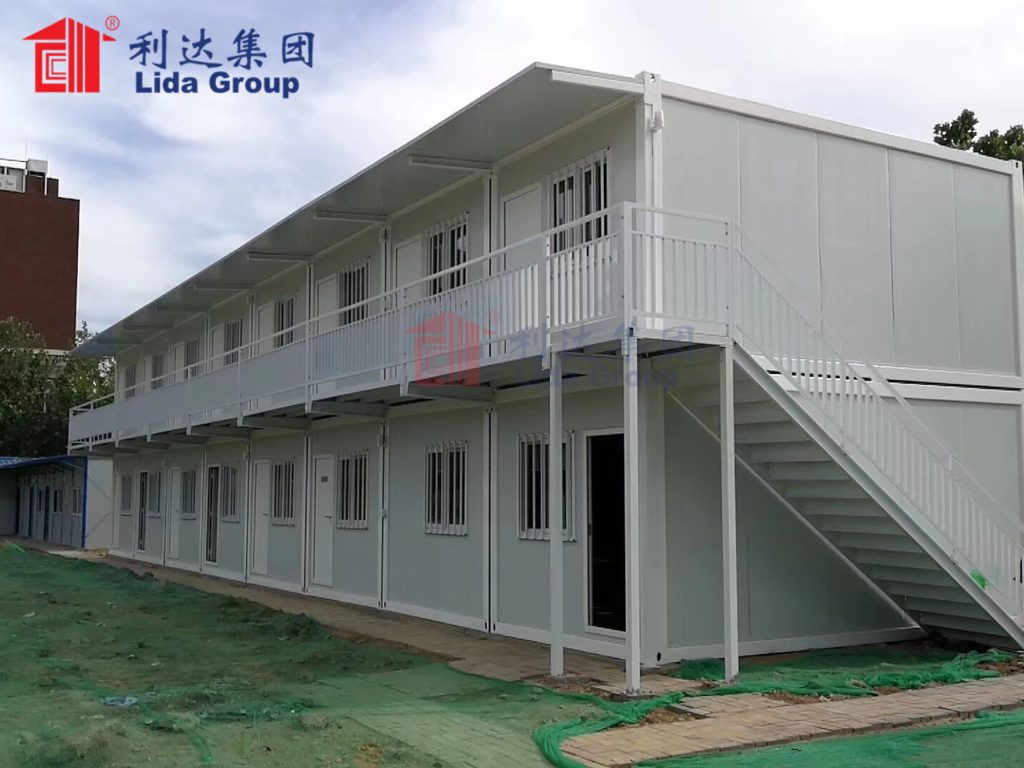
Lida Group’s innovative mobile container dormitories are underpinned by three critical technical breakthroughs that ensure performance, reliability, and scalability: advanced structural engineering, precision production technology, and adaptive deployment systems.
3.1 Structural Engineering: Strength & Mobility in Harmony
Lida’s structural engineering innovations balance superior strength with portability, enabling dormitories to withstand extreme conditions while remaining lightweight and easy to transport. The optimized steel frame system uses 15% less material than conventional prefab frames while maintaining structural integrity—achieved through CAD (Computer-Aided Design) simulations that identify load-bearing critical points and minimize excess material . Corner pillars (210×150×30mm with 2.75mm thickness) provide robust support for vertical stacking, while bolted connections (replacing welding) enable easy assembly and disassembly without compromising structural stability.
Integrated sandwich panels further enhance structural performance. These panels combine insulation, weatherproofing, and structural support in a single prefabricated component, eliminating the need for multiple materials and on-site installation. The panels undergo rigorous testing to ensure IP65-level waterproofing, level 12 wind resistance (220 km/h), and grade 8 seismic resistance, making them suitable for diverse climates and geographies—from hurricane-prone regions in the U.S. to earthquake zones in Tibet.
3.2 Precision Production Technology: Smart Factories & Quality Control
Lida’s smart factories integrate 83 cutting-edge technologies to deliver precision production and consistent quality . Robotic welding systems ensure uniform joint quality, eliminating human error and reducing rework. 3D printing is used for custom components such as connectors and fixtures, reducing lead times and costs compared to traditional manufacturing. Digital twin technology creates virtual models of each module, enabling real-time production monitoring and optimization—identifying inefficiencies before they lead to waste.
A multi-layered quality control system ensures that every dormitory meets global standards. Each module undergoes 12 rigorous inspections before shipment, including structural load testing, electrical system validation, and waterproofing checks. Post-installation, Lida provides a 10-year structural warranty and 5-year warranty on mechanical systems, backed by IoT-based remote monitoring to ensure long-term performance.
3.3 Adaptive Deployment Systems: Rapid & Versatile Installation
Lida’s adaptive deployment systems simplify on-site assembly and relocation, reducing reliance on specialized labor and equipment. The standardized connection system (ISO-compatible Twistlock connectors) enables a 2-person team to assemble a 3m×6m unit in 4 hours, with no welding required . For large-scale projects, the “parallel workflow” model—where modules are fabricated in factories while on-site foundations are prepared—shortens deployment time by 60-70% compared to traditional construction.
Demountable design further enhances deployment flexibility. Dormitories can be disassembled into standardized components for transport, with minimal wear and tear, enabling reuse across multiple projects. Shanghai Construction Engineering Group has adopted Lida’s demountable steel structure dormitories citywide, establishing standards for rapid deployment and relocation in urban construction projects.
4. Real-World Projects: Innovative Dormitories in Action
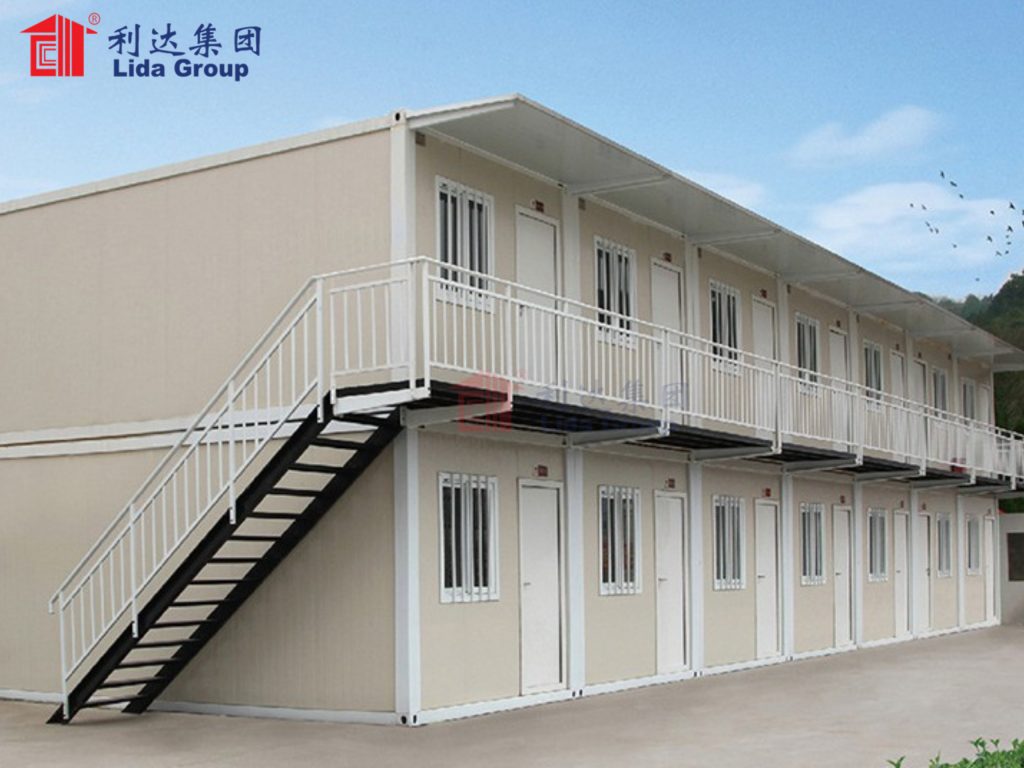
Lida Group’s innovative mobile container dormitories have been deployed across diverse sectors and geographies, demonstrating their adaptability, performance, and value. These projects showcase how innovation addresses specific client needs while setting new industry benchmarks.
4.1 Construction Camp Dormitory: China Railway Sixth Bureau Project (Beijing)
Lida partnered with China Railway Sixth Bureau to deliver a 64-container worker dormitory complex for Beijing’s suburban railway Fuxi Line project, accommodating 130 workers. The project exemplifies modular design flexibility and smart technology integration. The complex uses movable partitions to adjust room layouts between 2-person, 4-person, and 6-person configurations, adapting to fluctuating worker numbers. Smart features include an AR fire simulation system, VR safety training zone, and IoT-based environmental monitoring, blending living functions with safety management.
The modular design enabled the complex to be assembled in just 15 days, with shared spaces including a medical room, barbershop, and supermarket. An innovative “point reward system” links worker safety performance to on-site amenities, improving compliance and productivity. After the project’s completion, the entire complex was relocated to another railway construction site, maximizing reuse and return on investment.
4.2 Emergency Relief Dormitory: Tibet Tingri Earthquake Response
After the 2024 6.8-magnitude earthquake in Tingri County, Tibet, Lida deployed 20 folding mobile container dormitories in 24 hours, housing 200 displaced residents. The hydraulic folding design allowed local volunteers (with no construction experience) to expand and assemble units in 20 minutes per module. The dormitories were customized for high-altitude conditions with enhanced insulation and oxygen supply systems, ensuring occupant comfort in harsh mountain environments.
Smart sensors monitored indoor temperature and air quality, triggering automated heating and ventilation systems. Within days, some units were converted into medical consultation rooms using removable equipment, while others served as temporary classrooms. After the relief effort, the dormitories were relocated to rural areas to address teacher housing shortages, demonstrating lifecycle flexibility and long-term value.
4.3 Mining Camp Dormitory: Indonesia Mining Project
Lida supplied 40 innovative mobile container dormitories for a major mining project in Indonesia, housing 200 workers in high-humidity, high-temperature conditions. The dormitories featured corrosion-resistant steel frames, enhanced insulation, and solar-powered air conditioning—innovations that ensured durability and comfort in harsh tropical environments. Smart energy management reduced utility costs by 25%, while IoT sensors monitored structural integrity and environmental conditions, enabling proactive maintenance.
The modular design allowed the units to be relocated to another mine site after the project’s completion, with minimal modifications. The client reported a 40% reduction in maintenance costs compared to previous temporary housing, along with improved worker productivity due to enhanced living conditions. This project exemplifies how material and technology innovation addresses extreme environment challenges.
4.4 Cultural Tourism Dormitory: Zhejiang Anji Homestay Village
Lida transformed old shipping containers into 30 innovative mobile dormitories for Zhejiang Anji’s homestay village, blending sustainability, modularity, and aesthetic appeal. The dormitories feature folding glass walls that extend living space to outdoor terraces, integrating with natural landscapes. Interiors use recycled bamboo furniture and local handcrafted decorations, while exteriors are covered in climbing plants to enhance eco-friendly aesthetics.
Smart features include solar-powered lighting, rainwater harvesting systems, and IoT-based energy management, reducing operational costs and environmental impact. The modular design enabled 10 new units to be added in 2025 with minimal disruption to existing operations. The project attracts over 100,000 tourists annually, generating significant rural income and demonstrating that mobile container dormitories can be high-value, aesthetically pleasing spaces beyond industrial use.
5. Industry Impact & Future Innovation Trends
Lida Group’s innovative mobile container dormitories are reshaping the global modular construction industry, driving a shift from basic temporary shelters to high-performance, intelligent, and sustainable mobile living spaces. The company’s innovations have set new industry standards, influencing competitors, policies, and client expectations.
5.1 Redefining Industry Standards
Lida’s model has challenged the perception that mobile container dormitories are low-quality, temporary solutions. By integrating design, technology, and sustainability innovations, the company has proven that these dormitories can meet or exceed the performance of traditional buildings while offering greater flexibility and cost-effectiveness. Lida’s collaboration with Shanghai Construction Engineering Group to develop national standards for box-type steel structure temporary housing has influenced design, production, and quality control practices across China . Globally, the company’s success has accelerated the mainstream adoption of mobile container dormitories in sectors such as education, tourism, and humanitarian relief.
5.2 Future Innovation Directions
Lida Group continues to invest in R&D to push the boundaries of mobile container dormitory innovation. Key focus areas include: AI-Powered Design Automation: AI tools will generate optimized modular layouts based on client needs, environmental conditions, and sustainability goals, reducing design lead times by 40% and minimizing waste. Carbon-Negative Solutions: The company is developing dormitories that achieve carbon negativity through advanced recycled materials, carbon capture technologies, and enhanced renewable energy integration. Robotic On-Site Assembly: Autonomous robots will handle module connection and placement, reducing human labor requirements to near-zero and improving assembly precision and safety. Global Adaptation Technology: Modular systems that automatically adjust to local building codes, climate conditions, and cultural preferences, enabling seamless deployment across diverse international markets.
Lida is also expanding its digital twin capabilities to enable end-to-end lifecycle management, from design and production to maintenance and recycling, further enhancing sustainability and operational efficiency.
6. Conclusion
Lida Group’s innovative modern mobile container dormitories represent a paradigm shift in the construction industry—reimagining mobile living spaces as adaptable, intelligent, and sustainable solutions that deliver value across diverse sectors. By integrating modular design flexibility, smart technology integration, and sustainable material innovations, Lida has transcended the limitations of traditional container dormitories, creating products that balance performance, comfort, and environmental responsibility.
Real-world projects—from Beijing’s construction camp and Tibet’s emergency relief shelters to Indonesia’s mining camps and Zhejiang’s cultural tourism homestays—validate the transformative power of Lida’s innovations. These projects demonstrate that mobile container dormitories can address dynamic client needs, withstand extreme conditions, and deliver long-term value beyond temporary use.
As the global demand for flexible, sustainable, and intelligent living spaces grows, Lida Group stands as a leader and innovator, shaping the future of mobile container dormitories. The company’s commitment to continuous innovation—coupled with its global expertise and client-centric approach—positions it to redefine the industry further, creating a more agile, inclusive, and sustainable built environment. For governments, developers, and organizations seeking to embrace the future of mobile living, Lida Group’s innovative solutions offer a proven path forward—where mobility, quality, and sustainability coexist and thrive.
Related news
-
Lida Group's Cost-Effective Prefab House Balances Quality & Value
2026-01-22 17:51:36
-
Simplify Construction with Our Easy Assembly Container Apartments
2026-01-22 17:43:30
-
Flexible Design in Modern Mobile Container Dormitory Solutions
2026-01-22 17:37:24
contact us
- Tel: +86-532-88966982
- Whatsapp: +86-13793209022
- E-mail: sales@lidajituan.com
